The Demure Don’t Demur

The old man’s mother reached her century a few days ago. In cricket parlance, a century is a batsman’s dream innings, a cause for a massive celebration. The exuberance of the crowd would make it a big occasion for the cricketer to soak in the adulation. A performance that is often characterised by a doggedness in determination, flamboyance and ruthlessness in stroke-making, and patience in execution. It felt not so long ago that the old man’s mother was a demure young woman. Shy and quiet, she attracted the young man who was self-employed as a laundryman next door to her uncle’s dhobi shop. He had rented half the shop next door from the tenant who was struggling to prop up their business selling lollies and preserved knick-knacks such as sugar-coated nutmeg, dried mango, dried plums and other fruit pickles. She was sent to spy on his business by her uncle who worried that his business was losing its clientele. She reported to her uncle that he had nothing to worry about; the majority of his business came from wealthy plantation owners who played an important role in the rubber and coconut output of the country whereas the skinny lanky man next door merely catered to the locals, mainly poor Malays. ‘She will be my wife one day,’ the neighbour said to himself the moment he laid his eyes on the nubile young woman who was still in her teens. Realising that her efforts at espionage had been uncovered, the demure woman offered a sugar-laden smile and coyly left her post. In her mind, she would have to find another hiding place the next day, surrendering to the notion that her task to spy on the young man would be a daily task, whether required or not by her uncle.

Much to the chagrin of the old man’s Mrs, she has always felt his filial piety took precedence over his love for her. “Of course not!” he cried out loudly in despair, but his pleading voice failed to convince The Mrs. A woman’s instinct is seldom wrong,” she said. The Mrs is a modern woman, being demure doesn’t cut it for her. The modern woman will speak her mind, and often, as loudly as possible, to win an argument. Her akimbo stance is a language that clearly tells the old man his Mrs is assertive and comfortable in her own skin, and will not take kindly to any egregious insults. Her extensive interests in politics, art, music, Chinese Classics, allow her to engage with anyone in deep conversation. When she turned 60, she decided it entitled her to speak her mind and not care about what people think of her. The modern woman will not hesitate to tell someone they are wrong and tear off their layers of pretence. But, for the old man’s mother, rarely was she heard and never did she hog any limelight in her heyday. Deep-rooted in the traditions of her parents who hailed from Ningbo, the old man’s mother perceived herself to be devoted, kind, and considerate. She could not see her imperfections, and therefore did not correct them – her doggedness about thrift and money matters, her ruthless accusations about her husband’s infidelity and her wasteful use of time as she patiently undertook her daily chores remain her major character flaws. Her name is Mei-Leh, in her dialect meaning ‘plum orchid’.
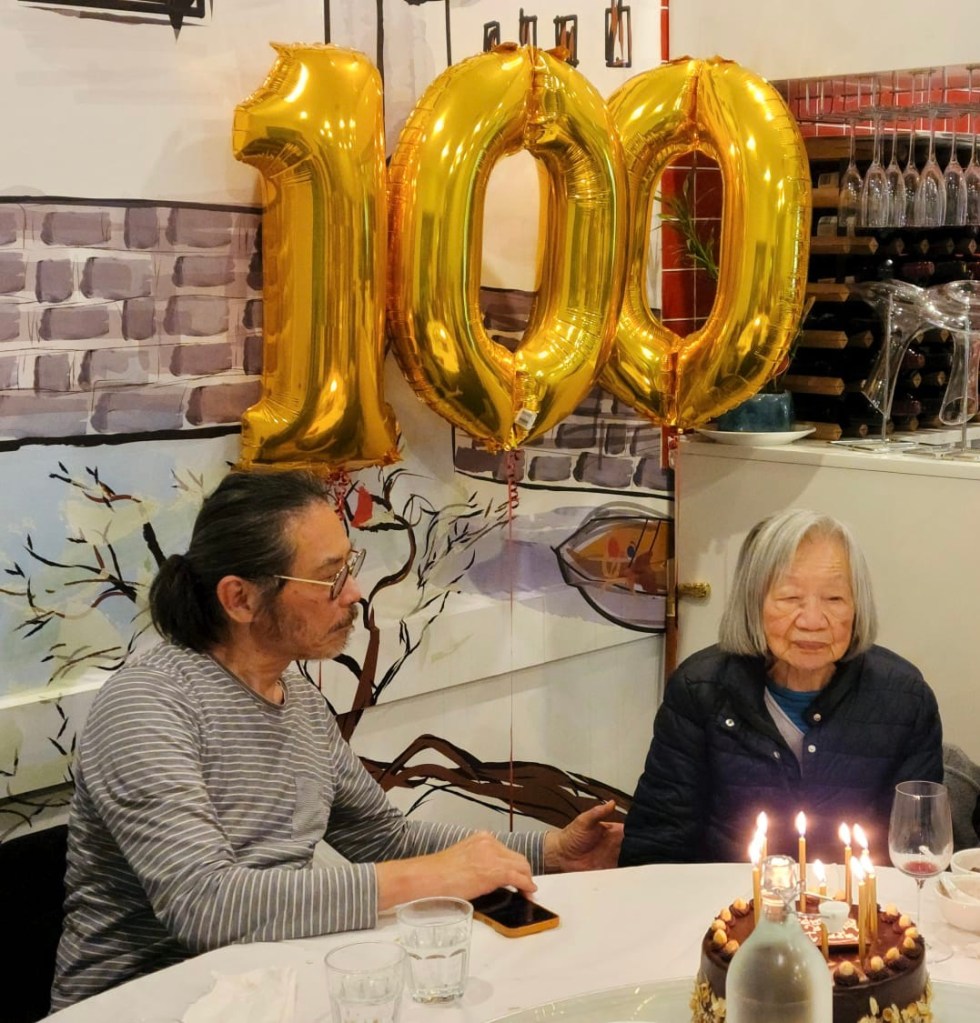
A party for her 100th birthday, not her 100th birthday party.

The old man was seated next to his mother at her 100th birthday party. In truth she has celebrated more than a hundred birthday parties. Being the matriarch of a big family, her birthday is celebrated at least twice a year, following the lunar calendar and the Western one. Her biggest pleasures in life is to be with her children and their off-springs. Any occasion that brings them together would please her no end. “She’s a party animal,” the old man told me. It soon became an appealing part of her nature, this love for parties invigorates her and perhaps is her elixir of life. “That’s her secret of longevity,” explained the old man, as he shoved a Hakka fishball from the steamboat pot that he had let cooled, into his mouth and merrily chomped at it. Her eyes closed tightly as she focused on chewing a sliver of beef, extricating every bit of taste from the crushed and thoroughly ground fibres and sinews of the meat. Even on her 100th year, she easily tires out some of her children. Just the other night, the old man had to bring his niece’s birthday to an abrupt end. It was a week night and he still had to rise early the next day to work. But, Mei-Leh was not pleased, to her it was only 10.15 pm as she patiently relished the last crumbs of the birthday cake – a chocolate mousse cake – scraping every bit of cream and dark chocolate from her plate with careful deliberation. Her mouth moved up and down slowly and deliberately as she ruminated on the crumbs, the rhythm synchronising her purplish lips and the surrounding wrinkly folds of skin deeply carved with creases as busy as lines of streets on a big city road map. Her edentulous mouth, nicely disguised with a full set of dentures, pursed occasionally but more often than not, it bobbed up and down in a fixed rhythm, quietly chewing her cake. It would be another fifteen minutes before she started sipping the tepid peppermint tea served by her grand-daughter before the birthday song was sung i.e. a good half-hour earlier. It would take three trips to the micro-wave oven to reheat her drink before she finally finished it. She examined the cup to satisfy herself that every last drop of it was consumed before she readied herself to leave. It would not be an Irish goodbye. As matriarch, she is accustomed to receive everyone’s undivided attention in the room, whenever she arrives or leaves a gathering. She lifted her left arm from her side without a word, but the old man understood clearly that she required him to help her up from her chair. He got her walking stick from the side of the wall and handed it to his mother. His duties, having being honed for many years, are perfectly understood and performed with utmost reverence and love. A request is rarely necessary, a command is superfluous. On their way home, the old man’s Mrs asked, “Why is it you can’t read my mind and know what I want?” The old man remained quiet all the way home. He refused to be baited into making a defence.

Great as heaven and earth are, people still find things with which to be dissatisfied.

Confucius

By the end of a meal, Mei-Leh is typically fatigued from chewing her food.

At 100, Mei-Leh is no longer demure. She decided she ought to free herself from the shackles of civility and be who she really is. When she turned 90, the old man took her aside and spoke at length about protecting her legacy and advised her to think of how she wanted to be remembered. “Don’t you want your future generations to know you as a loving and kind matriarch? A reasonable and happy person?” he asked. She didn’t answer in words that afternoon but in the following decade, she has answered him in spades by her actions. She didn’t care or isn’t capable of taking care of her legacy anymore. Ageing not only ravages the body but sinisterly, it ravages the mind too. We sympathise with someone who is physically impaired. We feel their pain when we see their missing limbs or cancerous wounds. Her damaged brain cells, invisible to us, are no less severe on her well-being yet we don’t acknowledge that advanced dementia is also a pitiful disease. Mei-Leh lives pretty much in the past; she speaks of names that the old man doesn’t recall and her failing memory has meant that he no longer can write her stories down with any conviction of accuracy. As if to prove he is right, those who aren’t demure do often demur. Mei-Leh had a big argument with one of her daughters this week causing her carer and companion to leave their house in tears. Despite her frailty and fainting spells, Mei-Leh refuses to be pacified, and maintains her rage at her daughter. “Wham!” she slammed at the dining table, treating her palms like a judge’s gavel. No further discussions will be entertained. The old man resigns himself to simply let her demur as loudly as she wants. After all, she is 100.

The Busyness of Business

The economic hurricane season finally arrived. The old man had been fretting ever since JPMorgan’s CEO Jamie Dimon warned of the impending disaster back in June. So, ’tis the season not of raking in whilst the sun shines but of tightening the belt and battening down the hatches whilst the cold winds blast the landscape. It didn’t seem so long ago that the sun was smiling at the old man. Business was brisk during the Covid lockdowns. Free money was being printed and handed out by governments all over the world. His business was going great guns and it felt the sun would never set, the sky would never turn dark, and the autumn leaves would not wither away. There was incessant chatter about selling his business whilst he was enjoying the busyness of business. He had learned his mistake from not selling his business just before the 2008 GFC hit. Buy low and sell high was always his mantra. His business was at its apogee – never before had it been easier to run – and all the vital signs showed a healthy business that was ripe for sale. But, in a blink of an eye, all the goodness evaporated. Now, the busyness of business was draining his vitality – the old man looked older and exhausted. The daily stretches from the eight brocades of Qigong no longer helped his posture. He looked hunched and appeared decidedly shorter, diminished by the passing of time. His gait, once as sure as a mountain goat’s, was unsteady and unsure. The years of stubbornly believing hair shampoo was a waste of money had hastened the damage to his once luscious locks of hair. Dry, unwashed and tangled, they should not belong to him. He, a businessman of some repute in his younger days, ought to portray or project a better image. His shadow seemed embarrassed and wayward.

Against the vast grey sky, the absence of golden sunlight and noisy birds cast a deathly pale over the majestic gum trees in the distance. Their leaves looked lifeless, the once shiny and vibrant green tops replaced by a dark greyish hue where even the gentle breeze that fanned the trees with cool soothing air had forsaken the land. The old man hurried back to his house, fretting at the sky for spitting at him. “The rain will be upon us again,” he said to his dog, knotting his brows with sadness. It had been raining all week as if to prove that the winter wasn’t over. The parks were soggy in most parts. His dog didn’t care but the old man tried in vain to keep his old pair of Skechers dry. He bought them some five years ago, just in time for a long European holiday that required many long walks. Lightweight and fashionable, they were his favourite shoes. “They just need a good clean,” he said to me, defending the notion that he did not need a new pair. Whilst avoiding a pile of dog shit, he inadvertently stepped into a muddy patch that was somewhat concealed by a thick growth of paspalum. “Bastard!” he cursed at the owner of the dog who didn’t ‘do the right thing’ and left the shit on the grass. The old man too had been guilty of not ‘doing the right thing’ but “it’s only when the poo is soft and runny,” he argued for his innocence.

As soon as he walked into his kitchen, he put the kettle on and waited for the water to boil. ‘Deborah’s Theme’ was streaming on the TV. He had been playing it over and over again in memory of his friend. Deborah, the eldest daughter of the owner of his favourite restaurant, died that morning. She succumbed to lung cancer after a four-month battle. “Life sucks,” he said, pointing out to me that she wasn’t ever a smoker. The room was cold. The old man realised his hands were icy cold too. The drawback of a central heating system was fully appreciated after his wife was given a Oodie for her birthday last month. Her Oodie kept her warm whilst he complained of freezing fingers. She no longer wanted the heater to be on and since the need to please her was greater than his need to keep warm, he told his fingers to get used to the new norm. The Oodie was invented by a young South Australian, Davie Fogarty, who simply made an oversized blanket to wear like a hoodie. We have all done that in our student days, right? Just ‘wear’ our blanket as we studied at our desk till the wee hours of the night. But, none of us took the next step and sewed a couple of sleeves and a hood to make our blanket into a garment. We would have been millionaires many times over, if we did! The kettle’s high-pitched whistling brought the old man back to the kitchen. He decided on E Mei green tea. Someone had given them that many many years ago. ‘First in, last out’ seemed to be the usual practice in their larder. As shopkeepers for many years, the couple religiously rotated stock on their shelves but at home, the discipline was seldom practised. The old man blamed it on the tortuous demands of a busy business. “The busyness of business sucked us dry,” he said.

The old man sat at his desk, decluttering his mind. Unlike his handphone which could delete messages and images in a split of a second, his mind seemed to take an eternity to banish bad thoughts and erase bad memories. His hands were still cold, despite the piping tea steeping in last Christmas’ present from his son’s girlfriend, a black cast iron tea pot, a replica of the one he saw in Taiwan’s national museum. His favourite teapot remained proudly displayed on a mantelpiece, an official replica of a Nambu-Tekki ironware from Iwate Prefecture. The technique used in the mid-17th century involved pouring molten iron into a sand mould filled with dots. The tiny knobbed pattern created from the dots somehow pleased him very much.

The dark rain clouds arrived as promised by the weather bureau. They pelted angry sheets of rain at the faded grey colorbond roof of his house, creating a racket so loud it drowned out ‘Deborah’s Theme’. The old man sat frozen like a scarecrow in an abandoned field. Old, irrelevant and forgotten. His icy-cold hands hung in the air inches above his laptop. He felt lost, not a word could be formed in his mind for his fingers to type. Hunched and looking haggard, he lost his shadow when the bulb in the room blew and left the room dim and grey. He stared at his laptop but the words would not come. Suddenly, his face contorted into a gnarled spasm of pain and bitterness. He pressed both shoulder blades inwards and then arched his chest closer to his lap. The masochist in him relished the sound of crepitus, unaware that cracking bones were another sign of ageing.

The awful news of his best friend’s wife had just reached him minutes earlier when he was sipping green tea whilst checking WhatsApp messages. The old man sat in the room that had grown dark once the computer had gone into screensaver mode. Like a stunned kangaroo caught by a bright light in the dark, he sat immobile as his past gathered speed, rewound and replayed in his mind, images and timelines melded haphazardly. Life was tough for everyone, but always fell short, both in time and in expectations. Caught up in the busyness of his business, he was feeling shortchanged in the busyness of life. He had only met her twice, once when she came to visit Adelaide with her husband and when he reciprocated with a visit to their city. She was much younger and much more caring to the needy, volunteering her time and energy in her church to help the poor in her community. Ravaged by cancer for the past twelve months, she gave up her fight in the afternoon, surrounded by her two sons and husband. “She’s gone. She’s gone,” cried the old man. His lips trembled involuntarily while tears formed into salty beads and stung his eyes in the process. ‘We have to go on living,’ he wrote to his friend. ‘Be strong.’

The dead will always be dead, but we have to go on living.

Haruki Murakami

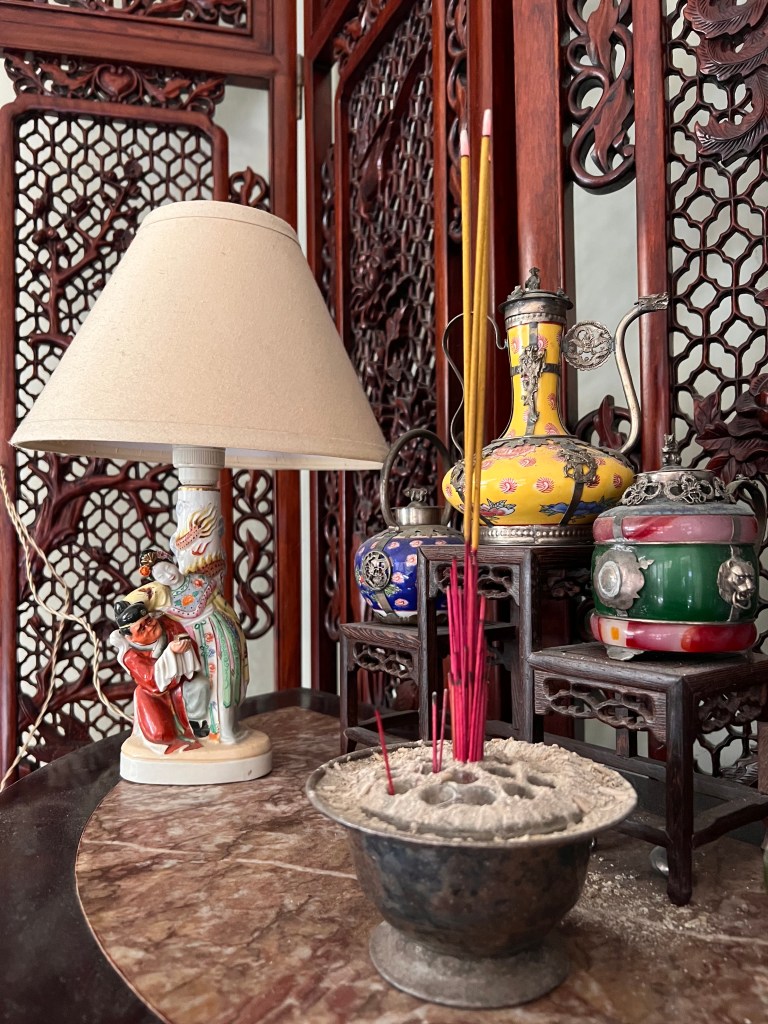
The old man sought solace the next morning and chose a page from The Analects. “If the superior man,” said he, “abstains for three years (to mourn the loss of a loved one), those observances will be quite lost. If for three years he abstains from music, music will be ruined.” The old man felt like Confucius was talking to him. We have to go on living. He lit three joss sticks for his friend’s wife and also for Deborah. Placing both hands together with fingers pointing to the sky, he stood upright and remained very still. The scent of the joss comforted him as he said goodbye to the recently departed. May they rest in eternal peace, he said softly.

Shell, it Shall Be

The next member to be inducted into the Urghhling Marsh Brotherhood is a rather mysterious fellow. He is neither tall nor short, fair nor swarthy. He shared a photo of him with his dad, in front of his gleaming white car with massive 19 inch mag wheels. His stance reminded me of Clint Eastwood in a spaghetti Western, left hand poised to draw in a duel, the only items absent were a pistol and a hip holster. He is strong but not big, fit but not muscular. For over a month, he has been telling me his stories, yet he has not revealed all that I want to know. He has given me a sketch of himself but the sketch is merely an outline without a glimpse of any bone or innards. His life story is one that is truly blessed without the usual bitterness and awful struggles. He has thrown some meat and fat my way, but there is none of the tears and blood that will make a reader cry. He told me about his grandparents and parents but there is no hint of their suffering, struggles or toil. I learned nothing about their idiosyncrasies, philosophies and customs. I wanted to learn about their adventures and feel the excitement about their early pioneering days, the challenges they faced, their brushes with the Japanese occupiers during the war or how they started their family business. How did they acquire and amass their seemingly substantial wealth? Where did they come from? Were they imperial officials from a dynasty? How did they end up in Malaya? Answers that will make their characters come alive. I needed some scandals to spice up his story. But, what I encountered was a hard shell that would not open up. Alas, a shell, he shall be.

好事不出门,恶事传千里。News of good behavior never gets past the door, but a scandal is heard of a thousand li away.

Shi Naian, Shuihu zhuan, Chapter 24

The new inductee to our brotherhood is Lim Hock Cheng. In relating Hock Cheng to The Water Margin heroes, I could think of no one more suitable than chief jailer, Superintendent Dai Zong. It is not that Hock Cheng was a sheriff or worked as a cop or was in charge of a jail. I thought of Dai Zong because he was also known as the ‘Divine Traveller’. All Dai Zong had to do was wear some cloth puttees bearing the images of a divine horse on his legs and he could run two hundred and seventy 里 li or one hundred and thirty five kilometres in a day. Dai Zong first appeared in the Shuihu zhuan novel after Song Jiang, the eventual leader of Liangshan Marsh had narrowly escaped becoming meat for the buns being prepared in the inn where he was drugged. Upon arriving in Jiangzhou to serve a long sentence for killing Yan Poxi, Song Jiang arranged to meet his jailer, Dai Zong. The two of them got on so well that Song Jiang was allowed total freedom to leave the prison whenever he wished. Hock Cheng does not have special puttees to enable him to travel fast like the ‘Divine Traveller’, but he has an energy source that is superior. He is a proud owner of a Shell petrol station. Yes, his story shall be about Shell.

Hock Cheng’s earliest memory of his childhood was the time he spent in a car with his paternal grandfather. “Many people will think it is impossible for a three-year-old to remember so vividly,” he said. “But, honestly, I still remember it as clear as day.” Grandpa put me on his lap as he drove his black car that day.” “I held the steering wheel of his Morris as he turned it left and right.” Not long after that day, his grandfather fell ill and passed away. It was a brief moment shared with the patriarch of the family but Hock Cheng still cherishes the memory today. He is the youngest of six children in his family. Being a son and the youngest, he was the father’s favourite.

Unlike many in school, Hock Cheng had it easy. His school uniform was always sparkling white, starched and ironed to perfection. He was never late for school. Well-groomed and well-behaved, he never got into trouble with the teachers. Detention classes were alien to him and the cane was only reserved for other students, never him. “He paid for his canteen meals without any hesitation, always choosing whichever food he fancied,” Blue Eyes said. When he was nine years old, a sister drowned. She suffered from epilepsy. It was on a Sunday. She was cleaning the fish pond in their garden when she had one of her ‘attacks’ and fell head first into the water. No one saw her unconscious in the pond till it was too late. For many months, the family mourned her loss and the inconsolable father was too distraught to go to work.

Hock Cheng attended St. Xavier’s Branch School in Pulau Tikus. “Life was normal,” he said. But, his normal was, of course, very good for many others who had less normal lives. He was a member of the fencing club. Fencing gear was well beyond the budget of the normal school kids. The Made-in-England sabre and sabre gloves, long trousers, jacket, underarm protector were all compulsory items and therefore the sport was exclusive to the rich. He had a motorcycle when we were still proudly showing off our bicycles. He did bodybuilding with proper equipment whereas Wu Yong also pumped iron, and he literally meant iron, i.e. the discarded rusty charcoal irons used in his father’s dhoby shop. Then, Bruce Lee and his style of fighting was a fad. Whilst most of us drooled at his martial arts and pretended to be the ‘Big Boss’, Hock Cheng actually enrolled in a Shaolin (kung-fu) school. Today, he still keeps fit with a rigorous regime in a local gym. He still applies the remedial massage techniques acquired from his Shaolin master today, helping to treat friends and family who have injuries.

After Form 5, he joined the Youth Park Leadership course. That was where he met his future wife. When his grandfather passed away in 1962, his father took over as the second generation Shell dealer. Hock Cheng began to take an interest in the family business. He worked as a pump attendant whilst he was still attending school in SXI. He started from the bottom and worked his way up the ranks, from the washing boy, to greaser to foreman before becoming the clerk at the station. His father retired in 2001, enabling Hock Cheng to become the third generation Shell dealer. A few years later, his wife joined him in running the business. One of Hock Cheng’s biggest achievements was to win the Shell V-Power Challenge in the country and was a Gold Retailer twice. These awards also meant free holidays to England, Italy and Switzerland. When the family achieved their 100 Years with Shell, they were rewarded with a much bigger operation in Bukit Mertajam. It was really a big occasion, even the then Penang Chief Minister, Lim Guan Eng, attended the event.

Lim Eng Hooi Shell Station 1913 at the corner of Penang Road and Northam Road.

The original petrol station was situated adjacent to the cemetery where Francis Light was buried. He was the founder of the British settlement in Penang, and not the founder of Penang like how we were taught in school. The Old Protestant Cemetery sits on a small patch of ground on Northam Road. It was just a stone’s throw from the shop house where Wu Yong lived. It was the go-to place for the young boy whenever he needed to find a replacement champion for his fighting spiders. He kept one or two at a time in separate lolly tins. Like gladiators, his champions invariably suffered injuries and damaged egos or irretrievable confidence. It never dawned on the young boy that, imprisoned in tins, despite a healthy diet of freshly caught flies, any prized fighter would eventually weaken. Nestled in the cool shade provided by a grand canopy of frangipani trees, shiny metallic blue-green and black warrior spiders, Thiania bhamoensis, made their homes amongst the thick long green leaves of agapanthus plants. “It’s very easy to find them,” Wu Yong said. “I just looked for leaves that are stuck together by tell-tale signs of white silky web,” he added. Apart from their fighting qualities, Wu Yong selected his spiders based on looks, the more iridescent the green or blue, the more he desired them. Wu Yong was surprised that Hock Cheng’s family owned the petrol station. He used to gaze at the Shell sign from his upstairs bedroom and wondered at why the afternoon heat caused the shimmering effect on the road as he observed the attendants attending to customers at the bowser.

Back in those days, Farquhar Street finished at Leith Street. The existing stretch of Farquhar Street between Leith Street and Northam Road was an unused field for the neighbourhood kids to play their games of marbles, tops, kites, masak-masak cooking or hopscotch depending on the season. During wet weather, the field would disappear leaving a thin haphazard trail of lalang grass, sand and stones amidst a body of muddy water and waving tips of lalang grass that resembled a padi field. The stench of mud filled the air and any open wound, no matter how minor, turned pestiferous. It was uncommon for the kids not to have pus on their limbs. The seventh month, the month of the hungry ghosts, was especially bad. Wu Yong called it his ‘pus season’, bringing a paroxysm of cuts and bruises without fail. To reach his school, Wu Yong the boy had to walk southwards on that tricky path, always minding the treacherous ground that might swallow up his white school shoes.

Hock Cheng remains thankful for what his grandfather had provided them with. It is forgotten how he secured the deal with Shell in 1913 or how he survived the Japanese occupation of Penang during the war in the early to mid 40s.

“All he told me was they moved to Irving Road for refuge and ate tapioca,” Hock Cheng said.

His petrol station closed for a few years to avoid supplying fuel to the invaders. After the Occupation was over, Grandpa Lim almost lost his station. He was deemed to have forfeited his right to continue as a Shell operator. It took his agility as a fluent speaker to wrest his business back from his competitor. From the will that he wrote, Hock Cheng said his grandpa had beautiful writing, another indication that he was a learned man. Very few men at the turn of the 20th century had any education in Malaya, so this was a strong hint that he hailed from a well-to-do background.

“My mother liked him,” Hock Cheng said.

He could tell from the way she talked highly of her father-in-law. He was strict but fair to all his children. Grandpa Lim had a good command of English and was a professional auctioneer besides running his petrol station business. Hock Cheng honours his grandpa’s memory by driving his fifteen-month-old grandson around the block. His greatest joy will be for his grandson to remember him the way he remembers his grandfather, he, holding the steering wheel with his tiny hands whilst on the old man’s lap. His grandma also came from a wealthy family. They owned five rows of houses and a mansion in Argyll Road. She inherited one of the houses when her father passed away. “There is a photo of her in the Penang Peranakan Mansion.” Her name is Tan Chooi Chit.

Grandpa Lim in 1916.
Grandma Tan

Hock Cheng’s mother was Siamese. She was adopted by the second wife of her adoptive father. The second wife was also Siamese. His mother’s biological parents were poor. She, being the eldest, was given up for adoption. Although illiterate, she was a smart person. She knew how to cook a dish simply by tasting it. Her taste buds were able to discern accurately all the ingredients and from the texture of the food, she could figure out how it was cooked.

“Her chicken pie was to die for, the puffy pastry was simply divine,” said Hock Cheng.

She worked long hours at home, taking care of the family. One day, the couple had a big fight. The husband discovered that his wife had been secretly pawning away her gold jewellery. The pawnshop owner had asked him if he wanted to redeem all the gold she had pawned. Hock Cheng said his mother did it to support his eldest brother who was studying in America. To supplement their income, she provided food and lodgings for some Thai students and sold jelly and cakes during festivities. Her secret condiments made her curry powder famous in as far away places as Genting Highlands and Pahang, where the late Sultan was especially fond of them.

Hock Cheng’s father was born in 1927. He was the second of three brothers and a sister. His mother died at age 28 whilst giving birth to his younger brother. He didn’t get the chance to know his mother.

“Dad’s stepmother was a terror,” Hock Cheng said. “Dad loved photography,” he added, showing off a thick collection of photo albums passed down by him.

When Grandpa Lim passed away, the three brothers had to take over the running of the petrol station.

“Dad was the most artistic and loved doing the displays and merchandising,” Hock Cheng said.

He enjoyed cutting words out of paper and sticking them to sheets of timber. A big banner that said SERVICE IS OUR BUSINESS hung proudly from a display window. They won many display competitions amongst the Shell operators. Over the years, the brothers had different temperaments and conflicting business ideas, one less entrepreneurial, the other less modern. Eventually, Hock Cheng’s father bought out the other two.

“Dad had a Chinaman mentality, ‘enough is good enough’,” he said.

Hock Cheng still thinks fondly of his young days when his father would drive the whole family to Swatow Lane for ice-kachang every Sunday. His father is 96 today and lives in Bangkok with a daughter.

Hock Cheng’s parents celebrating their 50th wedding anniversary. They married young and did not have a formal wedding.

Hock Cheng and his wife of 40 years have two children, both born in Malaysia. The daughter has a double degree in Computing Science and Accounting and is head of Accounting at a big firm in KL. The younger one worked in Dell for a few years before joining the Shell programme. There is an old Chinese saying that a business will not pass to the third generation, but Hock Cheng is proud that his son is today running the family business in its fourth generation.

Wu Yong welcomed Hock Cheng to their Marsh Brotherhood. Recruiting had been slow-going. His original plan was to have a hundred and eight ‘heroes’ before the year is out. There are many brothers doing great things and there are many more who continue to do good work, helping the disadvantaged in their community quietly and without fuss. To those who do not wish to reveal themselves, we say Thank you!

好人相逢,恶人远离。When good folk meet, evil men keep their distance.

Shi Naian, Shuihu zhuan, Chapter 37

Artist, Anne Koh. Lim Hock Cheng 2022

Phew, So Few.

The old man’s eyes looked sad. Oftentimes, he wore an expressionless face with shifty and slanty eyes that made him unattractive. It could be said his voice was monotonous and stodgy. The content of his conversation was usually out of topic or delivered late, after others had switched to other matters of interest. It hinted of a rather slow thinker, perhaps. I have observed him for a long time and my conclusion, made recently, was that he was a gangly awkward fellow who was prone to trip himself with his own foot. At the optometrist a few days ago, he found his hooded eyes hugely embarrassing when the young and gorgeous-looking woman had to lift and spread apart the excess skin from above and below his eyes in order to examine them. The angry tips of his eyebrows were turning white and faint, as if they were being slowly erased by time. His hair, once thick and wiry, had turned hoary and dry. They hung well past his shoulders, somewhat accentuated with faint wavy curls. The receding hairline used to worry him but with each passing year, there was growing acceptance that his ageing process could no longer be slowed, despite cutting-edge science that promises ageing can be reversed. Looking at the creases on his forehead triggered in my mind a word association with an iron. There had to be a way of smoothing them, surely.

入门休问荣枯事,观着容颜便得知。

One look at a man’s face tells you whether he’s prospering or suffering

Shi Naian, Shuihu Zhuan, Chapter 24

He told me about an incident he experienced many weeks ago. The winter had been long and severe and the sunbeams had failed to break through the clouds for days. But, that day the sun decided to work a bit harder and chased away the freezing winds from the south. The azure sky was still and constant, as the rain clouds floated away like butterflies in the sky. He was walking his dog in a field adjacent to a reserve when he came across a family of noisy parakeets. On that beautiful moment, he closed his eyes and listened to the wind blow. It was just a gentle whisper which did not have the energy to free any hair from the loosely tied bun on his head. Many minutes passed before his dog returned to nudge at his legs after a game of chasey with some bigger dogs. He saw a strange halation of light at the edge of the field furthest from him when he opened his eyes. In his left eye, a short burst of floaters that behaved like bubbles released from a straw clouded his vision briefly. He quickly dismissed it from his mind after the sharp reminder seared his head warning him that such an occurrence warranted an urgent call to his eye specialist. The Greek doctor whose rather long name was impossible to remember let alone spell had warned the old man that sudden floaters in his left eye could indicate that the retinal tear had worsened. He hugged his dog for instant comfort and decided to inspect what had caused the halation he saw earlier.

At the edge of the reserve, the old man came across a patch of ground that was in dire need of attention by the park ranger. Unkempt and thick, the long grass there seemed to summon him to draw closer. He did not let his guard down even though he knew there would be no brown snakes loitering in the middle of winter. He pretended to scare his dog with his sibilant whispers.

 “Murray, it’sssss not s-s-s-ssssafe here. Watch out for s-s-s-ssssnakessss….S-s-s-sshhhh, can you hear the hisssss? Ssh-shh-ss-s-shall you check that grass-s-s-s-sy patch there?” he said softly. 

The good thing about his dog was he’s not afraid of pretend-snakes. The other good thing about his dog was he would never treat the old man like used tissue paper. “The more you know humans, the more you love dogs,” he said to me, as if he had just invented the phrase.

Rain or shine, night or day, hungry or full, his dog loved him. A love that was as unconditional as the story of the Corinthians in the good book. 

The  dog barked enthusiastically like he had found treasure. The centre of his attention was a round dark hole in the ground. Just like his dog, the old man was on all fours as he edged his body nearer the hole. It was as big as a manhole except it was missing its round cover. Its verge had been baked hard over the years, a mixture of mud, cement and stones. A millipede sprung shut and pretended to be dead in one of the cracks as four paws rushed past it. The old man pushed his glasses firmly onto the bridge of his nose as he peered into the dark cavity.

“Hello-o-o-o, hello-o-o, hello-o-o” he said loudly, enjoying the reply of a distant echo. 

He blinked a few times to adjust his eyes to the darkness down there but he could not find the bottom. The smell of faint putrescence reminded the old man of his aquarium when it was overdue of a water change. Maybe there’s rotten vegetation down there; he hoped it wasn’t the smell of an unfortunate animal that had fallen in and made it its own burial ground. He covered his nose with a handkerchief that was scented with cheap perfume and quickly distanced himself from the odoriferous place.

The old man had many fears – of heights and of the sea. Why the sea? Simply because, being a poor swimmer, his biggest phobia was to die like Jack, in The Titanic. For years and years, he refused to entertain the idea of going on a cruise until the year when he won a free holiday to Alaska. He never liked it but his excuse was that he missed out on watching the FIFA Wold Cup that year. The Americans did not care to screen any live matches on the boat.

It caused him great anxiety even to drive up Greenhill Road to the charming hill towns nestled in places like Summertown, Piccadilly and Hahndorf. Strangely, he loved to use the enduring nature of the sea and the hills and their predictability when he was a young teenage boy writing love letters to his girlfriend(s).

My darling, I miss you so much.

The autumn leaves may be dying outside but in my heart, my love for you is an eternal spring. The hills are alive with the sound of your sweet voice. I shall hold you close, and never ever let you go. You do know, don’t you, that you will forever melt my heart, my darling and I will be forever yours. My love for you is like the sea, always returning to the shore. It is impossible, my darling, to stop thinking of you. You’re the pearl of my life and I am your oyster, my darling, I will keep you safe in my arms, like the oyster’s shell does for its pearl. Darling, you’re the whole world to me.

Wu Yonggang

What he did not realise was it was already sung many years earlier by Perry Como.

Can the ocean keep from rushin’ to the shore?

It’s just impossible

If I had you, could I ever want for more?

It’s just impossible

And tomorrow

Should ya ask me for the world

Somehow I’d get it

I would sell my very soul and not regret it

For to live without your love

It’s just impossible

Perry Como

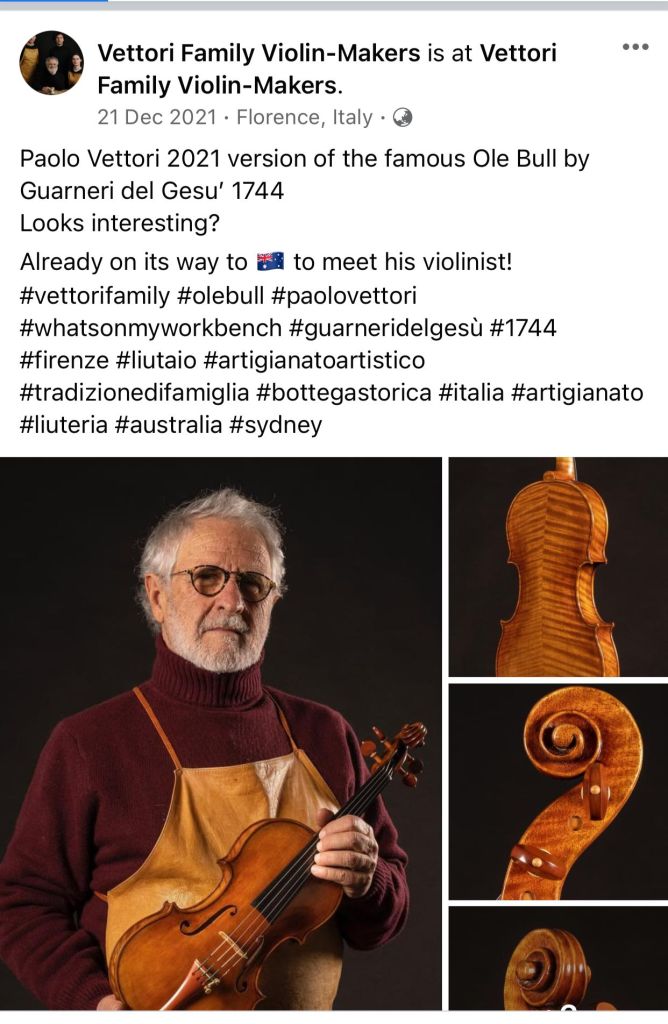
The old man had not had his eyes checked during the two and a half years of the pandemic. He could tell he needed new glasses once the black notes on his music sheets started moving like active tadpoles. Not long ago, he bought a beautiful violin, one that was made specially for him in Florence. As if he deserved better, he also bought a fine well-balanced violin bow that weighed 60 grams from Pierre Guillaume, a famous modern maker. To complete him as a serious player, his youngest son gave him a highly desirable case, which he nicknamed ‘Storm Trooper’, the reason would be quite obvious once you see it. I did not have the heart to tell the old man that to be a serious player, it needed much more than those things he showed me. He seemed to have drifted somewhere far away in his mind, so I dragged him back with a loud voice.

“Come, play me something nice,” I said.

He walked closer to where I was sitting. I could smell him; he had not changed his clothes for two weeks, I could tell. They were the same tan-coloured trousers, the same black turtle-necked long-sleeved skivvy, the same black thick jacket from Target that was rain-soaked days earlier. He picked up his violin, showing pure love for it with his careful tender touch, and took an eternity to tune it.

“Practice. Practice makes perfect,” I said, scratching my left ear with my forefinger, after I heard his Ave Maria, Meditation by Bach. He was tuning his violin again, not because any of the pegs had slipped, but the sounds were a good filler for the awkward silence.

After he had re-tuned his violin back to its previous pitch, he confessed he had been practising the piece for many months. I refrained from uttering a single word to hide my disappointment in his slow progress.

After a long pause, I said, “Perfect practice makes perfect.”

He winced, betraying his expressionless face.

Paolo Vettori, maker of the old man’s violin.
Take a bow, Pierre Guillaume!
The old man’s violin case, an Accord.

The young and gorgeous-looking optometrist in Norwood had a huge dazzling diamond ring on her wedding ring finger. Not many professions these days allow such close proximity between two consenting adults in a small and dark room, the old man thought to himself. She had a very attractive face and a rather alluring voice. Her long black hair had an extra shine and it smelled good, of Argan oil, the old man decided. But, she kept the old man busy, and diverted his eyes to the machine instead. Unkindly, she kept asking him to read letters and numbers so distant they seemed to be on another planet. “Which is clearer, this or this?” she kept asking him different combinations. The more she showed him, the more confused he became and the more muddled his answers were. After scanning his eyes for cataracts and glaucoma, she gave out a nervous sigh.

“Oooh, hmmmm.”

“Is there a problem?” the old man asked.

“How long ago did you say you had the retinal tear?”

“Oh, maybe eight to ten years ago.”

“I will make an appointment for you to see the eye specialist in North Adelaide. You must call him on Monday,” she said.

Monday arrived but the old man promptly forgot to call his eye doctor. No matter, he got a call from the eye clinic instead.

“Please remember to arrive early; your appointment is at 11.30 today,” a woman said over the phone.

“What, why? Mondays are very busy days for me,” the old man said, as he tried to wriggle out of the appointment.

“The doctor has very kindly squeezed you in today despite the seventy consults he already has,” the voice on the phone sounded firm and final.

“Ok, ok. How long will it take? Can I drive back within the hour?”

“No sir. You will need someone to drive you home. He has allowed time to carry out the operation today.”

“Operation?! What operation?” “I am not going to agree to an operation! I can see!” the old man protested anxiously.

His Mrs rushed in from some corner, hitherto unnoticed. “You scaredy-cat! I will be very very angry at you if you cancel the operation!”

“Angry at me? These are my eyes!” the old man said with disdain.

North Adelaide was just a twenty minute car ride away on a late Monday morning. The eye specialist was dressed quite sloppily. “Successful people need not dress up for anyone, it seems these days,” the old man said to his wife later on their way home. The eye doctor only made his appearance towards the last minutes of the consultation of which he would have claimed full professional fees for all the work carried out by his nurses. In his notes, much of it griffonage, he wrote that the old man had a ‘very impressive” ERM in his left eye and despite that, was maintaining excellent vision with no symptoms. In layman terms, ‘impressive’ meant significant. ERM was shorthand for epiretinal membrane. The wrinkling of his retina was so severe it would normally have meant a seriously blurred and distorted vision.

“His HST is fully operculated,” the doctor’s notes read, meaning the horseshoe tear is advanced to the state where the separated flap of the retinal surface is suspended but the body appeared to have healed itself such that it seemed unlikely that it would allow fluid to seep behind the retina. The doctor was amazed by the incredible image on his screen. He wore a bemused look and with an air of incredibility in his voice said, “I have never seen such an astonishing recovery! You should be blind!” Very very few cases escape without any issues given such significant distortions and unevenness of the ERM.

“Phew, so few?” the old man said whilst thanking the gods for his good luck.

“I could have told him it was due to the NAD+ I have been taking for the past three years,” the old man said.