
Unexpectedly finding themselves back in Sydney, the old man and his Mrs were slightly bemused. Just a fleeting three months prior, the vibrant energy and ceaseless merriment of their last visit still resonated vividly in their minds, hardly relegated to the dim and dusty recesses of memory. Yet, here he was again, seated on a clean newish train hurtling from Mascot towards Circular Quay, his Mrs by his side. This impromptu return was courtesy of a spontaneous invitation from the artist Anne Koh, coupled with the old man’s characteristic impulsive enthusiasm to accept invitations of any sort, in this case to attend the opening night of her art exhibition. Anne Koh and her husband, their intermittent next-door neighbours in the verdant leafy eastern suburbs of Adelaide, were rarely to be found in their charming cottage and mostly left their property in the hands of their elderly neighbours to look after. A celebrated and increasingly renowned artist with a significant following in Malaysia, Anne’s life was a constant itinerary of travels, participating in art exhibitions and prestigious events across Asia.
The Sydney trains of today were a far cry from the grimy, brown sluggish carriages of his past, those creaky, odorous, and rusty relics he used to board from Central Station on his way to Top Ryde back in the late seventies. Gone were the dimly lit, dank stations and the antiquated cardboard train tickets that required the attention and clip of uniformed conductors. Embracing a cashless future, modern train travel in Sydney was now a marvellous experience, a mere tap of a plastic card or a mobile phone against a sensor, granting seamless passage.
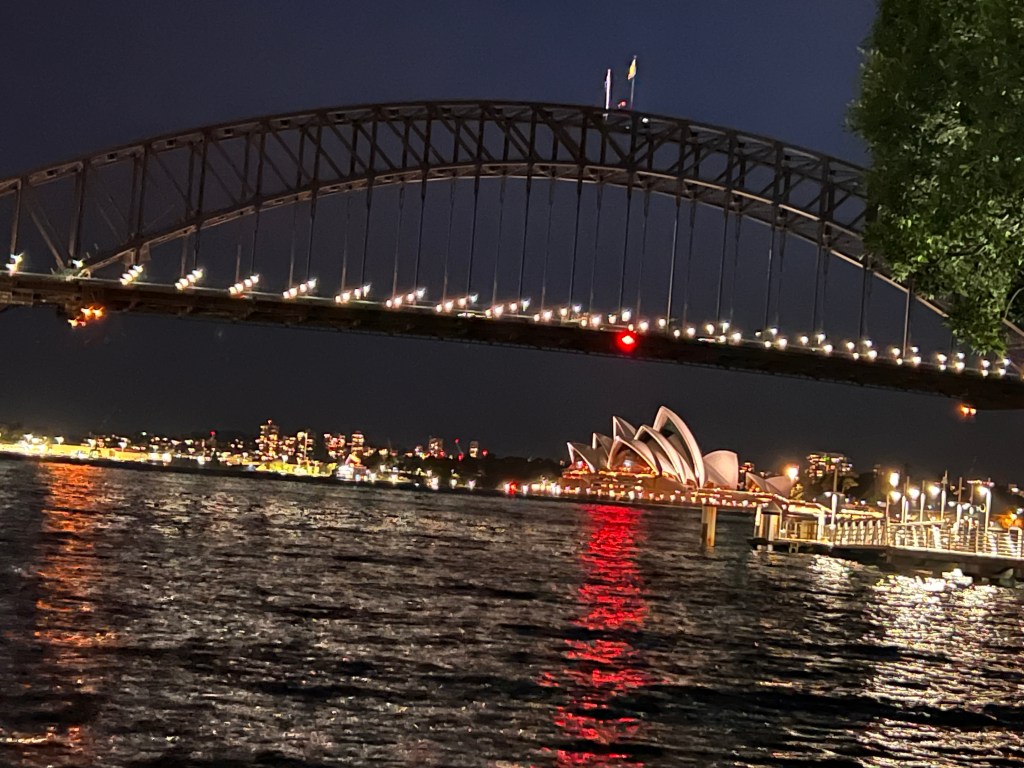
Their previous sojourn to Sydney, a mere quarter of a year ago, had been for a completely different occasion: an enchanting concert at the iconic Sydney Opera House. They were the privileged guests of a generous, albeit remarkably unassuming, patron of the globally recognised landmark. That visit had been a harmonious blend of a classical symphony and a Brahms concerto and the warm rekindling of old friendships, most notably with the Koo family who resided in Sydney. Richard Koo’s connection with the old man stretched back to the Penang of the 1960s, a time when trishaw rides from the elegant E&O Hotel to the bustling Chowrasta market cost a mere twenty cents. Richard’s father had journeyed from Shanghai to Singapore before finally settling in Penang, where he had forged a strong bond with the old man’s father. Together, they became founding members of the San Kiang Association, a cherished club for expatriates hailing from Zhejiang province. These were the pioneers who had bravely departed a desolate and isolated China in the early 930s, seeking a new frontier that promised boundless opportunities and sparked endless hopes – a future their motherland, ravaged by decades of humiliating defeats at the hands of Western powers intent on exploitation, could not offer.
This time, however, the focus was unequivocally on the Kohs and the realm of art. The Kohs had been invited to a lavish seafood dinner by a fellow Sarawakian, an invitation that naturally extended to the old man as well. His Mrs, also a proud native of Sarawak, usually the vibrant epicentre of any gathering, found herself somewhat overshadowed by the effervescent presence of Ah Lu, her dear old friend from their shared hometown of Miri, where she and his wife had spent their formative years in school. In those days, Miri was a close-knit community where everyone knew everyone else. It came as no surprise to discover that their parents had been close friends and that one of her brothers had been the fortunate recipient of an old bicycle gifted by Ah Lu’s mother.
It also seemed entirely unsurprising to observe that Ah Lu was a well-known figure throughout Sydney’s bustling Chinatown. The generous host of that evening’s opulent dinner had secured them a private VIP room and orchestrated a feast that seemed more appropriate for a delegation of powerful and prominent entrepreneurs. This grand affair stood in stark contrast to the old man’s rather less conspicuous arrival at the restaurant. Despite his enthusiastic waving to catch the attention of Siew Mei, Ah Lu’s wife, upon their entrance, she had seemed to look right past him, as if he were either invisible or utterly unrecognisable. Siew Mei, a captivating figure in her youth, still exuded an undeniable allure with her timeless elegance, beautifully accentuated by her flawless porcelain skin and a delicate, gentle demeanour. These, of course, were the carefully considered opinions of his Mrs, for he would never dare to voice such open admiration for another woman in her presence.
Had he stated that everyone in Chinatown knew Ah Lu? He felt a need to retract that statement, for it was a significant understatement of his immense character and widespread recognition. It would be no exaggeration to assert that he was equally well-known within the international golfing fraternity. Although remaining an amateur golfer for the majority of his adult life, Ah Lu had ventured into the realm of organising world-class golf tournaments, a role that had afforded him the opportunity to play alongside many of the game’s most elite figures. Names such as Els, Woods, McIlroy, and Daly were casually dropped during the dinner party conversation, spoken with an air of familiarity and without any hint of boastfulness. The old man’s Mrs, quite naturally, beamed with pride for her hometown hero. An engineering graduate from the prestigious UNSW, Ah Lu had surprisingly never pursued a career in engineering. His part-time job as a university student in a Chinese restaurant had unexpectedly led him to a management position within his boss’s fledgling hotel business, his inherent leadership qualities having shone through during his time as their head waiter.
“I fly up and down the stairs, plip plip plap plap, not stopping all night,” he spoke with exuberance about his time as a waiter, totally oblivious of his unusual and quirky vernacular style.
He had risen to prominence within the Chinatown community after playing a pivotal role in the construction and subsequent sale of his boss’s hotel to a group of Chinese investors, one of whom had been a junior officer within the Chinese government during the 1970s. Throughout the ensuing years, the two men had maintained a strong friendship and frequently collaborated on various ventures. Ah Lu had established several successful factories in China with his friend’s invaluable assistance, producing garments and footwear for major retailers such as K-Mart and Big-W. He had also been instrumental in the initiative to supply hydrogen-powered buses to Sarawak and was currently in the public eye once again, a central figure in an ambitious project to excavate a tunnel fifty metres beneath the seabed of Sydney Harbour.
Ah Lu, with his affable charm and captivating anecdotes filled with tales of unwavering confidence and an almost superhuman level of focus and application when seizing business opportunities, left everyone at the dinner table in awe of his profound dedication to his motherland. At an age when many of his peers had long since retired from active employment, his life’s mission remained steadfast – to contribute meaningfully to the prosperity and technological advancement of his country. As the elegant dinner party drew to a close, there were lingering goodbyes and heartfelt promises of prompt reunions. The balmy autumn night air in Chinatown carried the mingled aromas of barbecued meats and faint petrol fumes, while the sounds of distant laughter and animated chatter filled the atmosphere as Ah Lu and Siew Mei disappeared into the vibrant throng of trendy young revellers.
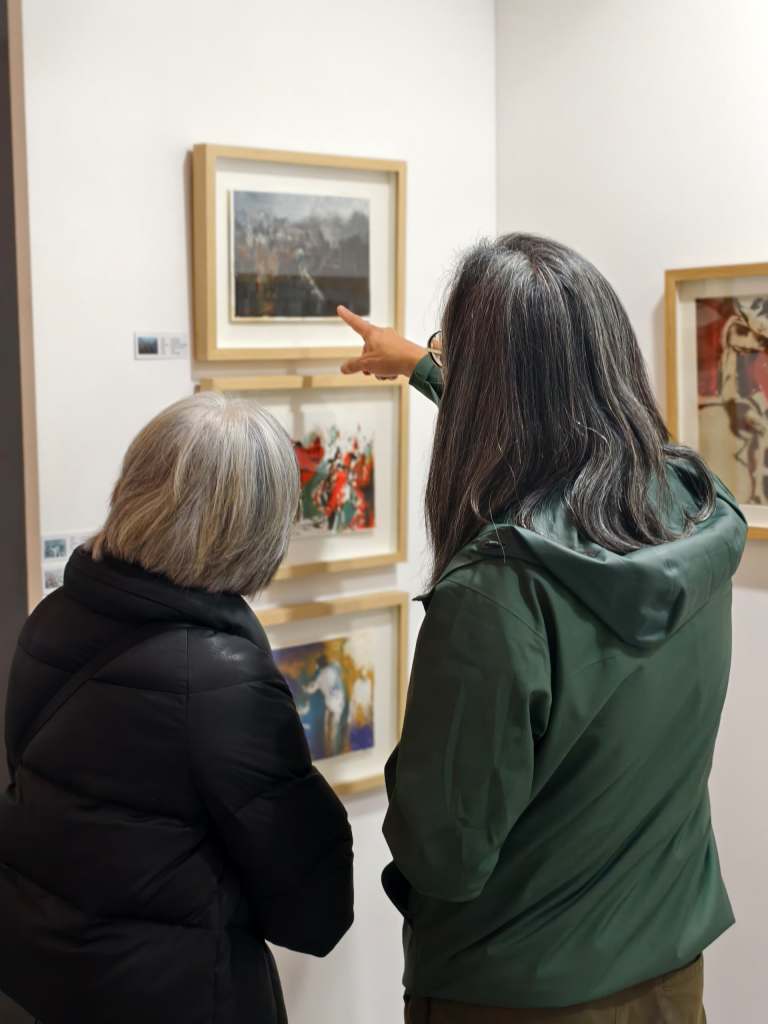
The following afternoon, the old man and his Mrs made their way to the sprawling White Bay Cruise Terminal in Rozelle. The Kohs had already arrived, accompanied by June, Anne’s curator, a strikingly modern and stylish woman who owned a prestigious gallery in Kuala Lumpur dedicated to promoting and selling contemporary art. Nestled within the vast complex, surrounded by the diverse works of 127 other artists exhibiting a wide spectrum of styles and varying degrees of skill, it came as no surprise that Anne Koh’s inaugural exhibition in Australia was proving to be a resounding success. Her art possessed a unique quality, an almost magical ability to evoke music through her paintings. The old man attempted to articulate his experience, describing it as a manifestation of synesthesia, where the artist seemingly invited him into a rich sensory dialogue. Vibrant brushstrokes appeared to echo the very rhythm and emotional resonance of music, effectively blurring the conventional boundaries between the visual and the auditory.
https://www.saatchiart.com/account/profile/2732735

 Urghhlings