I have viewed earthlings as urghhlings ever since the early 1970s when I read about people eating the raw brains of screaming monkeys. Two decades later when served live oysters in Adelaide, instead of being repulsed by eating a living thing while it was still alive, I discovered to my horror that I actually relished these living bivalves. The realisation that I am also an urghhling has muted my abhorrence of such despicable cruelty to living things.
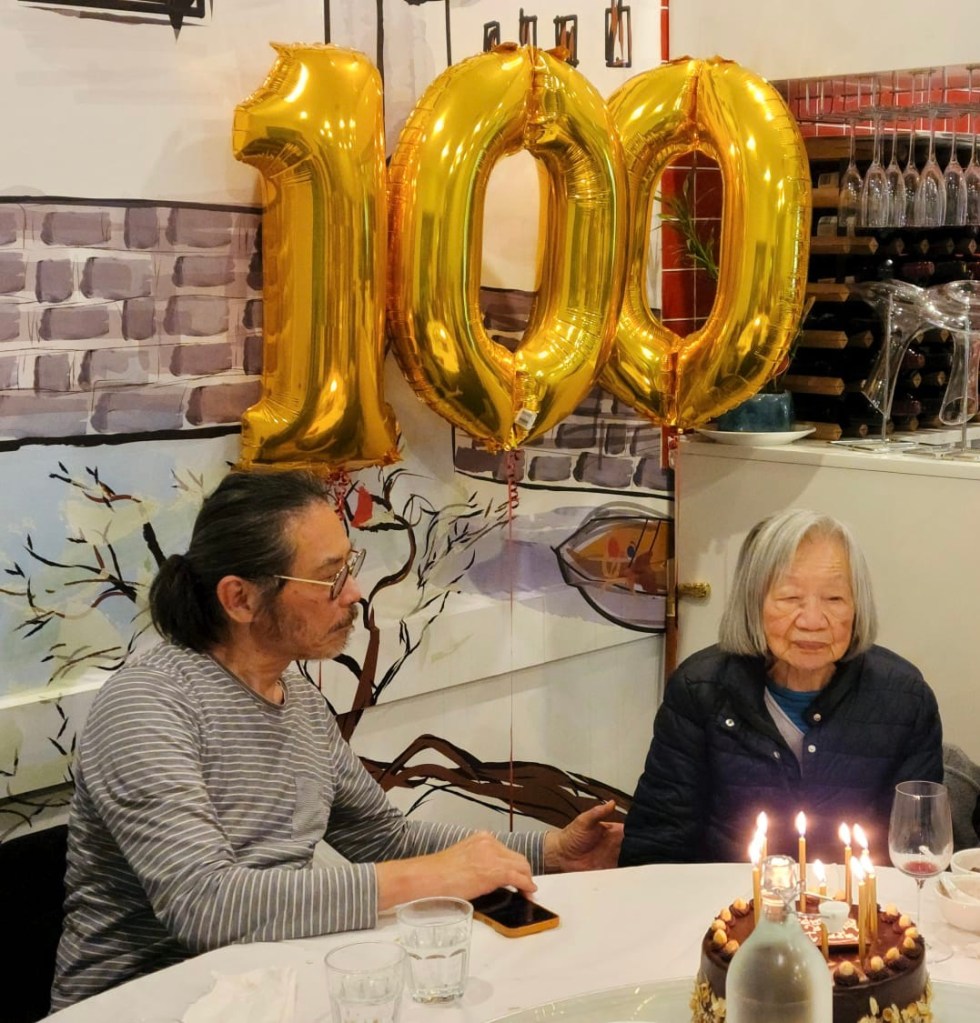
The old man’s mother reached her century a few days ago. In cricket parlance, a century is a batsman’s dream innings, a cause for a massive celebration. The exuberance of the crowd would make it a big occasion for the cricketer to soak in the adulation. A performance that is often characterised by a doggedness in determination, flamboyance and ruthlessness in stroke-making, and patience in execution. It felt not so long ago that the old man’s mother was a demure young woman. Shy and quiet, she attracted the young man who was self-employed as a laundryman next door to her uncle’s dhobi shop. He had rented half the shop next door from the tenant who was struggling to prop up their business selling lollies and preserved knick-knacks such as sugar-coated nutmeg, dried mango, dried plums and other fruit pickles. She was sent to spy on his business by her uncle who worried that his business was losing its clientele. She reported to her uncle that he had nothing to worry about; the majority of his business came from wealthy plantation owners who played an important role in the rubber and coconut output of the country whereas the skinny lanky man next door merely catered to the locals, mainly poor Malays. ‘She will be my wife one day,’ the neighbour said to himself the moment he laid his eyes on the nubile young woman who was still in her teens. Realising that her efforts at espionage had been uncovered, the demure woman offered a sugar-laden smile and coyly left her post. In her mind, she would have to find another hiding place the next day, surrendering to the notion that her task to spy on the young man would be a daily task, whether required or not by her uncle.
Much to the chagrin of the old man’s Mrs, she has always felt his filial piety took precedence over his love for her. “Of course not!” he cried out loudly in despair, but his pleading voice failed to convince The Mrs. A woman’s instinct is seldom wrong,” she said. The Mrs is a modern woman, being demure doesn’t cut it for her. The modern woman will speak her mind, and often, as loudly as possible, to win an argument. Her akimbo stance is a language that clearly tells the old man his Mrs is assertive and comfortable in her own skin, and will not take kindly to any egregious insults. Her extensive interests in politics, art, music, Chinese Classics, allow her to engage with anyone in deep conversation. When she turned 60, she decided it entitled her to speak her mind and not care about what people think of her. The modern woman will not hesitate to tell someone they are wrong and tear off their layers of pretence. But, for the old man’s mother, rarely was she heard and never did she hog any limelight in her heyday. Deep-rooted in the traditions of her parents who hailed from Ningbo, the old man’s mother perceived herself to be devoted, kind, and considerate. She could not see her imperfections, and therefore did not correct them – her doggedness about thrift and money matters, her ruthless accusations about her husband’s infidelity and her wasteful use of time as she patiently undertook her daily chores remain her major character flaws. Her name is Mei-Leh, in her dialect meaning ‘plum orchid’.
A party for her 100th birthday, not her 100th birthday party.
The old man was seated next to his mother at her 100th birthday party. In truth she has celebrated more than a hundred birthday parties. Being the matriarch of a big family, her birthday is celebrated at least twice a year, following the lunar calendar and the Western one. Her biggest pleasures in life is to be with her children and their off-springs. Any occasion that brings them together would please her no end. “She’s a party animal,” the old man told me. It soon became an appealing part of her nature, this love for parties invigorates her and perhaps is her elixir of life. “That’s her secret of longevity,” explained the old man, as he shoved a Hakka fishball from the steamboat pot that he had let cooled, into his mouth and merrily chomped at it. Her eyes closed tightly as she focused on chewing a sliver of beef, extricating every bit of taste from the crushed and thoroughly ground fibres and sinews of the meat. Even on her 100th year, she easily tires out some of her children. Just the other night, the old man had to bring his niece’s birthday to an abrupt end. It was a week night and he still had to rise early the next day to work. But, Mei-Leh was not pleased, to her it was only 10.15 pm as she patiently relished the last crumbs of the birthday cake – a chocolate mousse cake – scraping every bit of cream and dark chocolate from her plate with careful deliberation. Her mouth moved up and down slowly and deliberately as she ruminated on the crumbs, the rhythm synchronising her purplish lips and the surrounding wrinkly folds of skin deeply carved with creases as busy as lines of streets on a big city road map. Her edentulous mouth, nicely disguised with a full set of dentures, pursed occasionally but more often than not, it bobbed up and down in a fixed rhythm, quietly chewing her cake. It would be another fifteen minutes before she started sipping the tepid peppermint tea served by her grand-daughter before the birthday song was sung i.e. a good half-hour earlier. It would take three trips to the micro-wave oven to reheat her drink before she finally finished it. She examined the cup to satisfy herself that every last drop of it was consumed before she readied herself to leave. It would not be an Irish goodbye. As matriarch, she is accustomed to receive everyone’s undivided attention in the room, whenever she arrives or leaves a gathering. She lifted her left arm from her side without a word, but the old man understood clearly that she required him to help her up from her chair. He got her walking stick from the side of the wall and handed it to his mother. His duties, having being honed for many years, are perfectly understood and performed with utmost reverence and love. A request is rarely necessary, a command is superfluous. On their way home, the old man’s Mrs asked, “Why is it you can’t read my mind and know what I want?” The old man remained quiet all the way home. He refused to be baited into making a defence.
Great as heaven and earth are, people still find things with which to be dissatisfied.
Confucius
By the end of a meal, Mei-Leh is typically fatigued from chewing her food.
At 100, Mei-Leh is no longer demure. She decided she ought to free herself from the shackles of civility and be who she really is. When she turned 90, the old man took her aside and spoke at length about protecting her legacy and advised her to think of how she wanted to be remembered. “Don’t you want your future generations to know you as a loving and kind matriarch? A reasonable and happy person?” he asked. She didn’t answer in words that afternoon but in the following decade, she has answered him in spades by her actions. She didn’t care or isn’t capable of taking care of her legacy anymore. Ageing not only ravages the body but sinisterly, it ravages the mind too. We sympathise with someone who is physically impaired. We feel their pain when we see their missing limbs or cancerous wounds. Her damaged brain cells, invisible to us, are no less severe on her well-being yet we don’t acknowledge that advanced dementia is also a pitiful disease. Mei-Leh lives pretty much in the past; she speaks of names that the old man doesn’t recall and her failing memory has meant that he no longer can write her stories down with any conviction of accuracy. As if to prove he is right, those who aren’t demure do often demur. Mei-Leh had a big argument with one of her daughters this week causing her carer and companion to leave their house in tears. Despite her frailty and fainting spells, Mei-Leh refuses to be pacified, and maintains her rage at her daughter. “Wham!” she slammed at the dining table, treating her palms like a judge’s gavel. No further discussions will be entertained. The old man resigns himself to simply let her demur as loudly as she wants. After all, she is 100.
The economic hurricane season finally arrived. The old man had been fretting ever since JPMorgan’s CEO Jamie Dimon warned of the impending disaster back in June. So, ’tis the season not of raking in whilst the sun shines but of tightening the belt and battening down the hatches whilst the cold winds blast the landscape. It didn’t seem so long ago that the sun was smiling at the old man. Business was brisk during the Covid lockdowns. Free money was being printed and handed out by governments all over the world. His business was going great guns and it felt the sun would never set, the sky would never turn dark, and the autumn leaves would not wither away. There was incessant chatter about selling his business whilst he was enjoying the busyness of business. He had learned his mistake from not selling his business just before the 2008 GFC hit. Buy low and sell high was always his mantra. His business was at its apogee – never before had it been easier to run – and all the vital signs showed a healthy business that was ripe for sale. But, in a blink of an eye, all the goodness evaporated. Now, the busyness of business was draining his vitality – the old man looked older and exhausted. The daily stretches from the eight brocades of Qigong no longer helped his posture. He looked hunched and appeared decidedly shorter, diminished by the passing of time. His gait, once as sure as a mountain goat’s, was unsteady and unsure. The years of stubbornly believing hair shampoo was a waste of money had hastened the damage to his once luscious locks of hair. Dry, unwashed and tangled, they should not belong to him. He, a businessman of some repute in his younger days, ought to portray or project a better image. His shadow seemed embarrassed and wayward.
Against the vast grey sky, the absence of golden sunlight and noisy birds cast a deathly pale over the majestic gum trees in the distance. Their leaves looked lifeless, the once shiny and vibrant green tops replaced by a dark greyish hue where even the gentle breeze that fanned the trees with cool soothing air had forsaken the land. The old man hurried back to his house, fretting at the sky for spitting at him. “The rain will be upon us again,” he said to his dog, knotting his brows with sadness. It had been raining all week as if to prove that the winter wasn’t over. The parks were soggy in most parts. His dog didn’t care but the old man tried in vain to keep his old pair of Skechers dry. He bought them some five years ago, just in time for a long European holiday that required many long walks. Lightweight and fashionable, they were his favourite shoes. “They just need a good clean,” he said to me, defending the notion that he did not need a new pair. Whilst avoiding a pile of dog shit, he inadvertently stepped into a muddy patch that was somewhat concealed by a thick growth of paspalum. “Bastard!” he cursed at the owner of the dog who didn’t ‘do the right thing’ and left the shit on the grass. The old man too had been guilty of not ‘doing the right thing’ but “it’s only when the poo is soft and runny,” he argued for his innocence.
As soon as he walked into his kitchen, he put the kettle on and waited for the water to boil. ‘Deborah’s Theme’ was streaming on the TV. He had been playing it over and over again in memory of his friend. Deborah, the eldest daughter of the owner of his favourite restaurant, died that morning. She succumbed to lung cancer after a four-month battle. “Life sucks,” he said, pointing out to me that she wasn’t ever a smoker. The room was cold. The old man realised his hands were icy cold too. The drawback of a central heating system was fully appreciated after his wife was given a Oodie for her birthday last month. Her Oodie kept her warm whilst he complained of freezing fingers. She no longer wanted the heater to be on and since the need to please her was greater than his need to keep warm, he told his fingers to get used to the new norm. The Oodie was invented by a young South Australian, Davie Fogarty, who simply made an oversized blanket to wear like a hoodie. We have all done that in our student days, right? Just ‘wear’ our blanket as we studied at our desk till the wee hours of the night. But, none of us took the next step and sewed a couple of sleeves and a hood to make our blanket into a garment. We would have been millionaires many times over, if we did! The kettle’s high-pitched whistling brought the old man back to the kitchen. He decided on E Mei green tea. Someone had given them that many many years ago. ‘First in, last out’ seemed to be the usual practice in their larder. As shopkeepers for many years, the couple religiously rotated stock on their shelves but at home, the discipline was seldom practised. The old man blamed it on the tortuous demands of a busy business. “The busyness of business sucked us dry,” he said.
The old man sat at his desk, decluttering his mind. Unlike his handphone which could delete messages and images in a split of a second, his mind seemed to take an eternity to banish bad thoughts and erase bad memories. His hands were still cold, despite the piping tea steeping in last Christmas’ present from his son’s girlfriend, a black cast iron tea pot, a replica of the one he saw in Taiwan’s national museum. His favourite teapot remained proudly displayed on a mantelpiece, an official replica of a Nambu-Tekki ironware from Iwate Prefecture. The technique used in the mid-17th century involved pouring molten iron into a sand mould filled with dots. The tiny knobbed pattern created from the dots somehow pleased him very much.
The dark rain clouds arrived as promised by the weather bureau. They pelted angry sheets of rain at the faded grey colorbond roof of his house, creating a racket so loud it drowned out ‘Deborah’s Theme’. The old man sat frozen like a scarecrow in an abandoned field. Old, irrelevant and forgotten. His icy-cold hands hung in the air inches above his laptop. He felt lost, not a word could be formed in his mind for his fingers to type. Hunched and looking haggard, he lost his shadow when the bulb in the room blew and left the room dim and grey. He stared at his laptop but the words would not come. Suddenly, his face contorted into a gnarled spasm of pain and bitterness. He pressed both shoulder blades inwards and then arched his chest closer to his lap. The masochist in him relished the sound of crepitus, unaware that cracking bones were another sign of ageing.
The awful news of his best friend’s wife had just reached him minutes earlier when he was sipping green tea whilst checking WhatsApp messages. The old man sat in the room that had grown dark once the computer had gone into screensaver mode. Like a stunned kangaroo caught by a bright light in the dark, he sat immobile as his past gathered speed, rewound and replayed in his mind, images and timelines melded haphazardly. Life was tough for everyone, but always fell short, both in time and in expectations. Caught up in the busyness of his business, he was feeling shortchanged in the busyness of life. He had only met her twice, once when she came to visit Adelaide with her husband and when he reciprocated with a visit to their city. She was much younger and much more caring to the needy, volunteering her time and energy in her church to help the poor in her community. Ravaged by cancer for the past twelve months, she gave up her fight in the afternoon, surrounded by her two sons and husband. “She’s gone. She’s gone,” cried the old man. His lips trembled involuntarily while tears formed into salty beads and stung his eyes in the process. ‘We have to go on living,’ he wrote to his friend. ‘Be strong.’
The dead will always be dead, but we have to go on living.
Haruki Murakami
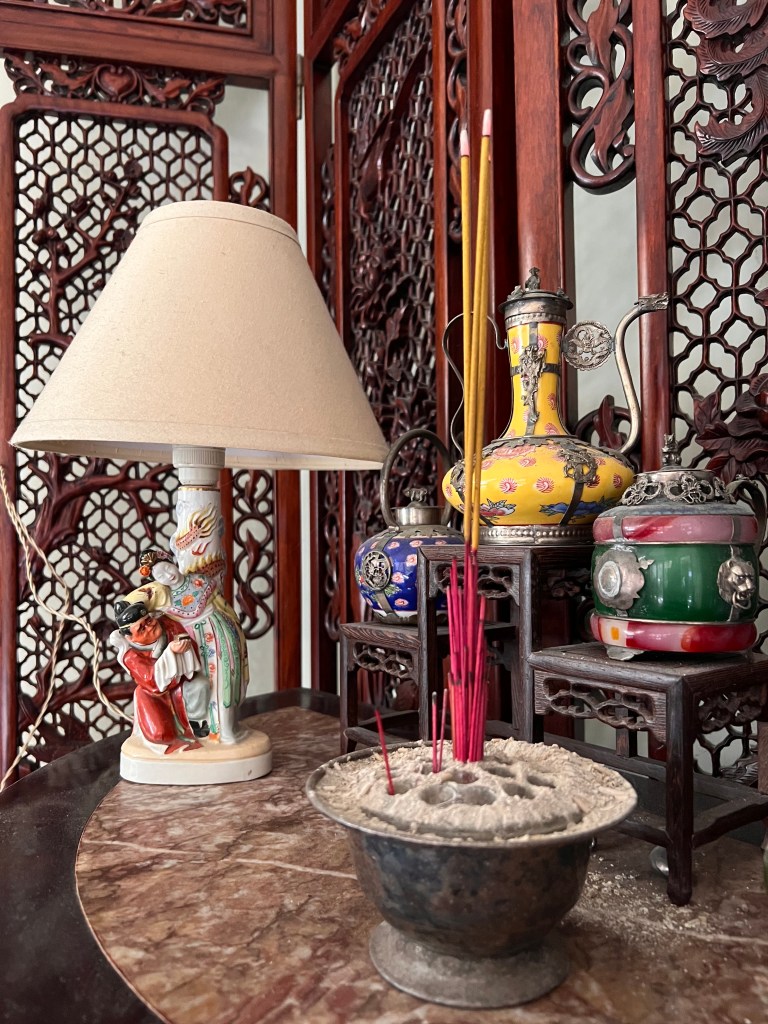
The old man sought solace the next morning and chose a page from The Analects. “If the superior man,” said he, “abstains for three years (to mourn the loss of a loved one), those observances will be quite lost. If for three years he abstains from music, music will be ruined.” The old man felt like Confucius was talking to him. We have to go on living. He lit three joss sticks for his friend’s wife and also for Deborah. Placing both hands together with fingers pointing to the sky, he stood upright and remained very still. The scent of the joss comforted him as he said goodbye to the recently departed. May they rest in eternal peace, he said softly.
The next member to be inducted into the Urghhling Marsh Brotherhood is a rather mysterious fellow. He is neither tall nor short, fair nor swarthy. He shared a photo of him with his dad, in front of his gleaming white car with massive 19 inch mag wheels. His stance reminded me of Clint Eastwood in a spaghetti Western, left hand poised to draw in a duel, the only items absent were a pistol and a hip holster. He is strong but not big, fit but not muscular. For over a month, he has been telling me his stories, yet he has not revealed all that I want to know. He has given me a sketch of himself but the sketch is merely an outline without a glimpse of any bone or innards. His life story is one that is truly blessed without the usual bitterness and awful struggles. He has thrown some meat and fat my way, but there is none of the tears and blood that will make a reader cry. He told me about his grandparents and parents but there is no hint of their suffering, struggles or toil. I learned nothing about their idiosyncrasies, philosophies and customs. I wanted to learn about their adventures and feel the excitement about their early pioneering days, the challenges they faced, their brushes with the Japanese occupiers during the war or how they started their family business. How did they acquire and amass their seemingly substantial wealth? Where did they come from? Were they imperial officials from a dynasty? How did they end up in Malaya? Answers that will make their characters come alive. I needed some scandals to spice up his story. But, what I encountered was a hard shell that would not open up. Alas, a shell, he shall be.
好事不出门,恶事传千里。News of good behavior never gets past the door, but a scandal is heard of a thousand li away.
Shi Naian, Shuihu zhuan, Chapter 24
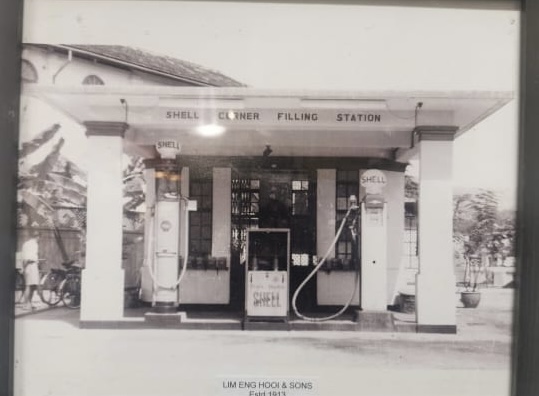
The new inductee to our brotherhood is Lim Hock Cheng. In relating Hock Cheng to The Water Margin heroes, I could think of no one more suitable than chief jailer, Superintendent Dai Zong. It is not that Hock Cheng was a sheriff or worked as a cop or was in charge of a jail. I thought of Dai Zong because he was also known as the ‘Divine Traveller’. All Dai Zong had to do was wear some cloth puttees bearing the images of a divine horse on his legs and he could run two hundred and seventy 里 li or one hundred and thirty five kilometres in a day. Dai Zong first appeared in the Shuihu zhuan novel after Song Jiang, the eventual leader of Liangshan Marsh had narrowly escaped becoming meat for the buns being prepared in the inn where he was drugged. Upon arriving in Jiangzhou to serve a long sentence for killing Yan Poxi, Song Jiang arranged to meet his jailer, Dai Zong. The two of them got on so well that Song Jiang was allowed total freedom to leave the prison whenever he wished. Hock Cheng does not have special puttees to enable him to travel fast like the ‘Divine Traveller’, but he has an energy source that is superior. He is a proud owner of a Shell petrol station. Yes, his story shall be about Shell.
Hock Cheng’s earliest memory of his childhood was the time he spent in a car with his paternal grandfather. “Many people will think it is impossible for a three-year-old to remember so vividly,” he said. “But, honestly, I still remember it as clear as day.” Grandpa put me on his lap as he drove his black car that day.” “I held the steering wheel of his Morris as he turned it left and right.” Not long after that day, his grandfather fell ill and passed away. It was a brief moment shared with the patriarch of the family but Hock Cheng still cherishes the memory today. He is the youngest of six children in his family. Being a son and the youngest, he was the father’s favourite.
Unlike many in school, Hock Cheng had it easy. His school uniform was always sparkling white, starched and ironed to perfection. He was never late for school. Well-groomed and well-behaved, he never got into trouble with the teachers. Detention classes were alien to him and the cane was only reserved for other students, never him. “He paid for his canteen meals without any hesitation, always choosing whichever food he fancied,” Blue Eyes said. When he was nine years old, a sister drowned. She suffered from epilepsy. It was on a Sunday. She was cleaning the fish pond in their garden when she had one of her ‘attacks’ and fell head first into the water. No one saw her unconscious in the pond till it was too late. For many months, the family mourned her loss and the inconsolable father was too distraught to go to work.
Hock Cheng attended St. Xavier’s Branch School in Pulau Tikus. “Life was normal,” he said. But, his normal was, of course, very good for many others who had less normal lives. He was a member of the fencing club. Fencing gear was well beyond the budget of the normal school kids. The Made-in-England sabre and sabre gloves, long trousers, jacket, underarm protector were all compulsory items and therefore the sport was exclusive to the rich. He had a motorcycle when we were still proudly showing off our bicycles. He did bodybuilding with proper equipment whereas Wu Yong also pumped iron, and he literally meant iron, i.e. the discarded rusty charcoal irons used in his father’s dhoby shop. Then, Bruce Lee and his style of fighting was a fad. Whilst most of us drooled at his martial arts and pretended to be the ‘Big Boss’, Hock Cheng actually enrolled in a Shaolin (kung-fu) school. Today, he still keeps fit with a rigorous regime in a local gym. He still applies the remedial massage techniques acquired from his Shaolin master today, helping to treat friends and family who have injuries.
After Form 5, he joined the Youth Park Leadership course. That was where he met his future wife. When his grandfather passed away in 1962, his father took over as the second generation Shell dealer. Hock Cheng began to take an interest in the family business. He worked as a pump attendant whilst he was still attending school in SXI. He started from the bottom and worked his way up the ranks, from the washing boy, to greaser to foreman before becoming the clerk at the station. His father retired in 2001, enabling Hock Cheng to become the third generation Shell dealer. A few years later, his wife joined him in running the business. One of Hock Cheng’s biggest achievements was to win the Shell V-Power Challenge in the country and was a Gold Retailer twice. These awards also meant free holidays to England, Italy and Switzerland. When the family achieved their 100 Years with Shell, they were rewarded with a much bigger operation in Bukit Mertajam. It was really a big occasion, even the then Penang Chief Minister, Lim Guan Eng, attended the event.
Lim Eng Hooi Shell Station 1913 at the corner of Penang Road and Northam Road.
The original petrol station was situated adjacent to the cemetery where Francis Light was buried. He was the founder of the British settlement in Penang, and not the founder of Penang like how we were taught in school. The Old Protestant Cemetery sits on a small patch of ground on Northam Road. It was just a stone’s throw from the shop house where Wu Yong lived. It was the go-to place for the young boy whenever he needed to find a replacement champion for his fighting spiders. He kept one or two at a time in separate lolly tins. Like gladiators, his champions invariably suffered injuries and damaged egos or irretrievable confidence. It never dawned on the young boy that, imprisoned in tins, despite a healthy diet of freshly caught flies, any prized fighter would eventually weaken. Nestled in the cool shade provided by a grand canopy of frangipani trees, shiny metallic blue-green and black warrior spiders, Thiania bhamoensis, made their homes amongst the thick long green leaves of agapanthus plants. “It’s very easy to find them,” Wu Yong said. “I just looked for leaves that are stuck together by tell-tale signs of white silky web,” he added. Apart from their fighting qualities, Wu Yong selected his spiders based on looks, the more iridescent the green or blue, the more he desired them. Wu Yong was surprised that Hock Cheng’s family owned the petrol station. He used to gaze at the Shell sign from his upstairs bedroom and wondered at why the afternoon heat caused the shimmering effect on the road as he observed the attendants attending to customers at the bowser.
Back in those days, Farquhar Street finished at Leith Street. The existing stretch of Farquhar Street between Leith Street and Northam Road was an unused field for the neighbourhood kids to play their games of marbles, tops, kites, masak-masak cooking or hopscotch depending on the season. During wet weather, the field would disappear leaving a thin haphazard trail of lalang grass, sand and stones amidst a body of muddy water and waving tips of lalang grass that resembled a padi field. The stench of mud filled the air and any open wound, no matter how minor, turned pestiferous. It was uncommon for the kids not to have pus on their limbs. The seventh month, the month of the hungry ghosts, was especially bad. Wu Yong called it his ‘pus season’, bringing a paroxysm of cuts and bruises without fail. To reach his school, Wu Yong the boy had to walk southwards on that tricky path, always minding the treacherous ground that might swallow up his white school shoes.
Hock Cheng remains thankful for what his grandfather had provided them with. It is forgotten how he secured the deal with Shell in 1913 or how he survived the Japanese occupation of Penang during the war in the early to mid 40s.
“All he told me was they moved to Irving Road for refuge and ate tapioca,” Hock Cheng said.
His petrol station closed for a few years to avoid supplying fuel to the invaders. After the Occupation was over, Grandpa Lim almost lost his station. He was deemed to have forfeited his right to continue as a Shell operator. It took his agility as a fluent speaker to wrest his business back from his competitor. From the will that he wrote, Hock Cheng said his grandpa had beautiful writing, another indication that he was a learned man. Very few men at the turn of the 20th century had any education in Malaya, so this was a strong hint that he hailed from a well-to-do background.
“My mother liked him,” Hock Cheng said.
He could tell from the way she talked highly of her father-in-law. He was strict but fair to all his children. Grandpa Lim had a good command of English and was a professional auctioneer besides running his petrol station business. Hock Cheng honours his grandpa’s memory by driving his fifteen-month-old grandson around the block. His greatest joy will be for his grandson to remember him the way he remembers his grandfather, he, holding the steering wheel with his tiny hands whilst on the old man’s lap. His grandma also came from a wealthy family. They owned five rows of houses and a mansion in Argyll Road. She inherited one of the houses when her father passed away. “There is a photo of her in the Penang Peranakan Mansion.” Her name is Tan Chooi Chit.
Grandpa Lim in 1916.Grandma Tan
Hock Cheng’s mother was Siamese. She was adopted by the second wife of her adoptive father. The second wife was also Siamese. His mother’s biological parents were poor. She, being the eldest, was given up for adoption. Although illiterate, she was a smart person. She knew how to cook a dish simply by tasting it. Her taste buds were able to discern accurately all the ingredients and from the texture of the food, she could figure out how it was cooked.
“Her chicken pie was to die for, the puffy pastry was simply divine,” said Hock Cheng.
She worked long hours at home, taking care of the family. One day, the couple had a big fight. The husband discovered that his wife had been secretly pawning away her gold jewellery. The pawnshop owner had asked him if he wanted to redeem all the gold she had pawned. Hock Cheng said his mother did it to support his eldest brother who was studying in America. To supplement their income, she provided food and lodgings for some Thai students and sold jelly and cakes during festivities. Her secret condiments made her curry powder famous in as far away places as Genting Highlands and Pahang, where the late Sultan was especially fond of them.
Hock Cheng’s father was born in 1927. He was the second of three brothers and a sister. His mother died at age 28 whilst giving birth to his younger brother. He didn’t get the chance to know his mother.
“Dad’s stepmother was a terror,” Hock Cheng said. “Dad loved photography,” he added, showing off a thick collection of photo albums passed down by him.
When Grandpa Lim passed away, the three brothers had to take over the running of the petrol station.
“Dad was the most artistic and loved doing the displays and merchandising,” Hock Cheng said.
He enjoyed cutting words out of paper and sticking them to sheets of timber. A big banner that said SERVICE IS OUR BUSINESS hung proudly from a display window. They won many display competitions amongst the Shell operators. Over the years, the brothers had different temperaments and conflicting business ideas, one less entrepreneurial, the other less modern. Eventually, Hock Cheng’s father bought out the other two.
“Dad had a Chinaman mentality, ‘enough is good enough’,” he said.
Hock Cheng still thinks fondly of his young days when his father would drive the whole family to Swatow Lane for ice-kachang every Sunday. His father is 96 today and lives in Bangkok with a daughter.
Hock Cheng’s parents celebrating their 50th wedding anniversary. They married young and did not have a formal wedding.
Hock Cheng and his wife of 40 years have two children, both born in Malaysia. The daughter has a double degree in Computing Science and Accounting and is head of Accounting at a big firm in KL. The younger one worked in Dell for a few years before joining the Shell programme. There is an old Chinese saying that a business will not pass to the third generation, but Hock Cheng is proud that his son is today running the family business in its fourth generation.
Wu Yong welcomed Hock Cheng to their Marsh Brotherhood. Recruiting had been slow-going. His original plan was to have a hundred and eight ‘heroes’ before the year is out. There are many brothers doing great things and there are many more who continue to do good work, helping the disadvantaged in their community quietly and without fuss. To those who do not wish to reveal themselves, we say Thank you!
好人相逢,恶人远离。When good folk meet, evil men keep their distance.
The old man’s eyes looked sad. Oftentimes, he wore an expressionless face with shifty and slanty eyes that made him unattractive. It could be said his voice was monotonous and stodgy. The content of his conversation was usually out of topic or delivered late, after others had switched to other matters of interest. It hinted of a rather slow thinker, perhaps. I have observed him for a long time and my conclusion, made recently, was that he was a gangly awkward fellow who was prone to trip himself with his own foot. At the optometrist a few days ago, he found his hooded eyes hugely embarrassing when the young and gorgeous-looking woman had to lift and spread apart the excess skin from above and below his eyes in order to examine them. The angry tips of his eyebrows were turning white and faint, as if they were being slowly erased by time. His hair, once thick and wiry, had turned hoary and dry. They hung well past his shoulders, somewhat accentuated with faint wavy curls. The receding hairline used to worry him but with each passing year, there was growing acceptance that his ageing process could no longer be slowed, despite cutting-edge science that promises ageing can be reversed. Looking at the creases on his forehead triggered in my mind a word association with an iron. There had to be a way of smoothing them, surely.
入门休问荣枯事,观着容颜便得知。
One look at a man’s face tells you whether he’s prospering or suffering
Shi Naian, Shuihu Zhuan, Chapter 24
He told me about an incident he experienced many weeks ago. The winter had been long and severe and the sunbeams had failed to break through the clouds for days. But, that day the sun decided to work a bit harder and chased away the freezing winds from the south. The azure sky was still and constant, as the rain clouds floated away like butterflies in the sky. He was walking his dog in a field adjacent to a reserve when he came across a family of noisy parakeets. On that beautiful moment, he closed his eyes and listened to the wind blow. It was just a gentle whisper which did not have the energy to free any hair from the loosely tied bun on his head. Many minutes passed before his dog returned to nudge at his legs after a game of chasey with some bigger dogs. He saw a strange halation of light at the edge of the field furthest from him when he opened his eyes. In his left eye, a short burst of floaters that behaved like bubbles released from a straw clouded his vision briefly. He quickly dismissed it from his mind after the sharp reminder seared his head warning him that such an occurrence warranted an urgent call to his eye specialist. The Greek doctor whose rather long name was impossible to remember let alone spell had warned the old man that sudden floaters in his left eye could indicate that the retinal tear had worsened. He hugged his dog for instant comfort and decided to inspect what had caused the halation he saw earlier.
At the edge of the reserve, the old man came across a patch of ground that was in dire need of attention by the park ranger. Unkempt and thick, the long grass there seemed to summon him to draw closer. He did not let his guard down even though he knew there would be no brown snakes loitering in the middle of winter. He pretended to scare his dog with his sibilant whispers.
“Murray, it’sssss not s-s-s-ssssafe here. Watch out for s-s-s-ssssnakessss….S-s-s-sshhhh, can you hear the hisssss? Ssh-shh-ss-s-shall you check that grass-s-s-s-sy patch there?” he said softly.
The good thing about his dog was he’s not afraid of pretend-snakes. The other good thing about his dog was he would never treat the old man like used tissue paper. “The more you know humans, the more you love dogs,” he said to me, as if he had just invented the phrase.
Rain or shine, night or day, hungry or full, his dog loved him. A love that was as unconditional as the story of the Corinthians in the good book.
The dog barked enthusiastically like he had found treasure. The centre of his attention was a round dark hole in the ground. Just like his dog, the old man was on all fours as he edged his body nearer the hole. It was as big as a manhole except it was missing its round cover. Its verge had been baked hard over the years, a mixture of mud, cement and stones. A millipede sprung shut and pretended to be dead in one of the cracks as four paws rushed past it. The old man pushed his glasses firmly onto the bridge of his nose as he peered into the dark cavity.
“Hello-o-o-o, hello-o-o, hello-o-o” he said loudly, enjoying the reply of a distant echo.
He blinked a few times to adjust his eyes to the darkness down there but he could not find the bottom. The smell of faint putrescence reminded the old man of his aquarium when it was overdue of a water change. Maybe there’s rotten vegetation down there; he hoped it wasn’t the smell of an unfortunate animal that had fallen in and made it its own burial ground. He covered his nose with a handkerchief that was scented with cheap perfume and quickly distanced himself from the odoriferous place.
The old man had many fears – of heights and of the sea. Why the sea? Simply because, being a poor swimmer, his biggest phobia was to die like Jack, in The Titanic. For years and years, he refused to entertain the idea of going on a cruise until the year when he won a free holiday to Alaska. He never liked it but his excuse was that he missed out on watching the FIFA Wold Cup that year. The Americans did not care to screen any live matches on the boat.
It caused him great anxiety even to drive up Greenhill Road to the charming hill towns nestled in places like Summertown, Piccadilly and Hahndorf. Strangely, he loved to use the enduring nature of the sea and the hills and their predictability when he was a young teenage boy writing love letters to his girlfriend(s).
My darling, I miss you so much.
The autumn leaves may be dying outside but in my heart, my love for you is an eternal spring. The hills are alive with the sound of your sweet voice. I shall hold you close, and never ever let you go. You do know, don’t you, that you will forever melt my heart, my darling and I will be forever yours. My love for you is like the sea, always returning to the shore. It is impossible, my darling, to stop thinking of you. You’re the pearl of my life and I am your oyster, my darling, I will keep you safe in my arms, like the oyster’s shell does for its pearl. Darling, you’re the whole world to me.
Wu Yonggang
What he did not realise was it was already sung many years earlier by Perry Como.
Can the ocean keep from rushin’ to the shore?
It’s just impossible
If I had you, could I ever want for more?
It’s just impossible
And tomorrow
Should ya ask me for the world
Somehow I’d get it
I would sell my very soul and not regret it
For to live without your love
It’s just impossible
Perry Como
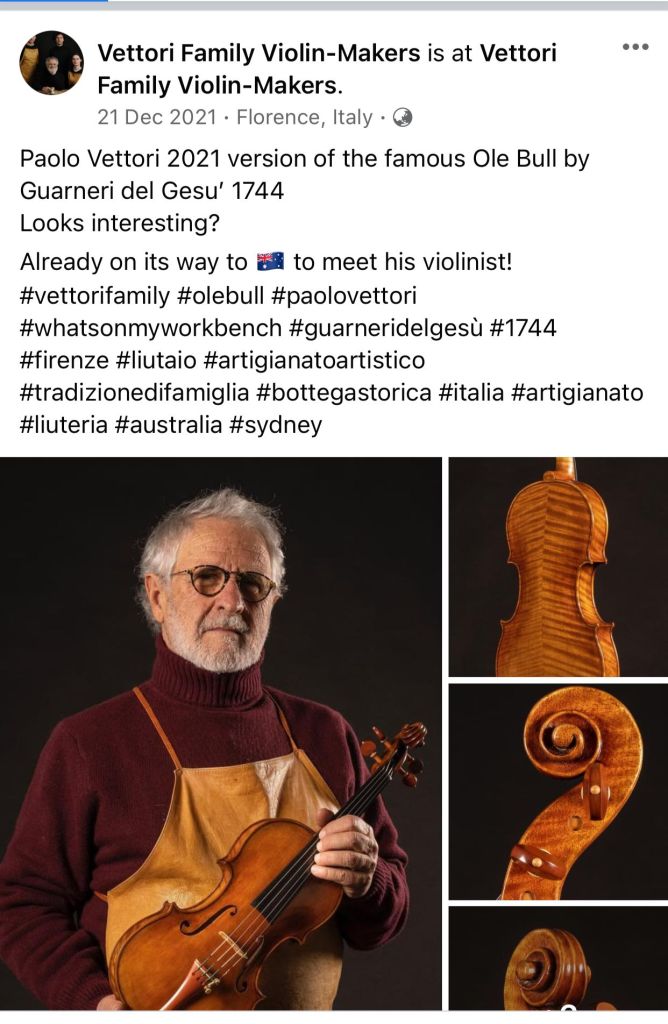
The old man had not had his eyes checked during the two and a half years of the pandemic. He could tell he needed new glasses once the black notes on his music sheets started moving like active tadpoles. Not long ago, he bought a beautiful violin, one that was made specially for him in Florence. As if he deserved better, he also bought a fine well-balanced violin bow that weighed 60 grams from Pierre Guillaume, a famous modern maker. To complete him as a serious player, his youngest son gave him a highly desirable case, which he nicknamed ‘Storm Trooper’, the reason would be quite obvious once you see it. I did not have the heart to tell the old man that to be a serious player, it needed much more than those things he showed me. He seemed to have drifted somewhere far away in his mind, so I dragged him back with a loud voice.
“Come, play me something nice,” I said.
He walked closer to where I was sitting. I could smell him; he had not changed his clothes for two weeks, I could tell. They were the same tan-coloured trousers, the same black turtle-necked long-sleeved skivvy, the same black thick jacket from Target that was rain-soaked days earlier. He picked up his violin, showing pure love for it with his careful tender touch, and took an eternity to tune it.
“Practice. Practice makes perfect,” I said, scratching my left ear with my forefinger, after I heard his Ave Maria, Meditation by Bach. He was tuning his violin again, not because any of the pegs had slipped, but the sounds were a good filler for the awkward silence.
After he had re-tuned his violin back to its previous pitch, he confessed he had been practising the piece for many months. I refrained from uttering a single word to hide my disappointment in his slow progress.
After a long pause, I said, “Perfect practice makes perfect.”
He winced, betraying his expressionless face.
Paolo Vettori, maker of the old man’s violin.Take a bow, Pierre Guillaume!The old man’s violin case, an Accord.
The young and gorgeous-looking optometrist in Norwood had a huge dazzling diamond ring on her wedding ring finger. Not many professions these days allow such close proximity between two consenting adults in a small and dark room, the old man thought to himself. She had a very attractive face and a rather alluring voice. Her long black hair had an extra shine and it smelled good, of Argan oil, the old man decided. But, she kept the old man busy, and diverted his eyes to the machine instead. Unkindly, she kept asking him to read letters and numbers so distant they seemed to be on another planet. “Which is clearer, this or this?” she kept asking him different combinations. The more she showed him, the more confused he became and the more muddled his answers were. After scanning his eyes for cataracts and glaucoma, she gave out a nervous sigh.
“Oooh, hmmmm.”
“Is there a problem?” the old man asked.
“How long ago did you say you had the retinal tear?”
“Oh, maybe eight to ten years ago.”
“I will make an appointment for you to see the eye specialist in North Adelaide. You must call him on Monday,” she said.
Monday arrived but the old man promptly forgot to call his eye doctor. No matter, he got a call from the eye clinic instead.
“Please remember to arrive early; your appointment is at 11.30 today,” a woman said over the phone.
“What, why? Mondays are very busy days for me,” the old man said, as he tried to wriggle out of the appointment.
“The doctor has very kindly squeezed you in today despite the seventy consults he already has,” the voice on the phone sounded firm and final.
“Ok, ok. How long will it take? Can I drive back within the hour?”
“No sir. You will need someone to drive you home. He has allowed time to carry out the operation today.”
“Operation?! What operation?” “I am not going to agree to an operation! I can see!” the old man protested anxiously.
His Mrs rushed in from some corner, hitherto unnoticed. “You scaredy-cat! I will be very very angry at you if you cancel the operation!”
“Angry at me? These are my eyes!” the old man said with disdain.
North Adelaide was just a twenty minute car ride away on a late Monday morning. The eye specialist was dressed quite sloppily. “Successful people need not dress up for anyone, it seems these days,” the old man said to his wife later on their way home. The eye doctor only made his appearance towards the last minutes of the consultation of which he would have claimed full professional fees for all the work carried out by his nurses. In his notes, much of it griffonage, he wrote that the old man had a ‘very impressive” ERM in his left eye and despite that, was maintaining excellent vision with no symptoms. In layman terms, ‘impressive’ meant significant. ERM was shorthand for epiretinal membrane. The wrinkling of his retina was so severe it would normally have meant a seriously blurred and distorted vision.
“His HST is fully operculated,” the doctor’s notes read, meaning the horseshoe tear is advanced to the state where the separated flap of the retinal surface is suspended but the body appeared to have healed itself such that it seemed unlikely that it would allow fluid to seep behind the retina. The doctor was amazed by the incredible image on his screen. He wore a bemused look and with an air of incredibility in his voice said, “I have never seen such an astonishing recovery! You should be blind!” Very very few cases escape without any issues given such significant distortions and unevenness of the ERM.
“Phew, so few?” the old man said whilst thanking the gods for his good luck.
“I could have told him it was due to the NAD+ I have been taking for the past three years,” the old man said.
“May I have a word with you about Edward?” Blue Eyes pulled Wu Yong away from his work the other day. Blue Eyes, ever the cautious one, declined to meet with Wu Yong even from a safe distance of a telephone call. He tested positive for Covid that morning and had already informed everyone he wasn’t attending the weekend’s big party. “Why don’t you write to me then,” Wu Yong texted after Blue Eyes did not pick up his phone all morning.
Blue Eyes, who wore a rather dejected look, was upset to miss RU9 that day, their ninth school reunion of Lasaints58 brothers. The LaSaints58 is a group of La Salle School and St Xavier’s Institution students born in 1958. While it is true that some were able to keep in touch with one another since leaving school and occasionally meet up in small groups, by and large, the majority were dispersed far and wide to all corners of the world after their Form 5 or Form 6. It took many decades before many were able to seek out long-lost childhood buddies. Their first reunion, RU1, was held in 2008, i.e. some thirty three years after they left school. The more recent pre-pandemic RU’s attracted about two hundred ex-students including girls from sixth form.
This year’s reunion was held after an absence of two years due to the disruptions from fighting the Covid virus. RU9 was held on 23 July 2022 in their hometown of Penang. The organisers were pleased with a turnout of some one hundred and thirty members including fourteen ex-teachers, despite the worries about Omicron variants and hassles in arranging flights and visas. A major event for RU9 was an exhibition by Malaysian artist, Anne Koh.
Anne Koh with a few Urghhling Marsh brothers at the RU9 presentation.
The KL-based artist whose paintings of orchestras and musicians are highly sought after by collectors presented her series of portraits of some LaSaints58 members whose stories will appear in a book titled ‘Urghhlings Vol 3 – Brothers of The Urghhlings Marsh’. The author’s name is Wu Yong. The theme of the stories is borrowed from Shii Naian’s classic novel Shuihuzhuan, The Water Margin – Outlaws of the Marsh. Blue Eyes and Wu Yong were the first two LaSaints58 guys to join the brotherhood of the Urghhlings Marsh. To call it a brotherhood is rather apt since they have all been calling one another ‘brothers’ since their first year of school. The Christian Brothers taught them to be brotherly to one another and instilled in them a sense of platonic love and brotherly care in school.
Blue Eyes wanted to introduce a close friend of his to the gang of brothers. “All men are brothers, is that not so?” Blue Eyes asked. Wu Yong recognised that although the proposed inductee was not a member of Lasaints58, he could not dispute the simple statement.
All men are brothers.
Shi Naian
Blue Eyes wanted to share a story about the journey of a mate who tore himself away from the grievances of a troubled early life in a broken family and in his journey to find a clear path for himself, encountered many battles with the Devil himself. Will he be triumphant ultimately or will he perish in unconsolable anguish?
Blue Eyes’ mate was from ACS (Anglo Chinese School). Edward Goh was his name. Edward was a smart chap from a well-to-do family. His dad passed away while he was in Secondary School. His mother met another man and remarried soon after. Edward couldn’t fit in with his stepdad. To further his tertiary education, he would have had to continue living with his family which included a brother and a sister and a half brother. Life was unbearable with his stepdad, so he opted to get the National Service over and done with. That way, he figured he had two years to reassess his situation whilst in camp. A year in, he enrolled into the Air Engineering Training Institute.
May 1977.
A bunch of the engineering trainees decided to stay back for a weekend to gamble and that was when Blue Eyes first met Edward, over a poker game. He was a year their junior but somehow the two chaps clicked from that moment on.
Months went by and life was good for the larrikins. A year later Edward changed his last name to Tay by deed poll.
“Why?” Blue Eyes asked.
“I do not want my family to find me,” Edward replied simply.
He was a true friend. He would always have your back no matter right or wrong. A very generous bloke, he gave whatever he had if asked. No questions asked.
“His only fault, one and only, was his love for gambling,” Blue Eyes said.
“Pharque that …. he was passionate about it!” Blue Eyes corrected himself.
“You name it, he’ll play it!……from horses at the tracks to two ants running across the dining table to see which one reaches the edge first,” Blue Eyes sighed as the distant memories played in his mind. Wu Yong let him wander off.
Edward stayed with Blue Eyes in Singapore for a couple years after he graduated as it was tough to come up with the monthly rental payments on his measly wages. Blue Eyes managed to convince his mum and stepdad to take him in.
“He’d give my mum a token sum,” Blue Eyes said.
“She would make sure his clothes were washed, bed made, food on the table at any time (emphasising that her kitchen never shut) .…uhm that applied to me too,” he added.
Although the two young men lived under the same roof, they seldom met up due to different assigned squadrons and shift hours. Edward landed a good job with an oil company as a bunker specialist after his Airforce stint of seven years.
From left to right. Blue Eyes, Edward Tay and Steven Leong in 1997.
“There’s a third friend who is integral to this story – Steven Leong, whom I’ve known since Secondary School right up to being in the Air Force together and we remained close friends since,” Blue Eyes continued his story after a multitude of puffs from a cigarette on his balcony.
Through the years all three of them would meet up occasionally but there were also times when it was either Edward with Steven or Edward and Blue Eyes who met up.
“The only trouble is gee whiz, those ‘duo meetups’ happened only when Edward was in dire need of funds,” Blue Eyes said of the times that felt like yesterday.
“We regretted helping him out but there was no way around it for us at that time. If we didn’t, he would have probably ended up borrowing from a loan shark,” Blue Eyes explained.
Years went by and we got the occasional greeting from Edward. Then one day Blue Eyes got a call from Edward’s tenant.
“We were in KL at that time,” Blue Eyes said. His tenant mentioned that Edward was in the General Hospital and the only contact number they had was Blue Eyes’ number.
“What happened?” Wu Yong asked eagerly.
“ Now this is where it gets f’kenly unbelievable!” Blue Eyes baited him, and made him wait longer whilst he sucked in more tar from his cigarette.
Edward had an accident at his worksite. He lost his right thumb while helping a junior inspector. They had to cut off his right toe to replace the missing thumb. On medical leave for six months, he received workers compensation that took care of his bills. With the money he wanted to better himself so he decided to look into furthering his educational level. Based on his calculations, he was still miles off from being able to afford a four-year stint in the USA.
“So what did he do?” Wu Yong asked impatiently.
“He studied the horse, He’s Dawan, for weeks,” Blue Eyes said. Baffled, Wu Yong pressed Blue Eyes for an explanation.
“He ain’t gonna get any other help so this was the only way he could confirm his ticket out,’” Blue Eyes said.
“He followed her outings, morning exercises, races, his form, the track conditions …..etc, etc. and if he caught this filly right, she would be a guaranteed winner at the race. He was convinced.”
That day came.
Edward dumped all he had on He’s Dawan. He even over-bet with the bookies.
“He was one hundred and one percent sure!” Blue Eyes exaggerated.
Blue Eyes pretended to call the race.
“And they are off ……… He’s Dawan is ready to roll, he’s in the pack looking good,” Blue Eyes said in a voice wrapped with heightened emotions.
“Final turn …….He’s Dawan leads by a few horse lengths. They are coming down to the finish and it’s He’s Dawan leading the pack. He’s Dawan is extending his lead! And it’s He’s Dawan well in front by six lengths…she’s a sure winner. She’s gonna win the race!!” Blue Eyes said excitedly.
“Then the gods decided to throw some nitroglycerin into the mix ….. just to get their kicks,” Blue Eyes continued.
He’s Dawan threw off the jockey and literally dropped dead metres before the finish line.
“I don’t think I can even start to understand or imagine what went through his mind. Whatever plans he had were smoked by C3H5N3O9,” Blue Eyes said, using the explosives’ chemical formula for good measure.
Edward was devastated.
“That’s just putting it mildly. Next thing on his mind .. leave this world and try and get an audience with the gods that played this bad joke on him,” Blue Eyes said.
Yes, suicide was the next thing on Edward’s mind.
“How long ago was this?” Wu Yong asked
“I don’t know the date,” Blue Eyes said.
“He turned on the aircon in his bedroom, swallowed over two hundred sleeping pills and went to sleep. Woke up a couple hours later and vomited most if not all those pills. Fark! .. His attempt failed!”
He went down to the nearby electrical store and bought two electrical timers and some wires. Strip the ends of two wires. Connected the other ends in the timers that were plugged into the wall. Masking taped both of the open wires ..one in each hand each ….and waited for the jolt of freedom. It came and with it the agonising heat and pain that seared through his body. The 220V burned through both of his palms. He suddenly fell out of bed and the wires pulled the timers out of the power points.
“Fark! … Second attempt failed!” Blue Eyes continued, as he flicked the cigarette butt into a red spittoon a few feet away.
Smell of burnt flesh permeated through the air-conditioned bedroom. Edward probably didn’t even realise or he didn’t even care. He found a box-cutter in one of the bedside drawers and slit his wrists. He laid himself down gently on his bed and drifted off to sleep.
“He later told me he saw himself knockin’ on heaven’s door,” Blue Eyes said.
Edward’s tenant came home and was bowled over by the stench.
“Bedroom door was locked – so he called the police and next thing you know, I got a call from him from the hospital,” Blue Eyes said.
Blue Eyes flew down to Singapore on the next available flight. He signed all the necessary paperwork for the hospital and assumed total responsibility for all the hospital bills. Three days later, Blue eyes took his mate back to KL, all the time keeping his eyes peeled for loan sharks’ watchers and feeling like a gazelle evading a pack of hyenas.
Edward recuperated well. Four months later, the two of them went back to Singapore. Blue Eyes wanted to make sure his mate would be ok.
“He seemed a changed man. No form of gambling was allowed during the months in KL and he appeared resolute about keeping it that way. He talked terms with the bookies who could have rearranged his face and misaligned his limbs had they wished to. To the friends’ combined relief, a compromise was reached with the bookies without the usual burden of daily compound interest.
Blue Eyes felt good; Edward had finally given up his addiction and was well on the path to a full recovery. Blue Eyes happily returned to KL and before the year was out, he was on his way to Canada to start a new life there.
“A few years later, I got a call from Edward. He got my number from Steven. He had gotten his shit together – all his debts had been paid. His slate was clean. The company he worked for had transferred him to their Bangkok office. He met a Thai girl there and fell in love. He was gonna get married soon,” Blue eyes said.
“Congratulations and tears of joy from us. Later that same year, we decided to return back to Penang to visit my in-laws in Penang and my folks in Singapore. Stopped in Bangkok on our return leg and together with Steven, we spent a few days with Edward and our nieces – relatives who married Thai,” he continued.
Thailand worked well for Edward because as a foreigner he could not get into any gambling venues or facilities. He was happy as a lark when he and his wife, Emmy, brought Thanyaporn into the world. About two years later, Cherie was born. Blue Eyes was very happy for them – finally, all the planets were lining up for Edward and he did not even have to gamble on that. Not long after Cherie’s birth, Blue Eyes got a phone call from him. He was in arrears in rent for many months besides other debts. Blue Eyes froze, his hair stood on end. Edward explained that he wasn’t gambling. Expenses had increased but his salary had not. He had hired a maid to help his wife and they were renting in an exclusive neighbourhood. He felt he could not short change his family by giving them less. Blue Eyes sighed but his heavy heart could not deny his friend, so he sent him the money he needed. It smelled like the same rabbit hole but being thousands of miles away, who was he to judge?
2003.
Blue Eyes returned to Penang for his mother-in-law’s funeral. He visited Edward and his family in Bangkok after the funeral. They seemed happy, and so was Blue Eyes. They spent quality time together but in a blink of an eye, it was time to say their goodbyes.
2008.
Edward transferred back to Singapore. He had his young family in tow. He filed all the necessary paperwork for his family to get permanent residency (PR) status. It meant he was serious about resettling in Singapore for good. It also meant he was back in the country where he was once again allowed to gamble. That demon in him reappeared very quickly. Steven Leong had reconnected with Edward and so was able to keep Blue Eyes updated with news.
2010.
Marina Bay Sands opens! This spelled great guns for Singapore’s tourism sector but unfortunately not for Edward. The next few years would see Edward slide down a razor’s edge with only his balls as brakes to stop himself from falling into the abyss. Bookies’ collectors would often appear at his doorstep. The wife and kids were continually scared out of their wits by the rough tactics and vulgar threats from the gangsters. The intensity of the harassment got beyond control. They were forever looking behind their shoulders, every shadow was a menace, every sudden noise a bang from a gun. His kids were afraid to go to school but Edward could not stop his addiction. He loved his family but he knew he was at the end of his tether. Their PR application progress was still that – in progress.
2014.
Edward told Emmy that he had bought insurance a while ago for a time just like what they were facing. On that fateful day, he instructed his wife to sleep in the master bedroom with the kids. He told her he would not be sleeping there that night. “Don’t come out even if you hear any loud noise or things breaking,” he told her sternly. The kids sensed something was wrong when they kissed their dad goodnight. He gave each of them a long hug and then gestured with an eyebrow and a nod for Emmy to shepherd them into the bedroom. They hugged their mother tightly in bed but did not ask the questions that were racing in their minds. What is wrong? Is daddy in trouble? Why doesn’t he ask for help? Why don’t we go back to Bangkok? That night, Emmy soaked her pillow with her tears. She could hear noises in the other bedroom but she dared not disobey her husband. When the banging and muffled sounds stopped, she mustered the strength to leave her room to check on the next room. She suddenly realised her hand was cold and clammy as she held the handle of the door, fighting the fear to open the door.
Slowly pushing the door open, with one eye wanting to look and the other reluctant to, she remained at the edge of the doorway, as still as Edward’s stiff body on the floor. Emmy rested her hand on the stile for support but her legs gave way and she convulsed in a heap but all the while, her eyes were glued to Edward. She sobbed until there was not a tear left from her eyes. Her body shaking, and whimpers trembling, she was unaware of the snot and mucus drenching her face as she crawled towards her husband. He laid there dead with a thick plastic bag zip tied around his neck over a damp towel. His legs were also tied together at the ankles. A pair of thick socks prevented any bruises to his ankles. His hands were zip tied together. There wasn’t much of a struggle. Only an old badly scuffed vinyl chair was on its side, a sign that he may have tried to muscle his way out of imminent death. There is no bloody scene to describe, no blunt instruments to look for, no spent shells, no smoking gun. Next to his cold body was a sheet of instructions for Emmy to act upon.
Emmy did as instructed by Edward. She kept the details to herself. Somehow, Edward pulled it off. Emmy was able to collect the insurance money. It was a tidy sum, a million dollars actually. But, within the next twelve months, more than half of the money had gone to ‘friends’ who sought help from Emmy for a variety of reasons. Stupid excuses can be made to sound like good reasons when one is desperate enough.
When she woke up to the scams, Emmy took the kids back to Bangkok to the chagrin of her kids. She continued to make some bad choices for companions who ripped her off further. The elder girl was very upset with her mum. So with what little balance she had left, Emmy bought a small parcel of land four hundred and fifty kms northeast of Bangkok where her folks hailed from.
Steven had lost touch with Edward sometime in 2012. Steven had told him to quit gambling and that he was no longer able or willing to support Edward’s gambling habits. So, neither Steven nor Blue Eyes got wind of what happened in 2014. Edward’s death was reported only in the Chinese newspapers and in a very nondescript column. Someone who knew someone who knew someone else told Steven about a guy who killed himself in a HDB flat. Steven recognised it was Edward’s Chinese name and rushed to the residential block to ask around. Steven was devastated when the neighbours told him the rest of the occupants had left after a suicide in the flat. It was more than a year after his suicide that Blue Eyes and Steven found out about Edward’s death.
“It was as if he was a nobody. Buried somewhere and nobody knew where. As if he had no friends or family. As if he never existed. It was f’kin sad. I asked Steven to look for Emmy and the kids. They were gone with the wind. Evaporated like a morning dew. No one knew anything. I was angry. Our buddy was gone forever and we didn’t know. I cried and cried but shed no tears. So, I drank instead and drank myself into a stupor,” Blue Eyes said.
2021.
Blue Eyes was chatting with his cousin in Bangkok whilst in Panama.
“I had asked her before to check out Emmy and the kids and she had tried but to no avail,” Blue Eyes said. Blue Eyes didn’t know Emmy’s Thai name but he knew the kids were Thanyaporn and Cherie.
“So, I was telling my cousin that if I walked around Bangkok and they bumped into me there’s a high probability that I would not recognise them or for that matter, nor would they remember me,” he said.
A month after their conversation, she found a ‘Thanyaporn’ on Facebook. She contacted Thanyaporn and told her that Blue Eyes was looking for one Edward and Thanyaporn who lived in Singapore many years ago. Three weeks later Thanyaporn replied that she was indeed the Thanyaporn in question. Blue Eyes’ cousin gave her his phone number and hoped she would contact him.
She did!
It was so very uplifting for both Blue Eyes and his wife, Li. Both were raining tears of joy as they spoke for hours on video chat. Blue Eyes answered every single question the two girls wanted to know about their dad. They had lived with the stigma that their dad was a useless and uncaring gambler who never loved them.
“If he did, he would have been around in their lives, bla bla bla, that sorta thing,” he said. “We spent a couple of hours assuring them it was not true,” he continued.
Today, Thanyaporn is in her final year in the university in Khon Kaen, and Cherie, the younger one, just entered uni. Emmy works in Bangkok. She visits them once in a while whenever she can. The pandemic put a damper on Emmy’s income but there’s nothing on the job front in Khon Kaen so she has to remain in Bangkok. Blue Eyes and Li are planning to make a trip north sometime before they head back to Panama. They just want the two girls to know they have their dad’s friends around.
“May I add a word about Edward?” Wu Yong asked.
Rest in peace, brother. You may be gone but you won’t be forgotten in the Urghhlings Marsh Brotherhood.
The Mrs was feeling anxious all week recently. A birthday was a great reason for a celebration for much of our lives although when we were little, our birthdays were a non-event. If we were lucky, we would get a plate of long noodles for longevity. It was a wish to extend life, not a party with friends per se. A nothing burger as the Americans will say, no cake to cut and no candles to blow. But, we had games. Everyday we had games, we did not have to wait for a birthday party to play games. Those were the good old days, referred to as such for a very good reason. The days were good, games were plentiful, and we could roam about anywhere we liked with our friends. No questions asked. No guarantees sought by the adults. We were never ever told it was unsafe to play outside. We did not need our mummy to tell us to get back by dinner time, we had our tummy to tell us that.
When we raced past the 60-year milestone, we seemed pleased with our achievements. But, as we approach the midway point of our 60s, we seem to be hurtling towards the abyss of a new decade. The 70s. The Mrs was in no mood to celebrate. Another birthday, another day to ponder about the meaning of life and how we got to where we are so quickly. As she pondered, so did I. Regrets I have had a few, I bet she does too. Did we choose the right partner? Did we pick the right country to settle down? After all, we had choices. Easy choices. We could have easily returned to Malaysia after our graduation in Sydney. After all, it was home. Our motherland. We could have gone to Singapore. After all, we both had job offers there. When the kids were born, we could have moved to Hong Kong. Shenzhen beckoned like the Wild Wild West to a new arrival – the opportunities in a new frontier felt limitless. Instead, we chose Adelaide. “Boring old Adelaide,” a friend would tell me when he visited a few years later. That remark reassured me in fact, that we had made the right decision. What better place to bring up young kids than a boring old place devoid of distractions?
Our kids are all grownups now. They are grownups without kids, to The Mrs’ constant discontent. Why bring up kids in this bad bad world, I could almost hear them ask. And then, there’s the issue of money. Bringing up kids has always been an expensive task. It could be crippling to anyone’s finances if they have grandiose ideas about giving their child every single opportunity they want. If we were ‘kia-su’ and refused to lose to anybody, then our kids would have grown up without experiencing a childhood. Private tuition would have been a ‘must’ for a bright future. Tennis, soccer, and golf, in case they were well-coordinated in sports. Big money in sports! No? Then, how about piano lessons, violin and cello? Big money as a concert artist. Look at Yo-Yo Ma and Isaac Stern! No? Then, how about science or medicine? Be a dermatologist or orthodontist? Rake in the money, elevate your social status. There’s also the matter of keeping up with the Joneses. Bigger lawn, bigger mansion, bigger wine cellar? Luckily for our kids, we did not care about all that, not that we were careless parents.
Let kids be kids was always our mantra. Let them have their fun outdoors. We had ours! We played masak-masak and pretended to help the housewives and maids prepare our meals. We harvested lalang grass and weeds and watched them cook dinner in empty condensed milk tins. We lit the fire, of course! We made our own kites, laced the strings with gum and cut glass so that we could cut the strings of the other kites in the sky. Finders keepers losers weepers – there would be the sprints across town, never mind the cars and motorbikes, as long as we retrieved the kites first. We played tops with sharpened nails so that we could aim and destroy the other kids’ toys. We caught the biggest and meanest male spiders with menacing green and black bodies and white round eyes to attack and finish off our friends’ champions. It was a thrill to see the enemy’s prized pets scamper off in defeat.
A generation or two ago, unwanted children were sold or simply given away for free. Free! Just take ‘em. I can understand folks take exception to being sold as slaves but it is just as traumatic if not more, to be sold by your own parents simply because you are surplus to requirement. That psychological baggage is hard to shake. The Mrs has, to some extent. Her baggage has gotten lighter with the passing of her parents a long time ago. Conversations about her family were confusing when I first met her. It felt like reading a Dostoyevsky novel with forgettable names and complicated threads across biological families and adopted ones and with different fathers. She was sold on the ninth day of her life. When children are made to feel unwanted, there would be scars in their psyche. The Mrs hid hers but took decades to finally heal from them.
All you need is love
All you need is love
All you need is love, love
Love is all you need
John Lennon / Paul McCartney
I was lucky. I was never unloved even though my mother tried to ‘finish me off’ when I was still inside her womb. She didn’t want another daughter. Shhhh, please don’t tell my sisters. Luckily, she aborted the abortion attempts. The brownish liquid from a herbalist that went glug-glug-glug down her stomach was too bitter to take.
The first decade of my life was fun, I think, but much of which I do not remember. It wasn’t forgettable or boring, that I must say. My early memory was wiped out by a bad fall from my bicycle. It made my skull swell and soft like tofu. There were snippets during this period that will forever be etched in my memory. One episode was when I was about five or six. I got my dad into trouble when I yelled out, “Pa, Pa!” as I saw his car pass by the front of our shophouse. Ma rushed out of the shop, only to miss seeing the car. So, it was my word against my dad’s. Pa had categorically said no. He was not in the car, and the car was not his. He totally denied it when he returned home a few hours later. Ma had already interrogated me earlier, and I was positively and absolutely sure it was his car. Silly me. How could I have been sure? It was about 7 pm, the road was dimly lit and I had no idea what car my dad had. Was it an Opel? Was it lilac or blue? They had a big row downstairs. A chair was broken. There was yelling, cursing, and screaming. Kids cry when adults yell and scream. The neighbours’ curiosity along the twelve link-houses would have been perked to the max, their ears strained like stethoscopes to catch every word from the couple’s fight. The memory seared into my skull was that of my dad, gently shaking his finger at me as I peeped from under my pillow in bed. Our eyes met. His eyes looked sadder than mine, that I was sure. I am so sorry, Pa. A son should never get his dad in trouble.
时中分校, a Chinese medium school not far from the shophouse where I grew up in. Photo by Francis Koh.
The second decade of my life was fun too. The first half of it was filled with books. I discovered the school library and I was ravenous for Enid Blyton books and books about the American Wild West. Unfortunately, I grew up thinking the ‘Injuns were the baddies. The latter half of my second decade was not about books but boobs. I discovered the opposite sex. My mum’s half-brother taught me to “feed the cockroaches”. He said I should learn to play with my ‘little birdie’ now that it had grown ‘feathers’. He saw my ‘feathers’ because he was a six-footer. Standing on tiptoes, he was tall enough to look over the bathroom door which was at least half a foot lower. Maybe that was how children were taught the fundamentals of sex education in the 60s and 70s. My dad’s workers had a penchant for the night club. They were short men in tall clog shoes and bell-bottomed pants. I was a bad student but I learned how to do the twist and danced the Agogo. I was all agog when their topic was about boobs. So, I learned why girls were so different from boys.
The third decade of my life was fun too. That was when I met The Mrs and married her just after we graduated from uni. She was worried she would be like her adoptive mother – barren. But, I was quick to prove her wrong. With her, I fathered three sons within three and a bit years of marrying her. The first half of the decade was all about nappies and formula milk. The second half was when my career became my focus. I wanted to be somebody who could yield tremendous power in the admin and accounting arm of a sizeable business.
The fourth decade of my life was about conquests and competitions. I had already read Sun Tzu’s The Art of War and I was ready to fight the fight. I had set lofty personal goals and corporate life felt exciting and rewarding. I considered myself a jet-setter even though the frequent flights were merely domestic. It did not matter that some friends were venturing overseas and had become international corporate raiders. I was a big fish in my small pond. I felt I was relevant and important. I was a key contributor to my boss. Wait a minute, I said to myself. Why work for a boss when I can become one? By 34, I had become one. The second half of that decade was all about expanding my business. Building blocks were laid to satisfy the ‘first goal’. One shop was not going to be enough for me to trade away my career as an executive for it. So, the ‘first goal’ was to have three shops within five years. It was about building shops and building a brand. Looking back, it was a missed decade. I missed spending precious time with my sons when they were the cutest; at a time when in their eyes, I was their rock, their mentor, their hero. The eldest was ten going on twenty in no time. His brothers were in a hurry to taste the world too. At 15, they had flown the coop after being awarded a full scholarship by The Queensland Con at The Griffith University.
The fifth and sixth decades of my life were about the lost years. The younger two left home so early. I was not ready for that. After sending them to the airport, I lingered in their bedroom and burst into tears. Perhaps something in me died that day. Not so long ago, all three of them were toddlers. They were cutest when they lost their teeth, speaking with a deliberate lisp and whistling the way only the toothless can. They were a bundle of joy and with them around, my life was complete. The apogee of my happiness was hearing their laughter and listening to their music. They filled the house with love and happiness. Home was warm even in the depths of winter. Success in business on the other hand, was hard yakka. Dealing with the public on the cold face of retail was harsh. Ugly, even. By the middle of this decade, the eldest boy also left home. He was 21. Suddenly, the emptiness hit me. I was too young to be an empty-nester. I started to question the meaning of life. Was all that energy and effort to be successful necessary? The drive to do well in High School. The drive to shine in uni. The drive to be a corporate leader with unquestioned integrity. The drive to be a rich businessman. An empty-nester sees things differently. What was important had become unimportant. What was vital was merely vanity. I should have been critical of what I thought was critical. When the kids left home, I thought they were still kids. I suppose at 15 or 21, they felt differently. They had their own goals to fulfil, their own worlds to conquer. I was 45 when all three sons left home. Sure, a bit of me died. I lost their growing-up years when they were home. I lost their “Why is it, Ba?” questions. I lost the family time watching TV shows and I lost their loud guffaws during favourite comedies such as Seinfeld and The Prince of Bel-Air. I lost the excitement of queueing up to watch blockbuster movies. I remained on my own hamster wheel with a diminished sense of purpose. Was I too young to get off it? Maybe. Was I too afraid to get off it? Probably. Was I too late to get off it? Most certainly.
The biggest loss in my fifth decade was the loss of my dad. I was 49. He was 91 when he died. During the four years in the nursing home, he lost the big things that mattered. First of all, he lost his freedom. It was a ‘High-Care’ facility meaning he could not do and go as he pleased. The door locks are coded to keep them in. Once I could not remember the code, and that kept me out. Very soon after, Pa lost his dignity when he could no longer wipe his own bum and clean himself. A very sad moment was when he lost his leg. He asked if there was any point for him at his age to undergo the operation. The traditional belief of people in his generation was to pass this world with a body that was intact. He did not want to be reborn with a missing limb. The gangrenous limb had to be amputated after a few months of his foot being wrapped up in fresh white crepe bandage. At the time, my worries were soothed by the daily attention given to his foot. After he lost his leg, I was convinced the nursing home staff used the bandages as a cover to hide the truth of his wounds from us. Pa was a brave and generous man; always considerate and reasonable till the end. He was a nice man to many people because he was genuinely interested in what they had to say. During my daily visits at his nursing home, he always showed interest in my life. About my business and about his grandsons. Generally an uncomplaining man, the only times I witnessed him complaining was at the restaurants that were slow in bringing out the food we ordered. There is some truth to the old adage, ‘A hungry man is an angry man’. Pa never hesitated to slam his hands loudly at the table. The courtly man of course gave ample warning to the waiter by drumming his fingers loudly on the table. The poor bloke failed to heed Pa’s warnings but at least he never forgot my father after that.
The sixth decade of my life was also a lost decade. The global financial crisis hit in 2008. I had just turned 50. Losing the franchise business I had built up the decade before was difficult to stomach. One after another, the shops under my domain started closing. The sharemarket crashed. My investments lost their value at an alarming rate. It turned out the shares in so-called blue chip companies were not investments, such is the Ponzi nature of the sharemarket. The fruits from the years of hard grind and slog were meant to be enjoyed during my retirement. I had many years earlier proudly announced to my parents I aimed to retire by 40. My dad smiled and did not say a word. My mum smiled but has not stopped reminding me of my ridiculous delusion. As the shops were closing, the contagion did not stop. Everything was cascading and before the middle of the decade was reached, all sixteen shops had closed. I was an empty-nester with a greatly diminished nest egg.
The seventh decade is about losing. Yes, that means I will continue to lose many things and loved ones from here on. There are many things in the house that are just dust collectors. Surpluses to requirement, they only exist because of past utility. The Mrs is less sentimental; I shall depend on her to lose them. Suddenly, as if by clockwork, I started losing the vigour and energy I used to possess. My eyes tire quickly and the level of focus and attention to detail is not as sharp as before.The Mrs complains that my hair stinks. “Why can’t you wash your hair daily like everyone else does?” she asked. If I was argumentative, I would have said she did not know that as a fact, unless she was a six-footer looking over a 5-foot door of a bathroom. I am beginning to lose hair, lots of it, after every shampoo. So, why do the idiotic thing that only results in more hair loss, right? I am not stupid! I am losing muscle mass too. The curves and bulges of my biceps and triceps have long disappeared. “Use it or lose it,” The Mrs said, echoing some mantra she heard from her yoga teacher years ago. Hmmmm. I had a mind to say that to her about some longish organ of mine which she had shown no interest in using for a long time. Lately, I have been losing sleep too. The Mrs assumed my sleeping pattern was still the same as before. She listens to audiobooks and Youtube channels during the night, with her noise-cancelling headphones. So, she can’t hear me snore or not snore. Oh, I am forgetting. I am also losing my memory. Those were my headphones for when I was travelling but since Covid, I no longer use the convenience of aeroplanes and therefore have no need for noise-cancelling gadgets. I have since fixed the problem of nocturia by regularly adding two hard-boiled eggs to my dinner. There is no scientific explanation that I know of as to why eggs stop the bladder from being overactive. I am just thankful that they do! However, deep sleep doesn’t come till well after the Kookaburras have stopped laughing.
Losing our health and fitness is more worrisome. I swear I can hear my old bones creak with every step I take. In my mind, I was as nimble as a mountain goat not so long ago. The moss rocks are a feature in my garden, used as retaining walls and steps in a tiered garden. These days, I don’t prance up or skip down the rocks anymore. I adopt a more sedate and uncertain action of an elderly person more and more. Of course, I blame that on my failing eyesight. Cataract, glaucoma, and epiretinal membrane tears are common ailments for people of my age. I do not have the first two defects but the third has worried me in recent years. Could that be the reason I am losing my eyesight?
Losing time is probably the most regrettable for me. Still desk-bound for much of the working day, I am beginning to value my time more and more. After all, what is our real worth if not measured by our time? Many of my friends in Penang have retired. They don’t dress well, they aren’t concerned about their grooming. They don’t portray a rich background but hell, they are by far the richest in the time they give to the needy. Their amazing efforts are truly heroic. It is easy to donate money but it is far harder to donate your time. Why do we chase money? Toil for it? Why do we save it when the central banks simply print it? Whereas time cannot be printed or produced. It is limitless to humanity yet limited to the individual. I remind myself not to read unimportant social media or watch silly TikTok video clips or listen to toxic arguments. Our time is precious, don’t flaunt it.
Olive bar, formerly Hot Lips, formerly Popular Dry-Cleaning. The house where I grew up in. Photo by Francis Koh.
Losing relevance is not as scary for me as I imagined. I have been watching my mother lose her relevance over the years. She was the matriarch of my family and she enjoyed wielding that influence over us. No arguments, no discussions. Whatever she said, we did. I reasoned with her many years ago that we didn’t need to sell our shophouse in Penang. Penang is a small island, truly the pearl of the Orient. The shop was situated on Penang Road in the touristy end of town. In fact, just a hundred footsteps from E&O Hotel, a grand monument of the classy and sophisticated era of British colonialism. But, Ma had already persuaded herself that selling it was the only option. Selling it was wrong, selling it cheap was a bigger mistake. But, relevance was important to her, I reasoned, so it’s ok to show her reverence, I told myself. Now, the time has arrived for me to lose my relevance. My family business hardly requires my attention now. My jokes have become corny old dad jokes. My advice is rarely sought, and my attendance in business meetings are no longer required. When I see myself chasing the puppy round and round the coffee table, I see a frail Don Corleone running after his grandson around his tomato plants moments before he collapsed from a fatal heart attack.
What gives me the most anguish in this decade is the thought of losing relatives and friends. Losing loved ones is the most tortuous of all. My Balapai ahyi (Second Aunt) passed away during the height of Covid from cancer. I could not even visit her for a final time even though it was clear she was in palliative care. This year, two school buddies suddenly carked it, one after another. It felt like I ran into a brick wall. As much as we prepare ourselves for the inevitability of it all, I was still shocked by the whimsical nature of life. When we least expect it, death can visit us with a fury. Seldom a week passes these days without news of friends and distant relatives who had a stroke, or a bypass, or another stent replacement, or chronic end-stage diabetes or who passed away.
Life is like a candle in the wind.
Elton John’s tribute to Marilyn Monroe
Earlier this year, The Mrs lost a tooth and that truth was the cause of her recent anxiety. To be precise, a lower central incisor is now missing. She gives a cute appearance nevertheless but of course, if I were to say that to her, she would give me a verbal hiding. Are you trying to be funny again? I can imagine her saying it. I can understand her anxiety. When we lose a tooth, we will start wondering what else we will lose next. Whatever it is, it better not be our legacy. It takes a lifetime for us to build our legacy. By legacy, I do not mean the superficial matter of material wealth or money but rather what we have accomplished in the richness of life and substance of our being over a lifetime. We need to cherish it and defend it with all we got. Let us not destroy our own legacy knowingly or consciously. If the unfortunate event were to happen and dementia or Alzheimers robbed us of our wisdom and common sense, and from that we lose our legacy, then that’s just bad luck.
Losing a milk tooth is cute but it isn’t permanent like losing a permanent tooth.
You know you’re old when TV ads aren’t selling to you.
There were many scenes of boats and boatmen in Shuihuzuan, The Water margin. In the book, there were characters such as Zhang Heng and his brother Zhang Shun who patrolled the Xunyang River, preying on travellers duped into thinking they were just ordinary fishermen making a living. Our story’s hero in this chapter is Soon, and I must emphasise that although the scenery depicted in his story rekindles the images I formed when reading the Chinese classic, our hero’s grandfather who owned a junk boat certainly was not a crook who scammed travellers along his river routes. Zhang Heng and his brother had their act down pat whenever they sighted would-be victims who looked ripe for plucking. Their trick worked without fail. The younger brother would pretend to escape a mugging by diving into the river to save his belongings. A great swimmer, Zhang Shun would not resurface until he reached the banks of the river. The travellers, thinking he had drowned, would quickly surrender their valuables to the waiting Zhang Heng who did not hesitate to knife those who still resisted.
Song Jiang, whilst being escorted by two policemen to Jiangzhou to face a lengthy jail sentence, was similarly threatened by those two pirates. When Zhang Heng saw Song Jiang and the two men approaching, he sang this song:
Alone I live on the river’s bank
Not a friend but money do I adore
Last night the moon helped me find
I saw some gold and captured it.
Old Huzhou song
Zhang Heng then gave Song Jiang two choices. “Eat deck knife noodles or dumplings in soup.” Since Song Jiang did not understand what he meant, Zhang the boatman explained. He said he would mince his body and throw them into the river if he wanted deck knife noodles. He also said if he wanted dumplings instead, then strip off his clothes and leave them for him. Song Jiang did not lash out and vent his spleen with vulgar invectives but instead begged for their lives.
“Did your grandpa experience any threats from pirates?” I asked Soon, after I had inducted him into The Brotherhood of the Marsh.
This was how he began his story.
In Malaysia, the Chinese community called their borrowings ‘tontin’. Borrowers must bid for their loan. A desperate borrower would offer a higher monthly repayment to the lender. It was a time when borrowers and lenders set their own interest rates. For example, the borrower would offer to make twenty monthly payments of one hundred dollars, for a loan of seventeen hundred dollars. The tontin organiser would also earn a fee for ‘collecting back the loan’ when the final repayment was made. That was a common way for the average coolie to send money back home to their families in China. Most remittances to China were through Eu Yan Sang. Eu Yan Sang was a Chinese herbal wholesale merchant. The shop was at the corner of Chulia and Pitt Street. For the blessed ones, their bigger sums were remitted through the Bank of China at Beach Street. The bank closed after the communists won the civil war in China. Another method of sending money home was through a relative or friend who was going back to China. Filial piety was best measured by the amount of money people sent home. It was also true that the more they sent, the more successful they portrayed themselves to be in the new world.
Soon’s mum was born in Penang. Her adoptive parents were poor. But her birth parents were rich. A bit unusual, since it was the norm for the rich to have as many kids as possible and for the poor to give away their children due to their inability to make ends meet. Her biological father owned a junk boat. Most parents in that generation didn’t value daughters. Sold, given away for free or just marry them off. But, it could have been worse. Daughters can be simply ‘made to disappear’. It is still true today in China which explains the skewed ratio between males and females. Out of the population of 1.4 billion in China, there are 34 million more males – the equivalent of the total population of Malaysia. There is a song with the lyrics “Nobody wants me, I am nobody’s child.” It could have been easily written by Soon’s mum.
I’m nobody’s child
I’m nobody’s child
Just like the flowers
I’m growing wild
No mummy’s kisses
And no daddy’s smile
Nobody wants me
I’m nobody’s child
Karen Young
Soon’s mum didn’t say how old she was when she was sold off. The common guess was she was maybe around eight or nine. Later on, Soon’s maternal grandma (the birth grandmother) regretted her decision to sell her child and asked Soon’s uncle to help his sister whenever he could.
“My grandma had small little feet,” Soon said.
“Was she your maternal or paternal grandma?” I asked. It is often confusing when someone who was adopted talks about their family. The Chinese do make it less complicated even if it is less politically correct. “Wai por” 外婆 is the maternal grandma, “Wai” means outside, the literal meaning is that the female side isn’t part of the family. “Ju mu” 祖母 is the paternal grandma, the word “Ju” means ancestral.
“Was that your mum’s birth mother or adoptive mother?” I pressed Soon.
“When we were small, we kept looking at her pestiferous feet – the putrid smell was overpowering most of the time,” Soon replied without answering my questions. Later, he told me he was referring to his mother’s biological mother. The woman not only gave birth to his mum but also gave her her genes.
Soon’s mum spoke of an incident where a midwife with a long history of opium addiction delivered a child. The baby couldn’t let out her vagitus and looked blue in her face after birth. The midwife quickly puffed some opium onto the newborn’s face. The child miraculously cried out and started to breathe normally. The newborn was an addict even in the mother’s womb. Opium addiction was rife in those days. That was how the Brits forced China to her knees when they could not pay for the tea and porcelain they were addicted to. So, they introduced opium to the Chinese and later won both Opium Wars to fix the trade imbalance. Not only were all debts forgiven or paid with the spoils of war, the British Empire carved out big territories in China for their own benefit, as did other Western powers and Japan. Addicts were so common in Penang there was even a Taoist deity who some believed was the God of Opium. He was in charge of Hell, quite appropriately. In a Taoist temple that a young Soon often visited, he would not fail to pray to a deity who was always on the floor with a fan on his right hand and a tongue sticking out of his mouth in a cheeky manner. Chinese mothers often queued up to pray to the deity to grant them their wishes or to thank him for answering their prayers. If their wish came true, they had to buy some opium and place it on the deity’s mouth. The temple caretaker would place the opium on an ice cream stick. After the thanksgiving chants, the caretaker would immediately scoop back the opium for resale, lest the drug addicts partook in the opium. The prominent opium deity was located at the corner of Jelutong and Bridge Street. The temple was also a favourite haunt for those who prayed for empat ekor numbers (four-digit numbers) to come up in the next round of lotteries.
A junk boat similar to the one owned by Soon’s grandfather.
Soon’s grandfather’s jacket had many pockets. Before I asked him which grandpa, he told me he was the rich grandpa – the one who owned the junk boat that plied the Straits of Malacca freighting precious cargo alongside the peninsula. The pockets were obviously to keep his money safe in different locations. The Chinese were obsessed with money. It was common for the first generation Chinese to habitually sleep at the Paya Terubong Heavenly Temple just to dream of a four-digit number. Some people called the temple twelve hundred steps. In olden days, Captain Francis Light’s bronze statue stood opposite Convent Light Street and inside the Penang High Court compound. Soon wondered whether the dead Englishman who, according to Western narratives, founded Penang would have turned in his grave if he knew joss sticks and candles were forever placed at his statue’s feet for good luck. The young Soon did not see the irony of those Chinese gamblers praying to a dead Englishman for some winning numbers. Colonial masters did what they knew best – extract the wealth from their colony and repatriate it back to their imperial homeland. Many years later, someone in the local government decided to move the statue inside the museum. That decision saved the municipality from paying a cleaner to clean the feet of Francis Light’s statue.
Soon’s dad told him he planted a longan tree before he left his hometown in China and emigrated to Penang.
“I believe most immigrants did that,” Soon said. “Our relatives told us it was a big tree in their compound by the time his dad made his return journey to visit his folks,” he said.
His dad also told him the story of a friend who nailed a python’s head onto a plank. The friend made a small slit on the snake’s abdomen to harvest its gallbladder. He left the gallbladder on the garden bench and went inside the house to get a bowl. When he returned, the snake was gone. This happened during the Japanese occupation of Penang. Some twenty years later, Soon’s dad and his friend went snake gallbladder hunting again and to their surprise, the snake they caught that day was missing its bladder!
Soon’s grandma knew a lot about traditional Chinese medicine. Snake gall bladders and pangolin scales were exceptionally good to cleanse blood. A dried penis from a black dog was best to ward off evil – especially in the high seas. Soon’s grandpa carried one with him whenever he went out on his junk boat.
“How long was that black dog’s penis?” I asked, my eyes enlarged with wonderment.
It was amazing that there was a more important purpose for a penis. Warding off evil with a dog’s appendage was a revelation for me. I always thought it was a man’s appendage that got him into all sorts of trouble normally.
Soon’s grandma was the fourth girl in her family. Even though her family was quite well off, the general consensus in her day was that two daughters were enough. Four was definitely one too many. So, she was sold. Soon’s maternal grandparents came to Malaya in 1900. In that era, junk boats plied around Southern Thailand and Malaya. Most of the sailors were opium addicts. Not surprisingly, since opium was legal under British occupation. The former headquarters of The Star News opposite the Goddess of Mercy temple on Pitt Street was a thriving opium outlet. It was preferred that rich sons of Chinese towkays turned to opium addiction rather than gambled away the family wealth or mixed with bad company. Opium soothed the sick and prolonged their lives. Early immigrants had no medicine and opium was what they turned to for everything to do with pain and suffering. Were the British the worst people on earth? Possibly, in their eyes but after their lives had been wrecked. Soon had one relative whose two generations before him were hooked on opium. Luckily, his grandparents were free of opium as they were poor. Opium was somewhat of an equaliser to society in their era. Rich people became poor and poor people remained poor.
“Have you heard the old Chinese saying that wealth never crosses three generations?” Soon asked me.
“Maybe it is because of the three generations of addicts,” he said without waiting for my answer. He said the wealth of a junk boat owner mostly lasted two to three generations. The cargo boats were operational until the late 60s. It was a dying business for Soon’s grandpa by the time he was born. He said most Hokkien people in Penang originated from around Xiamen areas. Soon reckoned Penang food has a similar taste to Xiamen food. Penang’s goh kha khi – five-foot way made of granite commonly found in front of shophouses in town – were later introduced to Xiamen when successful merchants returned home from Nanyang in early 20th century.
Soon’s mum and brother were the only two kids their adoptive parents had. She was already old enough to know who her biological parents were when she was sold. She knew where they lived and so was able to visit the natural parents and siblings quite often. Even today, Soon still has contact with those cousins. Soon’s mum did not harbour any recriminations towards her biological family.
“We still have contact with grandma’s real family siblings. My uncle, her real second brother, married at fourteen years old,” Soon said. “My uncle passed away a long time ago,” he added.
It was common for the Chinese to describe their biological family as real. Is the adoptive side less real, I wondered silently.
“As we moved from house to house many times, we lost all our family photos,” Soon lamented when I asked him to show me what his parents looked like. Soon could not find a single photo of his parents when they were young. His mum was born in Penang and his dad arrived in Penang by steamship.
“He didn’t mention the number of passengers – it could have been at least fifty or more,” Soon said.
His parents lived in the same neighbourhood, and often met on the streets. They fell in love and therefore did not require a matchmaker to arrange their marriage.
In the old days, people married within their own dialect. It was rare to marry outside perhaps because people seldom venture out of their villages. Soon’s dad was considered tall in his generation. At five foot six, he was at least a head above most others. He combed his hair all towards the back, no parting line just like Mao Zedong’s but without the receding hairline. He was a handsome man with sharp facial features. His mum was at least five foot four, a rather good height for a woman in those days.
“Was she slim?” I asked. “Nobody was plump in those days,” Soon said curtly.
Soon’s dad had one elder sister and a younger brother. “On mum’s side – not the adopted ones – she had two brothers and three sisters,” Soon said, emphasising he was talking about the biological side.
“My dad borrowed money to start a small hotel business and paid ‘tea money’ for their house after the Second World War,” he said.
‘Tea money’ was rent paid by sub-lessees to the chief tenant of the house.
Soon’s dad went back to his hometown after having been fifty two years away. It was his final visit. His main task was to repair his parents’ tomb, out of filial piety and perhaps also to wish for prosperity and success.
I am sure he prayed for health too. I said in my mind.
“We all believe the grandparents will bless all the grandchildren with success and wealth,” Soon said.
So, it made sense to let the dearly departed know that they are not forgotten. Soon went to his father’s village three years ago, just before the pandemic.
“Nobody wanted to show me which house my father lived in,” he said. “I guess they were afraid their Malaysian family may be tempted to lodge a claim,” he said.
A reasonable assumption, I thought.
“My cousins there are quite well-to-do,” Soon said. In China, it is customary to have leftovers on the dining table. Every dish must have some uneaten portion. No clean plates!
“Clean means not enough to eat,” Soon said, revealing his logical mind.
In the next chapter, I would like you to share your story about your wife,” I said to Soon, hoping there will be more stories to be revealed.
“My wife’s original family came from Samba, Indonesian Borneo. Somebody brought a baby and placed her at the Methodist Church doorstep in Kuching,” Soon started. The baby was his wife’s grandma. I later learned that Soon’s wife is a third generation Methodist Christian, which is to be expected considering the nuns took care of her. All Soon knows about his wife is that she was a Hakka who lost all her roots. But, will he soon reveal more about Soon?
Your story is fascinating, will you tell me more?,” I asked.
Lim Soon Hin simply shrugged his shoulders.
“Maybe, let me try and remember my childhood years,” he said.
Exactly six months after I wrote ‘It’s Nifty To NFT It’, my sentiments have totally changed. The Bitcoin price then was USD41,911, today I feel jubilant if it rises above the 20K mark. Not so long ago, a Bored Ape NFT would fetch in excess of a million bucks, today, you’d be lucky to sell yours for USD100K. As prices plummeted, Bill Gates came out to say that the NFT market relies totally on the “Greater fool theory’. If the chap is right, I’d be a fool to have any faith in NFTs. So, it’s kinda silly to keep talking about it, right?
“What is it anyway, this NFT?” a friend asked in a deadpan voice. He suggested the ‘F’ in NFT should mean the swear word, considering many people would have lost over 70% of their investments. “We have No eFfing Time for such nonsense,” he said, quite cleverly. So, it looks increasingly futile to NFT the many paintings I have collected in my photo gallery from visits to the Hermitage museum. It seemed like a great idea to convert them into digital assets that will be collectable and therefore valuable in the future. Most things can be tokenised and be of value. Whilst money and currencies are fungible, there are assets that aren’t fungible, such as digital art and music. They are one-offs and cannot be easily replaced.
“That’s just bonkers to think anyone would part with their money for a thing they can’t feel or touch,” said my friend. He can’t understand that an experience can be felt, even if it is not physical.
“Besides, you can sell or rent it out to a virtual museum in the metaverse,” I said.
Renoir’s ‘Young Woman with a Fan’ will be disappointed she won’t be in the metaverse.
I had also planned to convert a painting of my mother into an NFT. I had even prepared the notes for it. In my heart, her portrait will not only exist in the physical form, but will also exist in the digital realm. What better way to honour her then to ‘teleport’ her to the metaverse? How would the 99-year-old feel about the idea that she will exist forever in both physical and digital forms?
Niang loves durian. Artist: Anne Koh
Of all virtues, filial piety is the first 百善孝為先
The concept of filial piety for the Chinese stems from the great sage, Confucius. The key
word is 養/养, pinyin: yǎng, which means ‘feed’, or ‘raise’. It is therefore not surprising that food is a symbol often used to depict our love and respect for our elders, through feeding and looking after their needs when they need our support and care most.
Anne Koh’s painting of ‘Niang’ or mother fully captures the spirit of obedience, respect, care and love for her elder. Niang is visibly content and happy with the durian (a thorny fruit from SE Asia) in her hand. Her effort to hide her smile and contain her appreciation, whilst showing off the durian which she obviously is enjoying, emanates from typical Chinese culture of behaving with appropriate decorum given her hierarchical status as Matriarch of her family. The formality of receiving food from her children who are not present in the painting is a strong symbol of filial piety, parental care on the one hand and of the ‘debt’ towards their elders on the other.
Wu Yonggang
It also looks increasingly likely that I will have to abandon my plans to NFT The Mrs’ painting of Third Son. If it is silly to NFT his music, it must be also silly to NFT the painting of him deep in thought and expressive outpouring with his cello.
Third Son during Covid years. Artist: The Mrs
The lost years of the pandemic is aptly depicted by The Mrs’ painting of Third Son’s journey as a musician. Some of his early childhood music still echoes in the house. ‘Song of the Wind’ and ‘May Song’ linger in the hearts and minds of the remaining residents of the house where the tyranny of time and harshness of distance can do no damage to the fond memories that forever reside there. On the bottom right corner of the painting, a snippet of Third Son’s notes in his diary reveals his love for the cello and his yearning for his absent father who was away in Sydney for long periods due to demands from his work. The young boy’s wish was to sit on his father’s shoulders and play his cello. On the left of that are the busts of the cellist’s favourite composers, whose music today form the cello’s greatest repertoire. Beethoven, Elgar, Shostakovich, Dvorak and Brahms, just to name a few. Even John Williams is there, but mostly for his Star Wars music which has been an enduring legacy of his fervent love for music. Picasso’s Old Guitarist, terribly hunched and haggard, bears no connection to Third Son but is there to depict the harsh desperation that Covid lockdowns had unleashed on the music world where musicians and other artists were bled of work opportunities. The Mrs aptly described the starkness between a vibrant life and suffering by using the image of a healthy tree-top to depict a fake normalcy of a healthy society but below it, the sad desperate truth is outed by a scene of devastation and direness unleashed by the bleached-white spikes of a Sars-CoV-2 virus on miserable orchestral players, some masked, others sombre and gloomy.
It’s not just that NFTs add value to art. It’s that art is a way to add value to any NFT.
Balaji Srinivasan
Who is Balaji Srinivasan? A hero, a genius, to me. Still quite a young chap, the Stanford University engineering alumni has won some notable awards such as the MIT Technology Review’s ‘Innovators Under 35’ Award and a Wall Street Journal Innovation Award. He sees a future where those who belong to a new country or state will require an NFT to ‘sign-on’ or a passport to enter a world where only they can enjoy an extra layer of the world where those without cannot see or experience. That NFT allows you to belong to an integrated community that is physically distributed but digitally connected in one place, in other words, a network state.
A network state is a social network with a moral innovation, a sense of national consciousness, a recognised founder, a capacity for collective action, an in-person level of civility, an integrated cryptocurrency, a consensual government limited by a social smart contract, an archipelago of crowdfunded physical territories, a virtual capital, and an on-chain census that proves a large enough population, income, and real-estate footprint to attain a measure of diplomatic recognition.
Balaji Srinivasan
So, I stand with arms akimbo and wonder which direction I should take. Is it nifty to NFT it? Or is it really silly to? I am so rugged up with layers and layers of thick winter clothes in the house, that I appear to have no neck to speak of. “Why don’t you turn on the heater?” Third Son asked me on a video chat.
Perhaps The Mrs said it best, “Dear, just remember that money has a way of burning a hole in your pocket.” I shrugged my shoulders and this time, even I felt neckless and feckless as she ended our conversation with words that still reverberate chaotically in my ear drums.
My Hongkonger friend shredded me into pieces in front of ninety of our childhood schoolmates last Sunday evening. All over a joke. So, not a single bloke laughed at it. That is how easy it is to kill a joke. By shooting the guy who said it. Publicly. Be scathing, treat the joker like he is a joke. Or, better still, reprimand him like he is a child, show him utmost disrespect. Ignore the fact that he is as old, if not as experienced as any of the sexagenerians witnessing the discourse.
The joke was about a British woman who lost her case after she tried to sue the NHS for botching her husband’s eye operation. “Me and me ‘usband Fred ‘ave ‘ad bangin’ sex till ‘e went ta ‘ospital and ‘ad ‘is operation, now ‘e’s not interested ‘n me and it’s all down to them twats,” she complained to the magistrate. The surgeon who performed the operation gave evidence and said “All we did was removed Fred’s cataracts.” Had I been laughing at her fat and ugly body, then fair enough, it would have been only right that someone told me off for laughing at someone’s misfortune. But, the joke was about our perception of life. How with clear sight, we will look at something or someone totally differently. Notwithstanding the fact that the joke was accompanied by a photo of a rather obese woman wearing a sleeveless body-hugging fishnet dress that left nothing to our imagination about the grossly large body deformed by heavy amorphous blubber overhanging perilously from her pale-coloured sagging breasts. Her bright red stockings which were rolled up to just above her knees failed abjectly to distract our eyes from the star-shaped black patch sewn onto the fishnet which fortunately hid what I suspected were rather swollen nipples.
“What is your point of forwarding the article?” he asked. I was cognisant that he did not use the word ‘joke’. Words are so easily abused to distort facts. A joke is a joke is a joke. But, call it an article, and it is no longer a joke.
“It’s such a bad joke! You knew Edgar just had his cataracts done,” he said, raising his voice.
Edgar Poe, according to a self-confession a few days later, was quite anxious about his cataract surgery. I have many siblings who had theirs done, without fuss. My parents and father-in-law also had theirs done, without any calamity. I was unaware that Edgar was feeling at a knife’s edge over his operation. But, he had already shared another joke about an eye operation earlier the same day, so I knew he had gotten over his anxiety and was well on his way to a full recovery. His joke was funnier, the cartoon had the eye patient’s hands fully bandaged up rather than his eyes. A caption explained that this was to prevent him from using his phone to text his friends.
“It is a bad joke,” chimed another close friend, “and it is badly timed,” he added.
“It is about caring among brothers in this group,” the Hongkonger continued, more boldly, sensing support from other friends.
“A badly timed joke is a very bad joke,” he surmised.
“You guys are so uptight. Chill. You’re incredibly serious and hot under the collar. I’m so sorry that you find it hard to laugh,” I replied.
“I wonder if you’re even smiling at all. Breathe! So sorry that you’ve lost your sense of humour,” I said dryly, and tried to put him on the defensive.
“Not at the expense of others,” he said with an air of superiority.
We all know whoever sounds the more chivalrous and the more considerate will be judged the better character. Yes, he may have sounded more caring, but was he really? He didn’t care to hurt my feelings!
“Anyway it’s Sunday night. I’m going to enjoy a nice movie. I am sorry that you have such a dramatic issue with a joke. Anyway, please take a long walk, breathe in some fresh air, and find something to make yourself laugh. Good night, bro,” I said, as I walked away into the night. If I had a tail, it would be down between my legs.
Seneca was right all those years ago. Nourish our minds, refresh ourselves with fresh air and deep breathing. Take long walks and solve our problems along the way. But, is this one a problem? Should I be bothered by my childhood friend’s rather unsubtle remarks? Chiding me for posting a bad joke, criticising me for not caring for a fellow friend’s sensitivities, posting an ‘article’ at the expense of another – these are all severe judgements against my character. Take a walk, breathe, think, stay calm, and don’t react. I reminded myself of an old saying I learned recently, if we want a good day, get it from ourselves. Don’t make things worse, Marcus Aurelius’ words also came into my head.
If you want some good, get it from yourself.
Epictetus, Discourses, 1.29.4
I was in the bathroom doing all the routine tasks just before bed when I received a barrage of text messages from another childhood friend. I do understand why I am often the target for criticisms or maybe even scorn. Maybe through my writings, they see me as a parvenu. A somewhat less deserving, less qualified person who has suddenly walked into their social circle. They accuse me of being indecorous but I am just being myself, different and perhaps indifferent to some extent. Sometimes, I think all they want from me is to be as lifeless as a coffin, and as predictable as a tomb. I gnashed a smile at the mirror.
“You should delete your joke. Please do not send jokes about cataracts,” my good friend continued to urge me.
“Cataract operation is such a common thing for people of our age. It’s nothing big deal and Edgar’s was done a few days ago now. Totally successful, so I’m shocked by this need for us to tiptoe about and be extra considerate,” I replied. Edgar posted a joke this morning too. If he can joke about his eye operation, it means he’s fine. “So please don’t tell me I’m being inconsiderate or unthinking!” I protested. Don’t make things worse, I reminded myself. But equally, they shouldn’t make things worse also. Again, they treat an old man of 63-years with three grown-up sons like a child. You should do this. You should not do that. He is a good friend, he means well, I told myself. Otherwise, he would have criticised me publicly too. Tear me into pieces and feed me to the vultures? That he did not do. So, he’s alright. Besides, our conscience is personal, it does not abide by public opinion. I know I meant no harm – a joke after all, if taken the proper way, can only be harmless. I should continue to ignore nebulous concepts like politically correct statements that are tailored to please the populists who divide rather than unite us. So, I abandoned my plans to go to bed and put back on my day clothes that Murray had infused his body smell with. I stepped into the cold dark night which was missing the moon. Breathe. Enjoy the calm of the night, I told myself. By the time I got back from a long walk, I was thankful for my friends. They are just being themselves, true with me. At least we do not engage in small talks. You know, the sweet nothings that are empty of meaning and thin on honesty.
Murray insists that is his ball; he found it on the road-side but I picked it up. Painting by The Mrs.
Amongst all the people I know, there is no one who has changed my life more than Murray. And Murray isn’t even a human being, although often I suspect he is one, or at least an alien. Murray came to us when he was just weeks old. A puppy from Murray Bridge. He never ceases to amaze me when so many around me cannot understand me (or refuse to). Murray has a knack of knowing what I’ll do next before the thought even crosses my mind. By alien, I mean his predictive power, as if he is wired with an algorithm that suggests an intelligence far greater than mine.
How has he changed my life? Well, he has made me physically fitter! Together, we have walked hundreds and hundreds of kms. When once upon a time, I would robotically drive my car to a letter box up the street or to the local deli round the corner, it is perfunctory for me today to simply put on my walking shoes and take a walk instead.
How else has he changed me? Well, he has taught me to breathe more deeply and that has enabled me to deliberate on important matters with a refreshed mind. So, I think my decision-making has improved. Long walks are great for us to find an equilibrium – a balance in our mental faculties – and to declutter our minds so that we can think more strategically. Nourish our minds with clean fresh air and we will surely solve our problems along the way. From Murray, I also observed that obstacles on the path become the way. If there is dog shit on the path, we sidestep it. If there is a puddle of water, we step over it. If the gate is shut, we find another route. Similarly, if a friend is rude, I forgive him. If he is unfairly picking on me, I simply smile. If he is hurtful, I practise forgiveness. If he is kind, I remind myself to be as well. If I find a mistake, I learn from it.
The obstacle on the path becomes the way.
Marcus Aurelius, Meditations 5.20
“How old is your dog?” a Chinese lady asked me in Hazelwood Park. “I should unleash my dog so they play together,” she said. Dog owners are somehow friendly to one another. Hers was also a poodle mix. For a long while, I had kept telling people Murray was two and a half years old. The Mrs’ sister said it can’t be, time does not stand still. As it turned out, she was right and I was wrong. Well…not by much. Murray will in fact be four years old this September. The Chinese lady suddenly rattled off in Mandarin that was laced with a strong Beijing accent. “Ni de kou hen kuai, 你的狗跑的很快” she said, having noticed that her dog could not catch Murray. Yes, Murray is a fast runner, a lot quicker. Besides, he darts and weaves like a soccer player. No one can catch him. At times he would venture to the opposite end of the park, sniffing and peeing at strategic trees and bushes. When I see he is far enough, I would bolt as fast as I could away from him. Yet, he would be right at my heels in no time. Yes, he is that fast!
Dog owners are friendly and courteous to one another, this is true. Yet, it has not escaped my attention that it is only the women with their dogs that are friendly and talkative. The men would at best simply nod their heads as they walk past, but not so for the women. They must engage in small talk. The small talks I have had are seldom interesting but what a woman said to me the other day made me wonder a lot. She was about my age, perhaps a few years younger. Well-spoken and well-dressed, she sounded sophisticated and intelligent. Her accent suggested upper class British elite if not aristocracy. Her dog and Murray caught on like a house on fire. They became best friends very quickly. It was her dog’s tennis ball; surprisingly, Murray knew the etiquette of not retrieving the ball during the game of ‘Fetch’ even though he was the faster of the two. The English woman would throw the ball and sometimes, I would kick it to them. Murray never once fell for my fake moves, preserving his readiness to actually run after the ball whereas the other dog time and time again was tricked by my pretend kicks to the opposite direction. All the while, the lady made small talk.
She was quite a beautiful woman, if my memory serves me correctly. She wore a low bun too, although hers was more full-bodied than mine. Mine was a mess whereas hers was neatly bundled below a stylish woollen hat. Other than that, she was dressed as if ready for horse-riding. A white shirt beneath a tight elegant black jacket with matching tight khaki riding pants held up by a dark green belt and of course, a compulsory accessory, a pair of fancy knee-height leather boots.
“So, do you come here often?” she asked. Before I had the chance to open my mouth, she added, “This is my first time here. My husband normally takes our dog for his walks,” she said. “But, he is in Melbourne for a few days, and so here I am,” she said in a sweet voice and smiled at me, her eyes met mine and lingered. I returned a sugared smile and just then, a much younger chap walked towards us and started talking loudly about the weather. I took the opportunity to say goodbye and Murray proved his obedience as he sat down for me to clip the leash to his collar. As I took the long walk home, I could not stop to wonder why a woman would tell a strange man her husband was away for a few days. Small talks can be so dangerous.
The old man looked sad. He wasn’t aware anyone was watching him. I had heard about his story from my neighbour, The Bloke. The old man is related to The Bloke through marriage. Like a potato vine, it would be hard to explain how they are connected in a few words, so I shan’t bother. As the old man sipped his cappuccino, he held the ear of the cup with his pinky finger sticking up in the air. In the old days, he would have been called a ‘sissy’; worse still, if he were in Victorian times, it would indicate to those around him that he had syphilis. Today, his extended pinky would convey that he was simply snobbish, if not a touch feminine. I could hear his stomach wamble even though he was at the next table. Maybe he was still on IF, intermittent fasting. A sun beam came through the glass window, shining on him like a spotlight. His hair was mainly hoary with the black ones fighting a losing battle. The glabella was typically that of a Chinese, clean of hair and well-defined. The light on his face had a pinky hue to it or maybe his face just had that healthy glow about it. His columella nasi was more on the red side, hinting that he had been blowing his nose, either too frequently or too harshly. I hoped he did not have Covid. He kept his hair long and had them swept behind his right ear; had it been his left ear, it would have exposed the deformity caused by a childhood accident. The sun must have been moving fast, as its beam suddenly hit my eyes and forced them to shut tightly. The phosphenes were still dancing in my mind as I tried to look away. His stubble was unusually neat but they still served their purpose and made him look rugged, if not masculine.
I gave him a fake smile as our eyes accidentally met. He misread my smile as genuine, and got up from his seat. No, no, don’t come over, I wished. I realised he was no mind reader as he walked over unsteadily, pulling up his loose blue jeans to his waist.
“Hey, how are you?” he asked. Without waiting for my answer, he mentioned how nice it was to see the sun out that morning. But, there was no chirpiness in his voice. He sounded like a dysania sufferer as he started complaining about how hard it was for him to get up off his bed most mornings. “I actually only got up early today because I was hoping to meet a friend here,” he said.
“Oh, ok, in that case, I should let you go back to your table,” I said, flashing another unwelcoming smile.
“No worries, he may not even turn up,” he replied, as he pulled out a chair on his side of my table. Gesturing him to sit, I asked if he would like a drink. To my surprise (ok, ok, to my shock, actually), he said, “Sure, why not. I’ll have another cappuccino.” A handsome waiter caught sight of my raised hand and briskly walked over.
“Can we have two cappuccinos please?” I asked, after I clicked my tongue. “And oh, can you swap this fork for me? It has some dried stuff on its tines,” I said, trying my best not to sound displeased with their tardiness.
The old man shook his head after the waiter had retreated out of view. “It’s like this everywhere; even the professionals are sub-standard these days,” he said. I nodded my head in agreement. It was a mistake. He took it as an encouragement to fire off a salvo of disparaging remarks about almost every profession under the sun. Oh, why must I endure this? My mind was working overtime as I looked for an excuse to disentangle myself from the toxic conversation. Damn. Why did I order another coffee? Otherwise, I could come up with an easy excuse to leave right now. I kept cursing myself until the handsome waiter returned with a tray containing our order.
“They are modern-day gangsters,” the old man said.
“Huh?” I asked, quite taken aback that my mind had wandered off and missed much of the man’s ranting. “Sorry, can you just say that again?” I said sheepishly.
“Gangsters. All of them,” he said, as he fidgeted in his seat; his bum failing to find a comfortable position on the chair. So, I tried to change the subject and told him a joke I had heard from a friend earlier in the week.
“Yeah, gangsters in the crypto markets too,” I said, hoping he did not catch me dozing off when he was speaking earlier. So, I continued with my joke. “Do you know what a Bitcoin investor said when I asked if he was worried about the prices falling?” The investor replied, he’s worried but he sleeps like a baby. “Wow,” I said, showing surprise. He explained, “Yeah, like a baby; I sleep for a couple of hours, then wake up, cry a lot and then sleep again for a short while but I cry a lot when I am awake again.”
The old man did not laugh. My joke fell flat on him somehow. And then, I found out why.
“It’s not funny, I am down 70%,” he said, looking decidedly a lot sadder.
Not knowing how to change the subject, I simply said, ” Talking about a baby’s cry, I learned a new word this week. Vagitus. Any idea what the origin of the word is?” I asked, wondering if it had somehow to do with a vagina.
“Anyway, I was talking about gangsters,” the old man said abruptly, looking slightly miffed. He started telling me his father’s story. By the time he finished, I was ready to leave. But, he caught the waiter’s attention and ordered two more coffees even after I said I was fine. His father was a small business owner in Penang who ventured out into coconut plantations and rubber plantations in the 50s and 60s. But, his small success caught the attention of the triads. One day, they knocked on his door and told him to follow them to a kopi-tiam (cafe) nearby. The gangsters ordered many rounds of drinks and food and left his dad there to pay for the bill. They made it clear to him that it was to be a weekly “get-together” to keep everyone happy.
Fully absorbed in his story, I said, “Bloody hell, that’s extortion!” But, that is what gangsters do. I had watched enough movies to know that. The Godfather. Scarface. Peaky Blinders. All with pretty much the same theme. From bootlegging to avoiding the Prohibition to prostitution and illegal gambling and selling drugs, but right through all that, there is always extortion.
” A gangster equals extortion,” I said in full agreement.
The old man then pulled out a sheet of A4 paper which was folded neatly into a small square. From the griffonage, he read out to me his notes from a recent meeting with his lawyer. After he finished his story, he placed his notes on the table. All I could discern from where I sat was the frequency of interrobangs used on the sheet, some large, some smaller, but all in thick and bold style. He paused and looked directly into my eyes. At that moment, I felt his sadness. The despair in his eyes seemed to reflect the eyes of a cow being herded into an abattoir. He took a deep breath and stared into space. Faintly shaking his head, he muttered something under his breath, briefly forgetting I was there. The busy twitching around his eyes and the involuntary jerky movements of his right shoulder hinted at his stress levels. Poor guy, I said silently to myself.
His story was one about a modern-day gangster. Dressed in the finest woollen suit, with matching shiny and pointy Italian fashion shoes, pure leather, of course. Well-groomed, impeccably presented, incredibly well-educated and well-spoken, and importantly, thoroughly verified and certified by one of the most prestigious institutions on the land, the Bar Association.
“Today’s gangster is a lawyer,” the old man told me.
The old man is a small business owner selling car accessories online. Almost two months ago, he received a letter from a big international law firm accusing him of intellectual infringement. The law firm claimed the old man’s business sold counterfeit floor mats by passing off them as original equipment products made by the carmaker that they represent. They claimed that the infringing conduct had caused loss and damage to the carmaker and given the flagrancy of the conduct, they were seeking a very significant award of additional damages over and above the loss of profit from the sale of said products. Amongst many other demands, the lawyer required all sorts of detailed information about the operations of the business, the customers’ information and demanded that the business send a customer recall letter to all customers requesting them to return the floor mats for a full refund and issue a public apology for those fraudulent activities. The lawyer also wanted the old man to pay for six months’ corrective advertising declaring his admission to selling counterfeit products and apologising for such conduct. Otherwise, and without further notice, the lawyer would institute proceedings in the Federal Court.
“Shit, that’s so scary! That would give me sleepless nights,” I said, displaying an insensitivity that was foreign to me. I was upset with my own thoughtlessness. Belatedly, I felt the jarring regret that I had further increased the old man’s anxiety by speaking words that had not dwelled long enough in my head. “But, you have nothing to worry about if you did not sell counterfeits,” I tried unsuccessfully to soothe his worries.
“I made a terrible mistake,” the old man said. “My own lawyer was also a gangster,” he spoke shakily.
“What do you mean?” I asked.
“I went to my lawyer’s office; being respectful, I dressed appropriately,” he said. “But, my lawyer was wearing an oversized cardigan and sloppy jeans. He apologised for his casual wear.” The old man had foolishly portrayed himself as a successful businessman in an expensive coat. His suede dress shoes caught the lawyer’s attention as the hard soles noisily enhanced his footsteps. “A day later, my lawyer increased his estimated fees by almost double,” the old man said.
The old man told them, very clearly and succinctly. Those floor mats were obviously advertised as after-market products, made to suit specific models of the carmaker. They were made by a family business in Sydney and branded as such, with the local company name, not the carmaker’s name. But, the law firm would not accept the facts laid out by the old man. So, he was left with no choice but to employ a local law firm to represent him. As a matter of principle, he would not be forced to make an admission of guilt that would destroy the reputation of his business, one that he had built up from the late 80s. “I didn’t do anything wrong,” the old man said. He told me he was forced to defend himself in the tort case when he had done absolutely nothing wrong. “Is that justice?” he asked. Even if he went to court and won, he would be out of pocket by many tens of thousands of dollars. “We never fully recover the legal costs, and that is only recoverable if we can get to the end of the hearing and win. Most of us will run out of money well before then,” the old man said and let out a long sigh. The carmaker’s lawyer wanted him to admit guilt and pay the settlement sum of $30,000. A simple demand to be met, an offer he can’t refuse. Or else. So simple. A carmaker client with deep pockets vs a small insignificant business. The small business owner knew he could ill afford to go to court, the court fees would cripple him. This was a simple case for the lawyer. Accept his offer, and pay him $30,000 or go to court and fight the case. Either way, he wins a big fee from a rich client. “A tort to extort,” said the old man.
How did you go broke? Two ways, gradually and then suddenly.
Ernest Hemingway
A long winter beckons for the old man. A crypto winter and a lawsuit.
“Let’s take a walk,” I said. As Lucius Seneca once said, we should take a walk outdoors so that our minds are refreshed by the open air and deep breathing. Whenever we need to do anything important, take a walk. Need to call your lawyer, take a walk. Need to borrow money, take a walk. Feel like arguing with The Mrs, take a walk. Your dog needs exercise, take a walk. Feeling lethargic, take a walk. Have to be creative, take a walk. Need a good solution to your problem, take a walk. Eager to buy Bitcoin, take a walk, and after that you are still sure to buy Bitcoin, take a walk again.
It is only ideas gained from walking that have any worth.