The Virus And Us III

The morning air is a lot sweeter now. It is 7am. No more petrol fumes for me to suck into my lungs this early in the day. The silence is broken by the chirpy cockatoos and colourful rosellas – the park in front of my house is a lot noisier than any wet market in Asia. The magpies have grown bigger and the distance we keep apart from one another is evidence of our mutual respect. I reckon those big birds can hurt me if they wanted to. Although this was the third week of me working from home, I have not been able to change my body clock to sleep the extra hour saved. I have just made a conscious decision to dress the part from next week on. The slide to anonymity has its advantages, I originally felt. Apart from The Mrs and my 96 year-old mother who has moved in with us since the early days of the SARS-CoV-2 virus making front page news, I am invisible to all others. But when The Mrs begins to treat me as the unwashed, I know the slide has reached the bottom of the barrel of self-respect. She would never bother to ask why I have stopped brushing my hair – the less hair on the floor, the more tolerant she is of me. The meter of her discontent is the frequency of her complaint about my hair. “It stinks! Why won’t you wash it nightly?” She is right, of course. At times, I have had to arrest my own breath. But, a couple of days ago, she said it the very next morning after I had washed it. It made me consider that maybe my hair odour is imagined. All the more reason for me to feel that the slide to anonymity is complete. From tomorrow, I shall climb out from the rut. The first thing to feel nice again is to dress nice. I do not remember if that was said by Dale Carnegie in his book “How to win friends & influence people”. I should read his book again. I am beginning to lose friends again. Two days ago, I used what I thought was already a very accepted word. A word that has not been derogatory for at least a century, surely. Kwailo or Gweilo. Originally deprecatory but it is a common Cantonese slang word for Westerners. As harmless, decades ago, as the Hokkien words “Ang moh kau” or “Ang moh kui” The first two words mean red hair. Kau admittedly can be offensive to some today, as they refer to our distant cousins, the monkeys. Kui or Gui means devil. Manchester United, my favourite football team, calls themselves the Red Devils, so my guess is that “kui” does not offend anymore. Dale Carnegie taught me about the secret of Socrates. We should always begin a conversation by emphasising the positives and the things we agree. But, I forgot to do that. I embarked on a litany of reasons why my Hong Kong friend who hauled me up on using the word “Kwailo” was overly sensitive. He said I am rude and racist. “Do you tell all your Hong Kong friends they are rude and racist?” I shouted. It is incorrect that the world has become so politically incorrect. Dale Carnegie rushed into my mind, and made me apologise quickly. “For those who are aggrieved by this, I say sorry.” The other big contributor to my reawakening is my son’s puppy, Murray. Pre-COVID-19 days, Murray used to share his living quarters with me. We were virtually inseparable, the best of friends. I learned a lot from the pup. He was in my office all day. I worked all day whereas he occupied his time gnawing at a goat horn, or made me play “chasey” round and round my desk with him. Whilst he enjoyed his breakfast and little snacks, I practised Intermittent Fasting. Every two hours, a staff member would take him for a walk around the neighbourhood. None of them refused. Murray is a really powerful magnet to the lovely office girls nearby. When I had my lunch, so did Murray. When I worked, he napped. You see the pattern? Murray never has to work! I could have written Dale Carnegie’s book by just observing Murray.

Principle 1 – He does not criticise, condemn or complain.

Principle 2 – He gives genuine appreciation and wags his tail with love.

Principle 3 – He arouses my affection for him. He smiles and gives me that cute look of his, without any ulterior motives.

Principle 4 – He is genuinely interested in me and is totally loyal.

Principle 5 – He makes me feel important. He gives unconditional love and attention.

Principle 6 – He is a good listener and encourages me to talk.

Principle 7 – The only way to get the best of an argument is to avoid it. Murray never argues with me.

Principle 8 – He never points out my faults. He never says I am wrong.

Principle 9 – He is quick to acknowledge when he is wrong. He will sit by my side and rest his head on my thigh.

Principle 10 – He lets me do all the talking. He lets me think all the ideas are mine.

Principle 11 – He praises (licks) me a lot and makes me feel special.

Principle 12 – He lets me know when I have made a mistake, indirectly. Once he whimpered when his water bowl was dry.

Principle 13 – He teaches me to be an effective leader with clear-cut communication skills. He knows to sit down when I point my finger at the floor.

Principle 14 – He teaches me to let the other person save face. I rebuked him once only to realise it was my fault, and he never embarrassed me about it.

Principle 15 – He teaches me to reward good behaviour generously. He gets a treat every time he responds correctly to an instruction.

It was my eldest son who told me about the idea that people dress nice to feel nice. It was a foreign concept to me. Why would anyone need material goods to make themselves feel good? How we feel and how we feel about ourselves comes from within, right? Our health is foremost and that can only come from the food we eat – the nutrition or lack of will determine everything else about us. Without our health, what does it matter about our happiness and harmony? Our health is not just our physical health of course. We need to look after our mental health and spiritual health too. When we feel good inside, we will feel good outside. Will we not radiate positivity and confidence? Will we not shine with assuredness and contentment? Will we not flash a happy smile more readily when we feel good about ourselves from within? The modern-day experts are trying to spin the opposite. Dress well to feel well. Where is my Pierre Cardin tie? Discarded decades ago, I decided a shop-keeper looks odd with a tie. Where is my Rolex watch? The one from Siem Reap when I last visited Angkor Wat. It was a fake and made me feel like a fake, so it got binned too. Where is my Hugo Boss jumper? I felt it, tried it on but never bought it. Where is my DKNY leather jacket – one of the few things I like about New York? It is probably breeding mould in the wardrobe. Dress nice to feel nice. Sounds nice that I will sound nice. My job requires me to answer the phone – a lot. One of the anomalies of an internet-based business. People still want to deal with a human being when they shop online. I man the live chats during working hours but AI takes over when I switch off. A customer who typed ever so slowly asked if I was a robot. It is the most frustrating part of my job, watching and waiting for what feels like an eternity for someone to string a few short words together. “Are you a robot?” took her more than a minute to type. Only The Mrs would say that about me, I wrongly thought. Now, I realise there is at least another woman in this world who suspects I am robotic. With COVID-19 scaring consumers away from the malls, my online business has, alas, not been affected enough by the social distancing measures being enforced in Australia. The federal government’s Jobkeeper stimulus would have entitled my business to a $120,000 rescue package provided my business revenue drops by over 30%. That’s such an arbitrary figure, don’t you agree? At one point, I was down 25% only! Life’s a bitch, as they say. Which reminds me, in some parts of Australia, life’s a beach. Many beach-goers simply ignored the social-distancing rules put in place to curb the spread of the virus, and insisted on enjoying sun-bathing together in close proximity to one another.

The bread I am making is almost ready. Nothing beats the aroma of fresh bread baking. It is enough for me to break my fast. The Mrs and I are very competitive. But, I have just announced that the breadwinner’s bread is the winner. Sorry, Dale Carnegie. I keep forgetting one of your more important rules – Don’t compare your wife’s cooking! The other smell I love is the petrichor from the first few drops of rain. It never fails to beam me back to my young teenage years in the school field playing football with friends. So long ago. So far away from COVID-19.

COVID-19 vs H1N1, Anyone?

An hour before I woke up this morning, the news flashed on my phone with the headlines “Worldwide deaths from the coronavirus hit 100,000”. Over 1.69 million in over 200 countries have been infected in just 92 days since the SARS-CoV-2 was discovered. The number of diagnosed cases in the US exceeds those of the next top three combined – Italy, Spain and Germany. The US tally stands at 502,513 with 18,679 fatalities, their first reported case was 81 days ago, on January 19. The IMF warned that the global economy is headed for the worst recession since the Great Depression. I remember how bad the 2008 Great Recession was, and this is going to be worse? Many nations have been in some form of lockdown for several weeks. Mostly, this has involved the total freeze on non-essential services but we begin to see the push to loosen the restrictions on key businesses and industries. The WHO warned that a premature lifting of restrictions could “lead to a deadly resurgence”. But, Spain has started to relax their movement control, and Italy is clamouring for the same. Malaysia just extended their MCO by a further two weeks, albeit selected sectors can phase in their re-openings. India and Indonesia with a combined population that is the biggest in the world went into some form of lockdown just a few days ago – testing kits are in limited supply, and we can only wonder how bad the true number of cases and deaths are. Both Japan and Singapore have seen a resurgence recently and have implemented a “circuit breaker” to stop the second wave. Britain is still in lockdown with a record daily total deaths of 980 overnight. In Melbourne, there was a doubling of infections amongst healthcare workers this week. All over the world there have been massive numbers of frontline workers infected and many thousands of doctors and nurses have died. The sharemarket plummeted to levels not seen since the Great Depression. Trillions of government subsidies are being distributed to prop up businesses and millions of people who have lost their pay cheques. Whilst much of the world has been at a standstill, Mother Earth has begun to repair our environment’s eco-systems.

It was on December 1 2019 that a patient showed symptoms of a novel coronavirus in Hubei Province. China reported a pneumonia of unknown cause to the WHO Country Office in China on December 31 2019, confirming 27 cases. On January 2, there were 41 cases. Many suspected SARS or MERS. On January 4, the head of US CDC was personally briefed about the pneumonia outbreak by the head of China CDC. On January 8, China confirmed the existence of a new coronavirus. The five weeks it took China to determine this was a new virus has been used as the reason to accuse China’s communist party of a cover-up. In the ensuing months, apart from a handful of nations, the majority of countries have fared very badly in their failed attempts to curb the spread of COVID-19. When questioned about their unpreparedness and slowness to plan and execute given the many weeks of news coming out of China, the common response from authorities was that no one expected the severity and spread of the disease. So, it was a “cover-up” by the Chinese which justifies their ignorance? The number of cases in China on January 9 was 59 with the first death, that of a 61 year-old man. A day before Wuhan, a city of 11 million went into lockdown on January 23 with confirmed cases at 495, China launched a database to release worldwide the coronovirus genome and information on variation analysis. The speed at which they share this vital information gave the rest of the world precious time to develop their own testing kits and hopefully discover the vaccine sooner. That China took only 15 days to go into lockdown once they determined it was a new virus deserves applause and perhaps the world’s appreciation. Instead, some in the West have taken legal steps to seek Chinese compensation. On January 30, the WHO declared the outbreak was one of international concern. It was announced as a pandemic on March 12, with a total of 125,260 confirmed cases and 4,613 deaths. In the connected world that we live in, it would be uncommon to find anyone who is not aware of the COVID-19 pandemic. There is hardly anyone who has not been affected by it – the fear, the hoarding of supplies, the loss of employment, the incessant news of new cases and deaths, the lockdown, the need to wash our hands, to wear masks, the boredom without our favourite sports, concerts or ballets, the withdrawal symptoms from deprivation of our addictions be it from football, drugs, restaurants, loved ones.

But, we had a similar pandemic just ten years ago. It was declared by the WHO on June 11 2009. One that infected maybe over a billion people, and killed many hundreds of thousands more than COVID-19 has to-date. The WHO announced the end of H1N1/09 influenza pandemic on August 11 2010. Who heard the WHO declare it? Who even knew about its existence before its end was announced? Who feared it? Did anyone rush out to the shops and empty the shelves of toilet rolls, anti-bacterial wipes, hand wash, flour, pasta, rice and long life milk? Were many amongst us scared or distressed by the daily news? Were we told by our governments to remain in our homes for weeks? Did anyone lose their jobs? Were we introduced to the term social-distancing? Did we know of anyone being forced back to their home countries? Were we deprived of air travel and did anyone forfeit their exotic cruise holiday? Were there mass burials like what we are witnessing in the US? The US CDC reported the first human infection on April 15 of 2009 in California. By June 25, the US CDC estimated they had over a million cases, i.e. in 71 days, whereas COVID-19 infected 473,000 Americans in 82 days. Today’s higher R naught rate is a contradiction that requires proper analysis. The H1N1/09 was a zoonotic disease, it came from pigs. According to Wikipedia, “Some studies estimated that 11 to 21 percent of the global population at the time—or around 700 million to 1.4 billion people (of a total 6.8 billion)—contracted the illness.” Let us ponder that for a little longer. That was a hugely terrifying infection rate in a pandemic that lasted for 14 months yet it seemed to have spread all over the world silently and without much commotion. https://en.wikipedia.org/wiki/2009_swine_flu_pandemic_timeline_summary COVID-19 has infected how many so far? 1.6 million, with 100,000 dead. How many deaths from H1N1/09, I asked? According to The Lancet in September 2012, it was estimated 151,700 – 575,400 died worldwide. COVID-19 may very well be as deadly, if not more deadly. The transmission method is the same – they spread from person to person via respiratory droplets. Infection can also occur from touching our faces with contaminated hands. The transmission rate for H1N1/09 was 1.46. COVID-19’s R naught is around 2 to 2.6, but it may drop over time as measures taken to slow the spread become effective. Both spread rapidly across the world; both deadly and knew no borders. There was discrimination along racial or religious lines only because religious leaders continued to ignore health advice from authorities and practised mass sermons, and the virus continues to discriminate against the poor as we see higher fatalities from the impoverished ones with underlying illnesses. 2020 will surely be written in history books as the year ‘the-once-in-a-century’ killer virus brought the world into lockdown. Yet, I cannot understand why the world was calm a decade ago and most were oblivious of the deaths and misery the 2009 pandemic caused. Why are we better informed today? Why are we being locked down or aggressively tracked this time, and why have borders closed? Why have share markets been pummelled this time when in 2009, the Dow was its lowest on March 9 (three months before the pandemic was declared) and peaked on December 28 when the cold winter should have been most severe with fatalities? According to the BBC, the most talked about problem in 2010 was corruption, not the pandemic! http://www.bbc.co.uk/pressoffice/pressreleases/stories/2010/12_december/09/corruption.shtml The H1N1/2009 pandemic did not even rate a mention in any media review of the year 2010. For an American review of top 10 world events, see https://archive.longislandpress.com/2010/12/24/top-10-world-events-in-2010-year-in-review/ Australia’s ABC 2010 review also made no mention of the pandemic. It was as if it never happened. Many reviews rated the Winter Olympics, the Icelandic volcano, Wikileaks and the Haiti earthquake as major events in 2010 worth remembering. Why did a pandemic that infected so many hundreds of millions and killed hundreds of thousands not be an event that is ranked as one of the biggest stories of 2010? Is it because it was so ineptly handled by the US authorities that it was covered up? How can it be that so many deaths were silenced in 2010? Did the US CDC have blood on their hands? Today, when we have Artificial Intelligence and biotechnological advancements being achieved in leaps and bounds, we are informed the vaccine for COVID-19 will still take about 12-18 months to produce. Yet, three billion doses of the vaccine for H1N1/09 were produced, with delivery in November 2009, a mere five months after the announcement of the pandemic. https://en.wikipedia.org/wiki/2009_swine_flu_pandemic_vaccine The development of a new vaccine requires quite lengthy human trials, and in this case, once the new vaccine was approved, the time to scale-up production was achieved in just a few weeks. How was that even possible?

Mad About NAD

Pa was bed-bound for the last two years of his life. That was something he dreaded when he became wheel-chair bound. He did not want to contemplate life without the freedom to move independently. The idea revulsed him so much that he uncharacteristically shared his feelings with me. Patriarchs of his generation only barked orders and assumed total control of their families. Patriarchs would never share their worries openly and they certainly would not reveal any hint of anxiousness to their children. When they said “one, it is one” (yi jiu se yi) and “two means two” (er jiu se er), they meant there weren’t other ideas to be entertained. They were decisive men whose tolerance for nonsense and tardiness was zilch. Pa was a gentle patriarch – he got his way with kindness and persuasion, never once was I belted or roared at. Roar he could – I heard him. The neighbours along the 12 terrace shop-houses from 3 to 3K Penang Road would have heard him too. Perhaps too often, Pa and Ma engaged in shouting matches. He had an unfair advantage. He was a lot louder than Ma – after all, his lungs were designed for him to perform the lead role as Zhuge Liang in amateur productions of Three Kingdoms in Peking opera. So, I knew he could sing and dance but I never saw him do any martial arts. So, maybe he was not the consummate performer. There was an old Er Hu in the house but Ma many years later told me he was a lousy student.

But, I know not to take the assessment of a wife seriously. My own, The Mrs once blocked her ears with her index fingers when I played my violin to her. She asked to be serenaded. I thought my version of Monti’s Czardas was pretty good, considering I had not touched my violin for some three years when I first met her in Sydney. That was the first and last time I bothered to serenade her. It was also the first and last time she asked for a performance below her balcony window. I used to bring Pa and Ma home on Tuesday afternoons. He would spend the few hours watching or listening to old recordings of my sons’ concerts. His favourite VHS tape was the one by ABC Classic FM. That was a recording of four soloists in different instruments, competing to be the winner of a national competition in Australia. His grandson’s performance with the Sydney Symphony Orchestra was so good he won. A huge win, really. One of the prizes included concerto concert opportunities in Shanghai and Beijing. They never eventuated and it made us forever cynical about prizes from Chinese corporations.

Never mind, Pa said the boy and his brother were going to be world famous. A grand-dad has every right to be super proud of his grandsons. I chose not to debate him on how remote the possibility was of that happening. I wouldn’t have won the argument anyway. Once the patriarch’s mind was made up, only the matriarch’s could change it. Besides, his George Peppard good looks were passed on to the grandsons and that X-factor would surely take their fame further than anyone could envisage. I imagine he might have harboured that thought. I do not remember what Ma did when she was here on those many Tuesdays. Perhaps auditing the fridge and freezer, and examining the stock in our pantry for prices and use-by dates. The Mrs would cook extra sumptuous meals on Tuesdays. We could see how much Pa enjoyed his meals with us. He would sit himself at the dining table and drum his fingers softly on it and before too long, dish after dish would magically appear in a train-like manner in front of him. Their visits continued even after Pa was moved into a nursing home. Nursing home food would be one good reason for anyone to want to shorten their life. Everything was mashed and presented like Neapolitan ice cream in three big round scoops but that was where the similarity ended. They only looked delicious but they tasted bland and fake – green was supposedly blended broccoli, vanilla was actually made from powdered potatoes, and the insipid orange was purportedly pumpkin. Ma the slow-eater would take far too long to start her dinner for Pa to wait. Ma was always busy in the background – I never figured out what kept her so occupied.

After all, as a dinner guest, there was nothing expected of her except to relax and enjoy the meal. It was a customary practice of hers to have the sudden need to use the washroom when everyone was seated at the dining table. By the time she re-appeared, Pa would have finished his meal. Often, Pa would ask to be driven back to the nursing home before Ma had even taken her seat at the dining table. They were the first odd couple I knew. Pa was “fast hand fast leg” (khwai shou khwai jiao) quick to attend to matters whereas Ma would treat everything like an embroidery that required extreme attention and finesse. You could tell Pa was from equatorial Asia the way he used water from the tap like the rain would never stop whereas you would think Ma dry-cleaned her vegetables and pots at the kitchen sink. You would never hear the sound of falling water from her faucet. I cherished the Tuesday night rides with Pa back to his nursing home – it was just him and me. It reminded me of our day trips to Sg Petani to inspect his rubber plantations when I was a wee boy. I did not just drop him off at the door and return home to resume my dinner. That wouldn’t be right. Instead, I would make sure he was safely tucked in his bed, after a good wipe-down with a warm towel. Helping him with his dental hygiene required me to brush his dentures thoroughly. Difficult as it was in transferring his bulky frame from his wheelchair to my CR-V and vice versa, I never hurt my back once. I figured out the safest way was to help him lift himself off the wheelchair and sit him on my right thigh and then use it as a springboard for him to transfer his weight onto the front passenger seat.

On Goldilocks mornings when the weather was perfectly fine – not too sunny and not too humid, and the breeze was just right – not too strong and not too cool, it was not uncommon to see an Asian man in his early forties pushing his heavy-set dad in a wheelchair to a Chinese restaurant a few hundred meters away from St Basil’s nursing home in St Peters for lunch. We knew every inch of the side streets and avoided the ones that needed repairs and those with speed humps. One Tuesday night, on the way back to his nursing home, Pa told me to help him end his life should he be bed-ridden eventually. Euthanasia was illegal in those days but Pa was always ahead of the curve. He said he wouldn’t tell if I didn’t tell. No one needed to know but I did not know the tricks to hide such a crime. I was not ignorant of Dr Death, Philip Nitschke who founded Exit International. He has legally assisted terminally ill people to end their lives but even today, it is still illegal to assist someone to die with dignity in South Australia. We can only rely on Common Law to grant a competent adult under an enduring power of attorney to authorise a specified adult to refuse life-sustaining medical treatment should the principal become incompetent. I should have said much more to Pa but all I said was he would be looked after.

It was about two years before it was eventually too difficult for him to use his wheelchair. I cried inside when I first saw them dispatching him from his bed to a wheel bed using a mechanical lifter. He was hoisted in a sling like how a sedated rhinoceros was dropped onto a lorry in a David Attenborough documentary. But, the ignominy of being hoisted like a sack of rice was a small price to pay. He told me it did not hurt him to be strapped tight although it would have hurt his pride. It did not stop us from our usual Tuesday outings. Instead, he travelled in a Des’ minibus taxi on his special wheel bed. Unfortunately, Des’ punctuality was often lacking and the extent of their lateness was always measurable by the decibels of Pa’s banging on the table with his hands. I miss those times terribly. They were not menial tasks I had to do for Pa or awkward back-breaking manoeuvres to move or sit him comfortably. They were opportunities to spend precious time with him and privileges for me to show my love for him. I still miss him. Today is the 13th anniversary of his departure from this world. It happens to be Good Friday – the Christian world remembers the death of their saviour. I will remember the sacrifices Pa made for us.

Ever since I read about David Sinclair and Stephen Wu’s research into NAD, I have been mad about NAD. I must admit I have yet to read Dr Sinclair’s book, Lifespan. It was on Joe Rogan’s programme that I first heard about his idea that ageing is a disease. More importantly, that the disease is treatable! That is right, it made me sit up and take notice. What he meant was one day we will not have to age. He wasn’t talking about extending our lifespan per se, but actually extending our health lifespan. Now, that makes sense, right? Who wants to live longer, unless we live healthily for longer. As I was listening intently to Dr Sinclair, I could not help but allow Pa to come into my thoughts. It was too late for me to share with Pa about IF, intermittent fasting and how that could have reversed the early onset of Type 2 diabetes when he turned 60. It was also too late for me to share with Pa about NAD and how one day that could actually be the elixir of life that grants us eternal life or eternal youth.

NAD, short for Nicotinamide adenine dinucleotide, has many roles in metabolism. It has two forms – in a chemical reaction, NAD+ accepts electrons from other molecules and becomes NADH. It is the discovery of sirtuins in 2000 that got the scientific world excited. They are a family of proteins that regulate cellular health and the implication is that sirtuins affect ageing and apoptosis. It is hoped that clinical evidence will support the theory that sirtuins can provide longevity benefits (The sirtuin SIRT6 regulates lifespan in male mice. Kanfi Y, Naiman S, Amir G, Peshti V, Zinman G, Nahum L, Bar-Joseph Z, Cohen HYNature. 2012 Feb 22; 483(7388):218-21.) Sirtuin functions have been described in the central/peripheral nerve system, cardiovascular system, immune system, liver, bone, skeletal muscles, stem cells, and tissue regeneration. They have also been associated with most major diseases, such as cardiovascular diseases, cancer, metabolic disorders, neurodegenerative diseases, arthritis, and osteoporosis, all of which are age-related. (https://www.ncbi.nlm.nih.gov/pubmed/21497775/)

Why NAD then, you may ask? Well, sirtuins can only function in the presence of NAD+. In February 2019, I wrote to David Sinclair asking him to include Ma in his clinical trials. I was surprised he wrote back, but although he and his colleague Lindsay Wu are both attached to UNSW, their clinical trials are being conducted in Boston. “Sadly, Australians can’t yet be part of it. If that changes, Lindsay or I will make an announcement publicly.” Lindsay Wu also surprisingly wrote back to say their work is still under development and would not be able to have Ma involved in their trials. “For the moment I can recommend exercise and a varied diet as the best ways to maintain healthy ageing – in particular, I believe that resistance training is useful in the elderly.” I hope these guys will make their breakthrough discovery a huge success for mankind. But, Ma does not have the luxury of time. Last year I found a product called Tru Niagen that was only sold in the US. I ordered them online but my excitement for Ma to be supplemented with NAD turned sour. Australia did not allow unapproved “drugs” to be imported. A few weeks ago, I received an email from Tru Niagen that they are now available in Australia! You should see the way I jumped with joy, yeah like in the Toyota advertisement. Two days ago, my first shipment of Tru Niagen arrived! I look forward to sharing photos of a rejuvenated Ma in the next few months. For benefits of Tru Niagen visit https://www.mypillapp.com/tru-niagen-review/

Play Your Part, Stay Apart

One of the best memories of my youth was Friday night rehearsals with the Penang Philharmonic Orchestra. Once I joined the orchestra, music was suddenly no longer a lonely pursuit. It was still rigorous but it didn’t feel mundane anymore. It became fun and interesting; it recaptured my initial feeling of rapture. The excitement of belonging to a musical group was as exhilarating as owning my first musical instrument a few years earlier. I was no longer bored with running the same passages over and over again on the finger-board. The foreign-sounding music was vastly different from the Cantonese folk songs and Chinese pop songs that were drummed into me during the years in my Pa’s dry-cleaning shop. My violin teacher was the conductor. Mr Woon didn’t introduce me to the orchestra. He just told me where to sit. Right at the back row where I could hide. When he tapped his baton against something metal on the podium, the whole orchestra hushed and everyone sat up and looked at him attentively. Before he swung his baton, I could feel the whole orchestra hold its collective breath. And then it happened – that moment was simply magical. With his first downward beat, the whole orchestra came alive. Well, actually Tchaikovsky’s Swan Lake came alive as we played our parts together. That was the first great classical work that I heard live. The great music surrounded me, it engulfed me. It was a great thrill for me – to be a part of a group of amateur musicians bringing alive musical notes written almost a hundred years before. Black tadpole-like notes with wriggly tails that waited silently to be played. In an orchestra, the players have to play their parts together strictly in accordance with the music score at the behest of the conductor or the whole creation collapses and is aborted. I found I was not alone, the others had difficulty too playing rest bars. There are four sections that make up an orchestra – the strings, woodwinds, brass and percussion. Everyone has to play their part for the music to sound as what the composer wanted. I was in the fourth or fifth row of the First Violins when I first joined the orchestra. The advantage of being in the rear was that I could play softly when unsure of my part. I can finally freely admit that at times I only pretended to play certain bars that were beyond my ability. May I hasten to add that it was only because of a lack of practice and not due to a lack of talent. I knew from an early age that we only have to look right if we can’t sound right. Right elbow up, bow straight. Bow hair off the strings!

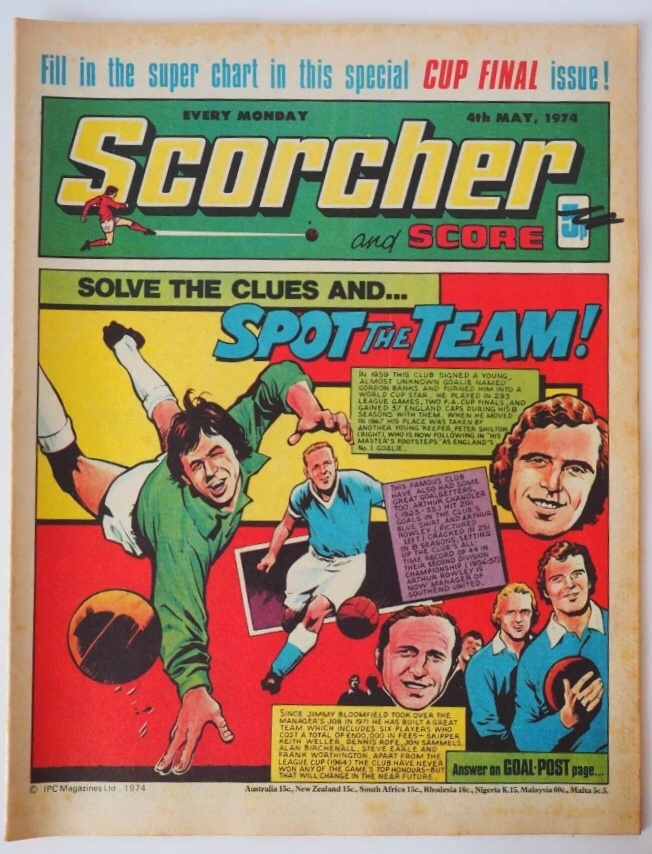
The other love of mine during my youth was footie. Both on the field and off. I can’t remember how I was able to afford the occasional Scorcher comic. I must insist I did not steal from the till, although my mother once did interrogate me when she couldn’t balance her takings. I imagined Pa was as uncomfortable, pleading his innocence when tortured by the Japanese during the war. Ma suspected I bought the Nasi Kandar I had for lunch that day with the missing money. But, lunch was steamed rice with one curry and half a hard-boiled egg, the day’s discrepancy would have bought ten such lunches. But, this has made me wonder how I managed to buy those Scorcher comics. Surely, Ma would have asked where I got the money from – nothing escaped her. Maybe a friend lent them to me. Yes, that must have been it. The story of Billy’s Boots was my favourite. Billy was an extremely poor boy who found a pair of old football boots in his grandma’s attic. The boots transformed Billy into a fantastic football player and granted him the intuition to be at the right time and place to score goals. The goals he scored still rate the best I have ever seen. On the field, I wore the number 4 jersey for my class team. The solitary goal I scored from just outside the 18-yard box still fills me with pride. It was a goal that Billy would have appreciated, that I am sure. Unlike Billy, I did not have any old boots to transform me into a great player. Today, none of my classmates remember I was in their team. No one can recall that special goal I scored either. Never mind, I played my part in defence solidly and was at times heroic as a barefoot player. A team player, I never stood out as most valuable player but just as importantly, I did not stand apart from the team either.

In my business, I often extol the importance of teamwork. We need to play our part and work together as a team. The picker and packer is as important as the salesperson on the phone. Sure, the latter may be the face and voice of the company, but without the packer, not a single customer order gets shipped. Without a cog, the wheel does not move forward as easily. In staff meetings, teamwork is a principle that is often a focal point. If we do not play our part, the team comes apart.

Yet, in today’s life and death crisis, there are too many reports of people wilfully ignoring expert advice to stay at home. There are many variations, the idea is to stay apart. The full lockdown, the Dutch Intelligent lockdown, the Malaysian movement control order, the Aussie partial lockdown, self-isolation, quarantine, social distancing. Be apart, save lives. A simple message, yet many flaunt it. We cannot sit still. There is the urge to leave our homes. A relative went out yesterday and bought a “tonne” of food for his household of two people. The Mrs insisted on going to the grocers to pick up discarded greens for her chooks. We must eat, and so must they! The Tablighs attended a gathering of over 16,000 in Malaysia – they had to praise Allah together. The Malaysian authorities bent their rules just once – it was suggested they needed to win the Muslim votes. Yesterday, the New South Wales health authorities are still defending their foolish decision to allow 2,700 passengers off the Ruby Princess into the community before COVID-19 test results were released – even as news are reporting more than 600 cases and 10 deaths have come from that ship. In Australia, Whilst the PM was imposing tougher rules restricting public gatherings to be no more than two people, we saw mass turnouts in Bondi Beach, Manly Beach and the Gold Coast. Market-goers ignored social-distancing rules and packed into a popular outdoor farmers’ market yesterday. Roof tops have proven popular for backpackers as they sun themselves openly and for Muslims in Penang who congregated to pray together. Malaysian social media have gone viral showing young people being locked-up as they flouted lockdown and social distancing rules. Meanwhile, Louisiana pastor Tony Spell will continue to hold Easter services after he was charged with disregarding state and local pubic health orders. He said “We’re defying the (stay at home) rules because the commandment of God is to spread the Gospel” That surely will spell more deaths in Louisiana. If they are serious, he should be charged with wilful manslaughter or murder, don’t you think? Urghhlings, it is really simple to save lives. Play our part, stay apart.

Willy, Am I Wily Or Silly?

Wilson has become a close friend of mine. We were schoolmates in the 1970’s, but I don’t think we met. Our year had over 400 students; it wasn’t possible to meet everyone. Besides, I was shy and quiet, socially reticent. If we did meet, I would not have forgotten. After all, Wilson is not the unforgettable type. From many accounts, he was a hunk. A swimmer who represented school, state and country. It would not have surprised me if some of the more desirable girls had asked to feel his muscles as they admired his sculpted physique. A fall from my bike one early morning during the month of the hungry ghosts may have concussed me more than I realised – that would be my excuse for not remembering Wilson at all if we were in fact good friends in school. No matter, we are good friends now. He calls me brother, I call him Wilson koko on account that he is older. We are like brothers. Pre-Covid-19, when I was spending Sunday lunches with Ma, I knew he would be having lunch with his mum too. We are equally filial. I suppose this is a common trait of the majority of Chinese. We are born to respect our parents – it is in our DNA. How else can one explain this element that is so dominant in Chinese families despite the diversity of religious beliefs? It is only now that I have learned Wilson is also known as Willy. There have been hundreds of messages for Willy since late last night. Messages of condolences have been surging in like a torrential downpour of tears for his beloved mother. Willy’s mum passed away last night after being admitted to the General Hospital in the morning. She did not linger and suffer, none of her loved ones were able to be by her side due to COVID-19 restrictions. The deprivation of a last goodbye would be too difficult to accept. In his wisdom, Willy reckons his mum timed it to perfection – she is now with her husband, celebrating his birthday together in heaven today. I did not ask Willy if he meant his dad’s birthday was the day he was born on earth or in heaven. RIP, aunty.

Willy’s name made me recall the night I was accused of being wily. It should upset me but it doesn’t. I was not even affected when it was said to my face. Some will say I was silly to ignore it; to pretend I did not hear it. Why did I not defend my honour? Why did I not pounce on my accuser? Let it be. Let it be. The Mrs thought I was witless. She was a witness. It was during a family dinner with my siblings and our mother. Before COVID-19, we used to have weekly gatherings and often we would dine together. Ma’s enjoyment in life. A simple pleasure we all want – to have our children by our side and partake in a meal together. That is what families do. Why spoil it, I asked. It was easier to ignore the remark – to pretend it was not said. Ma was handing me some cash to settle the bill. I have a reputation for getting freebies, and maybe I could swing a special discount her way perhaps. A sister hijacked the money instead and said “No, he is cunning and may shortchange you, Mum”. So, this sister thinks I am a low-life. One who would cheat his own mother of petty cash? Maybe the word cunning is not in Ma’s English vocabulary. Maybe Ma’s hearing has deteriorated rapidly and she didn’t hear it or maybe she has selective hearing and didn’t want to know. Maybe Ma pretended not to have heard that cruel remark – that would nicely explain why she did not demand a reason from the one who spat such venom. I did not make a scene but I found myself surveying the landscape of my face from my bathroom mirror that night. What is it about me that even a sister would doubt my honesty? Is it my scruffy thu-fei bandit looks? My Rasputin-inspired hair? My frequent tales of woe? Investment flops? Business losses? The old bomb that I drive? The old bomb that The Mrs drives? My status as the only non white-collar worker in my family? The mirror is the one thing I normally avoid looking into. The Mrs reminds me enough times how below average I am, in looks as well as in intelligence. To compound my sense of inadequacies, I am informed I am hardly useful as a home handyman. The wall in the living room is still devoid of her paintings. The picture hooks broke off and need replacing. I am too embarrassed to reveal how long the wall has been bare. The lid of our ‘Victorian’ garden lamp post broke off after a night of vengeful gully winds. That was quite a few years ago. The Mrs finally got me to repair it today – I tied it up with blue string. A couple of years ago, I tried my luck on rewiring a broken light switch. Today, it is still the only switch in our house that works differently from the rest – up is on and down is off. Both fluorescent lights in the garage have not worked for over half a year – I was foolish to dump a whole box of brand new fluorescent tubes when our last shop closed down for good. There is no urgency to replace the lights – my phone has a torchlight app. Why look into the mirror when I can look into my memory to determine who I am? My motto in life is to sleep well. Nothing is worth giving ourselves sleepless nights. I cannot understand why I give the impression that I am cunning. I would be a broken man if I didn’t think I have a moral compass that guides me. It can be self-harming should I allow myself to dwell on this. But, I am old enough to know my true self. Let it be. Let them be. Willy, I know I can be silly but I am not wily.

A wall without paintings

Last week, U.S. unemployment numbers increased by 3.3 million and the Dow jumped 1,300 points. The Dow Jones Industrial Average (DJIA) again rose 2.24% overnight, despite the weekly US unemployment figure doubling to 6.65 million – meaning at least 10 million Americans have lost their jobs in the past fortnight. As the jobless queue grows so quickly, does it not indicate the economy’s wheels have come off? Does it not tell us businesses are struggling when they embark on divesting their most valuable resource, their employees? It is true the Dow may have jumped upon news from Trump that Russia and Saudis have reached a deal to limit oil supply. But, can we trust any of Trump’s announcements? No matter, the experts did and the US crude price soared 35% overnight. When oil prices plunged in the second week of March, the DJIA crashed 2,000 points. So, the DJIA follows the oil price, it rises when oil price spikes. It crashes when oil prices collapses. It seems lessons learned from the 1973 sharemarket crash no longer apply. Then, the DJIA lost over 45% of its value following the oil embargo when crude prices rose by nearly 400%. The more money the US prints, the more valuable the USD is. The more the Federal Reserve borrows, the more sought after their currency becomes and its value goes up. The US currency moves in exactly the opposite direction to what my logic tells me. Willy, I have always been too silly to understand the sentiments of the herd. But Willy, that doesn’t make me wily.

The Virus And Us II

My mum groaned, mourned and sighed all day. We are people of few words. Grieving the death of her sister, she was at her most fragile yesterday morning. Ma was here but I could sense her mind and soul weren’t. She would have been thinking of Ahyi’s funeral – she asked me to light her three joss sticks. I suggested one will do, thinking that conservation of those trees should begin at home. No, it had to be three for the joss, no less. The word joss came from the Javanese dejos. They learned the word from their colonial masters, the Portuguese deos, the original Latin word being deus. But, Ma lit them not for the gods but for her sister. May she Rest In Peace with the gods somewhere interesting. Italy restricts funeral attendees to just two, Australia is generous with ten. I later learned my aunt’s cortège was small, just a handful of immediate family members plus Prez Theng Lye, president of my year’s school alumni in Penang. He went to pay his respects for my Ahyi despite the restricted movement order and despite never having met my aunt. Prez is simply a kind and generous friend. I never even met him in school. My aunt was buried in the Batu Uban land bought by generous elder clansmen including Shaw Brothers in 1951. It has become an expensive piece of real estate in Penang. I wonder how long the cemetery will remain before the property developers devour it completely to satiate their never-ending quest to build ugly residential towers there. I told my cousin sisters Ma seemed more frail yesterday than her usual self. Ma actually has been looking better, less withdrawn, I would add. Maybe she is getting better nutrition, we share everything since she moved in almost a month ago. She eats what we eat. And we eat healthily. Good nutrition boosts our immune systems. Less meat and more fresh homegrown fruits and vegetables. Simple but good for us. She loves the eggs our free-range chooks produce too. Every day she sits outside under the verandah to catch the late afternoon sun. Free vitamin D. Like me, Ma likes freebies too, especially when it is from Mother Nature.

“Didn’t know she took the news so badly. Please tell her my mum passed away peacefully and she is in a better place now. No more suffering for her. But my mum hasn’t been healthy and strong all her life. She had beaten all the odds to reach a ripe old age.” Cousin sister Yee Chan writes to me.

“That she has. She is always the frail and weak Ahyi to me.” It took only a brief moment for me to recognise that we were still using the present tense about Ahyi. That may take a while before we correct ourselves. The Mrs took many years before she finally used the correct tense when talking about her departed mother. Letting go is universally preached but hard to do. Occasionally, I have had to banish the thought of losing Murray one day, and he is only an 18-month-old puppy. Maybe Ma is grieving also for selfish reasons. She, being the eldest at 96, would be thinking of the obvious. It is a nasty thought, I am beginning to dislike this ageing thing. I was surprised to read my aunt passed away at age 96. No, she was only 91. I didn’t know about the custom of adding five years to her age for the five generations that she enjoyed during her life.

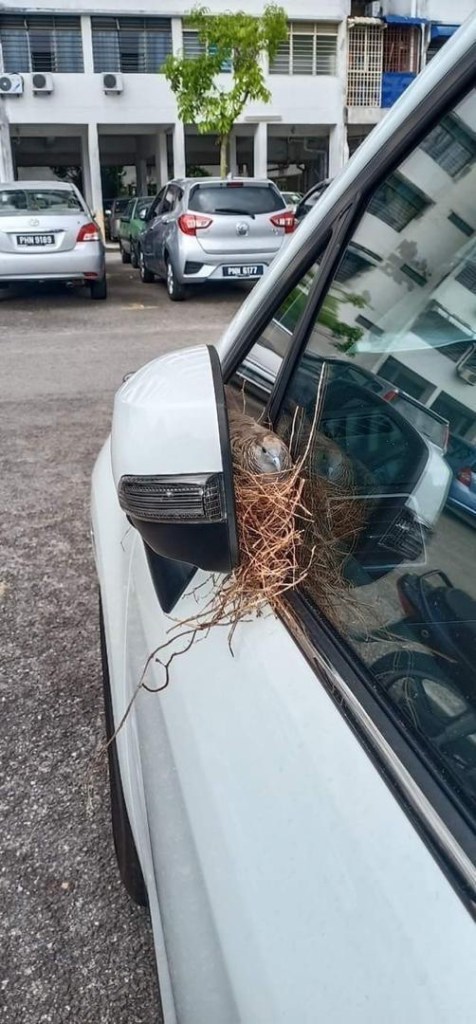
The Mrs thanked Ma for sweeping the front verandah. It is decidedly the cleanest it has ever been, she discovered. The Mrs made her judgement clear to me, “It couldn’t have been you!” It seemed a logical deduction, and I did not bother to correct her. But, Ma said “Don’t thank me. It wasn’t me.” The Mrs refused to think further about it, she did not want to entertain the possibility that I had anything to do with making the front verandah presentable. She would not consider that my being home a lot more lately could be the reason why the house is tidier. This was my first week of working from home. In keeping with common sense, we have been isolating ourselves from the world. I love it, although The Mrs’ Youtube programs are a bit loud for my liking, especially those Taiwanese segments that love playing silly background noises that sound like bad farts in a kids’ birthday party. Cousin sister Yee Chan asked where she could reach Ma. She wanted to reassure Ma that Ahyi is now in a good place where there is no more suffering. That is something we all tell ourselves when we mourn a death. I like to tell myself Pa is in a good place too. He hardly visits my mind now, unless I light a joss stick for him – he must be somewhere happy, right? Cousin sister Yee Chan says I am a good son. A reasonable deduction, after all, there has been no audible complaints from Ma. I told her I am lucky. The Mrs could have easily made my life hell. But, instead she has been amazingly supportive and sweet to Ma. I am a good son only because The Mrs is good. Which forces me to ask myself, can I be a good son with a less willing wife? Working from home has been a joy and an eye-opener. I cherish working from home. From a vantage point, I can look into two gardens – mine and the one next door connected by a cottage gate. I have been witnessing the tasks The Mrs does which had for years escaped my attention. The missing dust on my antique collections. The missing streak marks of grease on the exhaust hood. The well-watered lettuce seedlings at the back and the emerging cottage garden in the front. The uncountable trips she makes each day with water saved from the kitchen sink to the garden using nothing heavier than a used two litre milk bottle. I am thankful the nature of my job allows me to work from anywhere, but will my job still be there at the end of this pandemic? Will my business survive? More importantly, will we survive? Governments all over the world are spending billions and trillions of dollars trying to keep their economies alive. To keep peoples’ livelihoods going. How do we pay rent or our mortgages? If tenants stop paying rent, how do their landlords who depend on their rental incomes cope? If banks are forced to offer their borrowers a mortgage holiday, how do they avoid corporate collapse? The Australian Prime Minister wants to achieve economic “hibernation” whilst we practise social distancing. Balancing the trade-offs between tough shuttering and economic calamity isn’t something in any leader’s playbook but what are they smoking in Canberra? It is a fairytale ending they are wanting to write – to put everything in deep freeze until the pandemic has passed and then, hey presto, we all wake up to the new old world. And at the stroke of 7 am on a Monday morning months from now, we all leave our homes and report for work as if in a dream? I think the old world we left behind before the lockdown, or Movement Control Order or whatever it is called is gone. Life as we knew it has changed and will not return. We fought for our freedoms in faraway lands, during both world wars. Many went to the frontline with the belief that liberty was a prize that lives were worth giving up for. They heroically lost their lives for freedom. Today, we are asked to do the opposite – lose our freedom and restrict our liberties to save lives. Countries that have traded some of their personal rights have so far managed the control of the spread of COVID-19 better. Singapore, China and South Korea with somewhat draconian intrusions into their citizens’ privacy use high-tech surveillance methods to keep track of their movements and well-being. China’s and South Korea’s enormous capacity to test for COVID-19 and their heavy use of surveillance techniques to track spreaders from their bank card and mobile phone usage have been largely credited with their success to curb the disease’s spread. Taiwan’s “electronic fence” that uses location information on their phones to ensure people are properly quarantined has won global praise. A measure such as this would have been abhorrent pre-COVID-19. Singapore uses rigorous testing methods and enhanced surveillance to track patients with respiratory symptoms. This is a dilemma a more liberal country is faced with. Are they prepared to lose more privacy rights? It is a choice that people may not get to make as governments struggling to cope with the disease’s onslaught change their tune and impose total lockdowns and close down businesses deemed non-essential. We all feel our jobs are essential. Essential to maintain a livelihood, to feed ourselves, to have a roof over our heads. But, millions are finding they no longer have that livelihood. No country can be in hibernation. The virus won’t allow us this luxury. Government handouts are limited and only to those legitimately registered as citizens and permanent residents. The rest are on their own, without jobs, without government support. Third world countries will fare badly. Economies such as India’s and Indonesia’s were faltering well before the first coronavirus case was detected in Wuhan. Millions are already facing homelessness and hunger in this initial phase of their lockdown. There won’t be enough handouts to prevent the tsunami of hunger, diseases, desperation and hopelessness that will swamp many countries. Drug addicts will react violently when their supplies dry up. Desperation and hunger usually lead to crime and violence. It is no wonder Americans rushed to buy guns and not toilet paper. Their fear is that home invasions start to happen everywhere once the situation becomes dire. When China locked down, the rest of the world carried on with their lives normally. They clamoured for Made-in-China products. Now, China has eased movement restrictions and factories are re-opening, only to find the demand for their goods have dissipated as the rest of the world face lockdowns, despair and death. The Australian government’s wish for hibernation assumes the whole world is in sync together. But, that is wishful thinking. I fear the Chinese workers will find many businesses have already collapsed and those that have not will not have customers to export to for many months to come. Street riots have already been reported in some areas as desperation grip the workers who have no jobs to return to. The social dislocation forced on the populace from a prolonged economic shutdown is tragic and destructive. This reality will spread to the rest of the world as they in time recover from the pandemic. How nations manage the eventual first-steps will be critical to whether their societies implode or return to some “normalcy”. Is there hope that urghhlings will gather together for the greater good and not disintegrate into a Darwinian reality where only the fittest survive? Already the question is being asked in some quarters – will the cure be worse than the disease? Will democracies be a victim of this pandemic? Will autocratic governments manage the outcomes in much more controlled ways, limiting the trauma and destruction from the global crisis? Which systems will get the balance right? The trade off between money or our lives? Trump argues a prolonged shutdown will cost more lives than the virus. An economic collapse will tear down the fabric of society decaying any semblance of law and order. Dare we test his theory? Who will be his guinea pigs? I suspect Mother Nature finds we are as bad as the virus, infecting all other life forms and she will do what is necessary to obliterate as many of us as she can. If we begin to think we are as deadly as the virus, then maybe we will finally see how we have ravaged Earth, our home. Maybe then we will finally form a global solidarity to unite and do the necessary things to let the world repair itself. I don’t have any answers but maybe when the world is a cleaner and better place, the virus will suddenly disappear. Japan offers the inspiration. The Japanese have always worn masks even when they aren’t sick. Cleanliness is one of their traits and they greet with a bow rather than shake hands. Japan was one of the first countries to be impacted by the virus when the Diamond Princess docked with passengers stricken with COVID-19. Yet, there is no lockdown in Japan and the virus has not caused any panic. When we learn to keep ourselves clean, our world will be clean. Hopefully then we will begin to see hatchlings in nests on side mirrors of parked cars.

Dearths And Deaths

“When I find myself in times of trouble

Mother Mary comes to me

Speaking words of wisdom

Let it be.”

Let it be. Words of wisdom by Paul McCartney. He was not thinking of the Virgin Mary when he wrote these beautiful words in 1969. She was Mary, not Jesus’s mother, but his. Troubled times. All day news about the COVID-19 virus. It is still on a rampage, killing thousands overnight. All of India are now on total lockdown, i.e. 1.3 billion people sardined in small spaces. My generation has been the lucky one, until now. We had not seen anything like the fear and deaths that we are seeing now. Fear of being infected. Fear of suffering the debilitating effects of the disease. Fear of being stranded without an ICU bed with a ventilator to help us breathe. Fear of losing our loved ones. Fear of losing our jobs, our savings, our house. Fear of death. We read about home invasions but will we also be targeted because of our race? We have experienced recessions but never one like the Great Depression. Will we suffer one soon? Some of us may have seen street riots in our lifetime but will we feel the wrath of the fearless and starving mob desperate for food and water? We read about wars and the millions of casualties. We read about those lucky ones who survive but they are mostly desolate, desperate, displaced or destroyed after the horrors of wars. We read about the cowry shell money, the Gulden, Reichsbanknote and the Japanese banana money becoming worthless when empires collapse. Apart from Cowry shells, these are worth less than toilet rolls especially now. Will the USD follow suit in our lifetime? Will we see runs on the banks? Troubled times but time and time again, we read about the dearth of strong leadership, proper timely decisions and honesty from our political leaders.

Ma’s neat bundles of banana notes.

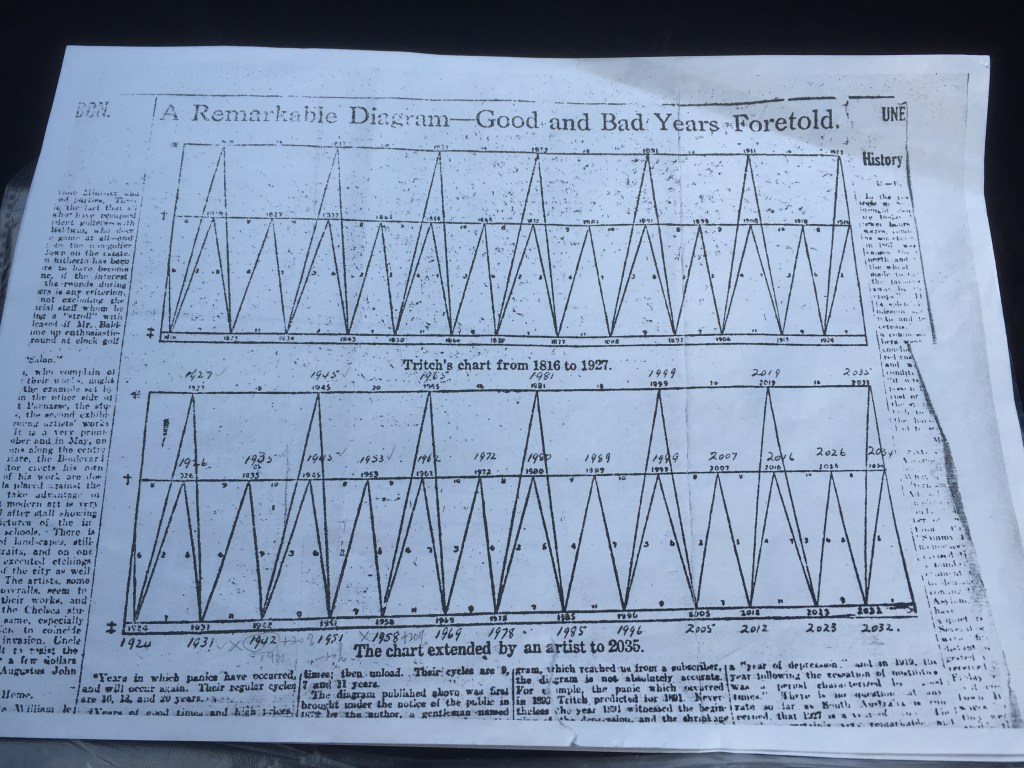
There is a serious lack of masks, PPE and hospital beds everywhere. The scarcity of ICU’s has reached a critical point even before the number of infected cases has reached anywhere near crisis level. Elective surgeries and non-life threatening surgical operations have been banned in Australia until further notice. The dearth of basic PPE even in Australia, supposedly a first world country, is disturbing. Personal Protective Equipment for frontline medical workers is scarce, I hear from a doctor friend. All over the world, medical workers are performing heroic tasks saving lives or soothing patients suffering from the COVID-19 pandemic. Both AMA’s of the US and Australia have called on their governments to address the critical shortage of PPE needed by frontline doctors, respiratory experts and nurses. The idea of being sent to the frontline without protective wear is unthinkable. It’s akin to sending your nation’s best soldiers to fight a war without backing them up with some basic protection. The dearth of coronavirus testing kits even in the richest country in the world spells trouble as the number of infected cases there double every three days. On Feb 26, Trump said the 15 cases would soon dwindle “down to zero within a couple of days.” That was just four weeks ago. Today, there are 53,778 active cases there with 784 deaths. The dearth of brain cells in his cranium is evident for all to see. There is a dearth of anything that may resemble an intelligent, honest and effective strategy from the leader of the most powerful superpower to overcome this pandemic. The WHO declared that the US could become the next epicentre of the pandemic. Nevertheless, the Dow surged 11% overnight – those in pinstriped suits want to desperately believe Trump can tell the virus to take a hike. Americans want to work; they need to bring food to the table. They worry about how to pay their rents or mortgages. Unfortunately, there is no good news on the horizon, even when Trump tells more falsehoods to calm the markets. Mr. Tritch foretold the current sharemarket crash in 1872. For those in my generation, many will not live long enough to see the peak of the next bull phase. That will be in 2035. Trump announces he loves Easter and wants the churches to be packed with believers, despite the Pope cancelling Easter mass over two weeks ago. He wants the factories and shops to crank up again. He is thinking in weeks ahead, not months, to reopen America for business. He reckons a prolonged lockdown will cause an economic hardship so severe it will kill more Americans than the virus will. There is a dearth of common sense in America. Even if the people want to work but will they dare when sick people start falling down in the streets and in the factories? Will they even have the strength to stand? Fortunately for the Americans, it is their governors who decide to open or shut their cities for the greater good. Trump has not locked down a single town and he cannot open up any of them. Trump reckons many thousands may commit suicide if they do not return to work. He is somehow oblivious to the mortality rate, especially of someone in his age group. See covidvisualizer.com Cases 333,235, Deaths 21,191, Recovered 114,218. Mortality rate of closed cases: 15.6%. A more accurate measure for those in the vulnerable age group, to which I belong, may be the deaths over total closed cases. Mortality rate of active cases are yet to be determined, this being dependent on whether the hospitals can cope with the influx of cases. Will the authorities “flatten the curve” quickly enough? Will the dearth of medical supplies and ICU beds be fixed soon enough?

It is true America does not have the capacity to look after their own in times of trouble. They are armed to their teeth with nuclear weapons but basic health care? Why bother? Obamacare was signed into law ten years ago, yet there is still no universal healthcare for all in the richest and most powerful country in the world today. Those Trump supporters who rely on Obamacare voted for him, knowing he would repeal it. They are the ones who are worse off – those who cannot afford private health insurance. There are over 26 million Americans who do not have health insurance today. The dearth of common sense and general knowledge is palpable in the red states of the USA. In twelve days, China built two hospitals with the capacity to house 2,600 coronavirus patients in Wuhan. Meanwhile, the two naval hospitals announced by Trump to house COVID-19 patients will take many more weeks to reach New York City and Washington D.C. The dearth of preparedness and ability to respond to this global emergency is unexpected. In Australia last weekend, NSW authorities allowed 2,700 passengers to leave the cruise ship, Ruby Princess, before test results were available to determine if any of the 13 people tested were infected with SARS-CoV-2. Sadly, it is now confirmed over 130 cases of COVID-19 can be traced back to the Ruby Princess and one woman has since died. The dearth of good governance is regrettable and unfortunate. Dr Kerry Chant, NSW’s Chief Health Officer was still trying to justify their stupidity in front of cameras this afternoon. Her “monumental stuff up” will be responsible for the fast uptick in infections in Australia.

Tritch’s Chart of 1872

China, despite her initial hiccup in attempting to block the public dissemination of a virus outbreak, has demonstrated to the world her enormous capacity to organise their manpower and stop the spread of the virus in Hubei in just over two months. It wasn’t until January 8, some four weeks after the initial outbreak in Wuhan, that China realised this was a new virus. They moved with remarkable speed to determine the genome sequence of the virus and locked down the city of 11 million people just 15 days later when the confirmed cases were relatively low at 495. This has bought precious time for the rest of the world. Yet, in many parts of the world, the virus has put the limelight on their Sinophobic underbelly. There is a dearth of trust and goodwill shown to the “yellow peril”. Some of Chinese appearance were vilified, mocked and even bashed up in Western societies. Even when China demonstrated their eagerness to share scientific knowledge about the virus, publishing the world’s first genome sequence of SARS-CoV-2 that causes COVID-19. This has helped laboratories develop new test kits and improved their treatment plans from a better understanding of how the virus attaches itself to a human cell. Even when experts say the global rush to find a vaccine has been facilitated by China’s preparedness to share vital information about the virus to the public. Sharing the virus’ genetic sequence online publicly has enabled virologists and immunologists to quickly work on finding a vaccine. Algorithms are being churned out by today’s powerful computers to find motifs of the virus that a vaccine can be designed to combat. It is hoped AI will speed up the discovery by many months, perhaps by altering current vaccines rather than inventing a new one. Even when China voluntarily dispatched a team of medical staff and 30 tonnes of equipment to Italy and Spain. Even when China sent a lorry-load of medical supplies to Sungei Buloh Hospital in Malaysia. Even when China donated hundreds of thousands of surgical masks and test kits to the Philippines and Pakistan. Even when China sent teams of medical officers to Iran and Iraq. Some in the US question China’s motives even as China sent 117 tonnes of medical supplies to the Czech Republic. Some are pointing to the authoritarian power’s ability to shut China’s supply chain to the US, curtailing the flow of most medical supplies that America needs – from simple syringes, masks and gloves, to antibiotics, antidepressants and chemotherapy drugs. As former White House adviser Gary Cohn once observed, “If you’re the Chinese and you want to really just destroy us, just stop sending us antibiotics.” Secretary of State, Mike Pompeo, still accuses the Chinese Communist Party of a major cover-up and withholding vital information about the virus that would help the world vanquish it. They may continue to accuse China of initially dithering for two weeks but history will show that many countries in the West lost precious months to mobilise their health emergency protocols before the virus reached their shores. Even today, Trump is still in denial. The sheer incompetence and inferiority of Western governance is displayed in stark contrast to the Chinese who were able to quickly bring together their citizenry as a unified and organised response to the calamity the virus unleashed on them.

When there are dearths of trust, goodwill, common sense, good governance and compassion, I fear there will be many more deaths with the virus still out of control. Let it be. Nothing I can do. A reminder to appreciate life and the small things in life. Grow some veggies, go smell the roses. Enjoy the incredible special time during the lockdown; catch up on things and people we would not have time for. This is a unique moment in our lives to reset our priorities. Let me support Ma as she mourns the death of Ahyi, her youngest sister who passed away this morning. RIP, Balapai Ahyi.

The Virus And Us

“Hope is the only thing left in Pandora’s box.” The doctor’s words have been repeating continuously in my mind like a broken cassette player. That doctor was Tang Xin of Wuhan Union Hospital. It felt to him like everything in Pandora’s box had been unleashed on the 11 million people of Wuhan. The landscape in Wuhan would have been one of devastation, fear, agony, illness and death. Over 68,000 of the doctor’s colleagues and other medical workers had toiled unceasingly for a month to fight the onslaught of the virus in the city now made infamous by it. Many had succumbed to it despite their protective clothing that seemed more suited for space travel. When nature unleashes all its fury and scorn at us, the least we expect is that it would be in the form of a simple organism that our eyes cannot even detect. A virus. It attacks us, maims us and kills us, indiscriminately. It teaches us we are all the same, all equally susceptible to fall ill from it. Irrespective of our belief systems – which God or Gods we pray to or not pray to. It does not matter if we are rich or poor, famous or insignificant, powerful or weak, happy or sad. It teaches us to distance ourselves from others, that ganging up together in numbers is no longer our strength and being alone isn’t really loneliness. To be separated from one another is not a weakness but our strength to weaken its spread. It teaches us basic things like how to wash our hands. I learned to be miserly with water from years of drought but the virus teaches me how to clean my hands the right way. I am 61 and am realising only now I’ve been washing my hands the wrong way all these years. Saving water now isn’t as important as saving ourselves from passing the virus via our hands. The virus teaches us that the trillions of dollars poured into propping the global economy does nothing to stop it let alone slow its advance around the world and it surely doesn’t stop the stock markets crashing either. The trillions of dollars that we spend on military weapons doesn’t keep us safe. It teaches us that we are one and the same. It really is us vs the virus. It teaches us that our money is best spent on education and improving our health and hygiene, and finding vaccines and cures.

The virus shows us the ugliness of earthlings. It has a name. The WHO named it SARS-CoV-2. Before being given this name, it was loosely called “Wuhan virus”, or “Chinese coronavirus”. The disease this virus causes is called COVID-19. Yesterday, Trump crossed out the word “Coronavirus” in his notes and replaced it with “Chinese virus”. He claimed to be in the interest of accuracy. It’s from China and therefore it should be named the Chinese virus. He’s a slow learner, so let’s forgive him. Let’s not ask him to rename the Spanish Flu the “American Flu”. We don’t even know for sure Wuhan is where the virus comes from. Not until Robert Redfield convinces us the deaths in America previously attributed to vaping and the winter flu in June to October last year were not posthumously determined to be from COVID-19. It is ugly that some of the leaders of the world use the virus to play politics and gain some little brownie points with their electorates. Likewise, I think the leadership team in China is wrong to promulgate the theory that it was some American soldiers who introduced the virus to China during the October military games in Wuhan. If that was true, one would think the athletes of other nations would have also brought it back to their own countries at about the same time. In the last 24 hours, there have been examples of urghhlings around the world showing the contempt they have for the efforts local authorities are making to try and contain the pandemic. There is the cardiologist, Dr Ong Hean Teik, who was adamant to jog in the lovely Youth Park in Penang despite the restricted movement order that’s in place in Malaysia. Or the Tablighs who travelled to Indonesia for another religious gathering despite having caused the doubling of confirmed cases in Malaysia from their recent gathering in the Petaling Mosque. Or those who sought hospital treatment and lied that they were not participants of that gathering when asked by hospital staff, infecting 15 medical workers overnight. Or the Australian woman who went out jogging in Shanghai when she was in a compulsory 14-day self-quarantine. Or the NSW government defending their stupid decision to allow 2,647 passengers to disembark from the Ruby Princess at Circular Quay, despite knowing four of the passengers were infected with the virus. Which part of “Anyone arriving in Australia from overseas will be forced to self-isolate for 14 days” do they not understand? Or the Haves in Australia hoarding foodstuffs unnecessarily as most of the food on supermarket shelves are produced locally in this country. There is simply no risk of a supply problem here. Whilst the Haves hoard their excess foods in cupboards and freezers inevitably leaving some portions to perish, the charity Foodshare in Shepparton which normally receives 300kg of food a day found only 10kg turned up today, without any bread. There was also an absence of volunteers as they abandoned their usual practice to help the Have-Nots, practising social distancing instead. Or the Muslim devotees in Penang who congregated for a prayer session on a rooftop to circumvent the country’s ban on gatherings of any sort. Or those in Wakefield, England who go around the suburbs scamming vulnerable elderly people for their cash and credit cards, pretending to be authorised government workers tasked with buying food for those who self-isolate and cannot go outside. Or the idiocy of our Prime Minister who bans indoor groups of more than a hundred but insists on schools remaining open, risking the health and lives of children, their parents and teachers. A friend asked us a few days ago, what if we are the virus and nature’s immune system is getting rid of us? Urghhlings overpopulate, we destroy our habitat, we farm animals without ethics or respect for them. We persist with allowing wet markets to cruelly impose unnatural and unhealthy conditions on wild animals from different continents, caging them close together in crammed spaces. These wet and humid conditions are foreign to them, and ideal for viruses to jump to humans. We attack nature. Maybe our threat to our environment and our cruelty to animals have reached a tipping point where nature has decided to fight back? Elizabeth Farrelly wrote: We attack nature; eventually nature fights back. The fires destroyed Christmas; pandemic destroys Easter. I cannot agree more. We are Urghhlings, ugly earthlings.

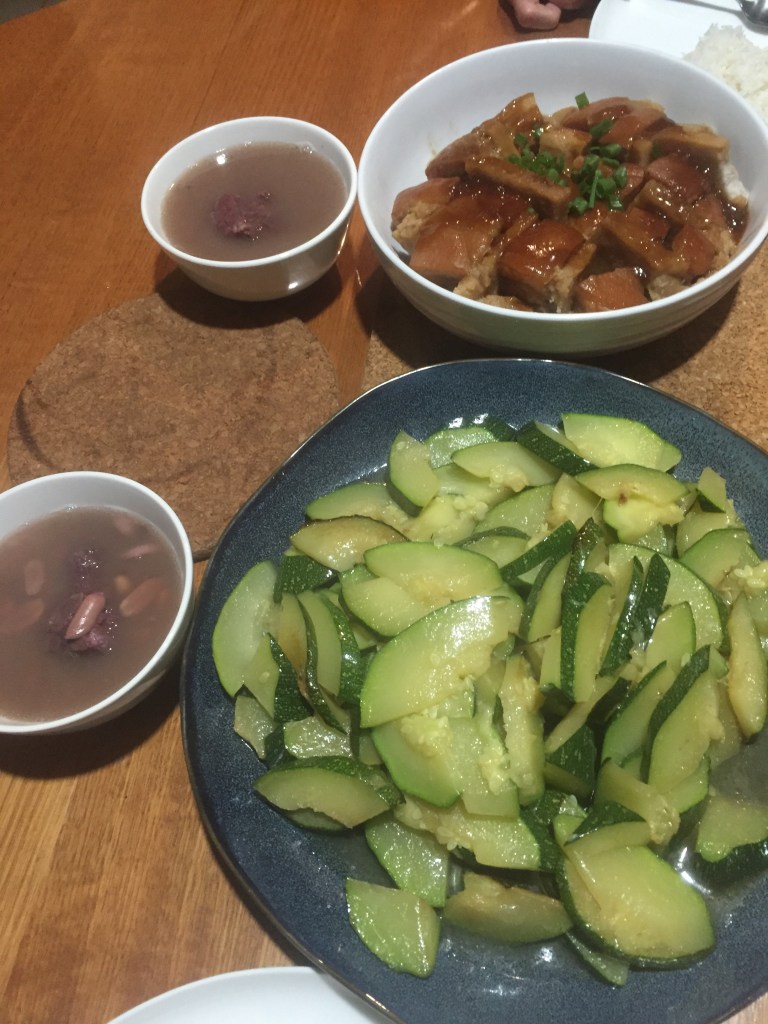
Maybe the world needs this virus to reset our moral compass. As more and more countries go into lockdown and close their borders, it allows all of us a rare opportunity to slow our pace. A change that’s as refreshing as the first coffee in the morning or that first stroll in the garden as we greet the beginning of another day. Lose that hustle and bustle, discard that impersonal and inconsequential life much like that of the mouse on a treadmill. As governments and employers do their bit to soften the financial burden many will undoubtedly face as they are deprived of movement and therefore incomes, hopefully the slowdown will be temporary yet bring some respite for Mother Nature to repair the damage humans have inflicted on her. There is evidence of it as the air becomes much cleaner in China, where birds are heard in the skies of Wuhan, Shanghai and Beijing again. Animals roam the empty freeways in Sichuan and weeds grow in gaps of bonnets and boots of parked cars that have not moved since January. As Julia Roberts said, we need nature, but nature doesn’t need us. Mother Nature is prepared to evolve. She has been here four and a half billion years and has fed or starved living things greater and stronger than human beings. So, maybe the virus is sending us a reminder. Look after nature or nature will wipe us out. She doesn’t care. As lockdowns become common, crowds and cars disappear and cities become alive again, not from the din people make or from the noise and fumes of unending traffic, but from fresh air and birds in full flight high up in the sky. See the pubs with beer remaining closed and the people are home with their loved ones. Look at the golfer who spends his whole weekends hitting and chasing a small white ball rediscover the joy of spending time with his Mrs. They are tending to the roses and vegetable beds together. I am home and I get the privilege to bond with my 96 year-old mum. Look at me looking at The Mrs. It is our 39th wedding anniversary today, and although we did not dine out, The Mrs and I got to celebrate it with her home-cooked Hakka “Khao Yoke”, pork belly steamed with yam. After 39 years, she still doesn’t know I dislike yam. On second thoughts, maybe she does. There is still hope in Pandora’s box. The virus and us – we will just have to show mutual respect for one another.

A Red Field. Where Is Redfield?

The experts’ assessments are bleak. News shared on social media as dour. TV chatter is no longer sensationalised. Now when they report COVID-19 is fast-spreading and deadly, it is actually that. People are queuing up to hoard supplies for their families; there is a sense of panic in grocery stores and supermarkets but the rest of the shops in the malls are deathly quiet. Reality has set in the public’s minds. People are being denied COVID-19 testing even in Adelaide. But, President Trump is still in denial. He is still lying through his teeth, and in doing so, it surely is costing lives in America.

Trump: Anybody that needs a test, gets a test.

Dr Anthony Fauci, Director of National Institute of Allergy and Infectious Diseases: We are not set up for that.

Trump: We are testing. We have a tremendous testing set up.

Dr Fauci: We do not have enough tests today to meet what we anticipate will be the demand.

Trump: We have thousands of people who get better by just sitting around or going to work.

Dr Fauci: This is 10 times as lethal as seasonal flu.

Trump: The vaccine is coming along well, and we think this is something that we can develop fairly rapidly.

Dr Fauci: The ability to scale up even if we have the vaccine will take a year to a year and a half.

Trump: You know, in April, supposedly it dies with the hotter weather.

Health experts say there is no evidence that this new virus will simply go away with warmer weather.

Trump: We are prepared and we’re doing a great job with it.

Trump: It will go away. Just stay calm. It will wash through. It will flow through. It goes away. It’s going away.

Dr Fauci: Bottom line, it is going to get worse.

Trump: Now, the Democrats are politicising the coronavirus. This is their new hoax.

Official stats as at March 17 for the US: 6515 confirmed cases, 115 deaths

These are the stats for today (March 17):

182,555 confirmed cases (+12,945, an 8% increase since yesterday)

79,881 recovered (+2,105; a 3% increase since yesterday)

7,166 deaths (+648, +10%; 8% mortality rate)

US Congressional doctor, Dr Brian Monahan on March 11 said up to 50% of Americans will contract the virus (150 million people). On the same day, Angela Merkel warned that 70% of Germany could be infected (58 million people). Australia’s Deputy Chief Medical Officer Paul Kelly conceded 20-60% of Aussies could get the disease – that is 5 million to 15 million people infected. At a 3% mortality rate, that is 150,000 to 450,000 deaths. Scarily too many.

For once I strongly applaud the authorities to promote speed. The old adage that “Speed Kills” cannot be more accurate. Only with speedy decision-making, fast implementation of lockdowns and movement restriction measures will we see the “flattening of the curve” – epidemiology catchphrase for social distancing measures that keep the daily number of disease cases at a manageable level for medical providers. Yet, the UK government is worried about “behavioural fatigue” – if restrictions were implemented too early, people could become increasingly uncooperative and less vigilant, just as the outbreak switches into high gear. The UK’s chief scientific adviser, Sir Patrick Vallance, said the UK would suppress the virus “but not get rid of it completely”, and as a consequence, the majority of their citizens will become immune to the virus. This “herd immunity” would reduce transmission in the event of a winter resurgence. He later added that “probably about 60 percent” of people would need to be infected to achieve herd immunity. He failed to mention that without a vaccine, a herd immunity will result in many millions dying.

Malaysia announced a partial lockdown from midnight tonight. They now have the largest number of cases in SE Asia after the recent Tabligh gathering of some 16,000 followers. The number of cases almost tripled since the weekend with the majority of new cases linked to a cluster at the Sri Petaling Mosque. So far, 428 out of 673 infections have been linked to the gathering. There was no pandemonium but long queues formed in supermarkets (even though they are specifically excluded from closure), at the causeway (some 300,000 Malaysians work in Singapore and commute daily), and at police stations (to seek permission to travel interstate). This was the exact opposite result of the goal to practise social distancing. *The ban to travel interstate was rescinded the following morning.

During the House Oversight Committee discussion on the novel coronavirus response on March 11, the Director of the US Centers for Disease Control and Prevention, Robert Redfield said some deaths from COVID-19 have been diagnosed posthumously. I held my breath as I waited for Rep. Harley Rouda to ask the next obvious question. But, he never did. He only thanked Robert Redfield for answering his questions. Why did no one ask him when those deaths occurred? Were they before or after the “zero” patient in Wuhan? This is a truth that can be easily ascertained. Why is the question not asked? I think the CDC owes it to the whole world to divulge this important piece of information. Did those people die of COVID-19 before the first case was observed in Hubei province on November 17, 2019? View video from https://www.globalresearch.ca/coronavirus-covid-19-made-in-china-or-made-in-america/5706272

Assuming the posthumous results in the US were after this first case in Hubei, then the US would be the 3rd country to be exposed to COVID-19, on January 21, two days before Wuhan (a city of 11 million) went into lockdown. There were 495 confirmed cases in Wuhan at the time they went into lockdown. Too many countries went into lockdown when the confirmed cases were escalating at alarming rates – their mortality rate will undoubtedly be higher as their health systems buckle. The number of COVID-19 tests performed in the US is terribly low, in fact 201 times less than in South Korea on a per capita basis. If the cases over number of tests as a percentage is much higher than the average, it may very well indicate that the lack of tests is hiding the true magnitude of infections. The following data shows the number of tests carried out as at March 12 or 13 – there are no published national figures for many countries, including Canada, China, Spain and Australia. I have included the number of cases and deaths as at today, to show the magnitude of increases in some countries in just five days. Of particular concern is the US, where the cases have increased by almost seven-fold, and the UK’s cases quadrupling over the last five days. Per https://ourworldindata.org/covid-testing, and https://www.who.int/docs/default-source/coronaviruse/20200312-sitrep-52-covid-19.pdf?sfvrsn=e2bfc9c0_2:

South Korea: 248,647 (4,831 tests/million people) 7,869 confirmed cases (3.1% of those tested) 66 deaths (8413 cases, 84 deaths as at 17/3)

Italy: 86,011 (1,420 tests/million), 12,462 cases (14.4%), 827 deaths (31,506 cases, 2503 deaths as at 17/3)

Russia: 76,963 (532 tests/million), 20 cases, 0 deaths (114 cases, o deaths as at 17/3)

UK: 29,764 (450 tests/million), 460 cases (1.5%), 6 deaths (1950 cases, 71 deaths as at 17/3)

US: 7,934 (24 tests/million), 987 cases (12.4%), 29 deaths (6515 cases, 115 deaths as at 17/3)

Malaysia: 4,010 (126 tests/million), 129 cases (3.2%), 0 death (673 cases, 2 deaths as at 17/3)

China: no tests published, 80,894 cases and 3,237 deaths as at 18/3

My eyes see a sea of red just like in the Faroe Islands where dozens of whales and dolphins were slaughtered. A red field much like the one I visualised when I read about the killing fields of Cambodia. A red field. Where is Robert Redfield? He needs to come out and tell the world the truth before he is clamped shut. Did the fields turn red early in his last fall?

Moi Moi And Moi

It has been a scorcher in Penang. Aloysius sends an emoji of a black person with his hand raised. “Why the dark skin?” I asked. “Moi got burned in the sun,” he said. Aloysius in his heyday was a globe-trotter, a corporate wizard in the financial world for a multi-national company. He litters his conversations with Japanese and French words. At least, I know what umami and moi mean. Aloysius did not get burned in the rush to leave the sharemarket this week. The longest bull run in history has ended. The Dow, ASX and others are now in bear territory. All it took was a living thing our eyes can’t even see – a coronavirus. The Mrs is right. Again. She gave her prescient warning to our eldest son just before the Chinese New Year. “Son, no one will see it coming!” When you least expect it, the sharemarket will crash. That is the cyclical nature of investments. For every winner, there is a loser. The Mrs did not know what “it” would be, but I wish First Son had listened. But, First Son is smart. He knows who to listen to and who not to listen to. The Mrs and moi, important we may be to him, are not his important investment advisers. We are no longer important to anyone actually – no dependants, according to our tax returns. Failed investors, still scarred from the last three Big Crashes, we are the least entitled to make a sound about the sharemarket. We were not of sound minds as we burned our savings not once, not twice but three times. The Black Monday crash of October 1987. Did moi use the word we? The Mrs won’t be pleased with that. It is not a blame game – let me quickly correct myself and just blame myself. Moi was also caught in the Dotcom bust of 1999-2000 during which I looked dumb as I burned from losses in LookSmart shares, an early starter amongst the search engines such as Google and Yahoo. Why did moi not put my money in Google instead? We were also there, burning our money when the “2008 incident” occurred. The incident? In a climate where big banks were too big to fail, Lehman Brothers was allowed to collapse causing the biggest melt-down in the sharemarket’s history since the Great Depression. This week’s retreat from the highest peak of the bull run to the paws of the bear took only 18 days, only three days longer than the one in 1931 that trumpeted the arrival of the Great Depression. 18 days ago the All Ords was at its peak at 7289 points. At lunch today, it has sunk to 4940 points, a crash of 31%. It was perhaps no coincidence that my friends warned me to be careful in the morning, it being Friday the 13th. But, this time I kept my shirt on my back. The Mrs warned me to stay away from the sharemarket unless I wanted to give half of everything to her in a divorce settlement.

I was only attracted to Moi Moi many years after I set my eyes on her. She was my violin teacher’s youngest sister. I started learning the violin when I was 9. My first love was football and Manchester United. When I was in primary school, Saturday afternoons meant watching the English football league on the black and white TV. Violin was a distant second and girls were classified as the despicables – therefore did not deserve a second look and definitely not worth a mention. When I was growing up, I was bullied by my sisters. They would disagree, of course. Ganging up against a brother was always due to a difference of opinions, but even this my opinion differs – I suspect it was always because of the difference in sex. I was the only boy at home. My brother, eleven years older than me was nowhere to be seen. Maybe he knew he couldn’t protect me even if he wanted to. Such was the ferocity of sisters with contempt for those they deemed inferior and dull. I was the unfavoured brother because I was the favourite son? The thought did cross my mind but our parents never confirmed it. By the time I noticed Moi Moi, she already had a boyfriend. Lanky, long legs and long hair. Shiny bright almond eyes. Full lips. Full of life. Moi Moi, a Hakka girl who never noticed me. I should have abandoned my focus on Man United earlier. The Hakkas call their daughters Moi, pronounced as Moy. Moi means girl, the Hakkas do not complicate matters. They don’t beat around the bush. Moi Moi, Moi Mah, Amoy, Moi-jai, Moi-tiang. “Tiang?” I asked. “Yes, a nail. Insignificant and plentiful. My father-in-law was a carpenter. I suppose he never ran out of nails. They called their girl Moi-tiang. A girl and a little nail. In those days when poverty was common and starvation as regular as a change in season, girls were unwanted. Many were disposed of (a kind word for killed), especially when the communists introduced their one child policy. When one can only have one child, let it be a son. The Mrs was disposed of too. She should consider herself lucky she wasn’t killed. But, all the same, she was scarred, for life. Sold at nine days old for nine dollars. It was many decades later that she found out she was not unwanted but sold to protect herself from harm. Her natural father, a brilliant herbalist and engraver, was a drunkard. They never could tell what a drunk would do to a screaming baby. She was flung out the window one evening. Her mother decided she had no choice and sold her to a childless couple. The Mrs was also known as Moi-jai or girl child. Her grandma was a tiny woman with big hands and big feet, necessary attributes of a farmer. “We never heard a word of praise from her”, The Mrs said. She used sarcasm to prod the kids to work hard, unlike the new direction teachers take today to heap praise and encouragement on children today. It won’t surprise me if that becomes a human right one day – the entitlement to undeserving praises. Her grandma was brutal with her words but her actions showed love. “Here, go eat and choke yourselves”, she would say whilst serving them a nice dish. The Mrs reminisces a lot about her childhood days. Then she was called Moi-jai or Moi-tiang. “No one calls me that now.” her voice tinged with sadness. Maybe I should call The Mrs Moi Moi. Then, it will be Moi Moi and moi.

Moi-tiang and her mother