Fact Checked, No Fat Cheque

Three days ago, I decided I shall not share my blogs with The Mrs again…. well, for the immediate future anyway. Not that it would bother her, she has never said my opinions matter anyway. She accused me of writing stuff “without checking” my facts. It was a bad day for me – earlier that morning, a son had similarly castigated me for sharing unreliable advice on how to test ourselves for the coronavirus. “It seems fake news is more contagious than COVID-19”, he basically made me admonish myself. “Then all the more reason to carefully choose reputable sources for information. Especially if you share it.” I tried to defend myself by justifying the article sounded logical for someone who isn’t medically trained. “Come on, ba!” was the reply. It’s not the “come on” you hear in a sports match where the player barracks himself to try harder. Like “Jia Yu”. No, his “come on” was of the cynical type. Like “don’t be an idiot”. “It might sound logical but your logic might not be sound.” Case closed. I lost. The Mrs was so proud of The Son. “He’s so smart and sensible,” she quipped. The realisation that people think I am at best sloppy with what I write or share, or at worst, that I am shonky with fake news is hard to swallow. This hurt my ego, especially coming from people closest to me. It rocked my world again. For much of my life, I did not look at myself in the mirror. The Mrs had said on a few occasions it was my huai-ren (bad person) looks that make people question my honesty. That rocked me. The honesty was expected but not the brutality. I was ill-prepared for that. “Your demeanour and facial features (it is true she may not have used the word bad) are best suited for roles as a bad-ass buffoon in kungfu movies.” Mind you, not as the villain opposite the hero but as one of those who briefly appear in the set before being summarily terminated – she made it clear that was what she meant. “You’d be one of those kicked in the arse and viewers won’t even notice”, she said acidly. For decades, I did not bother to check myself in the mirror. What was the point, right? It did not matter if I looked scruffy or unshaven. I did not even own a comb. It was not until I aped my sons and tried out the expensive hair salon in my neighbourhood that I began to look after my hair. That was about three years ago. “If they can afford an expensive haircut, why can’t I?” It was a question for myself and when the answer came screaming into my mind loud and clear, I made an appointment with Hiro, the Japanese hairdresser there who would later become my hero. He told me I’d look good with long hair. He undid his bun that day and told me to grow my hair long, like his. He told me to look into the mirror and to give it a few months before deciding if long hair did not suit me. He made me look at myself with my own eyes. That day, I thought The Mrs was wrong. My looks are not that bad. But, there are days when I think The Mrs is right – that I have that mean bad-ass look. The “thu-fei” or bandit. I began to like that look. There are surprising advantages when I wear that mean look. Old ladies vacate their seats for me, without me having to ask! The Son bought me a wooden hair brush soon after I had learned to tie a bun, and he said his colleagues thought I looked great for my age. Some days, I think I do not look that insignificant. Viewers would notice me if I got my ass kicked, I assured myself. How I look was never important to me. “Never judge a book by its cover” – but that turned out to be such bad advice. I had that inner confidence, that rock-solid belief in myself. Besides, there were many who believed in me – those who signed up to own a franchise in my business, for instance. But, I was wrong to ignore my looks. I was foolish to consider hair conditioners as unnecessary expenses. Hair conditioners were something I brought home from hotels. I never believed how I presented myself to people mattered. They ought to look for the substance within rather than the surface. It was true. How I dressed or looked did not matter to me but I should have realised it mattered to them! I may have my self-respect but I forgot I needed their respect too. I have my “inner confidence” but I ignored the fact that I needed their confidence in me too. I may be right to think that my looks are irrelevant to a successful business but I was foolish to forget they wanted to follow someone who looked successful. How I did not present myself to people mattered. In the end, the franchise collapsed. I blamed it on a world-wide financial crisis, but the truth may be closer to home. Maybe, my business format failed because people started disbelieving me. Maybe they lost confidence in me when they saw me next to someone with a gold Rolex watch, or someone who flew business class, or someone who drove a Merc or Porsche. I thought as a team member I should look as average as them and wore the same uniform. I carted stock in shopping trolleys to the shops as would any of their casual workers. I drove a twenty-year-old copper-green Pajero which had a badly crumpled rear bumper that never needed fixing. At times, I looked like a nobody, or worse, like an old trolley boy. If I were asked for my advice about the importance of looks today, my answer would be an emphatic affirmation that how a person presents themselves matters. Do not believe those who say “It’s what’s inside that counts!” Looks may be superficial but they are certainly beneficial to convey a nice impression – in job interviews, sometimes the first impression is what gets us into the next round. For someone in the performing arts, how they present themselves may determine what opportunities come their way. “Looks attract but we cannot hide our personality. It is our personality that shines through.” I persuaded myself. In the long run, looks do not matter, that is true. But for many of us, we won’t get to talk about the long term when we can’t even get past the first door. Unfortunately, the world today values instant gratifications, quick success, and influencers teach us to look great and sound fabulous. Many gain their confidence not from their own abilities but from how they look and what accent they apply. A professional appearance buys respect in the workplace. Proper grooming and immaculate dressing often deliver self-confidence. We like what we see and others begin to believe in that image we project. Maybe we ourselves start to believe in our new look – we boost our self-confidence and the feel-good factor in turn lifts our mood and makes us pleasant to be with. Maybe we become nicer and our positivity attracts others. Who can deny that an attractive appearance with a positive attitude is not an advantage?

Maybe that “everything is great” feeling was foreign to me. It caused me to be sloppy. Maybe I became too sure of myself and I let my guard down. It brought out another ugly vein from within me. I used to rely on my inner qualities. Diligence, accountability, responsibility, reliability, trustworthiness, productivity and organisational skills to name a few. Guarding my credibility was a priority. Pa taught me to say my word is my honour and a handshake is not a form of greeting – it is an inviolable agreement. But ever since I started looking at myself in the mirror, I started to believe our looks matter, a lot. Personal hygiene and personal grooming are two key factors to how well we present ourselves to people. Look good, feel good and life will be good. I changed my wardrobe. Out went brand names such as an old favourite Kitten Car Care leather jacket or the fake Lacoste polo shirt from Thailand. In with British India cotton shirts and BOSS cardigans and shirts. I started using Aesop shampoos and conditioners and L’Occitane body milk. But, did I not check my facts before I write? Surely not. I asked The Mrs. “Show me, where did I get it wrong?” Fact-checking is vital, for anyone who values their credibility. Even for a non-professional writer like me. I do not earn a single cent from the one hundred and fifty thousand words I have written. Why bother to fact-check when there is no fat cheque coming my way? Could it be that I want to be accurate just to satisfy my ego? Just so I feel good about myself? So that I look good in others’ eyes? This is what happens when we are pre-occupied with how we look and attach importance to what people think of us. No, I have decided to stop looking into the mirror – I have learned to be comfortable with my “inner confidence”, warts and all. That, I have fact-checked.

Murray is comfortable being the chairman of my office.

Who Knows It’s A Zoonosis?

In the wee hours of this morning, The Mrs discovered something about me. I was stealthily returning to our bed but my Ninja-style silent movements failed for the first time. My clumsiness annoyed me when I carelessly kicked the castor wheel of the bed. I thought I only yelped in pain under my breath, but my stealth mode failed this time. “Where have you come back from?” She asked with that firm voice that often tells me I’ve done something wrong. “Err, I went to watch a football match downstairs” I whispered, as if afraid to wake her up. Her hearing has never been great; I was surprised she heard me. “Your team playing?” She asked. “Nah, match finished”. Only someone disinterested in sports would think sports fanatics would return to their beds midway during a match. “Who won? Your team?” It was five in the morning – I really didn’t think she cared. But she asked, and so I told her. “Yeah, Manchester United won”. “They are your team?” The Mrs pressed for more information. After being married to me for 39 years, she finally found out I have been a Man United fan since I was a little boy. I used to buy comics about English football – my favourite character was a phenomenon who could kick a ball so powerful like a cannon that the net would break each time he scored a goal. My heroes were Bobby Charlton and George Best. Last night, my team won 2-0 in their local derby against Man City in the Premier League. Last December, Man United won 1-2. Their first double win over their neighbours in a season since 2009-10. They have now gone ten games undefeated. A mini renaissance that will surely save their coach’s job. They won 2-0 and 1-2. The Mrs would never know to ask me why it is scored this way. Why not 2-0 and 2-1. She is simply not interested to know the home team’s score is reported first in the score line. “They won? Uh. Good.” That’s about as good as it gets when it comes to conversations about football with The Mrs. Rightly so, I should add. I am happy The Mrs leaves me alone when it comes to football. That is the one subject we do not have disagreements! Those who are disinterested in a particular topic and therefore ignorant about the matter should be quiet. They don’t even need to pretend to be interested. That is why people like Fox News’ host of The Five, Jesse Watters, should learn to be quiet in matters that he has no knowledge of. Last week, he was blatantly stoking anti-Chinese sentiments, guffawing and talking down at the “hungry” Chinese. He demanded an apology from China for the coronavirus COVID-19, pinning all the blame on the poor and “desperate” Chinese who, “failed by their communist government”, had to resort to eating “uncooked and unsafe” live bats and snakes. Watters is an ignorant bloke, yet he exudes supreme confidence from behind his desk as TV host. That makes him a loud empty drum, making all the wrong noises and drumming anti-Chinese support in the West. It seems Fox News use race and extremism to attract viewers. Last year, their right wing rhetoric attracted the highest ratings in their 23-year history, with nightly viewers of over 2.5 million. That makes Jesse Watters a dangerous man as he spews venom about China to his audience. Does he believe himself? Does he know his words are baseless and false? Is he really interested in the truth? Does he not undertake proper research in his topics before selling them to his audience? Or does he know them to be wrong to deliberately attract the target audience that they want with their propaganda? According to Nielsen ratings, Fox News viewers are 94% white people over 65. Those who are employed are mostly blue-collared and 83% are without a college education. No wonder they would give their time to Fox News. They do not know better.
But, who knows for sure COVID-19 is a zoonosis anyway? Earthlings have long domesticated animals for food. That is no crime. It is not about the hundreds of millions of animals we slaughter each year. It is not even about the land degradation and toxic wastes that damage the environment. The issue here is the cruelty we subject the animals to. But what is or should be criminal is the suffering animals destined for the dinner plate are subject to. ‘The live sheep export industry is unwilling and unable to reform, and must be prevented from inflicting further animal cruelty and damage to our international reputation and Australia’s farming future.” That was the damning statement from Australia’s RSPCA on April 22, 2018. Debeaking chickens and mulesing lambs are less horrendous compared with subjecting animals during their productive life to crammed spaces such as cages and crates on cement floors without windows or skylights. These animals stand on their own faeces until their legs rot; pregnant sows so fattened they cannot stand and milking cows with udders so grossly distended that their swollen and scarred teats leak pus from mastitis. In such factories the stench of urine is so strong their eyes burn; genetically modified animals, fed antibiotics and growth hormones to make them grow in unsanitary conditions, have become so over-sized their brittle bones break easily. Meat produced in such factories are laden with faecal bacteria. What we have today is antibiotic-resistant bacteria that threaten human health. In doing so, we actually bring about zoonoses – infectious diseases that pass to humans from other animal species via bacteria, viruses or parasites. Human history is littered with major well-known zoonoses such as the Black Death, a plague that wiped out 60% of Europeans in the 14th century and the Modern Plague which killed 10 million people in the late 19th century. The rat flea was very likely the cause of both plagues. TB or Bovine Tuberculosis is transmitted to humans through consumption of unpasteurised dairy products or direct contact with infected cattle. I know of many relatives who died of TB in the 20th century. It originated from Africa some 9,000 years ago. BSE, more commonly known as mad cow disease is a neurodegenerative disease which can spread to humans from cattle. It takes 4-5 years before symptoms appear after infection. By some stroke of luck, only 231 people have been reportedly infected with over 4.4 million cattle destroyed in the UK alone. It was the rise of agriculture some 11,000 years ago that enabled the evolution of pathogens to spread from domestic animals to humans. Large gatherings of humans with close proximity to animals gave us diseases such as diphtheria, influenza A, measles, mumps, pertussis, rotavirus, smallpox. The consumption of primates gave us hepatitis B and Ebola. There are four still from unknown sources – rubella, syphilis, tetanus, typhoid, and there is still debate about whether HIV/AIDS is a zoonosis. It was the pig that gave us the swine flu pandemic. The Americans discovered the outbreak in April 2009 outside San Diego but did little to contain it. It is estimated that by October 2010 when the pandemic was declared over, around 700 million to 1.4 billion people contracted the illness, with about 150,000–575,000 fatalities world-wide. In comparison, the SARS epidemic was much more alarming having its origins in Foshan, China. SARS coronavirus (SARS-CoV), a virus identified in 2003, is thought to be an animal virus from perhaps bats, that spread to other animals such as civet cats. From 2003-2004, there were 8,098 reported cases of SARS and 774 deaths. The other alarming outbreak was the bird flu or influenza A/H5N1 which was first isolated from a goose in China in 1996; it quickly spread to Hong Kong and the rest of the world. Some 700 cases were reported. The most horrendous in our history was the 1918 Avian H1N1 flu. Also known as the Spanish flu, it killed between 50 and 100 million people. Humans are under attack by another coronavirus today, named COVID-19. As yet, we do not know if it is a zoonosis. As worrying as it is, it pales into insignificance when we look at pathogens from the food we eat e.g. Salmonella bacteria in poultry, Campylobacter in raw milk, E. coli in under-cooked meat and raw fruits and vegetables, Taxoplasma parasites in pork, Listeria bacteria in deli meats and dairy products. According to the WHO, 600 million are sickened (48 million in the US) and 420,000 die from food poisoning every year. So, Jesse Watters, which country do you demand an apology from? Urghhling, it is the animals exacting their revenge on us. They want to have the last laugh and can you blame them?

A Mortal’s Portal

Death has been occupying my mind lately. It is macabre to dwell on it, I know. It cannot be good for my well-being, that I know too. But, I can’t help it. Death is everywhere and is reported with vigour in the news a lot. Friends even share it with some enthusiasm, I detect. Yes, I am referring to the daily statistics about COVID-19. For me, it is not just the numbers. There are those who use the numbers to quell fear. They assure us not to worry about it, the mortality rate is only 3.4%. No under 9-year-olds have died from the virus! As if that will soothe my worries. The WHO reported that those in my age group have a mortality rate of 3.6%. Why worry, right? For the 70-79 age group, it jumps to 8%, and for those over 80 years old, it is a whopping 14.8%. But, I remind myself the life expectancy around the world is about 80 years anyway. So, it is less troubling to know 14.8% of those infected with the virus will die if they are over 80 years of age. Trump goes even further to dampen the worries of his citizens. He tells them the mortality rate is false. For once, I think he’s right, for I have been harbouring the same suspicion. The mortality rate is very much higher in the US. Why? It is easy to conclude that they have not been counting the cases of infections correctly. The number of deaths is easy to determine. If you’re dead, you’re dead. But, if you’re infected with COVID-19, you may be unaware of it for more than 14 days, or worse, you may be asymptomatic and are one of the silent carriers. The number of infections is likely to be under-reported and for sure then, the mortality rate is exaggerated. Especially in the US where the mortality rate is over 6.5%. As of yesterday, they reported 14 deaths from 213 cases. South Korea, which has the second highest number of cases outside of China, has a mortality rate that is one-tenth of that. Out of 6,593 cases, 42 people have died, i.e. a rate of 0.6%. The situation is much worse in the US where they do not even have enough testing kits to distribute to potential epicentres. They have tested only 2,000 people instead of the hundreds of thousands in South Korea. Some states do not even have labs to process such tests. Wyoming, Oklahoma, Ohio, West Virginia and Maine are still in the process of setting up labs, as are Guam, Puerto Rico and the Virgin Islands. Unlike China which produces 1.5 million kits a week, the Americans are so underprepared despite four months’ warning of the spread of the disease. It was only yesterday that Trump signed off a USD8.3 billion package (four times the amount he initially asked for) to tackle this epidemic. But, whilst announcing it, he seemed to dismiss that it wasn’t necessary, “We are in great shape. ….we closed it down; we stopped it.” Although he denies it, he did imply that it was alright to go to work with the virus as many people with the flu do. His suggestion that the virus could boost their economy was met with disdain but in his usual fashion, he double-downed with his economic theory, “A lot of people are staying here and they’re going to be doing their business here. They’re going to be traveling here. And they’ll be going to resorts here. And, you know, we have a great place.”

It is no wonder that this will be declared a pandemic, such is the unpreparedness and ineptitude shown by the authorities around the world. The guy in charge of America’s domestic safety, acting Department of Homeland Security head Chad Wolf could not even answer simple questions about the mortality rate of COVID-19 and how many masks are required to tackle the imminent threat the virus posed on their country. He thought the mortality rate was as low as that of influenza. Wolf could not even report how many cases of the virus were in the US. He has been in that job for four months, he ought to be better briefed. The official travel advice from the UK even as recently as March 1 for instance shows how reluctant the world is to contain the spread of the virus. Simply because containment will necessarily mean depriving people of their right of movement. Perhaps the price of a recession that would follow is too much for them to consider. So far, apart from China, no other country has shown any preparedness to lock down cities, or close down factories and highways. The UK lists Cambodia, Hong Kong, Iran, Italy, Japan, Laos, Macao, Malaysia, Myanmar (Burma), Singapore, South Korea, Taiwan, Thailand and Vietnam as Category 2 countries. This was their advice for travellers from Category 2 countries: https://travelhealthpro.org.uk/news/499/novel-coronavirus-covid-19-general-advice-for-travellers.

“If you are well, you do not need to self-isolate. Your family do not need to take any precautions or make any changes to their own activities. However, if you become unwell within 14 days after returning from these countries/areas you should follow the self-isolation advice from PHE and immediately call……” Really? Wouldn’t it be too late to stop the spread if someone begins to feel unwell well into the 14 day period? How many would have been infected by that one person?

They still play politics with it. They show their Sinophobia and find it entertaining. People like Jesse Watters of Fox News even demanded a formal apology from China for spreading the virus, accusing the Chinese government for failing to feed their people – he claimed they had to resort to eating raw bats and snakes. His ignorance (that’s giving him credit) or his vile and deliberate hate campaign (probably more accurate) should see his immediate sacking as host for Fox News The Five. It is not a show I watch since I read that the total IQ of the panel equates to no more than five.

It is not just the numbers that I think about. It is the people behind those numbers that I wonder about too. Some 48 cities in China were issued with lockdown notices, affecting over 500 million people. Have you ever experienced being stuck at home for weeks when you’re absolutely healthy? Highways, railways and other public transport systems all shut down? What about those with a loved one in hospice care, and not being able to visit or say their goodbyes? What about wakes and funerals? Deferred until further notice? What if you had a severe toothache? What about those without savings or in debt – yet could not return to work? How did they carry on when their whole world had stopped? What about those infected with the virus and could not get help? At the portal facing death, how did they cope? Did they suffer? Did they get to use the toilet paper they hoarded during the good times? Did death come quickly? How did they feel at the steps of the portal? Were they alone or did their loved ones dare to hold their hands and say goodbye? Mortals at death’s portal, that is something we cannot avoid. That is something I cannot avoid thinking of lately as my Ahyi lies on her hospital bed waiting to cross her portal. We all love her. May she not suffer.

Death is the portal we mortals must all face. It is the gateway to the unknown. What lies ahead once we pass that portal? I like to believe Richard Dawkins is right, that it leads to nothing. Even more blissful than a pebble. Upon death, my hope was to be reincarnated into a pebble, no more fights, no more burdens, no more worries. I know, I know. No more pleasure, no more joy and no more excitement either. But at least there will be no hell, right? And no heaven. Why would anyone hope to settle in heaven where it is sold to us as a perfect holiday retreat, forever? That is what frightens me. Perfection is boredom and predictability. You’d just know it is perfect, which means there is no variation. It would be akin to listening to a musical performance that is perfectly executed. That would be predictably boring. Forever. Heaven would drive me insane. Nothingness sounds a whole lot better. Yet, God is understood to have created the universe ex nihilo, “out of nothing”. A bit of me says He spoilt it. Nothing is better, for there would be no death, no urghhlings, and no funeral expenses to budget for. It was Parmenides, the 5th century BC Greek philosopher, who said “nothing” cannot exist. “To speak of a thing, one has to speak of a thing that exists. Since we can speak of a thing in the past, this thing must still exist (in some sense) now”. Albert Einstein similarly said “For those of us that believe in physics, the distinction between past, present and future is only a stubbornly persistent illusion.” In Eastern philosophy, nothingness is prized to drive out our ego. The practice of meditation is about achieving a state of emptiness in our mind. I’d like to empty my mind about death.

Reddish Or Radish Soup?

The Mrs’ sister suggested we drink more reddish soup. “It’s good for us! High in antioxidants and anthocyanins, it boosts our immune system and also pu xin, good for our heart”. Anything to boost our immune system will prick our ears with COVID-19 swamping the news daily. “Reddish soup?” I asked whilst purposefully traversing the aisles in my local Coles store. The fresh veggie section was just around the corner – it felt like she had remotely controlled my shopping trolley and veered it there. The only veggies I could think of that make reddish soups are beetroot and red cabbages. “No! Not beetroot! I said reddish” she used her annoyed voice on me. People often are cross with me – their voices show even if their faces do not. It is a skill that I have gained over the years – I have heard annoyed voices so frequently I can now hear it even whilst reading their emails and WhatsApp messages. Luckily, I did not argue with her, I was quick to spot the bunches of red radish near the carrots. As I picked the best and firmest Garnet plums that were on special at $5.99 a kg, I told myself it was not such a wise thing to do anymore. People should no longer be allowed to touch and choose fruits. An infected person with the COVID-19 virus could have easily planted some of their germs on the fruits. “I must wash them well when I get home”, I reminded myself. The long years of drought had trained me to be miserly with water. Now, I have to abandon the practice of conserving water. Lately, there have been many reminders for us to wash our hands for at least twenty seconds! I tried that once and it felt like an eternity as good clean water simply gushed into the drain. Now I have to do it with fruits too. The guilt feeling from wasting water will be enormous.

Yesterday, we were on our last roll of toilet paper at work. It is no easy feat to have them requisition the supply of toilet paper before they totally run out. This was a rare occasion they remembered, without the panic. The consumption of toilet paper at work is one roll a day. At 40 cents a roll, the annual bill to keep our bums clean is $100. I ask myself why I do not simply load up the cupboards with them. The answer is to avoid WASTE, I suppose. It is human psychology. The more we have, the more we will use. Twelve rolls at a time will have to do. For the same simple reason, I know of someone who does not go out with his wallet. The less cash he has on him, the less he will spend.

Right throughout my life, I am one who is averse to touching public things such as door handles, escalator handrails, elevator buttons and toilet seats. In the squashed confines of an aeroplane, my first task would be to wipe clean my immediate surroundings with the hot towel from the cabin crew. Only then would I praise their peanuts and other snacks in the hope of getting a few more sachets. With COVID-19 drummed into my head, I have become even more careful. At Coles, I found myself confused at the shopping trolley line. Would I need a shopping trolley? Do I grab one? If so, how do I avoid touching the handle? I placated my angst by wrapping the handle with their single-use fruits and vegetables plastic bags. I consciously reminded myself not to divulge this bad practice to anyone. My cynical friends who accused me of hypocrisy about the use of plastic would have a field day at my expense (again) if they learned I use single-use plastic just to protect my hands. Containing the spread of a virulent disease is more urgent than saving the planet’s ecosystems. When I got to the toilet paper section, I was floored by the empty shelves. Normally, there would be a mountain of toilet rolls from Mount Gambier for me to rummage through and compare quality and price. Kimberly-Clark’s mill in South Australia is in Millicent, a beautiful country town 4.5 hours south-east of Adelaide, in Mount Gambier. Luckily, they rejected my job application in the 1980’s as factory accountant. Otherwise, my sons would have grown up in that country town without any appreciation of what good Peking Duck is. There are certain rules to abide by when choosing toilet paper. It must be no less than 3-ply, ink, dye and fragrance free and it must cost less than 50 cents per roll. Ma has long suspected there is something not quite right about today’s toilet paper. She told me to compare the pack of 12 Sorbent rolls 100x105mm in her room with the same pack I bought. Hers was noticeably a lot heavier and bigger. “Do the poke test. See, yours is much less compact”, she gestured with her index finger. Yesterday’s was 94 cents a roll, but there were only four packs left. Breaking the price test, I took them all, much to the annoyance of a beautiful Chinese woman who was a fraction slower than me. Many have been inexplicably buying up toilet paper in Australia, following the same phenomenon in China, Singapore and other countries. Apparently, it is attributed to FOMO, the fear of missing out. In stressful times, this square piece of soft paper will comfort us – something so basic we must not go without. She must have been disgusted at me for not leaving her a pack. She rolled her eyes and I imagined she said “You ignorant old fool. Don’t you know of those infected with the virus, only 4% suffer from diarrhoea? Why so paranoid!” So kiasu, so kiasi, so kia lausai. That’s Singlish for fear of losing, fear of dying and fear of diarrhoea. It dawned on me to hurry my footsteps. The next stop was to load up on rice. Again, I was met with nothing but empty shelves at the rice and pasta section. I cornered a Coles shelf stocker in the next aisle. After a friendly exchange of a few words, he managed to find in the back room four bags of the Maharaja Basmati rice that was on special at half price. The beautiful Chinese woman was again a fraction slower than me. She asked the chap if she could have four bags as well only to be told they have truly sold out. As I passed many other empty shelves that used to display a variety of long life milk, flour and yeast, canned foods, I began to understand the hint of despair and desperation that people must feel when they run out of basic necessities. During riots, wars and periods of political upheavals, it would be most stressful to run out of food, water, medicine and personal luxuries such as toilet paper. It never crossed my mind that in Australia, I would one day experience a taste of this kind of distress. In many countries, normal life is being stopped by a living thing so small our eyes cannot even see. Trade exhibitions, seminars, concerts, football matches, festivals have been cancelled. We read about the closure of schools and universities. The lockdown of towns and cities in China have caused a shortage of manufactured goods with many businesses running out of stock. Some have even closed down. My own business has been also affected by another small living thing – a stinky bug which has detained a container of imports for three months whilst raking up a “Detention and Fumigation” bill of over $29,000. The coronavirus is also starting to rear its ugly head against my business – some fast sellers cannot be replenished as the materials required are being diverted for mask production in China instead.

Whilst loading up my boot, I felt a desperate need to rush to the shopping centre toilet. It is something I avoid – using public toilets. But, my advancing age means my bladder has acquired a more persuasive voice than my brain. It told me in no uncertain terms that I needed to go, and so I went even though my brain said “No, home is only five minutes away.” My brain failed to reason with my bladder. Fortunately, the toilet door was the type that I could kick with my leg to get in. I shudder at doors with door knobs. Doors in public buildings should not have round door knobs, the ones we have to fully grab with our hands to turn. The door handle of the toilet was the lever type – normally I could press the lever down with the back of my finger or knuckle to open the door. But, this being a posh shopping centre in a blue ribbon suburb, the door was too heavy for me to open with a finger. I was reluctant to go inside a cubicle to grab some toilet paper, so I had to do the unthinkable and open the door with my hand. Not wanting to get into my car with unclean hands, I returned to the toilet with the shopping trolley I had left on the verge (tsk, tsk, tsk) and used it as a door stopper. A lot of effort I know, but I managed to keep my hands clean that time!

On the way home, I could not resist the cheap petrol price even though my tank was two-thirds full. At 121.6 cents a litre, I saved 50 cents a litre. As such bargains usually do not last more than a day or two, it gave me much happiness to fill up the tank. The bowser nozzle had never bothered me before but this time it threatened me with COVID-19. I did not care what the bloke at the next bowser thought of me as I covered the handle and trigger with sheets of paper towels freely available at the bowser. “Prepare but don’t panic” – that was the advice in the news. At what point are we considered being paranoid, I wonder.

Allowed To Think Aloud

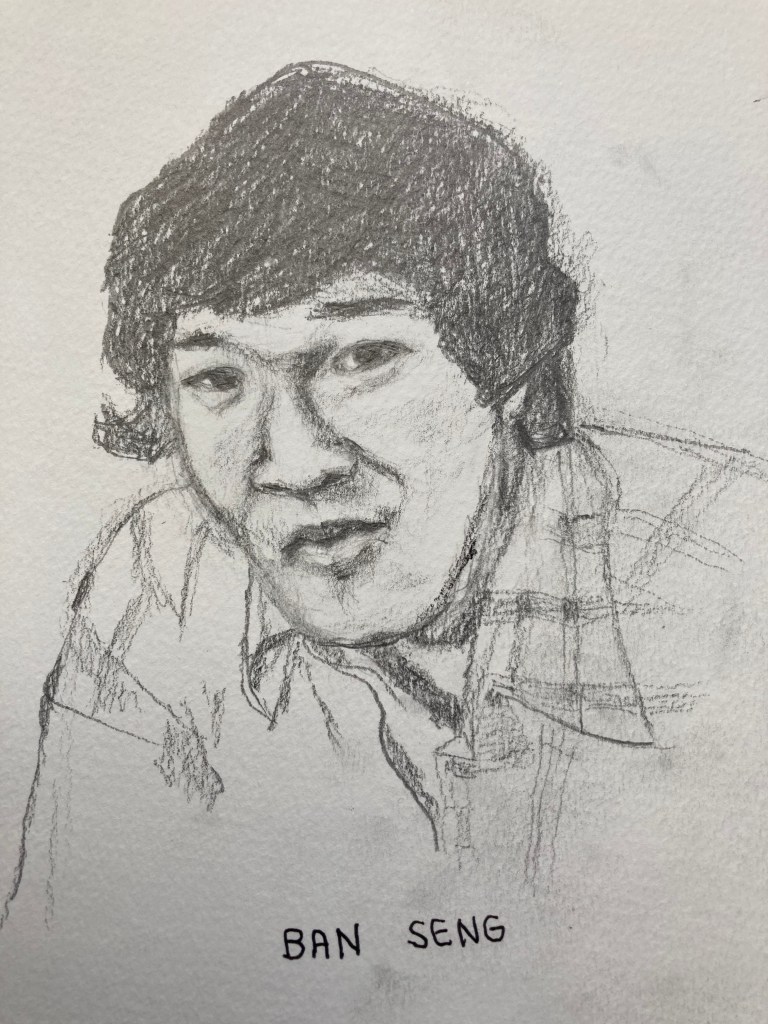
I often cop severe criticisms for thinking aloud. It takes guts to ponder and ask questions in one particular WhatsApp chat group I belong to. Belong. That’s such a reassuring word. It conjures in my mind a sense of being accepted, welcomed and it informs me I have earned some entitlement as a member of the group. But, that sense of entitlement is incorrect – try and exert a right to think out loud in that group and the axe will fall swiftly on those who dare. I am anointed the annoying one. The one who asks annoying questions, about anything (including religion, even though I know it isn’t wise to). The one who is most likely to crack old dad’s jokes – it makes me a rather disagreeable fellow. The one Red Devils’ supporter who openly criticises their supposedly talented millionaire players. My friends have therefore good reasons to pick on me. They think when I think out loud, I speak without using my brain. They conclude I’m the empty vessel, making noises without proper deliberations. On a few occasions, their comments have been scathing and hurtful. “Why don’t you think with your brain?” A voice from the North asked. I’m called many names, such as NATO, no action, talk only. A well-disguised word for a blowhard, a blusterer. Boisterous and pompous without any solution. One even calls me a eunuch, presumably insinuating I don’t have balls, that I am gutless. Maybe that’s a bit unfair. They don’t all dislike me. Ban for one isn’t like that. I’ve known Ban since Standard 1C. We were seven and growing up fast. Somehow with Ban, I had to grow up faster. He once told me his initials do not mean bullshit. By the time we were eleven, we had already formed the Dynamic Duo. He was Batman and I was his sidekick. In truth I was his psychic, I knew who he was going to fall in love with well before he realised it. How did I know? Easy. He loved all of them, such was this Romeo. During the day, I spent much of my time in his house when we were not out gallivanting on our bicycles. Correction, during meal time to be precise. I was there so often that they must have felt I was part of their dining room furniture. It was from then on that I learned to appreciate free meals. Meals given free of conditions – without obligations and without expectations that I had to pay back. Meals free of invitations. Somehow they just assumed I’d stay for lunch or I’d turn up for lunch. It was a habit formed – I’d just follow Ban home. I was not a relative, yet was very much part of his family. I loved his mum, she was “auntie”. She often rambled in her foreign dialect with no regard. She just knew I’d understand her. Her Heng Hua dialect may be somewhat similar to hokkien if we compare just the pronouns. Auntie’s accent was foreign and her words, indecipherable. Yet, I understood her well. “Shit shit” meant “eat, eat”. She taught me not to fear foreign languages. I have become so proficient in many dialects that I sometimes confuse people. In hokkien, “wa bei” means I bought it and “e bei” means he or she bought it. When asked where the algaecide for my pond came from, I told my sister her husband bought it but somehow she insisted I told her it was from eBay. But with auntie, there were never such frustrating misunderstandings. I always knew she meant sit down and “shit” when she placed food on the table for us. I can still visualise her rocking a little from side to side when she walked. I thought it was the excess weight she was carrying around her waist and legs that made her waddle. But having witnessed the same gait The Mrs had, I now realise auntie suffered from bad hips too. Ban’s dad was “Ah chek”, or uncle. Also from Putien, he managed to lose most of his Heng Hua accent. A very kind gentle man who rode his bicycle to work – a salesman of a spare parts businesshe was never without a smile. He would always stop and say a few words to me. He gave me his time. The most precious thing we have. Somehow, I had the wrong impression he was very old. I suppose my little nieces would think I’m very old too. It would not surprise me if they think I leave a trail of dead skin wherever I go. They burst into tears when their eyes meet mine though, old and harmless I may be. I suspect it’s my Rasputin hairstyle that frightens them. But not Ah Chek. He was the opposite of scary. A Chinese Santa with a prominent gold tooth filling actually, such was his kind and generous demeanour. I am again reminded of the word. Belong. Ban’s folks made me feel that. I was part of their family. That is the most amazing gift we can give someone. To treat a person like they are family. To make them feel they belong.

Ban and I grew up together in the tropical paradise that was Penang. Both cubs, we became Boy Scout leaders. I was the one with the triple white stripes first. Ban got his after me. That’s my way of saying they sacked me and appointed him as Troop Leader instead. But I got the recognition and promotion before him. Annoying, but an undeniable fact. He was raging with testosterone well before me though. His sister’s Honda Life gave him a new lifestyle – I was his navigator – the front passenger seat was reserved for me. I never knew what it was like to be sardined with six others in the back seat. Some were bashful young teenage girls whose shyness and inhibitions were likely cured after one session in his car. I don’t think anyone could have remained reticent after an intimate car ride in Ban’s car. He had an acute predilection for the windy roads from town to Tanjung Bungah, swerving abruptly as he manoeuvred the bends like a Formula One driver. I was too embarrassed to look at how the backseat passengers would have clung to one another during the exaggerated swerves. It wouldn’t be too difficult to imagine the chaps accidentally pressing their bodies onto the girls. No one ever protested about the rough rides. Except me. Ban became SuperBan after that one incident. He had to have skills like Superman’s, I remember noting in my mind. He denied he was suicidal the way he hurtled side to side, hugging his Mini along the windy road to the beach town. His girlfriend had a tiff with him and he took to drinking that day. I went to lend him my ears like a best friend would but I think I left some of my guts somewhere along that stretch of road, so scared I was of dying in a car crash that afternoon. But SuperBan’s driving skills shone like only a superhero’s can. We survived unscathed but not unscarred. He was scarred by his first lover’s jilt and hopefully by the guilt I poured on him. “You could have killed us!” I screamed at him after that episode. “But we didn’t!” He protested. “You should trust me!” He added. “I do but I don’t know the other drivers. How good are their driving skills?!” I thought out loudly. Back then, I was allowed to think aloud. 

SuperBan, he is our superman in school

Heel To Heal

Murray has taught me how to be a better human being. I have learnt so much from him since he came to stay with me three weeks ago. My son is away in Hokkaido on a skiing holiday. So, I grabbed this opportunity to bond with Murray – not that I had the choice to decline the offer. My son simply left him with me as he whisked himself into the cab. We have become inseparable pals, so special has been the affinity we have for each other. I have even set my alarm clock 30 minutes early so that we have more time together. Without exception, when I wake up every morning, I would rush downstairs as soon as I complete my daily routine in the toilet. We are pretty much each other’s shadow. He not only accompanies me to work, he spends his whole day in my office! After work, on our way home, we would stop by the reserve opposite my house. There we would have a stroll together and I would tell him how my day was. Sometimes there are good news, but more often, it is the stress from work that I impart on him. I would pour out to him all my frustrations with unreasonable customers. Murray is such a great listener. I have re-learned the art of listening from him – he does not ever interrupt me when I speak, and he is not the argumentative type. He is totally not judgemental. Unlike many around me, he simply goes with the flow and accepts my point of view. Sure, undoubtedly he will see things from his own perspective but the respect he has for me is abundantly clear. He allows me to vent out my stress without once standing on my customer’s side.

What a champ – that is real friendship. Unconditional. I suppose he knows how ridiculous my customers can be. Before my business went online, we were a brick and mortar business which followed the trend in the 1990s and expanded via a franchise system. At our peak, we had 17 stores, all based in shopping centres. The advent of online retailing into the mainstream of Australian households from 2007 saw a paradigm shift in the behaviour of consumers. The Global Financial Crisis struck in 2008 and it became apparent soon after that the concept of having retail stores in shopping centres was no longer viable. Thankfully we started our venture into online retailing in 2006 selling on eBay. Our online sales were growing steadily and this allowed us to close unprofitable stores and consolidate. Our website was turned into an e-commerce store in 2011 and today we are a pure-play online retailer. It was an arduous 20 years in retail, serving customers of whom many were merely tyre kickers, there to enjoy the air-conditioning on heat wave days or heating on cold wintry nights. I was polite and subservient from behind shop counters, often biting my tongue to secure a sale. It was the time spent in retail that made me see the ugliness of human beings. Earthlings definitely became urghhlings through terrible retail experiences. Their lies, the manipulation, the petty thefts, the physical threats – that was just from customers. Shopping centre landlords were equally bad if not worse – the lawsuits, the forced expenditures on expensive shop fit-outs, their backdoor deals with trade unions, their greed, their crippling rents. The following decade has seen me serving customers from behind computer screens instead. They are still urghhlings, uglier actually; people are ruder, as dishonest and extremely impersonal behind their computer screens. Urghhlings can be really vicious with their unfair and unfettered online reviews. They behave like they enjoy the opportunity to bring down a business with exaggerated half-truths or distortions and lies from their keystrokes. Their chance to exert authority on social media much like how a parking inspector relishes his job when he issues you a fine. He knows he is both judge and executioner and there is nothing you can do about it. They behave more foolishly too behind their screen. I normally avoid describing someone as foolish, but in my daily dealings with the public, I see too much dishonesty and unreasonable behaviour when people hide behind a screen. Being faceless and nondescript, they become emboldened as they heap abuse at us. They can be as odoriferous as a basket of rotting fish, really. They would buy seat covers for their quad bikes and expect the bike with it. They would enquire about the sidesteps of their car and ask how many kms it has done. When their parcel goes missing, they would expect compensation even though they opted out of insurance for loss in transit. In the reserve, I would share with Murray all that and more. He listens, always intently. He does not insinuate some of the problems could have been my own doing. He unwinds my tensed up nerves. He heals me and then we go home. I should have met Murray a long time ago. There is so much more I have learned from him. For instance, the way he greets me in the morning is unquestionably the best way anyone should greet a friend or spouse. He exhibits unrestrained pleasure when he sees me walking down the stairs. Yes, the guest room downstairs is now his domain. It would not matter if I greeted him with ruffled hair and teeth unbrushed. It would not matter if I had just expelled some overnight flatulence and the ensuing trail had followed me downstairs. It would not matter if the night had been humid and my body stank of garlic and turmeric. Murray would greet me good morning the same – exuberantly. He literally jumps with joy. He is so endearing; this is his way of welcoming a friend, every morning. Why not? Better that than the way The Mrs greets me. She is usually startled by my sudden appearance as I walk into the kitchen from the garage. “Aiyuh! Why don’t you make a sound before you enter the house?” With eyebrows furrowed and a voice as tangy as a half-ripe grapefruit, that is how she welcomes me home after a long day in the office. Whereas Murray makes me feel valued like a deity and cherished like fresh air when he greets me. I have learned this and I too, am beginning to greet people enthusiastically. Hopefully, The Mrs will feel I am finally treating her like my God.

1, 2, 3, … 19, 20!

Rain or shine, Murray and I would go for a morning run. Well, it has not rained in the past three weeks, so we have not missed our daily morning exercise yet. What I have missed is UEFA Champions League football. I would have been lazing on my couch the past two mornings, watching Europe’s best footballers play if not for Murray’s strict discipline. He must have his morning run. I hate jogging, so I walk instead and throw balls at Murray like an Aussie fast bowler to strengthen my arm. Before Murray’s regimented discipline, I could manage only 3 dips at a time. Yesterday, I could do 20. My son encouraged me to do dips, as they strengthen my upper body. A couple of blokes almost half my age at work cannot even do one. So, I am mighty proud of myself; it does not matter if I have maybe counted wrongly. Murray’s affinity with me has reached a new level. Sometimes, words are no longer necessary, such is the intuitive rapport and understanding we have with each other. A gentle nudge or a tap on my hand will tell me he is enjoying his meal with me. Without asking, I will quickly top up his dish with his favourite serving of Atlantic Salmon or minced pork balls. My son reminded me Murray is on a no-salt diet but I found out he is actually quite partial to the occasional “tao yu bak” or braised belly pork in dark soy sauce. Unlike some of my friends, he does not need a reminder to eat his greens. He loves fruits too although he is prone to reject those bruised by ants or gnawed by garden mice or possums. He is a guest – I cannot tell him he is being fussy. We do not throw away home-grown organic fruits.

Murray finds my life boring. He is naturally fun-loving and mischievous. When I cannot be disturbed at work, he would rather nap than find a hobby to keep himself occupied. He does keep the staff on their toes though – he would show his discontent with them whenever they come into my office and bother me with inconsequential matters. A bit embarrassing really, I wonder if he makes them feel “chased out” of my office. But, he is right. They should be able to “problem-solve” without me by now. Quite often during the day, he would drop subtle hints that we should go for a walk around the block. The office workers in the neighbourhood find him extremely attractive. And adorable, I think. One lady even called him a spunk and asked for his name. I was surprised the gorgeous young blonde did not ask for his number, the way she was eyeing his taut torso and touching his back. I have learned so much from Murray. When a super attractive lady asks for my name next time, I shall remind myself to act like Murray – puff my chest out, stop slouching, stand strong and straight, and be very attentive with genuine confidence. But, I will need to pretend I have his beautiful round eyes and wear a sweet smile.

After dinner time, the next best time of the day is of course TV time. Murray gets excited during action movies – the sound effects easily manipulate his mood. He is not one for movies that have lengthy dialogues. He would rate movies with implausible twists and turns harshly – not that I would watch such movies myself. I suspect he is an animal lover; movies with dogs and horses make him jumpy – he would be on the edge of his seat right through such movies. He is courteous and understanding. He knows not to bother me when I need my “me time” to write. So, he uses his “me time” quietly by lazing on the leather sofa. It is almost 9 pm – I should stop writing and take him out for a pee. Yes, Murray is my son’s dog. He learned the word “heel” when he was a pup. “Heel, Murray!” That means he is to walk directly next to us and at our pace. He knows not to drag the leash by walking slower or faster. Thank you, Murray. I have learned to heel as well. When we heel, we show respect and obedience. We start to listen rather than argue. We begin to offer genuine affection for those we care for. We demonstrate reconciliation which is usually accompanied by an apology. When we heel, we surely heal any conflict in our relationships. When we heel, we actually heal ourselves. Let me remind myself. To heel is to heal.

Murray, after his first home haircut

Indeed I Did

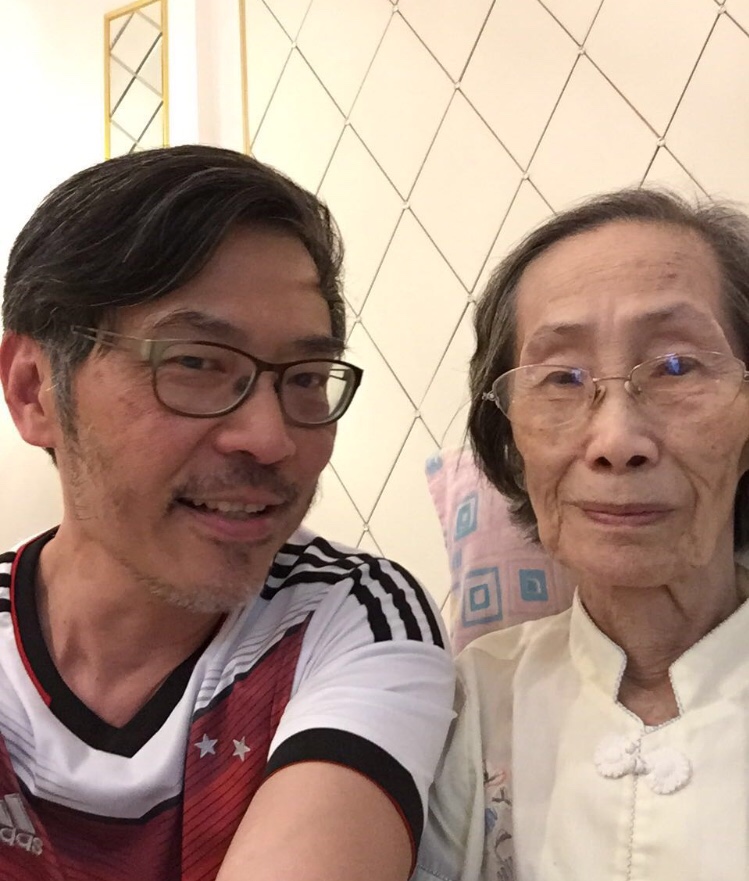
Ma’s younger sister, Ahyi, is close to exiting this world. Three nights ago, they FaceTimed each other. A poignant moment of a likely final goodbye. Ma left Penang for Australia in 1988. Her children were all already here, except for one daughter in KL and one in London. It did not cross my mind that Ma might have missed her siblings. A great distance now too far to bridge. They used to correspond by letters and then frequently by phone when overseas phone cards became popular. The popularity was of course price driven – which meant we had to go to Chinese grocery stores to buy them; any real bargains could only be found in Chinatown or in Arndale where the Vietnamese community congregated. It was many years later that such phone cards became available in Post Office shops. Before the advent of the phone cards, international phone calls were restricted either by ISD barring or to important occasions such as Chinese New Year and birthdays. Ma never caught up with digital technology till much later. The phone cards were cheap enough, dialling seemingly never ending codes to call “home” was no bother when the cost of an overseas phone call was something like six cents a minute! For Ma, it was illogical to consider buying a mobile phone to take advantage of free calls using Skype or Viber. But now with free Wi-Fi, FaceTime via her iPad has consigned Skype and Viber to the same fate as the overseas phone cards. Irrelevance. A distant memory.

Ma spoke very much like the older sibling. She always has been, I suppose. Their eldest sister, Jie. For their generation, Jie represents seniority, a ranking that is bestowed special respect. In her mind she may have earned it. No one disagreed, at least not publicly. Jie believes it and therefore expects it. Respect and therefore obedience. The generation after them would not enjoy such unquestioned privilege, no matter how big the gap in years may be. I never heard the sisters argue. Whatever their Jie said, no one countered. Although Ma left home when her sisters were both still very young, she was their go-to sister for advice and support during their early adulthood. “Be brave, sis, there is nothing to be afraid now”. Ma told her sister they had much to be afraid during their childhood and during the war but everyone has the same journey to face at the end. The path to the next world is a path we all travel alone. They had a tough life but there were also lots of good times. Ahyi’s husband succumbed to TB quite early, when their five daughters were still very young. Ahyi herself was also very young then, a widow at 34. Tuberculosis was a common death sentence in the 1950s to 1970s amongst the elders. It is now a treatable and curable disease. To my surprise, over 1.5 million people die from it each year, 44% of new cases occur in SE Asia. Match-made by my Pa when she was 17 to a Shanghainese man, Ahyi gave a slight nod to the proposal. Ma said her sister was visibly happy when she left for Ipoh to marry the handsome man. Six years younger than Ma, my Ahyi is also a nonagenarian. Quite a remarkable achievement, considering Ahyi was always a sickly woman. Fair in complexion, her high cheek bones and beautiful eyes that shone kindness made her very attractive. Coupled with her elegance and porcelain-like fragility, her feminine qualities were such that she was known in Bayan Lepas as the beauty from Shanghai. Had Ahyi been born into a wealthy family, she would have assumed the role of a classical Shanghai woman with aplomb, such was her beauty and poise. I imagined she would have played her “dia-dia” card in her “Qibao” or cheongsam, overtly and overly gentle and charming. When I was little, it worried me that she was so light and petite that she could be blown off her feet by a light breeze. Her usual posture was sitting down with her right hand feeling her forehead whilst complaining about dizziness or headaches. When we were kids, we knew it to be rude to call our elders by their names. No, it was a no-no to call her Wei Leh Ahyi. That is her name in their Ningbo dialect. Instead, it was somehow alright to call her by where she resided. She has always been my “Balapai” Ahyi, or auntie from Bayan Lepas. We love you, Ahyi.

My thoughts have been with my Balapai Ahyi all day. I shared my “prayer” with friends and family, hoping the power of the zeitgeist may work miracles. I have not prayed since 1977 – at that point in my life, it dawned on me that God was too busy with so many crises that my problems were too petty to bother Him. I rationalised that there was no point talking to Him – it became obvious to me the way to contribute was not to add to His workload. “Don’t ask for favours!” I yelled at myself.

“May she be free of suffering and pain. May she be comfortable and at peace. May she know we all love her dearly.” When one of my family sent me his condolences, I said “oh no! I have misled you! My Ahyi hasn’t passed away!” Indeed, I did mislead them.

A selfie with Ahyi, three and a half years ago

Last night, two sons in Singapore shared their meal with me on WhatsApp. Their Teochew steamboat had the usual favourites – slivers of wagyu beef, drunken prawns, cockles and other delicacies. A scrumptious meal always reminds them of home, especially a hotpot using shark bones as stock. The Mrs was right. A mother’s radar from yesteryears proven spot on, yet again. Cook the boys good meals, and they will always come home (or remember home, at least). “Steamboat? In Singapore?!” I protested. “Don’t you know a steamboat dinner spread COVID-19 to a family of ten in Hong Kong recently?” A steamboat is a cauldron of boiling soup from quality stock in which diners dip their bite-size pieces of meat, seafood and veggies to cook in. Once the food is cooked, it is usual to then dip it in a variety of different sauces of one’s choosing. The communal way of sharing a meal has never been a problem for us Chinese, but the coronavirus is yet another reminder that the practice of touching a shared dish with one another’s chopsticks or spoons is best discarded. China’s largest steamboat chain, Haidilao, has closed all its outlets in mainland China whilst the outbreak is not contained. “And you guys are still so reckless to have steamboat?!” I did over-react, succumbing to the mass paranoia temporarily. Indeed, I did.

Coincidentally a friend, Swee Fuan, posted the latest COVID-19 statistics from thestar.com.my. 80,248 cases, 2,704 deaths. In Singapore, 53 have recovered from 90 cases with zero deaths. Perhaps, a good enough reason for my sons to behave normally. Most disturbing are the stats from Iran, 15 deaths from 61 cases, zero recovered. The fatality rate there is 24.5%, well above the 3.3% globally. Apparently, the officials in Iran are refusing to impose quarantines, believing quarantines are old-fashioned and do not work. The Shia shrines in Qom are still open, despite Qom being a hotbed of COVID-19. I woke up this morning, and simply shrugged my shoulders. Indeed, I did.

Astargfirullah Hal Azeem! Redeem Me

Astargfirullah Hal Azeem! Noor cried out after having been shown a horrendous video of a traffic pile-up involving countless semi-trailers rear-ending passenger cars and bursting into flames inside a tunnel in Japan. Astargfirullah Hal Azeem!
Muslims are inclined to utter this exclamation, asking for forgiveness for their own sins and those involved in any mishap. It is a teaching in their religion whenever there is a calamity resulting in loss of life and/or property to ask Allah for forgiveness. It is a lovely practice when in times of trouble, we naturally pray not just for one’s own redemption but also for those we do not even know.

“Astaghfirullah Hal Azeem al-lazi la ilaha illa Huwal-Hayyul-Qayyum wa atubu ilaih ”

“I seek the forgiveness of Allah the Mighty, Whom there is none worthy of worship except Him, The Living, The Eternal, and I repent unto Him”..… even if one has committed sins as much as the the foam of an ocean, still one will be forgiven. [Abu Dawud- 2:85/ Tirmidhi 5:569]

They say “distant relationships” do not work out. I have met Noor for maybe five times in the ten years I have known him. Yet, he remains a dear friend of mine. A special human being. A friend for life, I hope. That would be a privilege. Inappropriately, I write about him in a blog about urghhlings. My blogs are usually about the ugliness of Earthlings. Humans are mostly ugly, not all the time, but their selfish genes raise their ugly heads too frequently. So do their vengeful wicked genes. At the height of the COVID-19 outbreak, we read about Chinese nationals being arrested for defying orders to wear masks – a social responsibility to reduce the spread of the virus at the epicentre of the contagion. CCTV cameras in lifts showed people spitting onto the buttons and smearing their spit on the doors. There was the case of the American woman on the balcony of the Diamond Princess defying the quarantine order, openly socialising with her neighbour in the next balcony not quite a meter away. Similarly, the Oregon man, comedian Frank King who sneaked out of the cruise ship Holland America during his 14-day quarantine. He finally got the whole world laughing at him. The World Health Organisation reported yesterday there are 76,785 cases now with 2,249 deaths. Many more will be reported for awhile yet, whilst people continue to be reckless and selfish. Urghhlings also too often reveal their greedy genes. JP Morgan’s own economists reported that our planet is on an unsustainable trajectory, heading for ecological oblivion from the climate crisis. “We cannot rule out catastrophic outcomes where human life as we know it is threatened”, notes the paper, dated 14 January. JP Morgan are one of the world’s premier financier of carbon-intensive industries such as oil and gas. They will continue to fund climate-destroying endeavours whilst there are massive profits to be made. In university, I was taught capitalism works well because we have (almost) perfect markets. The sharemarket and foreign exchange market are commonly thought of as having perfect information and therefore perfect pricing. Yet, this is obviously false as the cost of damages to the planet are not charged to the users and producers of CO2 emissions.

My good friend, Noor

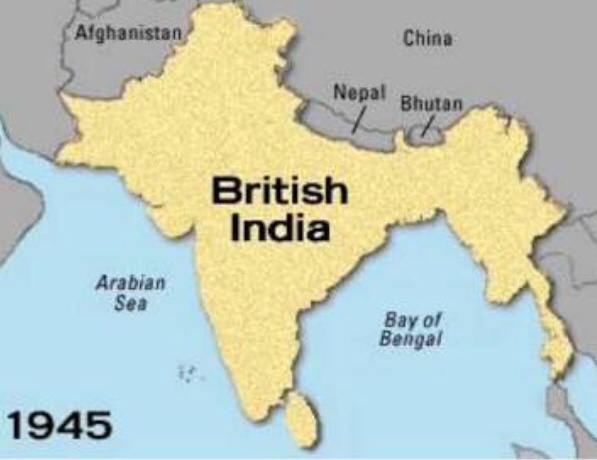
When we meet someone, it is normal for that person to break into a smile. But Noor doesn’t, because the smile is a permanent feature of his face. He perpetually flashes his snow white teeth, maybe the white is enhanced by his dark skin. I imagine he smiles whilst he sleeps but without exposing his teeth – that would be too scary! Noor’s kindness and calm persona is reflected in his face and in his voice. His father left India as a 12 year old, and later married a Singaporean whose parents were Pakistanis. Noor is therefore part Indian and part Pakistani. But he is not a product of the India-Pakistan conflict. If only the two nations could learn from Noor’s parents – love their common traits rather than hate their perceived differences. Undoubtedly, it was easier for Noor’s parents, they were both Muslims, whereas predominantly Hindu India and Muslim Pakistan faced turmoil and suffered bloodshed from their separation. Pakistan was an Indo-Greek kingdom from 155 BC for about 200 years, thus early artworks had Greco-Buddhist influences. For most of its early history, Pakistan was ruled by Hindu empires. Islam arrived in 711 AD, 79 years after the death of Prophet Muhammad. India’s documented history goes back to the Mauryan Empire when in the third and fourth centuries, Chandragupta Maurya ruled all of Afghanistan, Iran, Iraq, Syria and the Indian sub-continent. The next 1,500 years were the Golden Age of India where much of Indian business, civic systems, culture, Hindu religion and Buddhist philosophy spread to many parts of Asia. They were ruled by the Turks (14-15th century) who introduced Islam to them and later by the Mongols (16-18th century) during which the Mughal Empire was the largest empire the world had ever known. When the British controlled the sub-continent, India was called British Raj or British India. After 89 years, the British left in 1947, partitioning the land into secular (mainly Hindu) India and Islamic Pakistan. The partition saw the biggest mass migration in history, some 14 million displaced and over a million deaths. Divided by religion, there have been many skirmishes and four wars between the two countries since independence. Astargfirullah Hal Azeem! May the Brits be redeemed for meddling in affairs they had no right to be interfering in. Delineating land based on religion brings more division and less diversity. More conflict and less security.

Noor is a private man. Wise, circumspect and prudent, he has been a well of advice and fatherly support for my son in Singapore. Thank you Noor for being that bottomless source of friendship and good tidings. Thank you for showing the beauty that’s still around in this increasingly ugly world. Thank you for praying for others when others pray for only themselves.

The Right To Have Human Rights?

In the history of mankind, the first evidence of a written law to protect our human rights was the Magna Carta of 1215. Ironically, it was created under duress. Threatened with civil war by the powerful barons of the day, England’s King John agreed to a charter of liberties that would ensure no one would be above the law, including himself and all future monarchs. Thus, the first written rights protecting our life, freedom and property were introduced. These cannot be taken from us without due process of law. That sounds right, I want it too. It is numbing therefore, to realise it took the world until 1948 to produce The Universal Declaration of Human Rights. The atrocities of WWII hastened the need for a formal document to affirm the universal respect for and observance of our inherent dignity and of the equal and inalienable rights of all human beings. Finally, a clear and undeniable right to amongst other things, freedom of movement, thought and religion; to be free of slavery, torture, degrading treatment, and have equal rights to education, marriage, property ownership, security and equal pay. Importantly, the will of the people shall be the basis of the authority of government. Recently, gay rights have been won in many parts of the world. A right to be gay, a right to marry someone of the same sex or indeterminate sex. Clearly, this new right won by a “minority” has been given urgent priority over other rights such as the right to basic health care. It is a legal right that has been granted by many jurisdictions around the world. However, it is not a human right, according to the 2010 ruling by the European Court of Human Rights. Neither does the Universal Declaration of Human Rights address the hugely important issues of health, happiness and harmony. I have preciously carried with me these three H’s all my life, wherever I go. It leaves me dumbstruck that the world did not consider them important. Have I been wrong all this time to wish them upon my friends and family, above all other wishes? Health, Happiness and Harmony. What do we have that can be of any relevance without our health? What is the use of equal pay and a gay marriage without happiness? Without harmony, what is the good of freedom of movement or freedom of religion if every corner is war-torn?

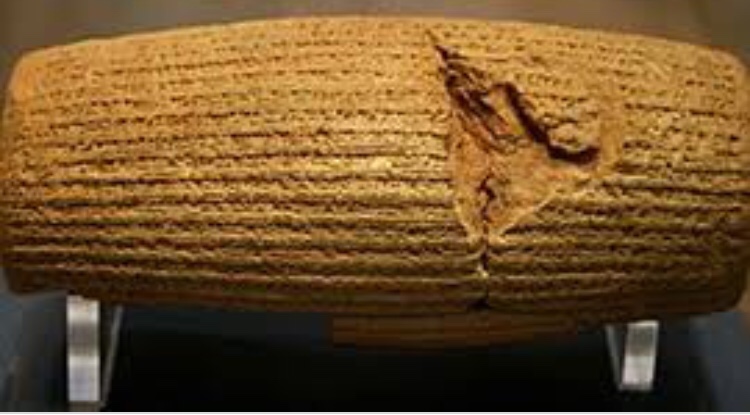
Human rights were first annunciated in 539 BC when Cyrus conquered Babylon. He freed the slaves and declared that all races were equal and everyone had the right to choose their religion. The Cyrus Cylinder, a clay tablet containing his statements, is the first human rights declaration in history. Human rights is man-made, it does not exist in nature. In the wild, it is the fittest and strongest that rule. The ones with weak genes do not survive. We obliterated our distant cousins, the Neanderthals. There was no law in nature that compelled early humans to grant equal rights to others. The right to life belonged to the strong. Dignity did not exist either. Did Adam and Eve cover their bodies? Peed and pooped in their own private corner behind some shrubs? Rights to dignity exist today but try and use a toilet in a public place that displays a W4CO sign – washrooms for customers only. Two years ago, a Canadian woman denied access in a Tim Hortons store defecated and threw her faeces at employees. In early human history, I suspect the weak or dying did not demand a dignified death; they were very likely left to die on their own if their tribe could not fend off a marauding attack by enemies or predators. Slavery in America did not officially end until 1865. The Christian folk did not agree that black Africans had a right to freedom or that the rape and torture of the slaves were a deprivation and degradation of their dignity. After the defeat of Saddam Hussein, America lost their status as moral leader of the free world when they could not hide the inescapable facts of having lied to start the war against Iraq. They convinced very few allies about the imminent threat to the world from Saddam’s non-existent weapons of mass destruction. Did they ask the Iraqi people if they wanted or needed to be saved from their leader? Did they ask the Iraqis if they wanted a new government? Hundreds of thousands died and over 4 million displaced from their homes. A crime against humanity over weapons of destruction that did not exist. Later, they engaged in horrendous acts of torture and unlawful deprivation of freedom and dignity on suspected Al Qaeda operatives, captured in the War on Terror. Human rights are man-made and therefore can be easily revoked or ignored by man.

“Thou shalt love the Lord thy God with all thy heart, and with all thy soul, and with all thy mind. This is the first and great commandment. And the second is like unto it, Thou shalt love thy neighbour as thyself” (22:37-39). A heart that is filled with love for God naturally overflows. Human rights is, for many, the natural right that flows from God’s love. For them, anything given by God cannot be denied. But, rather than man’s rights, it may be more appropriate to argue that only the man’s rights come from God. The woman’s rights are often excluded. Unfortunately, the Old Testament is littered with too many uncomfortable “truths” about the lack of human rights for the woman. In Exodus 20:17, Eve was told that Adam would rule over her. In the Ten Commandments, the wife is clearly the husband’s property: “Thou shalt not covet thy neighbour’s house, thou shalt not covet thy neighbour’s wife, nor his manservant, nor his maidservant, nor his ox, nor his ass, nor anything that is thy neighbour’s.” Numbers 5:12-28. Just as harsh for the woman as a rape victim in Ephesians 5:22-23, if she were a single woman, the rapist shall give 50 shekels of silver to her father, and she shall become his wife. But her fate would be disastrous if she happened to be a married woman or was already engaged to another, in which case, she would have to be stoned to death. Today’s women would have to forget about the apostle Paul’s view on women. “Let your women keep silence in the churches: for it is not permitted unto them to speak… And if they will learn anything, let them ask their husbands at home.” 1 Timothy 2:13-15. and, “Wives, be subject to your husbands as you are to the Lord. For the husband is the head of the wife just as Christ is the head of the church.” 1 Corinthians 14:34-35. In Job 31:10, the guilty man absolves his own sin with this statement, “then may my wife grind another man’s grain, and may other men sleep with her.”

The Australian Open proudly announced that they are the only Grand Slam event that pays equal prize monies to both the men’s and women’s singles champions. They may be the only sports event that does. But, how equal can it be when the women play best of three sets, i.e. often playing three sets less than the men? Advertising revenues commensurate with the length of live telecasts. More game time means more advertising dollars. Equal pay in this case does not mean equality is achieved. Many Australian companies have difficulty paying actual pays. Paying equal pays would be even harder. In recent times, many big firms have publicly apologised for wrongfully underpaying their employees. Coles today admitted to underpaying their staff by $20 million. Last year, it was the ABC, Bunnings, Woolworths ($300 million), Super Retail Group ($32 million), Commonwealth Bank ($15 million), Qantas and many more that cheated their staff. The principle of equal pay for equal work was recognised in the Declaration of Human Rights over 70 years ago. Yet, the gender pay gap persists.

It seems odd to me at first that the West is not disgusted by India’s caste system. Their caste system is extremely discriminatory. Introduced over 2,000 years ago to categorise peoples’ occupations, it became hereditary – one was born into a particular caste and could not alter their social status. Pity those born outside the caste system, they are the condemned, the untouchables. The untouchables are deemed so vile that even their shadows must not touch the other castes such as the Brahmins. When a Brahmin walks past the untouchable, the latter must lie face-down on the ground. India, with a comparable population size as China, will eventually rise to be the other economic powerhouse. Currently, their economy is 1/5th the size of China’s and as yet, poses no threat to the US. This may explain why there is no uproar nor furore in the West about India’s caste system, such is the obvious abuse of human rights.

Human rights have been in the news a lot, of late. But, it is not about the threat to wind down the hard-won basic health care in America. Ever since he won the presidency, Trump has attempted to overturn Obamacare, yet his supporters do not seem perturbed by the loss of their health insurance should Trump get his way. After all, health care is not a human right. It is also not about the nearly 70,000 children held under detention without their parents in America, at the Mexico border. In addition to the rights as human beings, children and their parents enjoy special rights due to their relationship. These special rights are also ignored, if not forgotten by the Americans. Today’s news is no longer about the invasion of our privacy by the National Security Agency (NSA) as revealed by Edward Snowden. The NSA collected 5 billion phone records a day in their surveillance program of their citizens as well as foreign dignitaries and just about any world leader of note including Angela Merkel, Nicolas Sarkozy, Benjamin Netanyahu, Ban Ki Moon and François Hollande. Do we not have an alienable human right to privacy? We frequently read about Trump and Pompeo strutting the world stage, feigning abhorrence as they allege that Huawei is obliged to spy for the Chinese Communist Party. The presumption of innocence is a human right, but conveniently ignored for the Chinese. Boris Johnson, say no Chinese 5G or there will be no Five Eyes! A study from the University of Michigan, Rutgers University and Washington University found that police is the sixth leading cause of death of young black men in America. One in 1,000 black men will be killed by police during their lives in the land of the free. Meanwhile, black deaths in custody have worsened in Australia also. But, there is hardly any furore about it in mainstream media. The right to life seems to have been conveniently forgotten in many parts of the world. Yet many, especially in the West, seem very concerned about the lack of human rights in China. America has been especially busy protecting human rights of Hong Kong, Tibet and Xinjiang, all territories of China. The US House of Representatives last month overwhelmingly passed the Tibet Bill, providing a plan to sanction Chinese officials who “interfere” in the Dalai Lama’s succession. A month before that, they passed the Uighur Act, requiring Trump to act decisively against Chinese officials who purportedly issue crackdowns against the Muslim minority in Xinjiang. At the height of the riots in Hong Kong which many in the West refer to as pro-democracy street protests, the US House passed The Hong Kong Human Rights and Democracy Act of 2019, a US federal law that requires the US Administration to impose sanctions against Chinese and Hong Kong officials who commit human rights abuses against student protestors. Tibet has been part of China for 750 years since the Yuan Dynasty ruled over it in about 1270. It was British troops that invaded and conquered Lhasa in 1904, leaving the holy city in ruins. It was only after the Qing Dynasty collapsed that Tibet declared independence. They signed a treaty with the British who recognised them as an autonomous region. The meddling Brits were of course acting on self interests, even though they were so far away from home. Before the Chinese took back control of Tibet in 1950, no Western country ever accepted Tibet as an independent country. It is only very recently in Tibet’s history that the West has shown a desire to defend their human rights. The question must be asked, why have they decided that Tibet is now a separate country from China? The cynic will see that human rights is merely a tool for some Western countries to wreak political havoc and social discontent on countries that they are against.

According to statistics from the China National Tourism Administration, over 131 million Chinese tourists travelled overseas in 2017. If we hear frequent news of defectors or Chinese tourists refusing to return to their homeland after their holidays, it would be logical to deduce that perhaps the accusations about human rights abuse in China were true. But, we hardly hear of any defections. So really, how unhappy are the Chinese about their lack of human rights? China’s top priority in promoting human rights is the eradication of poverty. The World Bank reported that over 850 million people have been freed from the scourge of poverty in just over three decades. China’s poverty rate fell from 88 percent in 1981 to 0.7 percent in 2015, a feat no other country has emulated or achieved. Whereas in 2017, the official statistics reveal over 39.7 million Americans lived below the poverty line, a poverty rate of 12.3%. Australia’s poverty rate of about 11% is on the rise also, even with our relatively generous social welfare packages. A whopping 20% of British people live in poverty, some 14 million of them in 2017. Why is it not a human right to be freed from poverty? Quite easily achievable, considering the US and UK will spend over $980 billion this year on military weaponry. Just funnel half of the military budget for social benefits instead. The Brits call it Defence spending, but the Americans call it their Military budget. Quite clearly, they are not for the defence of their country. Why do we humans not have the right to live in peace and harmony? Too many urghhlings around, that’s why.

The Cyrus Cylinder

Mum About Mum IV

The war was over! The Japanese surrendered on September 2, 1945. Although the Royal Marine commandos returned to a hero’s welcome the following morning, their landing on Weld Quay did not lend confidence to Pa to stay put in his rented shop on Bishop Street, just a stone’s throw from the quay. The unfurling of the Union Jack at the front of The Eastern and Oriental Hotel with much fanfare did nothing to soothe Pa’s anxiety either. The Japanese POW’s were marched along Penang Road and shipped out of Penang Island in ferry boats that would take them to the mainland in Prai. Pa and Ma gathered their few precious belongings plus about $40 in cash and one leather briefcase heaving with “Japanese paper” and hurried off to a relative’s property at Ser Dio Lu, Fourth Street in the countryside. There, they and their first child, a daughter who had been born in October 1943, would hide quietly with a few other families in a timber house on stilts. At the time, Ma had just turned 20. Childbirth was not frightening for her. Bringing up a baby was also not daunting for the first time mother. It never crossed her mind to be worried. There was no one to turn to for support. No advice from anyone to reassure her. Ma’s mother lived in Bagan Datoh, a distance as far as a distant memory. The wife of Pa’s blood brother came with two home-made nappies. A Chinese style shorts that open from the front without buttons or zippers. Those were pre-singlets and pre-undies days. Every garment was made at home. At the Ser Dio Lu house, they used palm leaves to separate their living quarters from one another. The Koo family had fled Singapore two years earlier but they were no better off in Penang with the Japanese embarking on the same Sook Ching that spread from Singapore. The Koo’s would eventually establish Penang’s first piano shop, called World Piano. There were two brothers who owned Penang’s soya sauce factory. Those men did not experience starvation during the war years; they were dog eaters. They also hunted wild rabbits and bats to make curries. I have always known Ser Dio Lu as Fourth Street in the Shanghainese dialect. Everyone else knows it as Anson Road – today, it is just a short distance from the city centre, part of Georgetown’s Inner Ring road. Pa’s assessment of the security vacuum after the Japanese left was prescient. The returning British presence did not have the muscle to police the town effectively. They failed to quell the hunger riots which would claim a few lives and destroy a few more properties. Pa was also worried about vendettas. Those suspected of being Japanese lap dogs were hauled away never to be seen again. Pa’s shop on Bishop Street was inconveniently close to the Japanese headquarters at Fort Cornwallis. The fort was built with bricks by the British after the Sultan of Kedah fell for Francis Light’s treachery and ceded Penang to the British East India Company. Completed in 1810, two years before the ignominious defeat of Napoleon Bonaparte in the Napoleonic War by the Russians, the fort’s purpose was to protect Penang from pirates and perhaps as a deterrence to Kedah. Who would have imagined that 130 years later, it would become a strategic military location for the Japanese? Some of the Japanese officers were housed in the fort. One of them happened to walk past Pa’s recently bombed dry-cleaning shop just a few streets away. The shop banner withstood the devastation of the bomb that fell on the front of the shop house. Named “Standard Dry-Cleaning Co”, Pa intended it to set a new standard to dethrone the “World Dry-Cleaning Co” as the premier dry-cleaner in town. The Japanese officer made an offer that Pa could not refuse. Having been jailed and tortured by the invaders a few months earlier, he dared not refuse the request to look after their laundry needs. One could deduce that his decision was made easier also because his embryonic business was suffocating without the Europeans who fled just before the Japanese occupation. Pa’s business was started on the promise of expected arrivals of European expats who would dress well in the day and dress even better at night in lavish evening gowns that shimmer with glittering sequins and woollen suits and silk shirts for their hopefully frequent formal parties. That dream vanished when the British too readily surrendered, allowing the Japanese soldiers to leisurely cycle into the island.

Pa’s release from Wesley Church could be better argued as a daring escape. He was being transferred to Penang Gaol to join the thousands imprisoned there by the Japanese. When queuing up to the lorry that would transport the prisoners (presumably) to the Gaol, Pa decisively stepped sideways to his right and joined the shorter queue when guards were being distracted. April 20 1942 turned out to be his lucky day. The shorter queue was being released as part of an early celebration of Emperor Hirohito’s 41st birthday. The Tien Wang’s 天王 birthday was nine days later. Pa got home in a trishaw. He was already not lucid, feverish and nauseous from acute diarrhoea. Pa collapsed into the arms of the Indian tailor who was renting part of the front of his shop. Ma felt desperately useless that day. Apart from watching her husband writhe in agony, there was little she could do to help her husband who was by then oblivious to soiling his own pants. Someone sent Ma on an errand to buy opium ash. It wasn’t challenging as there was an opium den not far away. The small sachet cost twenty cents but it brought Pa immediate relief. A kati of samcham bak or belly pork fetched thirteen cents and a bunch of chaisim was two cents. Why was opium ash so expensive?! Many weren’t as lucky as Pa. Ma rattled off many names of those who perished. Many did not survive after their release from gaol. One died in a trishaw on his way home from gaol. His wife shrieked when his dead body arrived home. The nephew of the wealthy boss of Prai’s 三林 Motors did not make it either. Mr Yeoh was a PE teacher. Pa’s cell mate, a Malay by the name of Haji, visited Pa twice to check on his condition but on both occasions, Pa was “out gallivanting”, Ma’s version of 25 year-old Pa enjoying coffee with his mates in a nearby kopi tiam coffee shop. Ma was just 18. Bread was a luxury then, impossible to find. Even rice was difficult to afford – it was usual to cook it with lots of water. Rice porridge was more filling. The adventurous ones would join long queues for jagung or maize scraps to make bread, those swept from the grounds of Weld Quay, mo dei thung in Shanghai dialect, are more dirt than maize. Ma suspects it was the same people who punctured the sacks of grain at the mo dei thung who later swept them up after hours to sell them as scraps. Ma would be lucky only once to buy a loaf of bread, no butter or kaya coconut jam, just plain with sand. The partially bombed shop was rebuilt once Pa recovered from his ordeal. In a way, it was God-sent. A building damaged from war was free of rent. Business was almost non existent, so the rent-free status of the shop proved to be a lifeline for the young couple. The Japanese officer’s business offer could not be declined, such was the persuasive powers of authority with guns. The next day, Pa was escorted to the fort, briefed on the strict procedures and was handed a “ pass book” which allowed him entry to the Japanese quarters in the fort. The price for cleaning the officers’ coats was worth five cents each and their trousers two cents. But these were paid in Japanese banana notes, locally called that due to the banana motifs on the ten dollar notes. These were ridiculed as “Japanese paper”, currency that was not worth their weight in waste paper. Not long after the Japanese left, Pa brought his briefcase out of his hiding place and burned his savings of Japanese paper. He decided they weren’t even good enough as toilet paper.

Pa delivering dry-cleaned uniforms to a Japanese soldier