Nothing can knock me off the perch right now. I feel on top of the world. The only person who can possibly bring me crashing down would be The Mrs – she is that important to me. She holds sway over my domain. A twitch from her or extra loud footsteps from upstairs will be enough to make me sit straight. Did I mess up “her” kitchen? Did I produce excessive flatulence under the doona? Again?! That is her power over me. But, this week has been glorious for me. The Mrs knows I am floating amongst the clouds. Every cloud seems to have a silver lining. There can be no dark clouds over the horizon – this feels like the pinnacle of my life as a blogger, albeit in truth it is just a little peak. You see, it never crossed my mind that I could write and so prolifically since I started blogging in April this year. When I was a practising accountant, I knew I could write management reports well. Short, concise and illuminating to management, they would quickly understand the issues I highlighted in my reports. I did not beat around the bush. As the watchdog of the business, I viewed my job as watching over the integrity of the organisation. Every word had to carry weight, none was superfluous or unnecessary. But to write stories about people and places? And not be boring? That cannot be my cup of tea. That is in the realms of creativity. No, after all, they drummed into me enough times, accountants are supposed to be boring – only looking at the past – cannot be relevant and definitely cannot be interesting.
My book, titled Urghhlings, was launched three days ago, in fact. A book! Written by me! All 304 pages. Now that I think back to my school days, I recall I enjoyed writing poems for a short while and I got good marks for English. But, write a book? Never! It was not even a secret wish, the idea that I could write a book had not entered my mind. I never harboured a dream to write a book – it was in the realms of the impossible. Yet, there it is. In mint condition. Sitting in the office of my friend’s printing company. Wilson said he would print my book and he has. All for free. All for charity. When he first broached the subject, I thought little of it. But, I played along with the idea, just for fun. We talked about it in the group chat, all proceeds to go to the Class of 1975 alumni which we call LaSaints58, those born in 1958 from La Salle and St. Xavier’s Institution, Penang. Nice, money raised will go to those who otherwise would not be able to attend the next reunion. Unrealistic, but nevertheless, it was a seed planted in my mind. Blogging has been a joy for me; the opportunity to put down in words the events, ideas and thoughts that had sparked interests amongst my friends during the course of the last few months. I have always loved history, and suddenly I am a historian in my small group, recording snippets of conversations and observations. On average, a blog takes me about two and a half hours to write. Early blogs were short, I had the notion that people’s attention span is short. I limited a blog to about six hundred words. But, latter ones have lengthened to over 1500 words. Suddenly, I hear criticisms of my blogs as “operatic” with too many “sub-plots”, meaning they are becoming too long for those older folks who question the coherence of my stories. My book contains 116 blogs, mostly in date sequence, apart from “Mum about Mum 3” which I wanted to include with the first two chapters about my mum. I also added “Stan The Man” which is a blog I withdrew from my WordPress account following advice from certain quarters. I was asked if I would rather be kind or be right. A real gem, that advice.
Writing to me, is a lot easier than the behind the scenes work. I found proofreading to be tedious and yucky. I cannot read my own work too often, I realised. I am very lucky I have Sehchee, a very kind sister who lives in London. She has been a tower of strength for me, ever so reliable to fix the grammatical errors and improve on the structure of my writing. Once I had started to entertain the idea that my blogs can be compiled into a book, I needed an illustrator to replace the photographs I had used, as they may be subject to copyright. Anne Koh is a successful artist from Malaysia/Singapore. I am indebted to her for her willingness to help; her capacity to produce drawings for me at short notice is simply remarkable. The Mrs also helped a lot with her inspiration and honest opinions about my stories. The book would not be possible of course, without my good friend, Wilson Gan. It is his wild assertion that my stories are good enough to be made into a book that gave me the support and encouragement to “go for it”. Without his immense generosity and support, I would not have the courage to even dream of producing our book. In fact, I am right to call it our book, for without Wilson, there would have been no book at all.
I have learned a lot about how to produce a book. The time and effort spent in preparing the draft has been exhausting. After the drafts, came more proofreading. Some chapters were missed, some illustrations were inexplicably left out whilst other less important photos had to be culled. Wilson’s staff headed by Nicole were extremely patient with me. It was quite late after many alterations had been done, taglines added and layouts of photos and illustrations improved when I decided that the font style and size used was not ideal. When the deadline was almost around the corner, I asked Wilson to change the font to 11 pt Baskerville. Easier said than done. It turned out to be a nightmare, as it resulted in missing spaces after every comma and other issues. It meant that Nicole would have had to go through the whole draft looking for missing spaces and fixing them. Being guilt-ridden, I could not allow her to spend hours doing that. So, I did what we all do these days when we need to find out how to fix a problem. Google! I type in: How to search and replace in Adobe Indesign, a desktop publishing software.
1. Control F to find
2. Then enter comma in Find What
3. Enter comma space in Change To
4. Click Change All
Amazing, in just five keystrokes, all the errors were fixed. Soon after that, Wilson decided that the title of the front cover of the book would be stamped in gold. He selected a high quality paper, Mohawk Inxwell – “It’s your first book, must give excellent results to give the best impact”. Three hours later, the first dummy run was completed. Wilson took them home that night to check on the pagination, 304 pages excluding the front and back covers. The following day, the actual printing of the book finally took place. Once collated and folded, sewing of the covers and the pages was the final process. Five days later, Wilson proudly sent me a photo of our final product. The Urghhling book is born. Since then, the Penang Hospice Society is the body that has been selected to receive all proceeds from the sale of this book.
“Aren’t you going to have a book launch?” I was asked. We did not hire a venue. There were no balloons, no ribbons, no decorations, no champagne. No one was invited, neither was it opened to the public. I did not serve Hors D’oeuvres nor were there any Chinese spring rolls. There was no impressive extemporaneous speech by me and no one did any reading of the book. I should have done a book signing straight after the speeches, but I did not turn up either. And since no one turned up, we saved on door prizes and other freebies which would have delighted many friends. There was no celebratory music, no Pomp and Circumstance by Elgar. No need for any of that, actually. I am so happy to have been gifted this bonus and the support from everyone has been amazing. From the bottom of my heart, thank you for encouraging me to carry on writing.
It was a book launch, nevertheless. The digital banner circulating on Whatsapp simply said:
Urghhlings – Limited Edition
Reserve your copy now
Before it’s too blardy late!
True to the spirit of our brotherhood, many orders started flowing in. Many relatives and friends have also rushed to support me by buying the book. A friend, LV, ordered eleven books, mostly intended for public libraries and school libraries. But, we required an ISBN, which was easily purchased from Thorpe Bowker. The online ISBN agency provided a convenient service to buy the international standard book number which is a numeric commercial book identifier, without which public libraries will not think of accepting books. It costs $44 each or $88 for ten. Will I be able to use all ten ISBN’s?!
A book launch? I mis-heard. It was Keith, who had asked “will you book lunch?” when I next return to Penang. He wants a free lunch to celebrate the birth of Urghhlings. Many were born in 1958, I could have added.
It did not dawn on me until I earned my commerce degree from UNSW that life would present us more benefits if we found ourselves a niche. A piece of paper was all I got from the graduation ceremony. It did not really set me apart from the rest of the few hundred other graduates even though I was only one of ten who got the extra five letters after our degree – (Merit). Back in the early 1980’s, being Asian did not accord me a niche either. It may well be different now to be Asian in Australia. Of the four finalists in Young Genius of Australia 2019, one is of Chinese descent and another is Sri Lankan. The two ancestries only make up roughly 2.6% of the population yet they consistently are over represented in any field of excellence. A Chinese or Indian in an Australian school today would be accorded much respect in the school ground. They tend to excel in any school curriculum, especially mathematics, science and music. To glorify my existence, I inform myself I am one of the pioneers who helped pave an easier route for the next generation Asians in Australia. When I was in year 12, my reputation preceded me on the playgrounds in Unley High. They called me Bruce from the way I presented myself during recess – knees slightly bent like a tiger ready to pounce, fists clenched baring white bruised knuckles and a twitchy nose just like Bruce Lee in Fist Of Fury. I found my niche without realising it. Asians were only respected for their kung fu. “ You do karate? Judo? Jiujitsu?” My reply was always a smirk without a comment. Mysterious and serious. I walked the grounds, unchallenged and unscathed whereas other new kids on the block were taunted and deemed tainted. Not me, many considered me a young tiger. Certainly not edentulous. During the 1980’s in Australia, Asians were not yet synonymous with limitless capacity to accept work and prodigious output in the workforce. I would have been an early contributor in spreading that reputation, as a pioneer. We gained respect from our peers with our uncomplaining industry and consistent productivity. Regular promotions and the resultant pay rises became common in the Asian community of young professionals.
When The Mrs and I opened our first shop in Adelaide, we were the only Asian retailers that were not restaurateurs or Asian grocers. Everywhere we went, every event we attended, we were sure to be the only Chinese. We were best described as the odd couple in the automotive retail scene. At a drag race as a sponsor, we were heckled by a gang of bikies and told to go back where we came from. I almost told them they were in the wrong drag race – they were too pretty with their tattoos of naked women – but I knew my niche cannot be in this field, it would be wiser for me to eat humble pie and leave as soon as practicable. At the annual trade shows, no matter in which city, we were the odd-looking couple too. Most of the auto shop owners were “petrol-heads”, car fanatics and race car enthusiasts who would not grow up and ended as auto shop owners instead. They were beer drinkers – coarse, rough, loud and looked like mechanics with greasy hands and dirt-filled fingernails. We were red wine drinkers – refined, gentle, soft-spoken and looked like nerds. Wherever we went, we were the only Chinese. It soon became clear to me that I could not be a niche player in the automotive spare parts business.
In the late 1980’s, I befriended a nice Aussie cobber of German descent. He called me the yellow peril – in those days – an affectionate and harmless term for a Chinaman. He took me fishing one morning in the middle of winter in his tinny – a small boat with an aluminium hull. The sea was so choppy his yellow friend went home green from being sea-sick. Years later, he settled in Arno Bay and with a batch of newfound friends, founded an aquaculture business in Arno Bay. Their goal was to spawn the southern bluefin tuna off the coast of Port Lincoln and then grow the fingerlings in massive tanks on the land. Their other more immediate success was propagating kingfish and the green-lipped abalone. Success without sufficient capital would only lead to one certainty – cannibalism by a like-minded but wealthy neighbour in Port Lincoln. They were being offered peanuts for their exciting enterprise that could signal the world’s first success in farming tuna. Any sushi lover will understand how expensive tuna is. In January this year, sushi chain owner Kiyoshi Kimura paid over AUD$3 million for a 612-pound bluefin tuna. My Aussie cobber rang me for help – asked if I knew of any Asian consortium that might buy them out at a reasonable price instead. Instantly, I found my niche. I visited Port Lincoln in 2000, stayed in a haunted local hotel there and made a lot of noise about my Chinese-led consortium that was eyeing irresistible takeover targets in South Australian aquaculture. The pristine waters of Spencer Gulf – one of the cleanest bodies of water in Australia – were about to see “a cascade of Asian money rolling in”, I boldly claimed. Less than four weeks later, my Aussie cobber rang to thank me. They sold their company to their wealthy neighbour at a price they were all happy with. That was nice, to have found my niche in a white man’s land.
Five years earlier, I actually found my niche without realising it. The Mrs and I had put our family home in Highbury on the market. It was our family home for nine years – our twin boys were merely three years old – at their sweetest and most adorable age, and their elder brother had yet to play the violin when we first moved in. In other words, it housed a lot of precious memories for us. When the real estate agent told us the asking price was too high after the eighth opening, I sacked him. “They don’t like your chocolate brown bathroom.” The Mrs and I stripped the paint and gave the walls a fresh straw coloured paint. It took us three nights in that week after the first opening. ” They don’t like your wallpaper, it’s much too 1970’s.” The Mrs and I stripped them off, we were buggered by the next house inspection. Stripping the wallpaper from the whole house and giving it a new coat of paint before the weekend inspection would be beyond us today. We only had the evenings to work on it as I could not take time off my day job. But we did it! “Ah, I’m sorry to report they don’t like your gold and brown Egyptian floor tiles in the toilet and laundry room.” “Yes, I understand I’m asking you to take a big haircut here, dropping the price from $175,000 to $140,000, but given the weak market conditions and your outdated decor, we have to accept the reality.” the agent philosophised. And so, I sacked him, after four weeks. I figured I could sell our precious house myself at that price. We had three openings after that. The Mrs bought some oriental artefacts and displayed them strategically and lifted the “qi” of our house with nice big pots of variegated plants. We brewed fresh coffee and set the Hitachi radio on ABC Classic FM. I donned my favourite tie which matched my woollen suit tailor-made in Penang. It didn’t matter that February was the hottest month in Adelaide – I packed away the whole family in the garage and told them all to be quiet. The ambience had to be right, the feel of the house had to be perfect. We could not project a house filled with Chinese people – what would the white man think if they saw all of us? A horror house of Vietnamese refugees? It was nice, I found my niche. I sold our precious house after the third opening, for $171,000. The buyer came back for a second inspection prior to signing her beautiful signature on the contract. “I didn’t get to see how big your garage is” she said. “Sure, but don’t mind them, they are my sweet family” I said as I opened the garage door.
The next niche I find will be a wall in the pagoda that’s being built in Ottoway. Hopefully, there won’t be a sign that says “Urghhlings excepted” and I could sit close to Pa’s.
Pa’s niche will be in Row 4, column 32. 432, his lucky number.
The weekend breezed past especially quickly. It always does when we have a visitor. Mei is The Mrs’ Miri school friend from Form 1. She arrived last Thursday night and left Monday morning. Four nights in Adelaide, that is a long stay for most Sydney-siders. She had heard from other friends that this city is a small town, a kind word for boring. The roads are wide and the drivers are annoyingly slow. “South Australians drive like everyday is a Sunday. What can you expect from the city of churches?” A friend once asked acidly. Mei was fresh air for The Mrs. As soon as they gave each other a long welcome hug, The Mrs was resuscitated from sinking deeper into depression after having both her hips replaced. “My left hip was done exactly three months ago.” The Mrs informed her friend. “No, it was five days shy of three months.” I corrected her. Mei did not pull me to one side when she firmly advised me that The Mrs is always right when she is telling stories about herself. My silly behaviour that dared question the accuracy of her own stories was intolerable. “You do understand that, right?” She sought my confirmation. I turned taciturn and merely gave her a tacit nod. Her mellifluous voice is wasted on her, I decided. She does not sing and she does not enjoy karaoke sessions. Mei’s genius demonstration on how to be a nice listener was admirable. It was simply unnecessary to argue about inconsequential matters. No one should know better than me to be fully supportive when The Mrs is feeling despondent and dreading the general nastiness of her bed-bound life for the past three months. But, it was Mei who reminded me to be a nicer person when The Mrs obviously was beginning to resent the prolonged pain and prison-like restrictions to free movement. Again, I gave her a tacit nod and consciously refrained from giving out my habitual grunt. It was clear their friendship was never a sham. They lapped up their waking hours together with total alacrity. With Mei by her side, the frowns on The Mrs’ forehead smoothened, the laments and melancholy evaporated from her vocabulary. Adelaide surprised Mei. She had come fully prepared to “tut-tut” at everything we can showcase here. The wineries would not interest her, she does not enjoy the occasional tipple, no matter how little. Scratch out the Barossa Valley and McLaren Valley. Kangaroo Island off Adelaide, although bigger than Singapore, did not prick her ears either. We are the Festival State, but she was not into the arts. The Mrs cranked up Beethoven’s Violin Concerto in the car, but Mei said a little introduction of it was pleasant enough. We have a Chinatown here, but Sydney has a much bigger one and so she declined the offer to take her there. The Adelaide Central Market is a hub for South Australia’s farm produce, the buzz and din attract some 9 million visitors annually. But, Mei had been to Sydney’s Hay Market and Melbourne’s Victoria Market too often in her youth – markets no longer attract her. In the end, what surprised her did not surprise me. She discovered the secrets of Adelaide that bound The Mrs and me to this place when we first visited as a young family in 1985 and promptly settled here permanently the following year. It is the beautiful Jacaranda lined streets, the roses in full bloom on council verges, the stately Federation-style homes, the gum-scented neighbourhoods and the courteous and pleasant locals. I gave her a tacit nod, a silent “Bravo!” to have discovered our secret so quickly.
Mei was meticulously dressed in the four days I saw her. Graceful and lady-like, her movements were noticeably elegant despite her rounded shoulders. A short stint of yoga will easily fix them. She wore the cutest nose scrunch whenever she laughed. Her silky smooth skin attracted much praise from other women who were introduced to her. She had the perfect pink tone on her ultra fair skin. Even at her age, she could be a great ambassador for Maybelline. Her high nose bridge was unusual for her Chinese genes, which may be why her oversize Gucci sunglasses fitted her with aplomb. Big brands somehow suit women like her; her beige Prada handbag seemed to blend in with whichever day dress she wore. The Mrs possesses a high degree of self confidence, packed with the knowledge that she is well read, well informed of current affairs and keeps abreast of minutiae bytes of cooking shortcuts. Mei, however, was the exact opposite. Quick to announce her disdain for gardening, house chores and cooking, she was almost proud to dismiss any notion of her trying out The Mrs’ quick and easy recipes. “It is so easy!” The Mrs encouraged Mei to try her easy Jajangmyeon recipe but without much success. Mei merely scrunched up her nose and smiled and exclaimed,
“It is easier not to know anything!”
“Try it, you will have so much time for yourself!” “And look, you will have slender and smooth hands like mine..” as she offered her wrinkle-free baby-soft fingers for closer scrutiny.
The Mrs loves our four chooks. She told Mei that when she is well again – when her hips are fully operational again – she will be back to catching worms for her pets. They lay the most delicious eggs when fed with such a high protein diet. “Where do you go to catch the worms?” Mei asked, feigning interest.
“From my four compost bins in the backyard.”
“With my bare hands, of course.” The Mrs added, with a matter-of-fact voice. Mei scrunched up her nose again, but this time she was visibly repulsed, and was no longer cute.
Mei taught The Mrs her “know nothing and therefore do nothing” tactic decades ago, but The Mrs being the proud woman that she is, would rather the world know how smart and knowledgeable she is. She did adopt the strategy on a few occasions – which explains why I am better than her at ironing, vacuuming, washing (dishes and clothes), cleaning the aquarium and pond, mopping and frying Penang Char Koay Teow and Sar Hor Fun. In my household, the one who is better at a chore gets to own it for life. I gave Mei a tacit nod to let her know I am fully aware of her clever strategy.
When Mei found out I have been practising Intermittent Fasting (IF) for almost two years, she finally became genuinely interested in something I had to say. After rattling off to her the many health benefits one can get from IF, I hastened to ask why she would be interested. She did not seem like a candidate for our IF club, she already possessed a taut body many ladies would die for. But, there she was, asking sensible questions about the merits of fasting and the main differences of fasting versus dieting. Her husband had lost a lot of weight once from a strict diet but she told him he was shrivelling up like an old man with flabby skin hanging off his arms like those of a turkey’s wattle. He promptly gave up after that. “But, your arms don’t look like a turkey’s neck. Why?” she asked. I gave her a simple answer – fasting is not dieting. It is a lifestyle that leads to a taut, healthy body. Just like that, she was sold on IF and started her first 14-hour fast that same evening. She gave me a tacit nod the next day, as if to say it was really easy. Her husband will be her disciple when they return to Sydney.
For lunch on Saturday, we went to an Italian cafe. I was a dollar short at the cashier’s, and so I went over to my sister and asked if she had any small change. The cashier said loudly with his strong Italiano accent, “It’s ok, doanch worry ’bout it.” My sister could not help herself and quickly relayed to Mei my many stories of getting freebies around the world. “Even on an MAS plane to KL, a stewardess gave him a huge bag of peanuts. A HUGE bag that contained over twenty-five sachets of the best MAS peanuts!” Francis, a brother-in-law who was unnecessarily frank one day, gave me a name that sounded like Jeffrey but he bastardised it to “Jiak-fre”, a play on the hokkien word Jiak (eat) and the English word free. He too had witnessed my many free meals whenever he travelled with me. On their last night, The Mrs and I threw them a farewell party. Mei said her husband would bring some of their golfing friends along. They had all come here to compete in three days of golf. Sure, why not. I have to portray myself as a generous host and it was a good opportunity to dispel the myth about my pseudo name Jiak-fre. Mei’s husband has a handicap of 18, quite a good golfer as I understood it. He showed me photos of him with many of golf’s elite, such as Tiger Woods, Ernie Els, Nicklaus, Montgomery, Vijay Singh, Jason Day, and so on. That made him an elite in the business world – how else would one get so many prized opportunities to play with these legends of the game? I failed to display the myth about me that night. Someone at the table said The Mrs and I are lucky to live so close to such a fantastic Chinese restaurant – The Empress was voted Best Chinese Restaurant 2019. Yes, we are indeed lucky. As if to prove it, we were later served free desserts – a tropical fruit pudding. Nice! Later, I found out Mei’s husband had already taken care of the bill as I returned from the men’s washroom. I gave Mei a tacit nod. She understood. Jiak-fre, again.
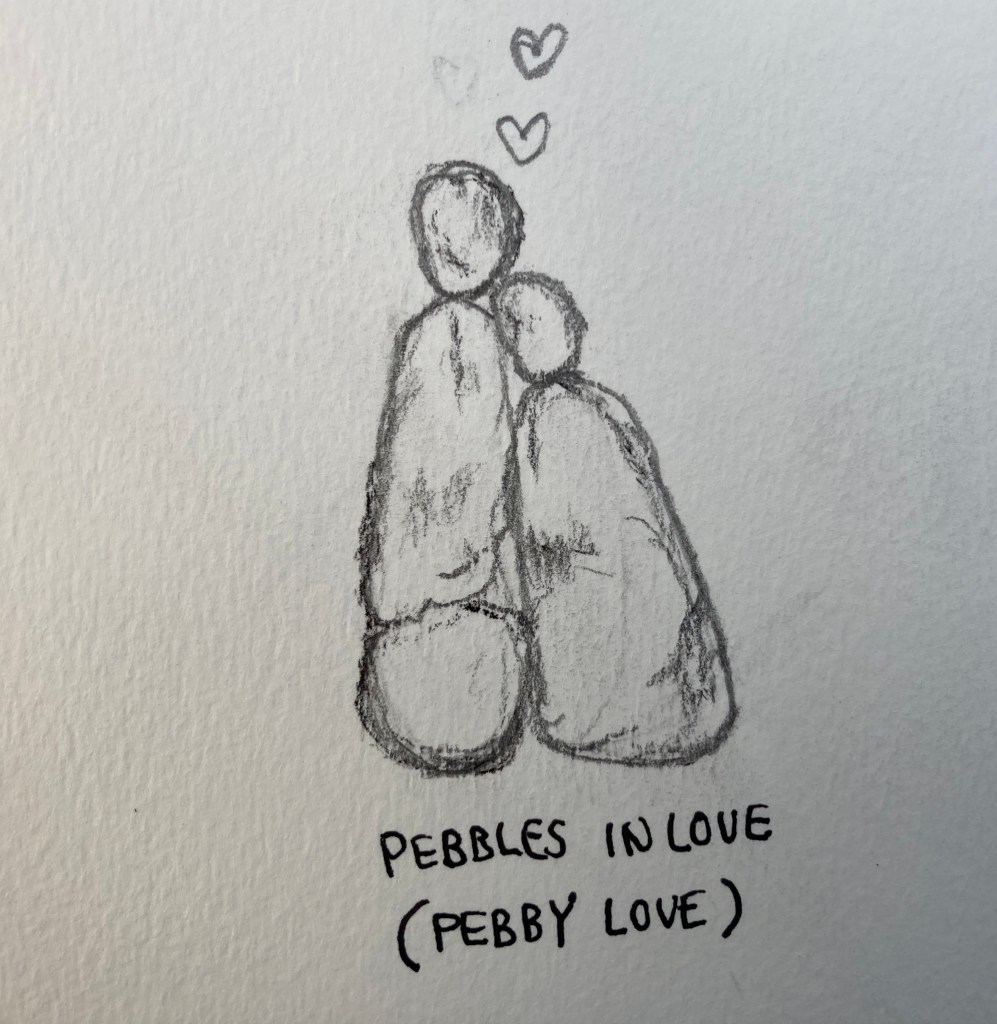
For over a decade, The Mrs has made known she wishes to be a pebble in her next life. The first time I heard it was after an inconsequential fight. Inconsequential fights are common in our marriage, something we have had more than our fair share of. As common as the Aussie blowfly in summer. Flies may be annoying but at least they are necessary; they are nature’s waste recyclers. Without flies, we would be covered in poo. Birds love them, for they turn poo into food when their larvae hatch. Whereas, our fights are annoying and unnecessary. In our early years together, we once fought tooth and nail over buttons and zippers. I must have said the wrong thing, maybe bragged about the length of my zipper. It may have been 30cm long, did I insist it was 50cm instead? That is the trait of a Libran. Belonging to the air element, Librans are cerebral, charming and cool. Being of Ningbonese stock, I am also unfairly described as calculating and conniving. But, let me stay with the positives. I will leave The Mrs to tell all about my negatives. The most prized trait of a Libran, for me, is the need to be balanced. To the chagrin of The Mrs, it is not whose side I stand on but which side; it is always the side of right and truth that I choose to stand on. “You say you love me?!” “Then, know whose side to stand on!” It is so clear and simple, yet I fail dismally to please her. Before I met The Mrs, I already heard Ben E. King sing it many times. I should have learned it. Oh why did I not practise it? It is so simple. If you love a woman, just stand by her. Stand on her side, always.
When the night has come And the land is dark And the moon is the only light we’ll see No I won’t be afraid, no I won’t be afraid Just as long as you stand, stand by me
So darlin’, darlin’, stand by me, oh stand by me Oh stand by me, stand by me……
But, I am a proud Libran. A balanced and just attitude, that is my strength but it is also the seed of all my troubles. The Mrs does not want me to be fair! She does not want me to be unbiased and just. It took me four decades to learn that. She just wants me to be her hero, to be on her side, whatever side of right or wrong she may be in. The Libra’s ethos is symbolised by the Scales of Justice; the one held by Themis, the Greek Goddess of Divine Law. Truth and justice are sacred to us. We proudly stand on the side of right rather than wrong. The only inanimate sign in the Zodiac, the scales are suspended to indicate the lack of action. No, do not conclude that we are indecisive! Suspension from immediate action means a Libran seeks to be fair, considerate and balanced in tackling any issues that disturb their sense of equilibrium; and that requires careful thinking. It is no wonder that some friends echo the same chorus, “You think too much!”.
The Mrs wants to be a pebble in her next life. I was distraught, dismayed and disbelieving when she said that. Maybe it was said in the heat of a quarrel. How did I drive the mother of my sons into such despair that life was no longer worth living? She unknowingly agreed to a miserable life sentence when she married me for better, for worse, for richer, for poorer, in sickness and in health for life? For four decades, the toil and the turmoil I shared with her have soiled her trust in me. The life of abundance and leisure I painted in my promise to her was just that, a promise. It did not sound far fetched from a promising young man, but suddenly, I am no longer that. The promise is still there, but that young man has long gone – withered away after many harsh Aussie summers. The promise seemed easy to make. Labor Omnia Vincit – labour conquers all. Just work hard and all our potential will be fulfilled. A Libran, I know the importance to be reliable, fair and honourable. I will surely deliver on my promise to The Mrs. A cautious bloke, I did not over-promise. There would be no excuses to disappoint her. Besides, she did not demand the moon nor the stars. Not even a gold bangle. A peaceful, happy and comfortable life, nothing outrageous, not excessive, totally doable. I want that for myself too, it really is killing two birds with one stone. No excuses not to deliver on this promise. Yet, the only promise that is guaranteed at this phase of my life is taxes and death. Maybe I can still avoid the former, with careful planning. The latter however, is a looming certainty as time no longer slowly passes by. It is no wonder she prefers to be a pebble. That is a painful realisation. It is a realisation of my abject failure. The one important person I wanted to impress – I needed to impress – would rather be an inconspicuous stone. I write with a bowed head, a heavy heart and in a remorseful mood. I had to turn off the radio. Gabriel’s Oboe played by Yo-Yo Ma was too heart-breaking for me somehow. Morricone’s creation is simply divine – beautiful and soothing normally, but tonight it drowned me with sadness. I imagined what The Mrs would see in a flashback of her life with me. It is difficult to see one’s own faults even with a magnifying glass. We tend to blur the truth with excuses – all justifications welcomed, whether real or imagined, substantial or superficial, relevant or outrageous. But it is clear she did not enjoy an easy life with me. Ambitious to carve a career in the corporate world prior to meeting me, she sacrificed her career to bring up our three sons. I did not impose it on her as a condition for us to have kids, but I do regret expressing to her my strong opinion that adults should be responsible for bringing up their own children if they plan to bring lives into this world. There were a lot of mixed emotions that followed her career sacrifice. The bonding with the children undoubtedly brought her much happiness but the loss of self esteem from a broken career and financial dependence affected her adversely. To her, I have very many more bad points than good ones. I often lamented that I have very many good points – they just are not visible to her. The more stress life threw at us, the more blind to my good traits she became. To manage life as a daughter, mother and wife, and at the same time, run a business as a partner would be challenging for anyone. I likened it to a prey being sucked dry by a spider after it had been injected with the spider’s digestive enzymes. I now understand how The Mrs would have seen herself as the prey. She was left emptied and spent. By the time we became empty-nesters, her parents had both passed away. A household of seven had become an empty nest of just the two of us. Being a pebble in a pond would be serenity and peace, and wonderfully recuperative after years of unceasing challenges. All she would want is to be left alone. To be free again. To live for herself. Perhaps she also meant to live by herself. Unthinkingly, I wanted to join her as a pebble, in the same pond if not the same creek. Presumptuously, I did not think she would mind. Recently, I shared with my friends my hope to be a pebble in my next life. They did not ask why and I did not bother to divulge my secret. Some friends decided to ridicule me for wanting to be a pebble.
“Be a pebble? Be as calm as one, lying in solitude at the bottom of a creek? Sigh.”
“Pebbles don’t make love!”
“As a pebble, you will not get to choose where you want to be! You will be where you are dropped or washed up.” That might be at someone’s outdoor dunny in a kampung.
Another sent a photo of a dirty river that has flooded its banks, to emphasise that a pebble’s existence is not all pink and rosy.
Urghhlings. Why quibble with a pebble? Just leave two pebbles alone in the creek.
“You have never been mine. Go away, for your deeds are evil”.
Earlier this week, a friend sent me this gem found in the Bible. There were ructions in our chat group about two American pastors who flew to Hong Kong to support the rioters or protestors; whichever word you subscribe to will reveal your stance on the civil unrest there.
Dr Pastor William Devlin and Rev. Patrick Mahoney, both American pastors, went to the Hong Kong Polytechnic University to support and encourage the students there to occupy the campus area in their fight against their own government. Fighting for democracy, human rights and freedom was their common catch-cry. That will garner universal support, acceptance and solidarity, right? But, even these learned and wise gentlemen of the cloth are blind to the violence and destruction that the students have perpetrated on fellow Hong-Kongers who do not share their political views or object to their destructive strategies for the past six months. In some interviews, some of these cherub-looking teenage students express their preparedness to die for their cause – for their democratic rights. Little do they know that although the notion of having democratic rights is noble and ideal, once we have won it, many of us somehow do not value it as worthy of a trip to the polling booth. To sacrifice our lives? If we are desperately hungry, yes. Less than 38% of women and 33% of men in the 18-29 age group exercised their voting rights in the 2018 mid-term US elections. Even in the 2016 US presidential election, less than six in ten eligible voters cast ballots for their president. In Australia, we have freedom of speech and freedom of information, except that voting is compulsory and we do not have the freedom to decide not to vote. Those disinterested in exercising their democratic right to vote are ignorant of the name of the Prime Minister and will have little idea what their local candidates stand for at the ballot box. Two federal seats won by the government in May this year are being disputed in the High Court. The reason? Some voters apparently did not know who they were voting for and were misled by the Liberal party candidates’ use of white and purple corflute signs that resembled the official signs of the Australian Electoral Commission. But, in Hong Kong, the young ones seemingly are ready to sacrifice their lives for democracy and freedom. Their concept of freedom is warped though, as they freely hurl verbal abuse and throw punches, bricks and molotov cocktails at those who disagree with their views.
Another friend commented, “How can they be pastors and spend most of their time as human rights activists around the world? It is contradictory! A pastor is supposed to shepherd or to oversee his local congregation…”. Maybe these men see themselves as more powerful than Jesus. They have global reach, whereas Jesus even at his peak could only preach for just over three years, in the Middle East beginning in Roman Judea and ending in Jerusalem. These men were working with members of the American Congress and Trump administration to pass the Hong Kong Democracy Act. Wait a minute. Isn’t that interference in another country’s domestic affairs? Can you imagine what the global uproar would be if America were to pass an Act that is called the Australian Aboriginal Death In Custody Act? That would surely stop the many aboriginal deaths in custody in Australia, right? Or if Australia retaliated and passed the U.S. Mass Shootings Act to coerce their Congress to stop the frequent school massacres there? At the time of writing, the bill for the Hong Kong Democracy Act has been passed, almost unanimously. No, there was not a single whimper to be heard in the West.
Not all who sound religious are really godly people. The way to identify a tree (or person) is by the kind of fruit produced. These American pastors are fake, my friend cried out. They are false prophets in sheep’s clothing, but inwardly, they are sneaky foxes. Their unconditional support for the naive and underage students and their encouragement for the youths to execute violence and destruction in the streets and malls will only breed hatred in their hearts and radicalise their thinking. Many families are broken as a result, their children running away from home to effectively become child soldiers in the fight against the government. Matthew 7:17 – Bad trees bear bad fruit. Will these young Hong Kongers become the pastors’ bad fruit? For the teenagers’ sake, they need a quicker way to identify the bad trees. “These pastors are fakes, for heaven’s sake!” my friend cried out to them.
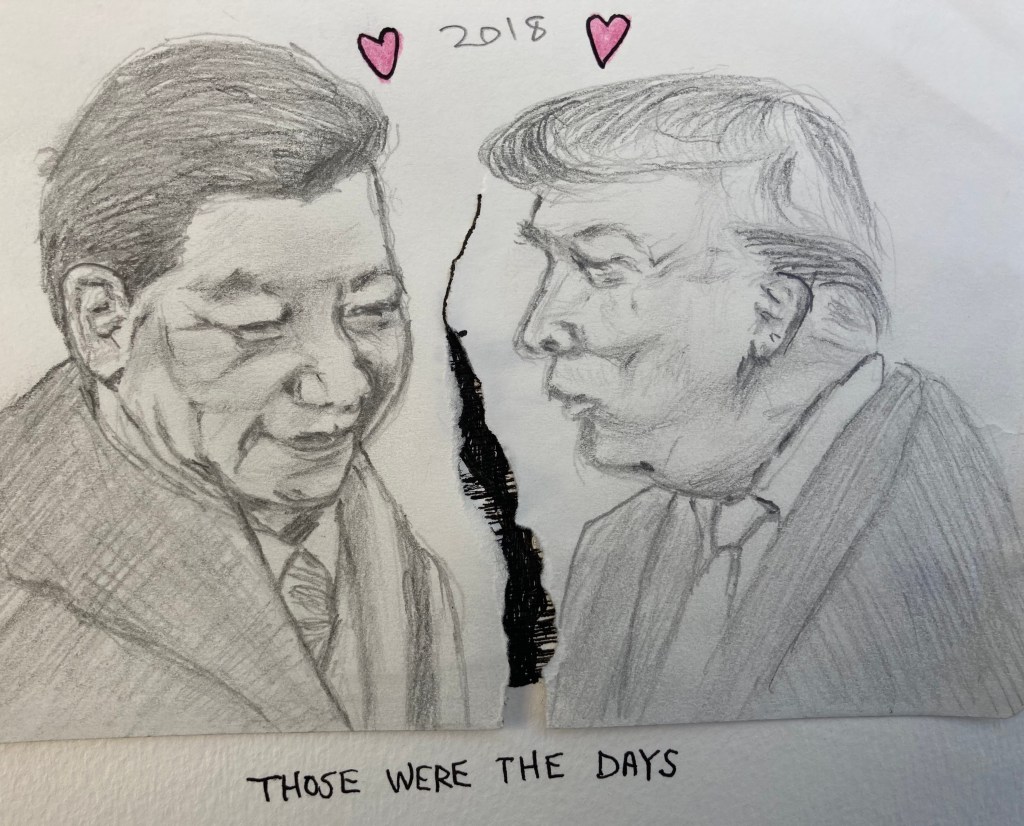
It begs the question. Why are we so susceptible to charlatans? Fakery is rife everywhere, maybe it is the digital age that has emboldened the quacks. Could it be that the internet has provided the easy avenue for them to spin their charm in their deceitful way? I cannot help it but Trump immediately springs to mind. Apart from mad Madoff ‘s Ponzi scheme, Trump’s fakery must be up there as one of the 21st century’s biggest. His trade war with China was meant to be easy to win and he was going to rip billions back from China for trademark thefts and unfair trade practices. Yet, he is the one to block the appointment of two judges to the WTO’s Supreme Court, and so there is every likelihood that the world’s top trade court will soon be curtailed from making any further rulings.
The WTO is presiding over a record number of disputes, many of them triggered by Trump’s tariff wars with China and other nations. Trade officials say the crisis needs to be avoided because if one of the three remaining judges has to recuse themselves from a case for legal reasons, the system will break down.
China is a serial patents thief? Trump obviously has not read any of Joseph Needham’s voluminous evidence of China’s discoveries and inventions over several millennia. Larry Romanoff wrote, “It is reliably estimated that over 60% of the knowledge existing in the world today originated in China, a fact swept under the carpet in the West.” Joseph Needham, a British biochemist, scientific historian and professor at Cambridge University wrote Science and Civilisation In China, a catalogue of 27 books on Chinese inventions, before he died in 1995. During his research, he discovered there are thousands of inventions that the West claim as theirs even in the face of conclusive evidence that prove that they originated in China hundreds and sometimes thousands of years before the West copied (stole) them.” In spite of clear irrefutable evidence, it is still so easy these days for charlatans to write a different narrative, even an opposite narrative. In the current impeachment hearing, Gordon Sondland, a big Trump donor, who was rewarded by becoming the U.S. ambassador for the European Union, verified many facts from earlier witnesses, and when asked if there was quid pro quo for Ukraine president Zelensky to announce investigations that can help Trump politically, his answer was “Yes”. Zelensky was pressured by Trump to “do him a favour” in order to win a coveted visit to the White House and receive the promised military aid his country badly needs to fight the Russians. Despite Sondland’s testimony, Trump did not resile from standing outside the White House and announce that the case against him is closed. “I want nothing. I want nothing. I want no quid pro quo. Tell Zellinksi (sic) to do the right thing. This is the final word from the President of the U.S.” He read it out loudly from his notepad, his fakery well disguised by the strong conviction in his voice. Can it be that we have forgotten charlatans do exist? Or that they only con others – we are not that gullible? Someone in my workplace said life would be boring if my prediction was to come true – that Trump would be forced to resign by the GOP rather than be impeached. Maybe, just maybe that is the reason why we have allowed these fakes to thrive today. Life’s mundane routine and unending pressures mean we actually welcome such daily light entertainment from charlatans.
This morning, Second Son happily told me he bought a dusty old Chinese vase in a shop in Bonn. “Is it an antique?” he asked with a great deal of hope. He has it displayed proudly on his dining table. I put on my fake auctioneer’s hat and proceeded to describe it. “Late Qing dynasty multi-colour glazed porcelain vase (Guang Cai). Striking pink and blue floral design with beautiful blue motifs on the base of the neck.” The Mrs pricked his hopes and officially announced it loudly “It is a fake, for Pete’s sake!”
Failure is forever if I quit. That has always been my private motto. I was in class Lower 6 Sc 2 in my last year of high school in Penang. There were only two classes in the science stream. The smarter guys in Sc 1 did Math 1 and Math 2. We in Sc 2 did Biology and Chemistry or Physics. It was a honeymoon year for some of us – those who knew they were leaving for overseas soon. “Soon” was August for those going to the UK, and the following January for those heading to Australia or New Zealand. Naively, I thought that was the end of school life. The reasons to learn were somehow no longer applicable. I could fail in that system and it would not matter. It was ok to flop the year-end exams. I duly got a mark of 41/100 at the end of the year for Chemistry. The first and only paper I ever failed in. It did not register any movement in my Worry Meter. Many of us do not remember sitting for any exams that year. We took the whole exam thing very lightly. No one cared, it was our honeymoon year. I did not freak out. I just told myself that would be the last time I fail in an exam or in any goal I set for myself. I was wrong. Life has a way of finding our weakest link, and once that is discovered, the relentless examination and testing of it will eventually break it. We are as strong as our weakest link. I started a franchise chain in the mid 90’s. It flopped after over a decade of impressive growth. I blamed it on the weakest links which caused the whole chain to break. Did I flip when they flopped? Yes, I freaked out. Not at them but by them. They blamed me for their failures and commenced numerous lawsuits against me. I am still relieved today to have won all of them, through detailed preparation aided by proper and thorough documentation.
Before my stint as a franchisor, I was head-hunted for a position as the Financial Controller / Finance Director of a well-known Sydney-based national business that was the industry leader in car alarms. I discovered real success at aged 32, I thought. The job required me to work in Sydney, to introduce new internal control systems and save the company from further losses. Working in a different city meant I missed out on the most adorable time of my sons’ growing up days. The eldest boy was learning the violin and piano, the twins had picked up their brand new 1/8 size cellos a year earlier. They composed a piano duet one Sunday morning before they turned 5. It was not written on a score since they were not taught the fundamentals of music theory yet nor were they taught any piano lessons. The Mrs and I woke up to a glorious spiritually healing music, which I promptly titled “Morning Glory”. How can young children under five years old create such beautiful music without being taught any fundamentals of music? How did they communicate between themselves and decide on how the music should sound like as a piano duet? Did they hear the same music from inside their heads? They had not been taught how to play the piano. How did they even know how to play on it? Right that moment, I said to The Mrs, “These guys should be given piano lessons! They will have so much fun.” When I left for Sydney to commence on my new job, the eldest son had already mastered the art of cycling his BMX bike. The older twin had just begun learning to peddle his tricycle whereas the younger twin, the “baby”, was contented to drive his toy push-car along the street with his little feet. He was the happy tortoise who was oblivious of his brothers’ hare-like speed in zooming up and down the cul-de-sac. I missed out on most of those scenes as I focused on my work in Sydney.
Ba is coming home today!
My living quarters were in the company’s Randwick flat with the convenience of cheap Chinese food cooked in bulk for the hordes of uni students living in that suburb. I did not realise it at the time, but I would have been one of the pioneers of FIFO’s – Fly in Fly out brigades which became the norm during the mining boom of early 21st century Australia. My shift was 12, -2 i.e. 12 days on, 2 days off. I got to spend every second weekend at home with my family. After nine months of intensive auditing and implementing new system controls, I handed my report card to my fellow directors at the board meeting. I dropped a bombshell that day. The business was beyond saving. It required an immediate capital injection of half a million dollars. The chairman informed me that he had done just that prior to appointing me for the job, and could not believe his ears that all that money had already disappeared – siphoned out by the crooked workers and contractors. The chairman freaked out. They flipped when they saw that I had flopped. The next morning, the chairman called in the administrators. The business had become officially insolvent. My impressive biography had to be altered but I could not put it down in writing. It would have read “Finance Director of a business that went into voluntary liquidation.”
Where is the absent father?
Success is most often achieved by those who have discovered failure.
Will success come to me? Coincidentally, Mak sends me a meme about success. It said success is measured by others, best to ignore it. I think success is measured not just by others but by everyone. The only measure that is relevant is the personal one. What is success? Material wealth? Status? Respect? An enviable lifestyle? Happiness? Happiness is the elusive goal. I do not think we can actively set ourselves to achieve happiness. We may develop the right attitudes, be contented, be peaceful, be righteous. But, all that will not guarantee happiness. Something may strike us. Someone may hurt us. Happiness just comes to us, when we least expect it. Maybe the secret is to live without expectations. Without expectations there will be no disappointments, and only then may happiness suddenly land on our laps.
“Happiness is like a butterfly. The more you chase it, the more it eludes you. But if you turn your attention to other things, it comes and sits softly on your shoulder.” – Henry David Thoreau
Many will say I am already successful. By many measures, I suppose I am. My marriage is still intact, after 38 years. The Mrs and I have three very good sons, all of them independent, respectful of their elders, and respected by their colleagues and friends. My business is still an ongoing concern; it still employs a few people and thus still contributes to society. Touch wood, at 61, my health is still good despite the harsh challenges my business threw at me and the sedentary nature of my work. The Mrs and I paid out the home mortgage some ten years ago. We are debt-free, set free from all obligations to the banks. Yet, I am still not totally carefree. There is still the matter of living responsibly. A filial son, even at my age, has duties. It is not that I feel obliged to spend time with my mother, I want to. She is 96, her enjoyment is to be with her children. I work during the week, so the weekend “roster” is for me to fulfil. Without exception, lunch or dinner on Saturdays and Sundays are booked with Ma. It is uncomfortable to have to tell her about my forthcoming overseas trips. Ma will lament for a few weeks and “count the days” of when I leave. Living responsibly. That also means the continued responsibility to the woman I married who is the mother of my sons, and to my sons, the Millennial or Gen Y’s. The Mrs and I are baby boomers, products of the celebrations after WW2. Sandwiched between the elders (our parents and parents-in-law) and our children, we bore responsibility for all three generations. I saw that as just a part of life, and for me, it never felt like it was a burden too heavy to carry. That is called living responsibly. The Gen Y’s heard about all that; the early marriage, the rush to find a career – immediately, and early parenthood. They witnessed the challenges of the child-bearing, the child-raising, and the child-like needs of the elderly. Filial piety has a price. The children witnessed the dark side of suffering in old age. Their maternal grandma’s long trail of plastic tubing that snaked along the floor from the downstairs bathroom and toilet to the oxygen tank in her bedroom; her pain, immobility and the shortness of breath caused by the emphysema that wrecked her lungs. The frequent visits to the Royal Adelaide Hospital – the old folks seemed to take turns; her turn – shortness of breath, his turn – acute constipation, her turn – shortness of breath, his turn – broken hip. Then, funeral 1, followed by the frequent trips to two nursing homes to visit their grandpas. Later on, funeral 2, funeral 3. Before funeral 3, there were my two years of daily visits to Pa’s nursing home. He had to go in, despite his protestations. Heavy set and tall, he broke his hip after a fall. Eventually, his Type 2 diabetes won the battle and he became an amputee, losing his leg to the disease. The Gen Y’s witnessed all of that. They were witnesses to the lifestyle of giving and more giving. When they grew up, they made a choice to live their own lives, for themselves. I guess they did not find my choices agreeable. None of them embraced the early marriage, early career and early parenthood paths I took. Ma sees that as a failure on my part to inculcate in them the doctrine of passing the genes and carry on the family name. She sees it as my duty to persuade my sons to deliver the next progeny and thus the next generation to the clan. Somehow she cannot see the funny side of this quest since she herself is not born into the clan. The clan is without a crest, flag or coat of arms. The future therefore will have no need for a flag bearer. So, what does it matter, right? When she sees me on Saturday, she will flip again, to know her mission is still a flop.
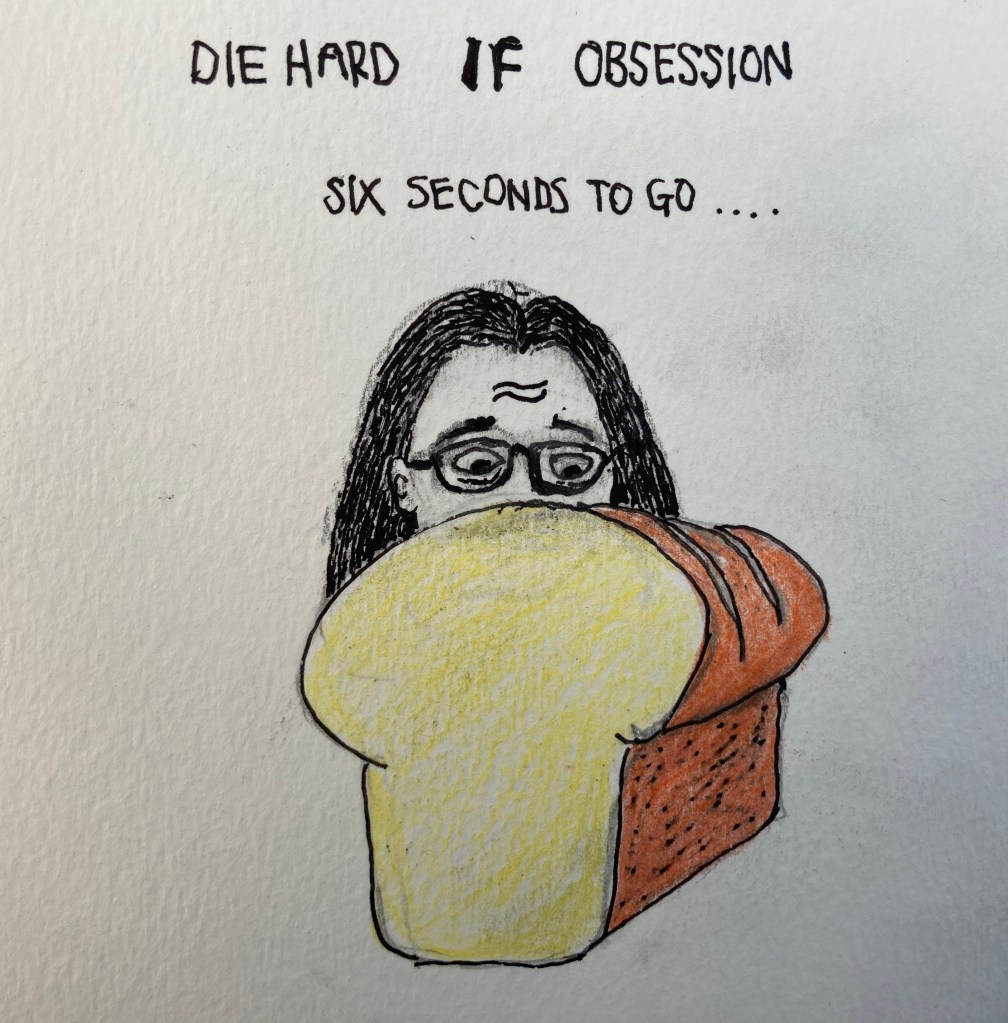
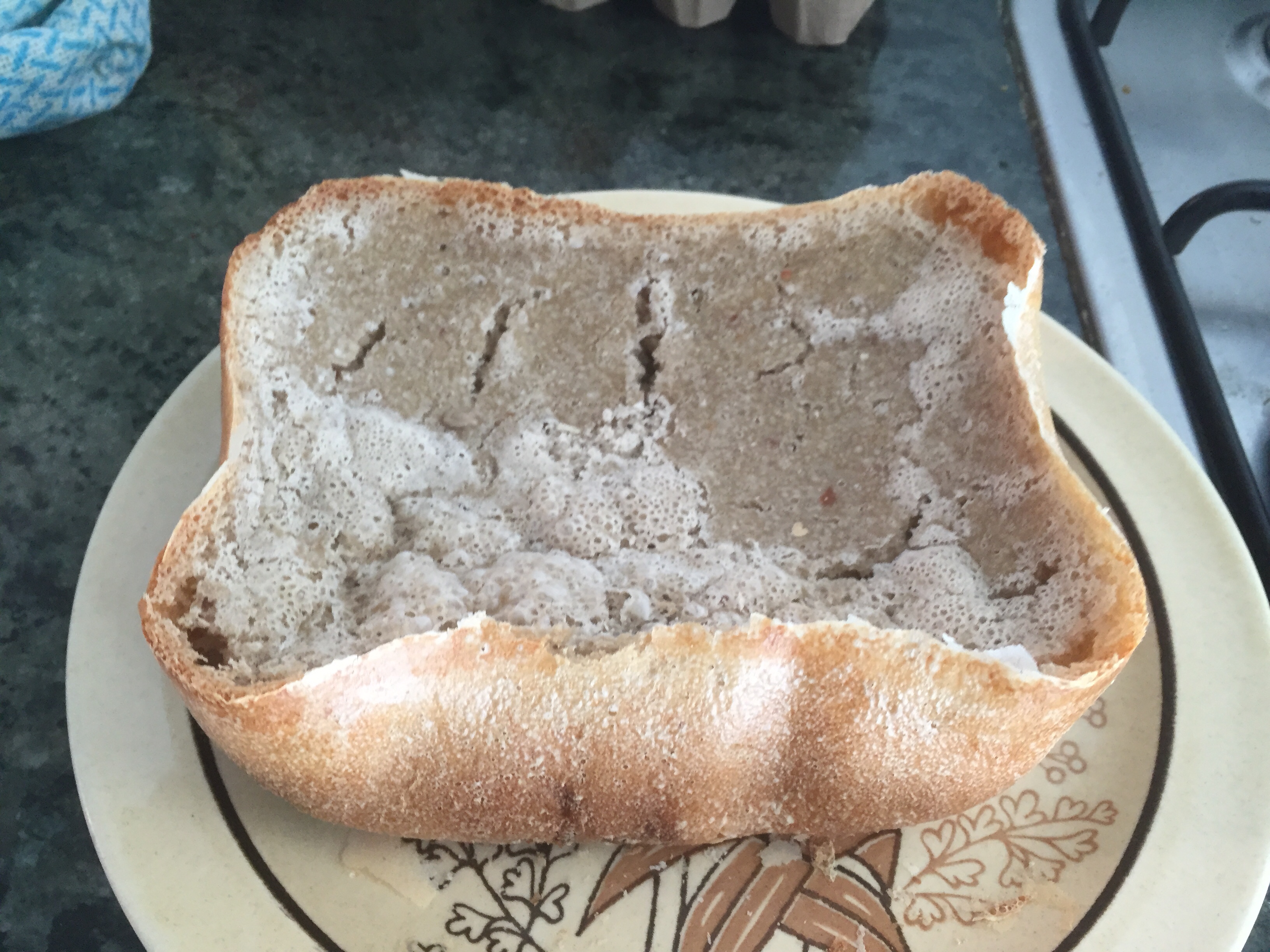
In the middle of the night, I was awoken by the alluring fragrance of bread, freshly baking in the kitchen. Aaaaahh, right at that moment, it was so tempting it almost broke my will to maintain my longest IF streak of 323 days. Intermittent Fasting has been a breeze for me, not even the decadent breakfasts served on the cruise ship to the Baltic countries could weaken my resolve. But, this wasn’t a visual sensation. It was olfactory. My senses were heightened by the temptation of the wicked scent. I had to subdue the strong urge inside me that wanted to quickly devour the enticing bread in the kitchen. I imagined getting up right that moment from my cosy bed and braving the chilly dawn. In the dark, I would not find my dressing gown. It is the one piece of clothing that I don’t habitually hang in a fixed spot, whereas my bedroom slippers, always at my side of the bed, were neatly placed side by side on the carpet. They don’t wander off. They never require me to look for them, unlike the itinerant dressing gown. In my mind, I was already in the kitchen, unscrewing the nut on the base of the bread container to free the bread onto a plate. As I slice the wonderful soft white bread, more of the aroma that had seduced me to leave my bed is released. Spread a wafer thin piece of butter onto it, and bring it towards my eager lips. As I consume it, I surrender to the wickedness of the carbohydrates that will cause my insulin level to spike. My mind may be weak but my shadow self is strong. It only allowed me to think it happened. It didn’t happen, except in my mind. That’s as real as it gets, right? After all, it is the same chemicals that the brain releases that tell us how we feel. Whether it is physical, virtual or imagined, to the brain the sensations are the same. Serotonin, endorphins and dopamine are the happy chemicals that are released by the brain irrespective of whether the trigger is real or imagined.
Back to my bread. I rushed out of my bed before 7.20 AM, put on my bedroom slippers and darted to the kitchen. I was eager to see if the bread matched the one in my mind for fluffiness, size and height. It did not. It was a total flop. Do I throw it away, make another one before The Mrs wakes up? “Don’t let her find out!” my shadow self implored me. Disappointed with myself, I went outside to the front garden to console myself. Where did I go wrong? Never mind, I’ll find out soon enough. The Mrs won’t let this opportunity slip by, it is her chance to tell me what I’m worth. She will flip when she finds out the bread is a flop. “Aiyaya, you waste the flour! You waste the elektrikcity! You waste your time!” I have heard this many times in my life, the way she emphasises the “K’s” in electricity. An hour later, she purrs out of the bedroom. “The bread smells so gooood!” she chirps happily. She limps out gingerly as she appears in the hallway. At least she doesn’t waddle anymore. In another week or so, she will fully recover from her second hip replacement. By then, I had better watch out. Better not cry. She will have her vengeance. The new bionic woman will eat me for breakfast if I don’t make her good bread. She flips when I flop. A no-nonsense woman. She has no truck with failure. “We do not fail. That’s for the weak. We will rise up!” (As surely as my bread must, next time) I added silently in my mind. Why did my bread fail to rise? “Warm water! Yeast is a living thing. It needs warm water, stupid!” She didn’t call me stupid but I heard it anyway, in my mind. So, The Mrs grabs her chance and pours cold water at my silliness. I used tap water instead, thinking the time set for three hours would be enough for the yeast to work and make the bread rise. Worse was to come. Having had to chew on soggy heavy bread and missing out on the enjoyment from what is normally the best meal of the day for her, the demeanour of The Mrs turned from chirpy to annoyed. “If you want to stick to your (stupid) cold water theory, I’ll eat Coles bread instead. I don’t enjoy chewing leather. I can’t afford to lose my teeth!” Untethered, free to show her annoyance, she plonks her plate and coffee mug loudly into the sink. I was pouring a cup of coffee for myself when I heard the commotion. Quickly putting the moka pot back on the stove, I rushed to empty the sink of its dirty contents, transferring them to the dishwasher. In my haste, the moka pot was placed precariously on the gas ring and it toppled over. “Aiyaya! What a disastrous morning!” she exclaimed. My freshly brewed coffee spilt everywhere. Into the gas burners, into the gas oven, it drowned the oven clock, and splashed all over the kitchen floor. Somehow the coffee must have got to the electrical bits of the oven and tripped the main fuse box of the house. Everything stopped. The noisy pond fountain, the soothing trickling of water from the aquarium, the whirring of the washing machine, the background humming from the central heating system. The dead silence didn’t last long. I shan’t repeat what transpired between the two occupants of the house after that, except that the bedroom door slammed shut soon after. The unintended consequence of wanting to make bread for The Mrs. I later found out the flour was four months past its expiry date, which leads me to think I was dealing with dead yeast.
Dead yeast can’t make fluffy bread
A son sent me a few messages. “Life is short, ba. Why make mum eat that bread?
“She said it’s as tough as leather!”
“The bread flopped, so what? Go to a cafe and enjoy the weekend”.
He too flips when I flop. Why would anyone think I can force their mum to eat anything? She is a strong woman. Strong headed too. There is no way I can make her do anything that she doesn’t want. Besides, that would be misogynistic and I am certainly not built that way. I did not dare to argue their preposterous suggestion about the bread being as tough as leather. I am quite sure none of us have tried leather. But, they will freak out if I dare voice my thoughts on the matter.
A lesson learnt. The next time I use active dry yeast, I will definitely check to see if it’s alive first. Dissolve half a teaspoon of sugar in half a cup of warm water. Sprinkle the yeast on top and stir. After ten minutes, I will know the yeast is alive and will proof the bread dough if there are bubbles and foam in the mixture. Failure is forever only if we quit. On second thoughts, the other lesson learnt is easier to remember. Just don’t bother making my own bread.
I just came home with a fresh loaf from Foodland. Urghhling.
Consequences are the results of our actions or words, usually with negative or tragic connotations. But, sometimes, we may receive a pleasant surprise instead. Life is full of consequences and we will usually shrug our shoulders and say, well, we deserved it. The stock market has burned me twice, and there is no denying I deserved it. Everything is clearer with hindsight; it is always unfair to those who lived through the moment without it. I promised The Mrs there will not be a third time – otherwise I have to sign the divorce papers – and so I have missed out on the longest bull run in the history of the stock market. I will knowingly not invest in cryptocurrencies even though the rewards are incredibly high. That is only because the said documents are pushed in front of my nose whenever I quietly weigh up the risks and returns of Bitcoin and gold. The Mrs somehow has a knack of knowing what is on my mind. Yet, there it is. The unintended consequence of helping me to avoid another major haemorrhage in the stock market is I have been sidelined, and can only watch others celebrate their massive profits from the longest ever bull run – ten years of amazing double-digit annual returns instead of the pittance the bank has been paying into my savings account. An unintended consequence is that I now hold the title of The Lousiest Investor.
There is also the example of my neighbour’s experience of readying her newly built pond for her koi fish. Admittedly, hers are to die-for, koi fish are extremely difficult to find here. Her specimens are indeed stunning, when you see their metallic colours darting through the crystal clear water. What did she do with such a precious collection? To test the water quality before introducing her koi to their new home, she sacrificed some cheap comets into the pond first. “If they die, they die.” She was almost callous about it. Their sole purpose was to test the safety of the water. Well, they did not die and the koi clan rightly assumed permanent residential status. So clever, right? Except that now, the comets are thriving in the pond and the koi cannot reproduce even though the conditions of their habitat are ideal for breeding. Why? Ask the growing school of hungry comets. They are the unintended consequence.
My parents were upset when I announced I was getting married to the girl I met in uni. I was twenty two at the time, and eighteen months later I became a father. My mother cried for me, I recall. “You haven’t lived your life yet!” she protested. It is true, I had not really lived; never ventured out on my own for a holiday; never had a honeymoon with The Mrs. At 26 years of age, I became the sole bread-winner for a family of five plus two elderly parents-in-law. There was the occasional dispute about what comprised the family of five. My version was The Mrs, me and our three kids. Her version? She and the four kids. Women mature faster and The Mrs was quick to recognise the child in me. She still sometimes says I am childish. Why did I marry so young? Perhaps it was my stuffy upbringing. Growing up in a Christian Brothers school environment, we were caned for keeping “long” hair that touched our shirt collar no matter how much we extended our necks. We were caned for being late, yanked down from the top of the high metal gates we were scaling. We were caned for talking on our way back to class after recess. Sometimes, Br Michael aka Lau Hor (the tiger) caned the wrong students. He caned any boy he thought was ill-disciplined. A fat boy was caned because he was standing at the entrance to the canteen, deliberating on what to buy for lunch. Jerry was unaware that he was blocking the passageway and caused a long queue to form. The only ones spared were Lau Hor’s school orchestral students. The oh-so-strict Victorian morality was the overarching principle in school, I thought, until I grew up and read about the sexual misconduct perpetrated by many priests and Christian Brothers world-wide. The home environment was also very strict, more a temple than a prison though. It is true that my wings were clipped when I was a young boy, but compared to kids today, I enjoyed a lot more freedom outdoors even though it felt like there was a resident sentinel in my mind that forbade me to join in the fun with school mates after school. Swimming was a definite no-no, as was fishing or anything to do with the sea. I lived like an island, on an island. I think my mother was afraid the hungry ghosts would devour me in the sea. A stuffy upbringing meant no sex, no drugs and no rock ‘n’ roll during my teens. In university, I met a gorgeous girl whose eyes perpetually smiled at me. An unintended consequence of my strict upbringing meant the resident sentinel forbade me to have sex outside of marriage. The only way to enjoy the newfound sensation of boy meets girl and falls in love?
Marry her. An unintended consequence for my parents, they frowned at my early marriage.
There is also the case of the retired hobby farmer who lives alone. If one lives alone, why would one keep seven chooks? She was given four by a local school which bred them for a students’ project. Once the school experiment was over, the chooks became irrelevant and needed a foster home urgently. So, the kind hobby farmer took them in. Free eggs, why not? The unintended consequence of a kind heart was that her fridge is now jam-packed with eggs! The idea of rearing chooks is to enjoy freshly laid eggs. They taste supreme, especially those free range organic ones. But now, this kind farmer cannot keep up with her chooks and is desperately donating her eggs to family and friends. I got a dozen from her yesterday but hers are not fresh and therefore do not taste so good. She will be better off donating her excess hens instead.
Smart phones have been a wonderful invention together with the internet. Vast improvements in productivity, connectivity and easy infinite access to knowledge banks in every field we can think of have advanced our lives in unimaginable ways with entertainment, information, news and social media at our fingertips. With built-in cameras, the gadget even allows any of us to record newsworthy events including major historical events e.g. the Arab Spring revolution, and the ongoing, escalating street violence in Hong Kong. The unintended consequence however is the high incidence of automotive injuries and loss of lives due to the distractions that smartphones cause whilst we are on the road. Taking selfies with our smartphones was never meant to cause self-inflicted harm.
Unintended consequences can be horrific. Those who caused extreme havoc and misery to the world were Mao Zedong and Adolf Hitler. These two dictators were responsible for the deaths of many many millions. Mao was a lowly paid assistant to a librarian in Peking University. Had Mao been offered a post as the chief librarian, would the young man have turned into a dictator who some reports say was responsible for 45 million deaths due to his failed Great Leap Forward programs? Mao’s Four Pests Campaign was launched to ensure success in his agricultural reforms. Rats, flies, mosquitoes and sparrows were targeted for extinction. Especially sparrows, which ate the seeds of grain crops. What Mao didn’t understand was sparrows had a much bigger appetite for locusts. The sudden absence of their predators created the unintended consequence. The ecological imbalance resulted in a locust epidemic that wiped out the crops that Mao so wanted to protect.
The other dictator was also responsible for millions of lives lost during WW2. He was an aspiring artist who was twice rejected by the Academy of Fine Arts Vienna. Once in 1907, and again in 1908 when he was 18. The arts school said his paintings were “utterly devoid of rhythm, colour, feeling, or spiritual imagination.” His dreams crushed, the young Hitler hit the streets of Vienna and lived in abject poverty. The streets were at the time rife with anti-Semitic rumours which festered the growing hatred of the Jews on the impressionable young man. Had the Academy not rejected the aspiring artist and had instead accepted him and encouraged him to continue to learn, the world may not have seen the rise of the murderous young dictator. These unintended consequences could have been so easily avoided had the teachers been more caring towards the two young men. The world would have been a kinder place. Like anyone with a little ambition, all they needed was to be given a chance to pursue their dreams. They had not sought to become mankind’s worst mass murderers. Their unintended tyranny were simply consequences of seemingly inconsequential decisions by a university library and an arts school.
Comets outcompeting and outnumbering koi, an unintended consequence!
“Chup ee khee si”, a common Hokkien remark. It means, do not be bothered. Let them die!
“Bu yao duo guan xian shi” is a typical advice in Mandarin. Do not meddle in other people’s business. Let them be.
But, on my way to work this morning, Yo-Yo Ma’s message sounded persuasive. Tantalising. Achievable. I have not been able to get it out of my head. Not that I have been trying to. But, his words have clung on to my grey cells. It is a message of inclusion, at a time when societies are focusing on the divisive and the negative. Yo-Yo Ma said ” Culture will turn ‘them’ into ‘us’.” When we recognise that the other person is just like us and is one of us, conflict will stop. When we realise we are all equal, discrimination will end. There will be no more recriminations, no more hatred, no more fights. He is in Sydney, on his world tour of thirty six concerts in six continents. He has brought Bach’s six suites for solo cello along. Through Bach, he wants to engage us in a series of conversations and collaborations to explore the ways culture and music can help bridge the world into a better place. He hopes that we will see the ‘us’ in the ‘others’. He is bothered about the others because he sees all of us in them.
As I settle comfortably on my recliner sofa after dinner, my mind drifts back to Yo-Yo Ma. He is much more than just a cellist. He is one of the greatest musicians the world has ever seen. Actually, he is even much more than that. He is a great human being. Pablo Casals too thought of himself as a human being first, as a musician second, and only then a cellist. To be human first. Humanists consider every action they take and every word they speak are in the service of their fellow human beings. Their common thread is their innate empathy and compassion for all. It is never ‘us’ and ‘them’. It is always about our obligations to one another, as human beings. They are above primal instincts. To them, it is not the survival of the fittest that ensures our survival, it is the survival of the planet that ensures our survival. For such great advocates of human dignity, it is an abuse of power if we were to remain silent when faced with confronting issues that threaten what is good in mankind. We all have the power to stand up to stop an injustice. From a small voice in the wilderness, a revolution can grow. It is through culture – the music, the story-telling – that inspires creativity and deep learning which helps us understand ourselves, understand one another and understand our environment. Above all, it is their choice to be human first. That was the message I got from Yo-Yo Ma.
I was lucky to have witnessed first-hand Yo-Yo Ma’s charitable, empathetic and caring side in Singapore. This was at a concert on November 11, 2016. The SSO concert opened with Sollima’s double cello concerto, titled Violoncello, Vibrez! with Yo-Yo Ma and Ng Pei Sian. When both cellists were on stage, Yo-Yo Ma asked Pei Sian’s parents to stand up from their seats. As the old couple reluctantly stood up, he told the audience of their struggles and perseverance to support not one but two sons’ ambition to be professional cellists. The living legend understood the selfless struggles the parents faced to help their twins pursue their love for music. The audience gave a rapturous applause to Pei Sian’s parents, but I was madly applauding Yo-Yo Ma for showing us his humanity. This is a great humanitarian. The maestro has an extra long list of achievements. The winner of 18 Grammys, he was the first to perform at Ground Zero on the first anniversary of the 911 tragedy. That solemn heart-pulling moment was served by Bach’s Sarabande from his Cello Suite no. 5, the most sombre, austere and profound of all. It is music for peace, for humanity. At the peak of his amazing career, Yo-Yo Ma whilst basking in the audience’s obvious love and adulation for him, revealed his humanity when he chose to divert the crowd’s applause to Pei Sian’s parents instead for their unwavering and unconditional support for their sons.
Ng Pei Sian and Yo-Yo Ma with maestro Shui Lan in concert
A day passed and the urghhling in me becomes less enthused about Yo-Yo Ma’s exuberance and trust in our propensity for empathy. Doubt creeps into my psyche about mankind’s readiness to accept our differences. After all, I have seen the ugliness of urghhlings for most of my adult life. Sure, there have been the odd few people of integrity and kindness whom I have had the good luck to meet along the way, but by and large, humans show their ugly side when they are able to hide behind anonymity. Strangers in public places who hurl abuse at us, those who sit behind their computer screens and vilify any race or religion they dislike, hideous customers on the opposite side of the shop counter, militants who will gladly blow anyone up including themselves, nasty soulless people who enjoy torturing animals, or bored, callous arsonists who light up thousands of hectares of gum trees and hundreds of homes and unfortunately, also animals including humans in their path. The world is littered with toxic folk with rancid prejudice, and devious minds with evil intent. Rather than it is never ‘us’ or ‘them’, it can never be ‘us’ with ‘them’. It is inconceivable that we can see the ‘them’ in ‘us’. At the other end of the spectrum, it is also sheer folly to think that the likes of me can even come close to understanding the minds of great men like Yo-Yo Ma. This may be the reason why I am finding this blog the most difficult to write. So, I cast my mind back to their Singapore concert. The magnanimous and generous Yo-Yo Ma gave two encores after the prolonged standing ovation from the audience. As he was already onstage, he borrowed Pei Sian’s cello instead of returning backstage for his ( Jacqueline du Pré’s) Davidov cello. Gasps of primordial orgasmic arousals could be heard when he began to play Bach’s Cello Suite no. 1 Prelude . It was followed by Bouree I and II and then da capo to I, from Suite no. 3. Amidst wild applause, Yo-Yo Ma then went over to Pei Sian onstage and gave him a big congratulatory hug. The younger cellist instinctively kowtowed and knelt before the cello maestro. What happened next took everyone’s breath away. Yo-Yo Ma, the universally respected great cellist of all time reciprocated with a bow and at one point, knelt down on both knees to Pei Sian as a gesture of mutual respect.
Recalling the last scene onstage instructs me that Yo-Yo Ma’s vision of the world in which human beings are treated equally and with dignity, where age-old issues such as religious fanaticism, white supremacy, slavery, bigotry, misandry and misogyny no longer fester, can be attained if we all see the ‘us’ in the ‘others’.
It was just before the pendulum clock struck three times. Outside it was pitch-black, the angry wind was a welcome guest as it forced its way into their stuffy, sweltering room via the wooden slats of the window louvres. Ma changed her position, and now faced away from Pa. All passion spent over an hour ago, he snored especially loudly after having satisfied himself inside her. She was relieved that his fire had been quelled, otherwise his restlessness and sulking would have spoiled another good night’s sleep. Ma was never taught the joy of sex. Brought up to respect proper decorum and propriety, in today’s vernacular, she would be easily classified as a prude. Sex was for procreation, not for recreation. Besides, their circumstances were so unsettled. They had not yet moved into their new rented shop in Bishop Street when the Japanese dropped their bombs from the sky. The front of the shop was destroyed. The glass display window the glazier had sealed the day before was completely shattered; its replacement was a wooden hoarding to deter would-be thieves from helping themselves to their meagre belongings. They left Teluk Anson with just a small bag of clothes each. Their prized possession, a cheap Japanese bicycle, was chained inside the shop. It had been a while since their last outing at the movies. After they were married in Teluk Anson, Ma’s favourite pastime was her Saturday bicycle rides as a pillion rider to town for movies with her handsome husband. It was said the 1930’s was ‘the age of the bicycle’ for it brought unimagined freedom to the young girls. There was nothing else worth stealing, except for the annoying striking clock that chimed the hours loudly and once every half hourly. Ma stirred from the timber floor. Her bath towel served as the mattress. Pa’s was crumpled and almost completely hidden under his long legs. He was a messy sleeper, even the face towel to catch his drool was missing from his pillow. They had an endearment for each other. Ma called him by his name one day, but he did not respond. So, she called out again, “Hey! Ngeh-doh. Blockhead!” That time, Pa answered, “What is it? Ngeh-doh?” Ever since then, they never stopped calling each other that. After she had straightened Pa’s face towel back onto his pillow, Ma carefully closed her paper and wood hand fan, a parting gift from her mother when she visited to say her goodbyes. Beautifully hand painted in water-colour, the red and pink roses on a greenish paper seemed to throw a floral fragrance whenever she waved them to cool herself. His was a scented one, made of thin slats of dark-stained bamboo with intricate carvings, riveted together at the pivot point, and tied together at their far ends with cotton thread.
“You didn’t have a mattress?” I asked Ma incredulously. At least The Mrs and I were able to join our single bed mattresses together when we got married. “No, the only furniture we had was a square wooden dining table and four stools.” Ma, ever one to demonstrate frugality oneupmanship, laughed, happy to have reminded me of what “tough life” really means. Her facial expression then turned serious, maybe even sad. “And then, our lives were turned upside down.” she continued with her story. It was a Monday, March 23rd 1942. The two Kenpeitai men crashed through the venetian louvres, and were immediately on top of Pa. Pa did not even have time to rise to his feet as they pummelled his body like a punching bag. Ma could not describe much else. Before she froze like a stunned mullet, she had turned away from the violence, facing the wall. Too scared to look and maybe even more scared to be seen by the Japanese secret police; their reputation as notorious as the Nazi SS paramilitary. By the time she breathed again, they had hauled her Ngeh-doh away. Li Tong, the owner of the small oriental arts and souvenir shop next door, was also rounded up. He was sleeping in the second bedroom, a sub-tenant of the entrepreneurial Pa. The whole house became eerily quiet, even the angry wind had retreated, disappearing into the dark night. Every light in the house had been turned on by the Japanese as they hunted for men to catch. Each light was by today’s standard unbearably dim, no more than 15W. A less frequently used room such as the outside toilet was equipped with a 5W globe, so weak it threw a reddish glow. It was Pa’s instruction never to turn on the lights at night. “A brightly lit house will attract the attention of the Japanese”, he had advised Ma. He did not need to explain that it was also a good way to save money. Since the Imperial Army’s bicycle infantry replaced the fleeing British regiment in Penang, they had formed the habit of using candle for light.
The next day, Li Tong returned. He was almost unrecognisable with dirt-caked dishevelled hair, his singlet torn and bloodied, his face riddled with cigarette burns – all telltale signs that he was tortured. He was lucky. Released after only one night of interrogation, he was thankful to be alive. “Quick! Cook some rice porridge for your husband. Bring his pyjamas also. He is being held indefinitely.” Ma rushed to the back of the house and chundered a load into the drain, but so far, she had not shed a single tear.
After the meek withdrawal of the British on the 17th December 1941, the Japanese occupied Penang just three days later. In the early days of occupation, the Japanese used a soft, gloved approach to win over the civilians; the friendly and fair treatment of local businesses was to promote the Greater East Asia Co-Prosperity Sphere. This was an objective to bring South East Asian countries together as a new bloc, sharing peace and prosperity under the umbrella of a benevolent Japan. After the fall of Singapore thirty five days earlier, the Kenpeitai was sent to Penang, by then renamed as Tojo To. This show of force was a marked change from the earlier strategy of cooperation. The 2nd field Kenpeitai under Lt General Oishi Masayuki was especially brutal, and gained notoriety for their fierce and cruel methods of subjugating the local Chinese populace. They embarked on a number of Sook Ching massacres to instil fear amongst the ethnic Chinese. Before the Kenpeitai’s arrival, life under Japanese occupation was still almost normal for many. The earlier gloved treatment of the town folk saw the return of many who had run away to hide up in Penang Hill and in the countryside.
“We had $60 left when the first bomb fell. Ngeh-doh knew his business was finished before it even started.” Ma continued with her story.
“History books said the citizens suffered great upheaval, repression and massive food shortages. Is it true, Ma?” I asked.
“We were so poor, it made little difference then.” Ma said. Breakfast was plain rice porridge enhanced with a dab of Shanghainese fermented tofu. Lunch and dinner had the same set menu. Plain rice and a plate of green vegetables. The vegetables cost two cents. “A local farmer delivers them each morning, ringing his bicycle bell as he rides past the street before nine a.m.” With their brand new shopfront substantially damaged, Ma resorted to selling cigarettes from the ‘Goh-kha-ki’ or five-foot way, in front of their rented house. Two sticks of cigarettes sold in a morning represented a good day. The profit was the equivalent of the day’s supply of vegetables, i.e. two cents. She hardly saw the Imperial soldiers, they did not patrol that side of town. They were housed in Minden Barracks, in Gelugor, quite a distance south of Georgetown. On the rare occasion that she walked past a Japanese soldier on the street, she just had to remember to bow to him. Those who forgot to bow or refused to, would cop a beating, or were killed sometimes. Apart from rice, the other expensive item was firewood used for cooking. A bundle of a hundred sticks cost $1.10. To save on that, she would shave the wood into thin pieces to avoid unnecessary burning.
The Wesley Methodist Church on Burma Road was where the Japanese housed those rounded up by the Kenpeitai. The brutal military police used it as their head office initially, but soon converted it to a holding base for interrogation and torture. Ma got there in the late morning, the task of lighting a fire to cook the porridge took a bigger effort than usual. Raining tears and nasal mucus, her grief finally overwhelmed her. She arrived on her bicycle at the front garden of the church and was met by a Sikh guard.
“No, no food allowed!” the guard roared as he commandeered Pa’s lunch. He was kind though, advising Ma to make her way to the rear side of the boundary. A little rise on the land offered her a vantage point from which to catch the occasional glimpse of her man. For twelve days, she would be there on the same spot. Her heart would soar if he appeared in the compound. Hunched, filthy and weak, Pa trudged weakly in small steps. from one end to the other. It must be life-giving, to be out in the warmth of the sun. What she could not see, she heard in loud decibels. The distance could not hide the screams and cries for help from inside the church. A trishaw puller went up to Ma and consoled her. “Your husband is in there?” he surmised. “Do not worry. He will be alright. Colonel Watanabe is not like the rest of the Kenpeitais. He does not execute the prisoners for fun.” The Kenpeitais tortured and beheaded whomever they disliked; whomever suspected of being anti-Japanese or a communist and whomever they deemed as lacking subservience through failure to pay obeisance. Pa’s crime was that he was seen playing a game of Chinese chess at the roadside, with a Chinese bloke the day before his arrest. The man was suspected of being a communist sympathiser, and was duly rounded up with about fifty others. A hooded informant pointed him out to the Kenpeitai on the padang at Fort Cornwallis and he was immediately beheaded. That same night, they came for Pa.
On the thirteenth day, April 5th, Pa did not make his usual brief appearance. The few scrawny men sunning in the compound had returned to the dark recesses of the church building. After almost like an eternity, Ma’s ashen face broke into a contorted grimace of sorrow. Her shuddering bony frame collapsed into a sobbing heap at the feet of a stranger next to her. “He is gone. Oh no, he is gone.” she wailed. She rushed back to the front gates where the same Sikh guard who had enjoyed Pa’s porridge was standing motionless. “Abang, can you tell me where my husband is?” she pleaded desperately. “I do not know who your husband is, but try the Penang Gaol. A few prisoners were sent there today.” He failed to disclose there was also another truck that morning which took some men to either Air Itam or Batu Ferringhi, places where many Sook Ching massacres took place. According to Lee Kuan Yew, some 50,000 to 100,000 men were massacred during the Sook Ching. These “purge to cleanse” campaigns were carried out by the Kenpeitai units to indiscriminately torture and kill anyone guilty or suspected of anti-Japanese sentiments. Penang’s wartime records show that some 5,000 men, mostly Chinese, were incriminated by hooded informants in various collection spots and transported to Penang Gaol on April 5, 1942. That was the day that Pa was trucked to the same prison from Wesley Church. Very few of these men were released, most died from cholera or malnutrition in the over-crowded cells or from beheadings in the secluded locations. Those rounded up were either anti-Japanese, communists, students, educators (intellectuals) or the unlucky ones like Pa, in the wrong place at the wrong time.
Whilst in prison, Pa befriended three men. Haji was a Malay fellow who was eventually released. The Japanese were a lot kinder to the Malays who they viewed as easier to win over with the promise of being freed from colonial rule. The second man, a P.E. teacher was a nephew of a rich car dealer in Prai. He did not survive, for he found the daily portions of half-cooked rice inedible, and gave them to Pa instead. The third was a boy student of Chung Ling High School, from Hat Yai. Pa saved his life.
Pa was released on April 20th. Actually, he escaped, with just his skin and bones. Very late on the previous night, his name was called out. “Goh Chan Chee! Goh Chan Chee!” the impatient voice bellowed in the prison corridor. That was Pa’s name in the Hokkien dialect. Whilst delirious with fever and mentally fatigued from the unending interrogations, he still had the presence of mind to decide his name would be Wu Zeng Zhi, in Mandarin. It was not a friendly roll call. The voice that hollered his name was impatient and stern, and it was very late at night, nothing good could be got from that. It was more likely a call to join those to be trucked out to an isolated beach somewhere. The next morning, two long queues were being organised by the prison guards. One was much longer than the other. The shorter one had men who looked less stressed, less beaten up. Pa decided he was in the wrong queue. When an important Japanese official arrived and the distracted guards stood to attention, Pa took a few steps to his right and joined the shorter queue. He gestured for the Hat Yai boy to copy him. The boy did not hesitate. To their delight, they soon found themselves lifted up to a lorry for immediate release. To Ma’s delight, the Indian tailor who was renting the front of their shop croaked out the happiest shriek. “He’s in the trishaw! He’s here!” Weakened by cholera and malnourished after 28 days, Pa stumbled into his home, in the safe arms of the Indian man. Pa refused to elaborate on that period of his life. He divulged little and never returned to visit Wesley Church or stepped near Penang Gaol. His story about those 28 days was consigned to the darkness of history. Pa, lest we forget. This is my contribution.
Ma, many years after the war.Pa, in better times after the war.

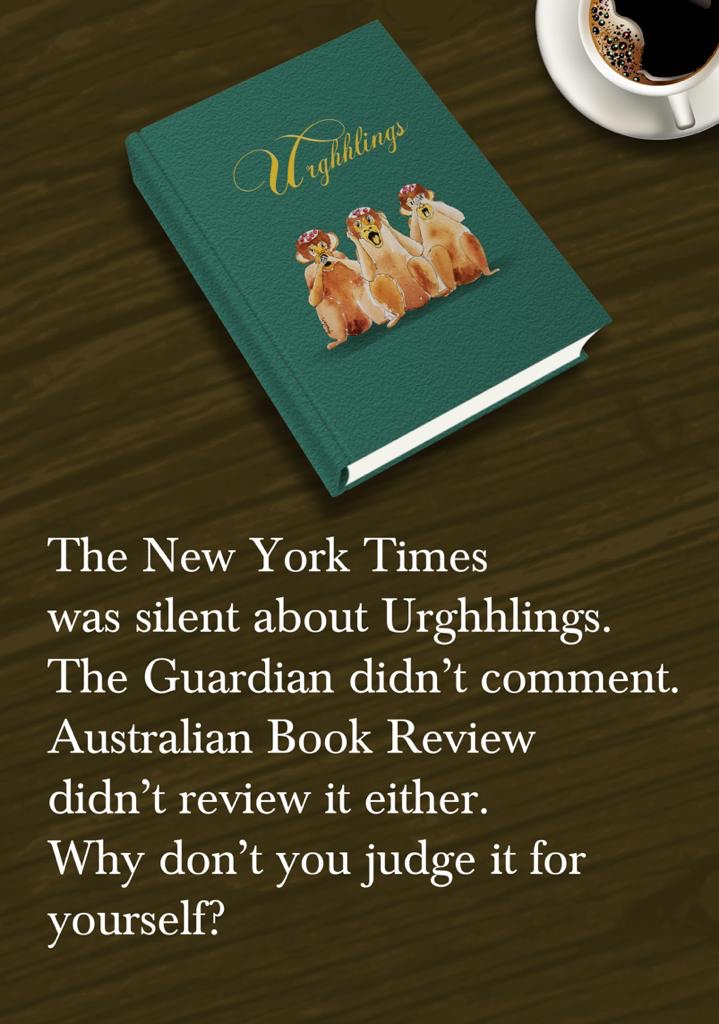 My book, titled Urghhlings, was launched three days ago, in fact. A book! Written by me! All 304 pages. Now that I think back to my school days, I recall I enjoyed writing poems for a short while and I got good marks for English. But, write a book? Never! It was not even a secret wish, the idea that I could write a book had not entered my mind. I never harboured a dream to write a book – it was in the realms of the impossible. Yet, there it is. In mint condition. Sitting in the office of my friend’s printing company. Wilson said he would print my book and he has. All for free. All for charity. When he first broached the subject, I thought little of it. But, I played along with the idea, just for fun. We talked about it in the group chat, all proceeds to go to the Class of 1975 alumni which we call LaSaints58, those born in 1958 from La Salle and St. Xavier’s Institution, Penang. Nice, money raised will go to those who otherwise would not be able to attend the next reunion. Unrealistic, but nevertheless, it was a seed planted in my mind. Blogging has been a joy for me; the opportunity to put down in words the events, ideas and thoughts that had sparked interests amongst my friends during the course of the last few months. I have always loved history, and suddenly I am a historian in my small group, recording snippets of conversations and observations. On average, a blog takes me about two and a half hours to write. Early blogs were short, I had the notion that people’s attention span is short. I limited a blog to about six hundred words. But, latter ones have lengthened to over 1500 words. Suddenly, I hear criticisms of my blogs as “operatic” with too many “sub-plots”, meaning they are becoming too long for those older folks who question the coherence of my stories. My book contains 116 blogs, mostly in date sequence, apart from “Mum about Mum 3” which I wanted to include with the first two chapters about my mum. I also added “Stan The Man” which is a blog I withdrew from my WordPress account following advice from certain quarters. I was asked if I would rather be kind or be right. A real gem, that advice.
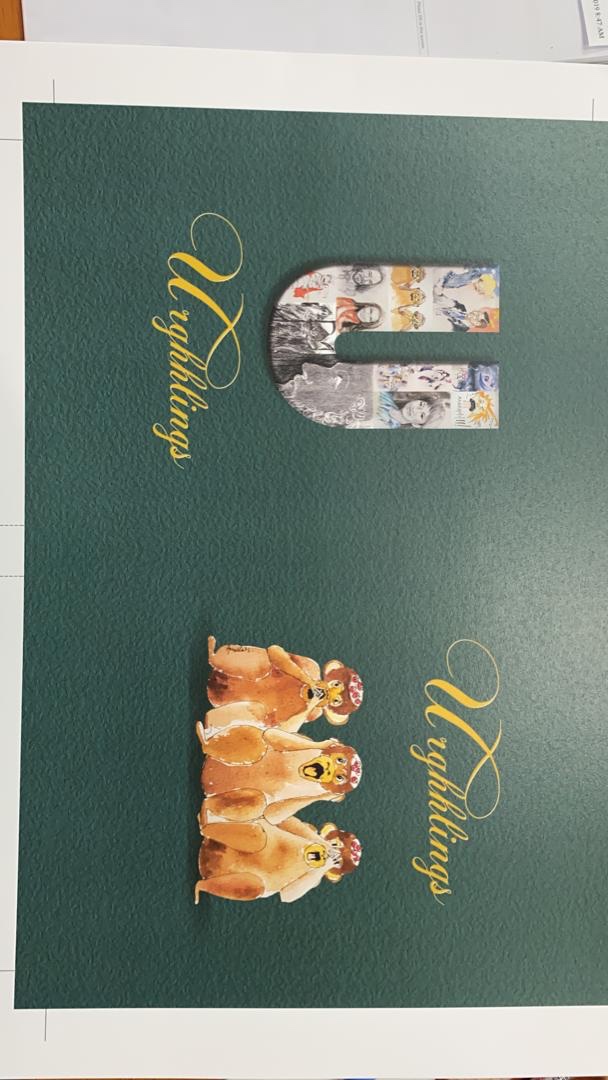

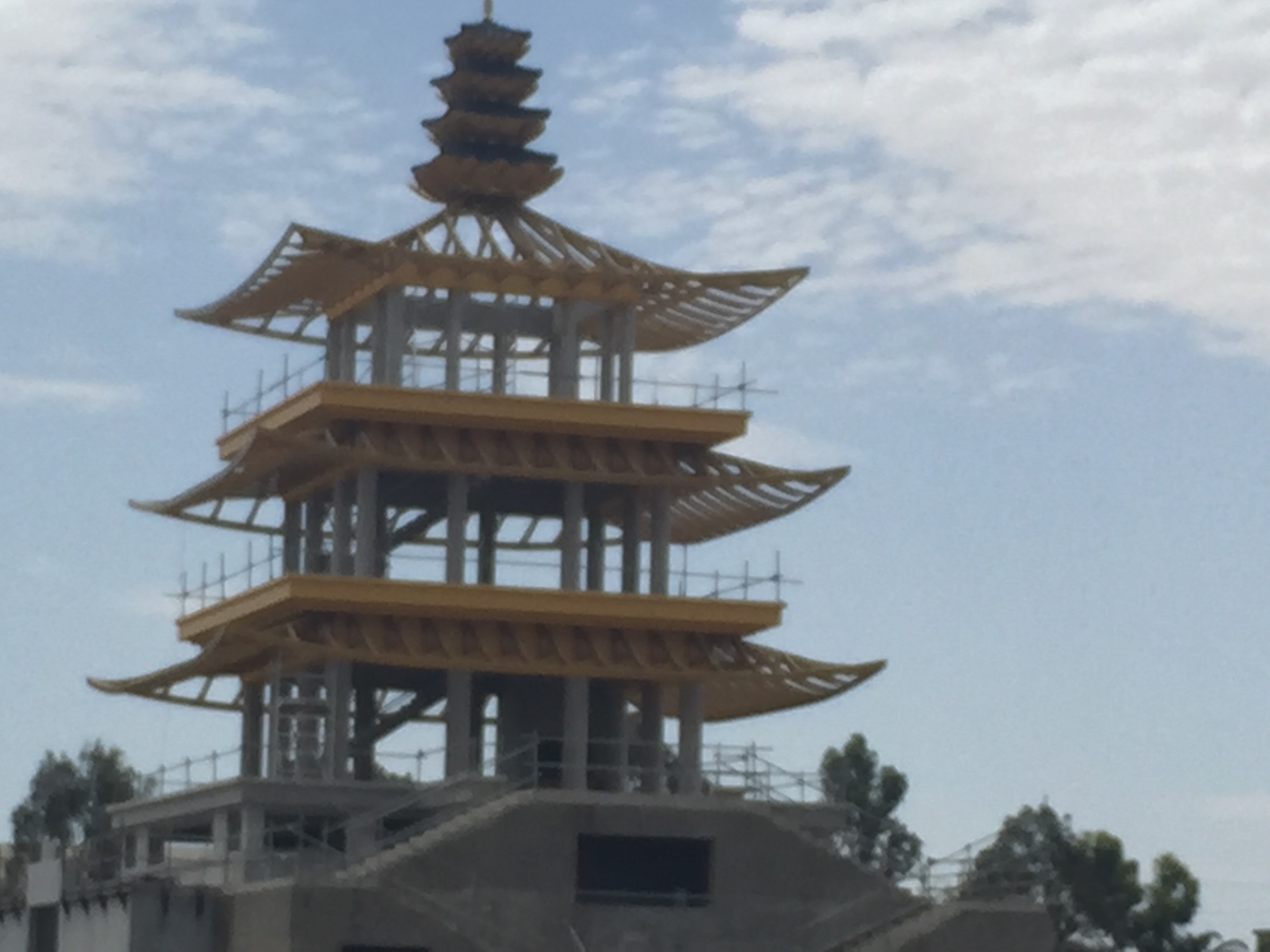


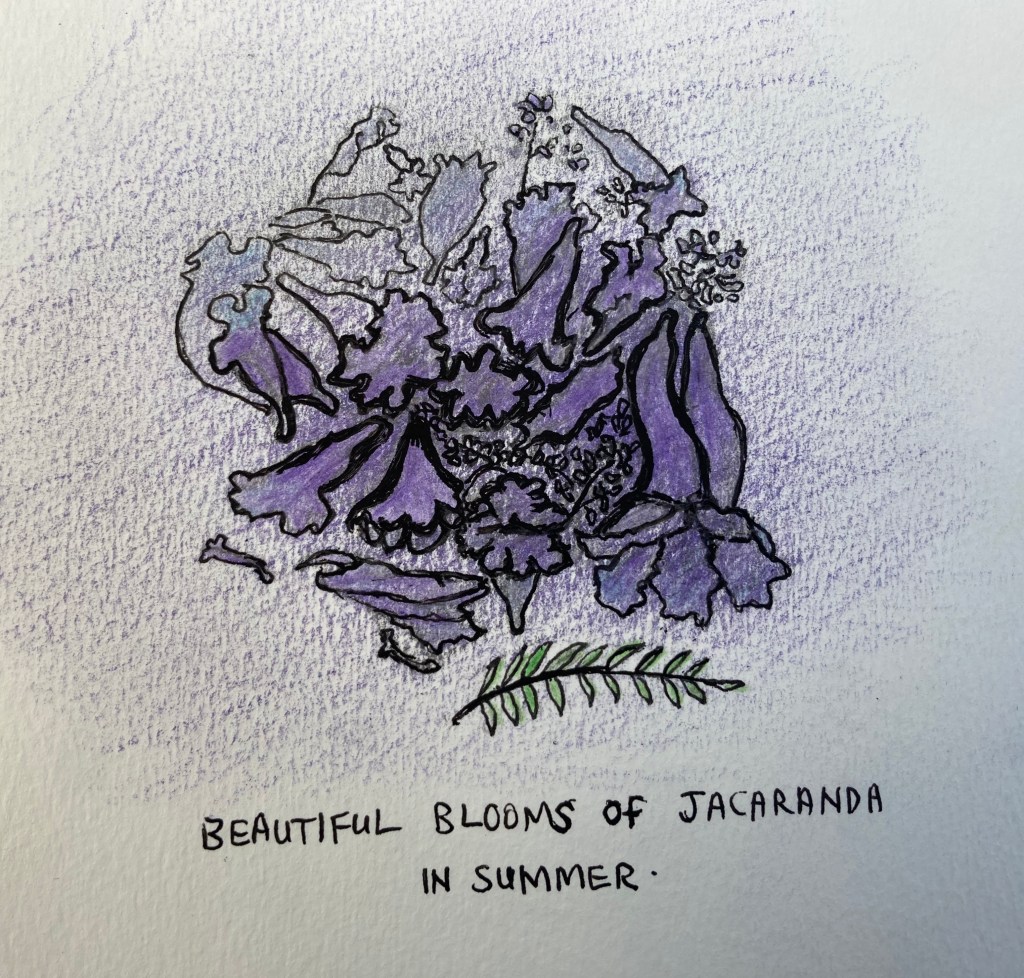
 Mei was meticulously dressed in the four days I saw her. Graceful and lady-like, her movements were noticeably elegant despite her rounded shoulders. A short stint of yoga will easily fix them. She wore the cutest nose scrunch whenever she laughed. Her silky smooth skin attracted much praise from other women who were introduced to her. She had the perfect pink tone on her ultra fair skin. Even at her age, she could be a great ambassador for Maybelline. Her high nose bridge was unusual for her Chinese genes, which may be why her oversize Gucci sunglasses fitted her with aplomb. Big brands somehow suit women like her; her beige Prada handbag seemed to blend in with whichever day dress she wore. The Mrs possesses a high degree of self confidence, packed with the knowledge that she is well read, well informed of current affairs and keeps abreast of minutiae bytes of cooking shortcuts. Mei, however, was the exact opposite. Quick to announce her disdain for gardening, house chores and cooking, she was almost proud to dismiss any notion of her trying out The Mrs’ quick and easy recipes. “It is so easy!” The Mrs encouraged Mei to try her easy Jajangmyeon recipe but without much success. Mei merely scrunched up her nose and smiled and exclaimed,