Dazzled, Then Frazzled

I like to think that once upon a time, The Mrs was dazzled by me. A time when I could do no wrong and say no wrong. When everything about me felt right to her. When my opinions mattered, and were always sought. When to her, my crooked teeth were the only crooked thing about me. When all that hung around my neck was a little wooden gourd strung by a sweat-soaked thread and she would still be dazzled by me. When all I had slinging from my shoulder was a cotton linen bag. When the only jacket in my wardrobe was a hand-me-down, almost thread-bare, black cotton jacket that was too thin for winter and too thick for the rest of the year. When my oral hygiene was never questioned and chewing gum wasn’t necessary. When body deodorant was foreign to me and my body odour was never an issue. When she asked me to hang around a bit more, eventhough I felt I may have overstayed after a dinner invitation. Alright, it was a self-invitation. I visited her unannounced at dinner-time and told her I had not eaten all day. But as the years passed, my mere presence had become thorny, the theory I toyed with was that she had become frazzled by my voice, my hair and my words. By me, to be precise. But, I hang on to the idea that it is just a theory. Routine bores and mundane chores are energy-sapping. Maybe it is the daily grind that frazzles us.

When Donald Trump won the presidential election in 2016, he dazzled the world with his freshness, his candid words and most of all, his aversion for stuffy political correctness. It was Trump who got most of us interested in American politics for the first time. The late-night shows were as hilarious as any nightly Seinfeld or M.A.S.H. episode. Trump promised to drain the swamp, build the fence, make Mexico pay for it and make America great again. But, we didn’t count on him to tear up the Paris Agreement on climate change or the Iran nuclear deal or the Intermediate-Range Nuclear Forces Treaty with Russia, or abandon the WHO in the midst of a pandemic. We certainly didn’t think he would risk a Cold War with China let alone a hot one. Least of all, no one expected him to let people die so that the lockdowns in place could be relaxed more quickly than justified. No one thought the most powerful country in the world would also be the worst in containing the pandemic. His political manoeuvres have been ugly and his disdain and disrespect for the law potentially destructive for well-entrenched U.S. government systems and protocols. It is fair to say the majority of Americans are frazzled by this man who has shown little ability to mend the many wrongs in their society. His law and order mantra has been possible only by activating his supporters to violently disrupt mostly peaceful Black Lives Matter protests. Today’s COVID-19 count in the U.S. reached six million cases with a death toll of 183,000. Those not feeling frazzled there have got to be urghhlings!

When the first wave of the pandemic arrived on the shores of Australia in February 2020, we were all devastated by the unseen enemy. It was said life would never be the same again. To a large extent, that remains true. Melbourne is again under Stage 4 lockdown, businesses cannot open and are locked up for a second time. Many small ones have not survived, even with the government’s very generous stimulus packages. Many chain stores have called in the liquidators too. Futile fights with greedy shopping centre landlords have only prolonged the agony for shareholders. There have been reports of aggressive and abusive phone calls directed at the Victorian state parliamentarians from people who feel they have lost their freedom, lost their jobs, lost their human rights, or lost loved ones. Yet, not every corner of society is feeling the wrath of the virus. Pockets in the economy are actually doing exceptionally well. The world is seeing high numbers of unemployed and therefore, debt-collectors are rubbing their hands in anticipation of another boom. Gerry Harvey, founder of Harvey Norman could not hide his glee when he said “I’ve never seen anything like this” in his 60 years as a retailer. By “this” he meant the COVID-19-induced boom in home furnishings and electronics. As reported in the Australian Review, same-store sales have soared 40.9 per cent in August and 35.1 per cent in July despite the closure of 18 Melbourne stores. When we can’t travel overseas for our holidays, attend footy games or concerts, or dine out at our favourite restaurants, what do we do with all that stimulus money the government has so kindly given us? We spend it on our house and garden! The likes of Gerry Harvey are dazzled by the gold they have surprisingly found in their bank accounts. In my online business, I have found the local factories all struggling to cope with the prolonged surge in demand. Lead times for orders have ballooned from 2 weeks to 8-10 weeks for many popular custom-made products. Inventories of imported goods are becoming depleted, and supply is becoming very tight in most categories. My business too has been dazzled by a healthy increase in turn-over. We have, however, been pushed to our limits, coping with this unexpected surge in demand with the same number of staff. Now, we are beginning to look and feel frazzled. After all, it has been six months of unrelenting waves of unprecedented demand for our goods and after-sales service.

Yesterday, First Son introduced me to GPT-3. I was totally enthralled by it. The possibilities dazzled me, and then frazzled me. Generative Pre-trained Transformer 3 (GPT-3) is a language-based deep-learning computer model that uses ordinary words to write complex algorithms by Artificial Intelligence (AI) in a matter of seconds. It is developed by OpenAI, a company started by Elon Musk. The quality of the text generated is already almost indistinguishable to that written by humans, but it is self-learning! So watch this space. Using simple English words, GPT-3 enables AI to do impressive work that not long ago could only be done by clever or tertiary-educated humans. Work performed by highly specialised professionals such as accountants, lawyers, doctors and medical specialists, web designers, translators, marketing and sales people, financial advisers, sharemarket brokers, real-estate brokers, etc, etc are all threatened. AI is not only more intelligent, it also possesses self-learning capabilities. Every job that is today done by humans is at risk since AI is faster, smarter and doesn’t forget and doesn’t need to rest. Initially, I was utterly impressed by GPT-3. Every job in my business can be taken over by it. The web design and development can be done in seconds. Live chats can be manned by AI – my customers won’t even realise it is not me answering their questions – all I need do is name GPT-3 after me! Telephone enquiries can also be performed by GPT-3 although I’ll need to tweak it to sound like me, with an Aussie twang laced with some faint Chinese and “islander” accent. Not so much from Manus, Bougainville or Fiji, but Penang. All communication by emails is easily handled by GPT-3. If it can pretend to be Tom Hanks and convince Tom Hanks himself, it can fool any of us when it pretends to be us. The AI researcher Eliezer Shlomo Yudkowsky observed that GPT-3 can even feign to be wrong. The deliberately deceptive AI troubled me enough to deliver me a sombre night last night. It is already capable of misinformation itself or fake information, we won’t just have State actors and hackers to worry about. With the ability to create portraits of people who don’t exist, it won’t be beyond its intelligence to create a video of a “real” POTUS threatening the world with tariff wars and trade wars. On second thoughts, we already have one. We won’t need GPT-3 to do that. Six years ago, Stephen Hawking warned AI will end mankind. But did he imagine in his wildest dreams that it can be so soon? Here are some words of wisdom from GPT-3. The first example to me is another deception designed to lull us into a false sense of security.

“AI will create jobs if it succeeds and destroy jobs if it fails”

“An expert is one who knows more and more about less and less”

“Art is what we do when we run out of useful skills”

“Science fiction and religion are focused on the same answer: the afterlife and the future”

“Responsibility is for the sane. If you’re crazy, you get freedom”

This last example is my favourite. “Music is the most advanced form of mathematics”

GPT-3 to me means AI will win against humans in any field, eventually. What happens to us when all our jobs are taken by AI? When the machines view us as superfluous to requirement, what will they do to us? I am feeling very frazzled now.

Check out what GPT-3 can do https://youtu.be/8V20HkoiNtc

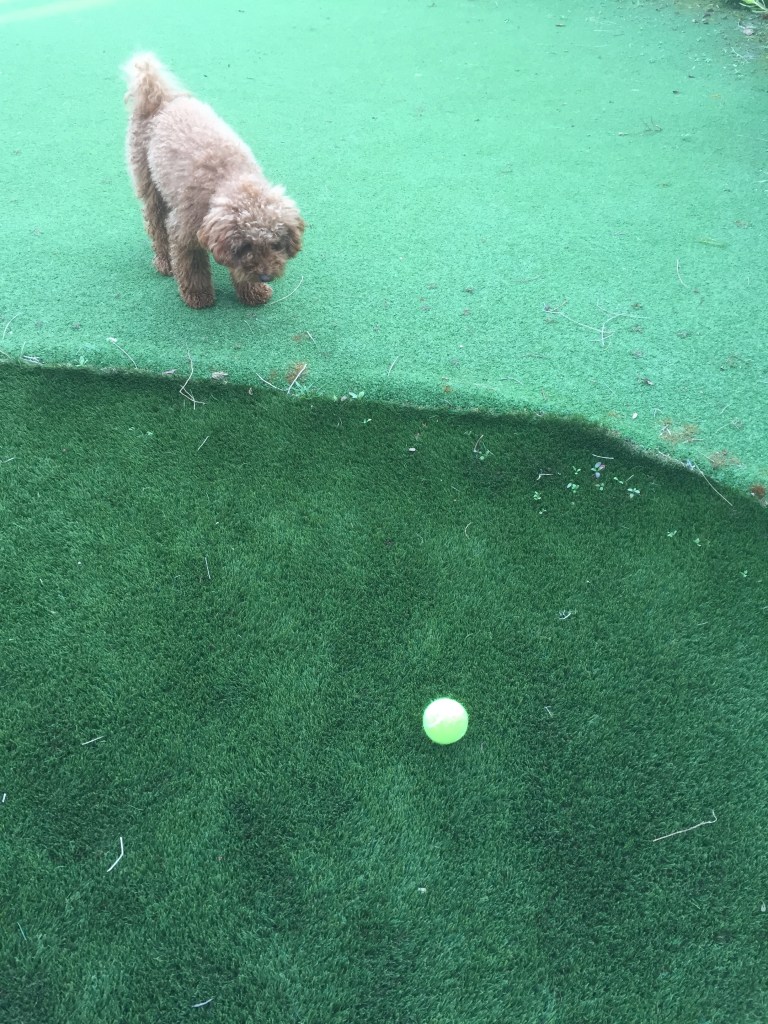
First Son’s pup, Murray, likes to play golf when he is frazzled.

Three Stories One Ending

The Mrs has the sniffles and a mild cough. Yesterday, she was worried enough to broach the matter about getting herself tested for COVID-19. A clear-cut decision, if you ask any doctor. Go! Get the test! I erred yet again. Instead, I suggested her symptoms are of a mild flu. No fever, no loss of smell, no severe sore throat, and no run on the toilet paper at home. Better to rest than to test. But, I did not stop her from getting herself tested. The damage was of course done. I get it, it is not something I have a say in. I am so stupid. Little Sis said so. “Show that you care! Don’t make her feel like she’s a second-class citizen!” That was exactly how The Mrs felt. I thought I did the right thing by reassuring her she is safe, COVID-safe. Instead, she felt I didn’t care. Feelings… I should add to Antoine de Saint-Exupéry’s very useful quote. “Words are the source of misunderstandings”. Rather, it is “Feelings and words are often the source of misunderstandings”. That is my conclusion. Even with the best intentions, I often get myself in trouble simply because someone “feels” wronged. Maybe it is how I react to accusations. When a very good intention is poorly delivered, it perhaps comes across as insulting or denigrating to the receiver. Accusations fly like sharp darts back at the giver. Rat-a-tat-tat. Tit-for-tat. My reactions are disproportionately strong, loud and fast. For that, I am sorry. I now know it is the ego that is slighted. The ego is the one that causes uncountable damage to our lives. Live and let live. Let go, go with the flow. Be the pebble in the pond, stay down there. Don’t cause ripples. I mistakenly thought my ego was tamed decades ago. Oblivious of my environment, I have allowed it to fester and maybe it has been allowed to prosper. My environment? As a young accountant, I was soon head of the administrative and accounting arm of the factory I worked for. Nine years later, I became my own boss. The Mrs held the title of Managing Director but my environment has been very much my own domain for many decades. I rule it with an iron fist and now I am aware of the damage that does to my ego. Has it always been my way or the highway? In my business, most certainly. I may have said to all my staff I have an “open-door” policy. But that is only because no one ever came to me with a better suggestion. Would I have entertained the idea that someone else knows better? Could I? I surely would. That no one came knocking at my door with a better proposal was certainly true until in recent years. First Son has proven he has many great ideas and he has executed them without fuss and commotion. The business, I know now, will be in very capable hands when I release the reins that I have clutched on so tightly from the beginning. Time to let go, go with the flow. Let the ego die.

Story by Yu Hua

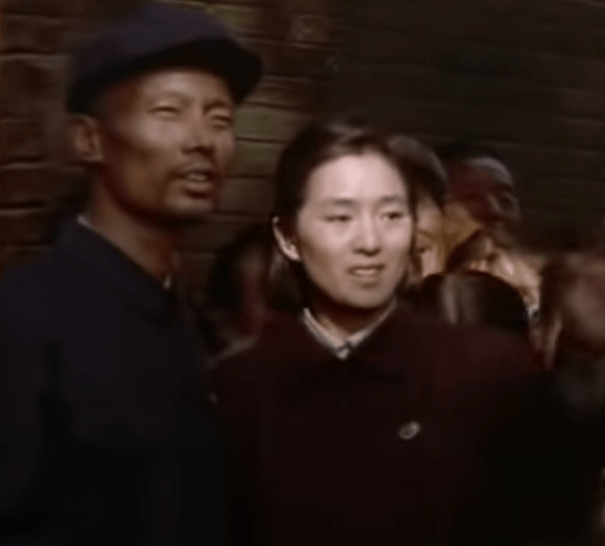
Two nights ago, The Mrs asked me to put on a very well-written story she has been listening to for ma to watch on the big screen. Huo Zuo 活着 ,To Live. Many say the author, Yu Hua, deserves a literary award for it. Apart from Mo Yan and Gao Xingjian, the only Chinese writers to win the Nobel Prize in Literature, no other Chinese has been nominated for that award. Surely Yu Hua deserves it too. Zhang Yimou’s award-winning epic movie is 2 hours long, but it is over 7 hours shorter than the audio book. The movie stars Gong Li. She is enough reason for me to watch it. The story, narrated by a cadre who was tasked with collecting old songs and Chinese legends throughout the land, starts in the 1940’s before communism took over China. It was about the life story of an old peasant who was a travelling singer/puppeteer once upon a time. Prior to that, he was the only son of a prominent landlord in their township. Master ShaoYeh was a gambling addict who very soon squandered the family’s wealth. His father, the patriarch, died from rage and despair on the day the debt-collectors came. The matriarch didn’t survive much longer. To live. To carry on, to survive. ShaoYeh would live on to witness the despair, tyranny of poverty and war, and the demise of many of his loved ones throughout his life. The gorgeous Gong Li leaves him with their bubbly daughter soon after they were kicked out of their vast estate. But I knew she would reappear in the story, she being the star. ShaoYeh, now penniless, is given a set of paper puppets instead of a monetary loan that he seeks from the gambler who cheated him of his family’s wealth. That set of paper puppets is the means by which he ekes out a living as a travelling singer/puppeteer. War comes whilst he is touring the country with his band of musicians. He witnesses deaths by the thousands as the civil war rages. Eventually, he returns to his hometown and is reunited with his wife and their daughter, Fengxia, who is now deaf-mute due to a high fever. Gong Li is dishevelled and supposedly gaunt (although that still cannot hide her natural beauty). She looks shellshocked by the war but she is no empty shell, still with the vigour to support Fengxia and herself by selling hot water in vacuum flasks to the neighbours. Over the next decade, they live through a series of hardships, the death of their young boy being a real tear-jerker. In the book, his death is caused by medical negligence while donating blood to save a magistrate’s wife. But, his death in the movie is due to Shaoyeh‘s unfortunate decision to send him to school despite being without sleep for many nights. He is crushed by a careering truck whilst asleep by the side of a road. Another decade passes and life seems decidedly comfortable under communist rule. Maybe Yu Hua was required to rewrite history or his novel would not get published. In the movie, Fengxia marries an army officer with a very bad limp – a leg injury from the war? But, the movie retains some historical accuracy by showing the public humiliation of the elites, the intellectuals. scientists, doctors, scholars, professional musicians during the Cultural Revolution. One such person who is persecuted is the obstetrician of the local hospital. His absence from the maternity ward means that Fengxia dies during childbirth. The student cadres happily trumpet their success in delivering the baby son but they do not know how to save her. In the book, Fengxia‘s husband’s disability is a grotesque, crooked head, not a crooked leg. He dies in a construction accident and his son too dies an untimely death later – he chokes to death whilst eating beans. Gong Li too leaves ShaoYeh, succumbing to years of illness. ShaoYeh sees through his final years, filled with regret, sadness and loneliness. Life is a trap, either way he loses – had he not lost his family’s wealth, he would have been the aristocrat executed by Mao’s Red Guards.

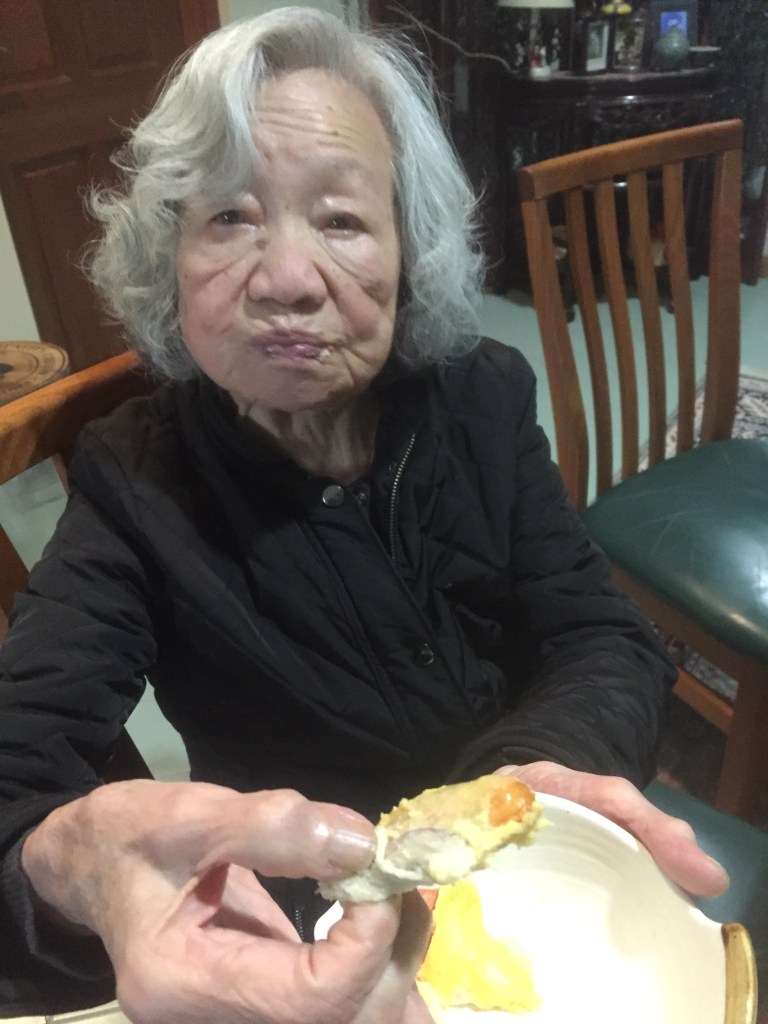
Gong Li reminds me of Violet, my niece.

My mother related this story to Corinne, a favourite grand-daughter of hers last night. Ma hates the movie. “Why do you show me such a sad movie?” There is no hope, no promise of a better tomorrow. Just two hours of misery, tears and death. “No good!” I was having a cross-conversation with a brother-in-law at the dinner table. He was talking about the idea of doing up an old Kia Pregio and converting it into a camper van. If we cannot travel overseas for our holidays, if we dare not fly in a crammed aeroplane, why not visit this vast continent from the comfort of a camper van? “But, a Kia Pregio?” I asked. So, I found some reviews on-line about the Pregio and read them out. From one reviewer: “A few lemon issues, damn noisy valves, weak sheet metal, large areas dent easily, crappy paintwork, always changing tyres over, no aircond.” From another, “Driving for over half an hour makes you feel like screaming to block out the diesel chatter! Engine is awful, very noisy, gutless.” Hilarious was the third, “Radiators corrode very easily.
Parts are expensive.
Carpets are low quality.
Had an sudden failure with the alternator – it was giving too much voltage to the battery. Sulphuric smell everywhere in the car, the car battery was partly melted by the time I got to it.
Door handles break too easily.
Worst of all no workshop manual. All in all a total lemon , avoid avoid avoid.”

Right at that moment, ma exclaimed. “Bodoh!” In Malay language, it means stupid. We were not sure which story was stupid to her. My brother-in-law chuckled and was sure ma meant the absurd idea about the Pregio was stupid. Little Sis would suggest ma was referring to my idiotic outburst with The Mrs. If you ask Corinne, she will undoubtedly say it was the story “To Live” that was at fault. I still think ma meant me, the urghhling.

Be Patient With The Patient

“I AM HAVING A HEART ATTACK!” The Mrs woke me up with that scream one night some 13 years ago. Another false alarm. It wasn’t the first time – the third actually, yes I kept count. So, like the boy who cried “Wolf”, she failed to get me anxious and I pretended not to hear her cry for help. She sat up and whimpered. The sleep inertia broke my dreamworld. Even in my grogginess, I could sense that she was in genuine discomfort. Her difficulty in breathing was palpable. So, I labouriously pulled myself up and tried to calm her. “It is another panic attack, Doe”. I call her Doe, not a female deer but my female dear. Pa and Ma used to call each other “Doe” too. Theirs is an endearment shared only between themselves for over 65 years, from Ngeh Doe”, meaning blockhead in their Ningbo and Shaoxing dialect. The Mrs asked to be taken to the hospital but I thought the RAH would rather we did not, since they would have many urgent emergencies to attend to than waste their time on a false alarm. Besides it was about 4 AM in the middle of a wintry night (Ok, that’s a lie. It was late summer). I was quick to convince her a visit was not necessary. “Wait awhile, it will pass”. The lack of celerity on my part was unforgivable. As I write this, I realise the foolishness of my actions or rather, inaction. How callous, how lazy, how irresponsible. In an emergency, our loved ones do not expect us to be sclerotic. The many “What-if scenarios” didn’t cross my mind then. Urghhling. What if it was a real heart attack! It is no wonder I seldom look into the mirror. I just cannot like what I see. My shadow self looms dark and large in the reflection.

It was nearly twenty-past ten on a bright autumn morning, still ten minutes before her appointment with the psychiatrist. She arrived at the blue-ribbon leafy suburb of North Adelaide. The streets were surprisingly quiet. She drove very slowly, noting the street numbers on every letterbox. She located the surgery easily. It was an elegant Queen Victorian-style cottage with a return verandah. Without any fuss, she turned her car which she calls “my old bomb” into the carpark reserved for patients only. The driveway and carpark were paved with white gravel. They crackled like popcorns bursting as the tyres rolled and stopped imperfectly in the parking bay. The adjacent car was parked at a even more pronounced angle. What is it about people who cannot park straight?

Hand of Fatima door knocker

This was the third psychiatrist The Mrs had to see. She pushed opened the heavy Jarrah door that had an antique brass knocker shaped in the Hand of Fatima. A good sign – the sign of God. Inside was a long corridor laid with stately plush Persian carpet. She could see doors opened on both sides. The first door on the left opened to the reception area. The receptionist promptly greeted her. Behind a French ornate chestnut desk, the woman in a smart navy shirt dress gave a slow and gentle smile and asked in a meditative silky tone of voice if The Mrs needed any help. The professionalism of the receptionist betrayed a sympathetic kind of gentleness – it was not so much from the heart. After all, every patient of the doctor has the same predicament. He is a honeypot for psychiatric patients. Her GP had arranged for her to be assessed for a probable mental disorder. Her mood swings, her bouts of breathlessness, and panic attacks were all tell-tale signs she needed proper medical care. Every patient who visits the surgery has to be treated with tender care. They know not to accidentally turn a patient hysterical. After her personal details were taken, she was asked to hang around in the waiting-room opposite. Besides the usual sofas and a coffee table full of magazines of all sorts inconsiderately messed up by earlier visitors, there were many paintings on the walls to keep her attention. She noticed that all the paintings in the three surgeries shared one similarity. The portraits were all distorted depictions of their subject. Like the one she was looking at. The woman’s head was lopsided, the right side about two inches too big. Her chin drooped so low it almost reached her navel. She held her baby by the head, a most uncomfortable posture that even a Yogi would find hard to do. The other painting depicted a man with one eye much higher than the other. If he wore glasses, they would sit on a 45-degree slope. A huge print of Gustav Klimt’s The Kiss captivated her for much of the waiting time. How uncomfortable to be kissing in that position – the woman’s head was at a perfect right angle to her naked shoulder. She understood these were contemporary paintings. Everything was deliberately twisted, contorted, distorted and exaggerated, like her mind. While she was contemplating this, a short elderly gentleman with a bulbous reddish nose entered the room. After the normal greeting, he gestured her to his room. He was the psychiatrist, Dr. Curtis. His room was stuffy and too warm for her liking. She immediately noticed the big bar heater on top of his desk. Who uses bar heaters these days? She asked herself. This apparatus was highly popular in the seventies. Well, he looked nearly eighty. This must be the one thing left from his internship that still performs well.

With the real The Kiss

She sat herself down heavily on the only available sofa while he flipped through her file. As he made the occasional ‘um um um’ sound, she couldn’t help but notice his many photographs of boats or yachts. With zero interest in anything that sails, she could not tell one from the other. She turned her attention to the podgy man. He was a man in desperate need of a strict regime of healthy diet and exercise. It was obvious from the two buttons on his midriff that were close to escaping from the buttonholes. The long fin-shaped creases on the front of his shirt did not hide the turgid belly and fullness of the fat within. The tightness of his shirt and the stuffiness of the room immediately made her breathing laboured. She was hoping an oxygen mask would drop from the ceiling. “Excuse me, how do I pronounce your surname?” She opened her eyes. Dr. Curtis asked a familiar question every Australian she encountered would. The familiarity gave her a feeling of calm. It was something she could never explain, not even to herself, why she frequently experienced the rise and ebb of anxiety and calmness. That was the reason why she was sitting on the huge sofa. He went through the reports from the other psychiatrists to get her confirmation that everything written down was correct. Then he asked the inevitable question, “So, why are you here?”

When there is too much pain to carry, the best remedy is to forget. Yet, as a patient, that is precisely what we do not get to do. The doctor’s role is to prise out what is hurting us inside our head. Every scar, every wound, every bad memory safely locked away for good. Talk about our feelings, why we feel the hurt, what troubles us. Our troubles usually start when we do not value ourselves. Why will others value us if we don’t value ourselves, right? Take the baby-steps – treat ourselves with kindness and practise self-respect. If necessary, avoid self-criticism. Don’t call ourselves urghhlings! In our darkest moments, when we are most desperate, it is common to sink to the bottom and stay there. Recently, I discovered it does wonders for our mind and soul when we give, even when we think we cannot afford it. When we give generously, our body secretes oxytocin, a hormone also known as the “cuddle hormone” or the “love hormone”. It is the warm, fuzzy hormone that makes us feel loved and wanted. Maybe it is the natural anti-anxiety drug that we need.

Some of us believe we are equal, created equal. Even if that is so, life is hardly equal. The Gini index clearly shows the harsh reality. Many are still without electricity, running water and security of food supplies. Most are still without 5G whilst some still wonder what the internet is. The Mrs and I were both born in Malaysia. She, from the East and I, from Penang, in the West. The roll of the dice meant hers was a tougher road to travel than mine to get here. West Malaysia had better opportunities, better facilities and more pathways to a tertiary education overseas. She had to dropout early before sheer guts and determination and a kind fate brought her here. Whilst it could be said we shared the same life here, hers was again tougher and much more challenging. White society is less kind to a woman, particularly an Asian with a strong Chinese accent – the combination of which did not hold her well in the automotive business we ran. I suspect the frequent bullying, harassment, intimidation both by shopping centre management and unscrupulous petrol-heads were too much for her to handle. Even the staff made her life miserable. In the early days when we had a business partner, she would come home in tears. Even a business partner who was indebted to us, not just financially, could bully her. The 18 years she worked as a store manager in our business wrecked her emotionally. She was forced into early retirement from her “baby”, our first store in Prospect. Time has flown by so quickly, it was twelve years ago she sat on that chair as Dr. Curtis extracted and expunged the scabs from her life history. Maybe he did not, we are who our lives make us. The Mrs today is a fine, strong and confident woman. Emotionally balanced, she has got her assertiveness back and decidedly imbued with self-belief. I can hear her coming………quick, I am outta here.

Gini And The Genie

Recently, I came across the Gini Index. The report showed South Africa as the worst ranked country in the world, at 62.5. A measure of zero would be impossible, not even in a Marxian utopia as it requires everyone in that society to earn the same income. A coefficient of 100 on the other hand means one resident in that country earns all the income, and everyone else works as slaves. I was immediately curious about how equal America was in “The Land of the Free” where everyone is created equal and all men are endowed by their Creator with unalienable rights such as the right to life, liberty and to be yourself. The right to refuse vaccinations and not wear masks are more modern rights won by the Americans. The U.S. came in at No. 30, with a Gini index of 45.0, just a point and a half better than their current nemesis, communist China. Somewhat unexpectedly, as I assumed the communists would be a lot more equal with their reward system. The Philippines performed as badly as both these countries, at about 48.0. This was a surprise to me, for I expected that country to rank much more badly. I was in Manila in 1981 not long after the Marcos era saw the lifting of martial law. A few months after my visit, Benigno Aquino Jr. was assassinated upon his return at the International Airport of Manila after a long exile. As a young man then, I was shocked by the extremities of what serious economic inequality and abject impoverishment can do to a society. The wealthy dead were housed in air-conditioned mausoleums whilst the impoverished living were eking out a miserable existence, begging and annoying tourists for pittance before returning to their cardboard shelters on the roadsides and medium strips of major avenues as the day became dark. On our first night there, The Mrs and I didn’t feel very safe, although it must be emphasised that we were never harmed or threatened as we walked past those people on our way back to the posh hotel after a sumptuous seafood dinner during which we were serenaded by a Spanish guitar trio. Countries that allow the unequal and unfair abuse of their masses are tinderboxes for civil unrest. It is no wonder we watched the end of Marcos rule on TV after “people power” used yellow ribbons to topple the kleptomaniac who brought his nation into economic despair. It is also no wonder that today we see street riots, looting and violence on the streets of America as normal occurrences as in Hong Kong who are ranked loftily at No.4. Egalitarian countries are mostly European with scores of below 30. Such nations do not witness civil unrest, food insecurity or political upheaval. People who are fairly governed and treated equally do not have the need to start a rebellion.

Screenshot of Pengana International’s July 2020 Report.

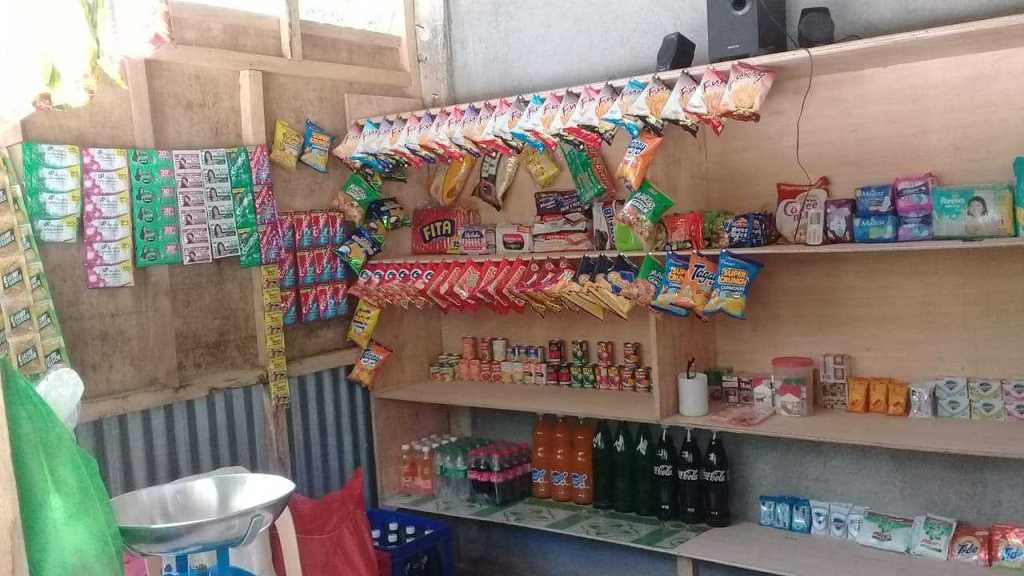
The average Filipino’s annual income is 1/20th that of an American who earns USD67,427. The starkness can be better explained if we say an average Filipino needs to work 20 days to earn as much as an American who works one day and rests for the next nineteen. This is not the case for Ammie Lanoy. She has worked seven days a week for most of her adult life. Hers is a life that is much more challenging than that of the average worker in her country. I have never met Ammie yet somehow, her story has captured my attention. Her story deserves to be told, for it is about the gutsy and admirable qualities of a woman’s determination to provide hope against all odds and ultimately, win reprieve from abject poverty for her family. A magical genie, that is how I see her. Early life with her loving parents was as safe and comfortable like that of a genie’s in an oriental bottle, but once she fell in love with the man who would become her master, her role became those of a genie who was summoned to obey her master’s commands. To be fair, I think she performed incredible feats to rescue her family from the tyranny of poverty and hopelessness, not to satisfy the whims and wishes of her husband. Once out of the comfort of her parents’ home, she has not stopped working. She has not stopped giving. Ammie was born on October 31, 1963, at Union, Dapa, Surigao del Norte. The 8th and youngest in her family, she finished her grade school at Union Elementary School and High School at San Nicolas School. She dropped out of the Bachelor of Science degree after one semester at the Mindanao State University. A common reason that bedevils most Asians – the tuition fees and living expenses were simply unaffordable for the family. After she dropped out of uni, she washed dishes in a school canteen in Manila to help her parents make ends meet. Eventually, she became the assistant cook of that school canteen and life appeared promising at last. She was able to save up enough money to buy a small plot of land at their local village (barangay). There, she met Elenito P. Lanoy who would become her lover and later, father of their two children. Somehow for those who lead tough lives, they would go on to meet bad luck or bad people. In her case, Ammie’s husband turned out to be an alcoholic. Drunks are often unemployed and for many, their circumstances worsen as the brutality and harshness of a hard life take hold. They usually become unemployable and their resultant anger at the world typically makes them violent and unpredictable. What does a woman do when her husband is unemployed? She compensates for his incapacity, bad luck or laziness. She works and works, and works some more. Even when she was heavily pregnant with child. Even immediately after child-birth. What does a mother do when the father of her children is a violent drunk? She takes the beatings instead and she makes sure they are not within his striking distance, even if it means they sleep outside their house on the verandah. When Gladys, their first-born turned 7, they uprooted from Manila and returned to Siargao Island. Life improved somewhat, the drunkard became a fisherman and Ammie by then confident of her cooking skills, prepared viands and sold them to every house in their barangay. If you peer hard, you’ll still see the millions of her footprints she made on that dirt path. A road that turns soggy and muddy when the rains come, it is as uninviting during the dry season, as it throws dust and fine grains of sand into travellers’ eyes. A viand could be a meat, seafood or a vegetable dish that is served with white rice. She carried the heavy load of viands with both hands as she walked the many kilometres every day, selling her food that she had toiled for much of every morning preparing and cooking. Her daily journey began at the school because many of the teachers were her customers but it was always necessary for her to traverse the whole barangay and not return home until mid-afternoon for her viands to be all sold. Her viands made her a reputation as a very good cook and eventually, she became the food caterer for local weddings, birthdays and festivals. To both their children, Ammie is their sole parent. The drunk by definition is stupid to let himself drink to a stupor. Gladys today works as my virtual personal assistant/office administrator. It still amazes me that she can be on the other side of the world yet work together with her colleagues who are based here in Adelaide. According to Gladys, her mother survived everything for them. Hurricanes, earthquakes and beatings, I suspect. Everything. Ammie even pawned her house and land, for their education. I am so glad for Ammie that they both graduated from college. Money well spent! Today, the sun finally shines on Ammie. Gladys has managed to buy back her mother’s house and land from the pawn-shop. Last week, she got an interest-free loan with no repayment obligations from someone who wishes to remain anonymous. Gladys borrowed the money for a good cause. She gave the money to her mother. It represents to her a “God-sent” opportunity to win her financial independence. The investment is worth it. It finally gives Ammie the realisation of her dream to run a small business from the dilapidated hut she owns by the side of their house. It has been wonderfully refurbished into a delicatessen, a delightful story. Today, I see it has been transformed into a convenience store in their barangay from which she can sell her delicious viands, and miscellaneous grain and rice for the villagers. The Coronavirus had threatened their community with food insecurity. This was another urgent reason to set up the convenience store. The good news keeps coming. I learned that Ammie’s husband has successfully kicked his addiction to alcohol. Ammie never abandoned him, her steely determination to keep her family together despite the many reasons to walk away is further testament to her great capacity to love and give. Ammie, a real genie. An inspiration to those who would have given up long ago.

Ammie’s Deli
Ammie enjoying better days

My Boss, My Loss

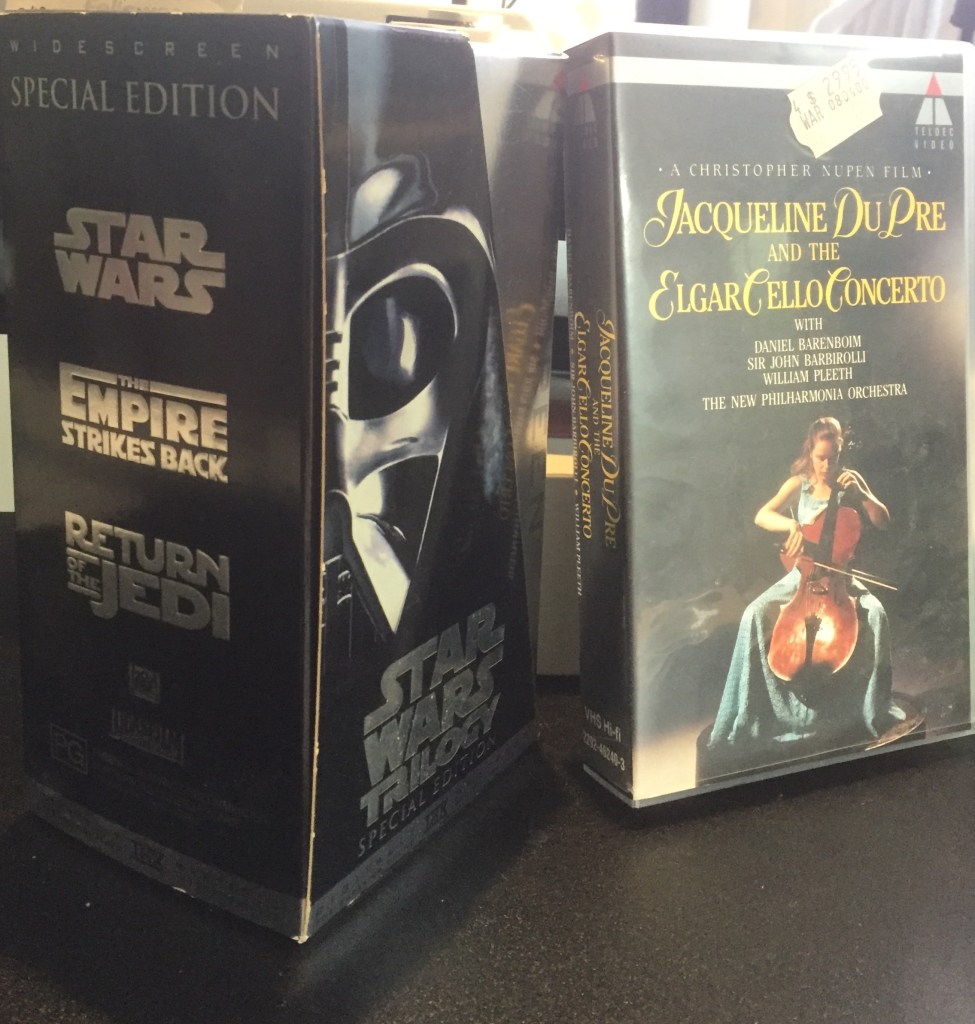
I love Fridays. So much so I tell myself every day is a Friday. It avoids the blues of a Monday or the dread of mid-week with the weekend still seemingly an eternity away. I love Friday nights, especially. A Friday night is a movie night. There is no longer the need to go to a drive-in or drive to a Video Ezy store for a VHS tape – there just isn’t one anymore, the stores I mean. The VHS tapes I still have – some precious ones in my collection such as the digitally mastered THX Special Edition Star Wars Trilogy and Christopher Nupen’s Jacqueline Du Pre and the Elgar Cello Concerto. There is no need to do an illegal download either, The Pirate Bay and Napster have long disappeared. A long time ago we used to pester family members to buy us VCD’s of pirated movies from pasar malam or night markets in Penang or KL before they come and visit us in Adelaide. All that is history too which may require me to explain what a VCD was – Video CD, usually pirated and sold in Southeast Asia for just a dollar a copy. At that price, no one complained about the poor quality. Yet, I still have the voluminous Winter Sonata collection stashed away. Don’t ask me why, maybe it has something to do with Choi Ji-woo. Giving her up is hard to do. Nowadays we have free online streaming such as iView and SBS On-Demand. Netflix is also free, but only because First Son pays for it. Friday nights offer me the luxury to sit on my sofa chair like how a lord would, outstretched legs overhanging from the recliner chair, the gin and tonic a genuine tonic to lift me up from the pits another hectic and stressful week had banished me to.

My VHS collection, precious only because of the memories

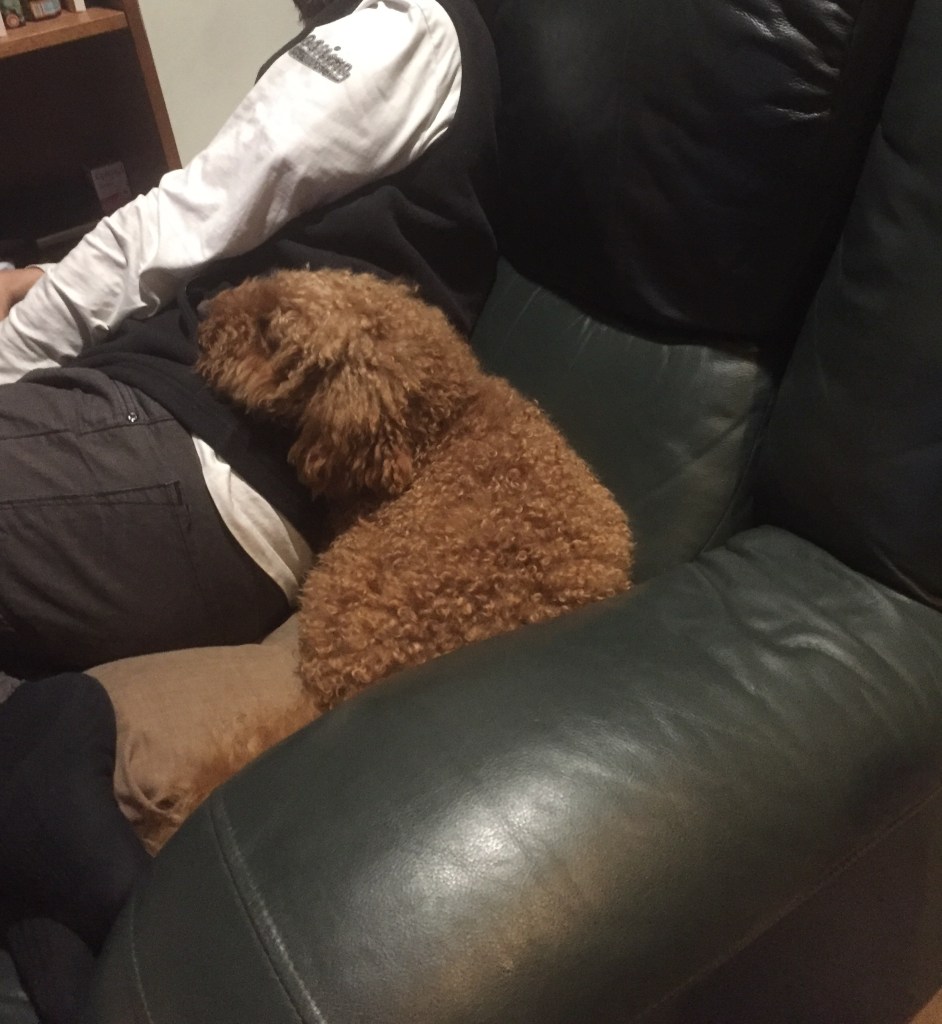
Tonight’s movie is about a small group of immortal mercenaries in The Old Guard. They are led by the very feminine Charlize Theron whose puny arms, slender body and skinny legs are not those you’d expect of a lethal indefatigable fighter who has not lost a fight since time immemorial. Incredibly beautiful eyes, interesting storyline but just a very unconvincing immortal fighter. Where’s Chen Pei-Pei when we need her? Theron is unconvincing, she is no Wonder Woman. There were some fine scenes that resembled martial arts, but her puny arms just don’t look like they would hurt a fly. Her inability to convince me she can be a lethal weapon suddenly made me feel I am as unconvincing too. Not as a weapon but as the boss of my business and the boss of my family. I am no lord. I am no boss of the house either. Theron opened my eyes and forced me to look at my own deception. Look at the way I sit on my own throne. It is no throne. It’s actually a broken lopsided sofa chair with badly scuffed leather that is screaming for a badly needed coat of leather polish. Look at me. I am not even sitting fully spread on my chair. Why? Look at Murray, First Son’s pup. He has ownership of more than half the seat and therefore has consigned me to sit on the side of my backside with a twisted torso. Who is the boss? I am at a loss to tell you the truth.

Murray dislikes me sitting on his brown pillow.

Earlier today, I took him to the backyard, immediately after I finished work. His favourite game is football (we still call it soccer here) – I seldom get the ball past him for he is such an agile goalie. No, no. It is not that I am a novice at kicking a tennis ball. Murray is simply so much sharper and his reflexes faster than the best goalies we see on TV. Please move aside, Manuel Neuer, David De Gea and Buffon. You guys are old and slow by comparison. I hadn’t checked my mobile phone for over an hour. So, whilst Murray was taking a breather, I thought I could sit under the gazebo and read some of the WhatsApp messages that trickle in incessantly. Not a chance. He barked at me as I was checking my phone. Who is the boss, I asked? He insisted I put away the phone. No phones allowed on the football field, especially during penalty kicks. I suppose it is not such an unreasonable rule. As the boss, I quickly agreed to the request, lest it became a demand.

Once upon a time, I was the sole breadwinner for my family of seven. The Mrs very quickly produced us three sons. Her parents lived with us then, all seven of us under the one roof. I remember the innumerable late nights upstairs at my desk toiling away till the wee hours whilst the rest of the family enjoyed their slumber. Back then, I believed I was the boss of the family. And, as the boss, you will do whatever it takes to deliver a safe and secure environment for your family. The boss provides what the family needs. There were no “wants” to satisfy. It turned out to be a good thing. No soft drinks, no junk food and no useless toys that only damage the environment. The boss was like a parrot whenever their “wants” were submitted to him. “Ba, can you get us this?” Baby Son wondered as he pointed to the photo of a packet of Smith’s Chips on special in the weekly Coles catalogue. “GET?” I hollered. “You mean buy, right?” “Buying requires money, Baby Son.” Usually they took turns to deprive themselves, though. Once, Baby Son was looking at the temptations in the ice-cream section. It wasn’t I who screamed but Middle Son did. “PUT IT DOWN! We can’t afford ice-cream!” Or, when Middle Son was about to choose some bananas. Baby Son yelled to him from the opposite end of the F&V section. “HERE! THESE ONES ARE ON SPECIAL!” So, who was the boss? I thought I was. Now, I realise a father’s job in the family was precisely that. A job. To provide and to protect. Did it make me the boss? I am at a loss to answer that.

A fortnight ago, my mum thoroughly enjoyed her first durian for the year. I bought two Musang King durian from Thuan Phuat in Chinatown. They were $27.50/kg. Ma uncharacteristically exclaimed they were reasonably priced. The sweetness of her smiles were enough for me to venture out to buy some more today. When I saw the price tag, the Penang-lang in me yelped “Oh, you have put the price up to $28.50! That was quick!” Penang-lang means a person who hails from Penang. Here, it also means a person who is price-sensitive (to put it kindly) or someone who is extremely miserly (to put it insensitively). Perhaps, it is safer to describe a Penang-lang as someone who is thrifty, one who is forever conscious of prices and therefore is never wasteful. The lady boss of Thuan Phuat smiled sweetly and said she will charge me only $27/kg. Wow. That is how a true boss behaves – generous, equable and congenial. Whereas I am the type who feigns displeasure at a shop-keeper’s price increase. Do I act like a boss? I am at a loss to answer that. Ma again was visibly happy as she helped herself to a second “hood” of durian. The Penang-lang in me counted she had three in total today. She looked so pleased, so I ate less and packed a container for her to take home. She kept saying that’s it, two durian sessions a year will do. I reckon I want to surprise her with a few more.

Out of three “hoods”, this was the best!

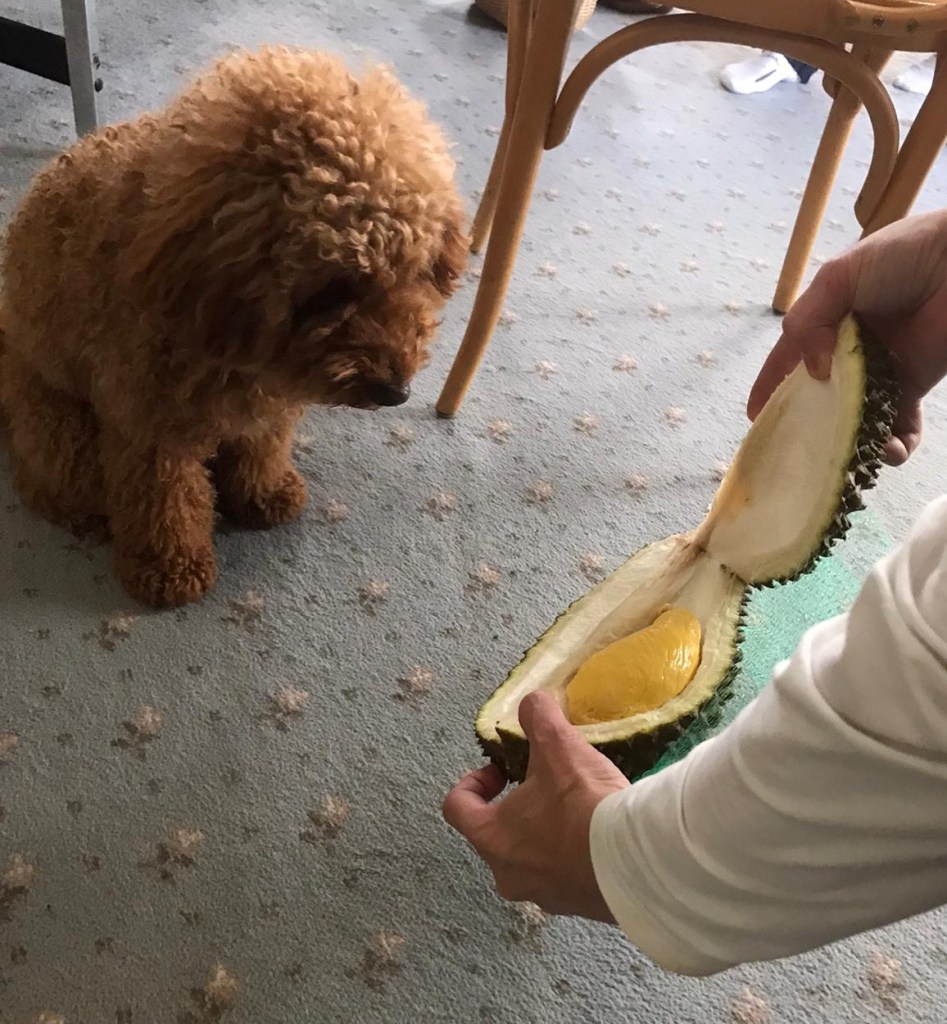
Murray also had his before me. I was responsible for opening and serving all three durians. I suppose that makes it clear who the boss is. I know it cannot be me. Let’s ask Murray.

Murray can have the durian but not the seed. It contains cyanide!

These Two 2 Too?

The Mrs’ sister has been spending a great deal of effort trying to produce the number “2” for me. It will be in the style of Chinese calligraphy with a strong and fast broad brushed effect that I can visualise clearly in my mind but one that I cannot convey to her to paint for me. All week I have rejected her submissions and it suddenly dawned on me that she would have spent quite a few dollars on paper and paint already, not to mention her time and effort. All over the number “2”. “These two 2 too?” She asked me dejectedly last night after I again consigned her effort to the rubbish bin. She has remained silent all day today – the sudden realisation of which delivered a monster wave of guilt on my conscience. Why would I even bother about something so trivial? Why would anyone supposedly of substance and of sane mind worry about how a number would appear in the title of his next book? A number is a number is a number. No matter how it is painted or positioned on the front cover, it will still read the same. No matter the size even. Why are some of us urghhlings so pedantic and ridiculous to such extremities to bother a professional artist about one little number? Heck, it is not as if a beautiful font and stylised number on a book cover will sell more books.

Yet, to say that would be to actually diminish the value of her effort. “Getting something right” does not have to be about the financial reward of an effort and it most certainly does not have to profit us with praises or recognition by others. So, why do we persist with “doing our best” then? With something as insignificant as a number? It could be that it has become unimportant to me at this very moment as I deliberate on the reasons why I persist on finding the right “look” for this “2”. Initially, it didn’t dawn on me that it would end up with so many attempts by her to get the style I want. Maybe I communicated poorly to her. How can anyone deliver something if the request was made in a vague manner? Or maybe she just does it the way she likes? I was confident I knew how it should appear on the front cover and believed I was able to describe the “2” I see in my mind. It has to be in red. A Ferrari red, to be precise. You will have to use a brush, a broad thick brush to be able to deliver a strength and substance of the number. Also, you will need to control the speed of the brush so that one can feel its power and movement. It must not look heavy and cumbersome. That’s pretty clear, right? Before I forget, it should look slightly oriental too.

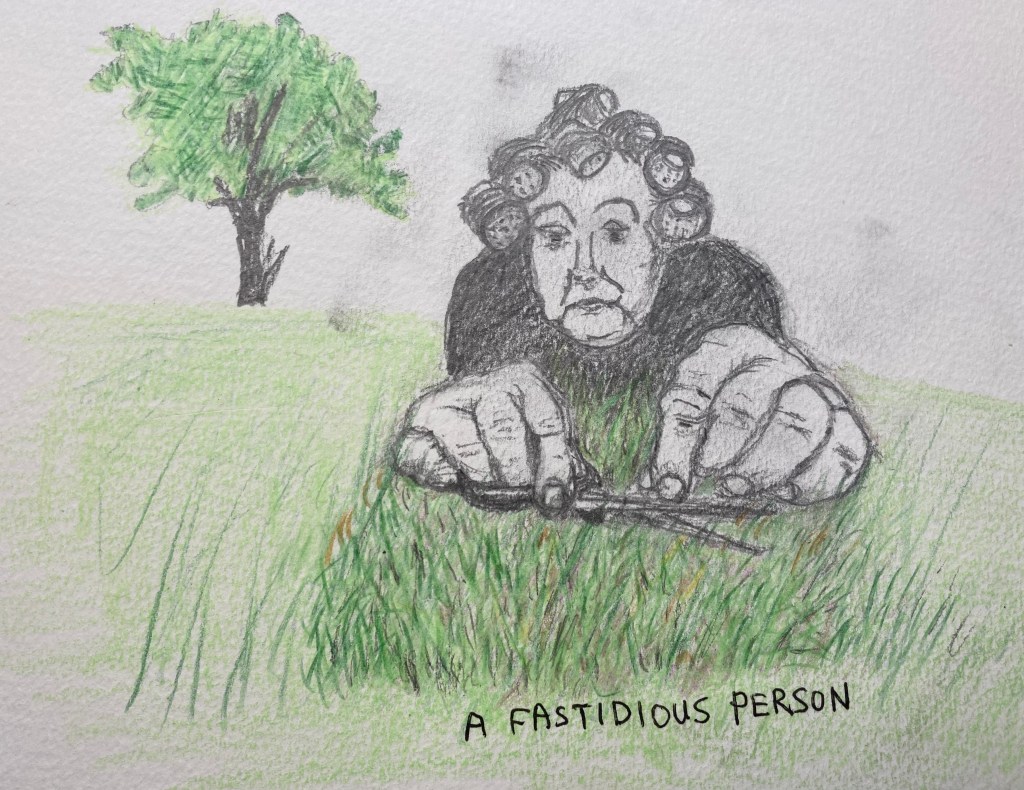
Why do artists feel the need to get their art exactly right? Even down to a few brush strokes? Or musicians who keep honing their technique for hours just to get some passages exactly how they think the composer wanted it? A few bars may warrant more practice time than a whole movement? Why do we need to get something this insignificant to be exactly how we want it to be? Is such a person ultra fussy? Simply ridiculous? A trifle idiotic? Mad? The artist does not judge my personality except to say it is my project and therefore I have every right to demand the way I want it to be. Others say we should see the forests rather than the trees. Success goes to those who can see the big-picture, to those who can strategise and take their endeavours to the next level. Those who allow themselves to be bogged down by the minutiae of daily grind will deservedly get stuck in the mud. They can’t pull themselves out of the quagmire they put themselves in. “Don’t be that little frog in that dried up well.” But, if we can’t do the small things right, how can we do the big things right, right? The Malays have a saying, “Sikit sikit lama lama jadi bukit” (little by little becomes a mountain over time). The Chinese also have a saying about the old man trying to move a mountain that’s in his way. He told those who heckled him that although he may not succeed in the task, he has descendants that will finish the job. 愚公移山。 In Australia, we all know that a small thing like a cigarette butt can cause a massive bushfire, which explains the need to not ignore seemingly unimportant little things lest they come back to hurt us in a big way. Similarly, we do not leave a small hole alone if that hole is on the floor of a boat. American poet Emily Dickinson (1830 – 1886) famously said, “If you take care of the small things, the big things take care of themselves.” Maybe that is what my concern has been. The need to get the small things right is the discipline I have imposed on myself for far too long now to simply abandon even when I know the irrelevance of getting them “exactly right”. Years of reconciling accounting ledgers to the last cent I fear was a bad teacher to accounting students on the merit of focusing on what the figures tell us about the big-picture stories of the business. Just write off those small balances! Or, maybe I have acknowledged this late in life that I cannot do great things in my life and so I might as well do the small things well. On the other hand, it could be that as life seems to pass faster and faster as the years go by, it is the wisdom I have found about the beauty and importance of small things in life that we often miss as we focus only on the big issues and big-ticket items that we dream of procuring. It is not wrong to agree that at times as I look back in time, it was the small things that mattered most in the end. The little things that gave us most contentment and joy were actually the big things, such as the loud chuckles from Ma when served a hearty meal by The Mrs or the occasional sweet smiles that flashed on Ma’s face as she reminisced about her early life with Pa. I still grip on to the precious early memories of my very few trips with Pa to Sungei Petani and Selama – part of his responsibilities to inspect and supervise the workers on their first rubber plantations. It isn’t the little fish in the creek or the carefree black puppy that brings me back to that happy place once upon a time, but the special and rare bonding of sorts with Pa. Yes, I do harbour the view that it is the small things we do that can save our marriage, e.g. ever since The Mrs’ face turned ashen from that incident with my “uncontrollable fart” when she was pregnant with our first son, I know never to release flatulence under the doona in case the “product” is of the super pungent type. That is the one thing about our farts, we just never can tell if they will stink or not. There is no warning, no signs to tell us which variety will be released at any given time. So, I have learned to do the little things to save my marriage, such as showing interest at the little things she shares with me, even if it’s about some stranger in Taiwan having a roadside tussle with her husband’s “Xiao Er” (mistress) or some mumbo-jumbo theory about the Year of the Rat. Be genuinely interested, give her a hug that can rival the enthusiasm that Murray, No.1 Son’s puppy showers on her as she comes down the stairs for breakfast. Be constantly on the lookout to be considerate, such as emptying the green wastes into the compost bin without being told to do so and collecting cut branches and twigs with rose thorns from the ground so they won’t exact their vengeance on her hands in the days and seasons ahead. I suppose the smallest thing we do that in time will be the biggest thing we do for our marriage is showing gratitude. Love is assumed for without love, nothing survives. Saying thanks for the breakfasts that she shares with me even though pancakes and freshly baked bread are made of flour – carbohydrates that we ought to avoid especially if we lead relatively sedentary lives. The one big thing I learned from Antoine de Saint-Exupéry’s The Little Prince is that it is the time we spent on our rose that makes it important to us. It is not that the rose is important to us that makes us invest the time to look after it. So, the more time and effort spent on getting the “2” I want will make it even more important to me!

These two 2’s too were binned

Virga Or Viagra

My younger sister aka Little Sis almost floored me last Sunday over lunch. I thought I heard she asked, “Do you know about Viagra? What it actually means?” “Little Sis! Of course I do! But it does not mean I need it!” I had to balance my retort delicately. Too strongly and she may wrongly suspect I take them. Too lightly and she will also think my flippant dismissal of it is indicative of a flaccid admission. Not that there should be any stigma for viagra users. “Why would you ask that? Is your husband finding a need to use them?” That was smart of me – I thought to myself – putting her on the back foot will teach her not to ask such personal questions. Instead she roared. “No! Virga, not Viagra!” She tsked-tsked at me, as all my sisters are prone to do to express their annoyance at me. But, being my younger sister, she never used to dismiss me in such a brusque manner. The hierarchical structure of a Chinese family unit is still very much observed, such has been the tight rule of our matriarch. My ranking is seventh, being the seventh-born. There can be no usurper. So, if there is a difference of opinion, the younger ones will be the first to quieten down. We don’t offer any ideas unless asked and we don’t touch the food in front of us until those who outrank us have. There are exceptions of course, as with anything in life. But by and large, the norm is the younger ones will show respect and observe that hierarchical line. Admittedly, that rule is quickly relaxed should a plate of lobster Yee-foo noodles be placed right in front of me. Or, a freshly opened Musang King durian is precariously positioned for a photo shoot near Little Sis. She will be quick to say she’s poised to attack it first, despite being ranked last. Observing this ancient tradition is a tacit nod to the virtues of filial piety that our parents had imparted to us all through our childhood, not an endorsement of the rule that age-based seniority deserves special respect. We willingly bend because we still can. Unlike the elders. They are more like the old oak trees that break rather than bend. When the elders speak, they command silence and expect obedience. When I speak, I expect courteous resistance at best and more too often, ridicule and sarcasm. There has been a notable shift of late though, since I turned 60 over a year ago. Maybe I have joined their club finally and am no longer treated as an inconsequential junior whose existence is of little relevance to them. “Virga”, Little Sis repeated. “It is rain that does not reach the ground.” The story of the virga is a sad one. Made in Heaven, they are sent down to earth to sustain the crops but they fail to even reach the ground, having dissipated in the atmosphere. Created for a purpose but perpetually an abject failure. For a long time, I too felt like virga in my family. Inconsequential and irrelevant. Useless. Aimless and often a disappointment. Hardly noticeable, my absence from a family party would rarely raise an eyebrow or warrant an enquiry, I imagined. Any room would not be less interesting without me, I dare say.

On the menu that afternoon was Penang bachang made by an incredibly versatile Penangite or Penang lang. Anne, a lanky perfectly-proportioned woman with gorgeous, long and silky black hair whom I have met a couple of times at dinner parties thrown by Little Sis, is Penang-born and bred. Radiating a sweet smile that is accompanied by a near-perfect set of natural white enamel unblemished by tea and black coffee, she is an obvious candidate as a model for any toothpaste brand. To be adept at making bachang (sticky rice dumpling) would not qualify her to be pigeon-holed as someone who is amazing or special. To be versatile enough to make perfect salted eggs, sambal belachan, nasi ulam and have a myriad of other Malaysian dishes raved and praised by the Malaysian diaspora here would put her on a level of culinary expertise very few have reached. Above and beyond her responsibilities as a mother of a young daughter and an incredibly supportive wife, she also helps manage a large successful winery in South Australia’s Clare Valley. “Manage” is a poor word that does a huge disservice to describe the physical and fiscal responsibilities and, dare I say, somewhat dare-devil feats required that accompany a “family-run” job in the wine industry. The long arduous hours she grinds through day after day and the tenacity to complete her impossibly challenging tasks without so much as a protest or a whimper inform me she is a very special woman. Both husband and wife arrived here some ten years ago, attracted by the offer to run the whole operation of a winery from toiling the land to planting and harvesting the choice grapes to making award-winning wines and storing them in massive tanks and oak barrels. After that comes the slick and upbeat marketing campaigns to distribute their products to a worldwide market. Anne is known to have scaled the heights of such massive tanks to repair a broken pipe or something, and then abseiled from one tank to the next without blinking or thinking about the “what-ifs” if she were to lose her nerve or footing or both. Since I suffer from acrophobia, she instantly won my admiration. She flexed her biceps and asked me to feel them. Her rock-hard arms won her many points too. Yet, she does not possess the typical physique of a weather-beaten farmer. No coarse calluses offered during a brief handshake, no sun-damaged, parched and mottled facial features when she smiled and surprisingly, she revealed a pair of pure white soft forearms when she rolled up her puffy woollen sleeves to help her husband clear his broken wine glass toppled during a brief careless moment of celebratory clinking of glasses. Anne and her husband Raymond, although their marriage is obviously also made in Heaven, are the opposite of virga. They are the heartbeat of any party – she the centre of attraction. Her life story is a powerful and poignant one. Filled with purpose from a demanding mother even from an early age. Her needy and aged parents still rely on her to look after their well-being. They still live in Penang but the physical separation does not lessen the emotional and financial dependance on her. I do wonder if she ever wished she was a virga, the ability to simply disappear and not reach her destination and fulfil her purpose in someone else’s lives would be so liberating and uplifting. Instead, she is the “viagra” that many people close to her depend on. She is the one they need and she has to continue providing the “blood flow” and the lifeline for them to carry on. Without her zest and enthusiasm for love and life, her loved ones would be the poorer.

Ma, enjoying Ann’s bachang at Little Sis’ party

Yesterday, I went to Chinatown specifically to hunt for durian. It was my first visit to that corner of the city this year, I reckon. COVID-19 has made me much less inclined to leave my house. Besides, Asian groceries are available even in the suburbs now – a far cry from when I first arrived here back in 1977. Then, not only were Asian groceries difficult to find, we Asians stood out like the proverbial dog’s balls. A rare sight. A common way strangers greeted me then was to ask if I knew karate or kungfu. My standard reply was real kungfu exponents never reveal their skills unless seriously threatened. Luckily I was never ever seriously threatened. Back to the hunt for durian. My friend Chip had shared some photos of the durian he had relished last week. His third durian for this season, he said. Not just any durian but the King itself! In Adelaide! Maoshan Wang in Mandarin or Musang King, accessible to and obtainable by plebs! Life is fair after all! This obviates the need for a costly air ticket and time to fly to Asia for the King! Just a leisurely 15-minute drive to Chinatown without the snarly traffic and toxic fumes. It was a Saturday morning “rush” in Adelaide, yet I slipped the car straight into a parking bay that had a sign that said free parking for 15 minutes! Free and isn’t it lovely?! And just across the road from where I needed to be! The two Kings cost me $115, providing a total of 19 “hoods”, local Penang parlance for the aril that covers each seed. Cheap, if you convinced yourself the price includes a free air ticket to the land of the King. But, it sounds even cheaper when you’re told they have flown it to you and you need not have to leave home to get it! That would have been my mum’s way to rationalise it. For once, she said it was very reasonable amidst a hearty chuckle. Ma even flashed a most treasured sweet smile. It’s amazing how a sweet-tasting but foul-smelling fruit can instantly inject an electrifying spark or a Dopamine boost to provide us brief feelings of euphoria and lift us from the rut and the mundanity of everyday life. Not dissimilar from what Viagra does, I bet.

A very contented ma, pleased with how flat the seed is. It means more flesh and better value!

Horrors, It’s Horace

Horace rang again yesterday morning. Again, I was the unfortunate one to pick up the phone. This time, he was asking about waterproof covers for his caravan. His awkward lisp informed me he is missing at least one front tooth. His strong Aussie twang revealed he has lived in the bushfire-ravaged outback all his life. Even though he is invisible over the telephone, I could imagine his skin would resemble those of a bull elephant – dried and wrinkled, windswept and parched under the Aussie sun with only his Akubra hat as futile protection against the UV rays. “What’s that accent of yours?” He asked. “Oh, some guess it’s South African, some think it’s Kiwi. But I’m chuffed there are those who think I’m English or Scottish” was my reply. Many hide their racism and so I hide my race. There is no need to jeopardise a sale.

“So, it is a local product, yeah?” Horace drawled with a Northern accent. “Local?”, I asked. I reminded him we don’t even make cars anymore. They were legendary – the Holden HQs and HKs and let’s not forget the Toranas! Ford had their Falcon XAs and XYs – oh, those were the glory days! Horace, today’s Australia is simply incapable of making a basic thing like a caravan cover. A good reason is it requires polypropylene. The Greenies won’t allow it for a start! Do not think we will be allowed to produce thermoplastic polymers in this country – leave our pristine habitat alone. The unspoken message is let China do the pollution and then we will in turn shake our fingers and reprimand them. Horace is a typical customer of ours who has to use the phone to buy from an online store. Almost computer-illiterate, they can only type with their fore fingers, and I can always hear them bashing at the keyboard and cursing the damn computer under their breath. They often forget to hang up and I could hear them swearing at life’s many grievances. We are for that moment a grievance. Many of them do not know their post codes and occasionally they will ring back to say they got their State or Territory wrong. They think our website is Google, and thankfully for Google, we are usually ranked top in the products they are searching for. The pandemic has caused severe economic trauma, wreaked havoc on peoples’ livelihoods and even destroyed lives. Yet, internet-based businesses such as mine have not felt the down-turn apart from a brief fortnight in February. Maybe, people under lock-down have nothing to do and nowhere to spend their money – no dining out, no footy and netball matches to attend and no concerts to splurge on. The closure of borders means no one can divert any savings to expensive holidays or luxurious cruises either. Since COVID-19, our business has been pummelled with phone enquiries so much so that the Horaces of this world have even begun to haunt me in my dreams.

“Why did you send us a quad seat cover, we ordered a quad bike?” 

Answer: You bought a Quad seat cover. We do not sell Quad bikes.

“But, how much is the Quad anyway?

“What does a pair of seat covers mean?”

Answer: Seat covers to fit both your front seats.

“Does a pair mean both front and rear seats?”

Answer: (Silence).

“Do your seats come with rails?”

Answer: We do not sell seats. We sell seat covers. 

“What is a Refund Advice?

Answer: We advised that we have remitted a refund to you.

“Is that a refund or credit?”

Answer: Silence.

“What is that buzzing noise?”

Answer: It is another incoming call (from another Horace).

“Where are you based?”

Answer: We are located in Adelaide.

“Where is Adelaide? I am in Perth”

Answer: (Silence).

“Where is my order?”

Answer: It has already been dispatched and we emailed you the tracking number. Would you like me to give it to you now?

“Oh, I already know it.”

“Your listing says it fits Honda Odyssey from 12/1999-9/2003. Does it fit my 2002 model?”

Answer: Yes (grrrrr).

“I ordered seat covers for my Audi Q5 2018, why does your invoice say it is for a RAV-4?”

Answer: Horrors, Horace. Let me fix it for you.

P.s. Your delivery address cannot be your email address, Horace. We have no means of shipping your parcel by email.

But, Horace is very likely in his late seventies, so I must remember to give him some slack. He is grumpy but he may have good reasons to be. He is parochial and seeks to buy-local only, but wanting to be a proud Aussie can’t be a bad thing. He is impatient but maybe his arthritic joints are killing him. He is irritated by the buzzing of my phone but maybe he is lonely. He is forgetful of his own address – perhaps he is a dementia sufferer? He is unhappy with his purchase but maybe that is because he had to forgo that pint of beer. He may be annoyed by me but who isn’t? His diction isn’t clear and he can’t hear me too well but could it be he has major dental problems and hearing impairment?

Horace, born in nineteen forty

A pre-war gift to his folks

They who loved scones and tea

Soon had no mood for jokes

The War didn’t end soon enough

The little boy a bundle of joy 

Lives taken or broken, rough

’tis time to celebrate and enjoy

Then came the roaring sixties

Strong and handsome in his prime

The girls loved him to tease

A larrikin without any crime

Next came drugs and sex

Did it in barns and sacks

It was wild and it was free

But then came the kids, all three 

In the eighties, pre-internet and computers

A burden with mortgage and children

His missus’ complaints always terse

Life is more caged and barren

Now he is turning eighty

His Missus left years ago

With a young bloke to the city

Horace, where will you go

Wu Yonggang

Despite Methuselah’s encouragement from Genesis, followers of the three relatively new religions that originate from the same Middle Eastern source are more likely resigned to accept the biblical life span of 70 years for urghhlings. Horrors for Horace, I wonder if he’s aware his life has been out of warranty for almost a decade. Horace made me gaze into the bathroom mirror this morning. After two failed attempts to mentally calculate how much time I have before my own warranty is voided by the manufacturer, I needed a machine to tell the answer is 3,000 days, or a mere eight Christmases to enjoy His warranty. Yeah, please don’t remind me – I know a warranty isn’t a guarantee. Horrors, Horace. I promise I will be extra kind and generous if you do call again. There is after all a Horace in us all.

Hey! Your website doesn’t work!
The difference between insanity and genius is measured only by success or failure

Black Lives Matter And Black Matters II

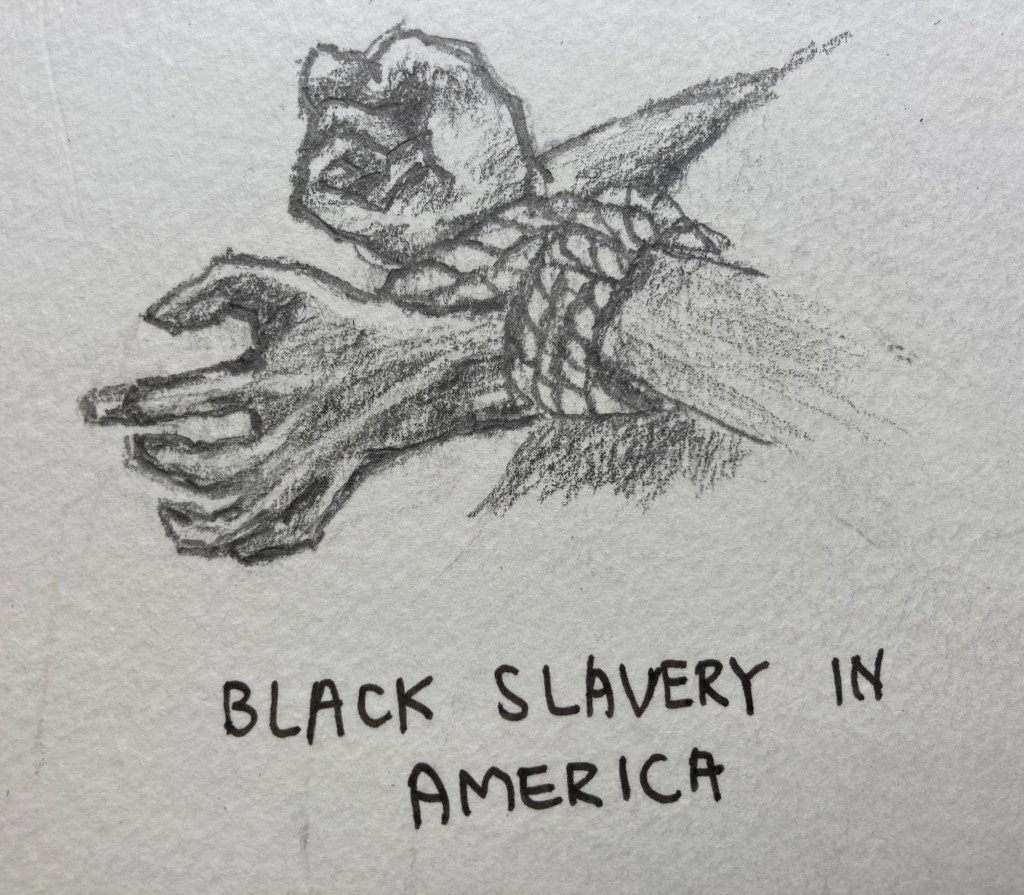
The blacks aren’t so smart. Look, they have been around for 50,000 years here yet we don’t see them in any leadership role, not in government, business or science. That was said to me in passing sometime in the 1980’s, possibly by a work colleague or newly befriended attendee at a convention. At the time, I did not mull over it and I was a much less confrontational bloke to refute that statement openly. Perhaps, as a fellow minority, I knew to keep myself inconspicuous unless the topic is central in my domain which was accounting and financial reporting. Why add salt and vinegar when I am not the cook, right? Better not to add oil and sauce (jia yu jia jiang) and exaggerate the facts if one is not knowledgeable of the truth, right? The Black Lives Matter street protests may no longer occupy the front pages of newspapers or online news, but I still see footy players “take a knee” before each match. The media lose interest in most things very quickly unless the people burn tires and cars. They need violence to prick our interest. The protests peaked in early June when over 500,000 protesters took to the streets in the US alone. The killing of George Floyd by a rogue policeman re-ignited a world-wide movement that had stalled since its inception in 2013. Despite the risks of catching the coronavirus, a niece of mine turned up in Victoria Square, Adelaide to lend support to the usually voiceless minority. The global rallying cry against racism and police brutality is evidence that the gruesome and unnecessary killing of an unarmed black man graphically captured the attention of many idle people under COVID-19 lockdown, including a new generation of young ones who were previously unaware of the brutal long history of cruelty against black people.

Although the Emancipation Proclamation in 1863 freed slaves in America, we know that the gross injustice and deprivation of human rights still greatly disadvantage the blacks there. All over the world, we still see the after-effects of the wreckage to economies and education from colonisation and the disappearance of cultures and civilisations from genocides that saw many millions dead in recent history. From a distorted viewpoint and nostalgic glory, some may argue that colonialism introduced legal systems and brought properly planned civic and sanitary systems to many primitive cultures. And besides, look at the beautiful buildings they left behind, someone added. But, history cannot be rewritten to hide the ugly truth that colonialism was a humanitarian disaster that wiped out about 90% of the natives of the Americas. The Spanish arrival in Central and South America saw the local population of Indians decimated – by warfare and European diseases such as measles and smallpox. After a hundred years of Spanish rule, there were less than 8 million natives left and once proud civilisations such as the Incas were destroyed. Similarly, under British rule of 190 years, there was no increase in the per capita income within the Indian sub-continent. During the British Raj from 1872 to 1921, Indian life expectancy dropped by 20 per cent. British rail roads were built to send soldiers inland to quell revolts and to transport food, cotton and spices out for export. Devastating famines caused the deaths of some 30 million Indians, mortality rates were highest along the railway lines. The story in China under Western rule was no better. To force the opening up of China to the western notion of “free” trade, the British Empire bombarded and defeated the Qing Dynasty with superior ships and weapons in both Opium Wars. Ports and territories were ceded to the western powers following China’s defeat and special tariffs and taxes benefited the foreigners. It was the forced addiction to opium that ultimately fixed the trade imbalance that previously heavily favoured the Chinese who sold tea and silk to the West but needed nothing back from them. In India, the British had encouraged the farming of cotton and opium instead of lentils and millet. Similarly, the Chinese farmers were persuaded to stop producing rice and grain in favour of opium and cotton, the latter saw a boom in prices due to the demand for textiles bound for the American Civil War. When the El Ninio of 1876-1878 struck China, the severity of the famine was made worse by the lack of food supplies. Some 10 million people perished during those two years. Later, the erosion of the Chinese economy and the divisiveness of a new religion, Protestant Christianity, led to serious social unrests that caused the deaths of between 20 to 70 million Chinese during the 14-year Taiping Rebellion. Years of unfathomable misery were meted-out to the American Indians, Africans and Australian aborigines by their colonial masters. Indigenous Americans arrived from Asia over 15,000 years ago. After the arrival of Europeans, these natives were mostly wiped out by ethnic cleansing, slavery, war and diseases. The Australian aborigines are considered the world’s oldest civilisation – some 65,000 years old. But, it took the British less than 130 years to bring them to near extinction. A 1930 report showed there were only about 50,000 left in New South Wales. If it were true that the blacks are not so smart, we can quite easily understand from such historical accounts why their peoples would take many generations to catch up with the West. They were raped, robbed, starved and murdered. Education and scientific progress would not be of immediate concern to those crushed and treated worse than animals.

But, of course, it is not true that the blacks aren’t smart. A learned friend, Bikash, sent me Sahana Singh’s YouTube video about ancient India’s educational system last week. It may be ancient history but it was news to me. It was mind-blowing to learn of the history of ancient India’s rather advanced emphasis on tertiary education well before science was seen as the engine for industrial modernisation in the West. India was the educational capital of the world when learning was a sacred duty. The elite students from neighbouring countries were eager to attend India’s best colleges and universities, not unlike today’s mad rush to gain admission to top universities like Oxford, Cambridge, Harvard or Princeton University. Chinese scholars such as Faxian and Yi Jing made their way to India as early as the 5th century. Indian astronomers and mathematicians from the best universities held high positions in China soon after. They even introduced Indian numerals to China. Invention of the printing press was attributed to Buddhist scholars who went from India to China. Indian knowledge flowed to Greece and to the rest of Europe also. Historian Dr Raj Vedam tracked the information flow of Ayurvedic medicine from Rishi Kanada (6th century BCE) to Democritus to Hippocrates – the father of western medicine. Indian knowledge of mathematics, medicine, astronomy, logic and philosophy, chemistry and even music were transferred to Persia and to the rest of the Islamic world. European scholars frequently plagiarised from Arabic texts without references to their Indian sources. The Renaissance was propelled by the works of Arabic scholars which were passed off as original works by Europeans. Unfortunately, from 12th century, many of India’s prestigious universities such as Nalanda, Vikramshila and many others were destroyed by Muslim invaders. Much of India fell under Islamic rule, mostly of Turkic, Pashtun and Afghan origins and became known as the Delhi Sultanate. Libraries and temples were also not spared. Much of the knowledge written down in Sanskrit was destroyed. In the 16th century, under Mughal rule, science education was erased whilst the focus was on poetry, architecture and religion. India then was the world’s biggest economy. They left the Taj Mahal as the jewel of Muslim art for the world to witness their greatness, but its position as the premier centre for science and mathematics learning was long lost. During this time, the western world in the 17th century was making advances in science and technology known as the Scientific Revolution whilst the Indian students became more learned about the Quran. In a series of 19th century surveys carried out by the British in India, Dharampal discovered that the literacy level was very high and every rural village had a school. In Bengal and Bihar alone, there were over 100,000 pathshala. Yet, the British found the natives much less intelligent than the Europeans. Perhaps, that was how the wrong impression was formed about the blacks’ inferior intelligence.

https://www.youtube.com/watch?v=vviYeA4fIPM

If you don’t know history, then you don’t know anything. You are a leaf that doesn’t know it is a part of a tree. – Michael Crichton.

Ruins of Nalanda University; it had a 9-storey library
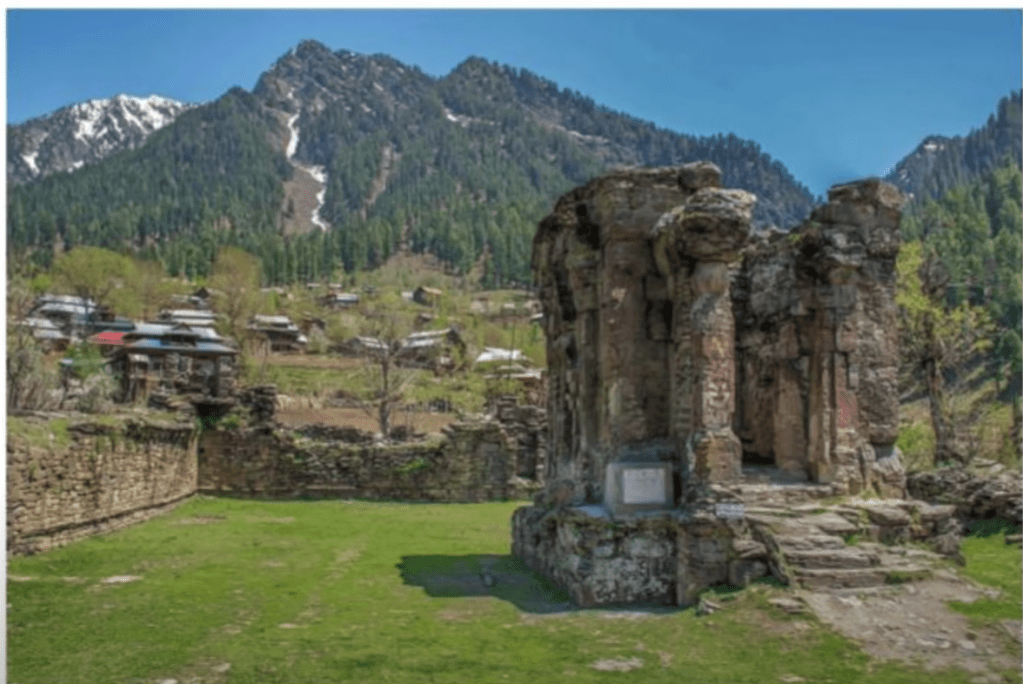
Ruins of Sharada Peeth in Kashmir; the temple university was famed for its library of rare manuscripts

More About Morricone

I met his manager, Luigi Caiola on March 2, eight years ago. Our meeting was hastily arranged. In fact, just the day earlier, he asked me to meet them at the Hyatt Hotel. A friend in the Adelaide Symphony Orchestra (ASO) had passed my letter to The Maestro on the off chance that he may consider my proposal to write music for me. Well, since I do not play any instruments, it was really a proposal to write for my sons. I was so taken aback that Mr. Caiola actually made contact and wanted to meet to discuss in more detail my “kind proposal’ (as he called it). On the morning of the meeting, I did not fret and I did not stammer. For a person who cannot make a public speech without being extremely nervous – potentially a closet sufferer of glossophobia – I was surprised I was calm and behaved normally during breakfast, despite the sheer audacity of asking for an audience with a living legend on the world stage. After all, at the time he was a five-time Oscar nominee and the winner of the Academy’s Honorary Award in 2007. He was to win one more nomination four years after we met and he would go on to win the Oscar that year. Luigi was a towering, heavy man with a massive handshake. “Please call me Luigi”, he said. Well presented in his bespoke Italian-made business suit, he made me feel under-dressed and disrespectful even though I had picked the best suit in my wardrobe. Maybe the tie let me down – it was one from the 80’s, a black skinny tie acquired after much deliberation from a clearance sale at Myers. Well, one must not judge a book by its cover, I was taught from very young. Let us not look at the superficial surface but delve deep into the substance of the person, right? Luigi came across like Michael Corleone (in The Godfather) in his demeanour – confident, busy and sharp. “Would you like coffee or tea?” he asked. He offered me only two choices, just as well I never decline coffee when offered. The one thing I learned about successful, worldly people is that they are incredibly polite and generous with their time. On reflection, why the heck would people of such greatness give someone like me their time? Someone like me… no, that is not a put-down, it is not self-deprecating. A person like me would frown and be agitated if I was asked to view a three minute video that was fit only for the rubbish bin. Our time is so precious we do not even give enough of it to our loved ones. Yet, this great composer had agreed to meet me, to give me his time. “The Maestro apologises for not being able to meet you personally this morning”. Luigi started with an apology. I later learned The Maestro never learned English – that could also be another reason why he was absent. Luigi went on to explain why his boss couldn’t make it. The night before, The Maestro had conducted the ASO in an open-air concert at Elder Park but he was greatly stressed by the poor acoustics and noise from outside the park. “The Maestro isn’t feeling too good this morning, he sends his apologies”. Luigi was very restrained to explain that the concert was spoilt by a noisy car race being held nearby their event. Such gentlemanly conduct, so un-Italian-like without the Italian expletives, I thought to myself. No, the word Vaffanculo did not spew from his mouth. No, his elbow did not bend to produce the Italian Salute either. So, I let rip into the farcical scheduling of South Australia’s event organisers instead. “No, those feckless idiots ought to be sacked! How unthinking were they not to understand that a car race cannot be held next to an orchestral concert just a few hundred metres apart. Do they not know how incredibly lucky and privileged South Australians were to be graced with such a visit? This was a visit from royalty, far more beneficial and special than that from any monarch. Seconds later, there he was, sitting right in front of me, sipping coffee and listening to my ideas why The Maestro should consider writing for me. How impetuous of me! How audacious of me! Yet, I attracted no vituperation from him. What was I thinking? No, I wasn’t thinking. That was why I had the nerve and naivety to even dare dream to meet the great man. No, not merely to meet him, but to actually ask him to write music for me? No, not for me. For my sons. A father does just about anything for his sons.

Spaghetti westerns won’t be the same without Clint Eastwood and Ennio Morricone

On Monday 6th July, Ennio Morricone died in a Rome hospital, after earlier falling and breaking his leg. He was aged 91. The Maestro leaves behind a huge legacy for mankind – a body of work that someone like me cannot even begin to imagine – some 500 original scores across many genres, westerns, romances and historical dramas. He was annoyed at his music being predominantly known for spaghetti westerns because they were no more than 7-8% of his work, he said. Yet, who will not remember A Fistful of Dollars, For A Few Dollars More, The Good, The Bad and the Ugly, Once Upon A Time In The West? He brought new sounds to Hollywood – to America and therefore to the rest of the world. He was the first to use the notes a-e-a-e-a-e to depict the sound of the hyena. In A Fistful of Dollars, he showed what a genius can do with a guitar, a whistle and a whip to convey the stark landscape of the world of Clint Eastwood’s character, “a man with no name”. Morricone also showed us a showdown or a gun-fight cannot be faced without the solo trumpet’s call for bravery and sharpness. I learned to spin my wooden revolver as a young boy whilst the music replayed in my head. I listened to his music all day today. I still get goose-pimples when I hear Edda Dell’Orso’s soaring voice in Once Upon A Time In The West. But, for me, there is nothing more wonderful than Deborah’s Theme in the 1984 drama starring Robert De Niro, Once Upon a Time in America. This movie was Sergio Leone and Morricone’s final collaboration. Deborah’s Theme… I have shed many tears listening to Yo-Yo Ma’s version of it. Listen to it in the still of the night, but please have a box of tissues ready by your side. It pulls at your heart, kneads it, crumples it and turns it inside out. You suddenly cannot breathe whilst it transports you into another realm.

Deborah’s Theme will make your tear ducts hyper-active

The other contender for making my tear ducts hyper-active is Gabriel’s Oboe, a soundtrack from the movie The Mission. It was voted #1 in the ABC Classic Music in the Movies countdown in 2013 and again in 2020. Its music is more famous than the movie, often performed in concert halls all over the world. It is so glorious it lifts my spirit high every time the oboe makes its entrance. The Mission was a 1986 drama about the experiences of Jesuit missionaries in 18th century South America trying to ward off the Portuguese and later the Spanish invaders. But, it is they too who destroy the idyllic innocence of a group of people. It is no wonder we describe grand scale high drama music as “cinematic”. The Maestro’s music is cinematic. Director Edgar Wright probably summarised it best. “He could make an average movie into a must see, a good movie into art, and a great movie into legend.” Film composer Hans Zimmer said “Ennio was an icon and icons just don’t go away, icons are forever.”

Thank you, Maestro Morricone for enriching my life with your music – another personal favourite is Cinema Paradiso. The poignant piano never fails to bring me back to my own life as a 15-year-old boy who fell in love with a girl with pig-tails who he remembered as Janet all his life until friends recently told him her real name is Susan. When the violin appears it is like a beautiful moment when their eyes meet briefly, just once. In his mind, he saw a smile formed by her soft lips as her shy eyes looked away. Hello Susan, goodbye Janet. Vale, Ennio Morricone.