As the old man sat by the window of his study, his mind cast back to his childhood. His fading eyebrows that were more grey than black knotted up his forehead, exacerbated the deep creases, the result of tortuous nights of money worries and unanswered desperate prayers during the tumultuous years when his retail shops closed one after another, after the franchise owners said lawsuits from landlords and suppliers were untenable to face and legally undefendable. As his dream of a franchise ‘empire’ collapsed, so did his own stores.
His childhood was nightmarish, the spartan meals and frequent rowdy quarrels between his parents haunted him for much of his youth. Their verbal fights were legendary in the neighbourhood that consisted of a row of shophouses along upper Penang Road. His father, debonair and well-dressed, attracted the ladies, according to his mother. She lacked education and therefore lacked the confidence and ability to ask for a divorce. He lacked education yet taught himself how to read and write and keep the books. Was he unfaithful or was she delusional and wrecked by insecurity and jealousy? Her cries of anguish and his cries of the tormented were to recur in all his boyhood nightmares.
They weren’t plebs by any means, but like most people in Penang, life for them was backward and harsh during and immediately after the war. By the time the old man was born, the Japanese had left and so had the British occupiers. He was born free but the frugal life they led did curtail much of his freedom. The beginning was humble but poverty was easily avoided if people were prepared to work hard.
Consumerism did not exist; electricity was affordable, thankfully due to the sparse availability of gadgets that required electrical power. His family got by simply with dim light globes absent of any lamp shades and a redifusion set that blared news and music all day. They kept some chooks but chicken essence for him was a once-in-a-lifetime luxury item to power his tired brain during the major exams in Form 5. The tropics had not warmed up yet, so ceilings were not fitted with fans then. Warm sticky nights weren’t a problem when there was the sea breeze to depend on to cool down their rooms.
His dad did what a dutiful son did, saving enough to send money back home twice a year. Home was always China to him, even after he had left Penang and spent his final nineteen years in Adelaide. In the 50s and 60s, each remittance to China was about $50, enough for his siblings to support their mother and squirrel away some savings. He continued to send money ‘home’ even after their mother passed away. Over the decades, his siblings bought a house and some gold from the funds he had repatriated. The unending stream of money to them ended when he discovered they had flaunted the seed capital he gave for them to open an optical store in Shaoxing. He had wanted them to start a franchise chain but whoever usurped the money had shorter term plans.
“Life is good today,” Heng Poe said to the old man, reminding him to stop complaining about his problems but to be grateful for all the problems he didn’t have. Heng Poe, a friend in Johor Bahru, often shared little gems of wisdom in their chats.
“I know, I know,” the old man replied with a prickly voice.
He disliked his friend for being wiser and smarter. Heng Poe retired some six months earlier, joining many of their friends in early retirement. The old man once boasted to his mother he would retire by 45; early retirement represented financial success and profligacy of resources and time because people could afford that. He just turned 65. With no imminent news of his retirement, by his own measure of success, he was already twenty years late.
He was supposed to leave for Giza this week for a once-in-a-lifetime cruise on the Nile. The troubles in Gaza put a stop to that. The troubles. That sounded so wrong and grossly inadequate. The poor wretched souls are being mercilessly massacred in Gaza in what is a collective retribution to the Palestinians for the Hamas atrocities against Israelis. The cycle of murder and vengeance will not end if one side will not allow the same freedom and legal rights to the other side. The troubles meant thousands of dead Palestinians, many of whom are children and many more wounded or dying without water, food and basic necessities. It isn’t a war between Israel and Hamas. The Hamas militants aren’t dying in big numbers.
“Yes, it’s a war between Israel and children,” the old man said to himself, creasing his forehead with yet deeper lines.
When peace was brokered between Iran and Saudi Arabia in March, the old man sighed loudly and said “Oh oh.” Without reason, he feared that something would trigger the Middle East to become embroiled in another major conflict. The dark states have always divided the Arab world to keep them fighting each other, ever since they found oil.
“I still wanted to go,” the old man said and paused before adding, “but they cancelled before I got a chance to voice my opinion.”
He was out-voted 3 to 1, so they didn’t need his decision when they cancelled their Egypt holiday. Like a kid, he just had to tag along whatever the (other) adults said. He left it unsaid about what a holiday meant. If you want comfort and safety, stay at home. A holiday should take you out of your comfort zone, introduce new experiences, excitement even, and foreign smells, tastes and feelings. A hint of danger thrilled him about Egypt. Giza and the Sinai desert beckoned, a mere three and a half hours away to the massacres in Gaza. It wasn’t to be, instead, his travelling companions had switched their destination to Milan – Lake Como the ultimate attraction – and a chance to savour how the A-list celebrities in haute couture enjoy their days. Milan is home to high street fashion brands like Gucci, Prada, and Dolce & Gabbana.
“Milan is so chic and classy I’m afraid I will be so under-dressed even at my best,” the old man said as he checked the dress code for places like La Scala and Ristorante Giacomo Milano, where Salvatore Ferragamo and Mick Jagger have been known to dine there.
They may have escaped the fire and the rockets in Gaza but news of heavy rains in Northern Italy meant that they may still yet have a memorable but uncomfortable holiday. Central Milan was flooded and Lake Como had broken its banks. It looked pretty obvious to the old man his chance to be a dashing James Bond was dashed at Villa Balbianello. There would be no kissing scene in the garden either, if they cancelled the boat ride to Bellagio.
“I’ve just booked to attend a ballet at the Teatro di San Carlo in Naples, the world’s oldest working opera house,” the old man said to Heng Poe.
“Home of the pizzas,” Heng Poe replied.
“No lah, they don’t make pizzas in theatres, it’s more dance and pizzazz,” the old man said to his wiser and smarter friend.
It dawned on him that he had come a long way from his childhood days of dim lights, the little need for electricity and the frequent hunger pangs, his bedtime companion. He looked up from his book and noticed how much life had transformed. The house was never silent anymore – the usage of electricity was quite ridiculous with noisy gadgets that caused the constant sounds of waterfall from the pond, the humming of the internet modem, the running water of the aquarium, the sudden knocking sounds from their fridge, the guttural voices of Taiwanese talk show hosts from his wife’s iPad, the music from the TV and recently, the bubbling sounds of the double boiler from which four bowls of pure essence would be produced from one whole free range chicken.
Where have all the flowers gone? Thinking of the Gazans.
The old man turned 65 recently. As expected of him, he intended to implement an orderly change to his lifestyle in his little world from that day, but instead of an orderly world, he woke up to a rather disorderly one.
In Australia, 65 was the official pension age for a very long time. But of course, they added two more years seeing the old man was about to get his hands on the promised pension. Like the promised land for the Jews, what’s promised does not always eventuate. It would not surprise him that in two years’ time, the promised entitlements would be either diluted further or markedly revised from the original promises or worse, further delayed. The more the government promised, the less he trusted them.
“Democracy is a farce,” he said, in a poor attempt to excuse himself for voting for the wrong guy.
We get to vote for the local member of parliament but we have no say in who our Prime Minister should be. It’s the ruling party that picks their leader, as does the much maligned Chinese system. The American way is just as awful. They were given two choices, Trump or Biden. One was impeached and the other impeachable. Neither was a good choice. No matter who wins, the budget deficits will grow larger and the same warmongers will cajole the army generals to prepare for war against China.
At least Abraham had a good excuse. The promise made by God to him was not in writing, so Abraham could not be accused of failing to read the fine print. The God of unconditional love had imposed a condition for the promised land. There were some covenants that had to be fulfilled, such as circumcision and animal sacrifice. The Talmud teaches us that those who fail to cut off their foreskin are cut off from sharing the rewards promised by God. To this day, the Zionist movement cling to this promise of a promised land called Canaan, later changed to Israel, apparently because God had changed the name of a grandson of Abraham to Israel. Jacob became Israel, meaning let God prevail. Canaan became Israel, perhaps to exclude the other Canaanite tribes and gentiles or non-Jews from claiming they too had rights to the land. The promise was not in writing, so we cannot blame Abraham for failing to recognise that the promise was conditional and that exclusivity was not stipulated. To assume is always a dangerous folly – why Abraham assumed that only his descendants were entitled to the land is unfortunate for his future generations. It is true that Talmudic law defined “neighbour” to exclude gentiles, and so a Jew’s ox had every right to gore a gentile without punishment but a gentile’s ox that gored a Jew would mean a severe punishment for both ox and owner. We can understand why in Israel today, many Jews still find it difficult to live with Palestinians and why some still deem gentiles to be ‘human animals’. Abraham also failed to understand that God’s promise did not mention that the promised land would be theirs forever. Sure, if you left, you could return, as we can with a visa today but it did not mean it was in perpetuity. Such intricate details were not left to a property settlement expert to determine, unfortunately. No one should blame Abraham or for that matter, blame God, of course, for both were not property brokers.
The old man had made grand plans for his 65th birthday celebrations. A slow handover of duties to fellow colleagues at work and an orderly process of passing the reins to his successor. Initially, he would work just in the mornings. Rain or shine, busy or quiet, he planned to clock in before nine and clock out by lunch, and after a month, he would take some paid long service leave and visit Egypt and Italy for a month. He had great plans indeed, to visit the Great Pyramids and the Great Sphinx of Giza. Every detail of their holiday had been scrutinised with a magnifying glass. There would be no hiccups and no unexpected detours – his Mrs would be impressed, he said. He assured her there would be no repeats of his silly oversights such as checking in online for their flight to Kuala Lumpur but then forgetting to obtain their boarding passes at the counter just because they had no check in luggage. That was a debacle his Mrs would not allow him to forget and no, he would never again walk to the opposite direction at immigration to check on why the faraway queue was so short whereas where they were supposed to line up was like a frantic gate to a Taylor Swift concert. No, that was another debacle his Mrs would not allow him to forget also.
“You don’t just wander off as if you’re still a young man,” she said.
They were to be at Cairo before catching a flight to Aswan, in a fortnight’s time.
“We will visit the High Dam and also the Temple of Philae, which was devoted to the two goddesses, Isis and Hathor, after which we will visit the Unfinished Obelisk,” he informed his Mrs.
When his Mrs grizzled about why they would want to look at something that’s unfinished, he smugly suggested that they listened to unfinished symphonies too. An unfinished work would allow us a glimpse of how the pharaohs constructed the magnificent Obelisks, she knew that, of course.
The highlight of the tour in Egypt for him would be the cruise on the Nile. He had imagined himself to be the new Hercule Poirot. With an immaculate moustache and a lousy French accent, he had planned to do a role play with his Mrs aboard a glamorous river steamer.
“A steamy scene in a river steamer?” I asked, without expecting a reply and none was given.
At the Temple of Abu Simbel, he intended to ask the gods why the King’s wife Nefertari was given only a small temple. Just as in any Asian country, a holiday would not be complete with just a visit to one temple. There would be others to visit and a chance to ask the gods questions or favours. At Kom Ombo Temple, they would get to worship the gods Sobek and Haeroris and then onward to Edfu to visit the Edfu Temple which was dedicated to Horus, a most important Egyptian deity. Taking 180 years to build, it was completed 50 years before Jesus Christ was born. In time, Christians would rise up and dominate Egypt. Many of the temple’s carved reliefs, considered pagan by followers of Jesus Christ, were burned a few centuries later. For weeks, the old man fretted about getting on board a hot air balloon at Luxor. Already paid for, he secretly knew he would forfeit the ticket to fly with the gods. More temple visits would follow, Temple of Queen Hatshepsut, Karnak Temple, and Luxor Temple. Other planned highlights were a camel ride and an evening on a felucca on the Nile. Giza sounded like a dream start of a nice, happy retirement for the old man.
But, instead of Giza, it was all about Gaza. The massacre of Jews by Hamas. The massacre of Palestinians by the Jews. Ashkenazi Jews used to live peacefully there in the promised land, with fellow Christians and Muslims, for hundreds of years during the Ottoman Empire. It was only following the Balfour Declaration paid for by Walter Rothschild that conflicts arose. There is the idea that it was the Khazarian Jews from Europe that did not “fit in”. Faisal actually welcomed the Jews to share the land, even though the Arab himself was promised the land by the British for helping them oust the Turks in WW1. They were not all hostile neighbours in the beginning. They all lived peacefully together for hundreds of years during the Ottoman Empire. The conflicts and wars inflicted on both sides had a lot to do with how Israel, as a sovereign state, treated their neighbours as ‘human animals’. They were the ‘pests’ that Hitler needed to exterminate from Nazi Germany and now they dish out the same abuse to their neighbours, whose land and homes they were evicted from. When one believes gentiles should not be neighbours, it is easy to convince oneself that they ought to leave by whatever means necessary, by bus, train, plane or bombs. The abused become the abusers, weird but sadly again and again, we see this ‘phenomenon’.
It is understandable for most people to rise up against tyranny after decades of abuse, killings, torture and imprisonment. It is what all of us would do, if we saw our homes bulldozed, our crops destroyed, our families tortured or murdered and our land seized as we are threatened with genocide. Even the Jews rebelled against tyranny, opposing the planned Roman colony of Hadrian. 500,000 killed in those days is a very large number of civilians killed. We wept for the Jews in the Holocaust but why can’t we weep for the Palestinians today is beyond me. We would be accused of anti-semitism if we spoke of Jewish wrong-doings. Everyone suffered the same miserable fate of losing loved ones. It is only right to call out what’s wrong in this world right now.
It is the poor wretched people the world should focus on. They were forced out of their lands and homes and then treated like animals and pests. To rise up after decades of subjugation and brutality is what you and I would do too. But, would that make us terrorists or the terrorised?
“Both, unfortunately,” Mr Laurs replied.
The land may be promised but no promises were made about peace and security. Abraham should have been more discerning to ask God for some clarification on this very important matter. We are all a speck of dirt in the universe. Why must there be a need to dominate others and cause misery? Isn’t life short enough?
John Lennon taught us nothing. Imagine….
As missiles were flying in the skies above occupied Gaza and dropping on innocent civilians, the old man was occupying his mind with the question of whether to still visit Giza’s pyramids and temples. As the bombs continued to pile on the Gazans, with thousands dead and many more wounded and missing, the plight of the people in the world’s biggest concentration camp today dominated the news media and was the reason for many street protests around the world. Recognising the obscenity of his ‘clinical’ detachment from the suffering in Gaza, the old man quickly stopped his pondering about Giza. He asked his travelling companions to give him another day to agree to the cancellation of their holiday but by the time morning came, they had already cancelled and forfeited a big chunk of the deposits paid.
Imagine…
“How many lobster meals did we forfeit?” the old man asked.
Pausing to think of or pray for the wretched people of Palestine feels fake when one can think of lobsters lost at the same time.
A rose, a world away from Gaza. It should never have to be war.
At the CIMB Artober, I spotted an art exhibition being held from 6-8 October 2023 at the Malaysia International Trade and Exhibition Centre (MITEC).
Amongst some wonderful paintings, you will find some of Anne Koh’s latest works.
Anne Koh (2023) The Giraffe [Oil on Canvas].
In many of their family karaoke sessions, Anne Koh’s brother-in-law will ask to sing songs by Neil Diamond. Was Diamond’s Solitary Man in her mind when she painted the giraffe walking tall with majestic poise?
A mix of representational and impressionistic, it is in a style Koh has used in many of her earlier paintings. The giraffe will sometimes disappear into the misty background if you look at it from a different angle.
This painting is dark, not just in terms of light and shades. During the day, the giraffe is tall, upright and poise. Almost majestic and aloof, it munches at the leaves on the tree top. But, it is dark now. The sun has gone down and it has turned foggy. It does not see what’s in front of it nor sense what’s behind it. The giraffe is alone. But, it is no longer safe. It has to remain vigilant and brave.
Nothing in life is to be feared, it is only to be understood.
Marie Curie
Anne Koh (2023) The Giraffe [Oil on Canvas].
Meanwhile, Neil Diamond is singing. Don’t know that I will But until I can find The girl who’ll stay And won’t play games behind me I’ll be what I am A solitary man, solitary man
2. Anne Koh (2023) – The Zebras in Africa, Op. 89 [Oil on Canvas].
The zebras frolic in the open plains. Without the usual predators hiding to take them down, they briefly gather together to enjoy the respite. Can you see them dancing and prancing while the other animals create musical sounds like musicians in an orchestra with their braying, growling, chirping, howling? The sounds come from near and far; some loud and others soft, with crescendos and diminuendos, tonal and atonal, yet altogether, musical.
Koh paints the images of zebras as she saw them, some that are clear, yet at the same time, some are partially clear and others are hidden. The frequencies of the sounds she heard and the black and white keys of the piano are depicted as lines of the zebra’s stripes. The lightness of touch, the agility and technique demanded of the pianist and movements of the zebra are brilliantly captured by Koh as they reflect the music playing in her studio at the time – Camille Saint Saens’ Africa Op. 89, Fantasie for piano and orchestra, which he composed when he visited Egypt after the death of his mother. His knowledge of African folk music is reflected in his music.
3. Anne Koh (2023) Darknesse Visible [Oil on Canvas].
During the safari she attended with her husband and friends, Anne Koh felt the loneliness of the zebra seemingly lost in the savanna without its friends as the sun’s descent to the horizon started to dim the grassland. Koh painted this work about the lonely zebra looking for a friend. Its stripes depict the keys of the piano.
Zebras sleep standing up and can’t sleep alone. They survive and thrive by being together, looking after one another in a tightly-knit family unit. Koh was very concerned for this animal’s well-being, left alone on a dark night.
The haunting and shimmering piano music, Darknesse Visible by Thomas Adès, lends the atmosphere of unease and imminent evil to this painting. Will the lonely zebra be okay in the wild on its own? Will the tracks it makes on the soil there be the last ones it leaves behind? Will it find its friend? Or, will it be like the Darknesse Visible’s ending, its final steps as tentative and careful as it rushes into oblivion?
4. Anne Koh (2023) Sonata for Two Pianos[Oil on Canvas].
The zebra’s black and white stripes amazed Anne Koh when she looked at them from close proximity. “They are really unique creatures from God,” she said. She found the stripes beautiful and the different patterns remarkable.
Of the many photos taken, her most favourite one is that of two zebras standing head to tail with each other, heads resting on each other’s back. How clever! They give each other a pillow to rest and at the same time, look out for danger from both ends and swish flies away from each other’s face.
They look stately and calm as they rest, and then, it’s time to gallop away.The galloping sounds in the third movement of Mozart’s Sonata for Two Pianos, K.448A fill the air as Koh paints them in her studio.
5. Anne Koh (2023) Merry-Go-Round of Life [Oil on Canvas].
When she was a young girl, her rose-tinted lens romanticised the images of colourful horses going round and round in a picture book, giving her the thrill and sense of magic of wonderful foreign lands. Koh never did enjoy a ride in a merry-go-round.
Joe Hisaishis’s music from the animated movie Howl’s Moving Castle was the music playing in Anne Koh’s mind over and over again, as she painted this work. The poignant music flows and ebbs beautifully as the metamorphoses of the characters in the film come to life in the Merry-Go-Round of Life.
The piano takes centre stage in the music as does the zebra in this painting. Koh sees the constant cycle of birth and death in the wild. Some have to die for others to live. Life is a circle, unending and unyielding.
6. Anne Koh (2023) Bach Concerto for Four Pianos [Oil on Canvas].
Originally written by Vivaldi for four violins, Bach’s version is mind-blowing. What an experience it is to hear the combined sounds of four pianos in this great music. Written in A minor, it is surprisingly cheerful and upbeat. Rather than four separate sounds, the four pianos come across as a single sound. While retaining their individuality, they come together as one.
During her safari holiday, Anne Koh felt the same way as listening to the concerto for four pianos. In the vastness of the savanna, the mystery beyond what her eyes could see was spellbinding to her. The myriad of sounds from unknown creatures and unseen insects was enchanting, yet beneath the calm and serenity of the Serengeti, lurked one constant, danger.
To survive, the zebras must be constantly alert with a keen sense of smell, communicating with other herd members, braying, barking snorts and other sounds, always with eyes wide open and ears ready for any warning calls.
7. Anne Koh (2023) Moonlight Sonata II [Oil on Canvas].
Beethoven’s beautiful piano sonata was the inspiration for this work by Anne Koh. Her painting of a galloping zebra depicts a pianist awash in white on a moon-lit night on the savanna during her safari holiday.
Lions of the Serengeti are less successful on moon-lit nights when they are less inconspicuous to their prey. Less predictable than other animals such as the wildebeests and gazelles, Zebras are often also willing to venture out and graze when the moon is out but come together to form a herd when the night is dark.
8. Anne Koh (2023) Bach’s Bach Lullaby [Oil on Canvas].
Anne Koh paints this work with baby lullaby music playing all day and night in her holiday home in Adelaide. A surprise visit from her daughter, Violet, and her hubby brought immense happiness to the household. They also brought with them their three-month-old baby, Sebastian, who was given the nickname Bach, by his granduncle. Bach’s favourite was undoubtedly, Bach’s lullaby, Minuet in G Major Bwv Anh. 114.
Bach’s grandparents, both sexagenerians, suddenly found themselves immersed in the joy and love of caring for the new addition to their family. Oh, what an amazing time they had!
Of course, it also came with the busyness and headaches of minding a baby. It was clear that grandpa and grandma Koh were the ones to immerse in deep sleep with the lullabys playing all night.
9. Anne Koh (2023) The Conductor [Oil on Canvas].
The movement of a giraffe’s tail, swishing left and right, sometimes gently, sometimes intensely, was what captured Anne Koh’s attention during a holiday at the Serengeti. The giraffe stands tall, very upright and quite majestic. With its height, as if standing on a podium, it has the vantage point of looking at everything around it. Not unlike a conductor in an orchestra.
Anne Koh depicts the conductor’s baton in this painting with a giraffe’s tail. Left, right, up and down, articulating, gesticulating, imploring, encouraging, and commanding the players with his bodily movements.
10. Anne Koh (2023) Rach 3 [Oil on Canvas].
Rachmaninov’s manic, exciting yet soulful piano concerto is brought to life on canvas in this work by Anne Koh using the zebra’s stripes to depict the piano keys. The deliberate splashes of paint and confidence in the strokes demonstrate the energy and physical demands the concerto requires of the pianist.
The Rach 3 has it all – the beautiful melodies of the first movement, the romantic and sublime 2nd movement with its nostalgic heart-tugging sounds of the strings, and of course, the almost unplayable third movement with its virtuosic, thundering, and powerful finale.
The painting gives the impression of randomness, madness, turbulence with exciting yet controlled energy, a reflection of the emotions and awesome technical power Rach 3 so amazingly demands of the soloist, breathtakingly superb in finesse and virtuosic power.
11. Anne Koh (2023) Chariots of Fire [Oil on Canvas].
Run! Run! Run!
In the movie Chariots of Fire, the men ran to win. One for the glory of God, the other to beat the prejudice against his religion and race.
In this painting, Anne Koh’s depiction of a herd of zebras galloping at full tilt gives the same feelings.
Run! Run! Run!
Was it a migration to greener pastures, or a bonding of friends and family, or were they trying to outrun their predators?
The top half of the painting is completed but it is deliberately left understated – life is not always filled with abundance, sometimes, we have nothing at all and other times, we have a lot of things that are hidden out in the open. Here, some will see yet others will miss the sky, clouds, wind, the stars and the moon but they are definitely all there. The bottom half depicts the toughness of life – it can be rough and chaotic when everyone is rushing for the same reward, be it for mere survival, comfort or largesse.
12. Anne Koh (2023) From the New World [Oil on Canvas].
Antonin Dvořák’s Symphony No. 9 was written by him in 1893 after he had migrated to America. He said at the time that this new music was influenced by Native American and African-American sounds and that they “bore a remarkable similarity to the music of Scotland”. Dvořák was inspired by the “wide open spaces” of America, such as prairies he may have seen on his trip to Iowa.
Anne Koh listened to Dvořák’s Symphony No. 9 frequently when she painted the migration of the zebras and wildebeests she witnessed at the Serengeti during her holiday there with her husband. Of the migration, she said, “I was surprised to see them migrate together, as if by prior agreement.” She feared for their safety and prayed hard that they wouldn’t jump into the mouths of crocodiles waiting in the river.
13. Anne Koh (2023) Born Free [Oil on Canvas].
Anne Koh’s brother-in-law, a wannabe crooner, often requests to sing songs by Perry Como and Andy Williams. One of his favourites is Born Free.
The messages are meaningful and appealing. We are born free and life is worth living. We are surrounded by beauty and life never ceases to astound us. No walls should divide us and we ought to be like a roaring tide, for there’s no need to hide our freedom.
Born free
As free as the wind blows
As free as the grass grows
Born free to follow your heart
In this painting, Anne Koh recreates the memory she had, searching for a leopard up in a tree during a holiday in the Serengeti with her husband. After what seemed like many hours, she finally spotted its tail and then the spots on its body became obvious.
“Can you see it?” she asks.
14. Anne Koh (2023) Journey of Life [Oil on Canvas].
In this painting, Anne Koh uses one line starting from left and ending at the right to depict the journey of life which came into her mind after witnessing the birth and in the very next minute, the death of another animal on her safari holiday at the Serengeti.
Some journeys are short, awfully brief whereas some are long and fruitful. In Adelaide, Koh’s neighbour’s mother is a centenarian. Life is a mixed bag of emotions, experiences, and sometimes, if we are lucky or wise, we are able to find the meaning of it too. But, there is no doubt, it has its ups and downs, and often with unexpected twists and turns, taking us to emotional peaks and troughs as Koh’s painting demonstrates.
Life is a journey and not a destination. But, as Koh depicts in this painting, it has a beginning with a birth and an ending. A shortcut may be a detour and sometimes, we simply end up in circles, going round and round, lost in a nightmare. We may not know what’s coming or going and even if we did know trouble is heading our way, there may be no way of stopping it. So, just live and enjoy the journey as much as we can.
15. Anne Koh (2023) The Firebird Suite [Oil on Canvas].
In this painting, Anne Koh combines all the elements of the natural environment in the Serengeti to depict total freedom of animals in the wild. What we can clearly see are zebras heading towards us, whether they are in the middle of a migration or being hunted down by some predators. What we cannot see does not mean they are not there. The dusty grassland of the savanna, the occasional stunted tree, the hordes of wildebeests and antelopes, the distant giraffe and wrinkly grey elephants.
Hidden in camouflage are the lions.
As she paints this, Koh is listening to The Firebird Suite by Igor Stravinsky. The final moment of intense celebration, when the egg containing Koschei’s soul is crushed thereby freeing his subjects and enemies from their enchantments, is captured by the thunderous roar of her zebras as the trombones and horns bring the story to its finale.
16. Anne Koh (2023) Paisajes by Mompou [Oil on Canvas].
This painting is inspired by the passages of musical notes composed by Federico Mompou in his Paisajes. The music is soft with sparse notes and simple chords yet the lyrical melodies connect with Anne Koh as she conjures up a story of her zebras hiding in camouflage with little or no movement. Paisaje means landscape, everything that you can see across a vast area of land. For animals to survive, they have to hide in it. Camouflage is a useful way for them to confuse the stronger and bigger predators. The incredibly beautiful patterns of the zebra’s stripes is to ward off biting flies that may carry deadly diseases.
Anne Koh (2023) The Butterfly Lovers [Oil on Canvas].
A tragic love story, set in the eastern Jin Dynasty, is the inspiration for this painting. Women in those days were deprived of higher education.The girl in the story disguises herself as a boy to pursue her scholarly ambition. The girl meets a boy in class and the two have great affinity for each other. He, a scholar but ignorant in all things about love, fails to recognise she is a girl despite the many hints she drops. By the time he discovers the truth, she is already betrothed to another. He falls ill and dies of a broken heart. A storm stops her wedding procession right in front of his tomb. She rushes to his grave and begs for it to open up. The grave suddenly opens up amidst a clap of thunder and lightning. She jumps into it to join him. Their spirits take the form of two pupae and we witness them turning into butterflies. The two butterfly lovers are still together, eternally inseparable.
Koh’s painting depicts the birth of the two butterflies in this work. In her studio, sometimes Joshua Bell’s performance of the Butterfly Lovers Violin Concerto fills the air, other times, it is the arrangement for the piano that blasts out from her windows as she matches the speed of her brush strokes with that of the pianist’s fingers in full flight.
Anne Koh (2023) King of the Serengeti [Oil on Canvas].
This painting is a tribute to a lion – the king of the savannah. Named Bob Junior after Bob Marley because he was always easy to spot, the lion king ruled the savannah for seven years before being taken down by younger, stronger rivals.
Anne Koh was told this story during her holiday with her husband at the Serengeti.
She remembers Bob Junior because his story brings home to her about life in the jungle. It is about the survival of the fittest. It is not laws or ethics that govern how animals live but how powerful and strong one has to be.
Today, there is so much geopolitical tension around the world that Bob Junior’s story should serve as a constant reminder. Violence begets violence and that should be best left to the lions.
As she paints this work, Koh is listening to music in The Lion King. The song she likes best is Can you Feel the Love Tonight.
The old man sighed. It was well past mid-morning when he made his second cup of long black. His eyes were smarting from the sweat that sluiced them but they didn’t hurt as much as his heart; that was smarting from his Mrs’ comments about his physical weakness a few moments earlier. Stoicism taught him to ignore what and who he can’t control. We can only control our own reasoned mind, or so we should hope. It’s quite often that people can’t control themselves, yet they have the sense of entitlement that they expect to control how others think or what they believe in or how they should behave. But, this was his Mrs’ opinion of him – of course, it mattered to him.
“But, should it?” I asked and challenged him.
He chose to ignore me and carried on enjoying the simplest of pleasures in his life – sipping his coffee. It was still fasting time, so it had to be without milk. He gave up on sugar in his coffee a long time ago, after learning that sugar hides the real taste of coffee or maybe it was after discovering that sugar was cancer’s favourite food. It was still an hour to go before lunch with his lunatic mother but he decided against taking a shower to wash off the smell of his perspiration. Cleaning the pond filters and changing the yellow water may look easy work to his Mrs – everything looks easy for her – but carting buckets and buckets of the dirty water to nourish her veggie patches was becoming hard work for the old man. Instead of appreciating his bursts of energy, she asked him to cart more buckets to the front garden which was about twice the distance away.
“Lunatic mother?” I asked, shocked that he would call his mother insane.
“Life robs us of everything, in the end,” he replied whilst massaging his right elbow.
Tendonitis was affecting the old man’s lifestyle yet he persisted to simply live with the pain. He had done nothing about it apart from offering it as his excuse for his shrinking biceps and straight skinny arms.
“I can’t lift weights anymore,” he said, demonstrating with his crooked elbow.
It was something his son could not understand about him. The younger man would never do nothing and simply accept the status quo about anything that’s detrimental to his life. They do not leave life to fate. They will change their lifestyle, their life and even their fate. That, in essence, is believing in karma, I suppose. It is through our own volition, our actions – past and present – that determine our own happiness or misery, luck or misfortune, peace or hell, our own fate, actually.
“Fix it, Pa, before it’s too late,” the son said, rolling his eyes as he and his girlfriend secretly exchanged messages without words.
“I get all that, but a lunatic mother?” I asked, like a rabid dog not wanting to let go of its grip.
Life robs us of everything. Born innocent, our eyes will have seen evil by the time we grow up or grow old. The old man has seen his youth shrivel up after spending his adult life in the hot and dry mediterranean environment of Adelaide. A callow fellow when he first stepped onto the tarmac at Adelaide Airport in ’77, everything was foreign and interesting to him. The Greek girls in school called him Bruce. Believing every Asian boy was Bruce Lee reincarnated, they hassled him during lunch breaks to show them some “karate” moves. He kept them bright-eyed by saying his Shaolin teacher always preached discipline and never allowed him to ‘willy-nilly’ show off his skills. He never had a teacher, of course, although he convinced himself later in life that he didn’t lie, that he learned “a lot” from Bruce Lee and Fu Sheng movies and from Drunken Master and Once Upon a Time in China trilogies. He parroted Bruce Lee’s words to the Greek girls as if they were his and then basked in the respect and adulation they gave in return.
“I fear not the man who has practised ten thousand kicks once, but it’s the one who has practised one kick ten thousand times that I fear.”
The callow fellow was a popular bloke in the small circle of Asian students in school. Homesick and lost in a big new world of white people, they were a tiny minority and with strong guttural accents and poor diction and vocabulary, they did not assimilate very easily in society. Some of the girls took the callow fellow as their psychological rock. They went to him for advice or simply to ask what the heck was a dog’s breakfast or what “fair suck of the sauce bottle, mate,” meant.
“Just tell them they are dreaming,” he told them, whenever they didn’t understand what was said.
The callow fellow and his parents at Sydney Airport in 1979.
A mere few months after he graduated from uni, he married the pretty girl he met in the Commerce faculty. A mere few years after that, they produced three gorgeous kids. So, the callow fellow went from a single fellow to become a husband, a father and a son-in-law feeding seven mouths in the family and slaving to pay a home mortgage. Life robs us of our freedom and then our youth.
The years passed by. The parents-in-law passed. The business he built grew and grew and he patted himself on the back, telling himself he was useful at home and useful to society. The kids grew up and flew away, leaving an empty nest. That was twenty years ago. It did not feel so long ago that he was singing to them, “The hills are alive with the sound of music.” Suddenly, he is over the hill. Now, he is staring at the birth of his retirement life. Business suppliers hardly call on him now; there are no more free holidays overseas, no interstate trade shows by invitation, and if they did call, expect the occasional cup of coffee instead of the many expensive dinners. Like a pupa, life is transforming, twisting and turning, giving him no solace. Ageing, just as it gave his dad insomnia, is giving him sleepless nights. ‘Happy hour’ is now a good sleep just before dinner whilst listening to conspiracy theories on Youtube.
The callow fellow is long gone, he finally realises. In the mirror, he sees an old man, with his deep etched wrinkles and dry hoary hair and hunched shoulders. It is a mirror that he avoided looking into during his prime; he didn’t need it to tell him the ugly truths about himself. But, he finally gazed into it recently, for an honest opinion. It is a mirror that he ought to have looked intently into all those years ago to tell him where he was headed and what awaited him. The mirror could have told him that life would eventually rob him of his wealth. He built and built but like a sandcastle on a beach, a big wave would come crashing onto it and simply wash it all away. Life robs him of his youth and now it robs him of his usefulness to his family and importance to his business.
Life has robbed him of loved ones and good friends and as sure as night follows day, it will continue to do so. This is the way of life. Eventually, after robbing us of our physical appearance, life will rob us of our physical abilities and then our mental faculties will be threatened too. The old man is losing muscle mass, with stringy thin limbs and a scrawny long neck. Not so long ago, he could easily touch the ground with both palms without bending his knees, now it is a stretch to expect him to do that. Lifting dumb bells each weighing thirty kilograms fifty times in one go was a routine just a couple of years ago, but this kind of endurance is no longer possible with his crooked elbow. Just as life robbed his dad of a limb and then of his movements, it has robbed the old man of any trace of the callow fellow. A cataract operation is inevitable in the next twelve months and his canine-like hearing is much impaired these days, needing his dog to tell him the postie or courier driver is at the front door. I quietly wondered if he will lose his teeth too – his passion for nuts and lobsters makes him a perfect candidate.
“What can I do to slow down the cataracts?” he asked his eye doctor.
“Nothing,” the eye doctor said and laid the cards on the table about ageing.
“At your age, you can’t slow it down.”
The first three words suddenly reminded him of a missed doctor’s appointment. He went for a medical checkup recently after a sudden jolt by Bikash, a former schoolmate who was told he needed an urgent open-heart surgery during a routine annual checkup. The old man’s doctor had expressed satisfaction after a brief interview, “you’re perfectly fine, for your age.” He was asked to make another appointment for his blood test results.
“Strewth, I forgot to go back!” he said agitatedly and blamed Google calendar for failing to remind him. Business appointments are increasing again but now with doctors, dentists, ophthalmologists and periodontists.
Life robs us of our ability to keep up with technology and then we begin to lose our memory too. We become forgetful which isn’t too innocuous unless life gives us Alzheimer’s or dementia. It was dementia that has robbed his mother of her regal demeanour, reducing her to fits of aggressive behaviour and delusional tantrums. Ageing makes us brutally honest; it tells us to believe we are running out of time and teaches us to become selfish and feeling entitled with self-importance when actually, we have lost all relevance and importance, past our use-by date. Life even urges us to call a spade a spade without questioning if our perspectives and beliefs are wrong.
“Are you serious? That doesn’t make her a lunatic!” I screamed at him.
That was unkind of him to say that about his mother, of course. The callow fellow would never have been this callous. Neither would he have been this careless with words.
In the end, life robs us of our ability to reason and our joy in life before it robs us of life itself.
It was a gorgeous day when he rang. Pockets of fluffy white clouds were dancing with the sun, so graceful and light it felt like I was watching Swan Lake in the bright blue sky. The caws of a black crow, a stark reminder of the demands on earth, distracted me and abruptly ended the ballet. The crow was expecting me to share my bread with it, but it was grossly mistaken. The Mrs was still livid about her missing pork rind that she had been drying for days. They were to feature in her Hakka pork soup on the weekend, a delectable ingredient that everyone zeroed in with their forks or chop sticks the last time she served it. She wrongly accused Murray of stealing them from the clothes stand that the wrinkled pig skin were hanging from. Poor dog, he did not even know he was adjudged guilty without any evidence, for the simple fact that he’s a canine, nothing uncanny about her intuition. It’s as wrong as accusing the Chinese people of being communists simply because of their race.
The crow advanced a few more steps. I took no further notice of it since Murray was vying for my attention. Employing uncanny stealth in its movements, the crow was almost within striking distance – of striking me, I mean, that I almost dropped the plate that was on my lap in my recoil. The evil look on its face and the shine on its black coat made me realise why black crows are such useful props in any scary movie. I told the Mrs the thief that stole her pork rind wasn’t Murray, neither were the thievin’ magpies guilty. It was the damned crow. It stood there, near my shabby shoes, and mesmerised me with its cold eyes. Its demands were clear, there was no ambiguity in its command. I meekly threw a few bite-sized pieces of bread on the ground as a peace offering.
The crow demanded a piece of my bread.
“Ho’oponopono, Bikash,” I replied, not knowing what it meant, except that it must be a good wish.
We were never in the same class even though we were in the same year right through high school in Penang. We reconnected a few years ago in RU9, a reunion of schoolmates of the same year. Covid interrupted the annual event for three years. RU10 was held in May 2023 with a smaller attendance, perhaps many were still unsure about leaving their cocoon for a party. During the reunion, we had a late night drinks session after the grand dinner that was attended by over 150 school friends, many of whom had not met one another for over four decades. Over a beer, Bikash initially surprised me with his diction and command of the English language. Such a well-spoken guy.A worldly man. I thought to myself.
Later in the night, he surprised me even more with his intelligence and grasp of eastern philosophy. He was impressive as a global speaker in all matters of recycling, greenhouse gas protocols and solutions for sustainable industries. In a recent radio podcast, he showed his immense knowledge of and challenges in the industry of which he was an expert and a spokesman.
These guys from the “lower classes” shouldn’t be smarter than me! I whispered under my breath that was by then heavily imbued with remnants of fried noodles and little slivers of steamed rock cod trapped in the gaps in my teeth from the evening’s dinner. Washed with a few pints of beer, my breath did not bother me even as I leaned closer to Bikash during our conversation.
It is not a rehash to sing Bikash’s praises. A worldly man indeed, he was on a quest to save the world.
Bikash called to let me know he may have to miss the dinner I had organised in KL this October. My plan was to meet a small group of old friends over a nice dinner and have a good time. After the sudden demise of Soon Keat and Wei Wah this year, both schoolmates of mine, it suddenly felt imperative that I needed to make time to catch up with everyone, some yet to be reacquainted since 48 years ago. It was to be another fleeting visit to Malaysia, this one even shorter than the last. The day after the dinner would see me in Singapore to attend my youngest son’s solo concert, after which, we would fly back to KL to support a relative’s art exhibition at the CIMB Artober Art & Soul fair.
“Awww, shucks, Bikash,” I said with a grimace that he could not see.
“Why not!” I demanded to know, disappointed that the small reunion would become even smaller.
After he told me why, I realised the crow must have thanked me for sharing my breakfast and left without menacing me, and Murray, the ever-loyal pal, was sunning himself by my feet, his pink wet tongue hanging out of his mouth, shaking in tandem with his panting. He did not need words to tell me he was thirsty. The sun was beginning to be unkind to the black spots on my face, so it was time to return to the house. Very much unlike a mountain goat, I skipped and nearly tripped over the garden hose left on the pebbled path and forgetting my advanced age, I scurried down some moss rocks that served as giant steps to the patio.
What an awesome guy.
I thought of Bikash, not myself.
The man was told he needed to undergo an open heart surgery. It was too late for stents. He was lucky – there were no symptoms which meant he was a walking Russian roulette. It was discovered during a routine annual checkup; a slight anomaly in his ECG was enough to ring the alarm bells. He walked a lot, avoided lifts and escalators. He took the bus whenever he could. He did not wheeze, there were no fainting spells and he wasn’t ever aware his heart was working overtime.
What would a normal person do and what would the reaction be when told to check in ‘as soon as you can’ for such a serious operation? Panic? Get emotional, question the probability of meeting Death? Be cool, organise their financial matters, write a will? As for me, I would probably sit down and cry first, then regret over the things I didn’t do or worse, regret over some of the things I did. Yes, I have said ‘I love you’ to all my loved ones – that’s something I won’t have to regret anymore. When Pa died, it was one of my biggest regrets, not having said I loved him. Fellas of his generation didn’t believe in words, only actions counted. So, I convinced myself Pa knew I loved him, through my actions.
“What did Bikash do?” the Mrs asked.
Bikash thought of others, not himself.
He rang to ask me for my opinion! The proposed date for his operation – “do it pronto, as soon as you can,” advised his heart specialist – clashed with a long-planned reunion in Penang with the surviving siblings in his family. Bikash, the youngest of nine, had planned a you-beaut holiday for the remaining four sisters coming from overseas. A brother in Wales had sent his apologies. The eldest sister, a cancer survivor in her eighties, was becoming immobile and this would very likely be her last trip to the Pearl of the Orient. Bikash did not want to disappoint any of them and was justifying with good reasons why he could easily defer the operation till after their planned holiday.
I am fine, I am not suddenly going to drop dead.
My heart has repaired itself sufficiently for me not to feel any symptoms.
I’m only deferring it for two months, max!
We are very close.
It would mean the world to my sisters that we give ourselves this time to be together.
I can’t be selfish and spoil their holiday.
Bikash K Sinha
Just as I was about to give him my opinion, another caller rang – the third one during the short conversation; he asked to call me back the next day and hurriedly hung up.
“Get a second or third opinion!” I shouted, as the phone disconnected.
The next day, Bikash rang as promised – it was almost noon. By then, I had already made an appointment to see my doctor. I had missed at least five, maybe six annual checkups, three due to the pandemic and the rest due to procrastination and laziness. Bikash did me the favour; the story may be about himself but it was a story that screamed at me for my lackadaisical attitude to my own well-being. In troubled times, I never lacked fortitude yet now, as I approach retirement, at a time when illness or disease or even death can strike without warning, I switch off my survival instincts. Bikash rang me for advise, yet his very action actually woke me up from my stupor. I began asking myself why.
Why have I not bothered?
Why have I let myself down?
Why am I so irresponsible that I do not look after myself?
Why isn’t my health my main priority?
Isn’t our health the most important thing we have?
Isn’t health our true wealth?
Do I not love myself?
Why do I not love myself enough?
Bikash told me his siblings were adamant they must cancel their reunion.
“Get the surgery done yesterday!” one of them said.
It was, of course, a no-brainer. We have to save ourselves first and foremost – that was what I learned from an air stewardess the first time I flew in a plane.
Bikash, always the spiritual man steeped in eastern philosophy, said that throughout our lives, we try to do good in order to feel we have done the right thing. Our kindness and generosity bring some reprieve and perhaps even joy to others and our altruism brings happiness to ourselves also. Empathy makes us more caring, more alive, more in touch with others and gives a better understanding of the people around us. Doing good gives us good karma. Providence is our reward. “So, we do not leverage providence,” he simply concluded.
I was in awe of the man. When faced with his own mortality, he was still thinking of others. He was still talking about not disappointing his siblings. He was concerned about missing our dinner party. He did not want to let me down. He was questioning his right to be selfish at a time when self-preservation was the only thing to do, not something to consider.
He left with just a short cuddle and without ample warning. I could sense he was leaving me there even before we arrived at the destination. It’s not fair. Why didn’t he take me with him? Instead, he hurried out of his old bomb, a hailstone-riddled navy blue CRV which blew black smoke like a chimney in urgent need of a sweep, and impatiently waited for someone to turn up at the meeting place.
“C’mon, get out of the car,” he said in a voice less sweet than usual.
He cursed the time under his breath but I refused to oblige him, despite knowing he was late for something.
“Will you please hurry, Murray?” he asked, still politely.
I refused to budge to his command and merely looked at him dolefully with my big brown eyes.
He will fall for it, as usual. I can manipulate him with my eyes.
But, I was wrong that time. He didn’t even look at me as he dragged me off the lap of the front passenger, his Mrs. She gave me a quick cuddle before letting me go.
He’s not cold, just in a rush.
I continued to defend his character despite what he was doing to me. He didn’t care about my feelings. He dragged me out like I was a disobedient child. They teach kids as young as five or seven in school about their human rights. The other day, I overhead a neighbour telling him a high-powered Malaysian migrant was returning to KL with his family because his kids are rebelling at home about their rights. “Dad, you can’t tell me I’m a boy! I am now a girl!” the five-year-old screamed. The Malaysian migrant, a six handicap golfer, was unaffected by all things foreign to him in his new country – to him, a group of rowdy drunken aboriginals roaming Gilbert Street in the city were just being friendly, not at all devaluing his property there like someone suggested – but the recent wave of American woke culture to reach Aussie shores frightened the bejesus out of him and his wife. As far as he was concerned, it was not always right to talk about human rights. He wanted his kids to be right about being better humans than be humans with better rights.
What about my rights? They make me go where they want me to go. They make me stay from where they don’t want me to go. Sometimes, they use me as their fall guy, blaming me for things when they go wrong.
“Where are my slippers, Murray?”
“Did you dirty the floor again, Murray?”
They even suspected without evidence, albeit briefly, that it was I who broke the chooks’ eggs. No way! I don’t like eggs that much anyway.
“It’s the thievin’ magpies,” I suggested but no one listened.
They trample on my rights. Do they not know I am a dog and dogs have rights too? Do I get to say what hairstyle I want? Nope. They just go their merry way and cut it, shoddily. Unevenly. Sometimes, even crookedly. No use complaining, most times they don’t even give me treats for sitting obediently as they mess up my cute looks.
Yiyi, the auntie next door, asked me to make them take me to a professional groomer.
“You’ll look cute and adorable,” she said.
She could not understand. Sometimes, I think humans, as caring as they are, simply do not get it. I hate the sight of scissors. I distrust anyone with one. You would to, if your balls were snipped off with scissors before they even had a chance to descend.
“It is for your own good,” someone falsely assured me. That someone still has his balls. I don’t. The world is full of cons. I bit the hand of the last professional groomer. She was a con too. The careless bitch cut my belly with her scissors instead of my hair.
“Sit. SIT. Stay, Murray. Staaaayyy.” Nah. I showed her my teeth and she thought a tiny piece of beef jerky would buy my obedience. She was so wrong. The professional groomer wasn’t very professional when she quit in protest, howling like a lost child, showing her bloodied finger to a colleague.
Still wishing that he would let me lead him to a park instead, I froze in the carpark when I saw the other guy come out of the building. I tried to jump back into the blue CRV, but he almost suffocated me with the tight leash.
“Staayyyy, Murray,” he commanded.
The other guy was his eldest son. Over six foot tall, he kept his hair short, too short for my liking. I like my hair long, but he cuts them whenever he feels like it. I want my rights! He liked to think he was fashionable but his wardrobe only hung black Uniqlo clothes. He reckoned that was smart of him to save time each morning. Choosing what to wear was a waste of time to him. I suggested he ought to have the same can of food for every meal. Why choose your groceries and spend time looking for new recipes, right? He simply ignored me. He had begun to do that a lot; I guess he had no answers to my intelligent questions.
Oh no. He’s going to leave me here with his son. So, I tried to scamper away from him. The leash tightened and choked me to a standstill.
Show him some love. So, I turned around and greeted him like I had not seen him for an eternity. His mouth broke out into a beaming smile and was visibly pleased.
Show him some excitement. So, I jumped up on his lap and nuzzled up against his face. He hugged me tightly and said he loved me. So adorable, ain’t he.
The truth be told, I disliked staying at his son’s apartment, not because I disliked him, on the contrary, how can I not like my master? I just prefer a place with a garden that’s adjoining a big garden next door. A place that I can roam to my heart’s content. Besides, Yiyi, when she’s around, keeps a stack of goodies, to buy my attention and my love for her. It was remarkably easy to please her. I suppose that is what men do too with their women. All I had to do was greet Yiyi in the mornings like I had not seen her for an eternity and smother her with wet kisses and licks, jump up on her lap and cuddle her like a lover. A new trick I learned was to lean my head on her breasts and look into her eyes. Such private moments never failed to melt her heart.
“I’ll be back soon,” he said to me, as he heavily sat back into the front seat of his bomb.
“You’ll see, before you miss me, I’ll be back bearing gifts,” he added.
“Before you know it, you two will be sleeping cheek to cheek again,” his Mrs said sourly.
Painting by Joon Ng. August 2023.
He was flying out to Penang the next morning. Penang. It sounds foreign. I have never been there. Why won’t my pal bring me along? He had told me the food there was the best, a street food paradise, no less. He had bragged about about the golden sands on the idyllic beaches, the coconuts and durians. He knew I loved durian! Yet, he went on his own. He knew I would be sad but that’s a dog’s life, he explained. He was there to attend his book launch and to enjoy a family gathering to celebrate his nephew’s marriage.
As I stood under the portico and watched his car leave, he wound down his window and punched his puny arm in the air to wave goodbye.
The blue CRV coughed up a billow of smoke and fouled up the early morning eucalyptus-scented air with petroleum-based impurities as it spluttered out of sight after making a U-turn on Greenhill Road.
As promised, he was back in less than a fortnight bearing gifts for me – a new collar and a new leash. They feel quite flimsy, so I guess he got them cheap. He didn’t rush back for me like he told me he did. I overhead a telephone conversation he had with a friend that he had to return quickly to help look after his mother, the matriarch of their clan. The clown. He frowned when he told his friend his book launch did not launch. It fizzled out without the imagined fanfare and without a single person turning up. He gave the flimsy excuse of some election being held on the same day. I did not buy it. As if an election can spoil a party. Give the people free grog and free food and the masses will turn up! The only thing an election can spoil is the hopes of a nation. Time and time again, voters in a democracy elect the wrong people to govern them. I am a dog and I have the dog-sense to figure out why that is so. It is so bloomin’ obvious that politicians go into politics to benefit themselves; so, no matter who governs, the results will be the same!
Today, their matriarch turns a hundred. A centenarian, not a centurion like some of his friends texted. Her 81-year-old lady friend from Melbourne wanted to know the secret of her longevity. The matriarch said it was no secret and therefore did not see the need to elaborate.
Ahma on her 100th birthday.
“Just eat small portions, very v-e-r-y s-l-o-w-l-y,” the clown said. He did not frown today. He was busy reading hundreds of birthday wishes to his mum. I suppose he had done enough of frowning since he got back. His Mrs insisted on cutting his hair the minute she picked him up from the airport. She was not impressed that he partied hard and let his hair down there in his hometown.
“Oh, it’s too long,” she complained, not realising he was lauded for its length. I guess he is as worse off as me about his rights. They cut his hair when they feel like it too.
“Just two inches, ok?” he begged.
Four inches later, his mood went surly and it was obvious his frown was surely to remain stuck to his face for days. I was wrong. His frown stayed for weeks.
“The Mrs,” he began and sighed before adding, “she meant well.”
What a clown, I said to myself and gave him a dog fart.
Wu Yong’s purposeful trip to Penang was supposed to be a hugely celebratory affair. A well-planned holiday, his short stay was bookended by a book launch at the beginning and a pre-wedding party at the end. The book launch, set for the only Saturday he was there, fizzled out like a flat fizzy drink – no zest, no bubbles, no effervescence and zero fanfare. He was eager to be dressed for the occasion, in Song Dynasty outfit as a peasant or commoner in hemp robes and unwashed hair tied up in a high bun. Blue Eyes, the first “hero” in the book was expected to appear as a court official, in fine silk and long wide sleeves and an elaborate turban headpiece. Gosh It’s Josh was gonna be problematic. Would a dark-skinned Indian man be convincing, walking into a room dressed as a 12th century Song warlord? But, it was a no-show. The media didn’t turn up. There were no VIPs, no finger-food and not even a drop of champagne. It did not augur well for the book. Written by Wu Yonggang, The Brotherhood of the Marsh seemed destined to be consigned to history as maligned and irrelevant as the dead heroes of the Liangshan Marsh in the Water Margin to which the book’s theme was based on. Although the venue had been booked and the invitations sent, the book launch was cancelled once the government announced that the general elections would be held on the same day.
“There’s no way the democratic rights of the people can be interfered with,” I said. The people will be more interested in their future than dwell on the historical stories of their Brotherhood.
The indefatigable supporters did not give up. Book lunch? At the Richard Rivalee Nonya Restaurant to support their writer friend, there were not quite one hundred and eight brothers as in the Water Margin, but a lively and vigorous twenty-eight strong party turned up to give him a rowdy and warm welcome and turned it into a soft book launch as well.
Book lunch for a book launch at a Nyonya setting.
August in Penang was surprisingly cool in the early hours after dawn. The distant hills were decorated with white puffy clouds of mist not dis-similar to the wintry conditions in the Adelaide Hills. Wu Yong had lost his timbre voice from seven hours of non-stop karaoke and beer three days earlier. Correction. The free-flowing beers continued for another two hours after the short night-cap was extended by a bout of tropical rain. By the time they left the convenience store that also served as a pub not far from Edgecumbe Avenue, the open drains in the neighbourhood were gushing with free-flowing rainwater, a gift from the heavens above.
His attempts at intermittent fasting were less resolute than six years earlier. The pandemic and the sudden deaths of some in their brotherhood had weakened his steely discipline to be a standard bearer of good health and clean living. Relax when you’re on holiday, you can be rigid and fast when you’re back home. With that thought, he gulped down another mouthful of local beer.
“Life is short,” he said, reminding me of the futility to keep the smell of death away. The candles of two of his good friends were blown out in May but the wind of death would not be stopped. Overnight, Vasuthevan Loganathan, a classmate of his in Form 1, passed away after being a cancer victim for two months. He was reassured by this hindsight to party on long and hard, live life to the fullest and love those he loves in earnest.
“Let bygones be bygones, and don’t waste time judging others,” he chastised me for saying someone was tight-fisted and didn’t even offer me cup of coffee at an hour-long meeting to discuss the book’s marketing campaign.
“He gave you his time, right?” he said, suggesting that time is the most valuable thing we can give one another.
Oh Gosh, it’s Josh. He showed up a day before the scheduled book launch, not realising it was already a no-show. So, Blue Eyes took Josh and Wu Yong out to Moody Cow for cheese cake. They were bottomless cheese cakes, one made of durian and the other, a somewhat foreign-tasting chempedak. The more they ate, the more the cakes seemed to remain on the plates. Wu Yong suspected they were laced with coke. Whatever was in the cake made them laugh and laugh and laugh till they ran out of tears and their stomachs ached. Till the patrons at the nearby tables vacated in distress that the romantic, peaceful ambience was shattered. Till the cows came home, actually.
The following day, the trio adjourned to St. Nicholas’ Home for the Blind. To be politically correct these days, we call the blind the visually impaired. Does it make them feel better? See better? The trio didn’t care. They went there to support those who could not see but their attitudes to live and work and be useful were not impaired at all.
On the way there, Blue Eyes said they were supporting the home by giving their occupants work, and therefore a sense of self-belief and pride that they can contribute to society in a meaningful way. “They are the best masseurs!” he cried out whilst veering his car away from a errant itinerant motorcyclist who liked weaving in traffic.
“The blind will have sharper senses such as hearing and touch,” Wu Yong said before his wild imagination took over and not long after that, he was suggesting that he would play a prank on his beautiful and young lady masseur by positioning that part of his body where her unsuspecting fingers would be.
Blue Eyes paid RM85 each for all of them. Prez Lye turned up a bit later, so he did not use up the ninety minutes to the max. The four members of the Urghhlings Marsh Brotherhood were soon squeaking and grunting in pain. The loudest was that lout Wu Yong. The would-be prankster did not get what he imagined and who he imagined.
“What’s your name?” he asked the blind Indian man of no more than thirty years old.
“Mugilan,” the man repeated many times.
“Sorry, you’re mumbling. Can you spell it please?” Wu Yong asked.
” M U G I L A N” he said about three times, but the thick-headed lout could not remember.
“Mulan with a GI in the middle,” Blue Eyes said, rolling his blue eyes in disbelief at his friend’s slow mind.
Mugilan was no Mulan. Neither attractive nor feminine, he was not at all beautiful to look at. But, he was as powerful and strong, intuitively fast and accurate with his hands. He seemed to know Wu Yong just from feeling his toes. The middle part of the big toe reveals the neck part. The second toe reveals the health of his eyes, the more painful it hurts, the weaker the eyes. How good is his blood circulation? Check his lower ankles. Wu Yong’s big toe hurt like hell.
“Ah, your head is tired,” Mugilan said, before adding, “You think too much – you lack good sleep.”
“You over-thunk!” Blue Eyes exclaimed, marvelling at the accuracy of Mugilan’s assessment.
“You eat a lot of fruits,” the masseur continued.
“You have good skin,” he explained.
But, Wu Yong ‘s skin was dry, almost scaly, due to the harshness of Adelaide’s dry weather in the driest city of the driest continent.
“Maybe I have had too much dried fruits,” Wu Yong joked, but no one laughed.
The side of Wu Yong’s big toe hurt a lot. He was yelping like a puppy that was run over by a car.
“You have late breakfasts,” Mugilan said to everyone’s surprise. Everyone knew he did intermittent fasting and often skipped breakfasts. Wu Yong was disbelieving and felt Mugilan must have been briefed beforehand.
“How did you know that?” he asked.
“Your stomach ada angin,” Mugilan replied partly in Malay.
“Don’t tell the others,” Wu Yong said hurriedly; he did not want the rumour of him being a serial farter confirmed erroneously.
Wu Yong could hear the laboured breathing of the Indian man at his feet. His new-found respect for the masseur was not just for the physical skills of the man’s hands but also the knowledge of the relationship between the feet and the rest of the human body.
“It must be very hard work,” he said to Mugilan.
“Oh, you want me to work hard? ok, I make it harder for you,” Mugilan said as he applied more force and made his client regret asking a stupid question.
Mugilan massaged him like he was a snare drum. Stretched taut and pummelled with two clenched fists, Wu Yong’s face grimaced and grinned between pain and relief and relief and pain. He didn’t know if he wanted more of the same or for the session to end. In the end, he felt he needed to be stretchered out.
Josh (shirtless) and Wu Yong at the ‘torture’ corner.
In the old days, it was common practice for couples to be match made. A matchmaker was as sought after as a doctor in a village or town. How would society in those days continue if not for the roles played by them? They both concerned themselves with bringing life or maintaining life in their society. Without a matchmaker, how else would a couple marry and bear children? There were few opportunities for the youths to meet and fall in love. Youths, they were, for many girls were married off in their teens to lessen the burden on the family budget. 嫁出去的女兒,潑出去的水 Young girls were therefore looked upon as water in a wash basin that must be discarded after use. Once married, they belonged to their husband’s family. In hard, dour times and without effective contraception, it was no cause for celebration should another baby daughter be born in the family. Even today in China, we hear of the phenomenon of brothers pressuring their sisters to get married and move out of the family home so as to stop their daily expenditures from eroding their inheritance which commonly still go to the male heirs.
In the Water Margin, there were some cases of arranged marriages too. Song Jiang’s was a nightmare; he ended up killing his partner. Wu Dalang’s was worse, she ended up killing him. Yang Xiong’s marriage to the fifteen-year-old widow, Pan Qiaoyun, was also a farce. Yang Xiong was a prison warden and executioner in Jizhou. Nicknamed after Guan Suo who was the third son of Guan Yu, the legendary warrior in the Three Kingdoms, Yang Xiong had a pale complexion and a yellowish face. ‘Sickly Guan Suo’ was highly respected for his fighting skills and bravery in battle. Pan Qiaoyun, the daughter of a butcher, was married off to Wang Yasi, her first husband, for money and status. The disappointed Pei Ruhai who fancied her became a monk instead. How Wang Yasi died within a year of his marriage to Pan Qiaoyun was not important, but instead of marrying Pei Ruhai with whom she had an extramarital affair later, a deal was arranged for her to marry Yang Xiong. Their two-year marriage was probably not consummated and the virile highly hormone charged teenage girl turned to the monk instead for sex. In an earlier chapter, we found out that her guts and internal organs were hung from a tree when her infidelity was discovered by Yang Xiong. In Song dynasty days, there was no compassion for a young woman deprived of marital intimacy.
There was a perfectly arranged marriage though, that of Wang Ying and Hu Sanniang’s. They were both elite martial arts exponents but fighting for opposite sides. Wang Ying was a member of the Liangshan Marsh Brotherhood whereas Hu Sanniang, daughter of Squire Hu, fought for the tripartite clans of Hu, Li and Zhu. She defeated Wang Ying but was ultimately captured by Lin Chong whilst pursuing Song Jiang whose shambolic retreat showed a weakness in his leadership. In captivity, Hu Sanniang tended to Song Jiang’s elderly father and was subsequently converted to their cause. Their matrimonial pairing, arranged by Song Jiang, was a blissful one. Unfortunately, the couple was killed in the battle of Muzhou against Fang La.
It was actually the perfectly arranged marriage of another couple that reminded me of Wang Ying’s marriage to Hu Sanniang. Sum Tuck Hoong had shared with me his parents’ story – how they were betrothed to each other without even a glimpse of what the other looked like. Needless to say, it was a deal made with well-meaning intentions by other adults on their behalf and without a need for them to say anything about the matter. They just had to turn up on their wedding day and meet each other for the first time.
A marriage made in Heaven, in 1948.
“They were match made and made a beautiful couple. Married in 1948, dad was twenty eight, mom was twenty,” Sum said.
“Twenty was quite old in those days,” I said, revealing a curiosity about why she was not married off earlier. The world war had ended three years earlier; that they required the extra time to accumulate enough resources to fund a wedding made sense.
Some say the sum of a man’s life is his output – what he has built or amassed in his lifetime. But, having listened to Sum’s story, it is obvious to me it isn’t the possessions but what a person has built to mould their character and moral compass that sums up their life.
A man is the sum of his actions, of what he has done, of what he can do. Nothing else.
John Galsworthy
Born in 1920, Sum’s dad, Sum Theam Chew, was handsome and generous. Usually quiet, he was honest and friendly. He wasn’t tall but neither was he short. At approximately six inches shorter than six feet, he stood tall on his wedding day. Chiselled with a high bridged nose and deep set eyes below a pair of eyebrows that were thick and black, his smile revealed a healthy set of white teeth. He was quite tanned but his rented white suit made him appear fairer. He was born into a wealthy family.
Yehyeh, Sum’s grandpa was a man of substance in the society, successful and benevolent and a major donor to the hospital that was being built in Penang in 1924. His donation of five hundred dollars towards the Penang Adventist Hospital represented a lot of money then. Rental for a shophouse was five dollars a month in 1940. A bunch of veggies was two cents during the Japanese occupation. Yehyeh was in the construction business. The row of three storey houses in Campbell St was built by him. He was so wealthy he owned a couple of houses along Muntri street also. Yehyeh’s name was Sum Chee. He was a migrant from Guangzhou who left China just before the turn of the twentieth century as it declined into chaos following two heavy defeats in the Opium Wars against the Brits and the French. The port city of Guangzhou suffered massive destruction during the wars and also sustained immense hardship during the Taiping Rebellion; it was Guangdong where the Yue Bandits 粵匪 originated from.
“Yehyeh had a son and two daughters from his first wife. The first wife was from a wealthy family, with the surname Szeto, and when she passed away, he married my grandma, Porpor, who was sixteen at the time,” Sum said.
“Porpor gave birth to my father followed by five more sons and two daughters,” Sum added as I worked out in my head that his Yehyeh had eleven children in total.
The start-up capital for his construction business probably came from the Szeto family. Porpor, Kok Poh Kheng, wasn’t just the matriarch of the family. She was the boss. It was intriguing that Porpor was the head of the family, especially in those days when men were masters and women were their chattels. Perhaps it was due to her circumstances that forced her to take charge.
“Human proposes, God disposes,” Sum summarised.
Yehyeh was diagnosed with renal failure and died in 1935. He spent a fortune treating his illness and as his life ebbed away, his business empire also collapsed due to the financial strain.
Sum’s dad was fifteen when Yehyeh died a poor man. Being the eldest, he had dropped out of school at age thirteen to support the family. Porpor had to wash clothes with the help of her daughters to supplement the family income. In pre-war times, the majority of children were deprived of education. Sum Theam Chew received a full education in Primary School and was naturally streets ahead of many others during his time.
“He did all kinds of jobs and eventually went to work on a cargo ship,” Sum said of his father in an endearing voice.
Eventually, Sum’s dad got to be trained as a mechanic and he later worked in engineering at United Engineers.
Porpor’s birthday party in 1975. Sum Tuck Hoong, 4th from the right, back row.
“My mom, eight years younger than my dad, got the worst deal as she was subservient and very tolerant in order to avoid any conflict,” Sum said.
Hor Choy Farr was a timid and kind woman who chose to be accommodating at all times rather than to confront. Beautiful and alluring on her wedding day, the twenty-year-old vowed to make her marriage to the strange man a beautiful and blissful one. They were strangers but strangers do fall in love. Just slightly shorter than her husband, she was attractive and owned slightly broad hips that advertised her fertility. As promised by her hips, she was soon pregnant. Even when she was nauseous from morning sickness and lethargic during her pregnancy, she would immediately get up to start her daily work routine as soon as Porpor called out her name. She could have easily stayed in bed and complained of being unwell but she persevered and worked all day like a maid. She was the eldest daughter-in-law and so it was her duty to cook, wash and care for everyone of her husband’s siblings who were all single at that time. Porpor’s reign as matriarch was long. She died in 1992, aged 87.
“I guess I inherited this part from her,” Sum said nonchalantly, as if being accommodating was a strength rather than a weakness that others would see and take advantage of.
“I remember the room we lived in, when my mom and sisters needed to change, they would draw a curtain from which my dad had fixed a wire across a quarter of the room,” Sum said, as I listened with a baffled look.
“The room you all lived in?” I asked in disbelief.
The family lived at 9, Klang Street. Klang Street was a narrow dead end street. So cars had to reverse or make a three point turn to leave. At the end of the road was a convalescence and funeral parlour home. The dying, waiting for their time to come, were kept upstairs. Sum’s timidity during his boyhood years was not from his Porpor’s DNA but his fear of ghosts developed growing up in that eerie environment. When the sun began to set and the weak streetlights had not taken over their role fully, he would be the first to return home. From the road, he could see the dead lying in their caskets in the parlour. The coffins were as scary as any you would see in old Chinese horror movies.
“Whenever I was woken up by the blast of trumpets and suona with the Sai Kong, I would find my mom to hug,” Sum said, as he fidgeted with his glasses absent-mindedly over his nose bridge.
When the cardboard houses and cars and paper servants with stacks and stacks of hell money were brought out on the street, the kids knew there would be a fire jumping event that night by the Sai Kong. Sum would help his neighbours’ kids ready their chairs on the street to watch the show. During the day of the funeral, they would marvel at the paid performers dressed as the Monkey King, Pigsy, Sandy and Tripitaka and others. Such street scenes have long disappeared and are now only folklore. Even I had lost touch with some of the traditions. I had to ask Sum who Sai Kong was. Sum gave me a surprised look before replying.
“A taoist priest,” he said.
Life in Klang Street was carefree for the kids. The games they played were seasonal and it was usually the bigger kids who changed the seasons from spinning tops, to kites, to fighting fish or fighting spiders. The houses along the street were never locked as everyone would whizz in and out as though they were public property. They cycled to catch spiders or go fishing.
“Life was simple, we ate what mom cooked and never complained or asked for more,” Sum said, his voice filled with love and adoration for his mother. “Mom loved Kopi O. She would make us her favourite ‘coopa’, her term for coffee, and we would sit and drink together,” Sum said, quivering his lips before adding softly, “We loved her so much.”
“Tell me about this room you lived in,” I asked, to change the topic. I could see Sum in some distress and he seemed to have left the room, spiritually. Memories of our departed loved ones can transport us away from the present and I was not willing for Sum to stop his stories.
“It’s a double-storey house with four bedrooms. Three families shared the living quarters there. Porpor occupied one room. An uncle and his wife with two sons occupied another. Another uncle and two daughters and a son lived in the third. My parents, two elder sisters, two younger brothers and I shared the last room,” Sum said, after I had repeated my question.
“Measuring ten feet by ten feet, it was our bedroom, our study, and our recreation space. Each family had a designated stove and larder in the kitchen. We lived there from birth,” he added.
They were all born at the public maternity hospital. Their mode of transport from the hospital to home was a pickup truck that their father’s friend used to transport chickens to the wet market. Growing up together in close proximity for most of their growing up years made a bond so special the siblings shared a closeness few would understand. All seven of them, including their parents, spent countless hours together in that small room. Their father slept on a canvas sofa, whilst his wife shared the bed with their two youngest sons. The rest used a tatami mat made of coconut fibre.
“When dad passed away, mum took over the sofa,” Sum said.
His dad was killed in a motorbike accident in 1980. Sum was twenty two and still living in that room with his brothers and mother. His elder sisters had married and left a few years earlier, so the small room felt spacious suddenly with only four of them sharing it. Porpor joined them for dinner right throughout her remaining years although she did briefly have her meals with Sum’s Third Uncle. The arrangement turned sour quickly when Third Aunt started complaining she had lost her freedom. So, Sum’s mom without any fuss, resumed the duty that was always hers anyway. Sum’s mom was a placid and kind woman who made herself a willing wife to a stranger who became her husband on the day they met. They were match made but she made them a beautiful couple. She was the sixth child in her family. Her parents had both passed away when she married.
“Mom’s dad is my gong-gong. Gong-gong and his wife had four sons and three daughters,” Sum said, turning his story to his mother’s side of the family.
Gong-gong raised his family selling Chinese herbal tea from a pushcart. He would begin his day by stopping at Thou Yuen for a dimsum breakfast but the waiter knew he was there only for a pot of Chinese tea. Once he had finished his tea, he would pack up the tea leaves in a bag and bring home to dry for another round of tea after work. His children all grew up in Penang and had good jobs. The eldest son was a clerk in the army, the second son was a traditional Chinese medicine salesman and the third son worked in the water works department.
“Oh, all except my Tua-ee,” Sum said, jolted by his memory.
His eldest aunty suffered brain damage after a nasty fall when she was still a baby. She was cared for by her eldest brother who assumed responsibility for her well-being after Gong-gong passed away. Eldest Uncle unfortunately was hit by a car while crossing the road and died in hospital. He wasn’t the only one in the family to die from a traffic accident. Second Uncle died before him, also in the general hospital, after being knocked off his bicycle at Dato Keramat near the Brown Gardens area. He was using a pedestrian crossing when a car knocked him down.
Sum’s dad was also killed in a traffic accident. Left brain damaged, he passed away in the hospital. Sum had joined his dad three years earlier in his foundry business that catered for jewellery stores in Penang. He left SXI midway through Lower Six Arts 1 in 1976 to help support the family after his conscience had bothered him to the point that he could no longer ignore his father’s daily struggles as their sole provider. He worked as a clerk for about six months, a feat Porpor was immensely proud of. She expressed her dismay when Sum left that cushy job to join his dad in the business. She could not see any wisdom in swapping a job that you’d go home with clean hands to one that involved sweat, grease and grime. After his dad passed away so suddenly, Sum was glad he made the right decision or his dad’s business would have folded without a successor. A few years later, a younger brother asked to join him in the business and being the closely knit family that they were, Sum did not hesitate to give his brother half ownership of it.
“That’s incredibly generous, why did you do the right thing?” I asked.
“Because that’s the right thing to do,” Sum simply summarised.
Sum Tuck Hoong (left) with his younger brother in 2023
Sum married at thirty three in 1991, a son was born a year later and a daughter three years after that. His son is a pilot with AirAsia and the daughter works in Japan as a clerk.
Others may abandon us but we cannot abandon ourselves
The Water Margin is a historical fiction novel whereas the Brotherhood of the Marsh is based on historical stories of the brothers from Urghhling Marsh. That the Liangshan stories lack heroines is not surprising since it was written in the 14th century at a time when a declining dynasty saw the unravelling of meritocratic civic administration and the corruption of the courts and legal systems through flattery and bribes, which fomented the rise of rebellions from societal breakdowns. Women in the novel were usually chattels of unsavoury men and unsurprisingly were the subject of enslavement due to poverty and Confucian teachings that diminished a woman’s role in society to be dutiful only to her husband and family. Some of them were to perish in a gory manner, brutally disembowelled and mutilated, such was the adherence to the much revered teachings of Confucius that valued virtue above all else.
It is all over! I have not seen one who values virtue as he loves beauty.
Confucius, The Analects
One female character who was constantly bullied and lived in pitiful circumstances prompted me to write about the marsh girl in this chapter. Cuilian was the daughter of Old Jin, a poor man, aged about sixty, whose wife had just died from a long illness. The girl, aged about nineteen, was forced to submit herself as a mistress of the local butcher, in order to pay for their lodgings at the local inn. The butcher, a wealthy man with the nickname ‘The Bully of the Western Pass’, enjoyed her services but did not pay her the negotiated price of three thousand strings of cash (in those days, coins with holes in the centre were stringed together). Instead, he employed her as a songstress in the inn and taxed two-thirds of her income for the arrangement. The butcher’s wife kicked out Cuilian and demanded her to return the three thousand strings of cash she had not received. Cuilian was sobbing loudly in the inn in her desperation one day, disturbing the peace and quiet of the diners. She caught the attention of Major Lu Da who upon learning of their plight, decided to exact swift justice. It was easy for him to locate ‘The Bully of the Western Pass’ and with just a single lightning-fast blow, the butcher’s eyeball dislodged from its socket and landed on the street outside his store. Major Lu Da, who had no intention to kill him, suddenly found himself as a criminal and quickly fled the town.
Our marsh girl’s story resonated with me too. Also from a similarly poor background, she was deprived of her mother even earlier. She was no more than five years old at the time. She was also bullied by her peers and with neither parent to care for her, she was looked after by an aunty instead. Like Cuilian, our marsh girl wasn’t a stunning beauty, yet there was something attractive about her that men found difficult to resist. Unlike Cuilian, our marsh girl luckily was not forced into prostitution although that could have easily been her fate too.
“I should have been born into a rich family,” Cecelia Kok, our marsh girl, said. Cecelia has a very kind face, one that reveals her honesty and kindness, traits that her husband, Chan Jer Ping, will attest to.
“She’s nice to me from the very start. She has become my mentor, my life teacher. I can go to her for advice; she’s a very independent and strong woman, a woman that I truly admire and love,” he said.
“I am a better man because of her,” he added without any prompting.
Cecelia has a pair of healthy eyebrows and pretty eyes. She is unlike most Chinese in being blessed with a high thin bridge nose that broadens to a pair of nostrils that are much narrower-than-average. Bubbly and vivacious, she possesses a soft fair complexion that complements her slender shoulders and shapely figure.
According to her late aunt, Kok Kwai Mooi, both her parents were from rich families. Her great-grandfather was a rich businessman who arrived in Malaya from China, got married and had two sons. However, he decided to return to China with his wife and the younger son for unknown reasons. The younger son later died from a sexually transmitted disease in China. No one knew what happened to his wealth and even if they did, they kept it a secret.
“There’s a saying the wealth will not pass to the fourth generation,” Cecelia said, shrugging her slender shoulders.
“My late aunt suspected someone “swallowed” it,” she added.
“Why was the older son left behind when the rest returned to China?” I asked.
“I have no idea why Ah Yeh was left behind to fend for himself,” she replied.
“Ah Yeh married my grandmother and they had nine children,” she continued with her story.
Ah Yeh was an undertaker who struggled to make ends meet to support his huge family. So, all the children had to find odd-jobs at a very young age to contribute to the family budget. Cecelia’s dad, Kok Weng Fai, being the youngest and one of the smartest, was lucky to have the opportunity to study and became a teacher at age sixteen. He was considered the breadwinner of the family. Weng Fai’s mother and a young sister died in WW2 from cholera, a disease even the Japanese occupiers feared.
Cecelia’s maternal grandfather, Ah Kong, was a goldsmith but he died young. After Ah Kong died, her maternal grandmother went to live with her uncle in the basement of his house. Cecelia’s mother who was in her early teens then had four siblings – two brothers and two sisters. She was the third child. The younger of her two brothers worked to support them.
“My mum, Chew Kit Ching, met dad while she was a trainee nurse in Penang,” Cecelia continued.
Her mother was very attractive and had many suitors. Fate had it that Weng Fai was the chosen one to be Cecelia’s father. For reasons unknown, Kit Ching was not allowed to get married. Perhaps she was a trainee nurse that they forbade her to marry.
“Therefore, I was born out of wedlock,” Cecelia revealed.
3 June 1958 marked the day her vagitus was heard. It was a vociferous protesting cry. After growing in her mother’s womb for ten months, she was perhaps too comfortable and wished to hibernate inside her mother for longer. In mid-century Malaysia, a child born outside the sanctity of marriage was frowned upon and often stigmatised.
“My prolonged stay in my mother’s womb meant she had to start work immediately after giving birth,” Cecelia said.
“She was lost as to what to do with me.”
A mature Cecelia was later to understand her mother had three options after her conversation with aunty Mooi, her dad’s sister who was ranked sixth oldest amongst the nine siblings. If her mother had given her to a convent, she would have become a nun. It was not uncommon for a woman to leave her newborn with the convent out of desperation or to avoid embarrassment in a prudish society. The other viable option available to Kit Ching at the time was to sell her baby to a neighbour, a mamasan, who had been eyeing the progress of her pregnancy.
“I will take your baby if it’s a girl,” the mamasan said, without naming her price.
Luckily for Cecelia, calmer heads prevailed and Kit Ching gave her baby to her boyfriend’s older sister instead.
“Aunty Mooi took care of me like a real mother,” Cecelia said, oblivious of the probable inaccuracy of her comparison. I think her late aunty was probably a better mother than many other mothers during the postwar era.
Aunty Mooi passed on at age eighty-five in 2013. She worked very hard to bring food to the table as a single parent and ensured Cecelia did not lack any necessities.
“I was her “baby” and even when I landed in hospital for a surgery in 2000, she insisted on staying by my bedside. Knowing her, I agreed to take a single room and put in an extra bed so she could be with me. I am who I am and that is all because of her love. She taught me my manners and was always there for me as my mother. She supported me to take up a secretarial course by bringing home my course fees every month,” Cecelia said, as she finished the last bit of her scones and smacked her red lips. With a regal demeanour, she sipped tea from a porcelain cup and uncrossed her legs.
“She was the most understanding person and allowed me to go “dating” when I was fifteen. We used to talk about my beaus. When she left there was a void. I miss her so…..,” Cecelia said softly, letting her voice disappear into the void. She turned away from me to hide her face, crossed her legs, smoothed her floral skirts and regained her composure.
When aunty Mooi took Cecelia home to see Ah Yeh, she told him she had adopted her from an orphanage as the rest of the family did not want him to know the truth that his son, Weng Fai, had fathered an illegitimate child. Ah Yeh scolded her and took an instant dislike for Cecelia. When Cecelia was four, Ah Yeh fell ill and it was generally felt that he “had not long to go.” So, the family members thought he should not die not knowing who Cecelia was. When they told him she was his granddaughter, he was overjoyed and recovered!
When Cecelia turned five, her mother went to fight for her rights to have her daughter back.
“They quarrelled loudly long into the night. Aunty Mooi, realising Kit Ching was not going to agree to any terms, caused a ruse and snuck out of the house through the back door.
“I still remember aunty Mooi and I running away barefooted,” Cecelia said, and explained she was very particular about her footwear and never went barefooted outside the house as a child.
That episode was the final attempt by Kit Ching to reunite with her daughter as her husband, A Mr Khoo, did not want “someone else’s baby.” Cecelia was someone else’s baby yet felt like she was nobody’s child in her early years. But, once Ah Yeh was told the truth about Cecelia, she felt the love of everyone in their big family. She finally felt she belonged. But, disaster struck the family when Ah Yeh was fatally knocked over by a super-bike along Penang Road. He was around seventy years old.
Cecelia attended kindergarten in Fettes Park, after which she went to Convent Pulau Tikus Primary School and from there to Convent Pulau Tikus Secondary School for her MCE. In 1976, she did her Form 6 in St Xavier’s Institution, qualifying her as a true-blue member of the Urghhling Marsh Brotherhood.
As a child, she was very timid. Being an only child, she was over-protected. Aunty Mooi accompanied her to school from kindergarten till Standard 3 as she would cry if she didn’t see her aunty in school. As a kid who was often picked on by bullies in her school, she had every reason to be scared. A scare that seared into her memory was when she discovered she was locked up in the toilet by a school bully, a classmate in Standard 5. It seemed her frantic pounding on the toilet door could not be heard by anyone in the school. She stood inside the small cubicle and sobbed uncontrollably, her eyes stinging from free-flowing tears and from the stench of ammonia in the air.
That incident changed Cecelia. When the toilet door opened, she felt like a bird being released from captivity. She was going to find her true spirit.
Hope is your survival A captive path I lead
No matter where you go, I will find you If it takes a long long time No matter where you go, I will find you If it takes a thousand years
Clannad, I Will Find You
In Standard 6, Cecelia was already a different girl who was finding her way to negotiate safely out of the bullies’ reach.
“I remember who I fought with but I can’t remember why we fought,” she said.
That afternoon, she uncharacteristically yanked at the bully’s hair and pulled her school blouse towards her. Plat, plat, plat, plat, plat. Cecelia ripped the buttons off the poor girl’s uniform. From that moment on, Cecelia was no longer the target of any bully.
From Form 1 on, she was in Science 1 class but she considered herself as the ‘black sheep’ of the class as the others were much brainier. Most of them were glued to their books while she was dating boys.
“I had my fair share of beaus. I was always invited to house parties and discos. Even just before the MCE exams, I went on a date. Those days, going to the movies was the usual thing to do on a date,” she said while placing both palms together and fingers pointing to the high ceiling.
“Did you do alright?” I asked, for no reason.
“Two A’s,” she replied. “Not bad I guess,” I said.
Studies were okay but on the home front, it was becoming dire for Cecelia. Her dad had fallen into bad company and was in debt even with the Ah Longs or loan sharks. They would turn up at the house in the middle of the night shouting out her father’s name.
“We never owned a house and lived like hunted nomads moving from one place to another, alert to any sudden attacks by loan sharks, our hunters. Always on a tight budget we never had a nice house to stay in. I told myself things will change when I grow up,” she said.
Aunty Mooi, the wonderful mother that she was to Cecelia, always made sure “her baby” had money to spend on movies. In her late teens, Cecelia was attracting a lot of attention from the guys from nearby schools, so they would take her out to movies and places and being taught that chivalry and kindness were important qualities, they often paid everything for her. Aunty Mooi, having understood why Cecelia wasn’t spending much of her pocket money, began asking who she was dating.
“I even dated a band boy whose hair was longer than mine,” Cecelia said and noted that her aunty wasn’t the least flustered.
After leaving school, her first job was working as a cashier in a hair salon. It only lasted one month as she could not stand the customers eyeing her like a vulture waiting for its meal. One of the customers offered her a job also as a cashier in his restaurant. That lasted only one and a half months after a jealous colleague planted a story that she stole money from the cash register. Cecelia’s dad found out about this sabotage and stormed into the restaurant to tell her boss that she would never need to steal RM20.
“Dad told me to resign,” Cecelia said.
Jobs were harder to find then so Cecelia moved on to a hotel job in Garden Inn as a waitress. That lasted a year. There, she learnt a lot. Being overprotected at home, she never had to do any housework but the waitressing job gave her the opportunity to do just that – sweeping and mopping the floor, serving customers, setting up the tables, and observing dining etiquette.
Having completed her secretarial course, she was soon finding office jobs were easy to come by. Her first office job at a legal firm, Cheong Wai Meng & Van Buerle gave her one of the key foundations in her life. Possessing loads of initiative and being always proactive and a quick learner, the bosses soon noticed her and took the enterprising clerk under their wings. In the following twenty four months, she was learning about litigation and conveyancing matters. Those two intensive years gave her the insight of how businesses operate from a legal angle.
“That’s why I can read commercial contracts!” she exclaimed.
Her next job was the longest, for five and a half years as the secretary in Pantrade, a company trading in imported tiles. Jimmy Lim was a fantastic boss, in fact the best employer she ever had. She enjoyed working with him and only left when his sister-in-law got jealous and hindered her progress. The computer era had just started but his sister-in-law refused to allow Cecelia near the computer.
Realising that computers would be the next disrupter to business, Cecelia moved to Integrated Data Systems, a company selling high-end dot matrix computer printers. She was the Administrator for the Penang branch office with three staff and had her own computer from which she got to learn how to use many different software.
“My first boyfriend, Cliff, was a seaman so he bought me many presents whenever he returned from faraway places. He even took me onboard a cargo ship,” she told me matter-of-factly.
Cecelia was devastated when Cliff got married to a married woman with kids! She couldn’t get over their relationship. It took the jilted girl over a year and many troubled nights to recover from the misplaced trust.
“Rod Stewart’s song, The First Cut Is the Deepest, rang true for me,” she said.
So, she learned that although chemistry between two lovers was important, it was better to marry someone who loved you more than you loved him. The marriage would last, she was told.
Cecelia married Lawrence at age twenty-nine because Lawrence had literally chased her for seven years. Lawrence was a nice guy; he was chivalrous, honest and hard-working, all great attributes for a would-be-husband to show. But, it was a mistake as their marriage lasted only four years. Their relationship unravelled when Lawrence started making lots of money in his Sunway job. His work required him to network with housing contractors who took him to nightclubs and bars where he would meet someone who looked like Cecelia. It was just a fling to him but Cecelia got terribly upset and felt cheated by his affair with the girl. Cecelia had kept her marriage vows despite being pursued by other men. So, she decided her husband’s betrayal was too much to bear so soon after the seaman’s duplicity from a few years earlier. The couple divorced and with no children from their union, Cecelia did not want to look back despite Lawrence’s many attempts to win her back. Instead of hanging around in the same town, she decided to expand her horizons and moved to Kuala Lumpur (KL) in May 1991.
Cecelia wanted to believe KL was going to be her gold mine. Approaching the age of thirty-two, she felt she was already late to taste a new life in a new vibrant place all on her own. She was resolute to find her ingots there and poured all her energy and focus in search of golden opportunities. If truth be told, she was going to be happy with even gold dust, she said. Her first employer, The First Edition Pacific, an advertising company, offered her a monthly salary of RM1,400 which included an extra RM500 to cover for lodgings and food. Her post was as the private secretary for one of the directors. Ng Lai Yee was her first lady boss there but she failed in her fight to break the glass ceiling for other female staff in the firm. Although generous, the directors were petty and unforgiving. They made life difficult for Wan Lee, a female colleague of Cecelia’s, and when Wan Lee quit in tears, Cecelia followed her in solidarity. Widuri Pine Club situated in Taman Tun Dr Ismail was her next employer. The Chairman of the club fancied Cecelia and just like ‘The Bully of the Western Pass’ was with Cuilian, he offered her not a string of gold coins but ‘ingots of gold’. But, unlike Cuilian, Cecelia quit her job, rejecting her earlier ambition of accepting even gold dust.
After a few brief stints with other companies, Cecelia resorted to temping work. The one month with Vision Plus Entertainment gave her a full-time job at Vision Merchandising followed by other fulfilling jobs at their other subsidiaries. She used them as stepping stones in her career whilst absorbing knowledge at a fast pace. She was soon promoted to Office Manager and later on, as Personal Assistant to the CEO. She also worked with the Young Presidents Organisation and with the Young Entrepreneurs Organisation. She left the corporate world to care for her dad who had suffered a stroke. He and aunty Mooi had joined Cecelia in KL a few years earlier after he retired at age fifty-five. Being a carer was tough as she had to make-do on a much reduced income, juggling her time as a general insurance agent and unit trusts advisor.
“No regrets,” she said, as she got up to make herself another cup of tea, after I had politely declined her offer.
Cecelia’s dad, not only a former Xaverian but also a former SXI teacher, passed away in 2016, leaving her all alone till she met a licensed tour guide Chan Jer Ping two years later. It was a chance meeting from a swap meet called Beli Nothing project, where members of the Facebook group could exchange or give away possessions they no longer wanted.
Duchess played a pivotal role in the couple’s romance. Photo: Chan Jer Ping
In 2019, the couple married. Duchess was the one who gave her consent for them to wed. She was the glue that bonded their friendship. Born in 2006, Duchess was a gift from a friend of Cecelia’s. She thought her dad would be less lonely with Duchess at home. But, when he was finally moved into a nursing home, Duchess and aunty Mooi went to live with Cecelia in her condo and when aunty Mooi died, the shih tzu gained all the love and attention that the grieving Cecelia needed to pour out. Duchess survived two heart attacks but Cecelia’s fifteen-year-old companion was by then almost blind and deaf and with her right hind limb amputated due to cancer, she had lost all quality of life. Cecelia, in an act of mercy and love, softly asked Duchess to let go and not suffer anymore. The next morning, Cecelia managed to give her one and only four-legged darling a long gentle hug as a final goodbye before Duchess took her last breath.
Cecelia did not expect to marry again when she was already in her sixties, but her resolute belief that life should be lived with no regrets meant she disregarded or ignored all negative opinions and silly stigma imposed by society’s ignorance and followed her heart’s command to marry the man sixteen years her junior. The couple spend a lot of quality time together but they also understand the importance of “me time”, a time reserved for oneself for whatever reason, to rest, destress or restore.
There is therefore no doubt that the Urghhling Marsh has found the heroine in their midst. Cecelia is as confident, independent and honest as they come. Her strength, tenacity and energy are attributes that were the last missing piece of the jigsaw puzzle, those of the girl in the Brotherhood of the Marsh.
“Be regal, we have found our marsh girl,” I said.
A loving couple that loves to dance. Photo by Chan Jer Ping.
The old man was in bed at the time. He had already dozed off moments earlier from the gentle purring of his Mrs’ snores. A dream had taken him to a world of fiords and crystal clear water and above them, stunning gorges showing off autumn colours and white waterfalls. The purring from the Mrs was calming and comforting, quite unlike the guttural sounds she made during the day. Her covid coughs were showing signs of abating earlier in the week, giving false hope that her mood would improve and that her complaints about being homesick would dissipate. “You know I don’t like leaving home for more than two weeks,” she complained that morning. The old man understood that perfectly well. Every holiday they had together that exceeded two weeks was unfailingly met with plummeting morale and fading interest about places to visit and things to do once she started voicing her disdain for “outside food” and her preference for her own cooking. “I miss my own bed,” she said. The old man shuddered. Missing her own bed and pillows was always a precursor to an abrupt disinterest in doing anything together.
A sea lion’s bark startled the old man and ended his dream.
“Khaw, khaw, kragh!”
“Kra, khhhh, krghh,” the Mrs spluttered and seemed eager to spit out her bloated lungs.
She choked on her own batch of saliva that had collected at the base of her tongue and muttered some indiscernible words that sounded coarse. She let out a loud sigh in the dark, a signal the old man knew not to disregard.
“I’ll get you some water,” he said whilst his eyes adjusted to the darkness and the Mrs’ head began to form a clearer image. Her torso and busty curves were totally invisible, buried in the mountain of thick, fluffy, expensive comforters and quilt.
He turned back to his bedside table and inched his hand forward towards the solid table lamp. Unlike the one at home, this one was heavy and sat firmly and securely. There was no risk of him toppling it to its side, but the habit of being careful had formed over many years and he flicked the switch with great care in the dark. A bright white light spread from the lamp and lit up his side of the room whilst throwing shadows that seemed to dance and move in the halation. His head felt foggy, affected by blocked ears and a slight chill in his body. Quick to dismiss any thoughts of being sick, he got up and filled the Mrs’ cup with tap water. Mind over matter. If you think you’re sick, you’ll be sick. He told himself not to be sick.
He had the chills a week earlier, when they were still in Wellington. They had just got back from a stunning holiday in Queenstown where he was finally convinced the world had to be created by a great artist. His puny mind lacked the capacity to theorise if there was one God or a team of gods that was responsible for such grand creations, but the natural landscapes and the richness of colours and shapes left him agog and bewildered that nature’s incomparable tool bag of palettes and brushes, chisels and hammers could produce such an astounding array of formations and sceneries. The chills he had lasted an afternoon. After a less than satisfactory lunch at Little Penang – their second visit in a week – he complained to the Mrs that the Hokkien Char was too salty and even the sliver of Char Koay Teow from her plate was overwhelmed by the amount of salt. They ate very little that afternoon, and having decided the left-overs would be their dinner, they asked for a take-away box at a cost of fifty cents. On the way back to their hotel, he asked the Mrs to stop by a chemist to get some Panadol for his fever. He sunned himself on a bench but the afternoon sun in windy Wellington did nothing to help warm him up. His reflection on the display window diverted his eyes away from the stack of Oral-B boxes and his eyes instead rested on a hapless old man huddled in his own arms and crouched in a heap like a sick droopy-eyed chook. He didn’t have the energy to chastise himself for comparing himself to a sick chook. Once they got back to the hotel, the old couple did not exchange any words. For him, all that mattered was a long hot shower and a dose of pills. The following day, his fever had subsided and he was as good as gold. Four days later, they arrived in Christchurch.
They were greeted by a cold driving rain and a foreboding grey sky, a grey that was matched by the miserable buildings left in ruins by the 2011 earthquakes. There was a revival of sorts but the pace of progress was decidedly slow. The city’s cathedral was still hoarded up and the weather only made it feel more miserable. The old man’s childhood friend, Law Choong Chet, was there to greet them at the airport. He was the sunshine that beamed warmth and love when everywhere else was cold and forbidding in sync. They were classmates in school for three years, yet when Choong Chet left in 1972, he left without a goodbye. It wasn’t customary to say goodbye to school friends in those days. The friends and their spouses had lunch that afternoon in a chic end of town. They travelled in a Ferrari-red Tesla; the engine of it was so incredibly smooth and silent the old man quietly marvelled at it.
The following morning, the Mrs suddenly exhibited signs of a fever and developed a nagging cough that subsequently got louder and frequent. The old couple’s son had just joined them having also arrived from Wellington. Choong Chet and his wife Karen were out attending prior engagements. The old couple’s son insisted his mother did a RAT test. The mother said “don’t be silly, it’s just a cough,” but she obediently allowed the son to attend to her. The two red lines that appeared were unexpected. “You’ve got covid, mum,” the son said, as he moved a yard further away from his mother. There was no question that they had to break the awful news to their hosts. In Wellington, they were discussing what gifts to bring to their hosts but never did they consider that they would be bringing the coronavirus to them. Choong Chet didn’t care and Karen blamed it on their son who had been unwell the week before when she too came down with symptoms the following day.
The old man said to his son he felt awkward despite his friend’s nonchalance about catching covid from the Mrs. “No, ba,” the son said, observing that his father should feel rotten. A fish is still fresh and welcomed on the first and second day, maybe even ok on the third day. “You’re like a fifth day fish, definitely off and smelly.”
The old man propped himself higher against a pile of new pillows in his bed. His phone lit up from an incoming message. The long crypto winter had meant he no longer checked on crypto prices during the night, but that was a lie he had told his friends. His eyes were soon combing through the crypto board, but the colour was predominantly red. He sighed and almost forgot to check the WhatsApp messages. The message had come in at 11.18 pm, Christchurch time. The old man’s hands turned cold, not from the wintry conditions outside, but it was as if his heart had stopped and the blood in his veins had frozen in permafrost. His reflection on the window pane showed how quickly he had aged as he read the message. His hoary hair had turned mostly white and the lines on his forehead had etched deeply and permanently, adding more scars to his already disfigured pock-marked face, a face now wrecked with pain and confusion. How can this happen? He let out a deathly scream inside his head, a blood-curdling shriek at the gods that allowed it to happen. This is so wrong! We come into this world, work our guts out, do the best for ourselves and for our family and just when we are ready to bask in perpetual sunshine and immerse ourselves in a well-deserved respite of joy and rest, our life is ruthlessly and abruptly cut short. He read the message again and again, initially in disbelief and later in shock and horror. He pulled at his hair which was coming down in bundles around his ears and teased a few wayward strands away from his mouth.
Hello everyone, I am Joanna, daughter of Dr Lum Wei Wah sending this message on behalf of the Lum family. It is with great sadness for me to announce that my father passed away yesterday during his trip to Egypt, most likely due to a heart attack. We know that he is safely in God’s hands and God has allowed him to see the most wondrous sights in his last moments where he enjoyed the most. We will update you further on funeral services.
Wei Wah’s death reverberated in the old man’s mind throughout the remaining days of his holiday in New Zealand. A doctor, a learned man, he would have been alert to his own health issues if any, and he would surely have the best means to look after himself. Yet, he succumbed to the vagaries of life and the uncertain candle in the wind. What do we do, we lesser human beings? He was not only tall, dark and handsome, he was also someone special, incredibly smart, generous and kind. In his army fatigues, he looked remarkably fit and strong. His sculpted body, the toned muscular frame and display of agility and strength gave no hint of his impending demise. It was clear he loved life and life loved him. It was said he died during a diving mishap, likely in the Red Sea but could he have met his death on the Nile? No one would ever expect death to appear during their happiest moments. Blessed with three brilliant children and a brilliant wife, his great leap in front of the Pyramids of Giza celebrating his love for life will leave a lasting memory to those who knew him. Rest in eternal peace, brother Wei Wah. May your legacy be as great and long as the great pyramids. Wei Wah’s story appeared in the Urghhling Brothers of the Marsh, in the chapter titled The Venerable Sickly General.




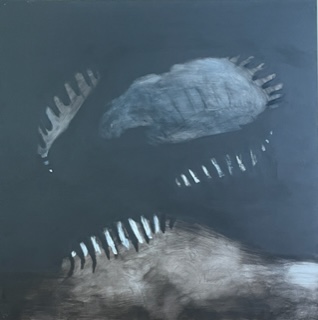


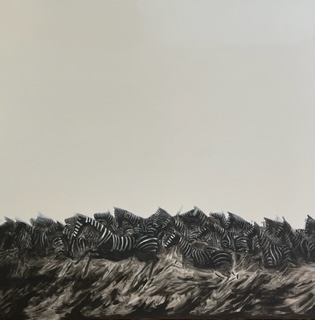


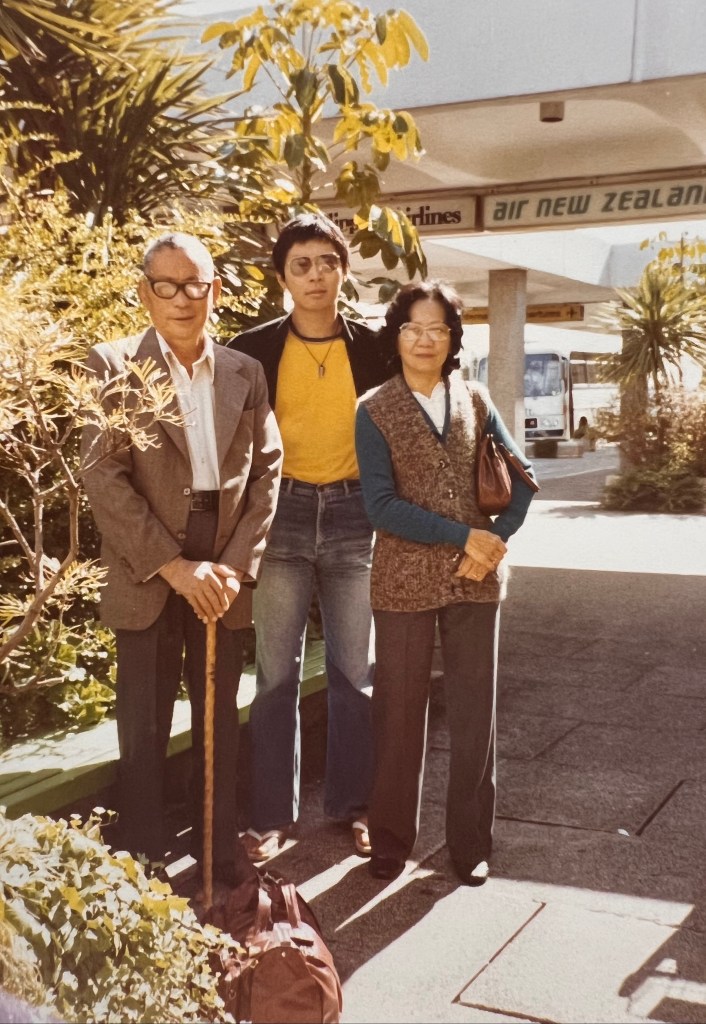


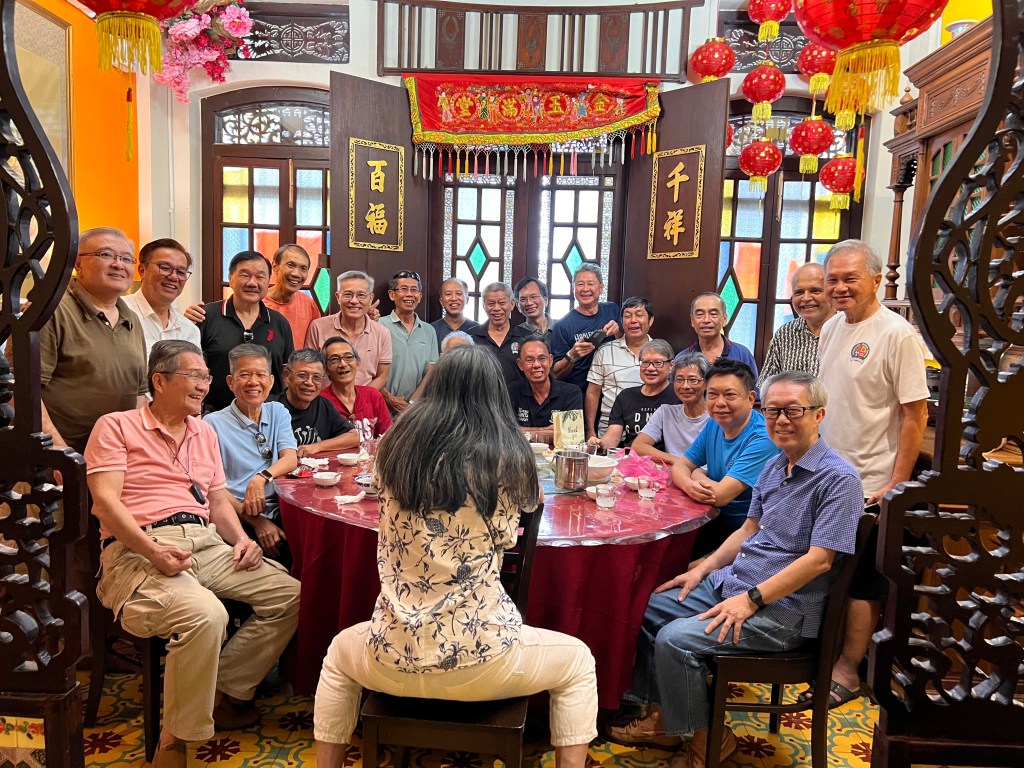

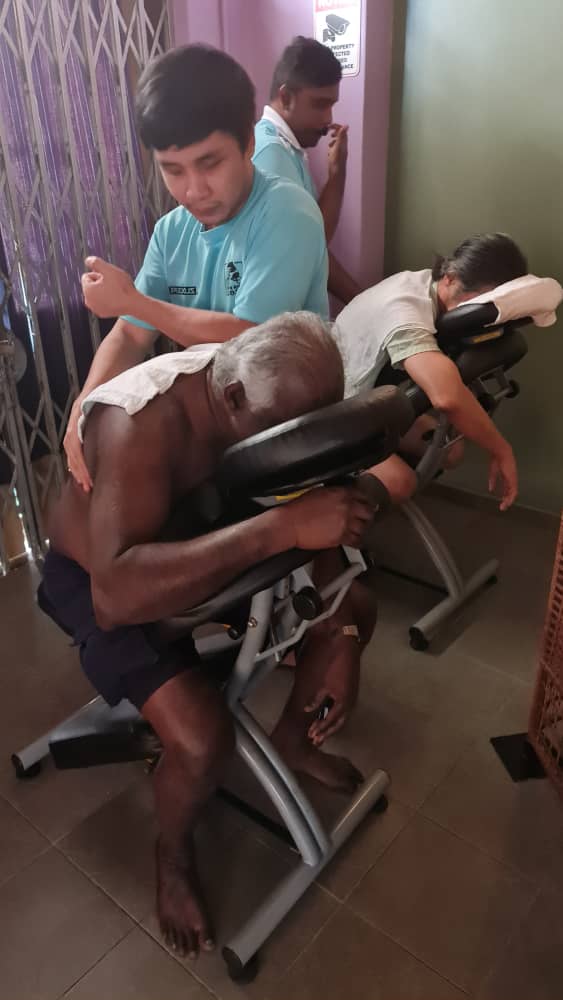


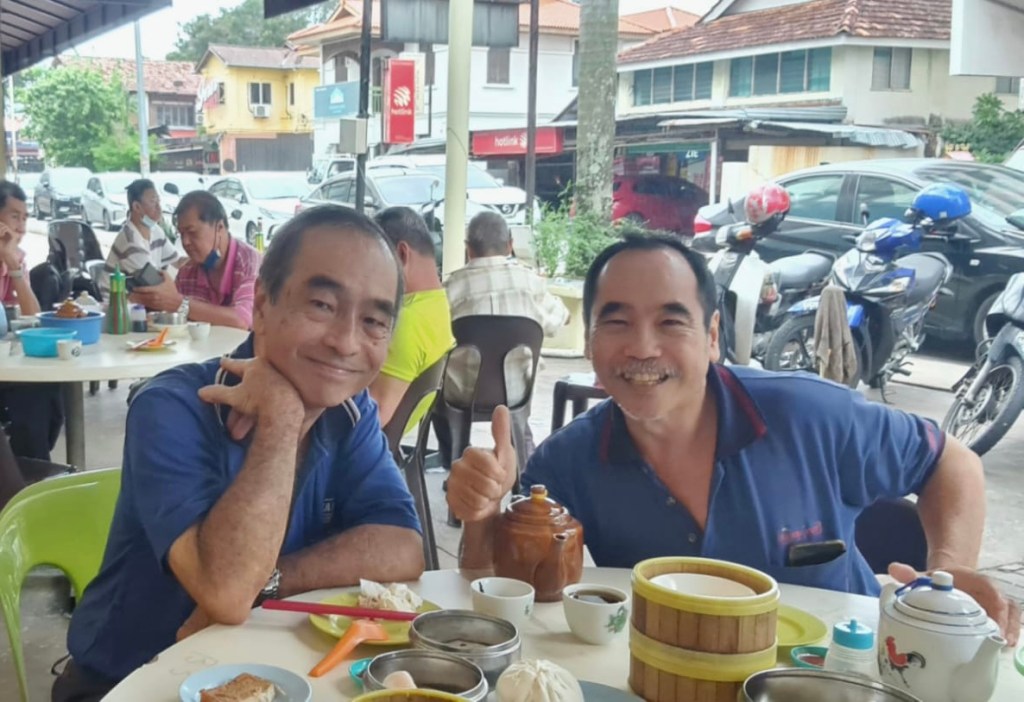



 Urghhlings