Providence in Aix-en Provence

The journey from Toulon to Aix-en-Provence was immediately defined by an atmosphere of inescapable confinement and auditory discomfort, a stark contrast to the promised idyllic escape. On the crowded bus, the old man, a keen participant in the excursion, found himself a captive audience to a cacophony of bodily noises. It is not considered impolite in many social settings to excuse oneself from a room or a dinner table when plagued by proximity to aggressive sneezing or coughing. Yet, on this moving coach, escape was an impossibility.

The initial discomfort came from the back of the bus—the loud, rhythmic snoring of an old bloke that began almost as soon as the journey commenced. This noise was, perhaps, less surprising than the absence of the advertised scenery. The brochure had painted a compelling picture of a “verdant patchwork of meadows filled with countryside flowers and bucolic valleys of noble heritage.” From the perspective of a bus hurtling along a freeway, however, the landscape remained stubbornly mundane.

This general hum of annoyance was soon intensified by the sounds of illness and poor manners. Coughing, initially a distant, manageable sound from the front and rear, became acutely personal when a man in a dirty red jacket took a seat just two seats to the old man’s right and joined the chorus. As if this respiratory distress were not worrying enough, the lady directly in front of him began to emit startlingly loud burping noises. These were not discreet, sharp sounds, but “ginormous and long noises,” emanating from a woman who, with her elegant appearance, seemed beautiful and sophisticated. Her dignity, however, was rapidly eroded as her involuntary expulsions were exacerbated by the gentle sway and gyrations of the moving bus. She was prone to seasickness on the boat but this was such a gentle bus ride by comparison! The sounds were as uncouth and jarring as the “uncontrolled farts” that two elderly passengers had released earlier during the effort of heaving themselves up the steps to board the vehicle.

The general unpleasantness of the journey was, in a sense, a microcosm of the entire trip’s frustration. Such annoyances, the old man reasoned, were often to be expected when travelling with a large group of elderly folks on a Mediterranean cruise ship’s shore excursion. But the trip itself, advertised as a five-hour opportunity to explore Aix-en-Provence, felt like a calculated deception—a “real con.”

The old man’s participation was entirely an impulse decision, ignited by the practicality of economics. He had initially intended to hire a private taxi, but when his fellow travellers decided not to join him and only informed him of their decision during breakfast, the cost became prohibitive. The cruise excursion was his only alternative and he had only twenty minutes to find the booking office and pay for the ticket, if indeed there were any tickets left for sale. The leaflet that lured him focused heavily on one major attraction: the promise of ample personal time for tourists to “retrace the steps of Cezanne by visiting his studio, where he painted some of his largest and most ambitious works including The Woman with the Coffee Pot.” Feeling abandoned, the rest of his companions bar one followed suit, everyone of them cursing under their breath for the abrupt way he left their breakfast table without as much as an explanation or convincing them to join him on the excursion.

The five-hour excursion was, inexplicably, immediately cut by 30 minutes, likely under the pretense of ensuring all passengers returned in time for the boat’s evening departure. With 90 minutes dedicated to the outward journey to Aix-en-Provence and another 90 minutes for the return, this left the tourists with a meagre 90 minutes of free time to wander the historical town, founded by the Romans in 122 BC.

As the group was being guided through the “labyrinth, stone-paved streets” of Aix-en-Provence’s beguiling Old Quarter, the old man finally voiced his specific reason for being there, asking the guide where Cezanne’s studio was located.

“Ah, that’s easeely an howeur’s walk away, hoh!” she replied, her words heavy with a thick French accent, confirming his rising suspicion.

The old man silently swallowed his profound disappointment. There was no point in drawing attention to being swindled. It was better, he thought, not to let the world know he had been scammed.

In truth, his mind had already travelled far beyond the fraudulent Cezanne tour. Less than half an hour after leaving Toulon, he and his sister, who was travelling with him, had received an urgent text message from a sibling back home, informing them of a sudden and severe decline in their mother’s condition.

The news was a profound shock, knocking the breath from him and causing him to curse his decision not to cancel the entire cruise holiday a fortnight earlier. The trip up to this point had been almost preternaturally perfect. It was the final leg of their cruise holiday before their ultimate destination, Barcelona, and they had experienced the best of everything they could have hoped for: perfect weather, no squalls, no miserable fights among themselves, intense mahjong games, wonderful food, and genuine laughter. In fact, the old man had experienced an unusual level of attention, which now, in retrospect, seemed ominous. Strangers compared him to John Wick; a couple from Hong Kong, Bernard and Joanna called him “Yao Yeng Si”—a Cantonese term they translated for him as “cool dude.” Bernard later called him “Keanu,” a nickname he had heard before in Istanbul. An old lady admired his glasses, another loved his old tee shirt, and many complimented his jacket. Many smiled or waved to him as they passed him on the boat or on land. Some even acknowledged his presence with a nod. The perfection, he realized, had been “too good to be true.” He morbidly concluded that these seemingly random, positive interactions had been a kind of gentle preparation for the terrible news he was about to fully absorb in Aix-en-Provence.

The details of the message were agonisingly clinical and raw:

“Her breathing is very laboured and she’s heaving very hard during the few seconds that she’s conscious and when she’s unconscious she doesn’t appear to be breathing at all. When she’s awake, her face is very contorted, she’s digging her nails into my hand or she will pull at the bedcovers or she will scratch at her head. And then her face becomes relaxed again briefly before she loses consciousness again. It’s quite distressing to watch, so I won’t send you any videos. I think it’s time to give her the morphine. She really is not getting anything out of this existence, whether or not she’s in pain. I don’t want her to suffer anymore.”

The family had already made the heartbreaking, collective decision to consent to initiate her “end of life” pathway.

The old man wrote back, each word a physical burden on his mind: “Thank you for your observations. I agree with you. It’s now suffering without any hope. It may be just a matter of hours before she won’t regain consciousness. Play soothing music for her please. Barriere’s Adagio for two cellos, was what I played for Ahpa [our father].

Not long after, a nurse from the nursing home attempted to call him. Due to the bus’s poor internet connection, he missed the call, and in a state of growing panic, he frantically asked his older brother to ascertain if it was an emergency. All the while, the bus was passing the long, dramatic stretch of limestone hills in the distance. Cezanne was entirely forgotten; his mother’s comfort and well-being were the only matters occupying his mind.

He and his younger sister were still on the bus as it meandered toward the town centre when their phones rang simultaneously. His sister managed to ask their siblings to call back in a few minutes when they could step away from the other passengers and have a private conversation.

When he finally had a chance to speak to his mother, he found himself incapable of speech. She had briefly regained consciousness, but all he could manage to utter was his name and “Ahma, it’s me,” before the sudden, crushing weight of grief constricted his throat, reducing him to an emotional mess. He felt a big heavy stone in his throat.

He used the time his younger sister spent speaking to their mother to collect himself. He was now certain his mother could only hold on for a few hours more. He had to speak or risk the eternal regret of having been unable to find his voice to say his final goodbye.

“Ma, we are all ok and will look after ourselves well; It’s time to be calm and peaceful and know that Pa will be waiting for you. Go in peace, know that we all love you and that we are all safe and well,” he said, forcing the words out, gulping down his tears, and holding his voice steady and clear.

Immediately after, he walked quickly away, seeking solitude to allow the tears to fall. In Aix-en-Provence, the place of the artistic scam, he searched for a deeper providence for his mother, deeply certain she would not wait for them to return home to Adelaide. Later, on the bus ride back to Toulon, a realization settled over him: his mother had already found providence for a very long time. The loving and tender, benevolent care that he and his siblings had given her for most of her life had to be a profound gift from a great power.

Less than 24 hours later, the old man was wandering along the side streets off La Rambla in Barcelona. After a light lunch of tapas and Sangria, he paused, reading the words that appeared on his phone. A deep, raw shock came over him before he finally shouted, his voice cracking with finality, to his sister, who was some seven meters ahead with the rest of their companions, “Hey sis, Ahma just passed away!”

They had, just moments earlier during lunch, raised their glasses and made a toast to the grand old dame, entirely unaware that she had passed away approximately half an hour earlier.

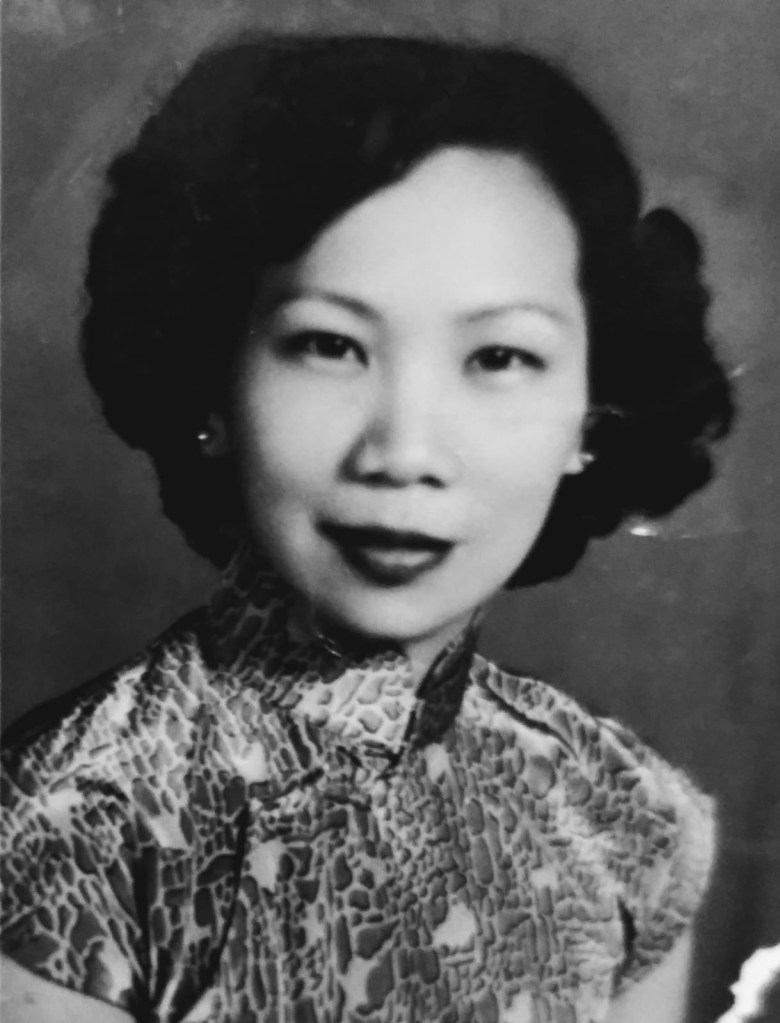
Rest in Peace, Ahma. 3 Sep 1923 – 3 Dec 2025

A Minion’s Opinions

Opinion. Everyone’s got one. It’s the currency of human interaction, flowing freely from every mouth, shaping and misshaping our perceptions of the world. From the high and mighty to the lowly minion, from the well-informed to the woefully ignorant, opinions are churned out with reckless abandon, a ceaseless tide of perspectives crashing against the shores of reality.


In the span of a single morning, the old man had already unleashed a torrent of opinions in his backyard, his pronouncements echoing through the quiet suburban landscape. Even the weather wasn’t safe from his pronouncements to his Mrs as she looked up from the uneven stakes that she had tried for days to train her tomato plants to cling on to with their tendrils like desperate arthritic fingers.

“It is not going to rain today,” he enunciated deliberately and slowly through his crooked teeth, as if words spoken with proper diction somehow bestowed infallibility upon his opinions.

His wife, however, was unconvinced. “You’re just wasting water,” she retorted, her voice laced with the exasperation of a woman who had heard it all before. “You’re just wasting your time. It’s gonna rain soon!” she opined in vain.

The old man didn’t care to scan the sky again for dark clouds as he kept aiming his hose at their banana plant, his gaze fixed on the banana plant he was watering. “It needs all the water it can get,” he muttered, his voice barely audible above the loud pissing from the hose. He had always believed that even trees possessed a certain discernment, a silent judgment of their surroundings. Trees discriminate. The two banana plants were discards (he nastily presumed) from their back neighbour, an old, shrivelled and bony Sri Lankan woman with eyes so milky he was surprised she could see them from her garden.

A year ago, she gave them the two plants, one almost withered and yellow, the other straight and green but thin. He planted the weak one in his neighbour’s garden – the good neighbour on the eastern side. The neighbour on the western side, they didn’t care much for – grouches, he called them, a long-standing opinion cemented by his wife’s endless litany of complaints. He had heard her grievances a thousand times, his usual response a silent nod or a noncommittal grunt.

The banana plant he was watering just before the rains swept through their hillside suburb was not much taller and not much thicker. It remained stunted and unimpressive, one of its leaves, once a promising burst of green, now wilted and drooping like the hunched back of its original owner, the brown-skinned woman with the wispy white hair. Meanwhile, the sickly yellow plant in the eastern neighbour’s yard had flourished, its leaves unfurling in a majestic display of verdant grandeur.

Trees discriminate!

“Even trees have eyes for rich people,” the old man declared to his Mrs, his voice carrying a note of disdain. The neighbours were out shopping, their ears spared from his haughty pronouncement.

“Ssssstrewth! They aren’t treeeesss,” she said. “They are plantssss!” she said with glee packed with subtle sharpness in her voice to show she had another win over him. Her sibilant reply did not escape him, warning him to simply agree with her.

“It’s just our bad luck that you planted it in the wrong spot,” she offered her opinion unsolicited but nonetheless delivered with the air of undeniable truth, the softness in her voice measured, not to annoy him too much.

“Sure, it’s the wrong spot. We can see that now, but no one said anything when I was planting it,” he countered, his flawed logic digging him deeper into a hole of his own making.

“I wasn’t here, remember?!” she shouted from the chicken run.

Noticing that the chooks were scattering away from her, their feathers ruffled in alarm, he said to her to calm down.

“You’re scaring them away!” he yelled back. Not the least concern for them, he merely used them for scoring points.

“They are just fighting for the worms I just threw to them!” she retorted louder.

He shook his head, muttering to himself, “She’s forever correcting me, the know-it-all.” But then, a flicker of self-consolation: “Never mind, even a broken clock is right twice a day.” And so, the tide of opinions continued to ebb and flow, shaping and reshaping their little corner of the world.

Smelling the distinct scent of petrichor in the air, a harbinger of impending rain, he hastily turned off the garden tap and began winding up the inexpensive Gardena hose he’d purchased from Bunnings. “Damn,” he muttered to himself, “She’s going to be right again.”

Observing his neighbours returning home, their arms laden with shopping bags, he stood on his tiptoes to get a better look. “Need any help?” he called out in his most amiable tone. Without waiting for a response, he swiftly nipped across their backyard. His motive was clear – to help his neighbours and, perhaps more importantly, to deny his wife the satisfaction of gloating about winning their ongoing debate about the weather.

“Here, let me help,” he offered, taking some of the bags from James, his next-door neighbour. James, two years his junior, had retired early. The more astute of the two, James had also achieved greater success, not just financially, but also in terms of respect and admiration from others. Despite this, the older man never displayed any inclination to genuflect to his prosperous neighbour or seek his guidance. His Mrs, much to her dismay, held a different view and often reproached her husband for not heeding James’s advice on financial matters.

“He’s been retired for over ten years!” the old man would retort, defending his stance. James had cautioned him against putting all his eggs in one basket – a simple yet universally true piece of advice. Yet, the old man, revealing his stubborn and foolish nature, chose to disagree with his neighbour. He was dismissive of those around him, never considering the possibility that they might be right and he might be wrong.

“It’s like in poker,” he’d often declare, “You go all in when you hold the best cards,” his voice brimming with unwavering confidence.

A confidence that may be misplaced, based on wrong opinions rather than true knowledge,” his Mrs would plead in vain.

“A fool and his money are soon parted,” she’d caution him, exasperated by the stubborn old man she shared her life with.

Throw out your conceited opinions, for it is impossible for a person to begin to learn what he thinks he already knows.

Epictectus, Discourses, 2.17.1

Merry Christmas to The Mrs

Christmas 2024 felt foreign to The Mrs. She was actually looking for things to do, dishes to plan and cook, perhaps even gifts to buy and wrap. Finally, she was told to do absolutely nothing.

“Nothing?” she asked Aye.

“Just enjoy! I’ll take care of everything,” Aye said with bright twinkling eyes and a smile sweetened with Confucian respect and duty.

Aye is their First Son’s partner. From snippets of stories about Murray, their cute and loveable dog, the Old Man gathered that Aye had been around their son’s life for quite many years. She was even around when Murray had his balls snipped off. That was some five years ago when he was forced to wear that Victorian collar so he couldn’t lick his missing balls, seeds necessary to germinate his next generation. A week ago, Murray had to wear the Victorian collar again – this time, the vet had to snip off a couple of grass seeds that were germinating in his front right paw.

So, The Mrs did absolutely nothing that Christmas. No turkey to roast, no leg of ham to baste with honey, no Christmas tree to decorate, not even gifts to buy and wrap. Not that she ever did any of that. She was no good at cooking traditional Christmas dishes. They use too many pots and pans and saucepans, she used to say. Traditionally, the Old Man would buy a cooked lobster, some Spencer Gulf king prawns and a box of cherries to supplement her salads, whilst others would chip in with baked snapper and ribeye steaks. Growing up, their three sons loved Christmas despite having to help in their parents’ auto parts shops during the marathon trading hours; the consecutive twelve-to-sixteen-hour days would raise their parents’ spirits, as the burgeoning tills promised their business would survive another year. Jingle bells, jingle bells, the carols would blast in the shopping malls, while their tills go ka-ching and the coins go jingle-jangle. Their auto parts shops were in name only, car parts weren’t in their inventory, ordered in for customers only when required. They mostly sold accessories, known in the trade as the “shit and glitter” for cars. Their customers used to be rough as guts, but those early days of attracting petrol heads hellbent on drag racing were long gone, once the state government deemed car hoons were goons and banned drag racing in South Australia.

The Mrs was the one who made the decision to go into the auto parts business. The couple’s twin boys were ready to join their brother to attend Highbury Primary, and so The Mrs felt the need to resuscitate her career in the world of accounting and funds management. Her selfless sacrifice lasted seven years and by the time she stepped back into the corporate world, technology had introduced the facsimile machine into Australian offices and the office computer had become ubiquitous. Back then, she was still lining her kitchen drawers and wrapping veggies with old newspaper. It did not cross her mind that one day her Old Man would stop buying newspapers and that there would be none for her to use. Soon, people would not understand why they were also called fish-wraps. The Mrs, the ever so confident woman in her prime, suddenly felt inadequate when told she was expected to use Excel spreadsheets. So, in a way, it was difficult to fathom why it wasn’t daunting for her to dive into owning and running an auto shop at a time in her life when she thought all car aerials and wiper refills were universal fitting.

The greatest obstacle to discovery is not ignorance – it is the illusion of knowledge

Stephen Hawking

The first customer she encountered wanted a needle and seat for his Holley. She didn’t know what a Holley was, so she went looking for a needle and thread set for a seat cushion.

“Did she come home in tears?” the Old Man was asked. She knew there would be books to tell her the part numbers of car parts needed for her customers but she did not consider that product catalogues were sorted by car brands, not by car models. She realised she had a big problem when she could not tell a Cortina was a Ford and a Torana was a Holden and how she couldn’t hide her blank look when car enthusiasts were telling her the legendary tales about Peter Brock and his latest win in the 1987 Bathurst 1000 with his VL.

“What’s a VL?” she asked.

The Mrs was no quitter. She delved into the world of coolants, additives and oils. She learned about oil viscosity, ethylene glycol and PTFE in engine additives. The Old Man would not have blamed her had she decided to simply give up and give away the business. After the initial profits when it was run by their ex-business partner, the business probably owed them about $20,000. In 1989, it wasn’t a small sum of money but it also wasn’t an amount big enough to cause them much grief. It represented less than a third of his annual salary; he was quite prepared to write it off as a bad investment and for The Mrs to treat it as a bad experience but to his surprise, she wanted to carry on and prove to herself that she could make it work. And she did. If the auto parts business did not suit her, she simply changed it to a car accessories business a year later. She knew about fashion and style. Instead of selling blow off valves, cv joints and tie rod ends, she got rid of them and stocked her shop with seat covers, steering wheel covers, sunshades, floor mats and dash mats instead. She did a roaring trade that year, doubling their profits from adding air fresheners, globes and car stickers to their staple – enough to lure the Old Man away from his cushy executive job to open up a second store. Theirs were the first auto shops to sell neon rods and flashing LED lights to decorate the cars in Adelaide. They imported them directly from Hong Kong despite the agent describing their first order as “small potatoes”.

It seemed like the good times would last a long time but of course, if it’s too good to be true, it is not true. South Australia soon after banned flashing coloured lights in cars and introduced extended trading hours. Saturday morning trading became nine to five Saturday trading and Sunday being the day of rest as delivered by the Good Lord delivered double time pay rates for workers instead. The much-treasured Christmas holidays were no more. Christmas holidays became just a day of rest for the family and their Christmas Day parties were always held at someone else’s home. The Old Man and The Mrs were simply too exhausted to plan let alone hold a party at home.

Twelve years ago, they closed their last remaining store in Adelaide. The Old Man reflected on that on Christmas Day. So, this is the sum of their lives in Adelaide, selling auto parts and accessories from 1987 till 2012, standing behind shop counters, sweeping and mopping floors, copping abusive language and even physical threats from the public, watching out for would-be shoplifters, slaving away seemingly forever, so long as their business did not go bust. All that and more, for exactly a quarter of a century. They reduced themselves to become slaves of their business but the real outcome was they managed to raise their fledgling family and gave every one of their kids a good start to their own careers.

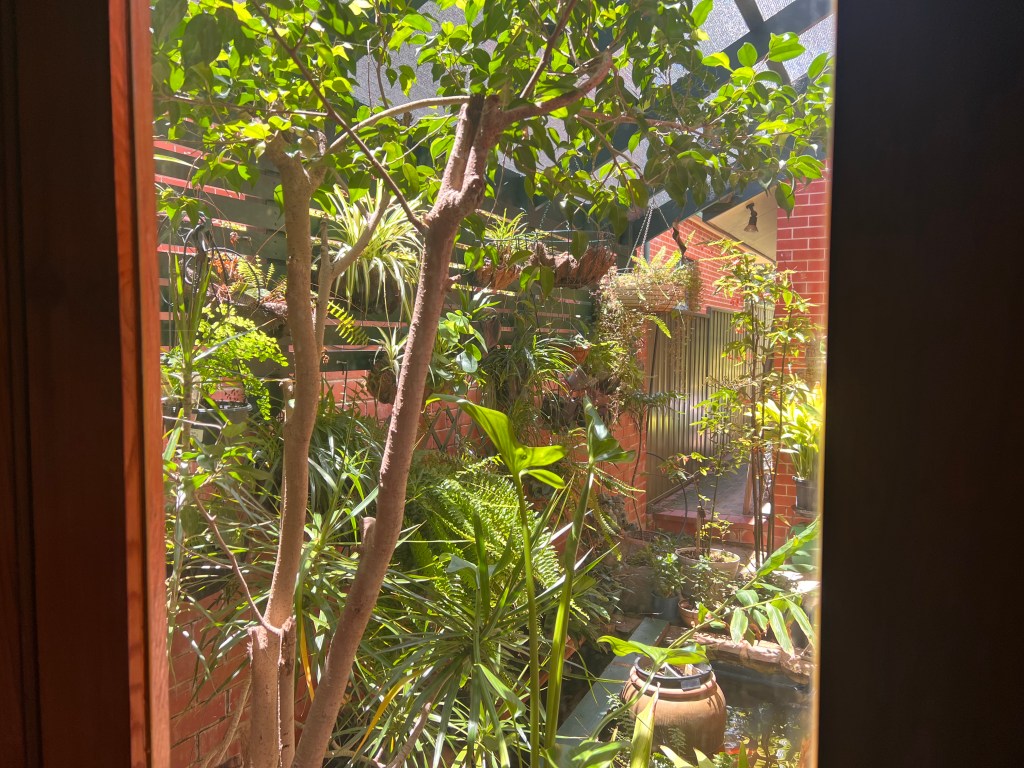
The Old Man peered out from the door of his study. It was a nice French door, made from cedar or perhaps it was maple. Ageing rapidly, he no longer trusted his own memory. The Mrs was out there in the courtyard, tending to her wall garden, her latest endeavour to beautify. The sun shone brightly from the mostly blue sky but did not warm the day enough for her to do without her jacket. His failing eyes checked her out from top to bottom. She was his lover, his wife, the mother of his children. His lifelong partner. A dazzling beauty in her younger days, she still attracted him; the growing patch of grey and white hair at the back of her head did not detract. She stood still, entranced by the prettiness of her wall garden as she allowed her eyes to embrace the beauty around her. She seemed distant, in her own world, a universe or two away. Although retired for fourteen years, those tortuous days of hard yakka in her shops still gave her the occasional nightmare. In recent times, she had found sleep hard to come by. Their two younger sons had long flown away from their nest, far far away. One in Glasgow, the other in Singapore. First Son remained, close by, and with Aye around, life offered a glimmer of hope of better and easier days ahead.

“Merry Christmas to The Mrs,” the Old Man said softly, but too softly for her to hear.

The Mrs’ latest endeavour – to beautify her wall garden

Pronounce the Pronouns

The old man was busy in the kitchen when I dropped by his house. It was already lunchtime and my stomach was growling. So, my face lit up when he said he was about to make himself a small bite to eat. But, like the grumpy host that he was, he did not offer me anything except tea or coffee.

“Coffee ,thanks,” I replied, but did not bother to tell him whether it was black or white, long or short. He ought to know, I informed myself.

It turned out he was preparing just a meagre bowl of rolled oats and Greek yoghurt laced with fruits, seeds and nuts. That was breakfast for him at lunchtime. People who practise intermittent fasting have a boring existence, I decided.

As he was waiting for his oats to cook in the milk, he showed me the Twitter message by Elon Musk that he was reading on his phone. He appeared dull and sleepy, as if he had another sleepless night. His bad breath was over-powering, forcing me to take two steps back. It was his Mrs who taught him brushing his teeth first thing in the morning was a waste of time and effort, since he hadn’t eaten anything since cleaning them the night before. He seemed foolish or maybe it was weakness to just do whatever she said. I remember thinking of him as uxorious in his younger years.

Leave him be, there’s no need to judge him, I reminded myself. Instead, I told him his late night discussions with his friends about the merits and properties of Bitcoin ought to stop. Anyone with a busy mind during bedtime only lend themselves a bad sleep.

“And we all know the lack of restorative sleep will only lead to memory loss and bad health,” I said, judging the old man poorly for his foolishness.

He ignored me and continued to look at the milk boil. He groaned at the tub of Farmers Union Greek yohurt as he took it out of the fridge. The lightness of the tub meant it was near empty, so he was soon scraping away at its sides and bottom for the last blobs of the white stuff. I did not dare tell him he had forgotten to make my coffee.

So, I returned to Elon Musk’s message.

“Whether or not you agree with using someone’s preferred pronouns, not doing so is at most rude and certainly breaks no laws. I should note that I do personally use someone’s preferred pronouns, just as I use someone’s preferred name, simply from the standpoint of good manners. However, for the same reason, I object to rude behavior, ostracism or threats of violence if the wrong pronoun or name is used.”

“I feel like having a cup of coffee, so I’ll make myself one, ok?” I asked the old man as I watched him shovel a spoonful of oats into his mouth. His body was there in the room but his mind wasn’t, or maybe he didn’t hear me. His mouth reminded me of my old grandma’s. Seemingly edentulous, sunken and wrinkled and therefore deformed, his mouth moved slowly like a brown mollusc missing its shell as he laboured to chew and swallow the food.

When I returned to the table with my coffee, his bowl was still almost full. A slow eater like his hundred-year-old mother, he appeared wasteful of the morning that had just turned into an afternoon.

He looked up at me with a frown and said he had mulled over the issue of misgendering a person for quite a long while and when he was reading Elon Musk’s pronouncement about pronouns the day before, his attention had perked up enough to awaken him from the state of stupor the extreme summer heat had reduced him to. Adelaide’s notorious hot spell had lingered for too many days and the smaller than normal crowds at the WOMADelaide festival 2024 was probably the outcome of it. The old man bristled at the suggestion that final numbers would prove the festival to be another big success.

“Expecting hordes of people enjoying music, arts and dance outdoors would be expecting people to enjoy being roasted in a hot oven,” he said.

“The other reason for the smaller crowds was due to a boycott for cancelling the concert of a Palestinian dance group,” he told me. Event organisers had become too political, and much too often, sided with the woke narratives spun by the west. Anti-genocide or anti-zionist protests and anti-war movements were too conveniently labeled as antisemitism or Pro-Russian stooges. Traditional understanding of biology had been thrown out the window. A girl born with a uterus could become a man if she said so. “Sorry, I meant if he said so,” he continued, but his apology was not genuine. A boy born with a penis could demand that it be cut off, no, not just the foreskin, the whole long thing. A boy with balls in his scrotum could become a woman if he said so.

“Sorry, I meant in her scrotum and if she said so,” he said sarcastically, the venom in his voice deterred me from arguing.

WOMADelaide, wo, so mad.

“So, be careful and pronounce your pronouns carefully,” he said. I knew he was deeply serious about this issue and was disturbed by this new movement that had government support to carry it to all levels of education including primary schools.

“The world has gone topsy-turvy,” I surmised. “Why should we care what people say anyway, right?” I asked.

If the person has a womb but wants to call herself a man and demands that we use ‘he’, ‘him’ and ‘himself’ when talking about her, then why argue with the woman? Just go with the flow. But, the old man would not have that. “It’s English and it’s biology!” he protested. Many are now so afraid of being accused of misgendering a person that they are using ‘them’, ‘they’ ‘it’ to address a single person.

“Being gender neutral isn’t being neutral,” he said.

I kept silent hoping the dark cloud above him would blow away. But, he kept ranting but I refused to become my truculent self that moment.

“You’ve already taken the side of the ridiculous when you use ‘he’ on a person born with a vagina and uterus.”

I fidgeted and switched my weight to my left bum instead. Sipping the last drop of coffee from my cup, I suggested it was all a waste of energy to discuss something of no importance.

“Who cares?” I asked. If they want to be called whatever, leave them to it.

“So, if the dickhead has a dick, why should we call him ‘she’ just because he says so?” the old man persisted, behaving like a mad dog biting on a bone and would not let go. His arms akimbo, he appeared ready for a long debate.

“And then, there are those who claim to be ‘non-binary’. What’s non-binary? I had to ask Google,” he raged.

I gnashed a reluctant smile but had to agree with him on this one. How can a person be neither male or female? So mixed-up that they feel they have mixed genders or no gender at all, and then there are those so obese that they lack a neck to speak of, yet if described as fat, they would be quick to be offended.

“Never mind, a rotting piece of wood cannot be carved,” I said, hoping he would be pacified.

“Would you like tea or coffee?” he absent-mindedly asked.

Nothing is more hostile to a firm grasp of knowledge than self-deception.

Diogenes Laertius, Lives of the Eminent Philosophers, 7.23