Adventure Before Dementia

“The AWO is coming to town in early September,” the old man yelped excitedly, his voice cracking slightly with anticipation. He had been looking forward to this for months, ever since he first heard whispers of the Australian World Orchestra’s upcoming tour.

“Nah, they never come to a small town like Adelaide, unless… you mean the Adelaide Wind Orchestra?” his niece said, a mischievous glint in her eyes. Steph knew her uncle well; he rarely spoke of local ensembles, and his enthusiasm usually pointed to something far grander. Her tongue-in-cheek comment was also a playful jab at his consistent disinterest in anything but the most prestigious international acts. Steph, on the other hand, possessed a deep, unwavering passion for music and art that had shaped her colourful life. She had budding success in carving a name for herself in Adelaide’s vibrant music scene, her reputation as a talented singer/musician preceding her. Her journey, however, hadn’t been without its detours. Her parents, like many in traditional Asian societies, initially held less supportive views of her musical aspirations. They had, with good intentions, steered her during her high school and university years towards “more financially secure” fields, explicitly mentioning medicine and dentistry as ideal career paths. The arts, in their view, were not reliable “rice bowls”; the inherent uncertainties and financial challenges faced by musicians were seen as unrewarding obstacles for ordinary individuals, and the potential earnings were considered paltry compared to the predictable high monthly incomes offered by established white-collar professions. To appease them, or perhaps to please them, Steph had indeed pursued and obtained a degree in physiotherapy, even practicing for a time and currently, doing it part time to help the aged. Yet, the siren call of music was too strong to ignore, and eventually, she found her way back to the path she had always loved – making music.

“The Australian World Orchestra, of course!” he bellowed, a characteristic scrunching of his eyebrows deepening the lines on his forehead, making him look considerably older than his advancing years. He often did that when emphasising a point. “Actually, I call it the Australian World-class Orchestra,” he added, chuckling to himself, clearly proud of his personal moniker for the renowned ensemble.

The Australian World Orchestra, of course. It was an institution, a national treasure formed a remarkable fifteen years ago. Their unique model involved inviting the finest Australian classical musicians, those who had forged illustrious careers plying their skills in the greatest orchestras and ensembles around the globe, back to their home country. These prodigal talents returned to perform to consistently sold-out concerts, a testament to their supreme artistry and the deep appreciation of Australian audiences. The AWO’s leading musicians were drawn from the ranks of truly prestigious ensembles, a veritable Who’s Who of classical music: the Berlin Philharmonic Orchestra, the Chicago Symphony Orchestra, the Los Angeles Philharmonic Orchestra, the Singapore Symphony Orchestra, the Vienna Philharmonic Orchestra, the London Philharmonic Orchestra, the London Symphony Orchestra, the Royal Scottish National Orchestra, and, of course, Australia’s own esteemed state orchestras and ensembles.

“Let’s go!” Steph exclaimed, her earlier teasing forgotten in a wave of pure excitement. “Mahler 4 and 5 in one concert. What a treat!” Her almond eyes sparkled at the prospect of experiencing such monumental works performed by an orchestra of this caliber.

“Great! I’ll get it organised,” the old man said, already mentally planning the logistics. Traveling interstate to attend classical music concerts or art exhibitions was, for him and Steph, a would-be cherished pastime, a true indulgence, if not for the  prohibitive cost. Even so, it was an adventure they had embarked on many times, creating a kaleidoscope of shared memories for their family album. Adelaide, where they lived, was indeed a wonderful place: beautiful, peaceful, safe, clean, and notably affordable. However, the very characteristic that made it so appealing – its smaller size and quiet charm – also meant a paucity of truly grand events, such as the AWO concerts. This scarcity necessitated interstate travel if they wished to immerse themselves in performances by big-name musicians or witness sports legends in their prime. 

Over the years, the old man, driven by his passion for classical music, had journeyed to all major Australian cities and many regional towns such as Bendigo, Bathurst, Barossa Valley, Bridgetown in WA, Cairns, Orange, Mount Barker. He had attended many fantastic concerts, vibrant music festivals, and prestigious competitions, including the Australian Young Performers’ Awards, and even ventured across the Tasman Sea for the Adam Cello Competition in Christchurch, New Zealand and to cities like L.A., New York, Seoul, Singapore, and Xiamen, Hong Kong, Taiwan in China, Chichester and London in England, Edinburgh and Glasgow in Scotland. On a few memorable occasions, these trips had been grand family affairs, with his beloved mother and sisters joining in the excitement.

Many of these cherished memories were chiselled into his brain during captivating overseas trips, each holiday leaving an indelible impression of shared adventures. The thrill of exploring new horizons together often began with a delightful food safari, a culinary preamble to the much-anticipated culmination: a concert in one of the world’s most hallowed venues. From the iconic grandeur of London’s Royal Albert Hall and the intimate acoustics of Wigmore Hall, to the iconic stages of New York’s Carnegie Hall, Amsterdam’s Royal Concertgebouw, and the historic Rudolfinum in Prague’s Old Town, each performance was an unforgettable experience. The operatic splendour of Milan’s Teatro alla Scala and the modern architectural marvel of Rome’s Auditorium Parco della Musica also provided equally magical backdrops for these musical pilgrimages.

La Scala, a dream stage for opera singers worldwide but also a dream stage for us to be there.

Beyond the concert halls, the invigorating pursuit of art also beckoned. New York’s Metropolitan Art Museum and the MoMA offered an immersive dive into diverse artistic expressions, each stay in New York requiring multiple visits to these must-see destinations while the Rijksmuseum in Amsterdam ranked highly for the old man, who was fond of the masterpieces of Dutch masters like Rembrandt, Vermeer, and Van Gogh. Great works such as “The Night Watch” and “The Milkmaid” stood out as particularly compelling for him. He was thankful to Catherine the Great for creating the Hermitage Museum that adjoined her Winter Palace in St Petersburg, with its astounding three million pieces of art, it might be considered the largest repository of paintings in the world; the intimate viewing of Leonardo da Vinci’s “The Last Supper” in Milan and Michelangelo’s breathtaking frescoes in the Sistine Chapel in Vatican City were equally, if not more, profoundly memorable. The allure of ancient civilisations also drew him and his Mrs to the National Palace Museum in Taipei, where China’s invaluable treasures offered a glimpse into a rich and storied past. They were there for three days in a row yet were unable to see every room there was on offer.

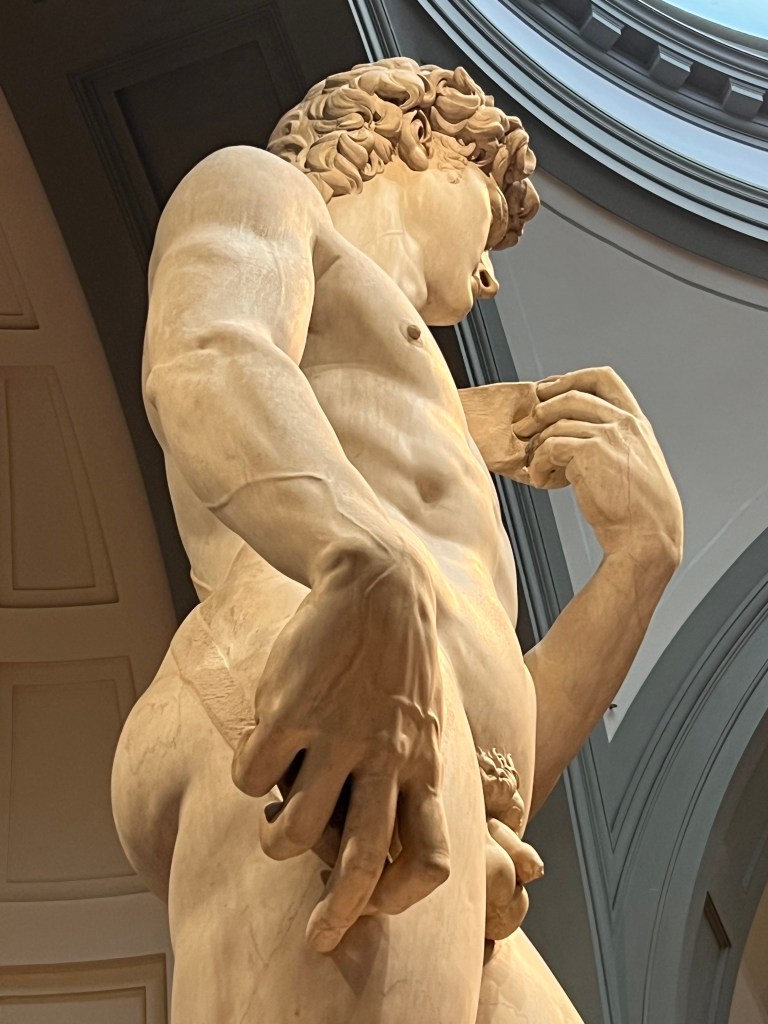
Indeed, there were simply too many extraordinary experiences to recount exhaustively, but certain marvels left an uneraseable mark. Michelangelo’s awe-inspiring marble statue of “David” in Florence, a testament to his remarkable talent, was a particular highlight. Equally captivating were the numerous supreme works by Gian Lorenzo Bernini, the leading sculptor of the Baroque period, housed in Rome’s magnificent Borghese Gallery. His unbelievable creations, including his powerful renditions of “David” and “The Rape of Proserpina,” showcased a masterful blend of emotion and dynamic movement.
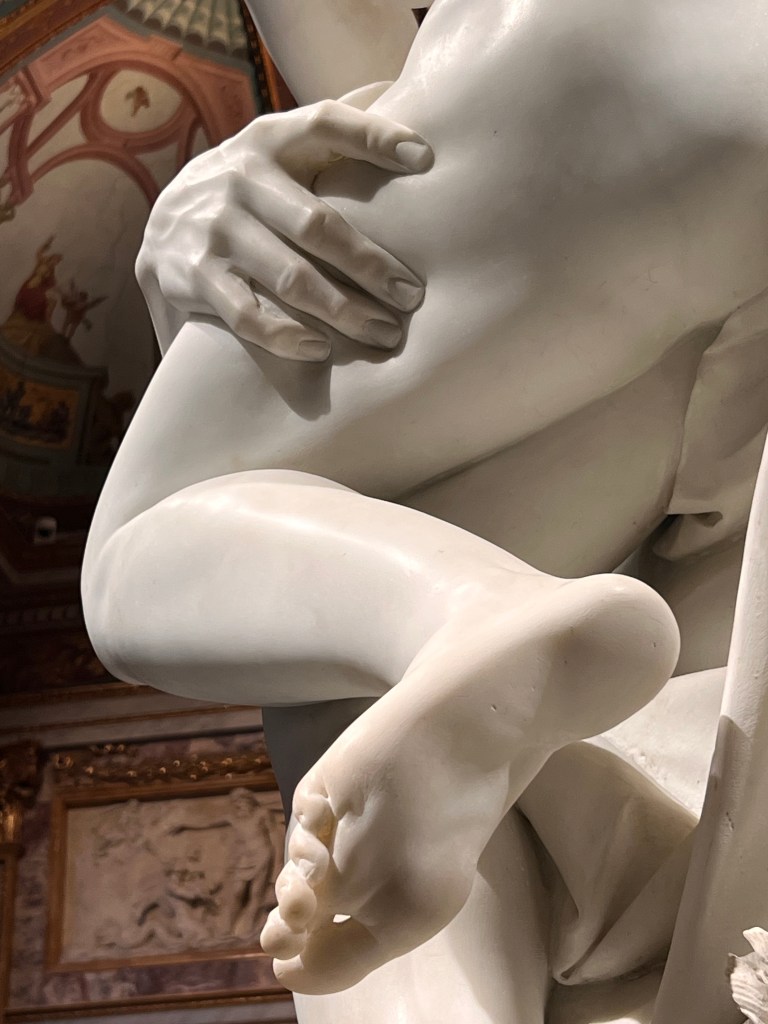
The Rape of Proserpina, a softness of marble only a great sculptor like Bernini can produce.
Michelangelo’s “David” shows his immense understanding of human anatomy.

Closer to home, just back in February, a quick trip to Melbourne and Sydney brought joy to several family members. This particular journey was timed to coincide with the esteemed Singapore Symphony Orchestra’s inaugural and highly anticipated visit to Australian shores, marking a significant cultural exchange and another cherished shared adventure.

While sitting at his desk remembering his adventures and penning them down for me, his mind drifted to something even closer to his heart – his mother’s dementia. Outside, the warm afternoon light, which had moments before streamed through the window and illuminated his parchment, suddenly faltered. A colossal bank of charcoal-grey clouds rolled in from the west, swallowing the sun whole. It was as if a celestial stagehand, responding to an unseen director’s abrupt and barked command, had swiftly changed the entire set and adjusted the lighting, plunging the room into a muted, introspective twilight. The sudden shift in ambiance mirrored the abrupt change in his own emotional landscape, from the exhilarating highs of recollection to the melancholic weight of present reality. The once-bright world outside his window now seemed to grieve with him, its golden hues muted to a somber palette, reflecting the somber turn of his thoughts.

Dementia is an insidiously cruel disease that relentlessly ravages the mind, inflicting immense suffering on the patient. They endure profound frustration, confusion, aggression, and even vivid delusions. The very essence of their independence is eroded, stemming from a tragic cognitive loss and the agonising inability to communicate their most basic needs, whether physical or emotional. It is a slow, cruel descent into a world where their own thoughts betray them, leaving them feeling isolated and bewildered.

This cruelty extends its reach far beyond the individual, casting a dark shadow over their loved ones. Family members are forced to bear witness to a gradual, heartbreaking decline, a beloved mind slowly succumbing to a toxic transformation. They often become targets of hurtful scoldings and nasty accusations, flung by the very person they cherish, whose mind has become a labyrinth of suspicion and paranoia. The emotional toll on caregivers is immeasurable; they are trapped on a relentless spiral of grief, stress, and despair. The once-familiar connection is strained, replaced by a painful chasm of misunderstanding, especially at the early stages when awareness of the disease has not formed.

In more severe cases, the suffering can escalate into frightening outbursts of physical or verbal aggression. Loved ones may face hitting, kicking, scratching, or relentless yelling, all from someone they once knew so well and loved. The physical and emotional scars left by these incidents can be profound. For the patient, true relief from this torment often arrives only much later, at the stage of total cognitive loss, a tragic surrender to the disease’s ultimate grip. Yet, even then, the grieving process for their loved ones does not cease. It continues, a lingering ache for the person they lost long before their physical presence faded. The memories of the struggle, the pain, and the grieving for the loss of the loved one’s mind remain.

The twilight years often cast long shadows, and for the old man, they were particularly deep, mirroring the shrinking, fragile form of his 103-year-old bed-ridden mother. Her once vibrant spirit was now a wisp, her forehead contorted in a perpetual grimace of pain or confusion, her words a jumble of inaudible sounds, often making no sense to him. Each day was a quiet vigil, the silence and repetitiveness, representing the relentless march of time and the slow erosion of a life once lived with vigour and purpose.

His mind turned to a particular night that was different, a peculiar shift in the now familiar rhythm of her dementia. She was wide awake, her eyes, though clouded with age and heavy from exhaustion, held an unusual glint. And she was speaking, not with the profound wisdom one might expect from a centenarian, nor with coherent sense, but with words that seemed to hold a peculiar meaning only for her. That night, she was chatty, a rare occurrence. Short sentences, strung together with a strange, almost childlike rhythm, flowed from her lips. She even mentioned possessing “ka tze,” two rings, adorning her fingers, a detail that surprised him. Her descriptions of her meal were equally vivid and unusual: her fried noodles were cooked with “dae wu bee” (dried tofu skin) and “ho mee” (dried prawns), specific but unexpectedly wrong observations.

Her right thigh was a persistent source of agony, and she was preoccupied with massaging it as she ate, her movements slow and deliberate, each mouthful a monumental effort. Yet, amidst her struggle, a new fixation emerged. She reached for the pillow that was supporting her leg, her still rather strong right hand attempting to pull it out from beneath her. “Deh kak sei deo,” she kept repeating in her Ningbo dialect, “egg shells are shattered.” Her voice, though weak, held a strange insistence as she tugged and even hit the pillow repeatedly, convinced that it contained egg shells or that it was egg shells. She explained that these shattered shells held the key to alleviating her pain, a bizarre, nonsensical yet desperate hope. Her energy, much like a faulty light bulb, flickered on and off, moments of unusual clarity and action interspersed with long stretches of quiet exhaustion, a poignant reflection of her fading life.

A ping from his phone alerted him to an incoming message, turning his attention away from the bleakness of dementia. A friend had sent him a note saying no one is great at birth – it’s our behaviour and actions that make us great. The old man disagreed.

“I think our mothers were great at birth. The severe pain during labour that they endured is surely a measure of their great love, at a time when they did not even know us.”

But, the matter of dementia soon dragged him back to his mother’s room in the nursing home.

The insidious grip of dementia had stolen his mother’s precious memories, including those of her son. The man standing before her, a reflection of her own youth and steadfast nurturing, was now a stranger. He, whom she had brought into the world and guided through the lean, challenging years of the 1950s and 60s in post-war Penang, was now met with a chilling detachment. “Go away, I don’t like you,” she would declare, her voice tinged with an alien ferocity, as she repeatedly tapped her head and sometimes tugged at her hair. Even more severe were the venomous pronouncements: “Pe-o-tze sa, zong-sa” – “A prostitute’s son, a wild-born.” These cruel epithets, utterly devoid of truth and verifiably false, had somehow found a deep, unshakeable root in the fractured landscape of her mind. Had he not possessed an understanding of the relentless and unforgiving nature of the disease, its capacity to twist and distort the very essence of a person, his own self-esteem would have been irrevocably shattered by the weight of her words. He would have internalised her accusations, allowing them to corrode his sense of identity and worth. But he knew, with a heartbreaking certainty, that these were not his mother’s true sentiments, but rather the cruel echoes of a mind under siege.
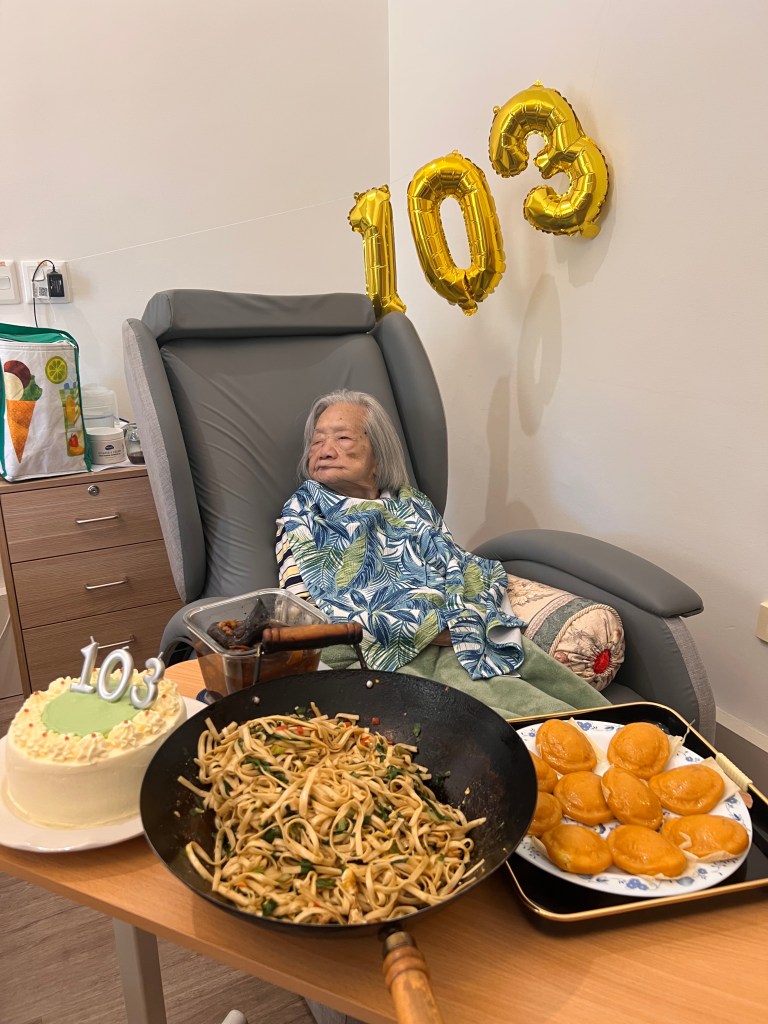
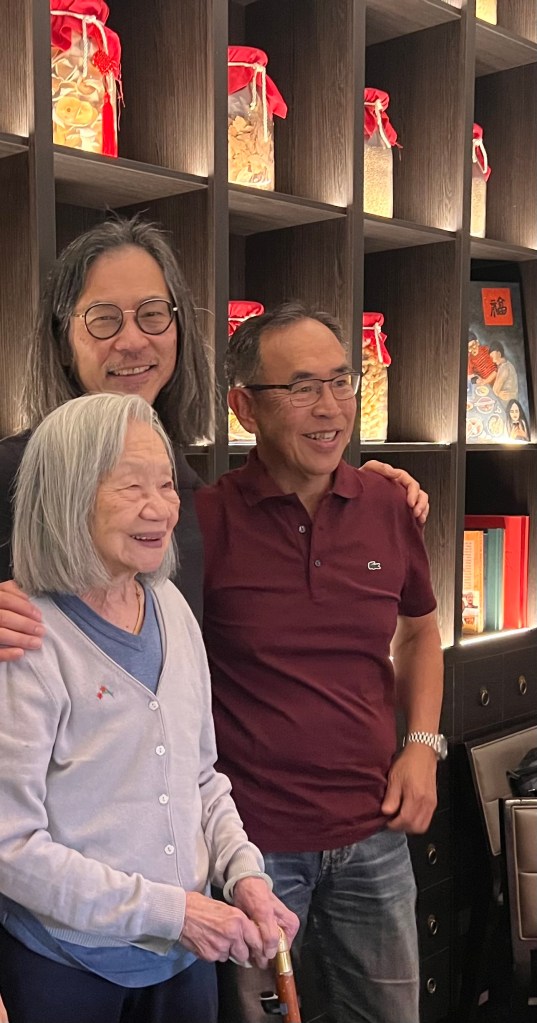
Ahma, on her 103rd birthday (lunar calendar)

The Substance About The Substance (II)

It was Friedrich Nietzsche who said that what doesn’t kill us makes us stronger. Suffering allows us the opportunity to become stronger – something the Spartans would have egged one another on to become the tough and resilient fighters that they were. Ancient Chinese knew that much earlier, they knew to fight poison with poison (“yi du gong du” 以毒攻毒). Traditional Chinese medicines still prescribe venom of snakes, scorpions, centipedes, toads, spiders and even use toxic substances from some trees and herbs to cure certain illnesses.

The old man was sitting at his desk thinking about whether his 101-year-old mother would ever attend a birthday party of his again. A few nights earlier, her absence was conspicuous at the restaurant where he held his birthday party; even Emma, the restaurant manager, noticed it before she went to lock the door of the side entrance to the premises, a humble door reserved for staff to use as a short-cut to the dining area of the restaurant. Emma had purposely unlocked it to save his mother the extra walking distance to the grand main entrance. Fair-skinned and youthful, her long pig-tail and sparkling eyes matched by an ever-willing sweet smile made her very attractive to the male diners in the restaurant. No one could guess she was over 40 despite being told she was already a young mother. Considerate and always alert to their wishes, she is the epitome of hard work and courteous attention.

“Unfortunately, Ahma isn’t feeling well tonight,” the old man informed Emma when asked why the matriarch did not attend. Everyone was accustomed to her usual slow entrance, giving royal waves reminiscent of a Queen of England to the people in the room, nodding and smiling, inching towards their table at the graceful pace no faster than a swan on a lazy afternoon. The booking was for eleven people and as it turned out, the pre-ordered menu was too much for the nine attendees; a daughter had to stay home to look after their mother who felt woosy and weak that evening. The venue was non-negotiable whenever his mother was invited simply because it was her favourite restaurant which served her favourite dishes and there was a convenient reserved space for those with disability parking permits. Despite the beginnings of soft murmuring about the predictability of the same dishes from certain quarters, he continued to hold parties in the same restaurant. It must be said that it was a reflection of how good life was to this family in Adelaide and how ridiculously out-of-touch they were to reality.

“Crikey, who would complain about shark’s fin soup and lobster noodles?” he asked, faking a high-pitched voice to sound incredulous. He understood there would be some, usually the younger, supposedly more righteous ones who held higher ethical considerations and frowned on killing sharks just for their fins and those older ones, especially those with dental issues, who would wince at seeing lobster noodles, finding the meat of the crustacean too tough to chew. So, he had to encourage the restaurateur to improvise and experiment with new dishes every time he booked a table there. That night, they had crab meat soup instead of sharks fin soup and experimented with salted egg tofu and teochew Murray cod.

The old man was so chuffed with the crab meat soup he eagerly hoped to hold another party the following week, knowing his mother would enjoy it as much as he did. A bowl of the soup was $14, with a lot more crab meat and zero shark fins but it was a savings of $8. His son read his mind and offered to make it happen. His guest list for his dad was similar but included his Ahnia (paternal mother) and Seokuku (youngest aunt).

The old man with his 101-year-old mother and a good friend, Chip.

Enjoy the soup, she did. The old man’s mother despite flawed faculties and failing memory told him so the following day. She said they were very generous with the crab meat, unaware that he had given her most of his from his bowl. Her dementia had worsened at a rapid pace but there were still joyful things that briefly occupied her mind. But, her body’s battery was like that of an old iPhone’s; it may be fully charged one minute and suddenly go flat without much warning. Oftentimes, she would zone out of the present and mutter incoherently about her past. Names of people and places would come up but like a jumbled jigsaw, a casual observer would fail to connect the pieces. He let her ramble on until she tired herself and dozed off.

When her eyes peeped out of the thick layers of skin that covered them, the sun was already beginning to surrender to the moon. He heated up a damp face towel in the microwave oven for her to freshen herself. His face distorted with pain and alarm when he held her emaciated limbs up to wipe them clean as much as she would allow him to. For some unknown reasons, the elderly woman, meticulously clean and neat all her life, had begun to steadfastly protest at any attempts to bathe her. During the past few months, she had been known to even throw tantrums and throw objects at those who dared to take her to the bathroom. The stubborn old lady, unlike her husband during the last few years of his life, did not see that it was necessary for her to cooperate with her carers to make their jobs easier. She refused all pleas for her to wear nappies during bedtime and for outings. So, there have been quite a few “accidents” lately but they are better described as incidents, since such messy and smelly events were not unexpected. When it happened twice in one evening, the old man did not make a scene; he remained calm since it was already bad enough for her. It was easier to simply throw away her undies than to clean the mess. Everything else could be cleaned after, her pants, the floor, the toilet bowl, the sink even. To protect her modesty and maintain her dignity, he made sure his eyes did not cast on areas below her waist. Each episode would take an hour to clean, she would clean herself and he would clean everything else.

Yesterday, he enjoyed a very good day with his mother. It started badly when she refused to leave his car, so he had to watch her sleep for an hour from his porch. When she woke up, he started to talk about his happy times with her when he was little; he cited trips to the wet market with her, how she taught him to select fresh fish, squid and prawns and the special-because-they-were-rare treats of toktok mee at the market. That prepared her for a very pleasant day. Apart from the usual confusion about days and dates (showing her the Chinese calendar no longer helped), she was particularly confused about a memory of having Hokkien prawn mee but kept wondering why she would have it in the morning. She couldn’t get over that throughout the whole afternoon. Overall though, it was a very good day for her, without any sudden mood change, frustration or aggression.

As he watched his mother scoop out the contents of a half-boiled egg, something nutritious and easy for her to eat , he let the memories of his childhood flood his mind like a kaleidoscope filled with fragments of faces, places and activities. He saw how she chased him around the shop house with a feather duster when he was around twelve years old, and the stern way she scolded him and accused him of stealing ten dollars from the till. The kaleidoscope then changed to happy scenes of her walking him back from school and showing him how to avoid muddying his white shoes. Another pleasing scene was of them at the Chong Nam cinema after which they brought home a packet of sar hor fun wrapped in banana leaf and newspaper to share with the family of eight children.

The kaleidoscope then turned dark and sinister, suddenly dominated by colours of shitty brown and mustard green. It was how she tried to kill her own son that left him feeling sad for her and wondering about her state of desperation and hopelessness. When the old man was just in his third month enjoying a warm refuge in his mother’s womb, she started attacking him with a greenish, brownish substance. Over the next few days, she took three doses of that vile liquid, prescribed by a gynaecologist to kill the baby inside her. The pain was so severe it left her chundering all over the bathroom, a mess so much more than her nappy-less state today.

“What was the substance,” I asked the old man but he merely shook his head. He was ignorant of what it was but on the substance about the substance, he was clear.

“What does not kill me makes me stronger,” he said.

Dinner took her over an hour to finish. It wasn’t a big meal but it was a good meal. She loved the charsiew bun and red bean puff. She even asked for the chicken curry that she had declined at lunchtime, remembering she hadn’t had that dish for years. At her age, it didn’t matter to her if she had desserts before or after or even during a meal. By the time he dropped her off at a sister’s house, it was already 10 pm.

“Are you tired, Ahma?” he asked.

“Of course, I am tired,” she replied but she did not say he was stupid.

He gave her a hug after he had helped put on her slippers to get her ready for bed. She was sitting comfortably on a rosewood armchair while he was squatting by her feet. He genuflected, symbolically out of love and respect, having noticed she was smiling and her eyes were very much alive without the usual blank stares. He gave her a long kiss on her forehead and told her he loved her, not in words but with another long hug.

“I’ll see you tomorrow, Ahma, may you have a nice and happy dream tonight,” he said and left with a heavy heart.

Will there be a tomorrow?

The Demure Don’t Demur

The old man’s mother reached her century a few days ago. In cricket parlance, a century is a batsman’s dream innings, a cause for a massive celebration. The exuberance of the crowd would make it a big occasion for the cricketer to soak in the adulation. A performance that is often characterised by a doggedness in determination, flamboyance and ruthlessness in stroke-making, and patience in execution. It felt not so long ago that the old man’s mother was a demure young woman. Shy and quiet, she attracted the young man who was self-employed as a laundryman next door to her uncle’s dhobi shop. He had rented half the shop next door from the tenant who was struggling to prop up their business selling lollies and preserved knick-knacks such as sugar-coated nutmeg, dried mango, dried plums and other fruit pickles. She was sent to spy on his business by her uncle who worried that his business was losing its clientele. She reported to her uncle that he had nothing to worry about; the majority of his business came from wealthy plantation owners who played an important role in the rubber and coconut output of the country whereas the skinny lanky man next door merely catered to the locals, mainly poor Malays. ‘She will be my wife one day,’ the neighbour said to himself the moment he laid his eyes on the nubile young woman who was still in her teens. Realising that her efforts at espionage had been uncovered, the demure woman offered a sugar-laden smile and coyly left her post. In her mind, she would have to find another hiding place the next day, surrendering to the notion that her task to spy on the young man would be a daily task, whether required or not by her uncle.

Much to the chagrin of the old man’s Mrs, she has always felt his filial piety took precedence over his love for her. “Of course not!” he cried out loudly in despair, but his pleading voice failed to convince The Mrs. A woman’s instinct is seldom wrong,” she said. The Mrs is a modern woman, being demure doesn’t cut it for her. The modern woman will speak her mind, and often, as loudly as possible, to win an argument. Her akimbo stance is a language that clearly tells the old man his Mrs is assertive and comfortable in her own skin, and will not take kindly to any egregious insults. Her extensive interests in politics, art, music, Chinese Classics, allow her to engage with anyone in deep conversation. When she turned 60, she decided it entitled her to speak her mind and not care about what people think of her. The modern woman will not hesitate to tell someone they are wrong and tear off their layers of pretence. But, for the old man’s mother, rarely was she heard and never did she hog any limelight in her heyday. Deep-rooted in the traditions of her parents who hailed from Ningbo, the old man’s mother perceived herself to be devoted, kind, and considerate. She could not see her imperfections, and therefore did not correct them – her doggedness about thrift and money matters, her ruthless accusations about her husband’s infidelity and her wasteful use of time as she patiently undertook her daily chores remain her major character flaws. Her name is Mei-Leh, in her dialect meaning ‘plum orchid’.

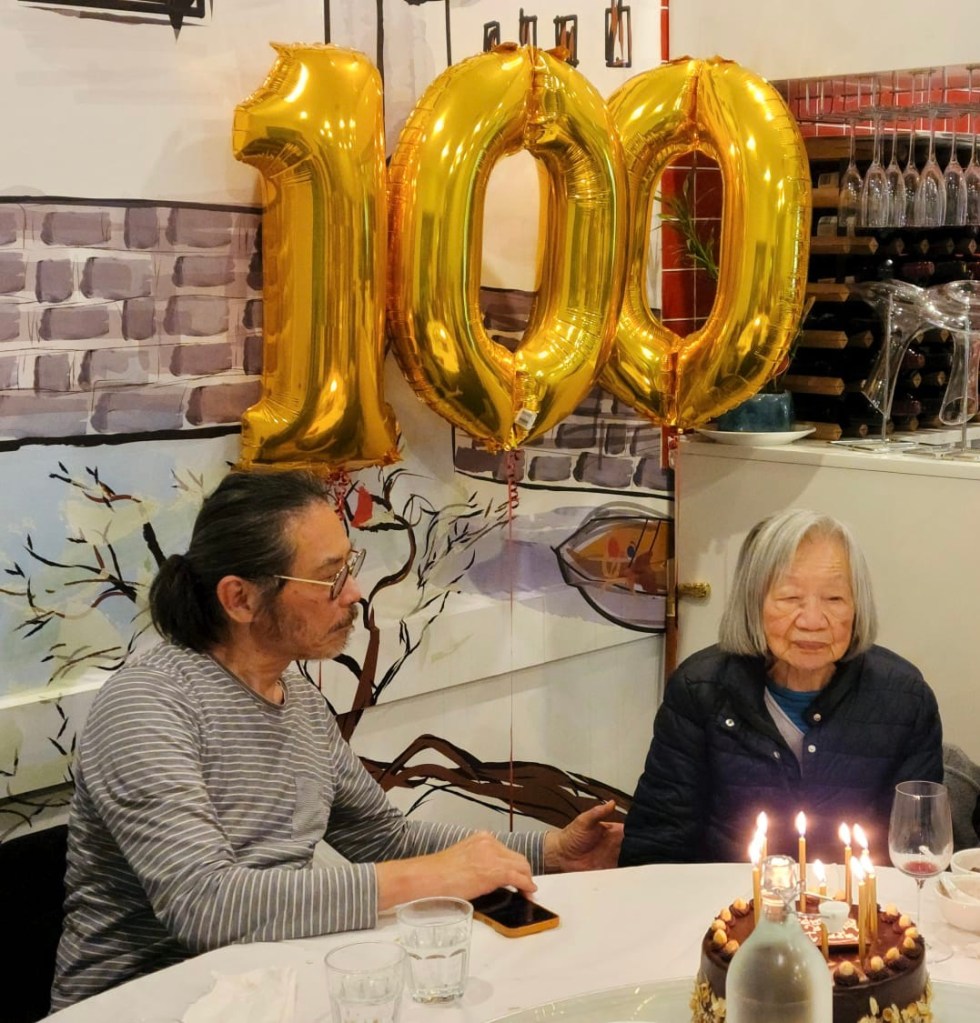
A party for her 100th birthday, not her 100th birthday party.

The old man was seated next to his mother at her 100th birthday party. In truth she has celebrated more than a hundred birthday parties. Being the matriarch of a big family, her birthday is celebrated at least twice a year, following the lunar calendar and the Western one. Her biggest pleasures in life is to be with her children and their off-springs. Any occasion that brings them together would please her no end. “She’s a party animal,” the old man told me. It soon became an appealing part of her nature, this love for parties invigorates her and perhaps is her elixir of life. “That’s her secret of longevity,” explained the old man, as he shoved a Hakka fishball from the steamboat pot that he had let cooled, into his mouth and merrily chomped at it. Her eyes closed tightly as she focused on chewing a sliver of beef, extricating every bit of taste from the crushed and thoroughly ground fibres and sinews of the meat. Even on her 100th year, she easily tires out some of her children. Just the other night, the old man had to bring his niece’s birthday to an abrupt end. It was a week night and he still had to rise early the next day to work. But, Mei-Leh was not pleased, to her it was only 10.15 pm as she patiently relished the last crumbs of the birthday cake – a chocolate mousse cake – scraping every bit of cream and dark chocolate from her plate with careful deliberation. Her mouth moved up and down slowly and deliberately as she ruminated on the crumbs, the rhythm synchronising her purplish lips and the surrounding wrinkly folds of skin deeply carved with creases as busy as lines of streets on a big city road map. Her edentulous mouth, nicely disguised with a full set of dentures, pursed occasionally but more often than not, it bobbed up and down in a fixed rhythm, quietly chewing her cake. It would be another fifteen minutes before she started sipping the tepid peppermint tea served by her grand-daughter before the birthday song was sung i.e. a good half-hour earlier. It would take three trips to the micro-wave oven to reheat her drink before she finally finished it. She examined the cup to satisfy herself that every last drop of it was consumed before she readied herself to leave. It would not be an Irish goodbye. As matriarch, she is accustomed to receive everyone’s undivided attention in the room, whenever she arrives or leaves a gathering. She lifted her left arm from her side without a word, but the old man understood clearly that she required him to help her up from her chair. He got her walking stick from the side of the wall and handed it to his mother. His duties, having being honed for many years, are perfectly understood and performed with utmost reverence and love. A request is rarely necessary, a command is superfluous. On their way home, the old man’s Mrs asked, “Why is it you can’t read my mind and know what I want?” The old man remained quiet all the way home. He refused to be baited into making a defence.

Great as heaven and earth are, people still find things with which to be dissatisfied.

Confucius

By the end of a meal, Mei-Leh is typically fatigued from chewing her food.

At 100, Mei-Leh is no longer demure. She decided she ought to free herself from the shackles of civility and be who she really is. When she turned 90, the old man took her aside and spoke at length about protecting her legacy and advised her to think of how she wanted to be remembered. “Don’t you want your future generations to know you as a loving and kind matriarch? A reasonable and happy person?” he asked. She didn’t answer in words that afternoon but in the following decade, she has answered him in spades by her actions. She didn’t care or isn’t capable of taking care of her legacy anymore. Ageing not only ravages the body but sinisterly, it ravages the mind too. We sympathise with someone who is physically impaired. We feel their pain when we see their missing limbs or cancerous wounds. Her damaged brain cells, invisible to us, are no less severe on her well-being yet we don’t acknowledge that advanced dementia is also a pitiful disease. Mei-Leh lives pretty much in the past; she speaks of names that the old man doesn’t recall and her failing memory has meant that he no longer can write her stories down with any conviction of accuracy. As if to prove he is right, those who aren’t demure do often demur. Mei-Leh had a big argument with one of her daughters this week causing her carer and companion to leave their house in tears. Despite her frailty and fainting spells, Mei-Leh refuses to be pacified, and maintains her rage at her daughter. “Wham!” she slammed at the dining table, treating her palms like a judge’s gavel. No further discussions will be entertained. The old man resigns himself to simply let her demur as loudly as she wants. After all, she is 100.