
It was Friedrich Nietzsche who said that what doesn’t kill us makes us stronger. Suffering allows us the opportunity to become stronger – something the Spartans would have egged one another on to become the tough and resilient fighters that they were. Ancient Chinese knew that much earlier, they knew to fight poison with poison (“yi du gong du” 以毒攻毒). Traditional Chinese medicines still prescribe venom of snakes, scorpions, centipedes, toads, spiders and even use toxic substances from some trees and herbs to cure certain illnesses.
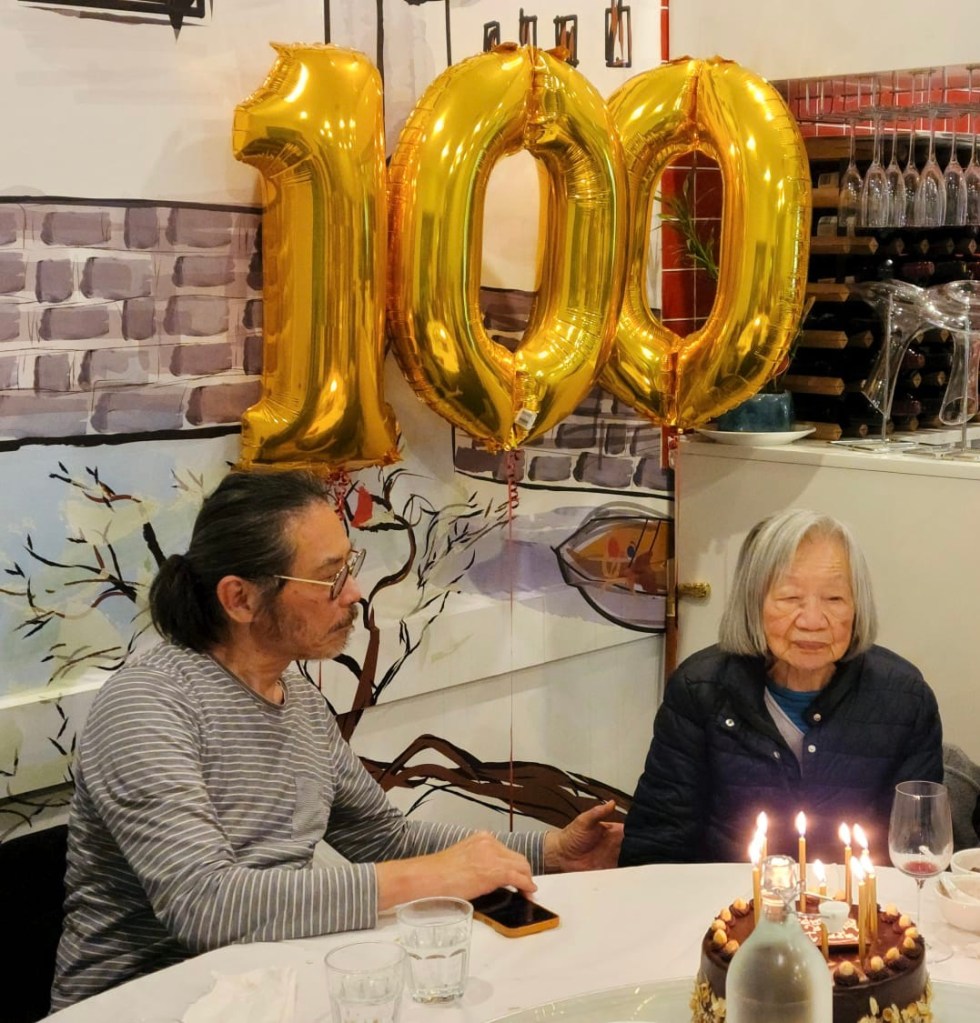
The old man was sitting at his desk thinking about whether his 101-year-old mother would ever attend a birthday party of his again. A few nights earlier, her absence was conspicuous at the restaurant where he held his birthday party; even Emma, the restaurant manager, noticed it before she went to lock the door of the side entrance to the premises, a humble door reserved for staff to use as a short-cut to the dining area of the restaurant. Emma had purposely unlocked it to save his mother the extra walking distance to the grand main entrance. Fair-skinned and youthful, her long pig-tail and sparkling eyes matched by an ever-willing sweet smile made her very attractive to the male diners in the restaurant. No one could guess she was over 40 despite being told she was already a young mother. Considerate and always alert to their wishes, she is the epitome of hard work and courteous attention.
“Unfortunately, Ahma isn’t feeling well tonight,” the old man informed Emma when asked why the matriarch did not attend. Everyone was accustomed to her usual slow entrance, giving royal waves reminiscent of a Queen of England to the people in the room, nodding and smiling, inching towards their table at the graceful pace no faster than a swan on a lazy afternoon. The booking was for eleven people and as it turned out, the pre-ordered menu was too much for the nine attendees; a daughter had to stay home to look after their mother who felt woosy and weak that evening. The venue was non-negotiable whenever his mother was invited simply because it was her favourite restaurant which served her favourite dishes and there was a convenient reserved space for those with disability parking permits. Despite the beginnings of soft murmuring about the predictability of the same dishes from certain quarters, he continued to hold parties in the same restaurant. It must be said that it was a reflection of how good life was to this family in Adelaide and how ridiculously out-of-touch they were to reality.
“Crikey, who would complain about shark’s fin soup and lobster noodles?” he asked, faking a high-pitched voice to sound incredulous. He understood there would be some, usually the younger, supposedly more righteous ones who held higher ethical considerations and frowned on killing sharks just for their fins and those older ones, especially those with dental issues, who would wince at seeing lobster noodles, finding the meat of the crustacean too tough to chew. So, he had to encourage the restaurateur to improvise and experiment with new dishes every time he booked a table there. That night, they had crab meat soup instead of sharks fin soup and experimented with salted egg tofu and teochew Murray cod.
The old man was so chuffed with the crab meat soup he eagerly hoped to hold another party the following week, knowing his mother would enjoy it as much as he did. A bowl of the soup was $14, with a lot more crab meat and zero shark fins but it was a savings of $8. His son read his mind and offered to make it happen. His guest list for his dad was similar but included his Ahnia (paternal mother) and Seokuku (youngest aunt).
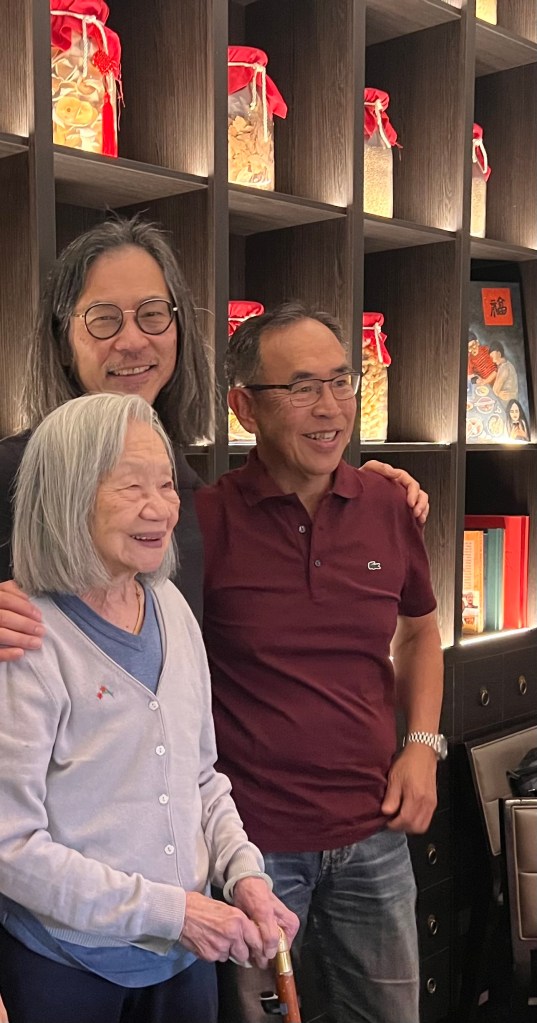
Enjoy the soup, she did. The old man’s mother despite flawed faculties and failing memory told him so the following day. She said they were very generous with the crab meat, unaware that he had given her most of his from his bowl. Her dementia had worsened at a rapid pace but there were still joyful things that briefly occupied her mind. But, her body’s battery was like that of an old iPhone’s; it may be fully charged one minute and suddenly go flat without much warning. Oftentimes, she would zone out of the present and mutter incoherently about her past. Names of people and places would come up but like a jumbled jigsaw, a casual observer would fail to connect the pieces. He let her ramble on until she tired herself and dozed off.
When her eyes peeped out of the thick layers of skin that covered them, the sun was already beginning to surrender to the moon. He heated up a damp face towel in the microwave oven for her to freshen herself. His face distorted with pain and alarm when he held her emaciated limbs up to wipe them clean as much as she would allow him to. For some unknown reasons, the elderly woman, meticulously clean and neat all her life, had begun to steadfastly protest at any attempts to bathe her. During the past few months, she had been known to even throw tantrums and throw objects at those who dared to take her to the bathroom. The stubborn old lady, unlike her husband during the last few years of his life, did not see that it was necessary for her to cooperate with her carers to make their jobs easier. She refused all pleas for her to wear nappies during bedtime and for outings. So, there have been quite a few “accidents” lately but they are better described as incidents, since such messy and smelly events were not unexpected. When it happened twice in one evening, the old man did not make a scene; he remained calm since it was already bad enough for her. It was easier to simply throw away her undies than to clean the mess. Everything else could be cleaned after, her pants, the floor, the toilet bowl, the sink even. To protect her modesty and maintain her dignity, he made sure his eyes did not cast on areas below her waist. Each episode would take an hour to clean, she would clean herself and he would clean everything else.
Yesterday, he enjoyed a very good day with his mother. It started badly when she refused to leave his car, so he had to watch her sleep for an hour from his porch. When she woke up, he started to talk about his happy times with her when he was little; he cited trips to the wet market with her, how she taught him to select fresh fish, squid and prawns and the special-because-they-were-rare treats of toktok mee at the market. That prepared her for a very pleasant day. Apart from the usual confusion about days and dates (showing her the Chinese calendar no longer helped), she was particularly confused about a memory of having Hokkien prawn mee but kept wondering why she would have it in the morning. She couldn’t get over that throughout the whole afternoon. Overall though, it was a very good day for her, without any sudden mood change, frustration or aggression.
As he watched his mother scoop out the contents of a half-boiled egg, something nutritious and easy for her to eat , he let the memories of his childhood flood his mind like a kaleidoscope filled with fragments of faces, places and activities. He saw how she chased him around the shop house with a feather duster when he was around twelve years old, and the stern way she scolded him and accused him of stealing ten dollars from the till. The kaleidoscope then changed to happy scenes of her walking him back from school and showing him how to avoid muddying his white shoes. Another pleasing scene was of them at the Chong Nam cinema after which they brought home a packet of sar hor fun wrapped in banana leaf and newspaper to share with the family of eight children.
The kaleidoscope then turned dark and sinister, suddenly dominated by colours of shitty brown and mustard green. It was how she tried to kill her own son that left him feeling sad for her and wondering about her state of desperation and hopelessness. When the old man was just in his third month enjoying a warm refuge in his mother’s womb, she started attacking him with a greenish, brownish substance. Over the next few days, she took three doses of that vile liquid, prescribed by a gynaecologist to kill the baby inside her. The pain was so severe it left her chundering all over the bathroom, a mess so much more than her nappy-less state today.
“What was the substance,” I asked the old man but he merely shook his head. He was ignorant of what it was but on the substance about the substance, he was clear.
“What does not kill me makes me stronger,” he said.
Dinner took her over an hour to finish. It wasn’t a big meal but it was a good meal. She loved the charsiew bun and red bean puff. She even asked for the chicken curry that she had declined at lunchtime, remembering she hadn’t had that dish for years. At her age, it didn’t matter to her if she had desserts before or after or even during a meal. By the time he dropped her off at a sister’s house, it was already 10 pm.
“Are you tired, Ahma?” he asked.
“Of course, I am tired,” she replied but she did not say he was stupid.
He gave her a hug after he had helped put on her slippers to get her ready for bed. She was sitting comfortably on a rosewood armchair while he was squatting by her feet. He genuflected, symbolically out of love and respect, having noticed she was smiling and her eyes were very much alive without the usual blank stares. He gave her a long kiss on her forehead and told her he loved her, not in words but with another long hug.
“I’ll see you tomorrow, Ahma, may you have a nice and happy dream tonight,” he said and left with a heavy heart.
Will there be a tomorrow?

 Urghhlings