Dour About The Tour

Tan Ban Leong told me it was raining the whole morning in Penang yesterday. The angry skies across the island spat at the people and blackened their moods. The defeated sun, ably aided by the heavy grey clouds, darkened their day and made life difficult for those who needed to be outside, making a living or just living, homeless or aimless. A simple enough unsolicited news on the weather but it triggered me to write this blog. I’m bewildered that I used to blog every Saturday morning without a break for months and months, years, actually. Sitting down at my desk on a Saturday morning now feels foreign; the realisation that I abandoned the discipline I had inculcated in myself the importance of forming good habits over the last four years or so saddened me. For a long time, I was pleased with my own stoic discipline to push the boundary of my newfound hobby to write every week, sometimes feverishly. Why did I stop? Maybe, the low readership of my blogs had finally got to me. I felt my copious writings were as useful as an ashtray on a motorbike. It was a massive undertaking which mostly bore ephemeral dopamine effects. It was easy to rid myself of my hedonistic tendencies. I convinced myself the idea to write was to have a useful hobby and maybe to improve the way I communicate and express myself – it was nothing about happiness.

Ban Leong went on to say that last night was the first night in days that it did not rain. That was what triggered me. It is hard to imagine that my mood turned as stormy and tumultuous as the weather in Penang. Dark, brooding and sullen I became. Dour, in a word. Dour about the tour, in fact. I was supposed to be in Penang last night, you see. My plan was to attend the final two rehearsals with the Penang Symphony Orchestra before we embarked on our China Tour. Since I got back from my holidays in early August with a dog-eared vanilla folder of music sheets, I have been practising like a professional violinist, putting in two to three hours of serious work daily. So, I channelled the majority of my “me time” to my violin practice instead. Am I ready to perform? You bet! Well…. I am always lenient on myself, which is why mediocrity is self-inflicted.

Mediocrity is self-inflicted, genius is self-bestowed.

Walter Russell

The Mrs walked towards me the other night as I was playing Grieg’s Wedding Day, Op. 65 no. 6 and kindly suggested I should use a lot more bow and although never trained in music herself, she proceeded to inform me to press my bow on the strings more firmly. I simply nodded, she is right, of course but it is a lot more than that.

To get a nice, strong tone from my violin, I focus on several key aspects of technique which I learned some 55 years ago and which ChatGPT confirms.

  1. Bow Pressure: Apply consistent, firm pressure on the strings without pressing too hard. Too much pressure will cause a scratchy sound, while too little will produce a weak tone. The balance between weight and speed is crucial.
  2. Bow Speed: Maintain a smooth and controlled bow speed. Faster bow strokes can increase volume, while slower strokes provide more resonance. Experiment with varying speeds to find what works best for different dynamics.
  3. Contact Point: The point where the bow meets the strings (closer to the bridge or the fingerboard) affects the sound. For a stronger tone, play closer to the bridge, but not too close as it may result in a harsh sound.
  4. Bow Angle and Straightness: Ensure the bow moves straight across the strings, parallel to the bridge. Any diagonal movement can lead to inconsistent sound quality. Also, keep the hair flat on the strings for an even tone.
  5. Left Hand Technique: Good finger pressure on the fingerboard is essential. Ensure my fingers press the strings firmly to produce a clear tone, but avoid excessive tension that can inhibit flexibility and vibrato.
  6. Relaxation: Tension in my shoulders, hands, or arms can hinder sound quality. Keep my body relaxed and use the natural weight of your arm to apply pressure on the bow.
  7. Rosin Application: Make sure my bow is properly rosined. Too little rosin can make the sound weak, while too much can cause excessive friction and a gritty tone.
  8. Practise Long Tones: Slow, long bow strokes on open strings or simple scales help develop control over tone production.

I nodded and thanked her for her input. Wow, she actually listens to my practice, I thought and felt enthused. I should have left it at that but after I had finished playing the piece, I went to her with the music and showed her the many bars that were marked “p” and “pp”.

“Do you know what “p” means?” I asked, and then stupidly answered my own question with an annoying tone.

“‘P’ means piano, soft, and ‘pp’ is pianissimo, very soft,” I needlessly said and began hating my own voice.

That, of course, has been the story of my life. I have always been tactless, careless and thoughtless. Spinning these faults as honest, direct and open, it is no wonder that my friends anointed me ‘The Annoying One’. The Mrs was being supportive and helpful, never mind that she has never touched a violin, but she does understand and feel music, having been an avid classical music listener since we met. I am sorry she married someone with the EQ the size of his shoe. In old Aussie parlance, I would be called Casablanca, a wanker. The old cobbers would have also described me as slow as the Second Coming. At almost sixty six now, I have to admit I am like a piece of rotten wood that cannot be carved. Despite the almost half a century of living together, she is unable to sculpt me into the knight in shining armour who sweeps her off her feet in her dream. Side by side, we are incompatible like water and fire, yet our lives are balanced enough that there is little likelihood of us drowning our spirits or burning our bridges.

Chip Beng chipped in quickly. He is an Adelaide resident but we go all the way back to 1958 in Penang. Being like fire and water is complicated but can be complimentary – when the water is too cold, the fire can heat it up……and if the fire is too fierce, water can douse it and regulate its ferocity.

So, last night, I was in a pissy and hissy mood in my study. In protest, I had decided not to touch my violin. Instead, I sat there peeling off dead skin from my feet; they were as dry as a dead dingo’s donger. Clearly, the almost-robotic routine of applying Nivea cream every day has proven to be futile. Einstein was right. Why do we persist in doing something that doesn’t work again and again and expect a different result? I was supposed to be in Penang last night, sitting as a tutti player in the First Violins of the orchestra, showing off my beautiful Paolo Vettori violin which I commissioned some years ago and brandishing my French-sounding Belgian bow, a ‘sakura’ by Pierre Guillaume that my youngest son gave me as a surprise present inside a shiny white Accord violin shaped case, also a surprise present. A surprise within a surprise, unforgettable and oh, so cherished.
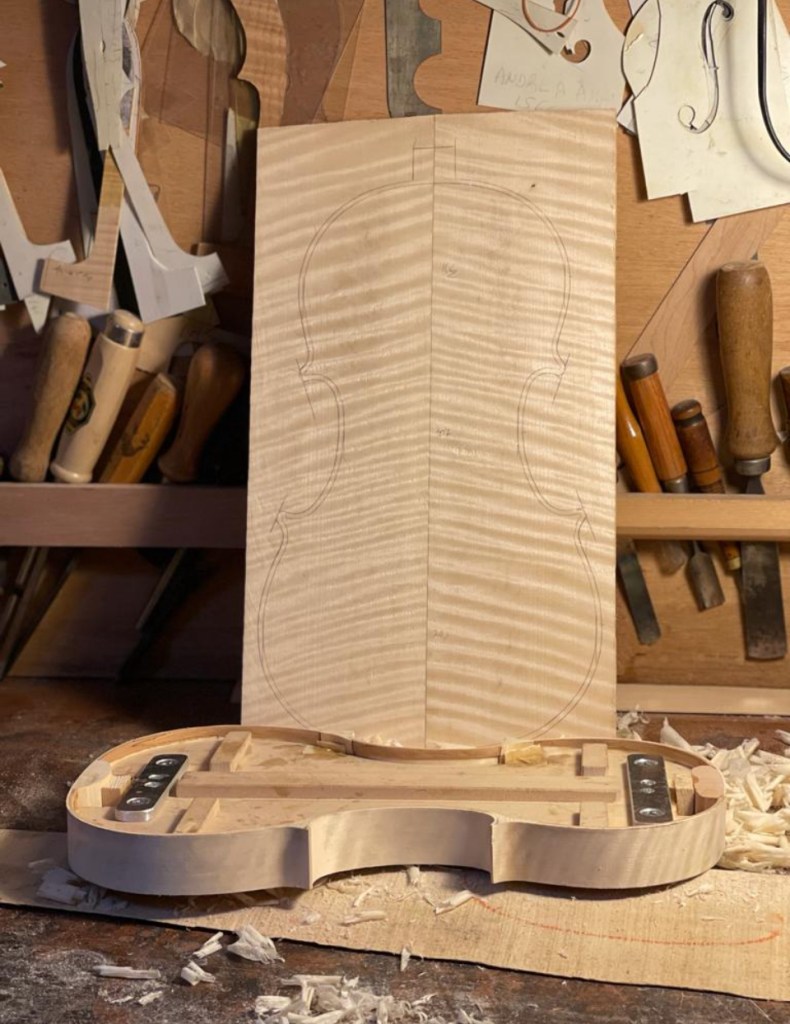
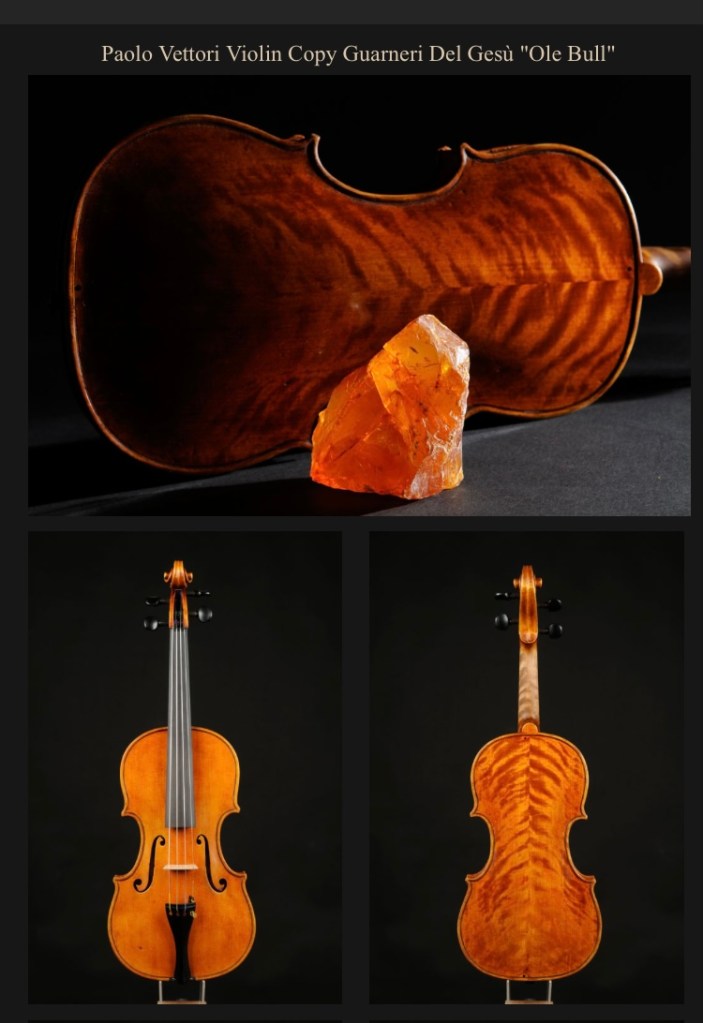
My Paolo Vettori violin, then a work-in-progress, with the Guarneri ‘del Gesù’, Cremona, 1744, the ‘Ole Bull’ template

But, I didn’t even have to cancel my air tickets to Penang because they were not bought in the first place. I half-suspected the tour was not happening when the conductor, Mr Woon, kept saying they were having issues with the venue in Xiamen. But, in my heart I knew that if Xiamen was the only issue, he would have still proceeded with the tour if he had Guangzhou and Shenzhen firmly in the bag already. To save him from embarrassment, I kept quiet even though I was bursting to ask him the obvious.

If those other two venues were ‘set like jelly’, then why cancel the whole tour?

I suppose it is forgivable that I feel dour about the tour. I had to forego the concert on 18 September with my local orchestra, the Burnside Symph in order to prepare for the China gig. It was to be my first international tour with an orchestra, so hyped up I had made it sound. Mr Woon said it is not cancelled, merely delayed till November. I took the news like a Pompeiian, frozen in time, caked in layers of utter disappointment and shock. But, do I continue to sacrifice my “me time” and the next BSO concert, Beethoven’s towering 9th Symphony in November for this very much vaunted international event that I never imagined was possible in my life? Maybe, this is just another piped dream of mine. Dour about the tour, that I am. Remind me not to be fervid about anything, please.

No Bull, It’s An Ole Bull

Paolo Vettori of Florence

I have been back to my usual saturnine self this whole week. Last week, I wrote about Rusalka’s song to the moon by Antonin Dvorak, and connected the opera to some of my close friends’ enthusiasm about going to the moon! “We are very early!” they have been chiming in like a new meme, yet it does not seem to register in their ageing minds that their next phrase “We are going to the moon!” is as contradictory as saying you will find the American flag on the moon because Armstrong’s moon landing was faked. It is as contradictory as my childhood complaint to my mother about the eye-watering agony from the joss sticks as she dragged me to the smoke-filled temple, “Ma, why do we need to go? No one goes to the temple anymore because it is too crowded.” It is said that those who have already invested in Bitcoin are ‘very early’ in the crypto space and can be likened to when football players are still relaxing in their locker rooms, not quite ready to walk out to the stadium where the floodlights had just been turned on. The national anthem won’t be sung for awhile yet, and the crowd hasn’t settled down in their seats because they are still queuing to buy their beers. ‘Going to the moon’ in cryptocurrency terms simply means the price of the coin is rising like a long green candle in the charts. Can they be early yet have the rockets to take them to the moon? Compared to some of them, I am quite pusillanimous, my money is still far away from my mouth. I ain’t about to put my money in my mouth even though investing in crypto feels right. The Aussie dollar keeps weakening against the USD, and my savings is still stuck in the bank earning less than one miserable percent per annum whilst the government is openly stealing my money using inflation as a means to whittle away the purchasing power of my money. For the whole of my adult life, I have been conditioned to believe that inflation is good as we need it to grow our economy. But, I now understand inflation is the root cause for global warming or climate change. Our “inflationary monetary system” is based on debt which therefore requires inflation to help pay for it. As Jeff Booth taught me, ‘Ever higher prices (inflation) require more production, more consumption, more transportation, more energy, more government spending. More, of everything, Forever!’ More consumer spending, more inflation, therefore more global warming. Now, you understand why I feel down. Diligently separating my rubbish into three different bins at home suddenly feels futile. No bull, there is no way we can beat inflation! It is embedded in every government policy by every government in the world.

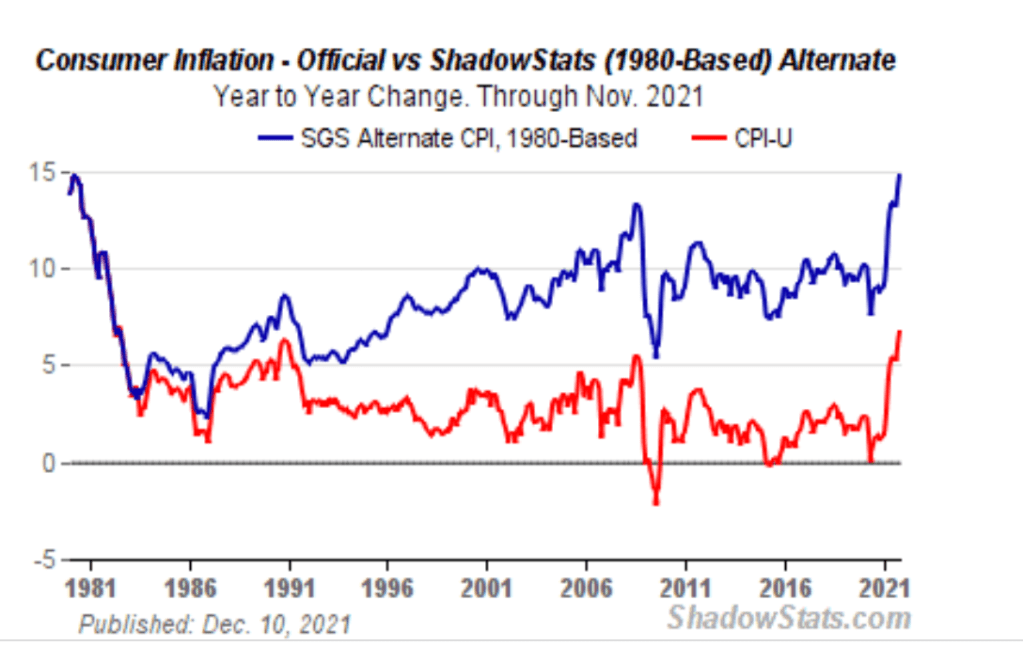
Undoubtedly, my ageing friends’ arguments are sound. The indisciplined loose monetary supply policy world-wide has resulted in the predictable debasement of currencies and high inflationary pressures in most countries. US Treasury Secretary Janet Yellen blames consumer spending for high inflation instead. It is true, the higher the demand, the higher prices go up. She is supposedly a macro economics expert yet she won’t connect the dots and say it’s the government’s policy of giving the people easy money that has led to more spending? The US inflation figure is now the highest since 1982, at 6.8% but she won’t tell you that is a lot less scary than the real figure. You see, they keep redefining what CPI is by changing the basket of goods and services and seasonally adjusting it month-to-month. ShadowStats using the same methodology prior to 1980 show the real inflation in the US is at 15%. My friends are therefore bullish about Bitcoin (BTC). No bull, they reckon that is the only way to protect our savings. The only asset class that will hold its true value and appreciate over time. Sure, Bitcoin is volatile. Very! It is volatile in the short term but goes up in value in the long run. Fiat currencies may be stable in the short term but devalue markedly in the long run (sometimes even in the short run). Look at the Lebanese pound and the Turkish lira this year. Even the USD has devalued by a lot, despite its strength against many other currencies. The other central banks have also been madly expanding their money supply therefore making them worth less. At the start of 2021, we needed USD29,358 to buy one BTC. Today, it takes about USD48,000 to buy one. No bull, BTC may be volatile, but its price is very bullish. Its adoption by major institutional investors and countries will only see its value surge even more early next year.

http://www.shadowstats.com/charts_republish

My mood turned dark mid-week after being chastised again. This time it was about my reputation for openly enjoying freebies but “you don’t give freebies,” the friend chided me. I simply replied I am too old to multi-task. I can’t give and receive at the same time! Another friend sarcastically said, “He gives anonymously!” Being anonymous means there is no way for me to substantiate it or disprove it. I have often said we give because giving gives us pleasure and makes us feel good. No doubt, our gift brings joy or relief to the receiver but giving also makes the giver feel good about themselves. In other words, ultimately the act of giving is also for selfish reasons. This is further supported by the good book in which the theme about giving freely is that we will grow richer and God will love us more. Another friend who clearly enjoys hitting me below the belt, asked why I am so stubborn like a bull. “Why can’t you give generously?” he asked, quite obviously insinuating that I do not. So, I merely growled softly revealing my saurian teeth. Grrrrr…. a pity he missed my gnashed smile. The Mrs’ younger sister, ages ago, advised me to be insouciant and learn to ignore negative remarks about me, but no bull, growling under my breath is the best I can do.

Last night, my indolence very quickly evaporated. I had been languid all day – maybe it was the summer heat that finally got to me. Even Murray, my son’s dog, cut short the afternoon walk that he normally looks forward to. No bull, he is given total freedom and can roam as far as he wants. He is leashed of course, but he walks in front and I follow obediently. I never complain. I am actually thankful to him for bringing me to the places around my neighbourhood that I never knew existed, despite the 25 years living in this small suburb. Yesterday, we quickly returned home without detouring across the main road or snaking our way along serpentine streets that hug lush green parks. Murray was contented to gnaw at a bone instead. No bull, he is one smart dog and I know I won’t go astray by simply following him. There is no further need to read about Buddhism. We have found the secret of contentment. He ate his bone and I ate my peanuts in the shady corner of the neighbour’s synthetic putting green. Side by side. Hot as it was, Murray made sure a part of his body was in contact with mine.

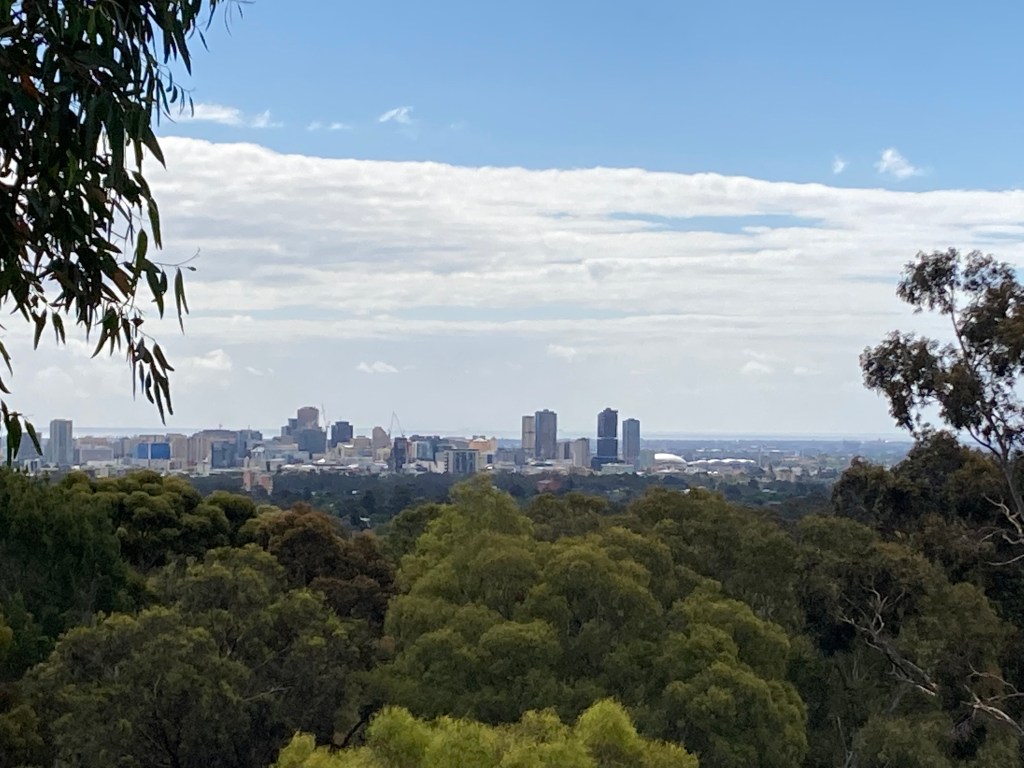
Murray brought me here! It’s only 2,300 steps from home.

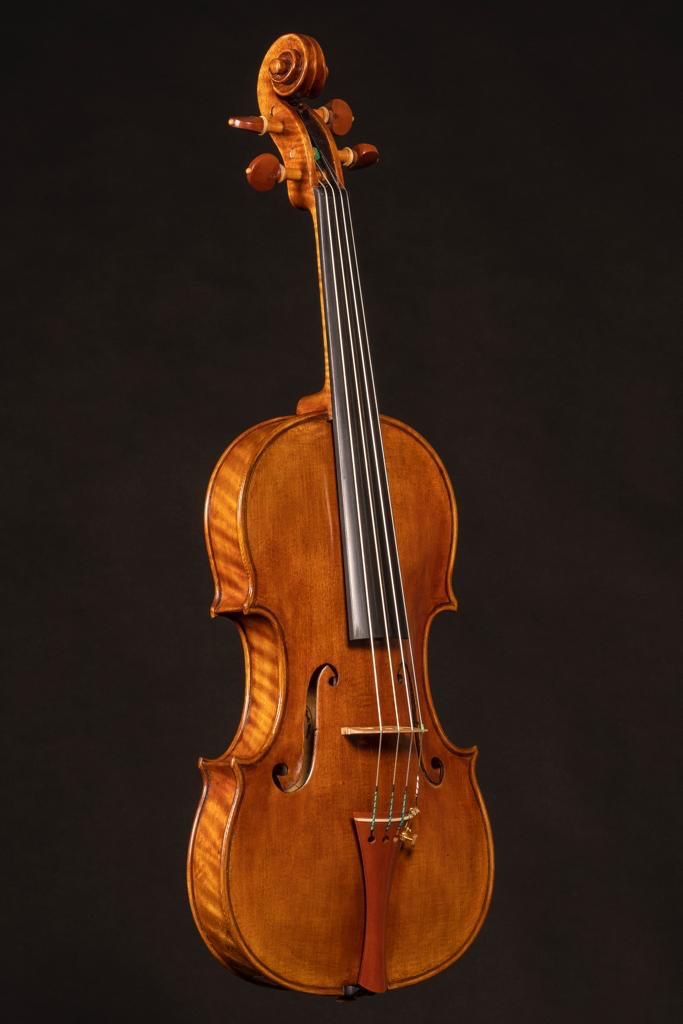
No bull, the ‘Ole Bull I ordered in February this year has finally been made. Hand made, to be precise. It is a very fine copy of the 1744 Bartolomeo Giuseppe Guarneri del Gesù ‘Ole Bull’. I can’t believe my luck, but the great Paolo Vettori of Florence somehow agreed to make it for me. For me! He normally is too busy to accept commissions from amateur players – after all, he has a long queue of professional musicians wanting his instruments. I am not even good enough to call myself an amateur player these days. A wannabe amateur player, maybe. The photos of my violin came last night and brought me back to life even though I was ready for bed. I am still so chuffed by it. It looks as beautiful as the real thing. The real thing was of course made by one of the greatest luthiers in Cremona. Even the varnish is yellow-orange, its richness and tender quality like the real thing. I love the yellow-orange varnish on the darkly oxidised colours of the wood’s grain, and the golden tint in the varnish seem to emphasise the exquisite grain even more. The two-piece back is simply gorgeous, even the stripes are reminiscent of the original. Its beauty is further accentuated by the rounded and voluptuous outline. The purfling may not be ebony; my son said it is more likely stained black willow strips. The core, usually made of poplar, is tight and not obvious. The wood of the top board was an antique beam of spruce from an old mansion. Dendrochronology dates the tree rings of the wood to the year 1600. The beautiful back, sides and ribs are from maple wood purchased in 2005 and seasoned in their workshop for 16 years. I love the fleur-de-lis, but not on a violin, and luckily there isn’t one on mine. I knew there wouldn’t be one on its back, because the original doesn’t have one! It is marvellous that instruments of such quality are still made today, the standard of this one is as fine as any in the great history of violin-making. (I may have inadvertently revealed my bias here.) The geometry and symmetry of the scroll already show the great attention to craftsmanship, its spontaneity and flare can only come from a hand that has great control to cut with such tremendous freedom and boldness. Bravo, Paolo! A modern-day master of the finest quality, Paolo Vettori is certainly not at all dwarfed by the giants in the art of violin-making. I think in a few hundred years from now, Paolo Vettori will be comparable to the great makers such as Antonio Stradivari, Guarneri del Gesù and Jean-Baptiste Vuillaume. The real thing today sits in the Chi Mei museum after the foundation acquired it in 1992. The ‘Ole Bull is believed to be the last violin made by Guarneri del Gesù who is reputed to be the greatest violinmaker since Stradivari. It once belonged to the famous Norwegian violinist, ‘Ole Bull (1810-1880). Bull was a highly successful composer also, but as Robert Schumann once wrote, he was famous as one of the greatest violinist of all during his time. Bull was also a skilful luthier (he studied with JB Vuillaume in Paris) and had a great collection of instruments by Amati, da Salo, Guarneri and Stradivari. But, he often performed with his favourite, the Guarneri that would eventually be named after him.

My violin! A copy of 1744 Guarneri Del Gesù ‘Ole Bull’ made by Paolo Vettori
My violin! The sexiest two-piece back I have ever seen.

No bull, isn’t this the most gorgeous instrument ever? This is a fine piece of art. The best investment I have ever made. That anyone can make. What better way to protect the value of our savings than to invest in a work of art that will only grow in value? At the same time, we get to appreciate the magnificent craftsmanship of the luthier! No bull, forget about the bit about Bitcoin above. This is to me, the best form of investment. After all, what are the important features or properties of money? Durability – a fine stringed instrument such as this beauty is durable – people will always want to make beautiful music from a beautiful instrument. Portability -it is portable, as proven by soloists and musicians as they travel with their instruments to all corners of the world performing in concert halls, outdoor venues and recording studios. Such pieces of art are also finite – the wood that is necessary to produce the sound quality that these instruments are famous for become rarer and rarer as the forests disappear. Scarcity is a very important character of money, if not the most important. Above all else, these fine instruments produce the most sonorous tones and in the good hands of a performer, the exquisite sounds will pull heartstrings and make us feel alive. Music that is cathartic can be healing and music that is exciting and happy can change our moods much more positively than money ever can. That’s no bull. I feel I am so lucky and blessed to be given this chance to own one. Thank you, Paolo, from the bottom of my heart. For more information about the Vettori family, visit https://www.vettorifamily.com/

My violin! I love it!

A Bull In The Year Of The Ox

Huat Ah! Heng Ah! Ong Ah! These are words I haven’t uttered since I was growing up in Penang in the 70’s. These are Chinese New Year wishes in hokkien. Most cultures wish for happiness for the coming new year. So, it is common to wish one another Happy New Year. But, we Chinese first and foremost will wish one another prosperity. Gong Xi Fa Cai in mandarin, Keong Hee Huat Chye in hokkien, Gung Hei Fatt Choy in cantonese, Gung Xi Fa Jei in shanghainese. They all mean the same, congratulations on your prosperity. Huat Ah! Heng Ah! Ong Ah! is about wishing one another prosperity and red-hot success. ‘Gain more wealth’ is not about happiness, so please wish me Xin Nian Kuai Le (新年快乐) instead. When a sage or a monk talks about the search for happiness, they inevitably steer (pardon the pun) us in the direction of inner peace and contentment. Personally, I have done well and got through 2020 unscathed. The pandemic still rages on all over the world but here in Adelaide, life feels very much like pre-pandemic days – normal. We have been very lucky – no mask-wearing or social-distancing necessary. The year of the Ox starts from 12th February or 12022021, a palindrome. Not surprisingly, some of my Chinese friends trumpet that as an auspicious sign of a prosperous year ahead. Fair enough, may the gods grant us prosperity. We will ask for happiness later. Although I find it difficult to connect happiness with the ox. After all, what is an ox but an adult steer? A male calf becomes a steer after being castrated. Why are animals castrated unless you want them to be easily controlled? I wouldn’t be happy if I were castrated. I wouldn’t like to be easily controlled. If you had a choice, wouldn’t you prefer to be called a bull rather than an ox? Why do Westerners name this year the ox and not the bull? The punter celebrates when it is a bull sharemarket. We would not call any market an ox market unless we are selling oxen, perhaps. We describe our euphoric sentiments as bullish and ascribe masculine words such as stallion, stud or bull to our virile strong men. We do not connect happiness to a word that implies castration. Never an ox. You want a happy year, call it the Year of the Bull. Don’t call it the Year of the Ox. Or, follow the Chinese. Avoid gender-specific words. 牛 Gu in hokkien, Niu in mandarin.

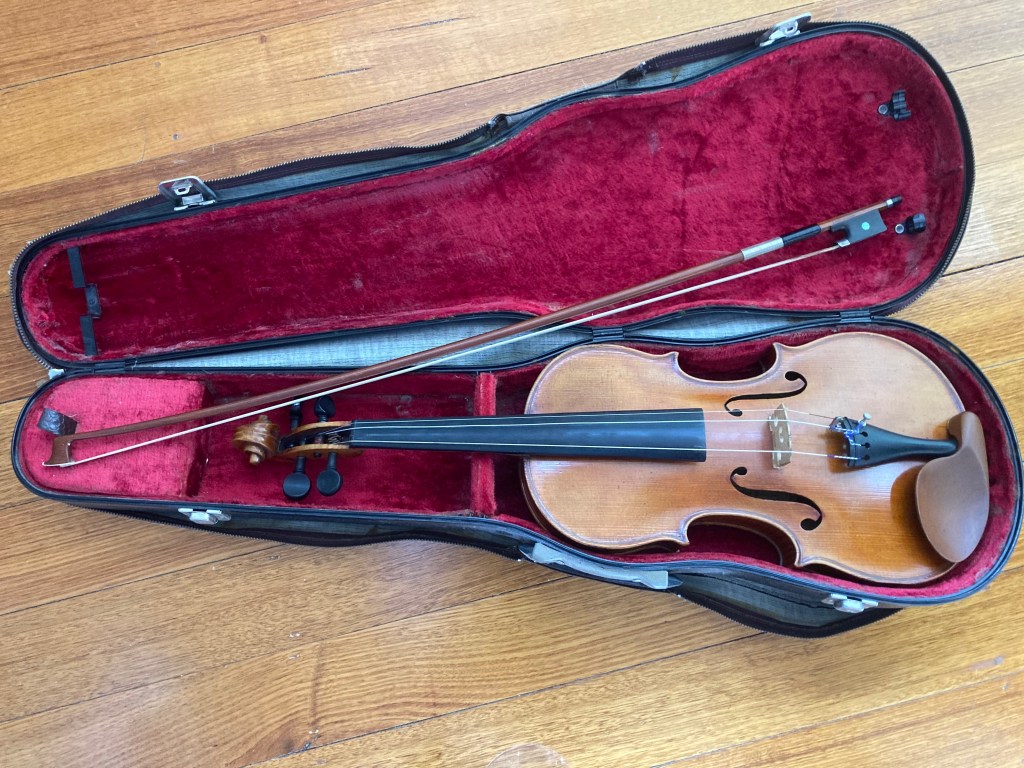
Happiness has come to me early in the Year of the Bull. On the very first day, in fact. No, it isn’t inner peace I found. Neither is it from contentment. Don’t mind me, I am just being facetious. The sage is right, of course. We can’t be truly happy without inner peace and contentment. Those are the foundation slabs without which our temple of happiness cannot be built. I picked up my first violin at age 9. Br. Michael picked it for me. Br. Michael, always in his Lasallian white long robes, was my school music teacher and school orchestra conductor. The orange-red violin was a cheap mass-produced one from China. I suspected it was from a sweat-shop – it was still sweating from a badly coated varnish. But, he knew that was all I deserved. I suppose he could tell from my school shoes. You know the ones. They are white all-rubber shoes that weren’t as white as the white canvas shoes that the other boys wore. The ones that turned slightly yellowish over time. Or, maybe he noticed my school uniform. You know the ones. Two sizes bigger so they would last an extra few years. My socks were hand-me-downs from Pa, overly long and thick. They had to be folded multiple times and tightened with rubber bands around my ankles. Or, maybe he noticed the absent school tie – the one I couldn’t afford. I was never selected to be a class monitor or a school prefect. I didn’t know why then, but this is the excuse I have just told myself. No school tie, no worries, we won’t make you a somebody. You do not get picked to be a monitor, you get picked on by a monitor. My second violin arrived quickly, just a year later after I had proven to my parents I was serious about playing the violin. Wise parents – they knew not to fork out any more money until they were convinced it wasn’t just a fad that would vanish like the morning dew. Wiser parents – they let Big Sis buy it for me. Big Sis happened to have a friend’s mother who would be visiting from London. So she asked the friend, a violinist, to pick a “good one” from a violin shop in London. An opportunity not to be missed – a free delivery from London! Big Sis was thrilled by it. I was thrilled with it. It possessed the most important thing – volume. The one thing I thought would impress everybody, a BIG sound. I didn’t know about the importance of tonal qualities such as richness, depth, warmth, brightness, softness, brilliance, lyrical colours, etc, etc. I just wanted it to be powerful. A loud tone does not mean it has a carrying sound, but I didn’t plan to be a soloist who must be heard in the last rows of the concert hall. I was happy, I could not “out-play” my friends but I could drown them out with my power. I was very proud to own that violin. When First Son outgrew his 3/4 size violin, he inherited my pride and joy, a Matthias Rudemann. Please do not Google it. It will say there aren’t many great matches for your search – which is a lie. There is not a single result. It was a German-made, but the truth be told, the Germans are not known for their violin-making.

The great luthiers were Italians. The word “luthier” is originally French, from the word lute. Today, luthiers make stringed instruments that are bowed or plucked, e.g. violins, cellos, guitars. A great French luthier was Jean-Baptiste Vuillaume. An outstanding 19th century luthier, he made over 3,000 instruments. Folks, if you have some spare cash to invest, this is the one I would recommend – a J.B. Vuillaume violin or cello. He is the real deal, yet somewhat still not priced out of the stratosphere. In October 2019, his 1845 cello, a copy of Duport Strad, sold for GBP 350,000. That price is just for a very good copy of a Strad. A real Strad is beyond my reach. Strad is of course short for Stradivari. His most famous violin, “The Messiah” was made in 1716. It is famous also for being hardly played. Its claim to fame is probably its price, a lofty USD 20 million a few years ago. Every layman would have heard of the name Strad – it would not be wrong to say Stradivari was the most famous of all. He came from Cremona, Italy. The other big names from the Cremona School during 17th-18th century are Amati, Guarneri and Bergonzi. The earlier great makers came from the Brescian School – names such as da Salo, Ruggieri and Maggini. The 18th century also produced two other important schools. One is known as the Milanese School which included famous makers such as Grancino, Testore and Landolfi, and the other is the Venetian School with big-name makers such as Montagnana, Guadagnini, Goffriller and Tononi.

This brings me to talk about my dream. I have long dreamt of owning a Strad. The closest I got was my 3-year subscription to The Strad, a monthly publication that covered anything and everyone concerning stringed instruments. I have measured my investment returns in real estate and share portfolios but they come well short against a hypothetical investment in a Stradivarius. The monetary return can be calculated but what is often missed is the pleasure of owning a piece of fine art. The joy of admiring beauty. The aesthetic beauty created by an artist or a master craftsman is to be marvelled at. The exquisite sounds that can emanate from it. It is a treasure that will continually give pleasure for generations to come. That is the true value. I have always had my heart set on a Stradivarius yet when the opportunity was presented to me last week, I chose another. What does that say about me? Fickle? Confused? Idiotic, perhaps. Someone who does not really know what (or who) he wants? Sorry, Stradivari. I suppose you have been so unattainable I want it to remain so. A son introduced me to the magnificent craftsmanship of another fine Italian maker. A modern-day master. His name is Paolo Vettori of Florence. This maker is as good as they come in terms of his woodworking and varnishing finesse, but he has one added advantage. He can still source the best “ancient” wood, even if it means acquiring them from used timber beams from old mansions. These days, no one can make a wild claim and get away with it. Dendrochronology is so advanced the experts can tell if instruments are made from the same log of wood. Tree rings with the dark and light areas tell us the age of the wood and also reveal the environmental conditions in which the tree lived – key factors that can determine the quality of the sound from the wood. When I saw Paolo Vettori’s copy of a Guarneri Del Gesù violin, I decided that is the one for me. I am finally realising a dream from a long time ago. A dream I saw in my mind whilst playing at the back row of an amateur orchestra in Penang next to Mr Yeoh, a bald-headed remisier during the day but a solo violinist in his dreams. Fondly known as “Kana-thau” or “Olive head”, Mr Yeoh owned a beautiful Italian violin that was so very precious to him that he slept with it wrapped under the satin sheets. But the sounds they made together were not so beautiful. His teacher should have corrected his wobbly vibrato. But hey, his passion for music and his obvious love for his instrument taught me a violin can be loved as tenderly as a woman, and great music is for all ages. Mr Yeoh, rest in peace and may your violin still be lovingly caressed in your arms in heaven.

No bull, but I am so very happy to know Paolo Vettori will be making me a copy of 1744 Guarneri Del Gesù ‘Ole Bull’. I hope she will turn out totally the way I have imagined her to be. I can’t wait to test her G-string or caress her slender neck with my left hand whilst running my fingers along it. The one thing I won’t do is tightly grip her throat. Her tone from her rounded F-holes will no doubt be alluring. The turns of her scroll flare outward when looking at her front or back, quite typical of a late Del Gesù. Her two-piece back will be revealing to all who want to take a peep and her arching, hopefully full and curvaceous, will flatten in the centre. She isn’t a cello, so although I can’t squeeze her between my legs, I can surely hold her comfortably between my chin and neck. Her body is surprisingly compact, measuring an ample 35.2cm but it is her sexy curves that will capture my attention. Those curves are accentuated by a slimmer upper bouts and more rounded lower bouts. Her C-bout ribs are said to be attractive, but I have never formed a penchant for ribs. I will need to practise my “finger exercises” to improve my fingering technique on her. Her purfling should be inlaid in a neatly formed channel, the white section is probably maple – wouldn’t that just make her purr? I have not considered getting a new bow yet. I’m still pleased with the stick I have. This is indeed a happy Year of the Bull! Heng Ah! Ong Ah!

My Matthias Rudemann violin