
The epic novel, Water Margin, is known by a few different names. In Chinese, we call it shuihuzhuan. In the West, it is commonly known as Outlaws of the Marsh. Its translation is ‘All men are brothers’, perhaps the ancient vernacular stems from Confucius’ 四海之內皆兄弟也 or ‘Within the four seas, all men are brothers’. The idea to write a book about a brotherhood of schoolmates and their families’ journeys from the East excited me greatly as the notion that we are all brothers has long been drummed into our psyche from early Lasallian teachings. It is fantastic when brothers reunite after a great distance in time and space. However, the recruitment methods in the novel are often atrocious. I can understand why the author of the book, Shi Naian, found it necessary to resort to ‘unsavoury’ tactics to recruit some of the outlaws. Many of my friends also show strong reluctance to participate and some are strangely aggressive in their refusal to have their stories written. It is not surprising that occasionally, a devious idea foments in my head to persuade less inclined brothers to participate. The hero in this chapter, however, needed no twisting of his arm – he has come forward voluntarily and for that, I thank him from the bottom of my heart.
The only doctor I remember in The Water Margin made a rather late appearance. By then, their leader Chao Gai had already died. It was his spirit that warned Song Jiang of a propitious star ‘Di Ling Xing’ shooting across the sky above him, indicating that a calamity would befall him. Song Jiang was in all likelihood already delirious with a high fever from an ulcer on his back. One of his chieftains, Zhang Shun knew of a doctor who treated his mother with a similar illness and thus knowing it could be fatal, it was imperative that he recruited the doctor urgently to save Song Jiang. The doctor was, of course, reluctant to sacrifice his city lifestyle and jeopardise his livelihood for a rebel. How An Daoquan was recruited to become the Liangshan physician was a strategy often used in the novel. Zhang Shun murdered a prostitute by the name of Clever Pet, and then smeared a ‘confession’ by An Daoquan with her blood on the wall of her boudoir. When the poor doctor woke up the next morning, he realised he had no choice but to flee to Liangshan Marsh. At Liangshan, An Daoquan cured Song Jiang of his life-threatening illness. His reputation as a miracle doctor working with the barest equipment and drugs earned him the title of Divine Physician. Following an amnesty granted to the brotherhood by Emperor Huizong, he later saved the emperor from an illness which enabled him to stay in the palace as the imperial physician.
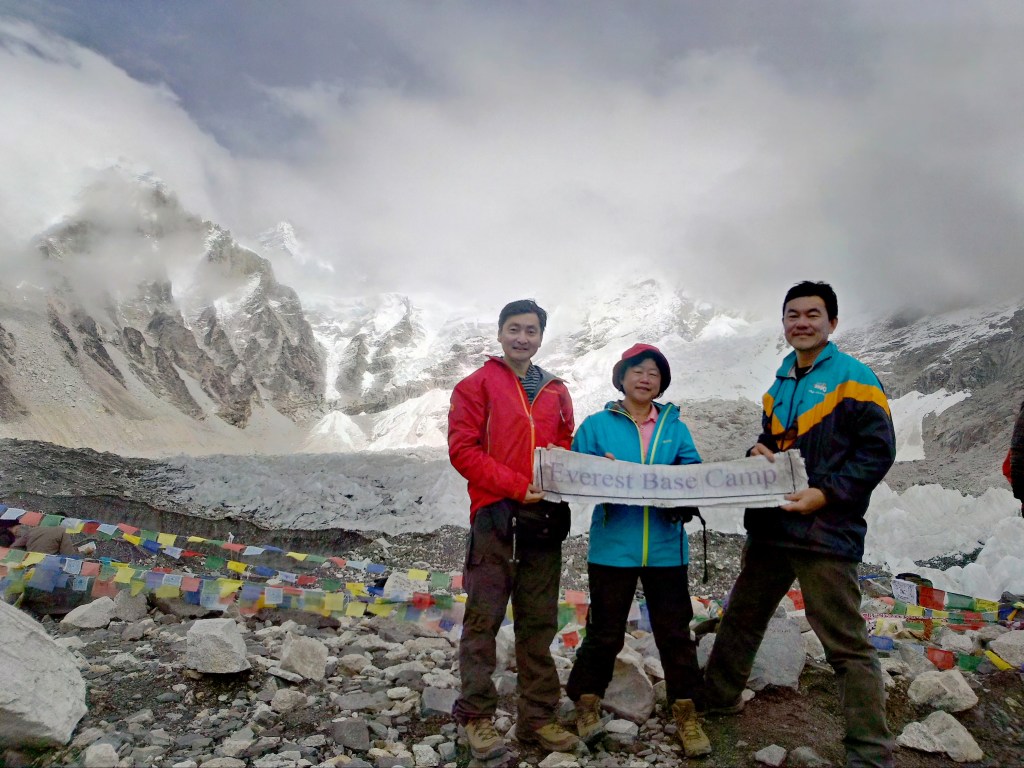
The vivid scenes described in the novel transported my mind to the stories a friend shared with me. He too described an important time of his life spent in the deepest jungles and riverine systems. But, he wasn’t fighting other outlaws or army forces; his endeavours were to snuff out illegal fishing and poaching of endangered species of wildlife such as the Johor rhinos and Bigfoot. Duobing Jiāngjūn, or Peng Kuan (in Cantonese), aka The Sickly General, hailed from the same school in Penang, but we were never classmates. He was a lot smarter. For me, apart from saving lives as a doctor, his major contribution to his country has been as a member of the Malaysian Nature Society. They helped protect the riverine systems and documented many varieties of freshwater fish. They also discovered many birds and butterflies in the virgin jungles that are now part of the Endau-Rompin National Park.
As Sima Yi in The Three Kingdoms said, “Misfortune generates blessings and blessings breeds misfortune”. The opportunity came after one of the heaviest monsoon seasons with floodwaters over 40 metres destroyed much habitat and also all the illegal fishing nets. The Sickly General and his cohorts suggested to the authorities to grab the opportunity to ban fishing in one tributary and that gave birth to Kelah Sanctuary, a crystal-clear river now thriving with Mahseers. His entry into The Urghhling Brotherhood is well deserved and requires no invitation.
The Sickly General’s paternal grandfather Ah Yeh left Chung San, Canton District, China for Selama, Perak in the 1920’s. He married a Hakka girl, a first generation Kedahan. She bore him many children. The Sickly General’s father was the third of four sons. When the war with the Japanese broke out, Ah Yeh burned down his own general store to prevent the invaders from getting hold of the provisions. Ah Yeh and his family went to Penang to live with his eldest daughter who was married to a dentist whose Wu Dental Clinic was in Chulia Street. Wu had a younger brother, a martial arts exponent who trained with sand bags tied to his legs. He purportedly was able to leap over walls just like Lin Chong did in The Water Margin, after he learned Marshall Gao Qui’s adopted son was harassing his beautiful wife in the Yue Temple. Younger Wu made sporadic guerrilla attacks on the Japanese but suddenly died of a heart attack when the enemy troops came to check the shophouse where he lived. Luckily for the whole household, the soldiers did not find his cache of spears and swords. All heads would have rolled and that would have been the end of The Sickly General’s story before he was even born.
The Sickly General’s maternal grandfather, Ah Kung was a first generation Penangite; Ah Kung’s mother was a second wife. In those days, bigamy was a privilege for men with wealth or status.
“Ah Kung’s father passed away when he was still in conception,” The Sickly General told me.
I did not want to pry and ask how he could be so precise – after all, conception occurs within hours to a matter of just a few days after sexual intercourse. After Ah Kung’s birth, mother and child were chased out from the family. He was taken care of by a well-to-do auntie and studied till Secondary School – it was quite a privilege in those days to be given an education. Ah Kung began work as a clerk in the American Automobile company as soon as he graduated from High School. When his wife died of asthma, he was devastated but didn’t remarry; the eldest daughter and The Sickly General’s mum, the second oldest, had to stop school to take care of the household. His mum worked for a Baba family, and from the Nonya matriarch, she learned great recipes and followed the strict meticulous disciplines of Nonya cooking. A great cook to this day, his mum, now eighty seven years old, insists on generous portions of quality ingredients to make each dish superb. She supplemented her income twice a year by making Chinese New Year cookies and Nonya Bak Chang for the Dumpling Festival.
“Mum was very generous to her seven siblings, and to my father’s fourteen siblings including two sisters who were given away,” The Sickly General said with a voice filled with love and pride.
The Sickly General was born and raised in Chulia Street, next to Love Lane just behind our school, St Xavier’s Institution (SXI). His father’s eldest sister who married Dentist Wu was the chief tenant of one of the shop lots. Numerous rooms were sub-let to others. The Sickly General’s mother, a pretty single girl then, and her own family were amongst the other tenants. Naturally his parents fell in love in that house, and they married soon after. The Sickly General was the firstborn of four children. Chulia Street still brings him haunting memories of the stench of night soil as they were being collected from each household.
“You don’t want to study hard? Then you’ll become a night-soil carrier,” his mum used to threaten him.
He swears he can still smell them on his clothes sometimes. Another haunting memory of the Chulia Street house is its room upstairs next to the kids’ bedroom. It was locked most of the time, and whenever The Sickly General walked past it, he would get the chills and goosebumps, the eeriness accentuated by the dark wooden floor creaking and cracking in the dark. Stories of Japanese beheadings, ghost sightings, demonic possessions and exorcisms were related by the tenants in that room. When the boy was five years old, his family shifted to Glugor, after Ah Kung convinced his son-in-law to get the lot of land next to the half-wooden bungalow he managed to lease. The hauntings stopped as did the nightmares.
The Sickly General’s father wanted his son to continue as a next generation Saint. All alumni of SXI are called Saints. But because they had moved far away from the school, he was sent to La Salle into the last available class, Std 1E. His father was an English teacher in a Chinese Primary School. His mother, who dropped out of Std 2 after the sudden death of her mum, was a homemaker. The Sickly General’s maternal grandmother died of bronchial asthma at the young age of thirty two. The hereditary disease affected almost every male of the next generation. The Sickly General took the full brunt of the defective gene, earning him the title of Duobing Jiāngjūn. His episodes were as regular as the monthly curse that afflicts women. During the asthmatic attacks which frequently occurred at night, he would sound like a wheezing cat as he was being ferried on his father’s motorcycle to the local hospital. In those days, there were no puffers to depend on. Instead, he would be given an adrenaline jab which opened up his airways giving an instantaneous relief from gasping.
“No outdoor games or ‘cooling’ foods,” his mother would theorise that if he could pass the age of eighteen without any attacks, he would overcome this curse. For the next decade or so, The Sickly General would become a depository for every remedy and concoction that his mother could get her hands on. Some of the more unforgettable treatments include swallowing live day-old hairless mice, drinking mantis dung boiled in herbal soup, consuming raw egg yolk dipped in honey, followed by munching on home-bred beetles fed on herbs and a host of other concoctions and talismans. He grew up not knowing any games or extracurricular activities and enjoying cold drinks and ice-creams were as forbidden as teenage sex. While waiting for the bus, the primary school kids would patronise several hawker stalls. For five cents, many could aim at a dartboard for a prize, or get a bangkuang slice with rojak sauce or simply suck on a cold ice ball smeared with evaporated milk and rose syrup. To challenge his mother’s theory, he tried an ice ball which tasted like heaven but when the night came, hell arrived in the form of a blocked airway that felt like a strangulation.

The Sickly General had his father’s fair complexion but not his height, his mother’s genetic curse but not her Teresa Teng beauty. With a sallow face and a wan smile, a slim body and puny arms, he was laidback and not a ‘silverback’.
“Somehow, I got all their bad genes,” he said with a tinge of self-pity.
His friends called him ‘Pale Face’ which he rather liked, it being the era of John Wayne’s cowboys and ‘injuns’ on TV. His childhood playground was the surroundings of Bukit Glugor. In the valley, there was a large Hindu community where the cow is a sacred animal. The sanctity of the cow meant there was a glut of dried cow dung which the kids could freely collect for their family’s vegetable garden. Boiled fresh milk was sent daily to Ah Kung next door, but their mother made sure to leave them the milk skin which the kids enjoyed like a delicacy. The brothers collected labels in Milkmaid cans to complete the four booklets of Fish, Birds, Butterflies and Mammals. That led to their love for nature. They would collect, set and frame butterflies, rear caterpillars, hatch golden pupae until butterflies emerged. They salvaged glass and invested in a glass cutter to make their own frames and aquariums. They caught fish from rivers and streams near the hills, worms from drains and bred the fish to sell to the pet shops. The Sickly General would go to the book store each month and spend his earnings on Marvel comics. The Fantastic Four was his favourite “as they had the almost accurate and believable scientific theories” but his idol remains Peter Parker, the struggling hero.
The Sickly General finally got into SXI in Form 4. He was quick to sign up with the PKBM cadet corps. The free uniforms and the chance to hold and fire guns were too tempting. He loved everything about the cadet corps, the grind of marching in the sun or in the rain, shouting orders and being shouted at, and giving a mirror-shine to his boots and buckles. He remembers fondly the times when they were packed like sardines into army trucks to the rifle range at Sungei Dua. There they enjoyed the chance to use live bullets for target practice. Those two years quickly passed, and suddenly the MCE was over. It was a disaster unheard of in the school’s history when a good number of students, even those with a string of A’s failed, in the first year of compulsory passing of Bahasa Malaysia. You fail the Malay language, you fail everything. It was a tragedy to see so many smart students being undeservingly left behind.
True to his mother’s prophecy, the asthma attacks disappeared when he turned eighteen and in Form 6, another new great thing happened in his life – girls in his school class! His new motto was ‘I can do all things’. It took many years later for him to add the word ‘almost’ to that. The transformation in him was astonishing. He shed his bilious yellow hue and the young man even put on a slight tan. The two years in the corps helped strengthen his core muscles.
With reticence and hesitance finally expunged in his late adolescence, the pretty girls in his class were no longer admired secretly. His father’s starting salary was $125 which meant he was just outside the minimum income to be eligible for book loans. Instead of buying the required textbooks, he borrowed them from the library and after learning typing from a secondhand book, he typed out the books during school holidays. Ms Tan Poh Gaik was, according to The Sickly General, the best Form 6 Biology teacher on the island. Wu Yong The Cur was quick to disagree. He had an altercation with the same teacher in Sixth Form.
“There is simply no need for us to dissect a frog each,” he protested.
He reckoned one frog was sufficient sacrifice for a class of thirty odd students. Ms Tan disagreed and banished Wu Yong from her class for that day. Her lecture notes were very sought after, and being a representative in the Inter-Sixth Form Science Society, The Sickly General’s knowledge of who were the good teachers in other subjects enabled him to exchange quality notes with other well-informed students. With three other friends, he came up with the idea of producing a whole series of past-years’ model answers in Bahasa Malaysia to sell to the bookstores. After a week of scrutiny by relevant Examiners, they were given the go-ahead to produce the reference books. The publisher offered them a choice between annual royalty or a lump sum cash payment. These Biology- Maths students, without any Accounting knowledge, already knew that numbers could be manipulated. A bird in hand is worth more than two in the bush, so is cash in hand. The Sickly General went home with a number of crisp thousand dollar notes and gave them all to his father.
The HSC results were the best ever for SXI, with five students eligible to enrol in a local Medical degree course. The Sickly General was offered places in India, Singapore and University of Malaya (MU). Singapore was the most enticing with a full scholarship but it came with a twelve-year bond. In his third year, he went up the roof of a rented room to fix the water tank but on his way down, he couldn’t reach the ladder that he went up from. Believing that previous PKBM training of overcoming twelve-foot walls was true, he jumped down from the roof but it landed him in the University Hospital with a fractured spine. It took a cute hospital houseman to make him realise how serious his injury was. Fortunately, the houseman possessed small hands and was a female. She inserted her finger up his anus to check that the nerve to his future line of descendants was intact. But after two days of entertaining concerned course mates about the awkwardness of his discomfort, he signed the ‘Discharge At Own Risk’ form to attend an important test for his third year exams. There was never any possibility that he would fail any subjects. A crooked back was not going to be a good enough reason to fail. It was obvious that the young man had a great destiny to fulfil.
If you have a great destiny, even if the sky is falling down on you, treat it as a down quilt.
Lady Wu in The Three Kingdoms
Armed with his MBBS, a recognition to work anywhere in the Commonwealth, The Sickly General spent his early professional career in Singapore. After following the advice of many fellow Malaysians, he decided to return to his homeland to work “where you can do anything and still own a house and car, without slogging too hard”. Perlis was his next stop, the smallest State yet so flat “you can practically see everything from a coconut tree”. A year later, he was promoted as the ENT (ear, nose and throat) Registrar in General Hospital KL. The status and money meant nothing to him and his wife after their Filipino maid absconded, leaving their rented house with gates wide open and their two precious kids crawling and bawling away.
They decided to leave the Big Smoke and moved to Pontian, a little fishing town on the southernmost part of the peninsula. Pontian in Mandarin sounds like “really stupid”. To the good doctor, it wasn’t really stupid to set up a general practice there. The Sickly General invested in Ultrasonography and Radiology, the first and only practice in the district to offer that service. Townsfolk had to go to the village for treatment. Isn’t that just so heroic? The Water Margin has heroes rebelling against tyranny and corruption, upholding the values of Confucian virtue, filial piety and benevolence. Similarly in The Sickly General, we have a hero rebelling against societal norms where the rich are catered for at the expense of the poor. A modern-day Robin Hood, he does not rob the rich, but he surely helps the poor. His green credentials from so early in his life – fighting for the environment, protecting natural habitat and promoting a sustainable economy and ecology – shows that this man is way ahead of our time. The Brotherhood of the Marsh is proud to call The Sickly General one of their own.
I can do (almost) all things.
Lum Wei Wah

 Urghhlings