
The silence of my home was a deafening counterpoint to the turmoil in my whole being when I finally returned, a long ten days after Ahma, my beloved mother, had passed. The guilt was a physical weight, pressing down with every step I took across the threshold of my house. How could I have chosen a four-week holiday, knowing with absolute, sickening certainty that the odds of seeing her alive again were heavily stacked against me? The logic I had employed before leaving, while seemingly sound and unequivocal, now felt like a desperate, flimsy shield. She was 102, a veteran of life but now a prisoner of severe dementia. Another stroke was a constant, looming threat, poised to further reduce her mental and physical faculties, or worse, another episode of end-of-life considerations was inevitable. Any of her aged organs could decide to simply shut down, or perhaps, the most heartbreaking thought, she might simply surrender her will to fight on and live. She had gone for ten days already, yet I had not seen her since that chilling day. How did she die? Did she have a peaceful death?
A frightening question haunted me: did my absence contribute to her giving up? Did she know I was missing from her routine? The answer, when it came through my brother’s retelling, was a thunderous confirmation that rocked my fragile sanity. Yes, she knew, I told myself.
I had departed on a Wednesday. That Saturday night, the very first shift I missed—my regular, sacred time to visit and feed her—she had rejected my brother, who had taken my place. “No same,” she had mumbled, refusing his care. Then, with a clarity that belied her condition, she had uttered the phrase, “mak deh wo” – no egg yolk. It was such a small, seemingly minor detail, yet the egg yolks were a simple pleasure she enjoyed tremendously, a treat I had never once failed to serve her during the last five months she lived, no, existed, in the nursing home after a stroke took away her ability to eat solid foods. Her comment was a direct acknowledgment of my absence, as if a sorrowful message that pierced the barrier of her dementia.
My house, a monument to my recent dereliction of duty, looked precisely as I had left it. It felt the same, too, imbued with the familiar chaos of my life. Untidy, messy, and the air hung stale and heavy, an expected consequence of having every window and door sealed for a long stretch. The stately Tasmanian oak dining table, a piece of furniture I cherished, was barely visible beneath a chaotic mess of newspapers and magazines, some unread, others half-finished, strewn haphazardly across its surface.
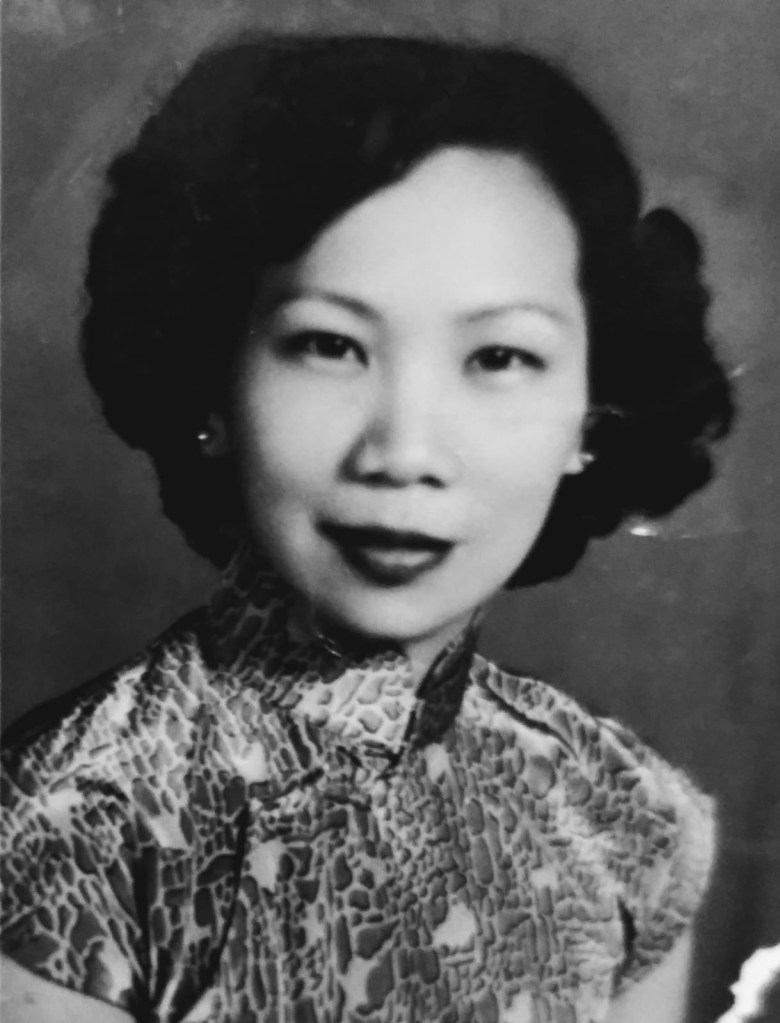
As I moved past the antique half-moon table, my eyes fell upon the framed black-and-white photograph of my father, resting just behind a simple copper incense holder. The image had faded somewhat—an unsurprising consequence, considering I had printed it eighteen years ago after his death so I could establish a place to pray to him. A cold, certain knot formed in my stomach: I knew, with the kind of knowledge that requires no thought, that I would soon have to print a similar photo for Ahma.
My immediate, non-emotional concern was for my chooks. Had they been fed adequately? Was their water supply fresh? Was their coop still the impregnable fortress it needed to be against the wily fox? Was the auto-door still functioning with reliable precision? The chore list was clear: roll up the blinds, unlock the rear sliding door, and go straight to the backyard to check on my feathered charges.
As I closed the sliding door behind me, my attention was snared by a strange, almost unsettling sight—an army of ants, unlike any I had encountered before, marching relentlessly upward. They followed the exact edge of the door frame, heading for a small, barely perceptible hole in the wall above. It wasn’t the mere presence of ants that was odd, but these ants. They were pale brown, almost translucent, and possessed a strangely clear hue. They moved with unsettling speed, yet their appearance suggested a morbid fragility, almost as if they were already dead. The sight conjured a brief, terrible memory of the ants that had hastened the death of one of my chooks some months prior, but these newcomers bore no resemblance to those aggressive, dark black attackers.
I finally reached the chicken run and was greeted by a joyful cacophony of rushing chooks. A genuine, small wave of relief washed over me. Phew, all good. All alive (a small victory that immediately triggered a fresh wave of grief for my mother, and I shed a few silent tears). After tossing them a handful of fresh veggies from the garden, I paused to confirm the auto-feeder was still stocked with plenty of seeds and grain. The garden looked wild and untended but at least it hadn’t died from the summer heat. My neighbourly duty then called me to the adjoining yard to check on their pond. The fish, looking noticeably leaner, rushed toward me, associating my presence with food. It was a comforting detail that they still recognized me—they had lost weight, but I, ironically, had put on an extra layer of fat around my waist. Ah, the sheer vicissitude of circumstances; gaining weight in the wrong parts of my body, I thought with a grimace, was the price one paid for a relaxing cruise to the Mediterranean.
The time was well past 8:30 that night. Yet, there would still be light for another good half-hour, a delightful feature of a summer evening in Adelaide. I walked back toward the house and was brought up short by the locked sliding door. Why? I asked myself in mounting frustration. I knocked loudly on the glass and called out to my wife, the “Mrs,” demanding an explanation.
“Why lock the door? You know I’m outside!” I scratched my greying hair, long but now so sparse the length made me look stupid.
She was preoccupied, busy unpacking the remnants of our trip from her travel bags piled in the middle of the dining room. Her response was a simple shrug of the shoulders—she couldn’t hear my words through the glass, but the frustrated, impatient expression plastered on my face clearly conveyed that I was locked out. With a sigh of her own, she removed the metal bar that had been securely wedged between the door and the wall—a simple, effective mechanism to prevent the door from being slid open. She then rolled up the blinds, unlocked the door, and, with an air of innocence, asked me why the door had been locked. I should have been asking her that question, but all I managed to say was that the door should not have been locked. I chose not to point out the blinds should have already been rolled up or that the metal bar should never have been wedged there in the first place, not after I had just opened the door.
Later, the Mrs headed upstairs to take her shower. In the blessed solitude of her absence, I lit a joss stick to pray to Ahma. I craved this time for solitary reflection, a moment to articulate my apology to my mother for not being present in her final days. As I was deep in prayer, a distinct sound reached me—the clear, unmistakable clink of a cup being placed onto the cold, granite countertop of the kitchen behind me.
I knew, with profound certainty, that it was my mother. The concept of 77 (七七, qi qi), the seven by seven, or 49 days, was true, I was sure of it. The Chinese believe in it deeply, and Buddhists especially follow this ritual of mourning for the deceased for 49 days. They hold the belief that the spirits of the deceased will linger in this realm we call our world for 49 days before finally departing. The sound of a cup was not scary; it was, rather, deeply reassuring. It was my mother, letting me know, in the simplest of ways, that she was still around.
“Ahma, I love you,” I prayed, pouring my heart into the words, hoping desperately that she would hear me.
That night, I sought refuge in sleep earlier than usual. As my head sank into the pillow, I couldn’t help but observe the unusual, intense darkness of the night. It wasn’t merely dark; it was a deep, pervasive, deathly kind of darkness. The timber wooden door, a piece of craftsmanship whose patterns and grain I often admired, was now a featureless black expanse, swallowed by the total absence of light. The Mrs, also noticed the strange, unusual darkness. She got up and checked to see if the street lights outside had failed. No, she could clearly see they were on, their white light twinkling faintly through the leaves of the plum tree in our front yard. The stars in the sky were also brightly twinkling around a silvery gibbous moon. Yet, despite these external light sources, not a single ray managed to penetrate the window pane. The bedroom was enveloped in complete, suffocating darkness, and the accompanying silence was truly weird. No insects singing their nocturnal chorus, no frogs mating in the nearby pond, no sign of the gully winds rustling through the trees, and no sounds of dry leaves sweeping the road.
“Ahma, I love you,” I prayed again into the void, a desperate whisper, hoping she would hear me. The nights since have been dark. A weird darkness.
The following morning, I got downstairs as soon as I woke up. I did not forget the deathly-looking ants and so, armed with a full can of Raid Max Ant Killer, I went outside to kill them. To my shock, there was no trace of them! They either knew I was going to destroy them and fled or they never really existed. Unless… Ahma got rid of them for me.
I’m glad Ahma died in her sleep, a peaceful end to her suffering. Her face had a radiant glow, according to a sibling who was first to arrive at the nursing home.
 Urghhlings