
The American Declaration of Independence famously enshrines the “pursuit of happiness” as an unalienable right, a concept deeply influenced by John Locke’s philosophy of life, liberty, and property as natural rights.
“Happiness in pursuit, actually!” The old man heard his son, the older twin, say.
Impressed with the much younger man, the old man found himself nodding in agreement, his life experiences echoing the sentiment that the relentless pursuit of happiness was a misguided endeavour.
The old man’s journey had been a testament to the elusive nature of happiness. His suburban existence, while comfortable, had been a constant juggling act between work and family, where happiness often felt like a distant mirage. He vividly recalled the dissonance of hearing his children’s laughter downstairs during sitcoms like Seinfeld and Friends while he toiled away at his desk upstairs, a stark reminder of the moments he missed while chasing business success. He could hear them guffawing loudly at the murmurings from the TV, raiding the freezer for ice-cream or bickering over the last crumbles of Smiths chips but never cherishing those moments were the best times with the happiest memories.
He admitted that his early departure from his home in Penang at 19 had left him unexposed to Eastern philosophies that emphasised contentment and mindfulness. Consequently, he had spent his life chasing the ephemeral “silver lining,” only to find that the harder he chased, the further it seemed to drift away. Happiness, he realised, was abundant in the present moment, but his focus on future goals and achievements in the search for wealth and happiness had blinded him to its presence. When the grass is greener on the other side, or bliss is missed, happiness becomes elusive.
Had he been more receptive to his mother’s Buddhist teachings or delved into Aristotle’s philosophy, he might have understood earlier that true happiness lies in a virtuous life and detachment from material desires. Joy, he now knew, was not in the destination but in the journey itself. So, rather than the pursuit of happiness itself, happiness is in the pursuit of what brings us it.
His sons’ youthful wisdom had not been the catalyst for this realisation, but it had pleased him to see them grasp this truth so early in life. The Japanese concept of “ikigai,” which encompasses finding purpose and fulfilment in life through the alignment of passion, vocation, mission, and profession, resonated deeply with him. A purposeful and balanced life brings with it longevity and happiness. What is it that brings us joy and meaning? Find it, happily pursue it and in turn, ikigai will deliver us happiness. The four key elements are:
- What you love – your passion.
- What you are good at – your vocation.
- What the world needs – your mission.
- What sustains you financially – your profession.
When these four elements align, we find our ikigai. The simplicity of this truth struck him like a thunderbolt of lightning.
“We find it in the joy of small things,” the old man said to himself. Now in his mid-60s, the old man and his Mrs had achieved financial comfort, allowing them to focus on the simpler joys of life. While they had checked off all the boxes of material success – a house, garden, a chicken coop, travel, hobbies, art lessons for her and orchestral rehearsals for him – they also acknowledged the missed opportunities for happiness in their earlier years, when they were caught up in the rat race.
Their twin sons, both musicians, had just returned home for a rather truncated holiday. Just for four days after an absence of two years. They were in Australia for performances in Sydney, Melbourne and Brisbane. Little Adelaide, their hometown, missed out as usual. Having grown up in a different era, they had a different perspective on happiness. They valued experiences over possessions and sought fulfilment in meaningful work and collegial relationships. The old man marvelled at their ability to find joy in the present moment, a skill he had only acquired later in life. ‘Work’ isn’t work for them. It’s a passion, an enjoyment for which they get paid a salary or a bonus.
“What is there that you wish to have in your house?” the younger twin asked his mum.
She retreated into her mind but came up with no answer. He pressed her harder.
“Maybe a new rangehood,” she said after detecting hints of salted fish in the room that she had used in her fried rice.
“See? There is nothing you need that you can’t afford.”
The younger twin proved his point. Their parents no longer lived the life of a hamster on a wheel. There wasn’t any rat race left that they had to win. The days of working like a cow or a horse had long stopped haunting them. Yet, they loved to see those painful days of hard work and long hours in their rear-view mirror, perversely using them as bragging rights or as a way of instilling their work ethics on their adult sons.
We don’t chase happiness; happiness suddenly drops on our shoulders like a butterfly. The old man said to himself silently before grimacing somewhat sourly as if decades-old wounds had suddenly flared up. He adjusted his bum on the hard surface of the oak floorboard and literally looked up to his two sons who were both seated at the mahjong table. This is happiness! It was as if Thoreau had suddenly spoken to him. His sons were playing mahjong with their mother and their 101-year-old grandma in a little corner of a suburban Adelaide house with fish frolicking in a pond, eight chooks scratching for food in their backyard and a loyal dog on his lap. Their matriarch looked decidedly serene and sweet. Gone were her incessant complaints about so-and-so and wild accusations about this or that.

Happiness is like a butterfly, the more you chase it, the more it will elude, but if you turn your attention to other things, it will come and sit softly on your shoulder.
Henry David Thoreau.
It is the joy of small things. The Mrs is surrounded by it. She tends to her vegetable plots, nourished by the rich compost from her scrap bins. The leaves and roots she picks become sustenance for their dinner, while the overly productive plants like watercress and those beginning to seed never go to waste. They transform into wholesome snacks for her cherished chickens, or even remedies, as was the case for one particularly old hen who had miraculously evaded death. The hole in the ground, dug in anticipation of the hen’s demise before her trip to Sydney to witness her sons’ performances, remained unoccupied. Earlier in the week, The Mrs had feared the worst, unable to find the hen’s hunched and bent form, assuming a fox had taken her. But to her delight, all eight chickens were present and accounted for, none waddling with bad hips.
“She has cured herself!” she exclaimed, overjoyed.
Her creative spirit finds expression in painting and drawing, her daily sketches shared on her YouTube channel, a source of immense joy. Embracing technology, she stays connected with friends online; her small phone a portal to the big world. Hours are spent chatting with ex-school friends across the globe, regaling them with stories about everything under the sun. She takes pride in her knowledge of current affairs, geopolitics, YouTube cooking shows like Auntie Liew, and her appreciation for art and classical music, from Baroque to Classical to Romantic to Impressionist. Though she claims to dislike Modern classical music, she loves Elgar’s cello concerto. These small contradictions in life don’t bother her; she is comfortable being herself, as much as she desires.
A gifted storyteller, she paints vivid images in the listener’s mind with her words. However, her love for her own stories has grown to the point where she often repeats her favourites to the same audience. The old man wonders if this is an early sign of dementia or simply a need for fresh experiences to enliven her life. He has gently hinted at this for years, and to his relief, she has recently started taking daily NMN tablets to boost her NAD+ levels for cellular rejuvenation. Small pills for health and happiness, he reasons, why not?
The pursuit of happiness is a deeply personal and multifaceted journey, as the adage goes, “there is no recipe for happiness.” To each their own. Money, beyond a certain point, doesn’t buy happiness. Beyond a certain threshold, the accumulation of material possessions and monetary gains often fails to deliver lasting contentment. In fact, an excessive focus on wealth can lead to heightened stress, anxiety, and strained relationships. By embracing acceptance, community, purpose, and productivity, we can create a fulfilling and meaningful life that transcends the pursuit of material wealth and external validation. We also need to accept ourselves. Acknowledgement from others may be a bonus but let’s remember the childhood story we learned about pleasing everybody – we end up pleasing no one, not even ourselves. Happiness has no correlation to wealth. Being in the right place, a community we feel we belong in, is one ingredient to harmony and happiness.
For the old man, he needs to feel he is capable and productive in everything he seeks to do but he knows there must also be civility and harmony, reminded by the scars of sibling rivalries. His journey had been long and winding, but he has finally arrived at a place of contentment. He has found ikigai in his hobbies, writing and playing his violin. He no longer chases happiness; he is living it, one small joy at a time.
Even a visit to the Sydney Opera House brings joy. This was especially so, thanks to a family friend who turned out to be a major patron of the opera house and the Sydney Symphony Orchestra. Their group was not merely guided by a single staff member, but rather, three dedicated Sydney Opera House staff members gave them the time and attention normally reserved to special people. This privileged access granted them entry to exclusive areas typically inaccessible to the general public, such as the Utzon Room and the Green Room, spaces steeped in history and artistic significance.
For the old man though, the pinnacle of the visit was unexpectedly humorous. The highlight for him was being shown “the cleavage”, a gap between the iconic sail-like structures.

Even the rain can bring joy was certainly true. There was a lot of laughter when they were caught in the rain in Sydney. This wasn’t just a light shower; it was a torrential deluge, with six inches of rain falling in just two hours. The rain seemed to defy gravity, pelting down horizontally with astonishing force.
Those who had opted for the ferry found themselves dry but stranded at the pier as the rain transformed the streets into rivers. Without umbrellas, they could only watch the downpour and imagine the warmth and comfort of the Pyrmont Hotel, where those fellow travellers who chose to walk rather than pay the fare for the ferry ride had sought refuge just in time. The old man, valiant and true, gathered some spare brollies and ventured out into the receding rain, intending to help the stranded travellers. However, the rain gods were not yet finished with their watery game. By the time the old man reached the pier and returned with the rest of the group, everyone was thoroughly drenched.
The sight of the group of senior citizens scurrying through the rain, some hurrying in a futile attempt to stay dry, was quite comical. It was a reminder that when you’re caught in a downpour, you’re going to get wet, no matter how fast you move. When you are wet, you are wet. Despite this realisation, the old man still found himself quickening his pace as they made their way back to the hotel.
The aftermath of the downpour was a scene of damp chaos. The hotel room’s hairdryer was repurposed as a shoe and sock dryer, and the air was filled with the unmistakable scent of wet wool and damp leather, with a hint of dead fish. When asked to describe the smell, the old man simply chuckled and declined, leaving the experience to be imagined.

Even Brahms can bring joy. Great joy especially from great music. The SSO was in town, so they went to their much touted concert featuring the Brahms Double. Two orchestras call themselves the SSO. The one that had a sold-out concert and brought the house down that day in Sydney was the Singapore Symphony Orchestra on their inaugural Aussie tour.
The SSO’s performance was indeed spectacular. Music critics from different continents were unanimous in their praises. The energy and enthusiasm were palpable. The audience was captivated by the orchestra’s performance, and the raucous ovation at the end was a loud and long appreciation of their skill, musicianship and passion. Through a fortunate connection with the patron of the Sydney Opera House, the group received invitations to the exclusive post-concert event. The allure of complimentary champagne and delectable finger food was irresistible, and the evening proved to be a delightful blend of mingling with high society and celebration. The experience was so enjoyable that the group decided to extend their musical journey by following the orchestra to Melbourne.
Happiness in the pursuit of food. Sydney, with its iconic harbour, bridge and an opera house, offered a feast for the senses. The group embraced the city’s culinary offerings with gusto, savouring Malaysian cuisine in Kingsford, indulging in Italian fare at the Star Grand, exploring the flavours of Thai Town, and experiencing the freshest seafood at the Royal Palace in Chinatown.
The culinary adventures continued in Melbourne, where a friend marked their reunion with a bottle of Dom Perignon. The group delighted in Char Koay Teow at Lulu’s Malaysian Hawker and enjoyed an afternoon tea featuring Nonya Kueh and Japanese Cheesecakes. However, the most unforgettable dining experience was at the Secret Kitchen in Chinatown. The sautéed snow crab in foie gras was so exquisite that it left a lasting impression, with promises to return solely for that dish.
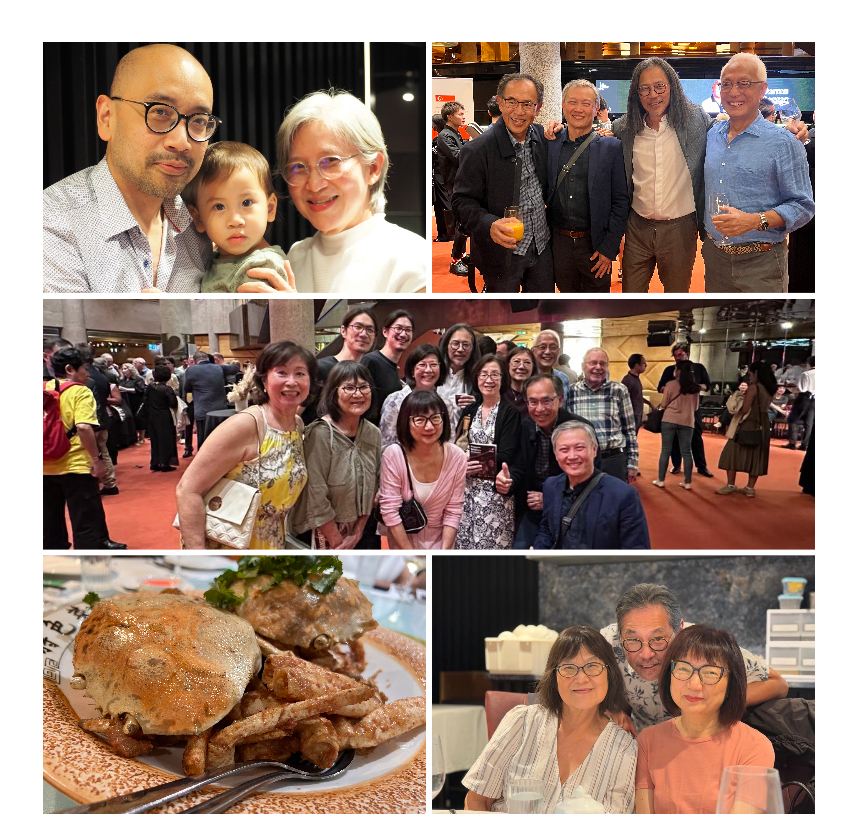
It is the joy of small things indeed. The old man found himself enveloped in a comforting solitude as he sat in his room, his attention captivated by the photographs that he had collected during the recent musical holiday. Though it wasn’t so many days ago, the echoes of laughter and melodies already felt like distant memories, their vibrancy fading into the backdrop of the newly arrived autumn season. The feeling in the room had turned autumnal. A melancholic hue had settled on the furniture, blending with the dust, mirroring the introspective mood that had taken hold of the man’s heart.
Within those captured moments, he discovered solace and a gentle reminder of the joys that life had to offer. The photographs – the small things – had become cherished artefacts, encapsulating a recent history that he promised himself to preserve and revisit. The happiness that emanated from those images was something to be treasured, a beacon of light to cling to amidst the encroaching shadows of old age and the inevitability of disease and death.
As his thoughts meandered through the corridors of his past, he contemplated the lessons that history could impart. It was not merely a collection of dates and events, but a tapestry woven with experiences and emotions. The old man realised that the true value of history lay in its ability to guide and inspire. If the past held moments of joy and contentment, then the path to future happiness was clear: one must strive to replicate those cherished experiences. The laughter, the camaraderie, the shared passion for music – these were the elements that had brought him such delight, and he would not allow them to be relegated to the realm of mere memories. His recent history was one to remember and the happiness from it to cling on to.
If we must learn from history, it is to repeat it, he told himself.
 Urghhlings
Glimpse of the variations of happiness spinning from younger days till the now.
LikeLiked by 1 person