The Character House With Special Characteristics

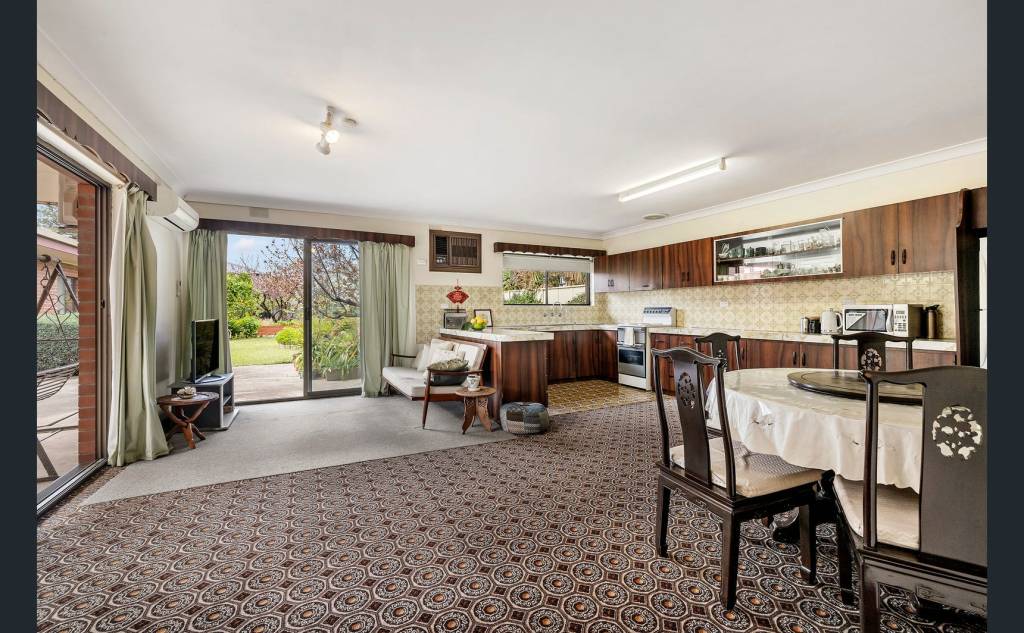
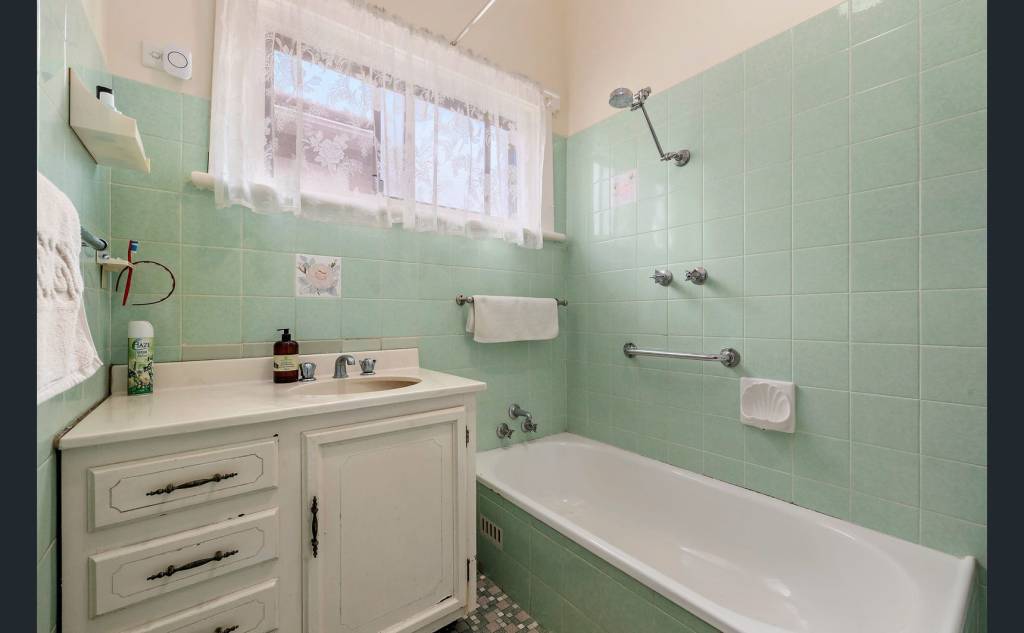
Built in 1925 during the opulent ‘roaring twenties’, it stands as a classic character home, distinguished by its original sandstone and striking, almost-black brick facade. This intricate stonework beautifully complements an architectural style reminiscent of a substantial gentleman’s bungalow, exuding an undeniable sense of historical charm and enduring craftsmanship. Throughout the interior, nearly all the rooms boast grand, generous proportions with high, soaring ceilings and sprawling footprints. The sole exception is the central bathroom, which, despite featuring a pleasant and calming light green palette, remains quite modest and functional by today’s modern luxurious standards—distinctly average in scale and noticeably devoid of contemporary embellishments such as ubiquitous marble-clad walls or sleek double hand basins.
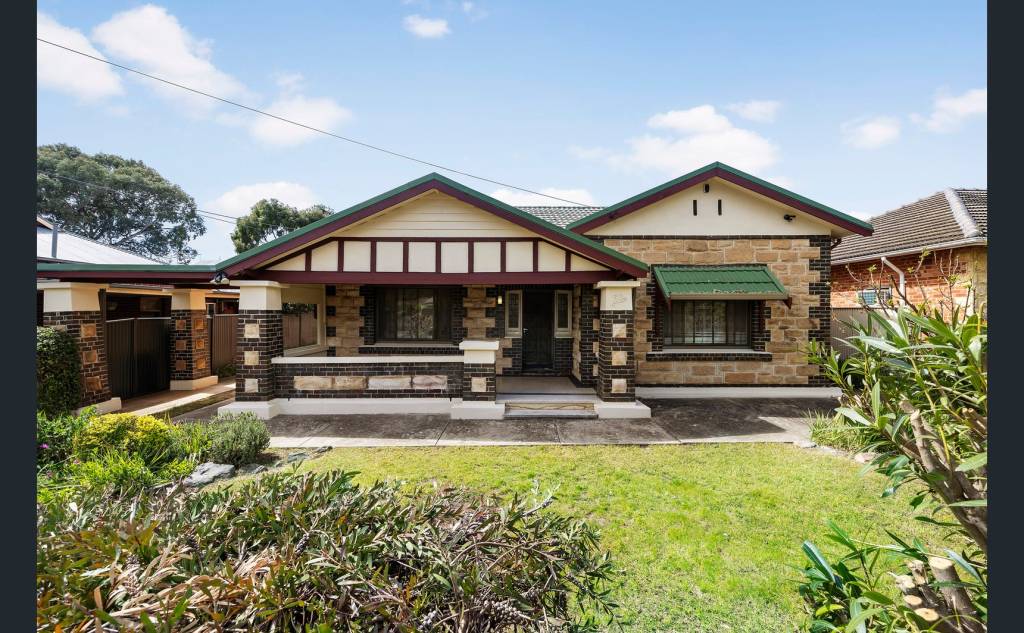
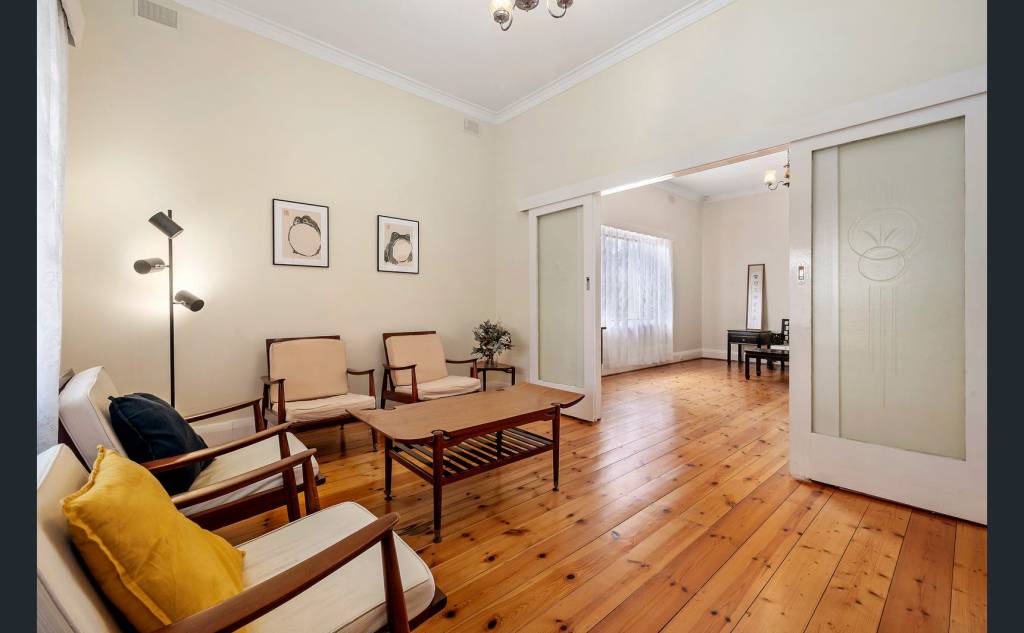
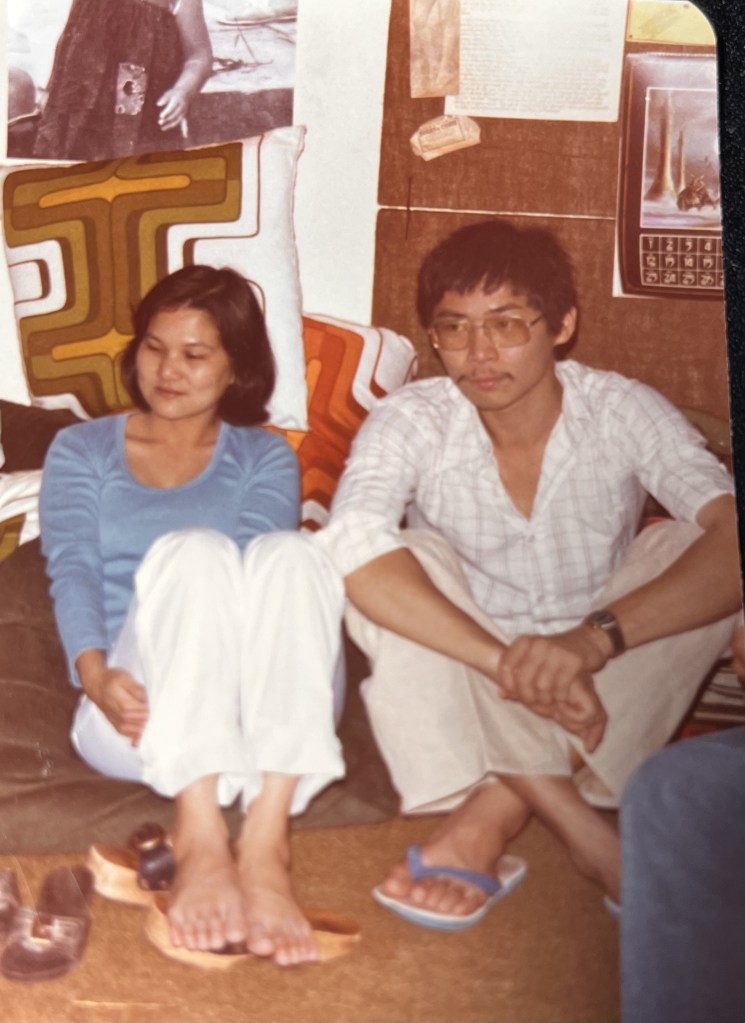
This was my parents’ new home in Adelaide in 1988 after they packed up their entire lives and moved their precious belongings across the world to a new country. Their luggage held treasures accumulated over decades: old coins, delicate jewellery and pure gold chains, and metres upon metres of cloth that my mum, Ahma, meticulously planned to turn into curtains, clothes, and pillowcases, plans that were never realised. Yet, so many cherished items of immense sentimental value could not fit, forcing them to either give them away to relatives or reluctantly dump them before departure. Upon arriving, I think my dad, Ahpa, was instantly inspired by the property’s soaring ceilings and rustic timber floorboards, which conferred a stately atmosphere. Coupled with a very generous land size of 880 square metres, the estate offered extraordinary potential for future expansion, gardening, or thoughtful refurbishment. The formal dining room and sprawling lounge showcase the home’s impressive proportions and timeless character. Meanwhile, the generously sized bedrooms present excellent scope to introduce modern comforts and updated fixtures, all while preserving their original sense of grandness, architectural charm, and nostalgic warmth.
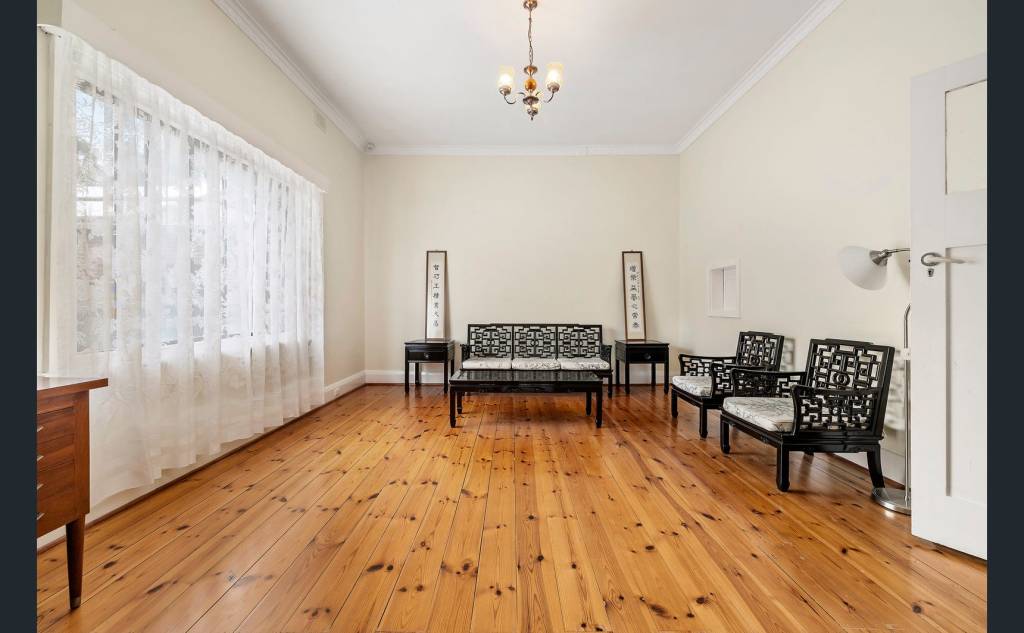
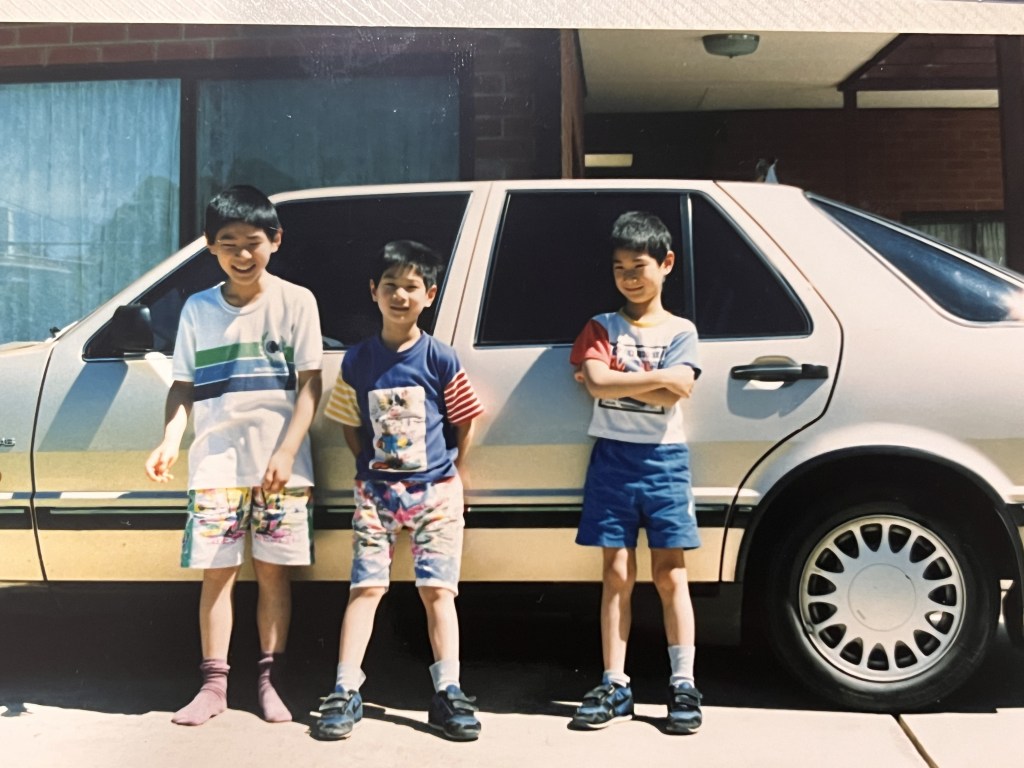
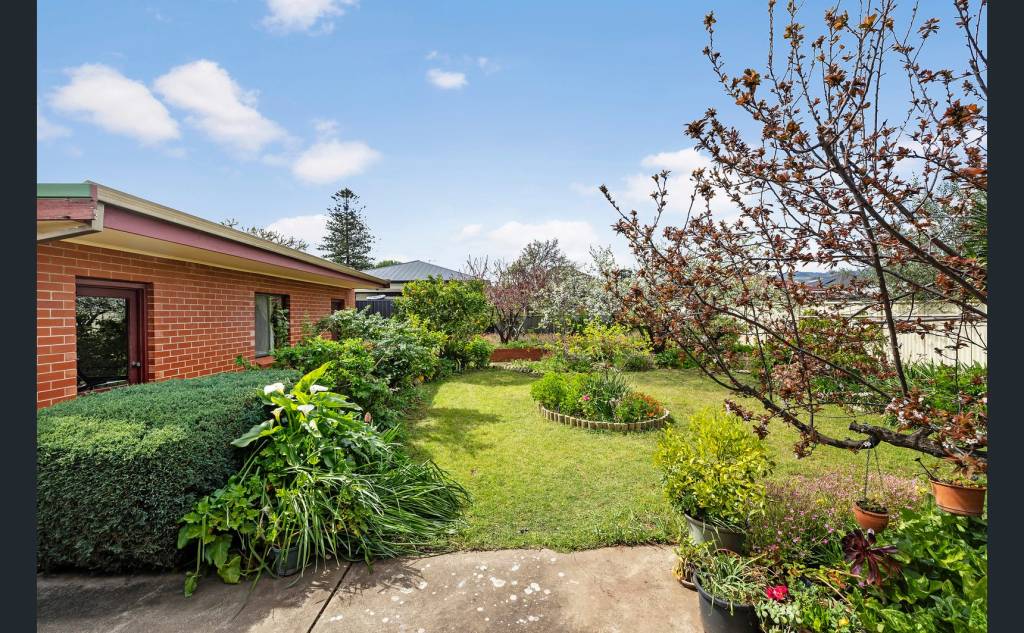
Positioned at the very heart of the home lies an oversized study, offering a versatile space ideal for work, quiet contemplation, or creative pursuits. The six-foot desk I used during my school days will surprisingly find a new home, this time in my own home in my own study. Seamlessly connected, the light-filled open-plan kitchen and adjoining family room boast scenic views of the rear garden. Extending outward beyond the family room, an expansive pergola would be expertly built a year later by my good friend, John Scalzi, creating an outdoor space for Ahma to cook rather than as an ideal setting for outdoor parties and family gatherings – activities they never did there. Further past the garage—which is currently utilised as spacious storerooms, yet can easily be converted back or thoughtfully re-purposed into a fully equipped granny flat or creative studio—lies the bountiful back garden. This vibrant outdoor space is a lush, happy haven where my very young sons used to endlessly run around, play cricket, and soak in the fresh air. After a rowdy time of active games, they would blissfully rest and behave like spirited young monkeys on the outdoor swing which was transported all the way from our old house in Penang. Remarkably, that very swing remains standing there today, serving as a nostalgic relic of childhood memories, albeit now totally rusty and squeaky with time.
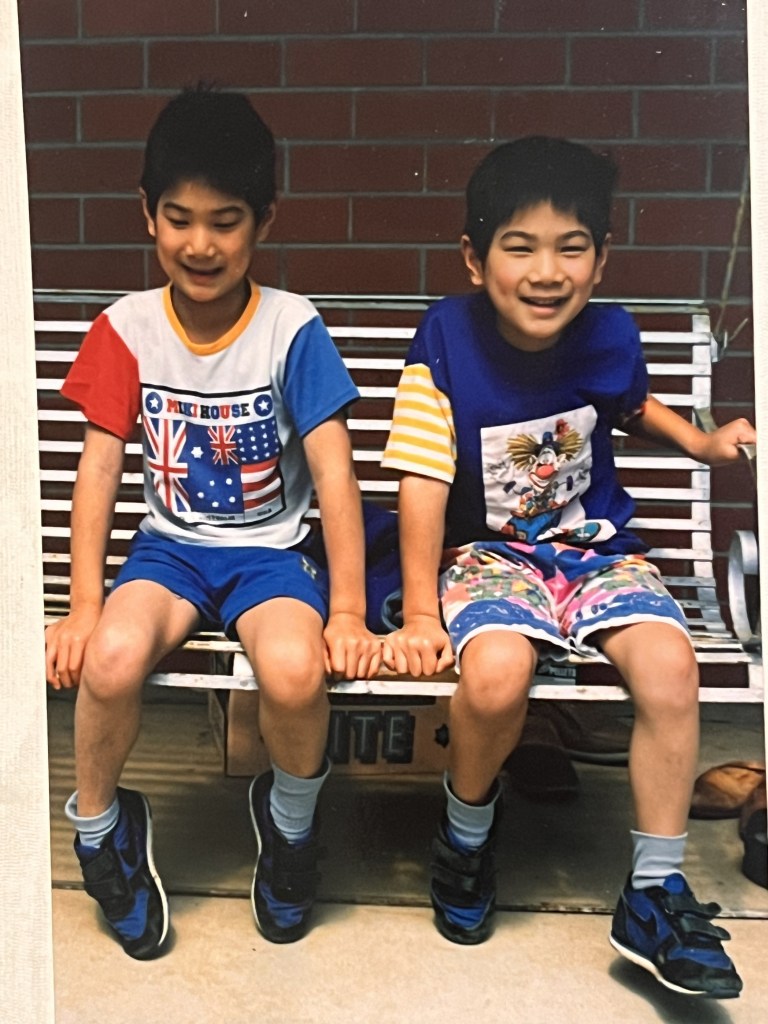
Two of my sons enjoying the family swing back in the old days
The backyard was their playground at my parents’ home.

Without fail, we would turn up every weekend to spend a few precious hours together in that house. In 1988, I had already left home for eleven years, building a life of my own, yet the pull of family remained as strong as ever. At that time, Ahpa was 71 and Ahma was 65. To my eyes, they were already well into their twilight years, and a nagging guilt-ridden feeling took hold of me—that I urgently needed to make up for all the lost time away from them. Sometimes, on a bright weeknight during daylight savings when the evenings stretched out long and warm, I would spontaneously bring my family over for just a few minutes, wanting nothing more than to see my parents and wish them a restful good night.

Ahpa was a man of unfailing discipline and strict routine, adhering faithfully to a schedule where he would reliably turn in for bed by six o’clock every single evening. On one particular occasion, our energetic, unannounced arrival and the vibrant, bustling chatter of the three grandsons rubbed him completely the wrong way. Deeply irritated by the sudden noise interrupting his sleep, he shooed us away, forcefully calling out, “Go home, go home!” Hurt, flustered, and desperate to avoid escalating any tension, I quietly and quickly gathered up my children to make a hasty departure. As we hurried down the hallway toward the door, I overheard Ahma softly and gently trying to soften his harsh reaction, reassuring him, “They just want to spend some time with us.” But Ahpa’s sharp, unyielding response cut through the quiet air: “Who asked them to come?!” Stung by his apparent coldness and sharp rejection, I felt a heavy wave of frustration, thinking to myself at the time what a grumpy old man he had become.

It wasn’t until some decades later, when I turned 60, that I finally understood the reason for his frustration. Back then, Ahpa was already openly taking sleeping pills to cope with restless nights, so I really should have been far more observant and empathetic regarding the severity of his chronic insomnia. It was only after I began struggling with my own sleep deprivation that the realisation hit me with sudden clarity: his intense outburst wasn’t out of malice, irritation, or a lack of love for his family, but was born of the desperate need for uninterrupted, quiet sleep. Only then, after suffering through my own sleepless nights, did I fully grasp why he had chased us away that evening.

In those early months after their initial move, we would occasionally gather at the house to enjoy Ahma’s authentic home cooking. With the full benefit of hindsight, she wasn’t actually that old or physically feeble yet, and she remained more than capable of cooking up a storm for all of us. However, Ahma had always been extraordinarily meticulous, methodical, and labor-intensive when it came to her household chores. Preparing a full family feast was no small feat for her; it would easily consume an entire day of non-stop, dedicated preparation in the kitchen. If the menu happened to feature special traditional ingredients like ‘tongku’ (rich, earthy shiitake mushrooms) and ‘nee-kor-kee’ (distinctive, band-aid shaped rice cake noodles) that demanded long soaking periods to reach the ideal texture, then the prep work would span several days of painstaking effort. Like an inveterate coffee-drinker, she had to inspect her larder and fridge daily to pick the oldest foods to cook first.

Because of the immense effort it required on her part, sitting down for a meal at their house naturally became a rare occurrence after a while. It was simply much easier and far less taxing for everyone if my Mrs cooked for them instead. Thus, a new routine was born: my Big Sis, who lived with our parents, would bring them over to our place to have a peaceful dinner with us once a week. Big Sis isn’t big in terms of physical stature, but rather in terms of family seniority, holding the respected position of the eldest among my siblings.

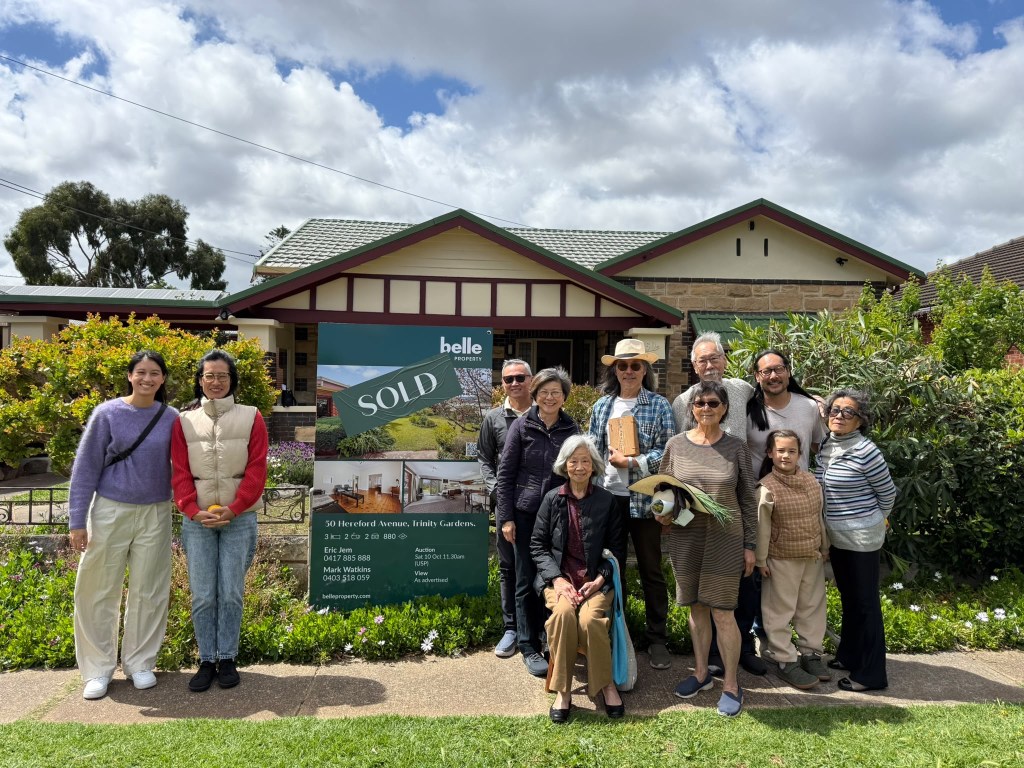
Today, as we gathered to bid farewell to the old family home, we had our group photo taken outside on the front verge. I had brought out a small wooden stool—an item I had appropriated from the house since no one else seemed to want it anymore—and offered it to Big Sis to sit down to have the photo taken. Big Sis firmly refused to sit on it, so I quickly sat down like an elder. After some castigation and insistence from the other siblings, I had to vacate my seat and hand it over to her. It was a vivid reminder that in my family, traditional seniority still carries immense privileges and unspoken authority—not entirely dissimilar to a government’s exclusive enjoyment of seigniorage. This deep-seated reverence for family hierarchy has always dictated our interactions, shaping both minor moments and major life milestones. Big Sis holds a revered position as the eldest among us now that Ahma, afflicted with rheumy eyes in her final year is gone, embodying that quiet power and unyielding respect. Vacating the simple wooden stool for her on the front lawn was far more than a courteous gesture; it was an unspoken acknowledgment of her role at the head of our generation, upholding traditions that have bonded our family together across decades and continents.
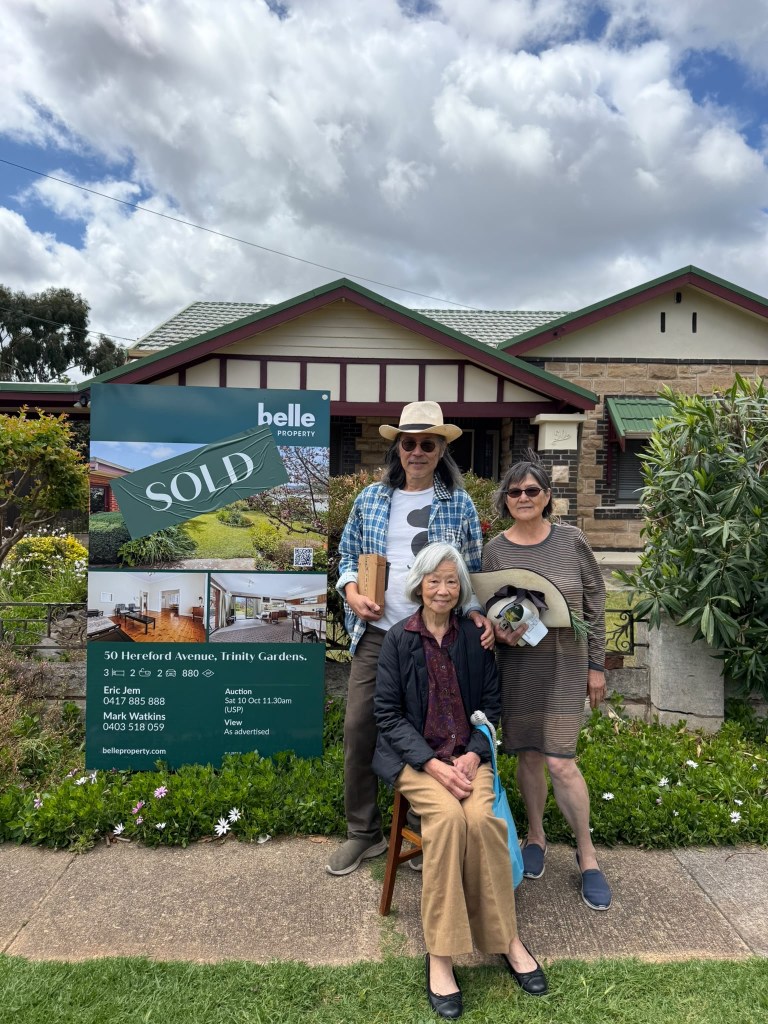
Enervated after many weeks of preparing the house for sale, Big Sis is finally feeling stress-free.

Why did we all gather to have our photo taken outside the house? My youngest son remarked, “Another chapter ended!” Big Sis officially sold the family house today. Leading up to the auction, the weather forecast had been thoroughly bleak—predicting a windy, cold, and wet day with a maximum temperature of just 17 degrees. I was genuinely worried that the dismal weather would keep people away, resulting in a sparse crowd unable to generate the necessary excitement and competitive momentum of buyers continuously outbidding one another. I arrived at the property early, eager to satisfy a quiet, contemplative mood and to personally say my final goodbyes to the familiar smells, the deeply soothing feeling of home, the bittersweet swell of nostalgia, and the comforting warmth of decades of loving memories.

Yet, to my quiet disappointment, those familiar scents of the past were entirely absent; the lingering, aged smells of old parents had been recently chased away and masked by a fresh, crisp coat of paint. The rich, inviting fragrance of home-cooked meals—painstakingly prepared by Ahma over so many years—had long since vanished. Similarly, the vivid mental images of my dad practicing his daily version of Qigong in the backyard felt long lost, fading away like fragile, old yellowed photos left out too long in the harsh glare of the sun, forever damaged and faded by time.

The sun was out, accompanying the brilliant blue skies overhead. It’s gonna be a good day, I proclaimed in my heart. People started streaming in like the warm golden rays of the sun, filling the quiet street with an unmistakable sense of anticipation. Cars slowed down as they passed, the curious drivers leaning toward their windows to check out what all the commotion was about. Three Italian families converged on the front garden, their animated gestures and vibrant chatter instantly making the atmosphere cheerful and party-like. A young couple treaded on the driveway, hesitantly, seemingly unsure of their whereabouts or where they should stand amidst the growing crowd. As expected, there was a large throng of Asians gathered, trampling  the neighbour’s verge, making themselves very visible and audible as they actively discussed the property’s potential. By around ten minutes before the auction was scheduled to begin, the whole place was practically overrun by prospective Asian buyers. Their presence lifted my spirits—and I hoped they would also lift the final price of the house. Asians are famous for engaging in intense bidding wars, and I had no reason to think these enthusiastic groups won’t do exactly that today.

As if pre-ordained by some capricious force, the weather gods abruptly decided to chase away the bright afternoon sun and summon an ominous gathering of dark, bruised clouds. The wind rapidly began to pick up strength, whistling sharply around the eaves of the porch and aggressively attempting to blow away my hat. I was worried the wind might blow off the rusty gutters at the back of the house. My hat was a very nice gift from my brother-in-law, purchased during an unforgettable family holidaying trip in Rome, so I made sure to pull it down tightly and securely over my head to keep it safe from the sudden gusts. By the solemn moment the auctioneer stepped onto the elevated front porch to officially proclaim the commencement of the auction, the last golden rays of sun had truly deserted the entire suburb. My once uplifting, expectant mood had turned remarkably dark, leaving the outlook for a happy or triumphant outcome feeling dour and sour.

The auction began with an opening bid that was utterly ridiculous, offered by a young Indian man. It was an insulting and almost laughable attempt, so far below expectations that it barely registered as a serious offer. Seemingly aware of the absurdity of his bid, he quietly slipped away and left the scene long before the bidding process even concluded. Moments later, a second bid came in at a whopping 40% higher. “That’s far more reasonable,” I whispered quietly to myself, though from my vantage point in the crowd, I couldn’t actually see who had raised their hand. A troubling thought crossed my mind: was it a genuine buyer, or merely a vendor bid placed by the auctioneer’s own agent to artificially propel the momentum? To everyone’s growing unease, no further bids followed, despite the auctioneer’s persistent efforts, dramatic pauses, and energetic appeals to garner support and keep the competition going. Although five serious, registered buyers were supposed to be in attendance, we were left with only one legitimate bid in play—since the initial low offer from the young Indian man was far too frivolous to count. Sensing the momentum grinding to a complete halt, the auctioneer called an official pause to the proceedings and stepped back inside the house. I imagined Big Sis inside, nervously biting her fingernails and pacing restlessly up and down the dining room floor as she awaited an update.

It took what felt like an absolute eternity to the waiting crowd, who had initially stood by with quiet patience, for the auctioneer to finally step back out onto the front porch. As the minutes dragged on under the gloomy overcast sky, people began nervously fidgeting, shifting their weight from side to side, and darting anxious glances around the yard to see who among them might make the first decisive move to give up and leave. Unable to bear the lingering uncertainty any longer, I decided to ring Big Sis directly to uncover what was causing such an agonising delay inside. Over the phone, she confessed that she was locked in an agonising dilemma, unable to decide whether to settle for an offer well below her original reserve price while the agents pushed to squeeze an extra five thousand dollars out of a young, inexperienced buyer. Although I had not personally spotted any prospective buyers following the auctioneer through the front door after the pause was declared, it was abundantly clear from her tense tone that high-stakes, hard-nosed negotiations were unfolding behind closed doors.

I told Big Sis the crowd was getting restless not realising a deal was being made. She asked me what she should do. I advised her that if the remaining gap was only five grand, it was certainly worth making one last attempt to push for it, but cautioned her not to risk jeopardising or losing the deal altogether over a minor figure. In truth, while the negotiated figure fell somewhat short of her expectations, it remained a very fair and reasonable outcome—particularly considering the broader softness in the current property market and the rising angst and unease stirring among sellers across the whole state.

This is a truly remarkable and extraordinary house. I shall miss walking into the rooms and looking fondly at my parents’ furniture, artefacts and paintings. The home has demonstrated an almost supernatural, special characteristic—an uncanny ability to compel prospective buyers to pay a massive premium simply to secure ownership. This unique spell first manifested almost four decades ago with my father, who found himself so captivated during the original bidding that he uncharacteristically stretched his budget, offering a staggering twenty thousand dollars above the previous highest bid. His style of bidding that day was fierce, theatrical, and overwhelmingly aggressive; with every incremental one thousand dollar bid he shouted out, he hit the ground with his wooden walking stick. His final and victorious sharp bid was matched with a resounding thud that echoed across the yard. History vibrantly repeated itself today as the home’s irresistible allure cast its spell once more, visibly possessing a young couple who eagerly negotiated and agreed to pay an astonishing $175,000 above the single legitimate bid received during the public auction, a bid they themselves apparently made. And just as suddenly as they came, the dark clouds inexplicably disappeared, leaving behind a blue sky mostly impregnated with thick white clouds.
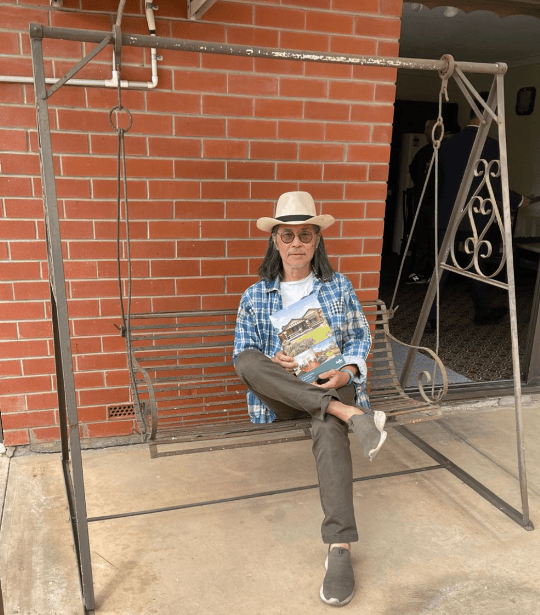
The family swing today, rusty and creaky
The end of another chapter. A new one begins…

My youngest son rightly summarised it as the end of a chapter, though for me, it feels more than that. It is as if the beginning and the ending have converged, leaving a sombre closure where my parents no longer appear but reside deep in my heart. From this heaviness, a stillness, a new chapter begins. I will write it with zest, with gusto, and with an abundance of love and joy, celebrating this life—whatever remains of it—their greatest gift to me.
A Homage, Still My Home

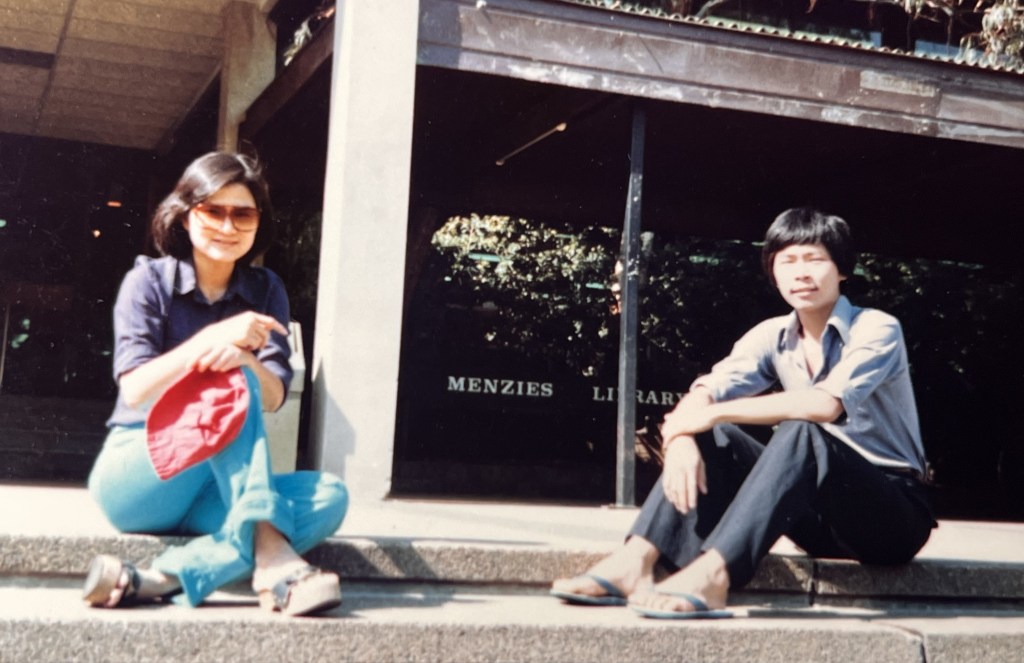
Doe-doe, in that lecture hall light

Economics, Law and Accounting day and night

At Uni New South Wales, side by side

You from Maroubra Bay, a beachside

Me from working class Kingsford, walking home

Young hearts making busy roads our own

Top girl in school, a soul pure white

You wore your grace like summer light

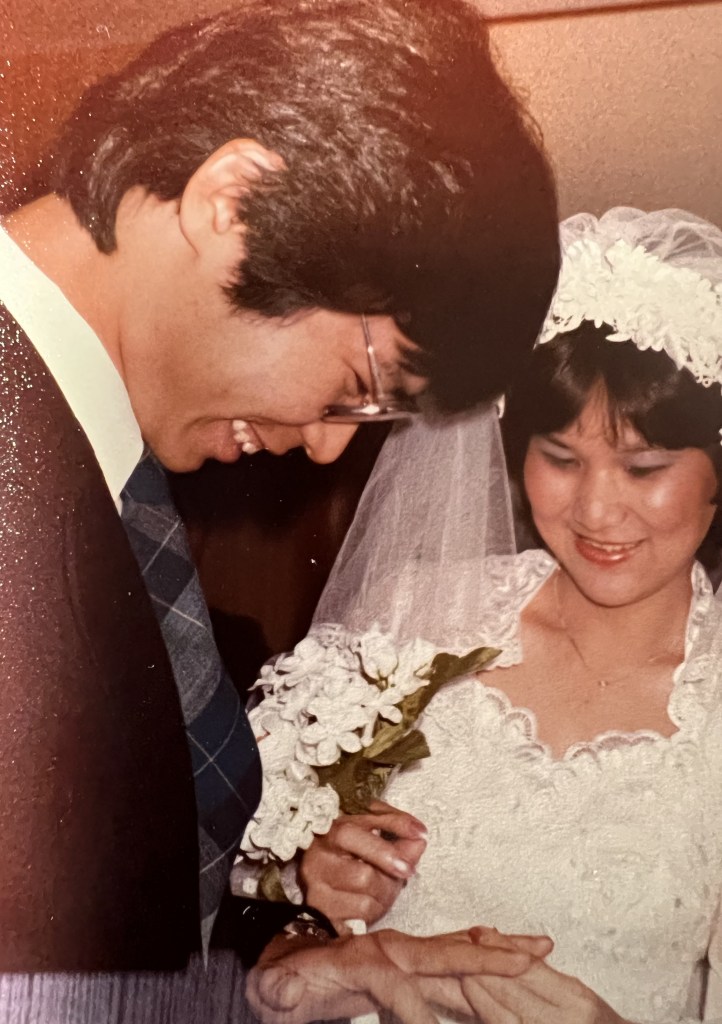
From bachelor dreams to a wedding vow

We found forever in our now

And every road kept leading to

A life I only knew with you

Doe-doe, you are my steady flame

The quiet truth beneath my name

Through every year, through joy and strain

You make my world feel whole again

Mother of my three brave sons

You are my home, my only sense

We married, moved down to Coogee

Mahjong at Koo’s till dawn, so happy

Centennial Park blue skies on Sundays

The calm inside my restless days

Doe-doe, you’re the heart of me

Forty-eight years, and still you move me

Three months in, you smiled and said

Buy that test kit, I am late

Morning came, then time slipped by

We checked after lunch, didn’t expect to cry

Teary eyed, we held each other till five

Shocked that we had created a new life

Then two years on, surprise again

Twin little heartbeats like music in the rain

We held on tight through happy tears

Love doubling up before our fears

And in your arms our future shone

Like morning finding its way home

Doe-doe, you are my steady flame

The quiet truth beneath my name

Through every year, through joy and strain

You make my world feel whole again

Mother of my three brave sons

You are my home, my only sense

Adelaide foothills and parks became our nest

Cheaper roofs, big rooms and the rest

Violin and cellos sang, life ain’t bleak

While you cooked love into the week

You got your Miri folks to our door

And still kept giving more and more

Doe-doe, you are my steady flame

The quiet truth beneath my name

Through forty eight long hard years

You held our joy, you held our tears

Mother of my three brave sons

You are my home, my only sense

Goodbye is the Hardest Word

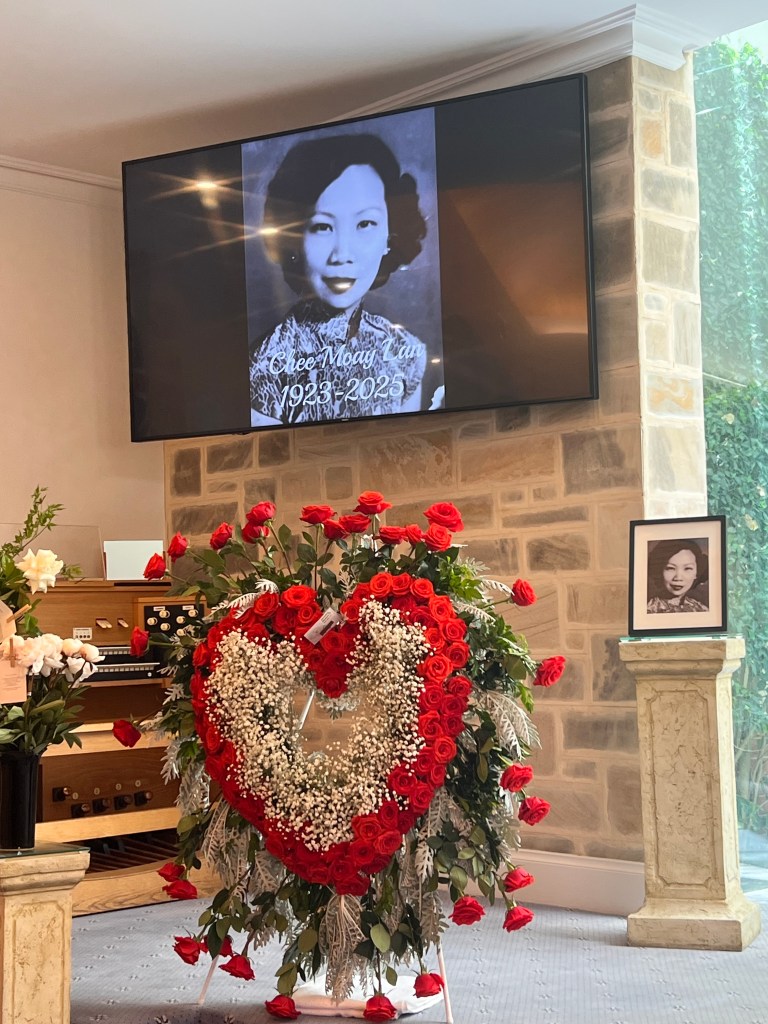
Ahma lived to 102. I had written many stories about her, a sixty-five minute read actually. But, I was asked to be brief, to distill a century into a mere five minutes. So, Ahma, forgive me for being brief.

Ahma’s name is Xu Mei Lan anglicised as Chee Moay Lan. Each character is a mirror reflecting her soul. Xu means slowly and gently, like the flow of a stream. Mei is the plum flower and Lan is grace and elegance. Anyone who knew her will know how perfectly her name described her life.
She did not take our father’s surname, out of filial piety, to her own family—a Confucian tradition she carried with quiet dignity. To many, she was Mrs Chee. To us, she was simply Ahma.

She married Ahpa at seventeen, in 1940. She was beautiful—porcelain skin, swan-like poise—always elegant in her cheongsam, even though her roots were humble. She was not born in Shanghai or Ningbo, as many assumed, but on a rubber plantation in Bagan Datoh, where her father worked as a dhobi man. Refinement, for Ahma, was not cultivated. It was innate.


She survived war, poverty, displacement, and loss. These shaped her lifelong frugality. I remember following her to the wet market as a child, where she would haggle fiercely over the smallest denomination—a single cent. Vendors would visibly brace themselves when they saw her coming. With eight children, one apple was sliced into eight equal pieces—and if one slice was thicker, a sliver would be cut off to restore fairness.

Yet this same woman sent all her children overseas for education—sometimes against her husband’s wishes. In the years after World War II, this was extraordinary. She believed education was the only way out of poverty, and she made it happen for her children.

Ahma had little formal schooling—only eight months in Malaya and two years in Ningbo—but she possessed a formidable mind. Her memory was astonishing. She remembered birthdays, anniversaries, grocery prices, historical events such as dates when her children first left home and when they returned, and the weather. Long before weather apps, she was our weather girl. Her memory was precise, immutable—like a blockchain ledger that never lost a record.

Ahma was the eldest child in her family. She had hoped to be a teacher. At the time, anyone with five years of education could become a teacher; she was halfway to reaching her ambition. But, all hopes of that died with Ngagung, her dad. In February 1936, Ngagung contracted Typhoid and passed away. In those days, when the sole provider of a family dies, usually hope dies too for those left behind. She was only thirteen years old.

She was meticulous, a perfectionist, right to the end. Earlier this year, I watched her cut a piece of cold toast into six perfect squares, carefully brushing crumbs aside before taking a bite. Her mantra was balance: not too hot, not too cold, not too fast, and certainly, never wasteful.
“Ok, ma, let’s go. Slowly and carefully,” I said to her as she rearranged the crumbs on her plate, she replied simply, “I can only be slow.” Perhaps that slowness was her secret to living to a hundred and two—with hardly any medication at all.

She endured unimaginable, silent grief. In 1948, she suffered a miscarriage at six months. In 1949, she miscarried twice more and lost a newborn son who survived just long enough to offer his parents a smile. In her mind, they were always part of the family. She remembered them on every anniversary, faithfully, quietly.

Her greatest joy in life was her eight children, seventeen grandchildren, and twelve great-grandchildren. Any gathering brought her immense happiness. She loved parties and the clinking of wine glasses, which was why we regularly took her to her favourite restaurant, The Empress, almost every weekend. At 99, she outlasted many of us at a New Year’s Eve celebration and did not want to leave well after midnight.

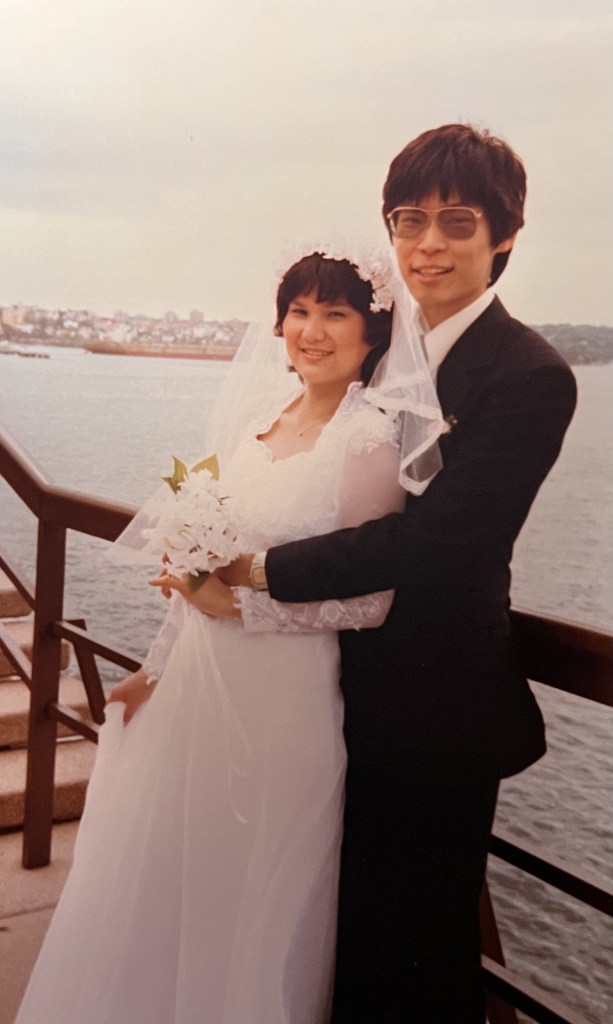
Ahpa and Ahma were married for sixty seven years until his death in 2007. He affectionately called her his “lor tha bo,” his “old woman,” with a chuckle. Surprisingly, theirs was not a match-made alliance. She chose Ahpa—a lanky, handsome man with a dry-cleaning shop two doors down from her uncle’s dhobi shop.The other candidate was from Fujian, a rice farmer with ten acres of land. Asked why she picked Ahpa, she replied,  “I saw myself slaving away in the rice field, rain or shine. Hard life.”
“The other was tall and handsome. Fair-skinned. Ambitious. Skilled in a good trade.”

She avoided the Japanese attack on China just before WW2 but was caught in the terror when they bombed Penang. My generation, which has never experienced war firsthand, is ignorant of the sheer tenacity required to survive years of hunger and hardship. Ahpa survived twelve brutal days in a Japanese jail; Ma endured those days alone, with great anxiety, fear and vulnerability yet, with mental resilience and maintained a low profile and composure in public.

The habits of survival die hard. Right up until her final days before moving into the nursing home, Ahma would enthusiastically “clean” her dinner plate at the dining table. Due to the length of time she needed to consume a meal, the minutest crumbs and dried-up sauce would often coat her plate. Every speck would be lifted by a small amount of water or soup, before being scooped up gently with a spoon. Every drop was consumed purposefully. She was fundamentally incapable of being wasteful—a thriftiness none of us truly understood, because none of us had lived through the war that forged it.

She lasted almost seven months in the nursing home, bed-bound with no hope of a miraculous recovery. Her question to me, posed in her native Ningbo dialect, “Yu so beh fa?” – is there any other option? – revealed a poignant awareness, a flicker of understanding regarding her circumstances, despite the severe dementia she was suffering from. In that question was awareness, acceptance, and grace. I told her she was loved, that she was cared for, that her children loved her very much. I held her hand—the same hand that had fed us, clothed us, protected us—and I whispered, “Goodnight, Ahma.” I could not bring myself to say goodbye on my last visit just before my trip to Europe.

While wandering along the side streets of La Rambla in Barcelona, I paused to read the words on my phone. I shouted to my sister who was meters in front, “Sufong, Ahma just passed away!”

Death is not the end; it is a quiet transition into another world – like sunset giving way to night. Some of us hold the deep conviction that we will be reunited with Ahma and Ahpa one day. There is dignity, serenity and love, not sadness or despair.

Ahma did not seek greatness, yet she embodied it. She did not lead nations or make scientific discoveries, but she raised generations through sheer sacrifice, unwavering fairness, incredible resilience, and unconditional love. To me, she was the greatest mother anyone could have.
And though her life here has ended, the legacy she bestowed upon us will never be diminished.

Gluck’s The Dance of the Blessed Spirits, the flute piece which was played earlier, was about peace, purity and release. Serenity, actually. It evokes a mother’s gentleness – care, tenderness, and watchfulness.

Later, you will hear Strauss’s Im Abendrot. As the poet writes, after a long journey, one may finally rest and ask, not in fear but in peace, “Is this perhaps death?” I think it aligns with my closing thought that death is a transition, not an end.

Strauss asks, “Is this death?”

Gluck answers, “This is peace.”

Ahma, as you go beyond mountains and rivers, may you rest in peace.

Alak ho chong ai nong.


Happiness in Pursuit

The American Declaration of Independence famously enshrines the “pursuit of happiness” as an unalienable right, a concept deeply influenced by John Locke’s philosophy of life, liberty, and property as natural rights.

“Happiness in pursuit, actually!” The old man heard his son, the older twin, say.

Impressed with the much younger man, the old man found himself nodding in agreement, his life experiences echoing the sentiment that the relentless pursuit of happiness was a misguided endeavour.

The old man’s journey had been a testament to the elusive nature of happiness. His suburban existence, while comfortable, had been a constant juggling act between work and family, where happiness often felt like a distant mirage. He vividly recalled the dissonance of hearing his children’s laughter downstairs during sitcoms like Seinfeld and Friends while he toiled away at his desk upstairs, a stark reminder of the moments he missed while chasing business success. He could hear them guffawing loudly at the murmurings from the TV, raiding the freezer for ice-cream or bickering over the last crumbles of Smiths chips but never cherishing those moments were the best times with the happiest memories.

He admitted that his early departure from his home in Penang at 19 had left him unexposed to Eastern philosophies that emphasised contentment and mindfulness. Consequently, he had spent his life chasing the ephemeral “silver lining,” only to find that the harder he chased, the further it seemed to drift away. Happiness, he realised, was abundant in the present moment, but his focus on future goals and achievements in the search for wealth and happiness had blinded him to its presence. When the grass is greener on the other side, or bliss is missed, happiness becomes elusive.

Had he been more receptive to his mother’s Buddhist teachings or delved into Aristotle’s philosophy, he might have understood earlier that true happiness lies in a virtuous life and detachment from material desires. Joy, he now knew, was not in the destination but in the journey itself. So, rather than the pursuit of happiness itself, happiness is in the pursuit of what brings us it.

His sons’ youthful wisdom had not been the catalyst for this realisation, but it had pleased him to see them grasp this truth so early in life. The Japanese concept of “ikigai,” which encompasses finding purpose and fulfilment in life through the alignment of passion, vocation, mission, and profession, resonated deeply with him. A purposeful and balanced life brings with it longevity and happiness. What is it that brings us joy and meaning? Find it, happily pursue it and in turn, ikigai will deliver us happiness. The four key elements are:

  1. What you love – your passion.
  2. What you are good at – your vocation.
  3. What the world needs – your mission.
  4. What sustains you financially – your profession.

When these four elements align, we find our ikigai. The simplicity of this truth struck him like a thunderbolt of lightning.

“We find it in the joy of small things,” the old man said to himself. Now in his mid-60s, the old man and his Mrs had achieved financial comfort, allowing them to focus on the simpler joys of life. While they had checked off all the boxes of material success – a house, garden, a chicken coop, travel, hobbies, art lessons for her and orchestral rehearsals for him – they also acknowledged the missed opportunities for happiness in their earlier years, when they were caught up in the rat race.

Their twin sons, both musicians, had just returned home for a rather truncated holiday. Just for four days after an absence of two years. They were in Australia for performances in Sydney, Melbourne and Brisbane. Little Adelaide, their hometown, missed out as usual. Having grown up in a different era, they had a different perspective on happiness. They valued experiences over possessions and sought fulfilment in meaningful work and collegial relationships. The old man marvelled at their ability to find joy in the present moment, a skill he had only acquired later in life. ‘Work’ isn’t work for them. It’s a passion, an enjoyment for which they get paid a salary or a bonus.

“What is there that you wish to have in your house?” the younger twin asked his mum.

She retreated into her mind but came up with no answer. He pressed her harder.

“Maybe a new rangehood,” she said after detecting hints of salted fish in the room that she had used in her fried rice.

“See? There is nothing you need that you can’t afford.”

The younger twin proved his point. Their parents no longer lived the life of a hamster on a wheel. There wasn’t any rat race left that they had to win. The days of working like a cow or a horse had long stopped haunting them. Yet, they loved to see those painful days of hard work and long hours in their rear-view mirror, perversely using them as bragging rights or as a way of instilling their work ethics on their adult sons.

We don’t chase happiness; happiness suddenly drops on our shoulders like a butterfly. The old man said to himself silently before grimacing somewhat sourly as if decades-old wounds had suddenly flared up. He adjusted his bum on the hard surface of the oak floorboard and literally looked up to his two sons who were both seated at the mahjong table. This is happiness! It was as if Thoreau had suddenly spoken to him. His sons were playing mahjong with their mother and their 101-year-old grandma in a little corner of a suburban Adelaide house with fish frolicking in a pond, eight chooks scratching for food in their backyard and a loyal dog on his lap. Their matriarch looked decidedly serene and sweet. Gone were her incessant complaints about so-and-so and wild accusations about this or that.

Happiness is like a butterfly, the more you chase it, the more it will elude, but if you turn your attention to other things, it will come and sit softly on your shoulder.

Henry David Thoreau.

It is the joy of small things. The Mrs is surrounded by it. She tends to her vegetable plots, nourished by the rich compost from her scrap bins. The leaves and roots she picks become sustenance for their dinner, while the overly productive plants like watercress and those beginning to seed never go to waste. They transform into wholesome snacks for her cherished chickens, or even remedies, as was the case for one particularly old hen who had miraculously evaded death. The hole in the ground, dug in anticipation of the hen’s demise before her trip to Sydney to witness her sons’ performances, remained unoccupied. Earlier in the week, The Mrs had feared the worst, unable to find the hen’s hunched and bent form, assuming a fox had taken her. But to her delight, all eight chickens were present and accounted for, none waddling with bad hips.

“She has cured herself!” she exclaimed, overjoyed.


Her creative spirit finds expression in painting and drawing, her daily sketches shared on her YouTube channel, a source of immense joy. Embracing technology, she stays connected with friends online; her small phone a portal to the big world. Hours are spent chatting with ex-school friends across the globe, regaling them with stories about everything under the sun. She takes pride in her knowledge of current affairs, geopolitics, YouTube cooking shows like Auntie Liew, and her appreciation for art and classical music, from Baroque to Classical to Romantic to Impressionist. Though she claims to dislike Modern classical music, she loves Elgar’s cello concerto. These small contradictions in life don’t bother her; she is comfortable being herself, as much as she desires.


A gifted storyteller, she paints vivid images in the listener’s mind with her words. However, her love for her own stories has grown to the point where she often repeats her favourites to the same audience. The old man wonders if this is an early sign of dementia or simply a need for fresh experiences to enliven her life. He has gently hinted at this for years, and to his relief, she has recently started taking daily NMN tablets to boost her NAD+ levels for cellular rejuvenation. Small pills for health and happiness, he reasons, why not?

The pursuit of happiness is a deeply personal and multifaceted journey, as the adage goes, “there is no recipe for happiness.” To each their own. Money, beyond a certain point, doesn’t buy happiness. Beyond a certain threshold, the accumulation of material possessions and monetary gains often fails to deliver lasting contentment. In fact, an excessive focus on wealth can lead to heightened stress, anxiety, and strained relationships. By embracing acceptance, community, purpose, and productivity, we can create a fulfilling and meaningful life that transcends the pursuit of material wealth and external validation. We also need to accept ourselves. Acknowledgement from others may be a bonus but let’s remember the childhood story we learned about pleasing everybody – we end up pleasing no one, not even ourselves. Happiness has no correlation to wealth. Being in the right place, a community we feel we belong in, is one ingredient to harmony and happiness.

For the old man, he needs to feel he is capable and productive in everything he seeks to do but he knows there must also be civility and harmony, reminded by the scars of sibling rivalries. His journey had been long and winding, but he has finally arrived at a place of contentment. He has found ikigai in his hobbies, writing and playing his violin. He no longer chases happiness; he is living it, one small joy at a time.

Even a visit to the Sydney Opera House brings joy. This was especially so, thanks to a family friend who turned out to be a major patron of the opera house and the Sydney Symphony Orchestra. Their group was not merely guided by a single staff member, but rather, three dedicated Sydney Opera House staff members gave them the time and attention normally reserved to special people. This privileged access granted them entry to exclusive areas typically inaccessible to the general public, such as the Utzon Room and the Green Room, spaces steeped in history and artistic significance.
For the old man though, the pinnacle of the visit was unexpectedly humorous. The highlight for him was being shown “the cleavage”, a gap between the iconic sail-like structures.

At the cleavage of the Sydney Opera House.

Even the rain can bring joy was certainly true. There was a lot of laughter when they were caught in the rain in Sydney. This wasn’t just a light shower; it was a torrential deluge, with six inches of rain falling in just two hours. The rain seemed to defy gravity, pelting down horizontally with astonishing force.

Those who had opted for the ferry found themselves dry but stranded at the pier as the rain transformed the streets into rivers. Without umbrellas, they could only watch the downpour and imagine the warmth and comfort of the Pyrmont Hotel, where those fellow travellers who chose to walk rather than pay the fare for the ferry ride had sought refuge just in time. The old man, valiant and true, gathered some spare brollies and ventured out into the receding rain, intending to help the stranded travellers. However, the rain gods were not yet finished with their watery game. By the time the old man reached the pier and returned with the rest of the group, everyone was thoroughly drenched.

The sight of the group of senior citizens scurrying through the rain, some hurrying in a futile attempt to stay dry, was quite comical. It was a reminder that when you’re caught in a downpour, you’re going to get wet, no matter how fast you move. When you are wet, you are wet. Despite this realisation, the old man still found himself quickening his pace as they made their way back to the hotel.

The aftermath of the downpour was a scene of damp chaos. The hotel room’s hairdryer was repurposed as a shoe and sock dryer, and the air was filled with the unmistakable scent of wet wool and damp leather, with a hint of dead fish. When asked to describe the smell, the old man simply chuckled and declined, leaving the experience to be imagined.

O-Week at the UNSW. ‘O’ for Oldies who needed orientation 40 odd years after their graduation.

Even Brahms can bring joy. Great joy especially from great music. The SSO was in town, so they went to their much touted concert featuring the Brahms Double. Two orchestras call themselves the SSO. The one that had a sold-out concert and brought the house down that day in Sydney was the Singapore Symphony Orchestra on their inaugural Aussie tour.

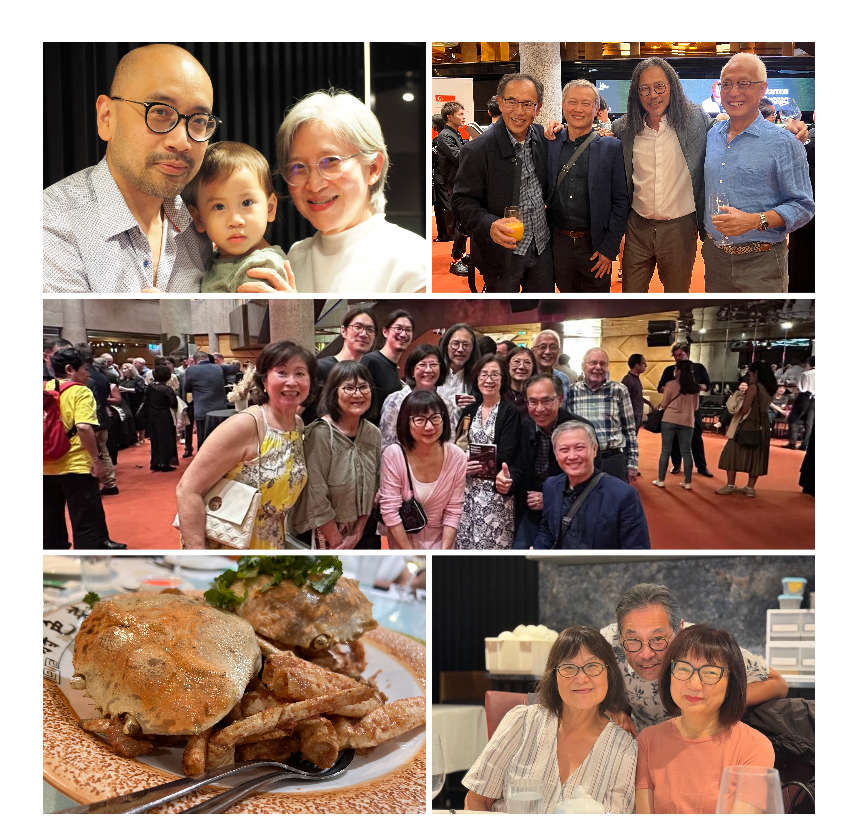
The SSO’s performance was indeed spectacular. Music critics from different continents were unanimous in their praises. The energy and enthusiasm were palpable. The audience was captivated by the orchestra’s performance, and the raucous ovation at the end was a loud and long appreciation of their skill, musicianship and passion. Through a fortunate connection with the patron of the Sydney Opera House, the group received invitations to the exclusive post-concert event. The allure of complimentary champagne and delectable finger food was irresistible, and the evening proved to be a delightful blend of mingling with high society and celebration. The experience was so enjoyable that the group decided to extend their musical journey by following the orchestra to Melbourne.

Happiness in the pursuit of food. Sydney, with its iconic harbour, bridge and an opera house, offered a feast for the senses. The group embraced the city’s culinary offerings with gusto, savouring Malaysian cuisine in Kingsford, indulging in Italian fare at the Star Grand, exploring the flavours of Thai Town, and experiencing the freshest seafood at the Royal Palace in Chinatown.

The culinary adventures continued in Melbourne, where a friend marked their reunion with a bottle of Dom Perignon. The group delighted in Char Koay Teow at Lulu’s Malaysian Hawker and enjoyed an afternoon tea featuring Nonya Kueh and Japanese Cheesecakes. However, the most unforgettable dining experience was at the Secret Kitchen in Chinatown. The sautéed snow crab in foie gras was so exquisite that it left a lasting impression, with promises to return solely for that dish.

Happiness in pursuit of family, friends, fun and food.

It is the joy of small things indeed. The old man found himself enveloped in a comforting solitude as he sat in his room, his attention captivated by the photographs that he had collected during the recent musical holiday. Though it wasn’t so many days ago, the echoes of laughter and melodies already felt like distant memories, their vibrancy fading into the backdrop of the newly arrived autumn season. The feeling in the room had turned autumnal. A melancholic hue had settled on the furniture, blending with the dust, mirroring the introspective mood that had taken hold of the man’s heart.

Within those captured moments, he discovered solace and a gentle reminder of the joys that life had to offer. The photographs – the small things – had become cherished artefacts, encapsulating a recent history that he promised himself to preserve and revisit. The happiness that emanated from those images was something to be treasured, a beacon of light to cling to amidst the encroaching shadows of old age and the inevitability of disease and death.

As his thoughts meandered through the corridors of his past, he contemplated the lessons that history could impart. It was not merely a collection of dates and events, but a tapestry woven with experiences and emotions. The old man realised that the true value of history lay in its ability to guide and inspire. If the past held moments of joy and contentment, then the path to future happiness was clear: one must strive to replicate those cherished experiences. The laughter, the camaraderie, the shared passion for music – these were the elements that had brought him such delight, and he would not allow them to be relegated to the realm of mere memories. His recent history was one to remember and the happiness from it to cling on to.

If we must learn from history, it is to repeat it, he told himself.