A Lovely Day On Love Day

Last night my mum asked “How did you celebrate Love Day today?” A love day. Valentine’s Day, originally pronounced as a feast day to celebrate St Valentine of Rome who died in AD 269 has become known as a day to express our love and affection for that someone special in our lives. The one we love. It then made me remember that Ma’s husband, my Pa, passed away 13 years ago this April. It did not dawn on me all day that maybe Ma would have felt lonely, sad even. Remembering the loss of her husband of 63 years. Missing him. His wit and charm. His strength. His broad shoulders to bear all burden. His wisdom. His love. There would have been countless brief moments they shared that made many lifelong memories. I cut The Mrs the best red rose in the garden. It was the most perfect bloom from a Mr Lincoln standard. My next door neighbour’s garden has a ring of twelve Mr Lincoln standards. It is common for a man to give the love of his life a diamond ring or gold ring. But a ring of roses? Mind you, these are not cut roses! Francis is the only man I know who gave his wife a ring of twelve rose plants. Living, fragrant, colourful and long-lasting. Not cut and certainly not plastic. I went over to their garden and cut the best rose from the ring that is his present to his wife. I won’t tell if you won’t tell. I planned to bring it home quickly to The Mrs, freshly cut unlike the ones you buy from a florist. But, she happened to walk over and so I handed her the rose. Her reaction? “Cheapskate (maybe I misheard), you didn’t even pay for it!” It is the one big disadvantage to have a garden at one’s easy reach. I never have to buy The Mrs flowers. Flowers from my own garden (or the neighbour’s garden) somehow have no oomph. They don’t get me any brownie points. I lack ingenuity and credibility when I bring home flowers from the backyard. There is no price tag. Free, not paid for. No value. Not valued. But, when I got home, the red rose I gave her was already in a vase, sitting proudly on the kitchen window sill. Happy Valentine’s! Ma deserves a red rose too. Let me quickly wander next door and see what I can do before she wakes up. Don’t be surprised to see a red rose on her bedside table.
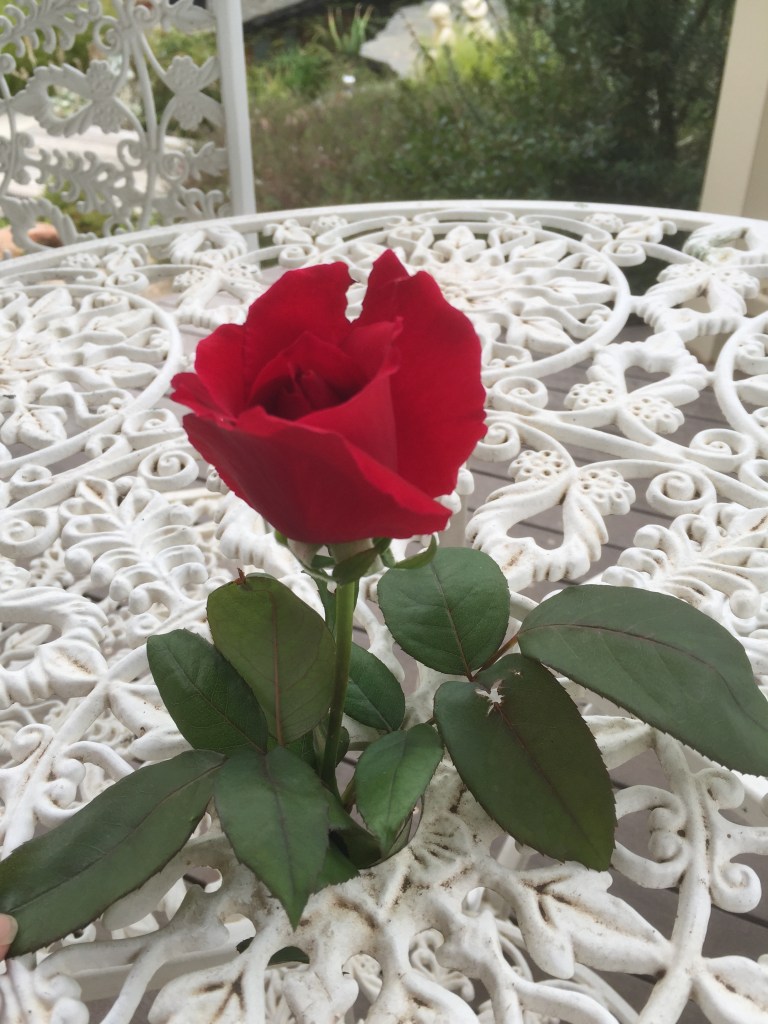
Happy Valentine’s Day! A freshly cut red rose.

I met some philistines on Valentine’s yesterday. They shuddered when I mentioned I heard some of the most romantic music on radio. ABC’s classic fm station that is affixed permanently on my car’s tuner played some really gorgeous heart-tugging classics yesterday. In Donizetti’s The Elixir of Love, who amongst us can say they won’t feel the melancholy, the sadness, and yes, the triumphant love that conquers all when we have the magic potion that helps us believe in ourselves? What more need I look for? She loves me! Yes, she loves me, I see it”. Who can shake their heads and say no to Saint-Saëns’ The Swan? Camille is the modern saint who I can relate very well. After all, my son won Australia’s very prestigious award playing one of the French composer’s most memorable concertos. The radio station also played The Adagio from Spartacus, by Aram Khachaturian. Such beautiful music stirs the heart, sometimes even melts it. It literally is love in the air, well, airwaves at least. It made me recall my boyhood days playing in the Penang Philharmonic as a first violin tutti. My favourite memory was playing that romantic music by Mascagni – Intermezzo, from Cavalleria Rusticana. Unforgettable. I had a crush on a young Girl Guide with pigtails that year. Our eyes met briefly at a campfire. You could say she put my heart on fire that night. A first feeling of romance. A first attraction. Maybe it was love at first sight. I did not forget her name, only because I never knew it. I thought she was Janet but maybe her name was Susan. No matter. The name isn’t important. It never was. But she was. The briefest of encounters, yet a memory forever. I forgot about re-enacting memorable soccer matches with scrunched up paper balls in my parent’s shop that year. I suddenly grew up. But, I didn’t give her a red rose. Back then I wasn’t aware February 14 is “Love Day”. Philistines declare they don’t like classical music. They cannot understand what the fuss is about. They cannot stand it. They tell me they do not enjoy it. “How can music affect our mood?” one of them challenged me. And then he added, “yeah maybe it can affect my mood! It makes me bored!” How can music make us feel romantic? They would not have forgotten the soundtracks that are embedded in their beings when they first fell madly in love or when they nursed a broken heart. Deep emotions are often accompanied by music that remains with us forever. Music can overwhelm us. It is not uncommon to see people cry during beautiful moments in a classical music concert. Or hear the uncontrolled orgasmic groans from a woman in the audience sitting nearby. It is scientifically proven that listening to soothing music increases the level of oxytocin – the love hormone. Our body releases oxytocin during social bonding, sexual activities and also during childbirth. I shall abruptly end here, as I am in need of some oxytocin. Let me crank up my radio!

Philistines are those hostile or indifferent to culture and the arts, according to the Oxford dictionary. Philistines on Valentine’s make me cringe. They are likely amongst the ones that buy their Valentine a box of chocolates, pay a premium for a dozen red roses from a florist and after a romantic dinner, attend a movie. They think a commercialised way to show their feelings is romantic. When their mood ebbs and flows inside the movie theatre, when their emotions change, be it feeling sad, happy, excited, relaxed, energised, scared, threatened, or maybe even sensual, they are the ones totally ignorant of the fact that the movie’s music was performed by an orchestra trained in classical music.

Did I Mention A Mansion?

Thirty eight years ago today, my eldest son was born. Happy birthday, boy! Silly me, like most other Asians, we call our sons and daughters by their gender. If I had a daughter, I would surely have called her “Girl”. Yeah, I am as unimaginative and predictable as that! For many years now, I cannot find a solution to the problem I have. How to suddenly not call him “Boy” after calling him that all his life? I mean, he’s far from being a boy for almost two decades by now! How mean for The Mrs and me to keep calling him “Boy”, right? He is taller, stronger, faster than me. My ego prevents me from publicly admitting he is also smarter and better looking. Inwardly though, I am quietly proud he is a much better specimen than me. He turns heads whereas I turn smiles into frowns. He turns up the volume of my TV and I will turn it down just as quickly. Somehow, millennials like their music loud. Very loud. Correction. We all like the music we love loud, I suppose. When Richard Strauss’s Also sprach Zarathustra Op 30, used by Stanley Kubrick in his widely acclaimed theme for his 2001: A Space Odyssey is played on radio, I must crank my sound system extra loud too. It just doesn’t feel right that we go to the silence of outer space quietly. We urghhlings are polluters everywhere we visit. Noise included.

In July 1981, The Mrs and I did a pregnancy test in the crammed kitchen of our Coogee flat. Many hours later, she jumped up from her bean bag and exclaimed “Oh! We forgot to check the test tube!” Fighting each other to get past the narrow kitchen doorway, she was first to discover the brown ring on the bottom of the tube. “What does the brown ring signify?” I asked myself. But her ashen-faced expression said it all. I hugged her and we both cried. It wasn’t that the brown ring was unwanted, it was unplanned. Her ambitious mind had planned for her a big career to conquer, instead it was a big fear of the unknown that she had to conquer. I made the expensive phone call home. Telecom Australia was the only telco in 1981 that provided ISSD calls, it was only sensible for a monopoly to slug their customers. Phone calls to my parents were rare. It was rarer to receive calls from home – thankfully, since calls from home only meant some beloved elder had died. The Mrs and I dreaded late night calls – rare they might have been – but to receive a late night call meant a long sleepless night of anxiety and trepidation about the health or wellbeing of a parent. Missed late night calls were much worse, of course – they never failed to transform into healthy seeds for ridiculously creative imaginations of the worst kind, the creator of many more sleepless nights and daytime anxiety. I called my parents to tell them the good news. “I’m going to be a father!” I said to Ma. “Ai yo wei! Chi So Kamaka?” How come like that? (in Ningbonese). Pa took it differently. He told me to go buy a house! The two-bedroom flat which The Mrs and I shared with my younger sister had suddenly reached “unliveable” status. Before December that year, I bought the fibro house in Little Bay that would eventually welcome the birth of my three sons.

The fibro house sat on top of a big rock at the highest point of Little Bay. Little Bay was the best kept secret that I happened to discover in Sydney. Just 14 km south east of the CBD, yet it felt like living in the wilderness with a pony wandering freely behind our back fence and open seas just a stone’s throw away. The discerning reader would quickly have gathered that the views of the water from the house would have been spectacular. Well, if I tip-toed and looked out from the windows on the southern side, I’d have been able to enjoy the vast blue expanse of the bay. Add a little imagination and one day, if we had the money to build a second storey on it, we would have seen the spectacular setting of a virginal nudist beach that lazed adjacent to the unspoilt blue waters of the Pacific Ocean on one side and the inviting greens of St Michael Golf Club on the other. Pa sent me $100,000 to buy a house. His instructions were clear. Buy a big house, have it ready before his grandchild is born. They planned to visit and be there for the ‘mua guek’ or first month after birth. It was a white fibro single-fronted house, with two good sized bedrooms, a lounge and formal dining room, and a little rumpus room that joined the original house to the extension at the back. The fibro extension housed a small bedroom and a kitchen and dining area. Ample space for a young couple to start a family.

Our first-born arrived a few weeks after we had moved in. The first toy that welcomed him to the house was a green frog that croaked when moved. A gift from a friend. Apart from a Smurf toy car and a matching wheel barrow, he had about three or four soft toys as his total toy collection. Everything else was made for him. His security blanket was a patchwork of scraps from discarded sarongs and well-worn clothes from uni days. We didn’t buy him any picture books. The Mrs made a picture wall for him instead. It was a collection of her paintings on sheets of thin cardboard paper glued on a wall. She also made him a toy house from the sheets of cardboard from work. Work was a corrugated box factory at nearby Matraville, owned by the Smorgon family. I used to drive the 5 minutes home for a quick lunch every day.

Happy life, happy wife.

My parents were ecstatic too, although they didn’t say so. Their faces told me they were very happy The Mrs and I delivered them a grandson so quickly. It didn’t cross my mind that one day they would expect a great grandson from him. Pa left in 2007, sorry Pa. None delivered a great grandson for you to embrace. Lately, Ma has been anxious about her failure to embrace a great grandson also. Somehow she feels she has disappointed our ancestors. I am proud my parents were modern thinking for their generation. By and large, the distribution of assets would be considered fair. Would distributing assets equally be fair if some are more in need than others? If one son has a better career than the other? Or if one daughter is married to a vastly wealthier family than the other? Or if some of the children are struck by bad luck all through their lives – would they not need a bigger share of the pie? In olden days, the daughters were ‘water thrown out of the face basin’; they were not entitled to any inheritance. Married off to another family, the daughters no longer belonged to their birth family. At a time when some families still observed such traditions, my parents were outstanding. They did what they considered was fair. Pa sent me what he considered was a lot of money to buy the house, especially when converted from Malaysian ringgit – it was at least two and a half times the amount in ringgit.

“Chao Chu, Chao Chu!”

“Chi So Kamaka? Bad house,” I could hear Pa complain to Ma about the bad house as he returned from his daily morning walk. A memorable sight to see him conquer the incredibly steep slope to Grose Street with nothing more than his walking stick and grit. With a fighter’s mentality, he fought off the debilitating effects of the stroke he suffered from a few years earlier. He hated the house. It was not a double brick house. It was not even single-brick veneer!

“Fibro? What’s that? Worse than timber!” Pa said he would not even use fibro to clad the garden shed. Fibro looked inferior. He would be the laughing stock amongst his peers. Your foolish son did what? He spent all your money on what?! A fibro house? What is that? These old men from China knew better. I should have known better. Mesothelioma has since killed over 10,000 Aussies. On December 31, 2003, Australia banned the use or re-use of fibro for any purpose. Fibro sheets were made of asbestos and cement. Since then, I have not stopped wondering if I did drill any holes on the walls of that house. Were the picture hooks already on the walls? Pa said buy a big house. Did I mention I’d buy a mansion? Urghhling.

“Chao Chu, Chao Chu!”

The house could have been a reason to start an internecine sibling rivalry in my family but Pa sold it for $266,000 after we moved to Adelaide. Thanks, Pa. I was relieved your Chao Chu made a nice capital gain despite the initial disappointment.

哎哟喂!Ai Yo Wei. It Is The Chinese Way

Chap Goh Meh. That’s Hokkien for the fifteenth night of Chinese New Year, the final night of new year celebrations. The Chinese way of celebrating is of course to eat! Another feast beckons, I reckon. It is also known as Yuan Xiao Jie(元宵节), which means Prime Night Festival. When I was a young boy growing up in Penang, chap goh meh also meant asking my parents’ workers who amongst the unattached ones would be throwing mandarins into the sea with their names and addresses written on the peel of the fruit. They did not have to tell me the following morning whether they were approached by singles of the opposite sex. Their uneraseable smiles told me they got lucky. Unlike today’s Tinder, they didn’t need to learn any pick up lines back then. Just throw a few mandarins from the Old Esplanade on chap goh meh. That seemed to work – all the workers got themselves married off before I left school.

I used to be able to rattle off a hokkien poem about chap goh meh. Thank goodness a friend was able to help me out. The poem still does not make any sense to me though. Ai yo wei. That’s the Chinese way. It doesn’t have to make sense.

Chap goh meh (15th night)
Hoay kim chneh (bright with fireflies)
Chnia lu a kuwa (invite your brother-in-law)
Lai lim teh (to drink tea)
Teh seo seo (tea is hot)
Kya lor bay kim cheo (walk to buy bananas)
Kim cheo bay kee peh (forgot to peel the banana)
Kya lor bay chek (walk to buy a book)

Chek bay kee t’ark (forgot to read the book)
Kya lor bay bark (walk to buy black ink stick)
Bark bay kee bwua (forgot to ground the black ink stick)
Kya lor bay chua (walk to buy a snake)

Chua bay kee liak (forgot to catch the snake)
Kya lor bay kah kiak (walk to buy clogs)
Kah kiak bay kee ch’eng (forgot to wear the clogs)
Kya lor bay kar leng (walk to buy Mynah bird)
Kar leng kong (male Mynah)
Kar leng boh (female Mynah)
Chnia lu a knia soon (invite your grandchildren)
Lai t’eet t’oh (come and play)

T’eet t’oh nya (play only)
Bay karm chiak (buy sugar cane)
Karm chiak dni (sugar cane is sweet)

Bay leng chee (buy longans)

Leng chee phong (longans swollen)
Bay tom bong (buy winter melon)
Tom bong khaw (winter melon is bitter)
Bay lor kor (buy a drum)

The Chinese way. Their detractors are more vocal and their shrieks louder, the more successful and progressive modern China portrays herself to the world. Last October in Berlin to remember the end of the first Cold War, US Secretary of State Mike Pompeo was hell-bent in starting another one, warning against a China threat to Western freedoms. He said the Chinese Communist Party “uses tactics and methods to suppress its own people that would be horrifyingly familiar to former East Germans”. Without evidence, he called China “truly hostile” to the United States. After Boris Johnson called America’s bluff that the “Five Eyes alliance would be in jeopardy and signed up with Huawei 5G, Pompeo continued to attack the Chinese technology firm. He regarded the CCP as “the central threat of our times” and urged America’s allies to ensure they have the military and technological power to ensure that this century is governed by Western principle. China’s threat to the Americans may be to topple them as the world’s biggest economy, but they do not send soldiers to attack other nations. Granted that they do export engineers and construction workers for their One Road One Belt initiative, but that is not flexing their military might. The threat to China, however, is real – the US is garnering support to arm the West against China. When I flew to vibrant and bustling Hong Kong for a job interview in 1986, I learned that my prospective employer wanted to send me to Shenzhen to buy hay (yes, dried grass) and explore business opportunities. Back then, Shenzhen was a small farming and fishing village in the Pearl River Delta with a population of about 20,000. Shekou was not a port yet. Its wet market with a big variety of live animals and seafood was what attracted The Mrs. She was not interested in hay either. It was our first visit to China – we were more interested in how the locals lived, the many beggars devoid of limbs and self esteem that had their hands out, the holes on the floor of the train from Hong Kong to China which served as toilets, the starry eyed locals staring at my brand new Sony handycam video camera bought in Mongkok the day before. Shenzhen gained special economic zone status in 2000. Her GDP in 1986 was USD 0.5 billion whereas Hong Kong’s was USD 41 billion, i.e. Hong Kong’s economy was 82 times bigger than Shenzhen’s. Twenty years later, Shenzhen’s GDP was USD 83 billion, still less than half that of Hong Kong’s. Today, Shenzhen has surpassed Hong Kong’s economy both in terms of magnitude as well as technological superiority. Her GDP last year was USD 374 billion. With a population exceeding 12 million, it is now a modern metropolis and rivals Silicon Valley as the world’s mecca for Artificial Intelligence. Shenzhen is also known as the “Silicon Delta”. A stunning growth at a breathless and frenetic pace. Let me pause and digest this. In 34 years, the small fishing village has become the world’s premier hub for AI technology. AI is already developing at breakneck speed, being used in just about all facets of the economy, transforming banking and payments, retail, logistics, transportation, marketing, as well as medical, agricultural and industrial applications. Using 1986 GDP data from countryeconomy.com and 2017 GDP data from worldometers.info, I calculated that during that period, the US economy grew 4 times, Japan 2.3 times, Australia 7 times, India, Malaysia and Israel 10 times whereas China, an astounding 40 times. In 1986, the US economy was 15 times bigger than China’s. Per IMF projections for 2019, this size difference has shrunk to only 1.5 times on exchange rate basis. But, in terms of purchasing power parity, China is now 1.28 times bigger than the US. That is the Chinese way.

One other statistic that caught my attention is the number of millennials in China. There are a lot of them! In fact, there are more millennials in China than the whole population of the US; 400 million compared to 331 million. Over 90% of them own a smartphone, i.e. they are tech savvy. They are also cashless. I felt much less modern than the locals in Xiamen and Beijing on my visit there last July. Armed with credit cards and little cash, I felt uncomfortably and unnecessarily dependant on my millennial host. Businesses everywhere seem to accept only WeChat Pay or Alipay. The many young Chinese I met were highly educated and impressively entrepreneurial. They were also big consumers for luxury goods and consumer electronics. Last year’s Double 11 Day sold US$38.4 billion for Alibaba, a tidy sum for a single day’s sales for Singles. All clear pointers to a healthy economy being driven hard and fast by no-nonsense movers and shakers. That is the Chinese way!

Which country has ever built a 645,000 sq ft hospital in ten days? The two storey medical facility is equipped with 1,000 beds, several isolation wards and 30 intensive care units. Some 7,500 construction workers worked around the clock to complete the building. No union rules – they volunteered to help their fellow citizens during such difficult times. The hospital started accepting patients infected by the Wuhan virus this week. In a few days’ time, two more hospitals will be completed to house the many more patients expected. When disaster strikes, help comes from all sides. That is the Chinese way.


Chap Goh Meh, tradition vs modern technology.

Bugged By A Tree Bug Or Three

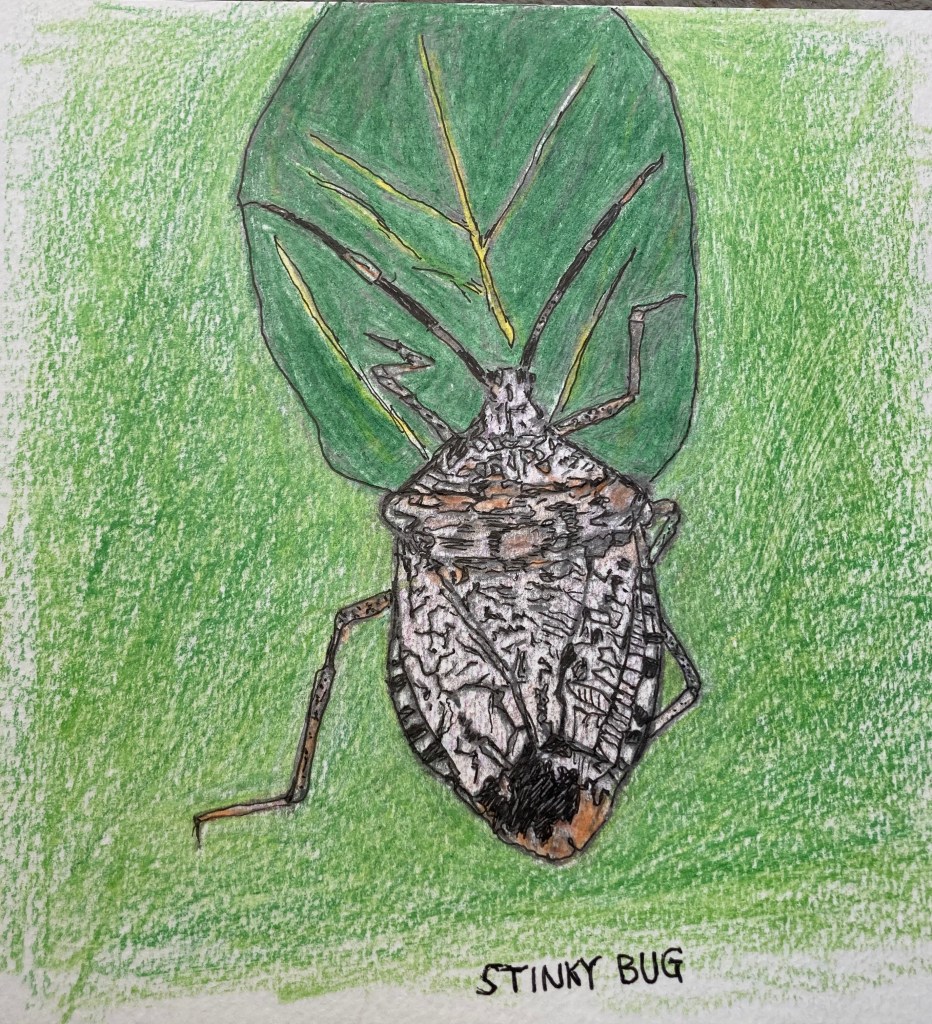
BMSB. I got acquainted with these four letters recently. I have two appropriate four letter words to voice my annoyance and discontent about it. Bull shit. What is BMSB anyway? Googling it tells me it is a stink bug. Australia sees this little bug as a threat to her biosecurity. But, aren’t these little insects a free helper to farmers? Avoid the need for chemical sprays, just introduce these predators that feed on caterpillars, beetles and other stink bugs. What? Not all stink bugs are the same? I found out that it’s the spined soldier stink bug that loves to eat the brown marmorated stink bug. It is this brown bug that wants to come to Australia. Alright, I concede that the BMSB loves devouring plants and fruits, bad news for the farmers. My last shipping container from St. Petersburg has been stranded in South Australia’s fumigation centre since 30 November last year due to the BMSB season. A season usually means three months. But, this stinky bug apparently breeds for much longer. All incoming goods that are defined as “Target high risk goods” from USA and selected European countries need to be fumigated from 1 September to 31 May. “All?” I asked. As it turns out, no, not all. Fly them in by plane and these flies are inexplicably and magically no longer a problem. They cannot explain why the need to fumigate a shipment is suddenly not necessary if it comes in by plane. My educated guess is that the bugs are afraid of flying and will frantically fly off the plane’s cargo hold before take-off. For many weeks, the authorities refused to advise how long the delay will be except to say it may take up to fourteen weeks. They have only one fumigation facility in South Australia. This rust-belt state has eight hospitals in the metro area, five universities and wait for this, forty four stadiums and football ovals, but only a single fumigation centre. Two weeks ago, they finally informed me it may still take 4-5 weeks before my container of plastic and rubber products can be released. South Australia’s port can at best be described as third world standard when we compare it to facilities such as Singapore and Shenzhen. Will the Premier of South Australia address such ridiculous inefficiencies in our port? The impression of our state by many of my interstate customers is best left unsaid. My Russian supplier expressed incredulity that they failed to engage any import broker willing to help us have the ruling overturned. Plastics do not breed bugs – they are not “Target high risk goods”. Plastics fall under tariff classification 39 of the target risk group. Target risk goods are subject to increased onshore intervention through random inspections only; mandatory treatment is not required. But, no one in South Australia will challenge the decision for fear of upsetting the authorities. This will remind my Russian friends of their Soviet era inefficiencies, I suspect.

The reply from the Premier’s office still bugs me. “As you may be aware, biosecurity in Australia is a Commonwealth matter and falls within the portfolio responsibility of Senator the Hon Bridget McKenzie, Minister for Agriculture. Accordingly, please be advised the Premier is unable to intervene in or influence the matters you have raised.” Does he not recognise that this bug is causing such a long bottleneck that harms our reputation as a progressive state? What about the damage to existing businesses like mine? What about the deterrence to new businesses? How is it that a bug can impede trade and commerce for 14 weeks or longer? Bah humbug. Bridget McKenzie fell from grace three days ago, not from the stinky bug affair, but from the stinky sports rorts affair. She quit the front bench and resigned as Deputy Nationals leader after being found guilty of breaching ministerial guidelines. She was so forgetful she forgot to disclose her membership in the gun club that she awarded a $36,000 sports grant to. I do wonder if she has any financial interests in all the fumigation centres around Australian ports. They are all doing a roaring trade, fumigating bugs that may not exist, especially on products that are not classified as “Target high risk goods”. This will continue to bug me whilst I am bled dry of my hard-earned money. The cost of fumigation is $560, monitoring and facility fee is $150 with a daily storage fee of $40. I am too nervous to do the sums, being sure as hell that I will feel a lot of pain when I am sent the bill. Urghhlings.

Exit And Exodus, Weaknesses Without Witnesses

Finally, Brexit! That was it. No awesome celebrations, no memorable fireworks, only recorded bongs from Big Ben. Winston Churchill was right after all. Britain will finally look to the open sea rather than to Europe. After 47 years as an important member of the European Union (EU), the Brits have decided to go their own way again and carve out a new direction for themselves – a more exciting and prosperous future that is for them to determine, not by anyone else, in Europe or otherwise. It took three governments, two elections and three and a half years to deliver to the people what they voted for in their 2016 referendum, i.e. to leave the EU. There are 21 republics and 6 monarchies left in the EU. Will Britain’s exit bring about an exodus of remaining members? It would not surprise me if this brings about a domino effect. Britain is not the only country to see a rise in nationalist sentiments. Austerity measures and immigration policies regarding refugees have also changed the economic landscape in Europe. Without Britain, the EU is £10 billion poorer every year – that is the net contribution by the Brits to help prop up the union. When there is financial stress, the divorce rate increases. It is no different for countries.

Another major event of historical significance that happened on the same day was the US Senate’s vote to dismiss the requirement for witnesses to appear in the impeachment trial of their President. It is a sad state of affairs that the lawmakers of the world’s champion of human rights can convince themselves that a trial to decide on the very serious charges of abuse of power and obstruction of Congress by their President can be carried out without any witnesses. Trump will be acquitted without any witnesses to provide the irrefutable evidence to reveal the truth about the quid pro quo demands on the Ukrainian President. Despite former national security adviser John Bolton’s willingness to contradict Trump’s “perfect” script that he did not tie the withholding of military aid to Ukraine pending the announcement of dirt-digging of 2020 election rival Joe Biden and his son. Despite two Republicans, Mitt Romney and Susan Collins breaking ranks with the Republican-dominated chamber. Despite retiring Republican Lamar Alexander’s admission that Trump acted improperly and “crossed the line”. It is a new low to see lawmakers concede extortions are wrong yet “are a long way from treason, bribery, high crimes and misdemeanors”. What is there to prevent the opposite scenario next time? What if a future President requires sworn testimonies to prove his innocence but his right to have supporting witnesses is quashed by those who dominate the House? To deprive the accused of their right to call witnesses to testify on their behalf? How weak will the pursuit of justice become without witnesses? Urghhlings. They never disappoint with their hypocrisy and corrupt nature. Their ability to convince themselves and then others that black is white and white is black is breath-taking. For me, it is black and white that Trump acted improperly and should have been found guilty of the charges against him.

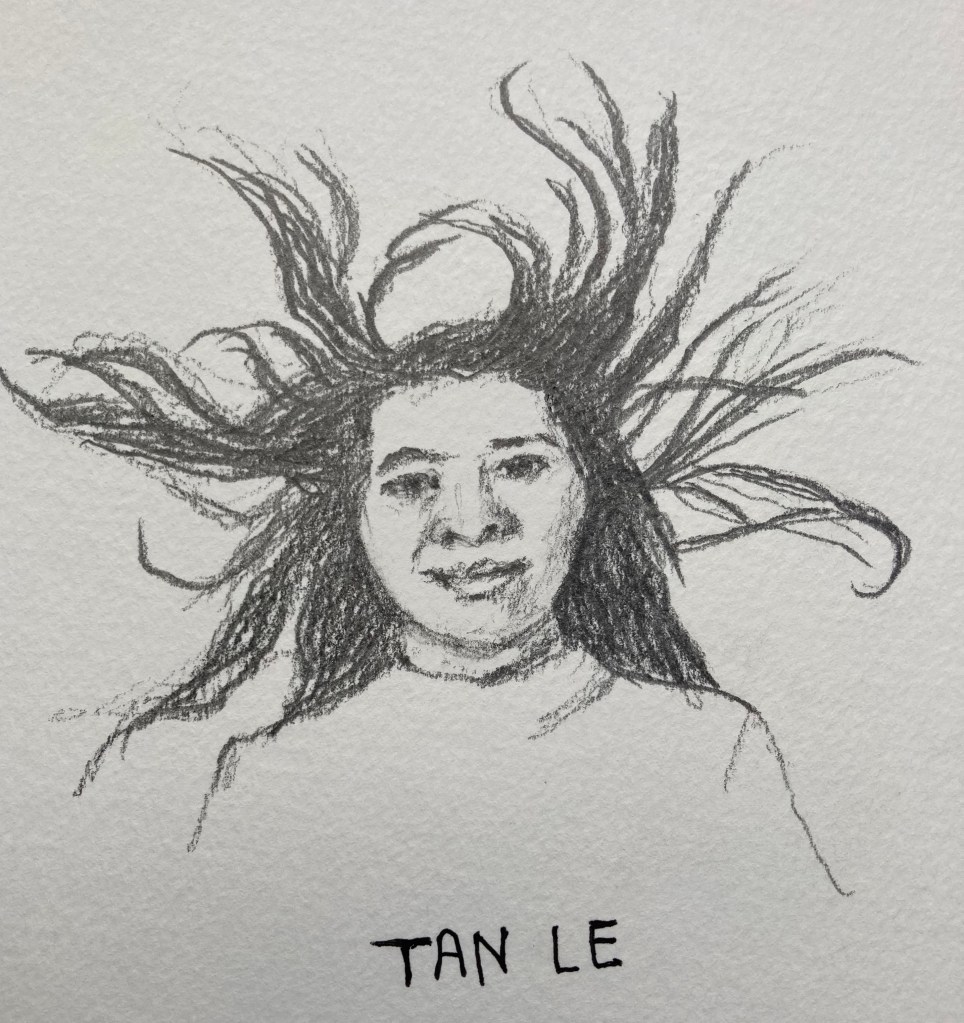
Fortunately, later that morning, I came across an article in the Weekend Australian Magazine by Cameron Stewart. It is a feel-good story that very quickly erased the frustration caused by the American lawmakers. Maybe, it was also that I am not an American, and therefore the sense of embarrassment and dismay about the growing weakness of their legal system did not linger. The story about Tan Le is mind-boggling. That a four year old Vietnamese girl who reached Australia in 1981 could grab her opportunities whilst growing up here and become the headline news about inventing an interface between mind and machine is a fantastic story to share. Tan Le was amongst the mass exodus of refugees fleeing their war-torn country after the defeat of the mighty American army. The GI Joes were equipped with far superior high-tech military weaponry than the Vietcong who were poor and poorly armed. Despite the lack of artillery, aircrafts, tanks and a naval fleet that only boasted a few Swatow class patrol boats and torpedo boats, they were able to defeat their enemy who the world wrongly thought were their invincible nemesis. When Tan Le and her family (minus her father who remained in Vietnam in case he needed to support them) landed in Australia, her mother told her to bend and touch the ground. “Mum, it does not feel very special” she said as she touched the ground at the airport. Tan Le’s mother said, “Make it special in your mind.” Make it special, isn’t that just the most important attitude to teach a young child? Seventeen years later, Le would indeed be special – she was named Young Australian of the Year for her work in helping those in her community assimilate in their new country. In 2009 her company Emotiv Systems, headquartered in San Francisco, released their first neuro-headset – a mobile electroencephalogram (EEG) device that detects electrical activity in the brain. Since then she has been able to use this as an interface with machines. Her headsets can now translate brain signals into commands that instruct machines to operate specific functions, using computer algorithms. These machines with artificial intelligence (AI) allow people, using their thoughts only, to move objects, fly drones, command and control wheelchairs and cars, move robotic limbs and even create art and music. Mind over matter is no longer science fiction. A quadriplegic, Rodrigo Mendes was able to drive a Formula One car using only his mind. It offers life-changing opportunities especially for the physically impaired. Le says the holy grail of this technology is when her headset can self learn from its wearer and automatically feed data back to the brain. When AI becomes integrated with the human brain, it will be able to use its markedly superior intelligence and wisdom to limit the human from making stupid decisions and prevent them from committing cruel acts on other living things. This gives me hope that AI may one day curb the ugly inclinations of urghhlings.

DNA Ancestry For Bioweaponry?

Are we true blue Chinese? Ever since I became a father of three boys, I began to question their ancestry. I was absolutely certain about mine, I felt. Pa’s roots were from Shaoxing, not far from Ningbo where Ma’s clan struggled to survive. I did not think further than that. It wasn’t important for me then – my basic understanding of Biology only told me my genes determined my physical attributes such as height, colour of eyes and hair. I blamed everything on my genes. The whole gamut of physical imperfections in fact. Skinny? Slant beady eyes, definitely due to my genes. Puny arm genes, buck teeth genes, flabby tummy, sparrow leg genes too. But The Mrs’ DNA? Where did they come from? Hakka people were travellers, that is why they are called guests, 客家話, khek lang or khejiaren. Believed to have fled northern China due to war and famine around 300 AD, they eventually settled in the south of the vast country. Did the Hakka for instance interbreed with non Han people? My sons all have a pronounced hooked nose – could it be a physical trait from tribes in Central Asia, I wondered. A colleague of one of them asked if he has Turkish blood. Hakka architecture is unique and totally different from the Chinese. The circular dwellings called tulou reminded me of ancient spaceships, more alien than Han. The Mrs rationalised that the Hakkas were constantly attacked by rival villagers. They were farmers, and had no military skills and weaponry to ward off attackers. Their walled round buildings housed a whole clan and kept the invaders away. “Then, why did they flee?” I asked her. Silence.

Tulou near Xiamen

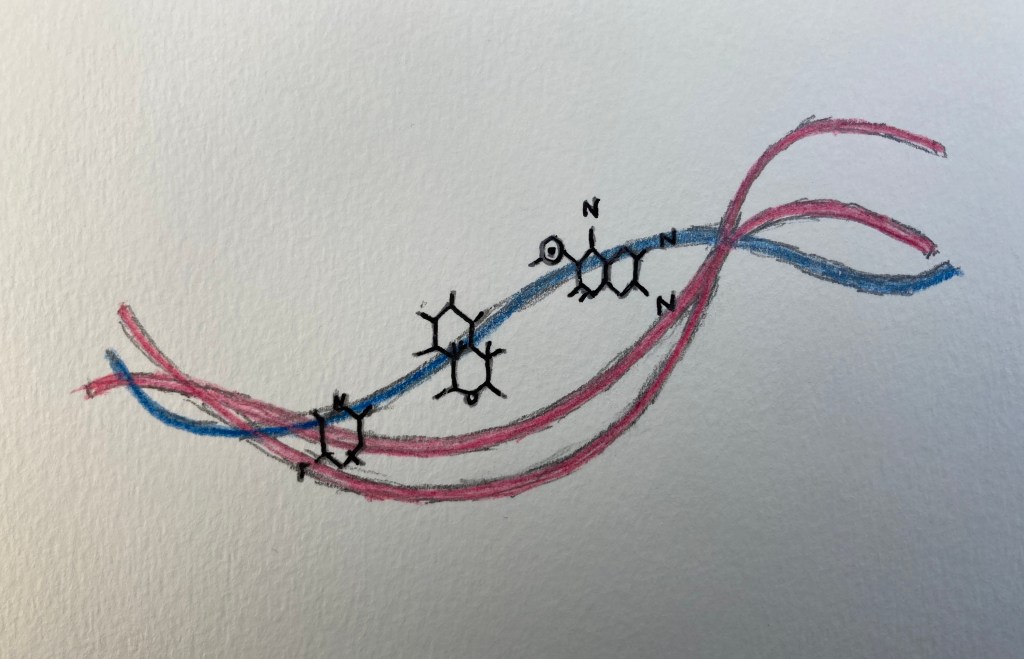
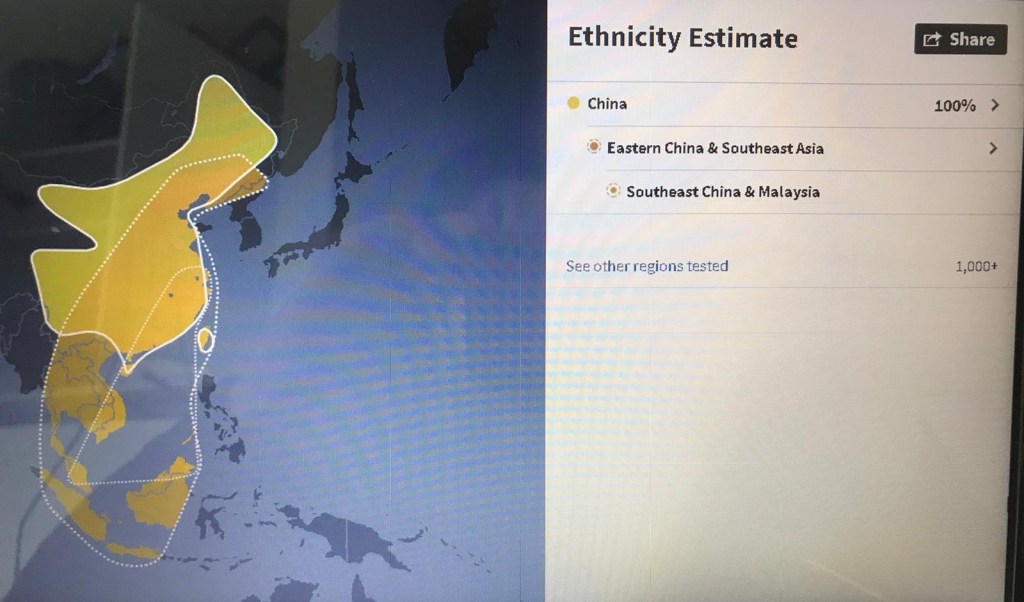
Last Christmas, I bought my eldest son an Ancestry DNA kit to crack the mystery once and for all. One kit would suffice since all three sons are of the same progeny. I gave myself a little praise for not buying three kits – the little Biology I learned in school saved me $129 x 2. Amazing technology, spit into a tube and they will tell him everything he does not know about himself. They can trace both his paternal and maternal lineages and even uncover the geographical and ethnic origins of his ancestors. My son got his results last week. Surprise, surprise. He is 100% Chinese. The $129 I spent did not explain why my sons have their hooked nose. They have neither Turkish nor Mongolian blood. Pure Han. Which does not explain why The Mrs has deep set eyes, high cheekbones, a hooked nose and big feet. But, the results were able to accurately describe my son’s physical attributes – that he is tall and muscular, possesses strength rather than speed, and prone to back injuries, to name a few. For a few hundred dollars more, he can find out what diseases would likely befallen him, what illnesses he will likely succumb to. And then the alarm bells started to ring loudly in my head!

If their ever-growing database has such incredible information, how easy would it be nowadays for AI or brilliant scientists to determine what pathogens can be manufactured to target and attack specific genes? Forget about viruses such as SARS and the current coronavirus that is grabbing global headlines and causing a media frenzy. How long would it be before a rogue nation with a rogue leader wakes up and orders their scientific community to produce a virus that would specifically target a race? Wipe out a whole race without firepower, without a missile being fired. Without destruction of roads and railways. Every building untouched. Without retaliation. The enemy would not even know it is being attacked. For instance, an enemy of China producing a virus that kills only people with genes specific to Chinese only? The attacker’s own blue-eyed and green-eyed populace will have no fear of the virus. And when the whole Chinese population is decimated, what is to stop the attacking nation from invading China and take over its infrastructure and financial systems that remain in working order? Bioweapons that kill only the enemy race. That is coming soon! Urghhlings. Meanwhile, the media frenzy continues about Novel Coronavirus 2019 n-Cov. The deadly virus. The deadly virus. The deadly virus. These three words are repeated constantly in all news channels. I get the feeling they are creating hysteria and panic before the pandemic is even a remote reality. First the trade war declaration by Trump. That did not defeat China. The cynics see this virus as another US attack against China. Another attempt to cripple the Chinese economy and slow their advancement to modernise their military. Wuhan is a near ideal city to start a war using biological warfare. A city of close to 11 million people centrally located near the important industrial and financial centres of the country. There were persistent rumours that SARS was a bioengineered virus that infected Hong Kong. It has not taken long for conspiracy theorists to accuse the Anglo-American axis of bioengineering this latest coronavirus. Fifty million people under lockdown today, American media reporting “skyrocketing” infections. Why are we seeing this mass hysteria? Globally, 80 dead out of 2,700 cases so far. Let me put this in perspective. In 2019, there were 430 deaths from 217,000 reported cases of the winter flu just in Australia alone. Undoubtedly, the health authorities are right to put systems in place to curtail the spread of this threat. But, let us not fear the end of the world is near. Far from it, urghhlings will not be so easy to get rid of from this world.

P.S. The H1N1/09 virus was first recognised in Veracruz, Mexico but quickly spread from the US. They did little to contain it. Yet, we now hear rumblings from The West criticising China for failing to contain the Wuhan virus or the Chinese Flu as some are calling it. From April 12, 2009 to April 10, 2010, the US Centers for Disease Control and Prevention (CDC) estimated there were “60.8 million cases (range: 43.3-89.3 million), 274,304 hospitalisations (range: 195,086-402,719), and 12,469 deaths (range: 8868-18,306) in the United States alone due to the (H1N1)pdm09 virus.” Estimated 105,000 to 395,000 deaths worldwide, according to The Lancet. That is roughly 0.03% fatality, but no accurate count was taken as the WHO and CDC stopped counting cases once they declared it a pandemic. Imagine the uproar if China were to simply follow their example. According to the WHO Review Committee in 2011, it could have been as high as 200 million infected. No one called it the American flu, although very appropriately it is also known as the swine flu.

Anything wrong with my DNA?

Gong Xi Fa Cai II

Keong! Keong ah! Keong Hee Huat Chai! Kung Hei Fat Choy! Gong Xi Fa Cai! Sure enough, the barrage of congratulations intensified as the clock approached Chinese New Year (CNY). Congratulations on your prosperity! We Chinese are either stubbornly optimistic or stubbornly delusional. Most of my friends are in their sixties, and none are prosperous, flourishing with great wealth like the Gates, Zuckerberg, Bezos or Rothschild families. Yet, they did not hesitate to congratulate one another, as if they had all struck gold or oil. I got congratulated too – even though an observer and a failed entrepreneur, their enthusiasm pulled me into their vortex of excitement and congratulations. On the eve of CNY, all chores involving the broom and sharp instruments such as knives and scissors had to be completed before midnight. It is a definite no-no to touch such gadgets on “Choo Yi” first day of CNY – try it and the year will be cursed, for sure. I ran out of energy after work yesterday and abandoned earlier plans to vacuum the house last night. I reasoned that the Kitchen God and Money God (Caishen Yea) would understand that we here in Australia cannot afford maids to do our housework – they would not spurn my house over a few specks of dust, I hope! As a minimum, I did change the linen in the guest room – only because I knew my mum was spending the first three days of New Year with me. My house was not designed to have a guest room. It was originally a formal lounge with a connecting formal dining room. They were converted into a bedroom for The Mrs’ parents, and a music room for the boys. After we became empty nesters many years later, this room has become a guest room. There is no economical sense to build a guest room. Why have a spare room that by definition means a room that is rarely used? Most of us have to take up a lifelong mortgage to build a house. Why spend that amount of money on a guest? It would be cheaper to put the guest in a hotel, right? Benjamin Franklin said guests are like fish. They are fresh and wonderful on the first day. On the second, it is still okay to enjoy them, but come the third day, we will find the fish off and the guests decidedly off-putting. To avoid such ramifications, I shall not treat Ma like a guest. She is my mother!
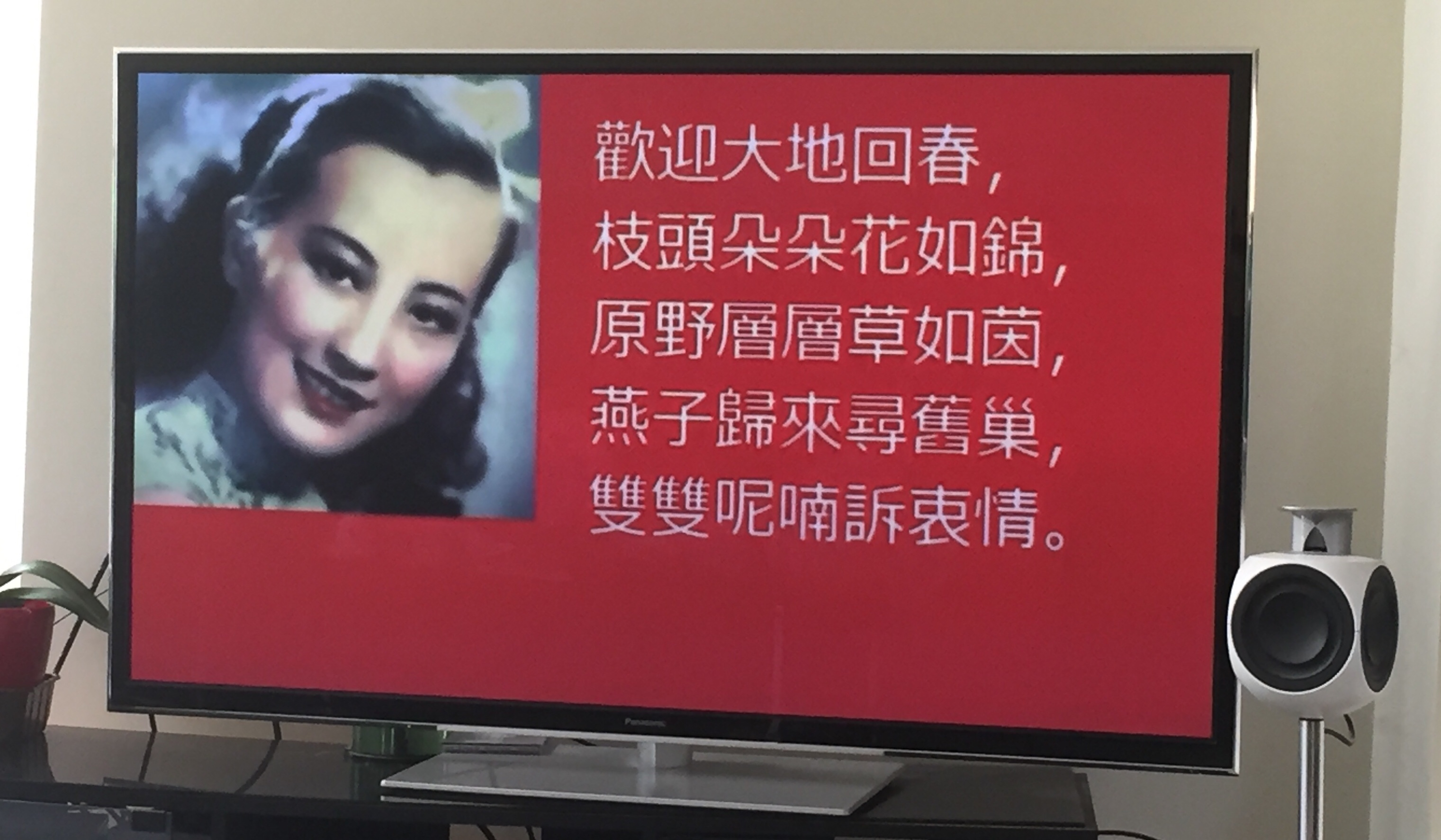
Xin Nien Hao! Happy Chinese New Year. Today is Choo Yi, the first day of the Year of the Rat. Chinese horoscopes say the metal rat will bring prosperity to most zodiac signs. But, do Chinese horoscopes ever not mention prosperity in their predictions? Ma is staying with me for three days. This is the first time Ma is staying with me for CNY celebrations since I left home in 1977. This is also my first time to enjoy a long weekend celebrating CNY in Australia. The traditions become important this time although Ma is quite relaxed about stiff customs. Since Ma is around the house on Choo Yi, I shall adhere to the rules that have ruled Chinese for a few millennia:

  1. Do not wash clothes – easy!
  2. Do not wash hair – easy! (to the Mrs’ expressed objections. She said my hair stinks)
  3. Do not use sharp things, e.g. scissors, knives, needles – but there is no mention of avoiding the use of a sharp tongue.
  4. Do not sweep the floor – in case you unknowingly sweep away your wealth.
  5. Do not take out the garbage – in case you unknowingly throw away your wealth (as if one’s wealth would loiter in the garbage bin)
  6. Do not eat lobsters – these critters can move backwards. Eating them may cause setbacks, but it may be too late for me! I had my favourite crustacean last night.
  7. Do not eat porridge – it hints of poverty.
  8. No killing. It is usual to have leftovers on the first day of the new year or adhere to a vegetarian menu.

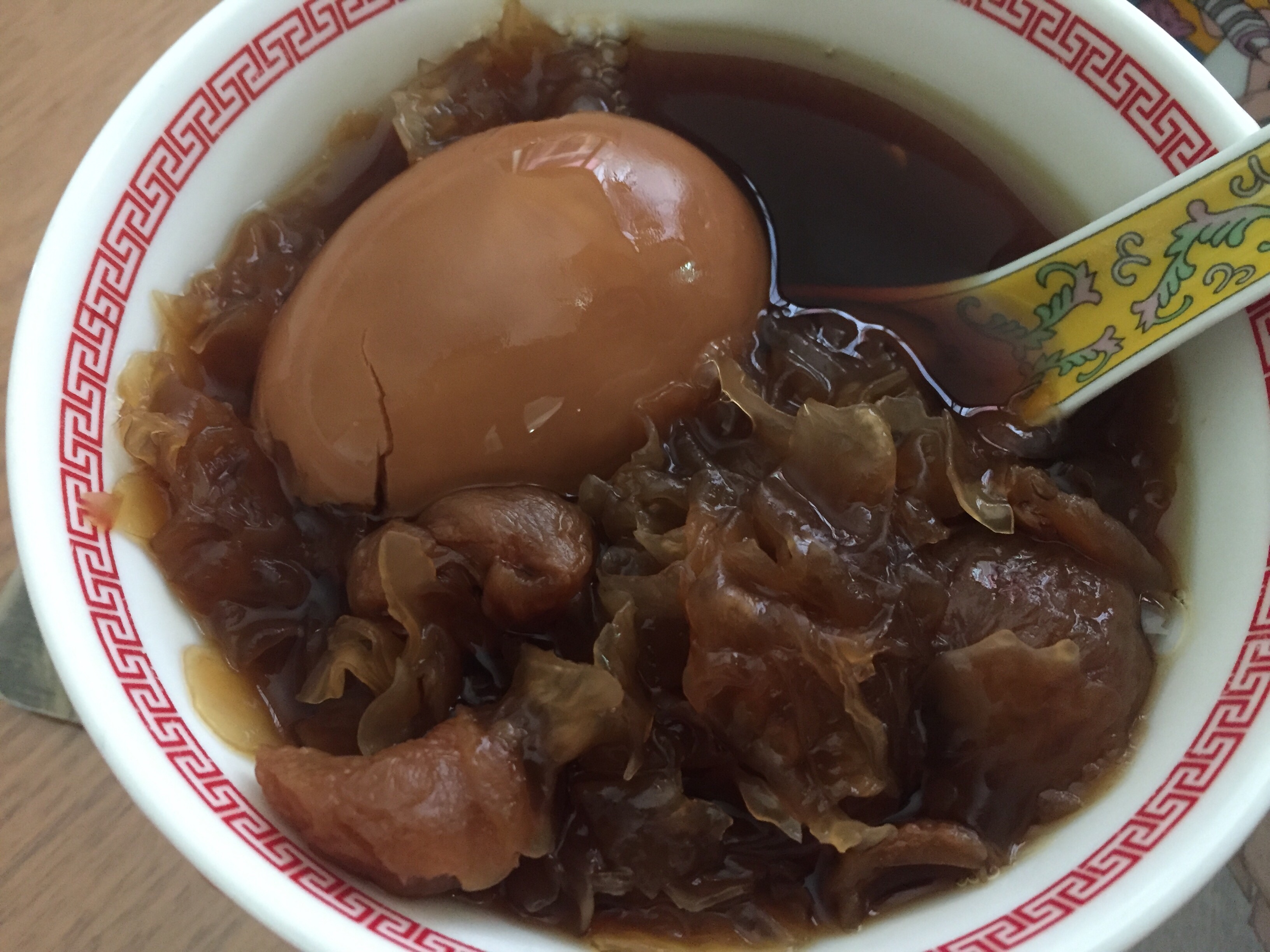
What I did achieve – yes, considered an achievement by none other than myself – was I made the traditional sweet soup for CNY breakfast. Ma unfailingly made that for us every Choo Yi when we were kids. I looked forward to our first dish every CNY with the eagerness of a child in a lolly shop. When Ma was in her eighties, she still made it for us. “Us” by then included many grandchildren, so the serves became much smaller. Today, I realised it is a simple dish to cook, yet it is tasty and packed with goodness. White wood ear mushroom and longan soup. Clean and rinse them. Throw them into a pressure cooker. Add water and palm sugar. I could not find the lotus seeds in the fridge even though The Mrs said “they’d be staring at you in the face”. Cook for 20 minutes, open the cooker once pressure is released, cut the wood ear mushroom into bite-sized pieces, add hard-boiled eggs (and goji berries, if I can find them in the fridge). Keep warm until everyone wakes up. Goji berries are a super-food, I add a handful of them to my rolled oats for breakfast in the office. Their medicinal benefits are finally being supported by Western science – otherwise, they are “unproven” and demoted and dismissed as “old wives’ tales”. The Mrs was so impressed with my dessert soup she said that will be my job from hereon. She is not just a good artist, she is artful as well – being easily impressed with me with the many things I do around the house.

CNY in Australia is usually a non-event – just another working day, never a public holiday. Occasionally, it may fall on a weekend but that made no difference to me. When I had my retail shops, work tied me down 7 days a week for twenty years. Sad, looking back at it. So foolish to have allowed circumstances and false ambitions imprison me and reduced my life into mostly work and commitments. In those twenty years, I would have been lucky to have read maybe ten books. Thankfully, I was able to free myself from that “life sentence”. The last seven years have been good years with leisurely weekends of gardening and reading (and now, writing). The amazing gift from YouTube – free CNY music and video clips streaming into my living room all morning, has kept Ma entertained. My earlier selections were 2020 CNY music, but many of the songs were not familiar to us. The black and white one turned out to be the best for Ma. She was visibly enthralled to see names familiar to her, popped up on the TV. Lin Dai, Wu Yin Yin, Tse Wei, Kha Lan. Familiarity does not breed contempt to the aged. Rather, it is a friend, a companion. Inevitably, these old songs and songstresses of yesteryears, revived her old memories. I suspect they were never deeply buried. How could they be, even though they were buried so very long ago? She was talking about her four children who never made it past their first day on earth, who never enjoyed the thrills of a Choo Yi. Never an Ang Pow (cash in a red envelope) under their pillow, never a dessert soup for breakfast, never the crackling sounds of firecrackers. The first casualty after the war was a premature boy – he was born at 24 weeks in 1948. The hospital, Penang’s General Hospital, did their best, but he did not survive in the incubator. The following year saw another episode, this time a girl, also premature at 24 weeks. The hospital had lost their credibility with Pa. On August 5th 1950, Pa decided to bring Ma to the “Khor Ning Clinic” in “Chia Chiu Lor” instead. A son was born there, premature at 32 weeks. Wet with amniotic fluid – the cotton wool supplied was sparse – he was hastily wrapped with Ma’s trousers (no blankets were supplied) and left on the floor below the baby hammock or “yaolan”. “Why did they not put him in the yaolan?!” I asked with an incredulous gasp. “The baby was still dirty”, Ma replied. “Oh, look, look. He’s smiling at me”, Pa beamed a proud smile. Unfortunately, the baby sneezed and died soon after. Early mornings in Penang during the 1940’s could be quite cool in the rainy season, especially in August and September. “Where did they bury the babies?” I asked Ma. The nurses took the bodies away, disposed of somewhere decent I hope. “They did not provide a proper burial?” I pressed Ma. No, they were “not human yet”. In December that year, Ma lost another child. That one was also not human yet, a mere three month old that “flowed out” from her whilst she writhed in agony on the wooden floor of their shop house in Penang Road. The bloody show came much too early. I am grateful these siblings did not suffer the scourge of the urghhlings. No matter no CNY celebrations for them on Earth. Ma, we still celebrated their memory on CNY 2020.

Gong Xi Fa Cai

Generally speaking, we Chinese do not wish one another happy new year for our lunar new year. We wish for prosperity, wealth and success. You, prosper! And you, prosper too! You, and you and you, prosper! In return, let me prosper too!

The Chinese observe the lunar calendar. Chinese New Year (CNY) never falls on January 1 of the Gregorian calendar. Congratulations! Prosperity! That is a literal translation for CNY wishes.

Gong Xi Fa Cai – in Mandarin

Keong Hee Huat Chai – in Hokkien

Gung Hei Fat Choy – in Cantonese

When we were young, that was how we were taught to wish one another on Chinese New Year’s Day. It was always about prosperity, never about happiness. Many of us Penangites cannot recall how to wish someone happy new year in hokkien. We never wished one another happiness. When we were kids, we did not hear the adults wish anyone happiness either. Maybe they connected the dots? Prosperity will lead to happiness anyway? I was young and naive when I pondered on that. At an age now when many friends have already become grandfathers many times over, I know such a connection is totally unrealistic. Stories about Princess Diana and current news from Harry and Meghan (who all were stripped of their HRH title) are testament to the fact that wealth and happiness are seldom found together. So why did the Chinese elders omit happiness and health in their new year wishes? The focus was always on prosperity and success. Was it the abject poverty and lifelong suffering they endured that prioritised their wish for prosperity above everything else? I would like to know what the great Chinese sage’s stance was on this. What did Confucius say about this? Were they not at all concerned that such singular emphasis on wealth and prosperity could cause the breakdown in the moral fabric of their societies? It may well be true that when one is suffering from extreme poverty, nothing else matters. Happiness? Peace? Tranquility? Sustainable consumption? Plastic and urghhling-induced climate change? No time and energy to worry about these when we cannot find food for our people!

“Ong! Ong! CNY will be hot! Briefly I thought they were predicting a hot day ahead. But they were hyping up the bullish sentiment of their economic status, raising hopes for a hot economy in the new year. Any hot tips for the sharemarket? They wish one another for a red-hot boom in the sharemarket and the real estate market. Ong in hokkien. Wang in mandarin. It means red-hot, raging success. Even the pineapple gets a guernsey during CNY. The fruit is called Ong Lai in hokkien and is therefore the fruit that is prominently displayed in many households. The boom is coming, the literal meaning. I know of a famous Malaysian artist, Yeo Eng Peng, who specialises in painting the pineapple. His subject, the Ong Lai, resonates well with the art collectors. Who amongst them do not want prosperity to enter their homes and offices with the painting of their pineapple prominently displayed?

Yeo’s Malaysian Pride sold for over RM30,000. Ong Lai! Huat!

Gong Xi Fa Cai. Hong Pao Na Lai! Keong Hee Huat Chai. Ang Pow Gia Lai! Congratulations on your prosperity, now give me the red packet! We Chinese are very direct – no beating around the bush! That’s the loud chorus you will hear around young kids during CNY festivities. Don’t be surprised the youthful ones will also echo that. Last year, my older cousin brother reminded me he is still entitled to the red packet. Ang Pao Gia Lai! His status as an unmarried still entitles him to claim a free packet that contains cash, never mind how old he is. Never mind the cashless societies we live in. When it’s CNY, cash is still king! The red packet is every child’s dream come true! On one good day when I was a kid, I managed to collect RM80. May the good times keep coming. Fortunately, the concept of collecting Ang Pao’s and accumulating wealth as a prerequisite for a good year was not adopted seriously by me. I took it as just another cultural tradition, the practice as interesting as eating moon cakes during Mid Autumn festival and eating tangyuan during Dongzhi (Winter solstice). Collecting Ang Pao’s did not teach me to become materialistic or money-minded to place the importance of money above all else. My point is it could have and maybe it can still inculcate a new generation to a culture of kowtowing to money and revering the prestige of wealth. The Taoists still pray to Caishen Yea, the God of Wealth. They believe in the supremacy of money – that there is a God to divvy it up to those who pray to Him. The Greeks also had such a God; their God of wealth was Plutus. Unlike Caishen Yea, Plutus has pretty much lost all His powers. Not many remember him.

Chinese traditions dictate that we would wake up to find red packets under our pillows. Those were the ones from our parents – containing the fattest wad of mint notes – slipped under our pillows with stealth whilst we tried our darndest to stay awake in our brand new pyjamas. The cash was so crisp I thought Pa had spent the night ironing the notes for us. CNY day was ushered in by wearing our brand new clothes – we would know the God of Prosperity was not so kind in the past year if there were no new clothes for us. The lack of new clothes did not matter, the excitement was really about how many Ang Pao’s we would collect. We went from house to house and “Pai Nien” – paid respects to all elders in our families and communities who in return handed us their pre-sealed red packets. Ang Pao’s, peanuts, sweet cakes and candy. Life was complete. Bottles of ice cold F&N Fanta and Sarsi were our all-time favourites except for one year when the new craze was some premixed lemon drink with beer called Shandy.

Dong Dong Chiang. Dong Dongdong Chiang. Xin Nien Tao. Xin Nien Tao. New Year has arrived. Gong Xi, Gong Xi, Gong Xi Ni. Congratulations to you. The familiar Chinese new year songs would be blaring in every household. What followed next after we got our Ang Pao’s? Gambling! Decks of cards would be handed to the older kids. They would decide which games to play. The adults would adjourn to their clubs or kongsi or in my case, the San Kiang Association on McAlister Lane. What were the adults thinking of?! Kids, first you go house to house and collect free money, then you try and multiply it by gambling! It is no wonder that the world’s casinos are swamped with Chinese clients. Gamblers, all of us! We started young, from our first Ang Pao! Ong! Huat! Gong Xi Fa Cai, urghhlings! Since I left my hometown of Penang in 1977, I have not experienced CNY in Malaysia. I have never been back in Asia during CNY celebrations. The Ang Pao’s I have missed! My last Sarsi was also in the 70’s. The sound of firecrackers exploding away in a billow of smoke is also a childhood memory. I used to imagine evil spirits being chased away by the loud explosions. Red is an auspicious colour for the Chinese, especially during CNY. My family never hung the Ang Chai red cloth over the front door of our house. It did not dawn on me to ask why the practice was never adopted at home. Very likely, the reason why many hang the Ang Chai was to ward off evil spirits from their homes. It must have been impressed upon them that evil spirits only trespass via the front entrance. I never saw Ang Chai red cloths hung on back doors. CNY is a non event in Adelaide apart from a family reunion dinner and a substandard lion dance in a suburban Chinese restaurant. As luck would have it, this year I will enjoy for the first time a public holiday to celebrate CNY. Australia Day, also now known as Invasion Day by the aborigines is on January 26 which falls on a Sunday this year, making Monday a public holiday. Yes! Maybe I will find a fat Ang Pao under my pillow. Ong! Huat! Keong Hee, urghhlings.

The Mrs, bribing a Red Lion for good luck
A friend’s Ang Chai is up!

Voice Of The Menace

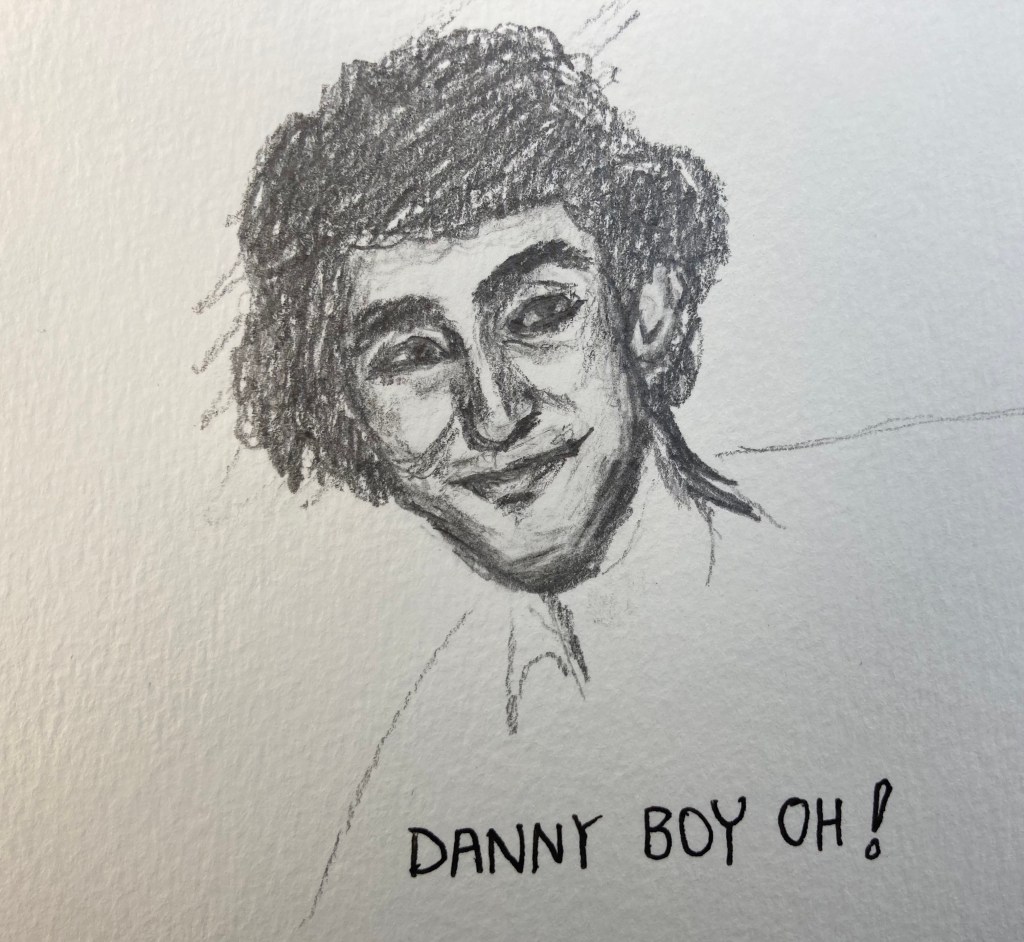
“Hey! Are you the boy from Scotland Road?” There was no hello, no g’day from the caller. The phone number did not reveal his identity. But his voice did. “Dennis the menace?!” I asked excitedly, not requiring an answer. Apart from Dennis Lee the pianist, Dan was the only other Dennis I knew during my school life in Penang.

“Close, it was Scotland Close.” I replied. In all my years since leaving Penang, I have never come across a more beautiful road than my childhood Scotland Road, the main road that was parallel to Scotland Close. Not even the Jacaranda trees that line the blue-ribbon streets here can outdo the magnificent Angsana trees that flanked the road outside the house I grew up in. The Angsanas were majestic trees, easily over one hundred feet tall, that turn golden during the flowering season of February to April. In the early 70s, Penang was quaint and exotic with more bikes than cars. Gridlock was not in my vocabulary. When the Angsanas dropped their flowers, the road would become carpeted with a thick layer of golden petals. It was pure joy to walk on the golden trail, and if the occasional car was to leave its tracks on the carpet, it wouldn’t take the trees long to cover them up. If only I had a camera then to capture what was my heaven. When I finally saw the yellow brick road in that famous Hollywood movie, The Wizard of Oz, my mind turned back to Scotland Road’s Angsana trees. The film’s director, Victor Fleming, would have created a more beautiful yellow brick road had he been acquainted with my real golden road. I wanted to brag about the aphrodisiac fragrance of my youth that the Angsanas brought but I honestly cannot recall they produced any noticeable scent. Well, better that than being woken up by a strong belch of sinister bushfire smoke in the wee hours of the morning. I live in the foothills and that means I can wake up in a panic thinking the bushfires in the hills I read about daily and watch on telly have reached my personal frontier. In my household, we now sleep with closed windows to shutter out the filthy brown air from Kangaroo Island and nearby peaks. My bedroom smelt of barbecue the one night that I forgot to close the windows. Apocalyptic is a word frequently used to describe the carnage and destruction of Australia’s wildlife this summer. Apparently, over 500 million animals have perished in the bushfires.

We spoke for 27 minutes. All the while, the Dan I saw in my mind was the same 18-year-old dark-skinned boy with a thick curly tousled tuft, bright wide eyes and a prominent nose reminiscent of Gérard Depardieu’s. Tall, dark and handsome, I was convinced those three words were strung together to first describe him. “Send us a photo! Show us how our Dan the cool man looks like today!”, I implored him to share his latest pic. He said he was balding, and confessed he envied the long-hair genes I have been blessed with. I suspect the tuft he has now, is on his chin. He proudly announced his status as a “Datuk”, not the title conferred on the wealthy or super successful, not the one you can buy for RM500,000 (a rough guess, based on the going rate of RM300,000 ten years ago) plus ongoing annual contributions, but the one that’s got the “kong” after it. My Indian friend still knows his hokkien. Kong means grandpa in the hokkien dialect. I could sense his happiness when he talked about his two grandsons, 4 and 6. “It’s hard to keep up with them but they keep me fit.” I imagine when he tries to put them to sleep, they put him to sleep first. Sixty-year-olds lack the energy to stay awake, I have come to learn. But, don’t ask me how I keep awake in my office please. The 27 minutes went by in a flash. I was sorry he had to go. As if he couldn’t talk in the toilet. He forgets we even shared a bed together when we were in our teens. That was how close we were as buddies. Back then, sharing a bed had no sexual connotations and was without any reviled intent. Yeah, I believe Michael Jackson was as innocent and pure with his young fans in his NeverLand.
Dan, my old buddy. As I listened intently and grabbed every single word of nostalgia from his amazing memory bank, the recollection of happy childhood memories was slowly tinged with a growing heaviness within. The realisation that all the carefree joviality and frolic he shared with me was long gone, shredded by the unrelenting twin demands of parenthood and filial piety. I always suspected Dan could have been a budding movie star. Opportunities were lacking, I suppose, during the 70’s in Penang. The only avenue to experience the joy and fun of acting was during our Boy Scout comedy sketches. It was serious business to be funny. There were prizes to win for our patrols. Together, we wrote our play scripts, plotted the storylines, picked the casts, devised the musical instruments (pots and pans and empty glass bottles) and directed the sketches. The most memorable one for me was the play that had me as a nosy parker, middle-aged housewife. Hilarious. I secretly discovered my penchant for acting. Once we even performed as a musical duet – he on guitar and I, the lead violin. He was self taught but his natural talent put me to shame.

With Dan, it is still hunky-dory to call him Indian. I never asked him what race he belongs to even though it is clear to me now that his surname does not sound Indian. When we were growing up, it never mattered what our race, creed or religion was. Not even rich or poor. Defenders of slavery were quick to promote the 19th century scientist Samuel Morgan who professed that white Caucasians were the smartest followed by East Asians (Mongolians), and black Africans importantly for them, were bottom of the food chain. But, no. Not us. We knew humans are all equal, decades before geneticists applied DNA sequencing to complete the human genome project. Race is just an invention to set us apart, a made-up label. In June 2000, Craig Venter, a pioneer of DNA sequencing, observed, “The concept of race has no genetic or scientific basis.” We may all be out of Africa, but it is the Africans who are the most diverse. Having existed the longest, they have the most genetic diversity and mutations. Along the way, the early migrants met another homo genus, the Neanderthals – that branch went to what is now Eurasia – and further east, they interbred with yet another, the Denisovans. Both Neanderthals and Denisovans became extinct after having co-existed and copulated with homo sapiens. There are many theories why this occurred – human violence and diseases, competitive advantages such as domestication of dogs helped humans with hunting and human adaptability to climate change. I suspect, without evidence, that it was the destructive nature of urghhlings that decimated their rivals.

Am I Chinese even though we are out of Africa?

Sarcastic About Plastic

Spastic. When my sons were growing up in the 80s, it was a word they learned in school. School for a short while was Highbury Primary. A suburb north-east of Adelaide, it was predominantly blue-collared, far from blue ribbon. Soon, it became a word frequently yelled out during arguments at home. “You’re spastic!” “No. You are spastic!” It was not taken as derogatory. Not by the adults, anyway. Whether the kids meant it to be, I do not know. Today, we do not use that word anymore. It has become offensive. The word is also taboo in the Spastic Society for the spastic cerebral palsy sufferers. They call themselves Scope. With the right support, every person has scope to achieve their goals in life. That is their catch-phrase.

Spastic. A word that was lost in my vocabulary since my sons left Highbury Primary and went to Burnside Primary instead. That was in 1996. So, it has been twenty four years since I last uttered the word. Twenty four years of being politically correct. But, suddenly today, the word sprung into my mind. Spastic. Idiots. Fools. I was a victim of cyber bullying. Some of my sexagenarian friends ganged up on me over a topic that is far from sexy. Plastic. Sarcastic friends. The discussion about plastic turned caustic when one of them accused me of being “what’s the word? It sounds like an oath doctors make.” Obviously, he wanted me to connect the Hippocratic oath with the unsaid word. Hypocrisy. Do I become a Pharisee for voicing my frustration when I see the ubiquitous usage of plastic in their photos? Why do they treat me with disdain and think it is a sham when I talk about the futility of our fight against plastic if urghhlings’ attitudes do not change about plastic? Especially single use plastic. “When in Rome, do what the Romans do”, one of them countered. In other words, they use plastic (proudly) in Penang; and if I do not like it, leave. During the course of our conversation, I became “you” rather than “us”. I was unprepared for this. How can plastic set me apart from these childhood friends? Suddenly, I am made to sound different, inferior, fake, a pariah. Fortunately for me, my father named me “forever strong”. Maybe not physically, but certainly, inwardly and resolutely. They displayed their sense of pride and confidence publicly, for all to see. “Why, do you want to go back to the days of banana leaves and eating with your hands?”, another mocked me. My Malaysian friends are openly happy to use plastic. They reckon I should try drinking piping hot soup with my bare hands if I didn’t want to drink from their plastic bowls. “You’re only environmentally friendly when it is not too inconvenient”, they chastised me. Nero fiddled whilst Rome burnt. Australia has been burning for over three months. These friends are still fiddling. They bragged about their antique collections of E & O Hotel tea cups from yesteryears. Of course, the era of elegance and class did not perpetuate the use of plastic. Fine porcelain, no less. These friends did not see the irony of their enthusiasm for pricey antiques. Such fine items are displayed in their glass cabinets – their practical use, never to be enjoyed. Instead, these friends eat from plastic plates and bowls, with plastic cutlery and chopsticks. Somehow, they see my fight against climate change, no matter how small this step, is a farce. “Are you going to blog about this? Here is a nice title. How about My Losing Battle Against Plastic?” “May we remind you, it makes little sense to antagonise us”. Another climate skeptic. Spastic. Sad. It is no wonder the world leaders are merely paying lip-service to combat climate change. Most people of voting age do not care! Despite global warming, the ever-increasing retreat of glaciers, extreme weather patterns and rising sea levels, my friends’ complacency and total disregard of their environment was astounding. Baffling, in fact. Just like Donald Trump’s, who withdrew America from the Paris climate agreement in 2017. My many detractors in their shrill voices said I was being hysterical, echoing Greta Thunberg’s fanatical screams. Global warming or climate change, I suppose, by its very nature, is a long term shift in global climatic patterns. We are old buggers, unlikely to face major repercussions of what horror that may be ahead of mankind’s future. Maybe that is why they do not care. Inconsequential to us. They might as well joke about it and poke fun at my serious intent to reduce my carbon footprint. “Plasticware is good! They last and last and last”, one of them said. That is the strange thing about looking at things from a different perspective. It is precisely the long lasting nature of plastics that is the problem! Single-use plastic bags can last 1,000 years before they decompose. Plastic is made from fossil fuels, and when they are burnt or left to rot in landfills, they release almost a billion tonnes of greenhouse gases into our atmosphere, every year. Discarded plastic also find their way into our oceans, even to the deepest place on earth, in the Mariana Trench. We cringe when we see images of dead whales, turtles and dolphins filled with colourful plastic in their stomachs. What is a looming major disaster is the microplastics that are being ingested by marine life, including plankton. It is plankton that play a vital role in capturing carbon dioxide and sequestering it in deep ocean sinks. Apart from this, plankton is of course what keeps the eco-system of the oceans alive. Without plankton, there would be no fish in the sea. Without fish, life as we know it will not be possible. A big chunk of the world’s population will die of starvation. Many today are wary of eating farmed fish; they are skeptical of the contaminants and antibiotics found in aquaculture. But, more and more, it is also the microplastics found in wild caught fish that are turning some of my friends off seafood altogether.

A Royal Doulton set from E&O Hotel in the 1980’s

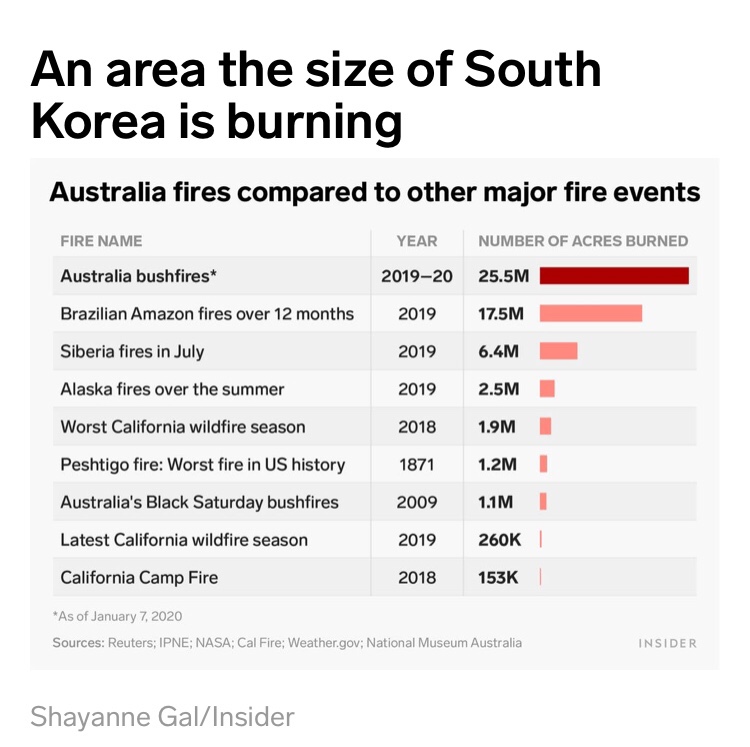
Surely, my friends can see that reducing plastic usage and increasing recycling is the key to saving the planet. It is satisfying to know that the Australian Open this year will introduce a world-first in the tennis Grand Slams. Their ball-boys and ball-girls will be wearing clothing made of recycled plastic. At present only around 10 per cent of plastic is recycled in Australia each year. One exciting development in this field was announced last year. Len Humphreys and Sydney University professor Thomas Maschmeyer, invented their Catalytic Hydrothermal Reactor (Cat-HTR) which recycles plastic not from high heat but through a form of chemical recycling that changes the plastics at a molecular level using hot water at a high pressure to turn them back into oil. The oil can then be turned into bitumen, petrol or back into different kinds of plastics. Now, my friends may be right after all, and remain lackadaisical about the horrors of using plastic. These urghhlings do not exhibit any worries. They adopt the “she’s right, mate” attitude. It will be alright, just don’t worry. In the meanwhile, over 25.5 million acres of bushland have been burnt in Australia. Let us not fiddle while the country burns.

A drastic need to reduce our rubbish.