It’s Fake, For Goodness’ Sake

Matthew 7:15-23

“You have never been mine. Go away, for your deeds are evil”.

Earlier this week, a friend sent me this gem found in the Bible. There were ructions in our chat group about two American pastors who flew to Hong Kong to support the rioters or protestors; whichever word you subscribe to will reveal your stance on the civil unrest there.

Dr Pastor William Devlin and Rev. Patrick Mahoney, both American pastors, went to the Hong Kong Polytechnic University to support and encourage the students there to occupy the campus area in their fight against their own government. Fighting for democracy, human rights and freedom was their common catch-cry. That will garner universal support, acceptance and solidarity, right? But, even these learned and wise gentlemen of the cloth are blind to the violence and destruction that the students have perpetrated on fellow Hong-Kongers who do not share their political views or object to their destructive strategies for the past six months. In some interviews, some of these cherub-looking teenage students express their preparedness to die for their cause – for their democratic rights. Little do they know that although the notion of having democratic rights is noble and ideal, once we have won it, many of us somehow do not value it as worthy of a trip to the polling booth. To sacrifice our lives? If we are desperately hungry, yes. Less than 38% of women and 33% of men in the 18-29 age group exercised their voting rights in the 2018 mid-term US elections. Even in the 2016 US presidential election, less than six in ten eligible voters cast ballots for their president. In Australia, we have freedom of speech and freedom of information, except that voting is compulsory and we do not have the freedom to decide not to vote. Those disinterested in exercising their democratic right to vote are ignorant of the name of the Prime Minister and will have little idea what their local candidates stand for at the ballot box. Two federal seats won by the government in May this year are being disputed in the High Court. The reason? Some voters apparently did not know who they were voting for and were misled by the Liberal party candidates’ use of white and purple corflute signs that resembled the official signs of the Australian Electoral Commission. But, in Hong Kong, the young ones seemingly are ready to sacrifice their lives for democracy and freedom. Their concept of freedom is warped though, as they freely hurl verbal abuse and throw punches, bricks and molotov cocktails at those who disagree with their views.

Another friend commented, “How can they be pastors and spend most of their time as human rights activists around the world? It is contradictory! A pastor is supposed to shepherd or to oversee his local congregation…”. Maybe these men see themselves as more powerful than Jesus. They have global reach, whereas Jesus even at his peak could only preach for just over three years, in the Middle East beginning in Roman Judea and ending in Jerusalem. These men were working with members of the American Congress and Trump administration to pass the Hong Kong Democracy Act. Wait a minute. Isn’t that interference in another country’s domestic affairs? Can you imagine what the global uproar would be if America were to pass an Act that is called the Australian Aboriginal Death In Custody Act? That would surely stop the many aboriginal deaths in custody in Australia, right? Or if Australia retaliated and passed the U.S. Mass Shootings Act to coerce their Congress to stop the frequent school massacres there? At the time of writing, the bill for the Hong Kong Democracy Act has been passed, almost unanimously. No, there was not a single whimper to be heard in the West.

Not all who sound religious are really godly people. The way to identify a tree (or person) is by the kind of fruit produced. These American pastors are fake, my friend cried out. They are false prophets in sheep’s clothing, but inwardly, they are sneaky foxes. Their unconditional support for the naive and underage students and their encouragement for the youths to execute violence and destruction in the streets and malls will only breed hatred in their hearts and radicalise their thinking. Many families are broken as a result, their children running away from home to effectively become child soldiers in the fight against the government. Matthew 7:17 – Bad trees bear bad fruit. Will these young Hong Kongers become the pastors’ bad fruit? For the teenagers’ sake, they need a quicker way to identify the bad trees. “These pastors are fakes, for heaven’s sake!” my friend cried out to them.

It begs the question. Why are we so susceptible to charlatans? Fakery is rife everywhere, maybe it is the digital age that has emboldened the quacks. Could it be that the internet has provided the easy avenue for them to spin their charm in their deceitful way? I cannot help it but Trump immediately springs to mind. Apart from mad Madoff ‘s Ponzi scheme, Trump’s fakery must be up there as one of the 21st century’s biggest. His trade war with China was meant to be easy to win and he was going to rip billions back from China for trademark thefts and unfair trade practices. Yet, he is the one to block the appointment of two judges to the WTO’s Supreme Court, and so there is every likelihood that the world’s top trade court will soon be curtailed from making any further rulings.

The WTO is presiding over a record number of disputes, many of them triggered by Trump’s tariff wars with China and other nations. Trade officials say the crisis needs to be avoided because if one of the three remaining judges has to recuse themselves from a case for legal reasons, the system will break down.
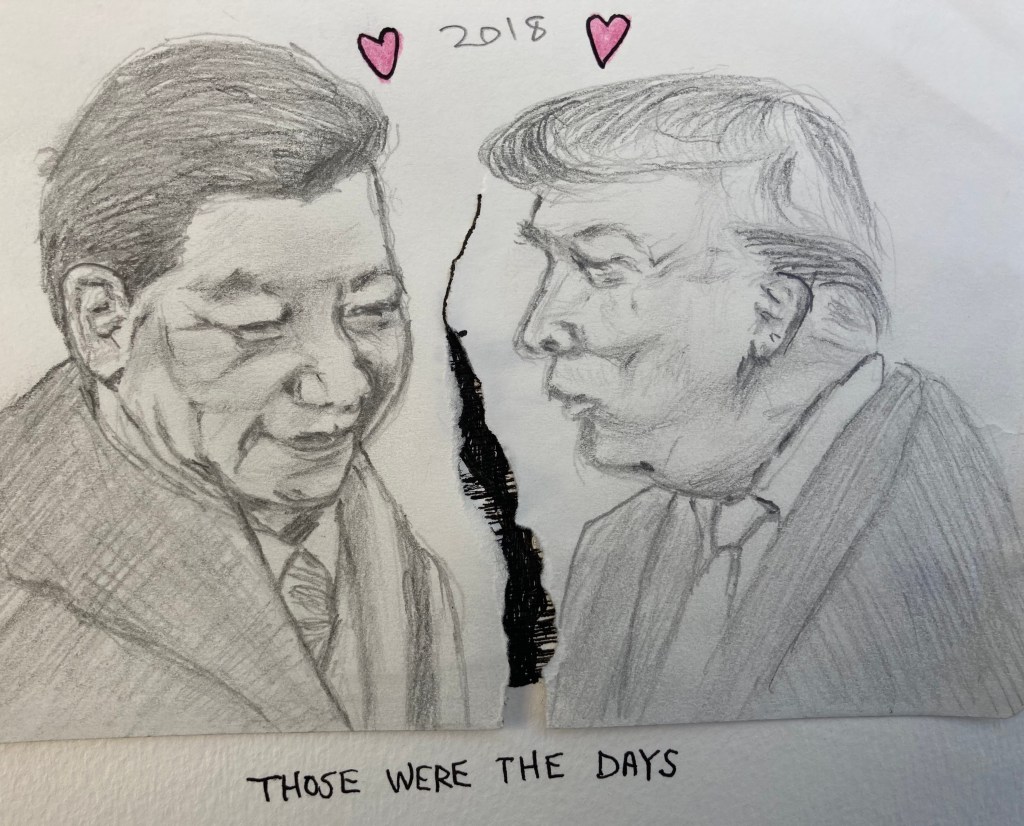
China is a serial patents thief? Trump obviously has not read any of Joseph Needham’s voluminous evidence of China’s discoveries and inventions over several millennia. Larry Romanoff wrote, “It is reliably estimated that over 60% of the knowledge existing in the world today originated in China, a fact swept under the carpet in the West.” Joseph Needham, a British biochemist, scientific historian and professor at Cambridge University wrote Science and Civilisation In China, a catalogue of 27 books on Chinese inventions, before he died in 1995. During his research, he discovered there are thousands of inventions that the West claim as theirs even in the face of conclusive evidence that prove that they originated in China hundreds and sometimes thousands of years before the West copied (stole) them.” In spite of clear irrefutable evidence, it is still so easy these days for charlatans to write a different narrative, even an opposite narrative. In the current impeachment hearing, Gordon Sondland, a big Trump donor, who was rewarded by becoming the U.S. ambassador for the European Union, verified many facts from earlier witnesses, and when asked if there was quid pro quo for Ukraine president Zelensky to announce investigations that can help Trump politically, his answer was “Yes”. Zelensky was pressured by Trump to “do him a favour” in order to win a coveted visit to the White House and receive the promised military aid his country badly needs to fight the Russians. Despite Sondland’s testimony, Trump did not resile from standing outside the White House and announce that the case against him is closed. “I want nothing. I want nothing. I want no quid pro quo. Tell Zellinksi (sic) to do the right thing. This is the final word from the President of the U.S.” He read it out loudly from his notepad, his fakery well disguised by the strong conviction in his voice. Can it be that we have forgotten charlatans do exist? Or that they only con otherswe are not that gullible? Someone in my workplace said life would be boring if my prediction was to come true – that Trump would be forced to resign by the GOP rather than be impeached. Maybe, just maybe that is the reason why we have allowed these fakes to thrive today. Life’s mundane routine and unending pressures mean we actually welcome such daily light entertainment from charlatans.

This morning, Second Son happily told me he bought a dusty old Chinese vase in a shop in Bonn. “Is it an antique?” he asked with a great deal of hope. He has it displayed proudly on his dining table. I put on my fake auctioneer’s hat and proceeded to describe it. “Late Qing dynasty multi-colour glazed porcelain vase (Guang Cai). Striking pink and blue floral design with beautiful blue motifs on the base of the neck.” The Mrs pricked his hopes and officially announced it loudly “It is a fake, for Pete’s sake!”

A beautiful Chinese vase. Is it an antique?

They Flip When I Flop II

Failure is forever if I quit. That has always been my private motto. I was in class Lower 6 Sc 2 in my last year of high school in Penang. There were only two classes in the science stream. The smarter guys in Sc 1 did Math 1 and Math 2. We in Sc 2 did Biology and Chemistry or Physics. It was a honeymoon year for some of us – those who knew they were leaving for overseas soon. “Soon” was August for those going to the UK, and the following January for those heading to Australia or New Zealand. Naively, I thought that was the end of school life. The reasons to learn were somehow no longer applicable. I could fail in that system and it would not matter. It was ok to flop the year-end exams. I duly got a mark of 41/100 at the end of the year for Chemistry. The first and only paper I ever failed in. It did not register any movement in my Worry Meter. Many of us do not remember sitting for any exams that year. We took the whole exam thing very lightly. No one cared, it was our honeymoon year. I did not freak out. I just told myself that would be the last time I fail in an exam or in any goal I set for myself. I was wrong. Life has a way of finding our weakest link, and once that is discovered, the relentless examination and testing of it will eventually break it. We are as strong as our weakest link. I started a franchise chain in the mid 90’s. It flopped after over a decade of impressive growth. I blamed it on the weakest links which caused the whole chain to break. Did I flip when they flopped? Yes, I freaked out. Not at them but by them. They blamed me for their failures and commenced numerous lawsuits against me. I am still relieved today to have won all of them, through detailed preparation aided by proper and thorough documentation.

Before my stint as a franchisor, I was head-hunted for a position as the Financial Controller / Finance Director of a well-known Sydney-based national business that was the industry leader in car alarms. I discovered real success at aged 32, I thought. The job required me to work in Sydney, to introduce new internal control systems and save the company from further losses. Working in a different city meant I missed out on the most adorable time of my sons’ growing up days. The eldest boy was learning the violin and piano, the twins had picked up their brand new 1/8 size cellos a year earlier. They composed a piano duet one Sunday morning before they turned 5. It was not written on a score since they were not taught the fundamentals of music theory yet nor were they taught any piano lessons. The Mrs and I woke up to a glorious spiritually healing music, which I promptly titled “Morning Glory”. How can young children under five years old create such beautiful music without being taught any fundamentals of music? How did they communicate between themselves and decide on how the music should sound like as a piano duet? Did they hear the same music from inside their heads? They had not been taught how to play the piano. How did they even know how to play on it? Right that moment, I said to The Mrs, “These guys should be given piano lessons! They will have so much fun.” When I left for Sydney to commence on my new job, the eldest son had already mastered the art of cycling his BMX bike. The older twin had just begun learning to peddle his tricycle whereas the younger twin, the “baby”, was contented to drive his toy push-car along the street with his little feet. He was the happy tortoise who was oblivious of his brothers’ hare-like speed in zooming up and down the cul-de-sac. I missed out on most of those scenes as I focused on my work in Sydney.

Ba is coming home today!

My living quarters were in the company’s Randwick flat with the convenience of cheap Chinese food cooked in bulk for the hordes of uni students living in that suburb. I did not realise it at the time, but I would have been one of the pioneers of FIFO’s – Fly in Fly out brigades which became the norm during the mining boom of early 21st century Australia. My shift was 12, -2 i.e. 12 days on, 2 days off. I got to spend every second weekend at home with my family. After nine months of intensive auditing and implementing new system controls, I handed my report card to my fellow directors at the board meeting. I dropped a bombshell that day. The business was beyond saving. It required an immediate capital injection of half a million dollars. The chairman informed me that he had done just that prior to appointing me for the job, and could not believe his ears that all that money had already disappeared – siphoned out by the crooked workers and contractors. The chairman freaked out. They flipped when they saw that I had flopped. The next morning, the chairman called in the administrators. The business had become officially insolvent. My impressive biography had to be altered but I could not put it down in writing. It would have read “Finance Director of a business that went into voluntary liquidation.”

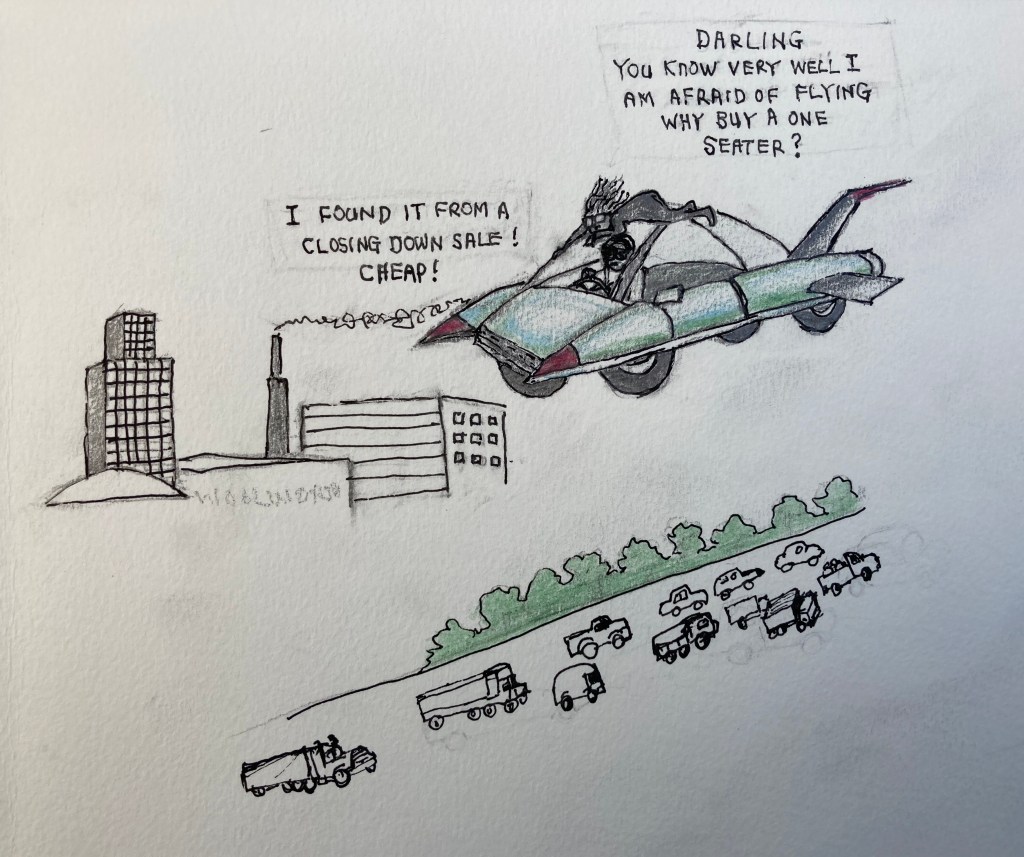
Where is the absent father?

Success is most often achieved by those who have discovered failure.

Will success come to me? Coincidentally, Mak sends me a meme about success. It said success is measured by others, best to ignore it. I think success is measured not just by others but by everyone. The only measure that is relevant is the personal one. What is success? Material wealth? Status? Respect? An enviable lifestyle? Happiness? Happiness is the elusive goal. I do not think we can actively set ourselves to achieve happiness. We may develop the right attitudes, be contented, be peaceful, be righteous. But, all that will not guarantee happiness. Something may strike us. Someone may hurt us. Happiness just comes to us, when we least expect it. Maybe the secret is to live without expectations. Without expectations there will be no disappointments, and only then may happiness suddenly land on our laps.

“Happiness is like a butterfly. The more you chase it, the more it eludes you. But if you turn your attention to other things, it comes and sits softly on your shoulder.”
– Henry David Thoreau

Many will say I am already successful. By many measures, I suppose I am. My marriage is still intact, after 38 years. The Mrs and I have three very good sons, all of them independent, respectful of their elders, and respected by their colleagues and friends. My business is still an ongoing concern; it still employs a few people and thus still contributes to society. Touch wood, at 61, my health is still good despite the harsh challenges my business threw at me and the sedentary nature of my work. The Mrs and I paid out the home mortgage some ten years ago. We are debt-free, set free from all obligations to the banks. Yet, I am still not totally carefree. There is still the matter of living responsibly. A filial son, even at my age, has duties. It is not that I feel obliged to spend time with my mother, I want to. She is 96, her enjoyment is to be with her children. I work during the week, so the weekend “roster” is for me to fulfil. Without exception, lunch or dinner on Saturdays and Sundays are booked with Ma. It is uncomfortable to have to tell her about my forthcoming overseas trips. Ma will lament for a few weeks and “count the days” of when I leave. Living responsibly. That also means the continued responsibility to the woman I married who is the mother of my sons, and to my sons, the Millennial or Gen Y’s. The Mrs and I are baby boomers, products of the celebrations after WW2. Sandwiched between the elders (our parents and parents-in-law) and our children, we bore responsibility for all three generations. I saw that as just a part of life, and for me, it never felt like it was a burden too heavy to carry. That is called living responsibly. The Gen Y’s heard about all that; the early marriage, the rush to find a career – immediately, and early parenthood. They witnessed the challenges of the child-bearing, the child-raising, and the child-like needs of the elderly. Filial piety has a price. The children witnessed the dark side of suffering in old age. Their maternal grandma’s long trail of plastic tubing that snaked along the floor from the downstairs bathroom and toilet to the oxygen tank in her bedroom; her pain, immobility and the shortness of breath caused by the emphysema that wrecked her lungs. The frequent visits to the Royal Adelaide Hospital – the old folks seemed to take turns; her turn – shortness of breath, his turn – acute constipation, her turn – shortness of breath, his turn – broken hip. Then, funeral 1, followed by the frequent trips to two nursing homes to visit their grandpas. Later on, funeral 2, funeral 3. Before funeral 3, there were my two years of daily visits to Pa’s nursing home. He had to go in, despite his protestations. Heavy set and tall, he broke his hip after a fall. Eventually, his Type 2 diabetes won the battle and he became an amputee, losing his leg to the disease. The Gen Y’s witnessed all of that. They were witnesses to the lifestyle of giving and more giving. When they grew up, they made a choice to live their own lives, for themselves. I guess they did not find my choices agreeable. None of them embraced the early marriage, early career and early parenthood paths I took. Ma sees that as a failure on my part to inculcate in them the doctrine of passing the genes and carry on the family name. She sees it as my duty to persuade my sons to deliver the next progeny and thus the next generation to the clan. Somehow she cannot see the funny side of this quest since she herself is not born into the clan. The clan is without a crest, flag or coat of arms. The future therefore will have no need for a flag bearer. So, what does it matter, right? When she sees me on Saturday, she will flip again, to know her mission is still a flop.

They Flip When I Flop

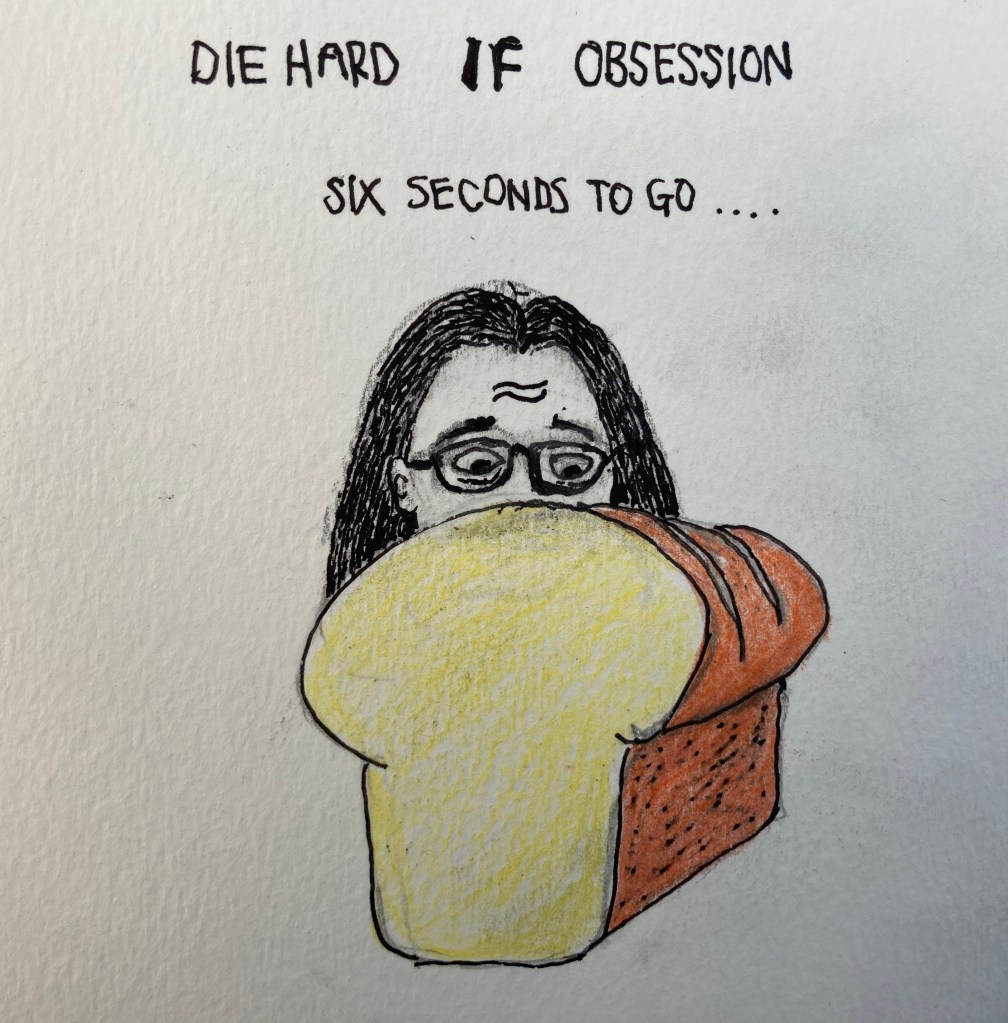
In the middle of the night, I was awoken by the alluring fragrance of bread, freshly baking in the kitchen. Aaaaahh, right at that moment, it was so tempting it almost broke my will to maintain my longest IF streak of 323 days. Intermittent Fasting has been a breeze for me, not even the decadent breakfasts served on the cruise ship to the Baltic countries could weaken my resolve. But, this wasn’t a visual sensation. It was olfactory. My senses were heightened by the temptation of the wicked scent. I had to subdue the strong urge inside me that wanted to quickly devour the enticing bread in the kitchen. I imagined getting up right that moment from my cosy bed and braving the chilly dawn. In the dark, I would not find my dressing gown. It is the one piece of clothing that I don’t habitually hang in a fixed spot, whereas my bedroom slippers, always at my side of the bed, were neatly placed side by side on the carpet. They don’t wander off. They never require me to look for them, unlike the itinerant dressing gown. In my mind, I was already in the kitchen, unscrewing the nut on the base of the bread container to free the bread onto a plate. As I slice the wonderful soft white bread, more of the aroma that had seduced me to leave my bed is released. Spread a wafer thin piece of butter onto it, and bring it towards my eager lips. As I consume it, I surrender to the wickedness of the carbohydrates that will cause my insulin level to spike. My mind may be weak but my shadow self is strong. It only allowed me to think it happened. It didn’t happen, except in my mind. That’s as real as it gets, right? After all, it is the same chemicals that the brain releases that tell us how we feel. Whether it is physical, virtual or imagined, to the brain the sensations are the same. Serotonin, endorphins and dopamine are the happy chemicals that are released by the brain irrespective of whether the trigger is real or imagined.

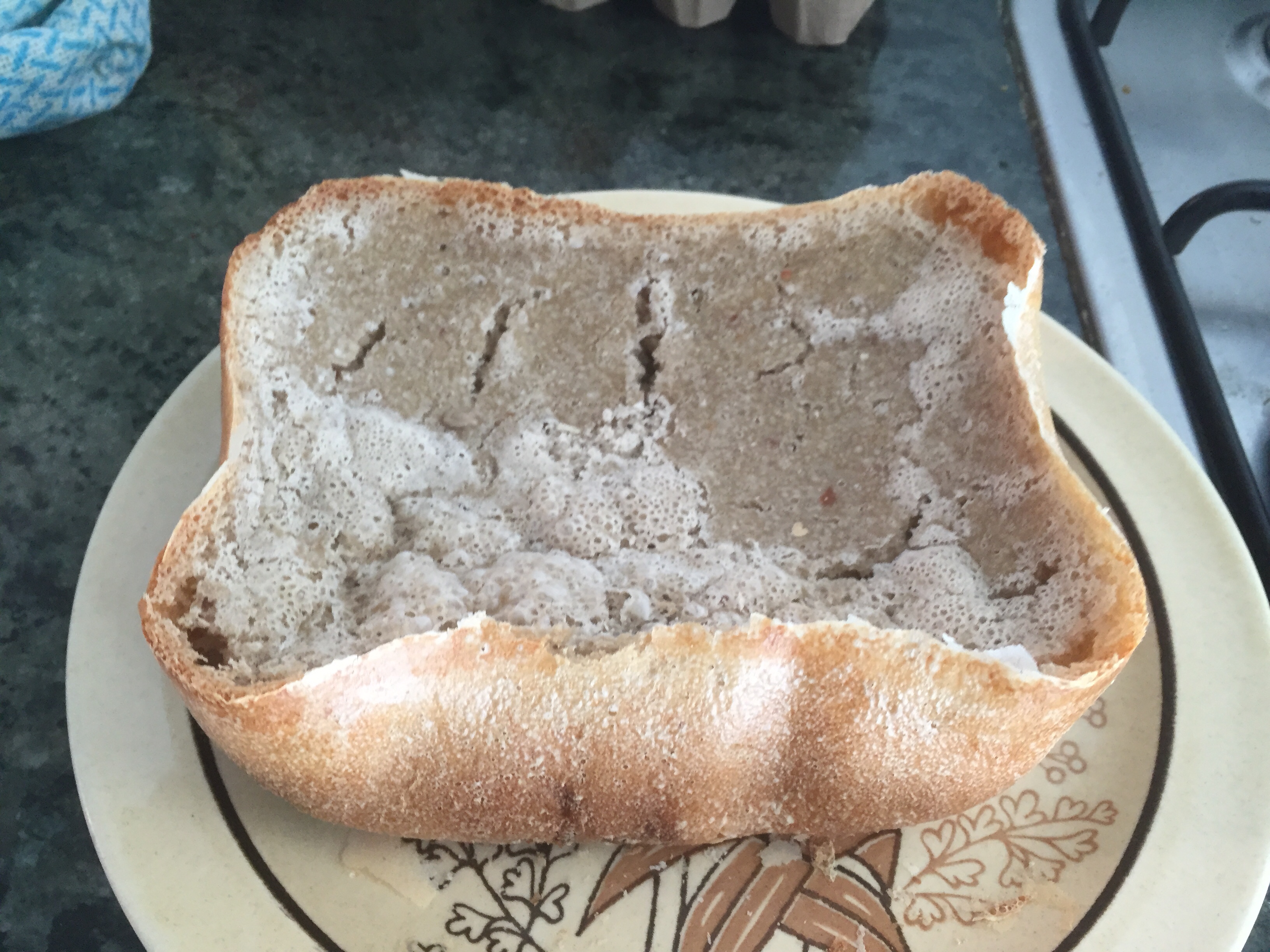
Back to my bread. I rushed out of my bed before 7.20 AM, put on my bedroom slippers and darted to the kitchen. I was eager to see if the bread matched the one in my mind for fluffiness, size and height. It did not. It was a total flop. Do I throw it away, make another one before The Mrs wakes up? “Don’t let her find out!” my shadow self implored me. Disappointed with myself, I went outside to the front garden to console myself. Where did I go wrong? Never mind, I’ll find out soon enough. The Mrs won’t let this opportunity slip by, it is her chance to tell me what I’m worth. She will flip when she finds out the bread is a flop. “Aiyaya, you waste the flour! You waste the elektrikcity! You waste your time!” I have heard this many times in my life, the way she emphasises the “K’s” in electricity. An hour later, she purrs out of the bedroom. “The bread smells so gooood!” she chirps happily. She limps out gingerly as she appears in the hallway. At least she doesn’t waddle anymore. In another week or so, she will fully recover from her second hip replacement. By then, I had better watch out. Better not cry. She will have her vengeance. The new bionic woman will eat me for breakfast if I don’t make her good bread. She flips when I flop. A no-nonsense woman. She has no truck with failure. “We do not fail. That’s for the weak. We will rise up!” (As surely as my bread must, next time) I added silently in my mind. Why did my bread fail to rise? “Warm water! Yeast is a living thing. It needs warm water, stupid!” She didn’t call me stupid but I heard it anyway, in my mind. So, The Mrs grabs her chance and pours cold water at my silliness. I used tap water instead, thinking the time set for three hours would be enough for the yeast to work and make the bread rise. Worse was to come. Having had to chew on soggy heavy bread and missing out on the enjoyment from what is normally the best meal of the day for her, the demeanour of The Mrs turned from chirpy to annoyed. “If you want to stick to your (stupid) cold water theory, I’ll eat Coles bread instead. I don’t enjoy chewing leather. I can’t afford to lose my teeth!” Untethered, free to show her annoyance, she plonks her plate and coffee mug loudly into the sink. I was pouring a cup of coffee for myself when I heard the commotion. Quickly putting the moka pot back on the stove, I rushed to empty the sink of its dirty contents, transferring them to the dishwasher. In my haste, the moka pot was placed precariously on the gas ring and it toppled over. “Aiyaya! What a disastrous morning!” she exclaimed. My freshly brewed coffee spilt everywhere. Into the gas burners, into the gas oven, it drowned the oven clock, and splashed all over the kitchen floor. Somehow the coffee must have got to the electrical bits of the oven and tripped the main fuse box of the house. Everything stopped. The noisy pond fountain, the soothing trickling of water from the aquarium, the whirring of the washing machine, the background humming from the central heating system. The dead silence didn’t last long. I shan’t repeat what transpired between the two occupants of the house after that, except that the bedroom door slammed shut soon after. The unintended consequence of wanting to make bread for The Mrs. I later found out the flour was four months past its expiry date, which leads me to think I was dealing with dead yeast.

Dead yeast can’t make fluffy bread

A son sent me a few messages. “Life is short, ba. Why make mum eat that bread?

“She said it’s as tough as leather!”

“The bread flopped, so what? Go to a cafe and enjoy the weekend”.

He too flips when I flop. Why would anyone think I can force their mum to eat anything? She is a strong woman. Strong headed too. There is no way I can make her do anything that she doesn’t want. Besides, that would be misogynistic and I am certainly not built that way. I did not dare to argue their preposterous suggestion about the bread being as tough as leather. I am quite sure none of us have tried leather. But, they will freak out if I dare voice my thoughts on the matter.

A lesson learnt. The next time I use active dry yeast, I will definitely check to see if it’s alive first. Dissolve half a teaspoon of sugar in half a cup of warm water. Sprinkle the yeast on top and stir. After ten minutes, I will know the yeast is alive and will proof the bread dough if there are bubbles and foam in the mixture. Failure is forever only if we quit. On second thoughts, the other lesson learnt is easier to remember. Just don’t bother making my own bread.

I just came home with a fresh loaf from Foodland. Urghhling.

Making my own bread. A sour experience.

Ended With The Unintended

Consequences are the results of our actions or words, usually with negative or tragic connotations. But, sometimes, we may receive a pleasant surprise instead. Life is full of consequences and we will usually shrug our shoulders and say, well, we deserved it. The stock market has burned me twice, and there is no denying I deserved it. Everything is clearer with hindsight; it is always unfair to those who lived through the moment without it. I promised The Mrs there will not be a third time – otherwise I have to sign the divorce papers – and so I have missed out on the longest bull run in the history of the stock market. I will knowingly not invest in cryptocurrencies even though the rewards are incredibly high. That is only because the said documents are pushed in front of my nose whenever I quietly weigh up the risks and returns of Bitcoin and gold. The Mrs somehow has a knack of knowing what is on my mind. Yet, there it is. The unintended consequence of helping me to avoid another major haemorrhage in the stock market is I have been sidelined, and can only watch others celebrate their massive profits from the longest ever bull run – ten years of amazing double-digit annual returns instead of the pittance the bank has been paying into my savings account. An unintended consequence is that I now hold the title of The Lousiest Investor.

There is also the example of my neighbour’s experience of readying her newly built pond for her koi fish. Admittedly, hers are to die-for, koi fish are extremely difficult to find here. Her specimens are indeed stunning, when you see their metallic colours darting through the crystal clear water. What did she do with such a precious collection? To test the water quality before introducing her koi to their new home, she sacrificed some cheap comets into the pond first. “If they die, they die.” She was almost callous about it. Their sole purpose was to test the safety of the water. Well, they did not die and the koi clan rightly assumed permanent residential status. So clever, right? Except that now, the comets are thriving in the pond and the koi cannot reproduce even though the conditions of their habitat are ideal for breeding. Why? Ask the growing school of hungry comets. They are the unintended consequence.

My parents were upset when I announced I was getting married to the girl I met in uni. I was twenty two at the time, and eighteen months later I became a father. My mother cried for me, I recall. “You haven’t lived your life yet!” she protested. It is true, I had not really lived; never ventured out on my own for a holiday; never had a honeymoon with The Mrs. At 26 years of age, I became the sole bread-winner for a family of five plus two elderly parents-in-law. There was the occasional dispute about what comprised the family of five. My version was The Mrs, me and our three kids. Her version? She and the four kids. Women mature faster and The Mrs was quick to recognise the child in me. She still sometimes says I am childish. Why did I marry so young? Perhaps it was my stuffy upbringing. Growing up in a Christian Brothers school environment, we were caned for keeping “long” hair that touched our shirt collar no matter how much we extended our necks. We were caned for being late, yanked down from the top of the high metal gates we were scaling. We were caned for talking on our way back to class after recess. Sometimes, Br Michael aka Lau Hor (the tiger) caned the wrong students. He caned any boy he thought was ill-disciplined. A fat boy was caned because he was standing at the entrance to the canteen, deliberating on what to buy for lunch. Jerry was unaware that he was blocking the passageway and caused a long queue to form. The only ones spared were Lau Hor’s school orchestral students. The oh-so-strict Victorian morality was the overarching principle in school, I thought, until I grew up and read about the sexual misconduct perpetrated by many priests and Christian Brothers world-wide. The home environment was also very strict, more a temple than a prison though. It is true that my wings were clipped when I was a young boy, but compared to kids today, I enjoyed a lot more freedom outdoors even though it felt like there was a resident sentinel in my mind that forbade me to join in the fun with school mates after school. Swimming was a definite no-no, as was fishing or anything to do with the sea. I lived like an island, on an island. I think my mother was afraid the hungry ghosts would devour me in the sea. A stuffy upbringing meant no sex, no drugs and no rock ‘n’ roll during my teens. In university, I met a gorgeous girl whose eyes perpetually smiled at me. An unintended consequence of my strict upbringing meant the resident sentinel forbade me to have sex outside of marriage. The only way to enjoy the newfound sensation of boy meets girl and falls in love?

Marry her. An unintended consequence for my parents, they frowned at my early marriage.

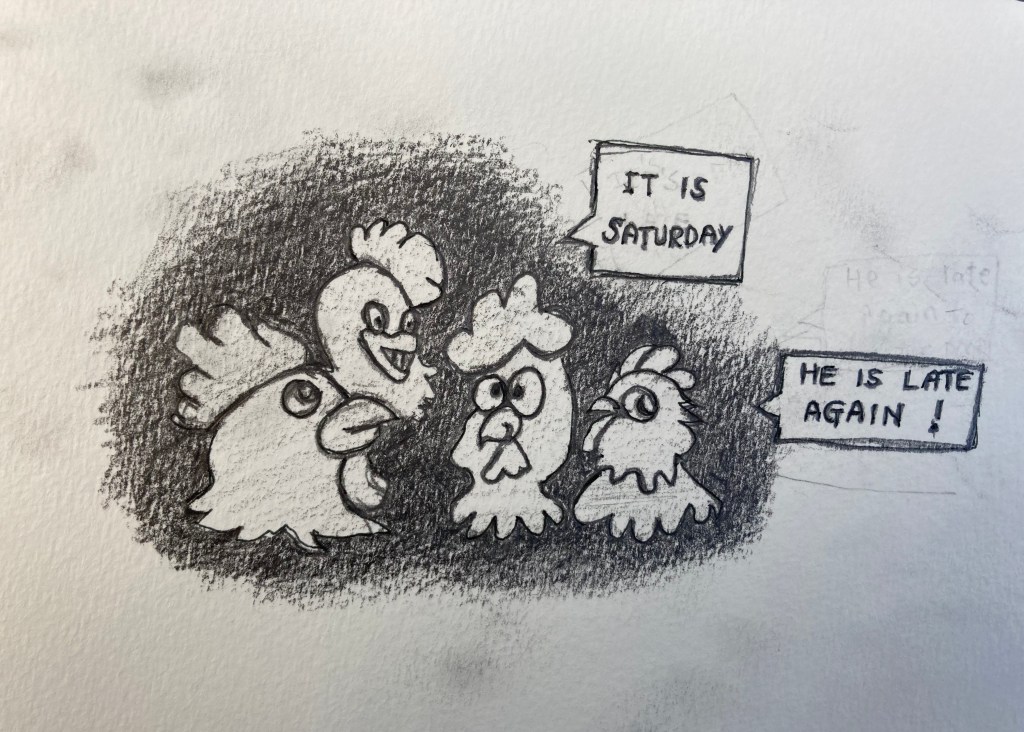
There is also the case of the retired hobby farmer who lives alone. If one lives alone, why would one keep seven chooks? She was given four by a local school which bred them for a students’ project. Once the school experiment was over, the chooks became irrelevant and needed a foster home urgently. So, the kind hobby farmer took them in. Free eggs, why not? The unintended consequence of a kind heart was that her fridge is now jam-packed with eggs! The idea of rearing chooks is to enjoy freshly laid eggs. They taste supreme, especially those free range organic ones. But now, this kind farmer cannot keep up with her chooks and is desperately donating her eggs to family and friends. I got a dozen from her yesterday but hers are not fresh and therefore do not taste so good. She will be better off donating her excess hens instead.

Smart phones have been a wonderful invention together with the internet. Vast improvements in productivity, connectivity and easy infinite access to knowledge banks in every field we can think of have advanced our lives in unimaginable ways with entertainment, information, news and social media at our fingertips. With built-in cameras, the gadget even allows any of us to record newsworthy events including major historical events e.g. the Arab Spring revolution, and the ongoing, escalating street violence in Hong Kong. The unintended consequence however is the high incidence of automotive injuries and loss of lives due to the distractions that smartphones cause whilst we are on the road. Taking selfies with our smartphones was never meant to cause self-inflicted harm.

Unintended consequences can be horrific. Those who caused extreme havoc and misery to the world were Mao Zedong and Adolf Hitler. These two dictators were responsible for the deaths of many many millions. Mao was a lowly paid assistant to a librarian in Peking University. Had Mao been offered a post as the chief librarian, would the young man have turned into a dictator who some reports say was responsible for 45 million deaths due to his failed Great Leap Forward programs? Mao’s Four Pests Campaign was launched to ensure success in his agricultural reforms. Rats, flies, mosquitoes and sparrows were targeted for extinction. Especially sparrows, which ate the seeds of grain crops. What Mao didn’t understand was sparrows had a much bigger appetite for locusts. The sudden absence of their predators created the unintended consequence. The ecological imbalance resulted in a locust epidemic that wiped out the crops that Mao so wanted to protect.

The other dictator was also responsible for millions of lives lost during WW2. He was an aspiring artist who was twice rejected by the Academy of Fine Arts Vienna. Once in 1907, and again in 1908 when he was 18. The arts school said his paintings were “utterly devoid of rhythm, colour, feeling, or spiritual imagination.” His dreams crushed, the young Hitler hit the streets of Vienna and lived in abject poverty. The streets were at the time rife with anti-Semitic rumours which festered the growing hatred of the Jews on the impressionable young man. Had the Academy not rejected the aspiring artist and had instead accepted him and encouraged him to continue to learn, the world may not have seen the rise of the murderous young dictator. These unintended consequences could have been so easily avoided had the teachers been more caring towards the two young men. The world would have been a kinder place. Like anyone with a little ambition, all they needed was to be given a chance to pursue their dreams. They had not sought to become mankind’s worst mass murderers. Their unintended tyranny were simply consequences of seemingly inconsequential decisions by a university library and an arts school.

Comets outcompeting and outnumbering koi, an unintended consequence!

He Bothers About The Others

“Chup ee khee si”, a common Hokkien remark. It means, do not be bothered. Let them die!

“Bu yao duo guan xian shi” is a typical advice in Mandarin. Do not meddle in other people’s business. Let them be.

But, on my way to work this morning, Yo-Yo Ma’s message sounded persuasive. Tantalising. Achievable. I have not been able to get it out of my head. Not that I have been trying to. But, his words have clung on to my grey cells. It is a message of inclusion, at a time when societies are focusing on the divisive and the negative. Yo-Yo Ma said ” Culture will turn ‘them’ into ‘us’.” When we recognise that the other person is just like us and is one of us, conflict will stop. When we realise we are all equal, discrimination will end. There will be no more recriminations, no more hatred, no more fights. He is in Sydney, on his world tour of thirty six concerts in six continents. He has brought Bach’s six suites for solo cello along. Through Bach, he wants to engage us in a series of conversations and collaborations to explore the ways culture and music can help bridge the world into a better place. He hopes that we will see the ‘us’ in the ‘others’. He is bothered about the others because he sees all of us in them.

As I settle comfortably on my recliner sofa after dinner, my mind drifts back to Yo-Yo Ma. He is much more than just a cellist. He is one of the greatest musicians the world has ever seen. Actually, he is even much more than that. He is a great human being. Pablo Casals too thought of himself as a human being first, as a musician second, and only then a cellist. To be human first. Humanists consider every action they take and every word they speak are in the service of their fellow human beings. Their common thread is their innate empathy and compassion for all. It is never ‘us’ and ‘them’. It is always about our obligations to one another, as human beings. They are above primal instincts. To them, it is not the survival of the fittest that ensures our survival, it is the survival of the planet that ensures our survival. For such great advocates of human dignity, it is an abuse of power if we were to remain silent when faced with confronting issues that threaten what is good in mankind. We all have the power to stand up to stop an injustice. From a small voice in the wilderness, a revolution can grow. It is through culture – the music, the story-telling – that inspires creativity and deep learning which helps us understand ourselves, understand one another and understand our environment. Above all, it is their choice to be human first. That was the message I got from Yo-Yo Ma.

I was lucky to have witnessed first-hand Yo-Yo Ma’s charitable, empathetic and caring side in Singapore. This was at a concert on November 11, 2016. The SSO concert opened with Sollima’s double cello concerto, titled Violoncello, Vibrez! with Yo-Yo Ma and Ng Pei Sian. When both cellists were on stage, Yo-Yo Ma asked Pei Sian’s parents to stand up from their seats. As the old couple reluctantly stood up, he told the audience of their struggles and perseverance to support not one but two sons’ ambition to be professional cellists. The living legend understood the selfless struggles the parents faced to help their twins pursue their love for music. The audience gave a rapturous applause to Pei Sian’s parents, but I was madly applauding Yo-Yo Ma for showing us his humanity. This is a great humanitarian. The maestro has an extra long list of achievements. The winner of 18 Grammys, he was the first to perform at Ground Zero on the first anniversary of the 911 tragedy. That solemn heart-pulling moment was served by Bach’s Sarabande from his Cello Suite no. 5, the most sombre, austere and profound of all. It is music for peace, for humanity. At the peak of his amazing career, Yo-Yo Ma whilst basking in the audience’s obvious love and adulation for him, revealed his humanity when he chose to divert the crowd’s applause to Pei Sian’s parents instead for their unwavering and unconditional support for their sons.

Ng Pei Sian and Yo-Yo Ma with maestro Shui Lan in concert

A day passed and the urghhling in me becomes less enthused about Yo-Yo Ma’s exuberance and trust in our propensity for empathy. Doubt creeps into my psyche about mankind’s readiness to accept our differences. After all, I have seen the ugliness of urghhlings for most of my adult life. Sure, there have been the odd few people of integrity and kindness whom I have had the good luck to meet along the way, but by and large, humans show their ugly side when they are able to hide behind anonymity. Strangers in public places who hurl abuse at us, those who sit behind their computer screens and vilify any race or religion they dislike, hideous customers on the opposite side of the shop counter, militants who will gladly blow anyone up including themselves, nasty soulless people who enjoy torturing animals, or bored, callous arsonists who light up thousands of hectares of gum trees and hundreds of homes and unfortunately, also animals including humans in their path. The world is littered with toxic folk with rancid prejudice, and devious minds with evil intent. Rather than it is never ‘us’ or ‘them’, it can never be ‘us’ with ‘them’. It is inconceivable that we can see the ‘them’ in ‘us’. At the other end of the spectrum, it is also sheer folly to think that the likes of me can even come close to understanding the minds of great men like Yo-Yo Ma. This may be the reason why I am finding this blog the most difficult to write. So, I cast my mind back to their Singapore concert. The magnanimous and generous Yo-Yo Ma gave two encores after the prolonged standing ovation from the audience. As he was already onstage, he borrowed Pei Sian’s cello instead of returning backstage for his ( Jacqueline du Pré’s) Davidov cello. Gasps of primordial orgasmic arousals could be heard when he began to play Bach’s Cello Suite no. 1 Prelude . It was followed by Bouree I and II and then da capo to I, from Suite no. 3. Amidst wild applause, Yo-Yo Ma then went over to Pei Sian onstage and gave him a big congratulatory hug. The younger cellist instinctively kowtowed and knelt before the cello maestro. What happened next took everyone’s breath away. Yo-Yo Ma, the universally respected great cellist of all time reciprocated with a bow and at one point, knelt down on both knees to Pei Sian as a gesture of mutual respect.

Recalling the last scene onstage instructs me that Yo-Yo Ma’s vision of the world in which human beings are treated equally and with dignity, where age-old issues such as religious fanaticism, white supremacy, slavery, bigotry, misandry and misogyny no longer fester, can be attained if we all see the ‘us’ in the ‘others’.

Mutual respect from a great human being

Mum About Mum III

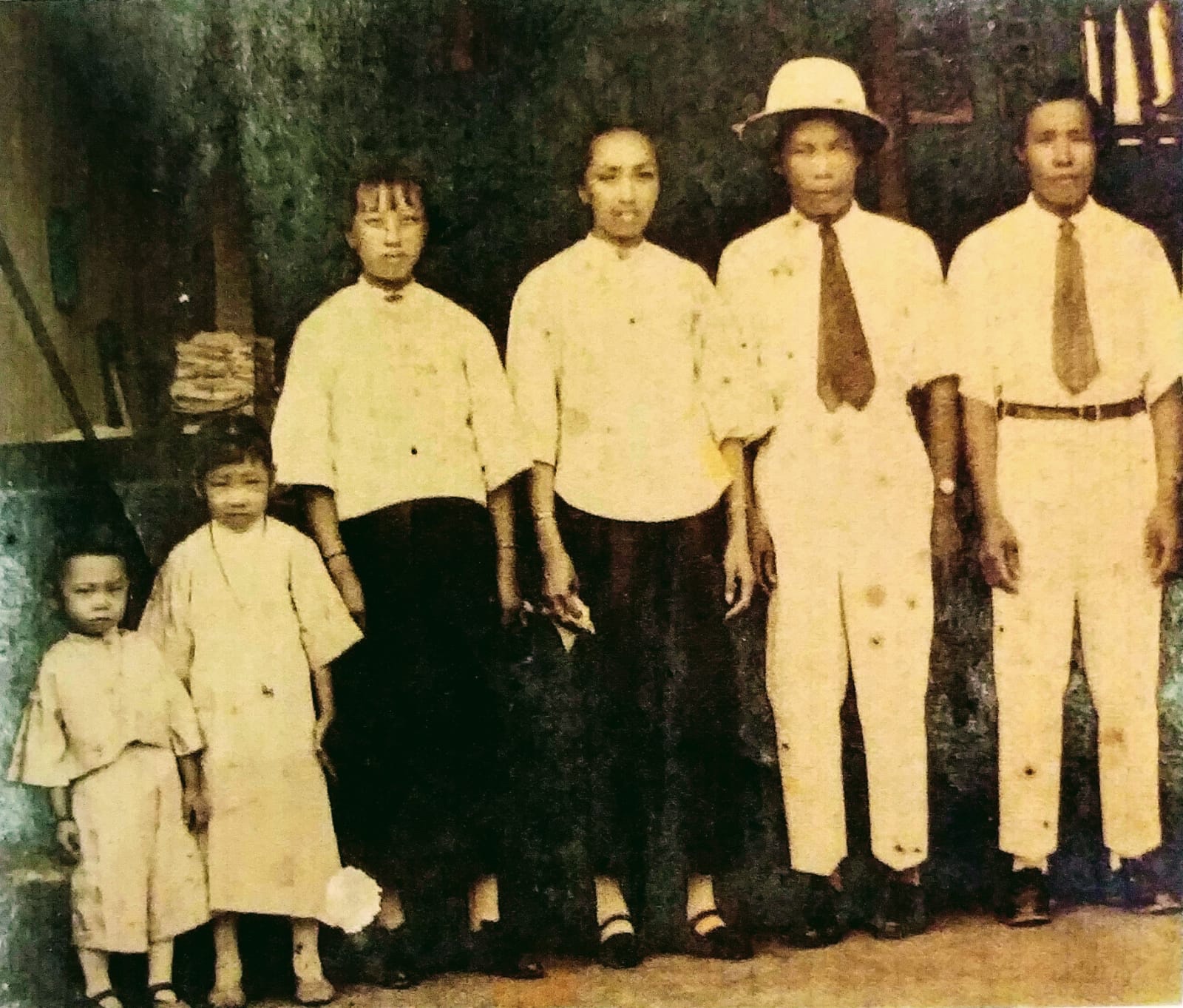
It was just before the pendulum clock struck three times. Outside it was pitch-black, the angry wind was a welcome guest as it forced its way into their stuffy, sweltering room via the wooden slats of the window louvres. Ma changed her position, and now faced away from Pa. All passion spent over an hour ago, he snored especially loudly after having satisfied himself inside her. She was relieved that his fire had been quelled, otherwise his restlessness and sulking would have spoiled another good night’s sleep. Ma was never taught the joy of sex. Brought up to respect proper decorum and propriety, in today’s vernacular, she would be easily classified as a prude. Sex was for procreation, not for recreation. Besides, their circumstances were so unsettled. They had not yet moved into their new rented shop in Bishop Street when the Japanese dropped their bombs from the sky. The front of the shop was destroyed. The glass display window the glazier had sealed the day before was completely shattered; its replacement was a wooden hoarding to deter would-be thieves from helping themselves to their meagre belongings. They left Teluk Anson with just a small bag of clothes each. Their prized possession, a cheap Japanese bicycle, was chained inside the shop. It had been a while since their last outing at the movies. After they were married in Teluk Anson, Ma’s favourite pastime was her Saturday bicycle rides as a pillion rider to town for movies with her handsome husband. It was said the 1930’s was ‘the age of the bicycle’ for it brought unimagined freedom to the young girls. There was nothing else worth stealing, except for the annoying striking clock that chimed the hours loudly and once every half hourly. Ma stirred from the timber floor. Her bath towel served as the mattress. Pa’s was crumpled and almost completely hidden under his long legs. He was a messy sleeper, even the face towel to catch his drool was missing from his pillow. They had an endearment for each other. Ma called him by his name one day, but he did not respond. So, she called out again, “Hey! Ngeh-doh. Blockhead!” That time, Pa answered, “What is it? Ngeh-doh?” Ever since then, they never stopped calling each other that. After she had straightened Pa’s face towel back onto his pillow, Ma carefully closed her paper and wood hand fan, a parting gift from her mother when she visited to say her goodbyes. Beautifully hand painted in water-colour, the red and pink roses on a greenish paper seemed to throw a floral fragrance whenever she waved them to cool herself. His was a scented one, made of thin slats of dark-stained bamboo with intricate carvings, riveted together at the pivot point, and tied together at their far ends with cotton thread.

“You didn’t have a mattress?” I asked Ma incredulously. At least The Mrs and I were able to join our single bed mattresses together when we got married. “No, the only furniture we had was a square wooden dining table and four stools.” Ma, ever one to demonstrate frugality oneupmanship, laughed, happy to have reminded me of what “tough life” really means. Her facial expression then turned serious, maybe even sad. “And then, our lives were turned upside down.” she continued with her story. It was a Monday, March 23rd 1942. The two Kenpeitai men crashed through the venetian louvres, and were immediately on top of Pa. Pa did not even have time to rise to his feet as they pummelled his body like a punching bag. Ma could not describe much else. Before she froze like a stunned mullet, she had turned away from the violence, facing the wall. Too scared to look and maybe even more scared to be seen by the Japanese secret police; their reputation as notorious as the Nazi SS paramilitary. By the time she breathed again, they had hauled her Ngeh-doh away. Li Tong, the owner of the small oriental arts and souvenir shop next door, was also rounded up. He was sleeping in the second bedroom, a sub-tenant of the entrepreneurial Pa. The whole house became eerily quiet, even the angry wind had retreated, disappearing into the dark night. Every light in the house had been turned on by the Japanese as they hunted for men to catch. Each light was by today’s standard unbearably dim, no more than 15W. A less frequently used room such as the outside toilet was equipped with a 5W globe, so weak it threw a reddish glow. It was Pa’s instruction never to turn on the lights at night. “A brightly lit house will attract the attention of the Japanese”, he had advised Ma. He did not need to explain that it was also a good way to save money. Since the Imperial Army’s bicycle infantry replaced the fleeing British regiment in Penang, they had formed the habit of using candle for light.

The next day, Li Tong returned. He was almost unrecognisable with dirt-caked dishevelled hair, his singlet torn and bloodied, his face riddled with cigarette burns – all telltale signs that he was tortured. He was lucky. Released after only one night of interrogation, he was thankful to be alive. “Quick! Cook some rice porridge for your husband. Bring his pyjamas also. He is being held indefinitely.” Ma rushed to the back of the house and chundered a load into the drain, but so far, she had not shed a single tear.

After the meek withdrawal of the British on the 17th December 1941, the Japanese occupied Penang just three days later. In the early days of occupation, the Japanese used a soft, gloved approach to win over the civilians; the friendly and fair treatment of local businesses was to promote the Greater East Asia Co-Prosperity Sphere. This was an objective to bring South East Asian countries together as a new bloc, sharing peace and prosperity under the umbrella of a benevolent Japan. After the fall of Singapore thirty five days earlier, the Kenpeitai was sent to Penang, by then renamed as Tojo To. This show of force was a marked change from the earlier strategy of cooperation. The 2nd field Kenpeitai under Lt General Oishi Masayuki was especially brutal, and gained notoriety for their fierce and cruel methods of subjugating the local Chinese populace. They embarked on a number of Sook Ching massacres to instil fear amongst the ethnic Chinese. Before the Kenpeitai’s arrival, life under Japanese occupation was still almost normal for many. The earlier gloved treatment of the town folk saw the return of many who had run away to hide up in Penang Hill and in the countryside.

“We had $60 left when the first bomb fell. Ngeh-doh knew his business was finished before it even started.” Ma continued with her story.

“History books said the citizens suffered great upheaval, repression and massive food shortages. Is it true, Ma?” I asked.

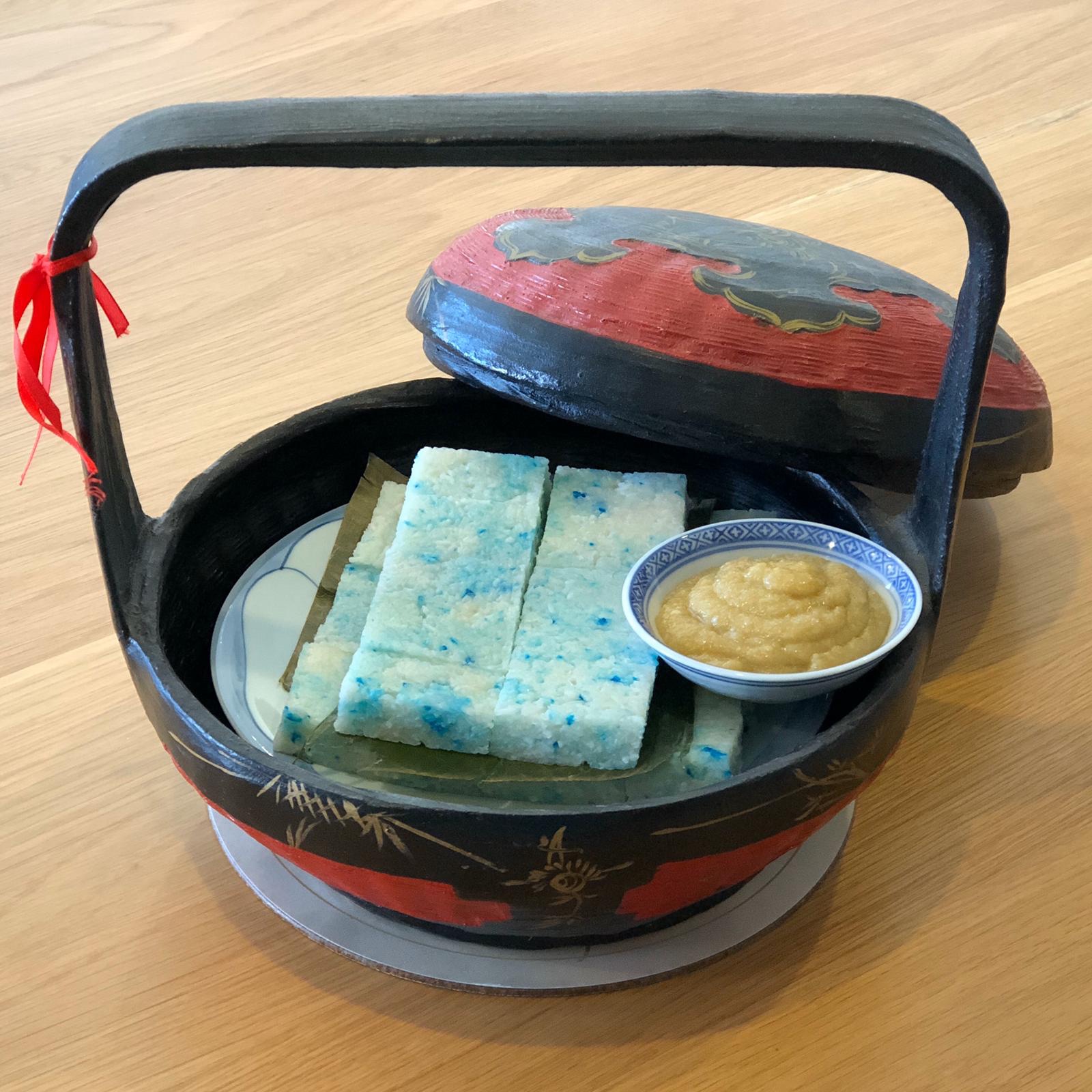
“We were so poor, it made little difference then.” Ma said. Breakfast was plain rice porridge enhanced with a dab of Shanghainese fermented tofu. Lunch and dinner had the same set menu. Plain rice and a plate of green vegetables. The vegetables cost two cents. “A local farmer delivers them each morning, ringing his bicycle bell as he rides past the street before nine a.m.” With their brand new shopfront substantially damaged, Ma resorted to selling cigarettes from the ‘Goh-kha-ki’ or five-foot way, in front of their rented house. Two sticks of cigarettes sold in a morning represented a good day. The profit was the equivalent of the day’s supply of vegetables, i.e. two cents. She hardly saw the Imperial soldiers, they did not patrol that side of town. They were housed in Minden Barracks, in Gelugor, quite a distance south of Georgetown. On the rare occasion that she walked past a Japanese soldier on the street, she just had to remember to bow to him. Those who forgot to bow or refused to, would cop a beating, or were killed sometimes. Apart from rice, the other expensive item was firewood used for cooking. A bundle of a hundred sticks cost $1.10. To save on that, she would shave the wood into thin pieces to avoid unnecessary burning.

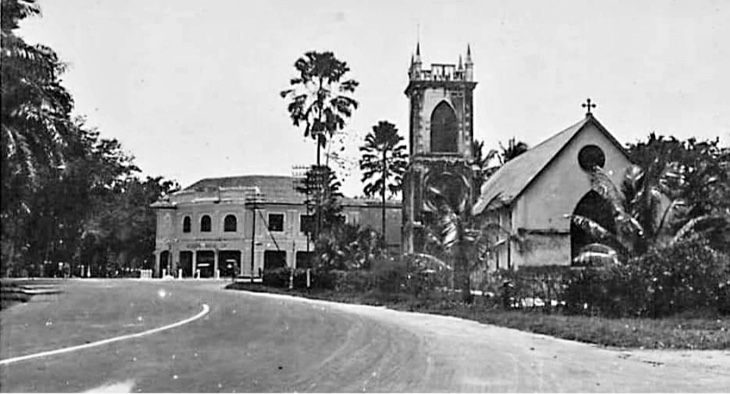
The Wesley Methodist Church on Burma Road was where the Japanese housed those rounded up by the Kenpeitai. The brutal military police used it as their head office initially, but soon converted it to a holding base for interrogation and torture. Ma got there in the late morning, the task of lighting a fire to cook the porridge took a bigger effort than usual. Raining tears and nasal mucus, her grief finally overwhelmed her. She arrived on her bicycle at the front garden of the church and was met by a Sikh guard.

“No, no food allowed!” the guard roared as he commandeered Pa’s lunch. He was kind though, advising Ma to make her way to the rear side of the boundary. A little rise on the land offered her a vantage point from which to catch the occasional glimpse of her man. For twelve days, she would be there on the same spot. Her heart would soar if he appeared in the compound. Hunched, filthy and weak, Pa trudged weakly in small steps. from one end to the other. It must be life-giving, to be out in the warmth of the sun. What she could not see, she heard in loud decibels. The distance could not hide the screams and cries for help from inside the church. A trishaw puller went up to Ma and consoled her. “Your husband is in there?” he surmised. “Do not worry. He will be alright. Colonel Watanabe is not like the rest of the Kenpeitais. He does not execute the prisoners for fun.” The Kenpeitais tortured and beheaded whomever they disliked; whomever suspected of being anti-Japanese or a communist and whomever they deemed as lacking subservience through failure to pay obeisance. Pa’s crime was that he was seen playing a game of Chinese chess at the roadside, with a Chinese bloke the day before his arrest. The man was suspected of being a communist sympathiser, and was duly rounded up with about fifty others. A hooded informant pointed him out to the Kenpeitai on the padang at Fort Cornwallis and he was immediately beheaded. That same night, they came for Pa.

On the thirteenth day, April 5th, Pa did not make his usual brief appearance. The few scrawny men sunning in the compound had returned to the dark recesses of the church building. After almost like an eternity, Ma’s ashen face broke into a contorted grimace of sorrow. Her shuddering bony frame collapsed into a sobbing heap at the feet of a stranger next to her. “He is gone. Oh no, he is gone.” she wailed. She rushed back to the front gates where the same Sikh guard who had enjoyed Pa’s porridge was standing motionless. “Abang, can you tell me where my husband is?” she pleaded desperately. “I do not know who your husband is, but try the Penang Gaol. A few prisoners were sent there today.” He failed to disclose there was also another truck that morning which took some men to either Air Itam or Batu Ferringhi, places where many Sook Ching massacres took place. According to Lee Kuan Yew, some 50,000 to 100,000 men were massacred during the Sook Ching. These “purge to cleanse” campaigns were carried out by the Kenpeitai units to indiscriminately torture and kill anyone guilty or suspected of anti-Japanese sentiments. Penang’s wartime records show that some 5,000 men, mostly Chinese, were incriminated by hooded informants in various collection spots and transported to Penang Gaol on April 5, 1942. That was the day that Pa was trucked to the same prison from Wesley Church. Very few of these men were released, most died from cholera or malnutrition in the over-crowded cells or from beheadings in the secluded locations. Those rounded up were either anti-Japanese, communists, students, educators (intellectuals) or the unlucky ones like Pa, in the wrong place at the wrong time.

Whilst in prison, Pa befriended three men. Haji was a Malay fellow who was eventually released. The Japanese were a lot kinder to the Malays who they viewed as easier to win over with the promise of being freed from colonial rule. The second man, a P.E. teacher was a nephew of a rich car dealer in Prai. He did not survive, for he found the daily portions of half-cooked rice inedible, and gave them to Pa instead. The third was a boy student of Chung Ling High School, from Hat Yai. Pa saved his life.

Pa was released on April 20th. Actually, he escaped, with just his skin and bones. Very late on the previous night, his name was called out. “Goh Chan Chee! Goh Chan Chee!” the impatient voice bellowed in the prison corridor. That was Pa’s name in the Hokkien dialect. Whilst delirious with fever and mentally fatigued from the unending interrogations, he still had the presence of mind to decide his name would be Wu Zeng Zhi, in Mandarin. It was not a friendly roll call. The voice that hollered his name was impatient and stern, and it was very late at night, nothing good could be got from that. It was more likely a call to join those to be trucked out to an isolated beach somewhere. The next morning, two long queues were being organised by the prison guards. One was much longer than the other. The shorter one had men who looked less stressed, less beaten up. Pa decided he was in the wrong queue. When an important Japanese official arrived and the distracted guards stood to attention, Pa took a few steps to his right and joined the shorter queue. He gestured for the Hat Yai boy to copy him. The boy did not hesitate. To their delight, they soon found themselves lifted up to a lorry for immediate release. To Ma’s delight, the Indian tailor who was renting the front of their shop croaked out the happiest shriek. “He’s in the trishaw! He’s here!” Weakened by cholera and malnourished after 28 days, Pa stumbled into his home, in the safe arms of the Indian man. Pa refused to elaborate on that period of his life. He divulged little and never returned to visit Wesley Church or stepped near Penang Gaol. His story about those 28 days was consigned to the darkness of history. Pa, lest we forget. This is my contribution.

Ma, many years after the war.
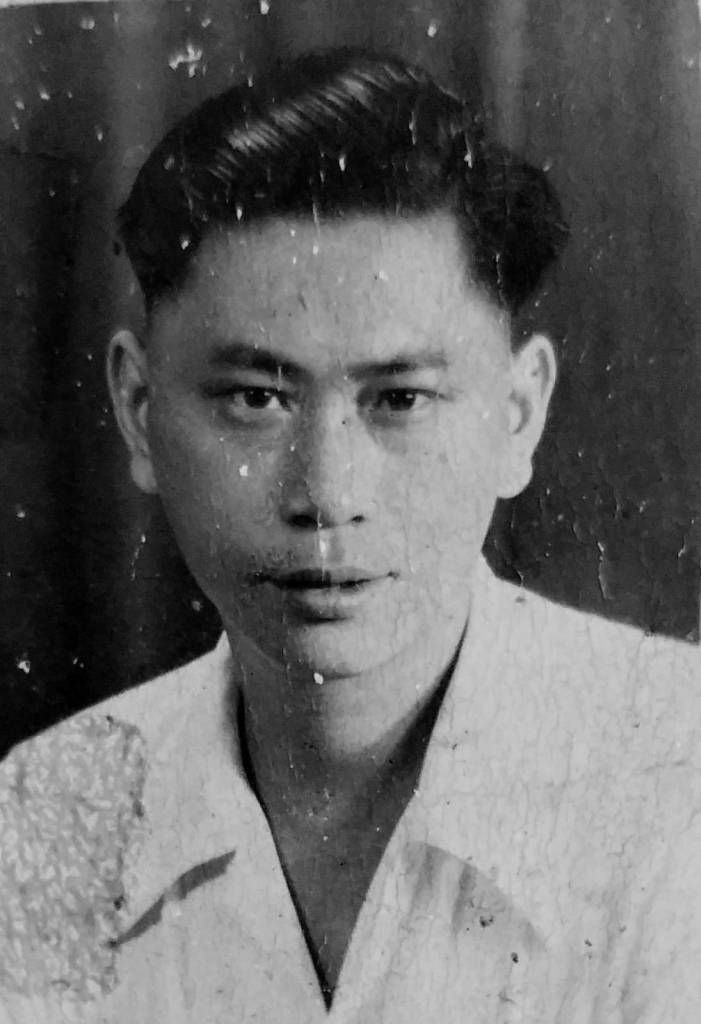
Pa, in better times after the war.

Live Then Learn

Three simple words. But, they stopped me in my tracks. My son sends the message from London. Live first, then we learn from life. A concept worth revisiting. Quite the opposite of what I was taught from birth. Learn, then live.

“Crawl before you can walk. Only then you can run.”

“Don’t play with match sticks. Fire will burn.”

“Don’t touch that pot! The soup will scald you.”

“ Study hard in school unless you want a hard life.”

“Don’t take drugs in Australia. You’ll ruin your life!”

“Work hard. Work smart. Don’t fail in business.”

“一山還有一山高。Climb that peak or you won’t see what’s below.”

We learn about taking safety precautions before we venture out from our safe house. If stones are thrown at us, we build bridges with them, not walls. I learned from Pa that our credibility is one of our most important assets, if not the most important. His generation did not need lawyers, their word sealed with a handshake was worth much more than the small print and vague clauses in a legal document. It was a universal accepted truth that children should attend school, and then hope that preferential policies in favour of bumiputras will not close our path to a tertiary education. Mine was the first generation when education was becoming universally available to all children. It was unusual actually, in the long history of urghhlings. Before my generation, it was usually the brutality of wars and agony of poverty that rendered education as an impossible dream to achieve. They had to live first. Learning was a luxury. What they failed to learn will teach them life’s lessons. They did not agonise over petty worries. Survival was usually the top priority. Avoid dying in a war. Avoid dying from hunger. Avoid common diseases such as tuberculosis, typhoid, cholera. They lived. The more life they experienced, the more they learned. Longevity was out of their consideration, and so they lived for the now, and not for the future. For them, tomorrow may never come. Today, we try so hard to avoid failure to the extent that we miss out on grabbing opportunities that come our way. But, they knew failure was only a small price to pay to gather knowledge. Failure is part of the learning process, it is actually a very good teacher. They knew to live and experience life in order to learn the lessons. They knew to learn from others too; the village elders, tribal leaders, through stories, legends, music and dance.

Three years ago, I helped design and plan the next door’s house and garden. It was my second opportunity in a lifetime to design and plan a house and garden from scratch. The first opportunity, I spurned. I had not lived enough, I thought. That was in late 1994. I was 36 years old. The house design was left to my brother. Being eleven years older and an engineer, his credentials were superior to mine. Besides, I liked the Federation-style house plan he presented to me and made only one minor change. I had no inkling then but it was a very good change to the design of the family room. It opened up the views of the rear garden such that not only can one see its lush green and striking red roses from the front hallway, one can also appreciate the little waterfall and pond on the side garden from the living room. It was like a secret garden that was revealed spectacularly. But, generally speaking, the house plan was his, and the garden design was by The Mrs. I took no further part in the design and construct except to meet the progress payments. Three years ago, my in-laws bought the house adjacent to ours and knocked it down. It became my second opportunity to design a house and garden. I do not know why my in-laws trusted me with such a huge responsibility. I was ill-equipped to accept such a heavy task. Experience in design and construct, zilch. Training in landscaping, zilch. Tertiary qualifications in architecture or engineering, zilch. Skilled in the arts, zilch. Interest in interior decor, practically zilch. Yet, they appointed me. My fees, zilch. But, I have lived long enough; three years ago, I was 58. I had developed a keen interest in looking at house designs. I was secretly proud of my ability to not only pick at the design faults of homes I inspected, but to offer quick solutions to improve on them. But, being untrained and a novice in the field of design and architecture, my affinity for architectural design and landscape design remained a secret. But, the couple came with an open mind and later, with an open cheque book, well, not really. They heard me out, they listened intently to my ideas. They must have liked what I said because when they returned, they asked me to manage the project. Fees? still zilch.

Looking back, it was a fantastic experience. A rewarding one too, albeit not monetarily. I was always led to believe that I belong to the non-creative side of society. Trained as an accountant, I fit the mould of those who are deemed boring and colourless. Staid. Serious. Predictable. But, I have lived. I have loved. I have learned. I know what is classy, what is beautiful, what is interesting. I know what is aesthetically pleasing. I know about balance, contrast, harmony, textures, the efficient use of space, even basic feng shui. I know about creating beautiful views for every room, and how to bring the outside into the house. Maybe that was why they liked my ideas, or maybe it was merely my ability to put in words what I could visualise in my mind.

Everyone has a dream house.

Today is the second day of November, it is still spring. It rained lightly all night, and then the sun rises and smiles gently in the early morning. The ideal time to take a few snapshots of the garden is now! The garden is awash with colour, with many shades of green overlapping the pinks, whites and reds of the rose garden. I share some photos with my family, to show them these are the living things that make me feel alive.

Second Son in London said, “The fragrance must be amazing!”.

“No! I too have to imagine the fragrance! Only the Mr Lincoln’s have a nice perfume. The others only look good. Beautiful but not scented.” “Should I rip them out and start again? Select ones that are beautiful and fragrant?”

“Yes. Live, then learn.” Second Son said.

I selected two more photos, to share with my friends; a risky thing that. Someone may accuse me of showing off. At what point does sharing what makes us happy become showing off? I cannot be bothered with such pettiness. I know I am not bragging about it. Many may not be garden lovers, they will be annoyed at the unsolicited photos. But, one important thing I have learned in life is to appreciate and value my friends. Friendships need to be nurtured, like a beautiful garden. Keep in touch with them. Share our likes and dislikes. Do not lose contact. I remember a report that came out in 2012 about the top regrets voiced by people in palliative care.

  1. The courage to live a life true to oneself, not the life expected of you.
  2. Worked too hard – missed out on loved one’s important moments.
  3. The courage to express one’s true feelings – they never became who they were capable of becoming.
  4. A wish to have stayed in touch with their old friends.
  5. A wish to have allowed themselves to be happier. They did not realise that happiness is a choice.

“Live, then learn.” Second Son said. He is so wise.

Live to learn, learn to live, then teach others. Douglas Horton

Looking into my garden

Looking into the neighbour’s side

A Flight To Sydney In 2016

An uneventful flight. And the urghhling is thankful for that. He has always feared the sea. It means he fears flying too, since planes do crash into oceans. He prefers the aisle seats, apart from the extra leg room, they are also further from the windows. But, his was a late booking and he ends up with a window seat instead. He avoids looking down at the vast expanse of bright blue water. The flight from Adelaide has been an hour and 45 minutes so far. As the plane descends from heaven, his sense of mortality becomes acute again. It is a known fact we are most vulnerable at take-offs and landings. 

“Right, I shan’t think about this, let my mind wander instead. Forget about my impending demise.”

“ Sydney, with its harbour and Opera House has much to gloat about.” He focuses on the iconic architectural wonder on the blue harbour instead, taking his mind away from his childhood fear.

His old hometown looks grey with its buildings, a lot less than glamorous. Tall glass towers cast long shadows on old but ornate structures. The night clouds have almost arrived, lopping off the top of Centrepoint Tower from the Westfield building. He left the city in ‘86, a young bloke with a young wife and three adorable sons. A rosy exciting future beckoned, a commercial world in which any success was possible, all that was required was hard work, talent and discipline. Or so he thought.

Young blokes don’t realise life isn’t like that. Sure, his new boss had said “you’re set like jelly” after the job interview. He was leaving the big smoke which had delivered him everything that any 27 year-old man would consider to be a good start to life.

He was thankful for the University of NSW. 

There, he got his degree. A bachelor degree in Commerce (Merit) which led to a secure well-paid job as the accountant of a paper box factory. In those days, any office job that came with a company car was a well paid job. The urghhling said to emphasise on the “merit” bit of his qualification. Only ten graduates out of that big faculty got that special mention, including his future wife. There, he found her. Her eyes smiled at him the first time they met. A beautiful woman. An intelligent woman. A strong woman. She said he was a good man. Reliable. Reliable, that’s all. The only criterion that mattered? She didn’t want him. They would mock her, laugh at her, she was years older, she said. 

“You’re too different, English educated, ignorant of Chinese literature, I’m too old for you”, she resisted.

“Let’s not care about how people think.” I persuaded her.

“I am not that much younger.” “So long as we are happy, we’re not here to please others” he appealed to her with gusto. He implored her to reconsider.

It was 11.30 pm, in her kitchen. Quite spartan, one that uni students were used to. The broken venetian blind hung lopsided, hiding the full moon. A well-used stove, ingrained with black burnt stains that Mr Sheen failed to get rid of, despite the claims on tv. A small Westinghouse fridge, another fallen Aussie icon. Quite a bare fridge, his eyes could only scan a glass bottle of milk that the milko delivered two days earlier, a tub of butter, some carrots and oranges but no left overs. His nostrils were fooled by the faint trace of fried garlic.

“Go home. It’s late” she said, not noticing that he was hungry.

“Please, give us a chance”. “Live our own lives, for ourselves. We can never please everybody.”

He hugged her, a long hug. But, it was not a goodbye hug. He willed his love for her to travel from his heart to hers. His arms enveloped her, transmitting his deep feelings for her. “Life will be good with me. You’ll see.” he promised her.

Eighteen months later, they were married. A simple wedding. A banquet for twelve, not for twelve tables.

On the morning of their wedding day, he sat on the toilet seat in their Coogee flat, feeling like a king whilst Eleanor, their best friend, fussed over the bride’s make-up. His younger sister, Sue, busily ticked the check-list as items were laid on the mattress. In those days, newlyweds fresh from university did not bother about bridal beds, they simply joined their single mattresses together.

Bridal gown, $350, off the rack from a bridal house in Singapore. No alterations required, she was skinny. All white, to prove her virginal status. A size so petite the mind cannot now fathom how it was possible to squeeze a voluptuous body into.

Bridal headpiece, made of white silk roses on a band embellished with iridescent rhinestones, a gift from the bridal house.

The hand bouquet was a last minute purchase, because the urghhling had forgotten that was a necessary accessory for a bride. Thank you, Sue. I think we forgot to express our appreciation.

A pair of three inch high silver shoes. They were not worn often; a case of fashion over function, they encouraged the growth of calluses on her big toes.

A gold ring, 24 carat. “Must be 24 carat.” Ma said.

A string of pearls. Not South Sea ones, of course. In the end, it got crossed out of the list; they decided against the pearls. If one cannot afford a bridal bed, one cannot afford non-necessities.
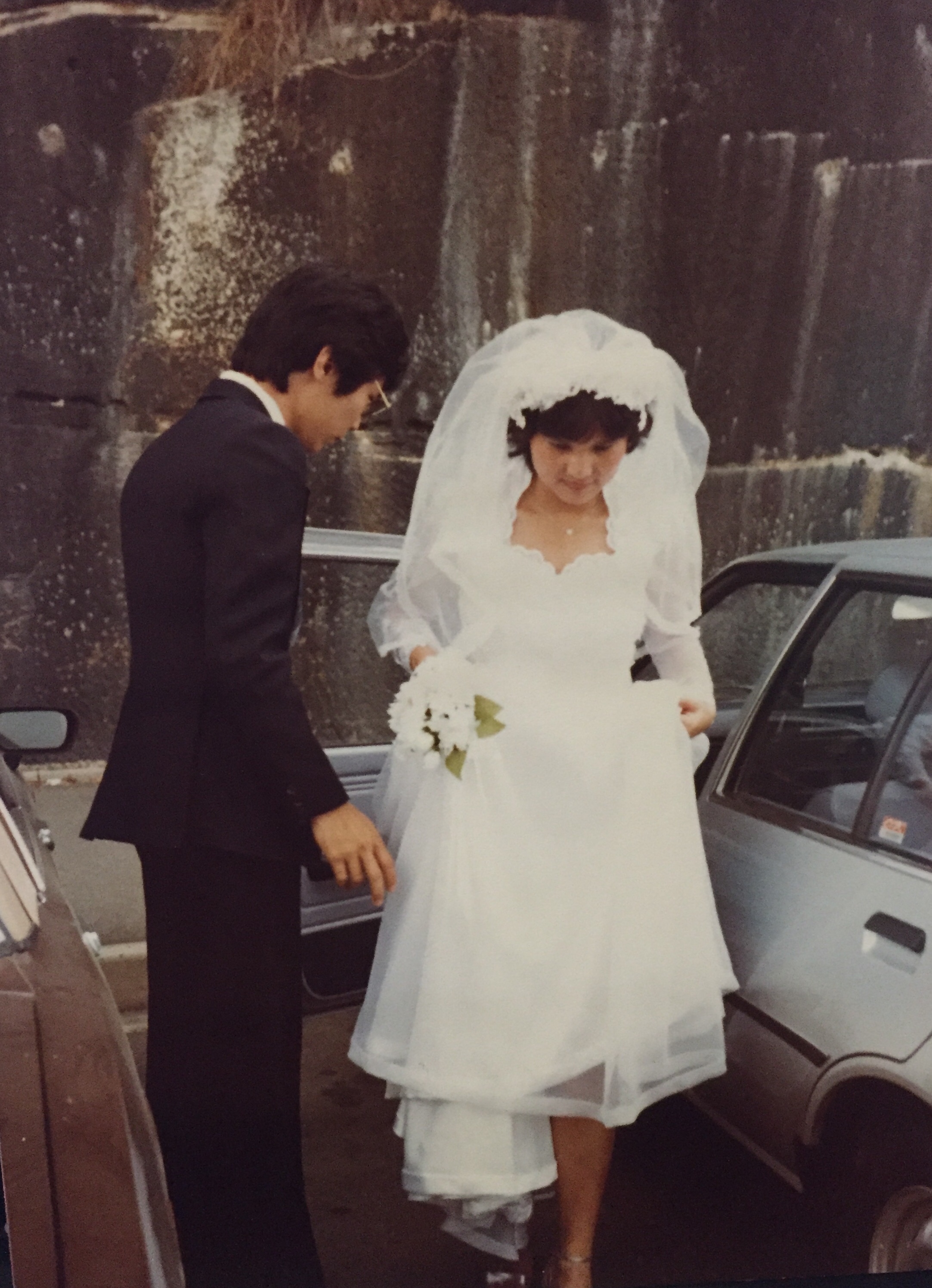
“Don’t forget the bridal bouquet!”, Sue shouted as he swept his bride off her feet. There were four flights of stairs to carry her down to their silver Mitsubishi Colt. The urghhling, tall and dark, looked quite smart in his black suit, blue tartan tie and brown shoes. “A colourless man with colourful taste” quipped a friend once. He was not due for a haircut for another month, so he turned up in an untidy “Bruce Lee” hairstyle. Quite a skinny man, his excuse was he came from a poor family and he abstained from meat for three years after their wonderful maid, Yung Jia, killed his pet hen.

The urghhling was skinny but strong. After all, his father named him “ forever strong”. As if he needed to prove it, he effortlessly carried his bride down those four flights of stairs. He plonked her on the front passenger seat of their car, with casual ease. He paused briefly to admire the showroom shine of his Colt, the effort of that morning’s elbow grease work. “Buckle up” he told the two bridesmaids at the back. “We are gonna get to our wedding on time!”

We arrived for our wedding on time.

Bridge Street, near Martin Place cannot be the right place for a wedding, it is the heart of banking in Sydney, therefore soulless. “Why on earth would a marriage celebrant conduct a wedding there?”  The Office of Births, Deaths and Marriages was situated there. “Never mind, at least it is within walking distance to Sydney’s Opera House, and the Botanical Gardens.”

Doreen and James were witnesses to the wedding. Doreen had not learned about make-up yet. So, she turned up with big blue patches of make-up around her bulging black eyes. With her long Farrah Fawcett permed hair, she looked lovely next to her husband, James, a young man with a thick frame and a wide white smile that was unspoilt by coffee. His stolid mannerism was always reassuring. Quite a short man, he looked like he belonged to a different wedding party in his brown suit and grey leather shoes. The men did not think about colour coordination, they were lucky enough to own a suit. The women did, though. All four turned up in white! Eleanor, with short, thick permed hair, wore the whitest dress. These minor details mattered not to the bridegroom. His bride was there.

“You may kiss the bride”, the marriage celebrant said with authority. It sounded strange to the urghhling but he wasn’t about to debate the right or wrong of a stranger allowing him to kiss his wife. His wife! Wow. Did he realise what he had signed up to? The responsibilities? Whether in sickness or in health? Forever, till death do they part? Mere words? A promise carved in the heart? Can you love someone forever? Unconditionally?

Too late to deliberate. The marriage document was unhesitatingly signed. Man and wife. It was time to celebrate, not hesitate. 

“Sue, what does our check list say after the ceremony?” the happy bridegroom asked.

No plans for the afternoon. No plans for the future. Just live, happily. Hopefully. 

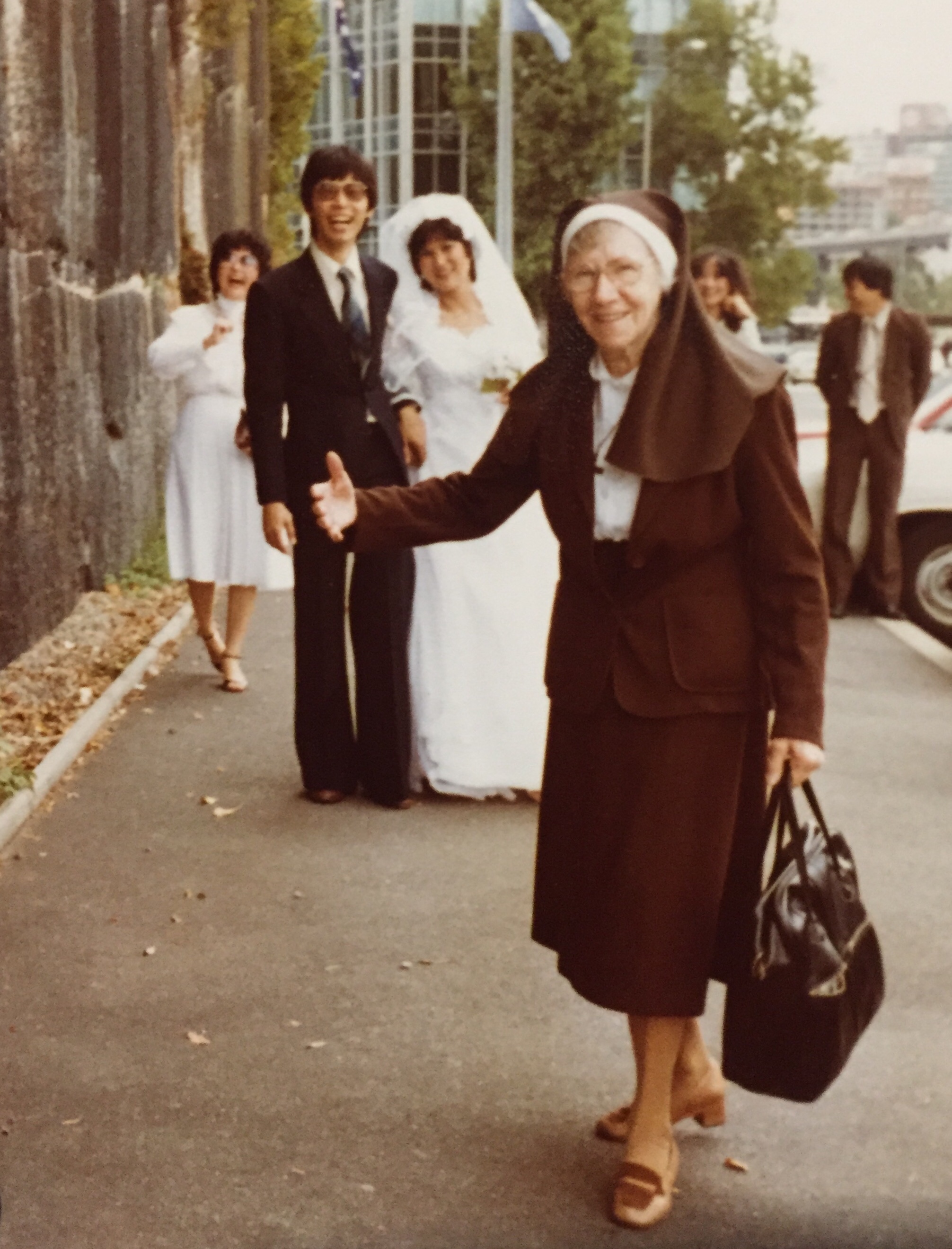
It was a Saturday. Early autumn in Sydney meant blue sky days and cool nights. Perfect for a wedding posse to walk the short walk to the harbour. A nun in a brown habit went up to the newly weds and wished them a happy future together. She wore a genuine kind smile. A good omen for the bride and groom. Along the way, cars honked and passers-by waved, hooted and shouted blessings. No wedding plan could have delivered such happy spontaneity.

Have a happy life together, the kind nun blessed us .


The wedding dinner was held in a Double Bay restaurant. No prizes for guessing it was a Chinese restaurant. They could not afford a “western meal” in the early ‘80’s. They knew what a “western meal” meant, that it was unaffordable. The urghhling was a “chinaman” anyway, meaning he loved his rice and noodles.  Nine guests, a table for twelve. Sue is family, not considered a guest. The urghhling was strange like that. Doreen turned up with the same blue eyeshadow, hand in hand with James who was still in the brown suit. Behind them were Richard and Cindy. Coo, coo, the lovebirds, whose 60th birthday party was the reason why the urghhling and The Mrs are in the plane. “Flying. Oh, don’t think about the flight. Back to the past.” Originally, they could only fill a table for nine. But, an odd number would not make an auspicious occasion. And so, they stretched the guest list and added three more. None asked openly why it was such a small wedding party. 

“All our friends had to go back to their home countries after uni, they weren’t allowed to stay.” The Mrs reasoned out loudly in her mind.

“His parents and other siblings couldn’t come. Some lived too far away, for others, it’s their busy time of the year”.

“Her elderly parents couldn’t come, it’d be too daunting for them to travel on their own”. The urghhling reinforced with a good reason.

“She is adopted, no siblings.”

Anyway, no one asked. The excuses were not verbalised.

A strange thing happened after the wedding dinner. All the guests followed the newlyweds home. Home was a two bedroom flat on the high side of Rainbow Street, not far from Coogee Beach. A cream coloured apartment block, a popular colour in the 70’s. Off a steep road, into a steeper driveway. Not a friendly place for older folk with stiff, painful joints. A creamy box amongst hundreds of boxes, in fact when you look up at it from the street. But, it is all about the location. Location, location, location. To buy well in Sydney, one must have water views. The urghhling was sure he bought well. They could see a glimpse of Botany Bay in the distance if they perched on their toes on the edge of the bathtub. It didn’t matter that the lounge was too tiny to fit all twelve of them, some outstretched legs could rest on the mosaic tiles of the narrow balcony once the aluminium sliding door was opened. It didn’t matter that you could see a couple making love on their balcony opposite, or overhear a heated argument across the courtyard, or watch the busy actions of a young Asian woman cleaning herself behind a frosted window. Live and let live. It didn’t matter to the guests that the night was their first night as a married couple. It didn’t matter that they overstayed till way past midnight. When morning arrived, the parted mattresses was a telltale sign of frantic activities after the tired guests left.

Either with relief that they had landed safely, or perhaps that she was still by his side, he squeezed The Mrs’s arm as the plane glided down the runway with hardly a bump. Amazing. How we can bring a 200-tonne flying machine down from 30,000 feet and land it exactly when and where we want it. Yet, no one in the plane applauded the pilot for such an awesome feat.

Amazing. The urghhling and The Mrs, still together, after 35 tumultuous years. He casts a glance at her. She had her eyes shut, both palms resting on the page she was reading, forming an unusual bookmark. Eyes shut, resting. A usual pose for someone who is always tired. He is suddenly consumed by remorse. He failed her. She, the mirror of the tough journey they had endured since their franchise business folded. The same remorse he felt when he overheard her crying in bed one night. A victim of his failed business, she was disappointed, disillusioned, disoriented, dishevelled, destroyed by the test of time. Once a strong, proud woman, she was almost a shrivelled husk, empty of the promise and beauty that was hers to claim.  He hears his old promise ringing loudly in his head, “Life will be good with me. You’ll see.” The Mrs opens her eyes, awakened by the impatient jostling of fellow passengers leaving their seats. Someone, in a few rows behind, was speaking loudly into his phone in a foreign language. She glances at the urghhling but fails to notice he had been crying.

Mum About Mum II

They told me not to write Ma’s story. Keep mum about mum. Respect her privacy. Respect theirs! I wrote Mum About Mum I, but I did not tell them. On Sunday, they saw me jot down notes whilst having “dim sum” with Ma at her favourite Chinese restaurant in Norwood. From this, they will know Ma wants her story told. They have not said a cautionary word since. They need not worry, I shall not divulge their names; but, Ma’s name is important for me to record down. Her name is Xu Mei Lan aka Chee Moay Lan徐梅蘭, Mei is plum flower and Lan is grace and elegance. I have long realised the importance of choosing the right names; it is often that we become what our names mean. Ma is indeed a graceful and elegant woman, as beautiful as the plum flower. In February 1936, Ma’s father, Ngagung, died from typhoid. She was thirteen years old. In those days, when the head of the family dies, the family has to fend for itself or find another head. Ma’s mother, my Ngabo, was subjected to the unfathomably cruel and oppressive fashion for bound feet. She was also denied opportunity to gain an education due to poverty and her gender and failed to be independent. The fashion for bound feet in China persisted for a long time, in fact, over a thousand years, mainly due to the mistaken belief that it would give girls a chance to have a “better” life. The fashion waned only after the roaring twenties. Wealthy men were titillated by tiny little feet; sexual objects that their concubines must have. A small foot in China was as popular as a tiny waist in Victorian England. Women with bound feet walked, swayed in fact rather “alluringly”. It was believed that the resulting “sexy” gait would give the woman an unusually tight inner thigh and pelvic muscles – all that to mean that they hoped for tighter vaginal muscles. That trend spread to the villages, men of all persuasions followed the cruel practice and bound their own daughters’ feet also, in the hope they could be married off easily. Foot-binding was a symbol of status and wealth, the poor would not deprive themselves of that. Ngabo had her feet bound but unfortunately, she was not married off to a rich man. Hers was not the calibre of the sought-after “Golden Lotus” – three inch small, and not quite within the 4 inch “Silver Lotus”. The inferior ones were five inch or longer, the “Iron Lotus”. The two years of excruciating agony in having her toes and arches broken and then crunched flat against the soles were in vain. She did not catch a scholar, not even a shop keeper. Her husband, my Ngagung brought her to Malaya, and soon found work as the laundryman for an Englishman, a coconut plantation owner in Bagan Datoh. When Ngagung suddenly died, his family’s world came crashing down. The eldest child was Ma who by then barely had two and a half years of schooling. She had hoped to be a teacher. At the time, anyone with five years of education could become a teacher; she was halfway to reaching her ambition. But, all hopes of that died with Ngagung. The second eldest was a son, my Jiu-Jiu. He was eleven at the time. An ambitious boy, he fought tooth and nail, and screamed that he wanted to continue with his schooling. He had hardly any lessons before he was forcibly carried away by their eldest uncle, my 2nd Ngagung to Five Miles. Five Miles was a village that was five miles from Teluk Anson. Jiu-Jiu, like Ma, also lost his hope to receive a school education. Instead, he was forced to be an apprentice in the laundry business. An apprenticeship meant long days, hard labour and pittance for wages. For the next four years of her life, Ma kept herself useful in the family. Daughters were viewed as expenses to the family, of little or no value. The sooner they were got rid of, the better for the family. Her main task was to look after her siblings – wash their clothes, cook for them, feed them, keep them out of mischief, and put them to bed. Apart from that, she was also responsible for the well-being of the ducks and chooks; collect the eggs and ensure they were well-fed and all accounted for at the end of each day. The end of the day was seven pm, and to save on energy, that meant lights out and bedtime. On rare occasions, Ma had to use the toilet, which was located outside the house, after bedtime was announced. A visit to the toilet on such occasions meant baring her bum to a swarm of mosquitoes. The price paid for such poor discipline was an itchy backside, courtesy of the mozzies. Ngabo, as would any widow with four children at home to rear, eventually invited her dead husband’s head worker to her bedroom. The strong younger man would become the new head of her family. Ma hated the man for taking her dad’s place; fortunately for her, she never had to learn first-hand this fact of life that was not uncommon in those days. Even birds know this law of the jungle. Magpies will often mate for life. However, if a male is killed while there are hatchlings in their nest, the female will take a new partner. Ma’s future husband, my Pa, would be her sole and reliable provider. She is fortunate not to have her own magpie stories to tell.

When Ma turned 16, she overheard serious discussions about her future.

“She is not young anymore. Time to let her go.”

“Find her a husband soon, the longer you wait, the harder it will be to find her a man.”

“You cannot have her at home forever. Have you considered the farmer’s son?”

The farmer’s son was a recommendation by the rice wholesaler in town. “He is a good man, he just turned 21.” Given ten acres of arable land, the young man was ready to start his own family. His parents, from Fujian province, advertised his fine credentials to all the match-makers around the villages. Healthy, hard-working, responsible, young and strong, and most importantly, a land-owner. One morning, Ngabo asked Ma to stand at the front window. “Stay there, and do not move away until I say so.” It was almost mid-morning when Ma noticed a young “boy” cycling past their wooden hut. The road was some ten meters away from the boundary of their front garden. He made a U-turn and cycled back to where he came from. Not a word, not a smile, their eyes did not even meet. ” He’s very dark skinned.” Ma summarised.

The other candidate for her hand was Pa. He was born Wu Yuan Quan, the fourth son of 文榮, grandson of Liu Shan 六山. His teacher – a man who occasionally turned up to teach the village boys – changed his name to Wu Zeng Zhi, 吳增智,but on his mother’s tombstone, his birth name 元泉 was used. Wu Zeng Zhi is a more intellectual name. When one receives education, one becomes learned. Zeng means to expand, Zhi is wisdom, resourcefulness, or wit. A handsome man, Pa left his home in Shaoxing for Shanghai when he was nine years old. His first stint away from home was an abject failure, in terms of money; he wasn’t paid a cent because he returned home to celebrate Chinese New Year with his family before the two year “contract” was up. But, he continued with his apprenticeship in the dry-cleaning trade. Later, he was sent to KL (Kuala Lumpur) by his entrepreneurial boss. The boss had a chain of dry-cleaning shops in Shanghai, and wanted to start another in Malaya. He sent his best apprentices abroad. Pa worked for him for two years in KL before deciding to be his own boss. The three pillars of Malaya’s economy then was tin, rubber and coconut. Teluk Anson was situated right at the hub of these industries. It made sense that Pa chose to set up his own business near Teluk Anson, at Five Miles. As fate would have it, his shop was located just two doors from 2nd Ngagung’s (Ma’s uncle) laundry shop, the one where Jiu-Jiu was forcibly taken to. Ma’s uncle was actually the husband of Ngabo’s younger sister, 2nd Ngabo. Whenever Ngabo visited her sister, Ma and her siblings ( another brother and two sisters) would tag along. Such visits were infrequent; (maybe once or twice a year) they were like an outing or a short holiday. 2nd Ngagung would send Ma to spy on the opposition’s dry-cleaning shop. “How many customers did they have that morning? How many garments? Did you see him? Was he busy?” Ma never spotted the man who would become her husband. She would have fallen head over heels for him. There would have been no uncertainty and angst when asked who she would marry when she returned to visit 2nd Ngagung during the mooncake festival in 1940. “The farmer boy with the ten acres or the dry-cleaner who now lives upstairs?” The dry-cleaner had by then closed his shop, having lost out to his competitor. He cut his losses and became 2nd Ngagung’s dry-cleaning expert instead. Inside information many decades later revealed that it was a strategic alliance that he forged with 2nd Ngagung. He wanted to get close to him and win his approval to marry Ma. 2nd Ngagung’s business grew. With both laundry and dry-cleaning businesses, he monopolised the trade. Impressed with the young man, 2nd Ngagung decided this man would be best candidate for Ma. His wife, 2nd Ngabo, however disagreed.

“He is a noisy tenant. His heavy footsteps annoy me when he is upstairs.”

” An inconsiderate man!”

“He drags his slippers!” “Flip flop, flip flop.”

Three months later, they were married. Ma decided against the farmer.

“Why?” I asked her.

“He is Hokkien, dark-skinned, a farmer. I saw myself slaving away in the field, rain or shine. Hard life.”

“The other is tall and handsome. Fair-skinned. Ambitious. Skilled in a good trade.”

Ma’s assessment of the two choices, I have to say, was superb. It did not mean she was happy to be married off though. Far from it, of course. But, at 17, she knew her time was up. She could not continue to be an expense to her family. She stood at that same window where weeks earlier, she was displayed like a shop window mannequin for viewing by the young farmer. She cried her heart out, bitterly disappointed that she could not have the education and the career that she had aspired to. She had to yield to the plan for her future which others had determined for her. Girls like her were mere chattels, to be disposed of as soon as practicable. Three months after the mooncake festival, Ma left her home at Bagan Datoh in a hired car. The next phase of her life was about to begin. Pa and Ma were married on 24 December 1940. On the same day, the warring nations, England and Germany began an unofficial two day truce to celebrate Christmas. It was a Tuesday, maybe the restaurant in Teluk Anson charged less on Tuesdays. The wedding party consisted of two tables, i.e. twenty people altogether, including bride and groom. No one from Ma’s side was invited, not even Jiu-Jiu, the brother who worked for 2nd Ngagung; he had to mind the shop. In those days, once a daughter is married off, she was “discarded water from a hand basin”. Even her own mother did not attend the wedding. In her white wedding gown, Ma was a classic beauty, before that term was made famous by the Hollywood sirens from the Golden Age. The tailor was from Shanghai, a friend of Pa’s who charged him mate’s rates for the silk dress. He ran out of fabric before the wedding dress was finished; Ma remembers clearly it barely touched the ground, there was no train for her bridesmaid to hold. Her beautiful lacy headwear lacked a veil for the same reason. To help mask the missing veil and train, the Indian florist made her an extra big bouquet. It was so big she struggled with the weight; a hand-tied bouquet would have been classier. Her wedding dress later became stock for hire in 2nd Ngagung’s shop.

Pa and Ma on their wedding day

The newly-weds rented a room on the floor above the shop. Rental was $5 a month. They lived there for seven months. Pa’s work station, an ironing bench was upstairs, in the next room. The other workers worked downstairs, the laundry arm of the business was more laborious and less skilled. Ma was confined in the room to “keep out” of harm’s way. I suspect Pa did not want his beautiful wife to be ogled by his colleagues. One morning, Ma went to the temple to pray for good luck. Pa was not aware where she had gone. By the time she came home a few hours later, he was in tears. He refused to tell her why he cried that day, but I suspect he thought she had run away. Their marriage was match-made, but that was the early tell-tale sign that he had fallen in love with his wife. Those early months of their marriage were sweet. He worked in the adjacent room whilst she kept herself busy during the day. She only needed to cook for herself, Pa’s remuneration included breakfast, lunch and dinner. 2nd Ngagung said she need not have to cook; it was alright for her to eat the leftovers after the crew had finished their meal. Pa declined his kind offer; his bride would learn to be independent. Ma’s chores were light, apart from cooking for herself, she kept busy with washing, mending, and making a new set of pyjamas and boxer shorts for Pa. The shop’s customers were predominantly Europeans. It was normal to find old English newspapers and magazines left in the shop. Afternoons spent browsing through them was how she learned some basic English grammar. Five o’clock was knock off time for the workers. She was happiest then, with an evening walk with Pa to look forward to or a movie to enjoy!

From left: Jiu-Jiu, Ma, 2nd Ngabo, Ngabo, Ngagung and 2nd Ngagung

During those days, news were weeks’ old by the time they reach Five Miles. The radio and tv had not been introduced yet, it was also before the advent of reddifusion. Her English vocabulary was limited, comprehension of news from English newspapers therefore was also limited. There was one person who made an indelible impression on everyone in the village. “A truly great man. I hope the Singaporeans do not forget him.” Ma reminisced and her mind drifted away. His name was Tan Kah Kee aka Chen Jiageng. Even the rickshaw pullers contributed to his financial effort to support China in their war against the Japanese, the 2nd Sino-Japanese War (1937-1945). Before that, he raised funds for the Xinhai Revolution and the Kuomintang’s Northern Expedition. The philanthropist gave away most of his wealth to these campaigns and helped set up Jimei University in Xiamen and many schools in south-east Asia and Hong Kong. He was also from Fujian as was her first suitor, the rice farmer. Ma need not worry about the philanthropist being forgotten; he has an asteroid named after him.

The Commoner And The Common Friends

It is Sunday. A day of rest, I get to sleep in. But, at the back of my mind, I know the chooks will be restless. They will want to get out of their coop and stretch their legs. Flap their wings, sing to the neighbouring kookaburras and excitable parakeets. Instead, I remain in my bed, beneath layers of crumpled moth-loved blankets and decades-old thinning quilt. It may be spring but the unseasonal heat wave conditions earlier in the week have retreated and surrendered to the cold Antarctic winds. The chooks will be more comfortable in their home, I reasoned with myself. My shadow self lost the debate, he too did not look forward to brave the cold. Moth ridden blankets still serve their purpose, there is no need to consign them to the bin, let us be kind to the environment. I did not have to wait for Greta Thunberg to evoke her thunder and lightning at us, the older folk. I have been using the “Save the environment” catchcry for all my life.

But, it is Sunday! He is also late.

“Time to throw away your singlets and undies. They are full of holes.” The shadow self hollered. “Nope, save the environment” I told him.

“Why don’t you update your wardrobe, ba? Sharp long collars are so out. Long before rounded collars were in.” “ Nope, save the environment, son.” I said with much conviction about saving the world.

“Heard of the latest QLED 8K big screen tv?!”, asked my shadow self. “You still spend your free time watching old movies on your old Panasonic Plasma tv!”, he mocked. “Look at the depth and detail 8K offers. Look at the vivid colours. It’s QLED, you know!” My shadow self loves all things modern, high tech and expensive.

“It’s ok. Let’s save the environment.” That was all I said. I did not bother to learn what QLED means.

Three Christmases ago, my son from London suggested it was time to change the carpets downstairs. “How about changing to solid timber flooring? The natural smell of Tassie Oak will be a welcome change.”

“Nope, save the environment, son.” I was quietly thinking more about the money saved than the planet’s well-being.

He pointed out that my house was beginning to welcome visitors with the previously familiar “old person’s smell”. Previously, my parents-in-law lived with us for many years until they passed away. Poh-Poh’s last breath was drained away by the emphysema she got from a lifelong habit of smoking. Gung-gung was forever strong until he broke his hips from a nasty fall. Euthanasia was illegal then, in 2002, and still is in South Australia. He was transferred to a palliative care unit where he passed away peacefully in the wee hours of the next dawn. When one is at that junction of one’s life, the issues are no longer quality of life versus longevity or right to live. It is no longer weighing up the burden of medical treatment versus the benefits of gaining it. It is not even about God’s will or God’s words. I am so glad Gung-gung did not hang around at all. Why endure immense suffering and pain at end of life? He lived a dignified life, it is only right he retained his dignity at death. I will want that for myself also.

Oh, the chooks!! Sorry, girls. I forgot to let you out! It’s 8.35 a.m. now!! “C’mon me ladies. Time for your breakfast.” I am a strict adherent of IF (Intermittent Fasting) but I do not impose it on my girls. They have a habit of lowering their body whenever I stroll by. Squatting low, Reddy’s underside almost touches the ground. She shivers momentarily as if expecting a sexual encounter. All she gets is a gentle pat on her back. “Good girl, Reddy. Did you sleep well, darling?” She has been stooping low at my feet ever since she lowered her guard about me. Always offering herself whenever I enter the chicken run, she wants to be straddled by a male. I should keep a cock for her, but the local council frowns at cockerels in the suburbs. My shadow self hopes she does not feel dejected by my rejection of her advances. I will only pat her back, that is the extent of our friendship. She knows I will never harm her. All my four ladies will never experience a black swan day. They should know this is always their home, till they die a natural death. Yes, with tender palliative care too.

Late in the morning, Chip, a good childhood friend, shared some food pics of his Nyonya dinner with some common friends in Adelaide. The Baba’s and Nyonya’s have a colourful history in Malaysia. The meeting and eventual merger of cultures between the early Chinese migrants and the local Malays enriched not only the cultural fabric of the society there but also impressively created a new type of cuisine. A Baba friend encourages us to keep using “Baba-Nyonya” for the Straits-born Chinese-Malays rather than adopt the more commonly used word for their culture, the Peranakans. Legend has it that in 1459, the emperor of China sent his daughter Hang Li Po to marry the Sultan of Malacca. The nobles and servants who accompanied her married the native Malays and they gave rise to the new class of Straits-born later known as baba-nyonya. Apparently, the term Peranakan is predominantly used by the Indonesians and later exported to Singapore. Last night’s party theme was to celebrate the baba-nyonyas. I imagine the women all went dressed in their best lacy see-through kebaya, with colourful batik sarong and manek slippers. The photo of the nyonya fish curry was mouth-watering but it did not affect my mood considering I was still on IF. But, when Chip sent me the photo of his wife’s Pulut Tai Tai, I couldn’t help but feel like a commoner. They were all our common friends yet I missed out on my favourite snack. Made of fluffy glutinous rice steamed in coconut milk, it is a heavenly dessert especially if you slather it with generous dollops of pandan-flavoured kaya (egg and coconut jam). Commoners miss out on all things exotic in life, including nyonya delicacies, that’s the hierarchical rule. When do ordinary folk without any significant social status get invited to such special parties? That is what I want to know, Chip. Urghhling.

Chip The Chairman