Diagnosis Of Gnosis

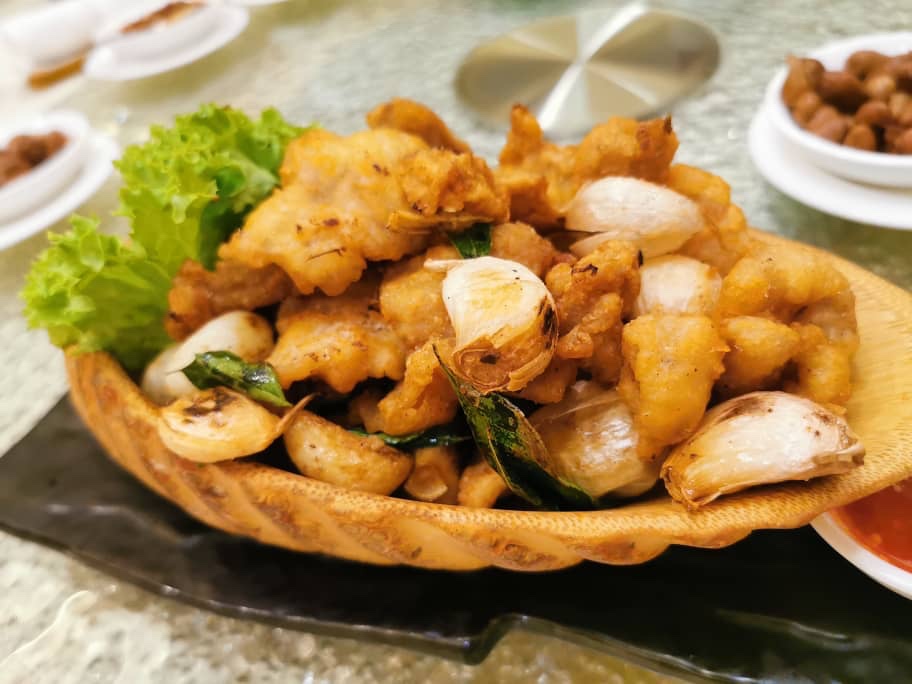
The memory of last night’s reunion with friends and relatives, one of whom I hadn’t seen for 43 years, still occupies my mind. We met at the Tang Restaurant, the name should have been a reminder to me to hold my tongue and avoid the discussion of sensitive topics such as religion and medicine. Knowledge that I do not possess, experiences in these fields, I absolutely lack. But, my dear friend was perhaps overcome by his emotions to finally reconnect with me. He was less restrained than me, eagerly wanting to share the gnosis of his religion with me. During his “sermon”, I noticed my chopsticks were busily picking on the delicious morsels of divine Tang cuisine whilst my friend was enthusiastically imparting his religious knowledge and experience of the divine, forgetting to use his chopsticks as the food disappeared from the lazy susan. Eat, eat, my dear friend, I attempted to drag him back to the real world from his Gnostic world.
Gnosis, an old Greek word for knowledge of Hellenistic religions and philosophy was later used by early Christians to mean personal knowledge of the divine.

My friend carried on almost breathlessly about how religions required the slaughter of animals as sacrifice to atone for one’s sins. It wasn’t until God sent his only son down to earth to die for our sins that animal sacrifice was no longer permitted. I bit my tongue on this one, and was proud not to point out that Hebrews 10:11-2 contradicted God’s intention. The ancients still permitted animal sacrifices except they were no longer any offerings for sin. Instead I blurted out that I was dismayed to learn that God saw the need to sacrifice his only son to atone for our sins. If it’s wrong to sacrifice the lives of animals, how can it be right to sacrifice the life of a human being, especially his only son? I was relieved my friend didn’t hear my remarks. Well, if he did, he didn’t show me any annoyance. He was already on to the next subject, why the Bible dictates that women cannot be pastors. In 1 Timothy 2:12-14, Paul did not permit a woman to teach or exercise authority over a man, she should remain silent. For God made Adam first, then Eve. Therefore, the woman must be subordinate to the man. “God designed men to lead”. The second reason Paul offered was that Adam was not deceived, Eve was and she became the “transgressor” (1 Timothy 2:14) Again, I was proud to bite my tongue and refrained from arguing that if man was designed to lead, why did Adam fail to control Eve from committing the first sin. After all, it was only an apple, not irresistible like the delicious slivers of steamed cod we were picking with our chopsticks.

Cardiognosis means knowledge of the heart, in Eastern Christianity and Roman Catholic theology, it is a view that only God knows the condition of one’s relationship with God. As we were being served the sinful dessert, our discussion was being hijacked by the more raucous friends at our table. They were clamouring over one another debating about cardiac arrests, strokes and statins. My ears pricked upon hearing the talk about bad LDL cholesterol. The bloke next to me was especially knowledgeable, he sounded like he would have been a great physician if he hadn’t chosen Industrial Engineering in university. He had been quiet all night until the discussion turned to the right or wrong of taking statins. Suddenly he’s on fire, blaring loudly about the dire consequences of not knowing our cholesterol levels. Hey mate, I interrupted him. Why do we conclude that cholesterol is bad simply because 70% of cardiac fatalities show a high presence of LDLs? If we say that in 70% of arson cases, we see the presence of firemen and fire engines, would we similarly conclude that firemen and their trucks are the cause of those fires? 60% of our brain is made of cholesterol. 90% of cellular cholesterol is found in our endothelial membrane. Our body makes cholesterol because it needs cholesterol. The fact that our body doesn’t waste cholesterol tells us it is a precious resource. Every LDL cholesterol sent to repair any inflammation in our body is returned to the liver by HDL cholesterol. Why do we therefore disrupt the efficient dispatch of cholesterol by our body? Why do we think we need to reduce our LDL with statins? Because studies supporting the use of statins from decades ago concluded that high levels of LDLs detected in cardiac patients point to cholesterol as the culprit? My mates laughed at my logic, they found my analogy ridiculous. Let me repeat: blaming LDLs simply because they are heavily present in cardiac patients is akin to blaming firemen at the scene of arson attacks as those causing those fires.

What wasn’t disputed is the need to change our lifestyle to reduce inflammation. Exercise, adopting a healthy diet, practising Intermittent Fasting to encourage autophagy and promote cell regeneration. What’s debatable is the sensibleness of taking statins let alone questioning their effectiveness. What’s also indisputable about statins is the many side effects. Muscle and joints pain, rash, muscle loss, Type 2 diabetes, liver poisoning, memory loss, leading to Alzheimer’s and dementia.

Urghhling, I heard them call me, as we bid one another good night and promised we will not wait for another 43 years till we meet again.

No Sis, It’s Osmosis

Osmosis, that’s the word I couldn’t recall. I’m in Kuala Lumpur! It feels like home even though I’m still a fair distance from Penang, my birthplace. To welcome us, my sister-in-law made us a bunch of rice dumplings wrapped in bamboo leaves. She knows our penchant for bachang ( in Hokkien) or Zongzi, in Mandarin. She has raved for years about how delicious her Zongzi is, her adoring and very biased husband praising them as the most delicious and incomparable Zongzi ever.
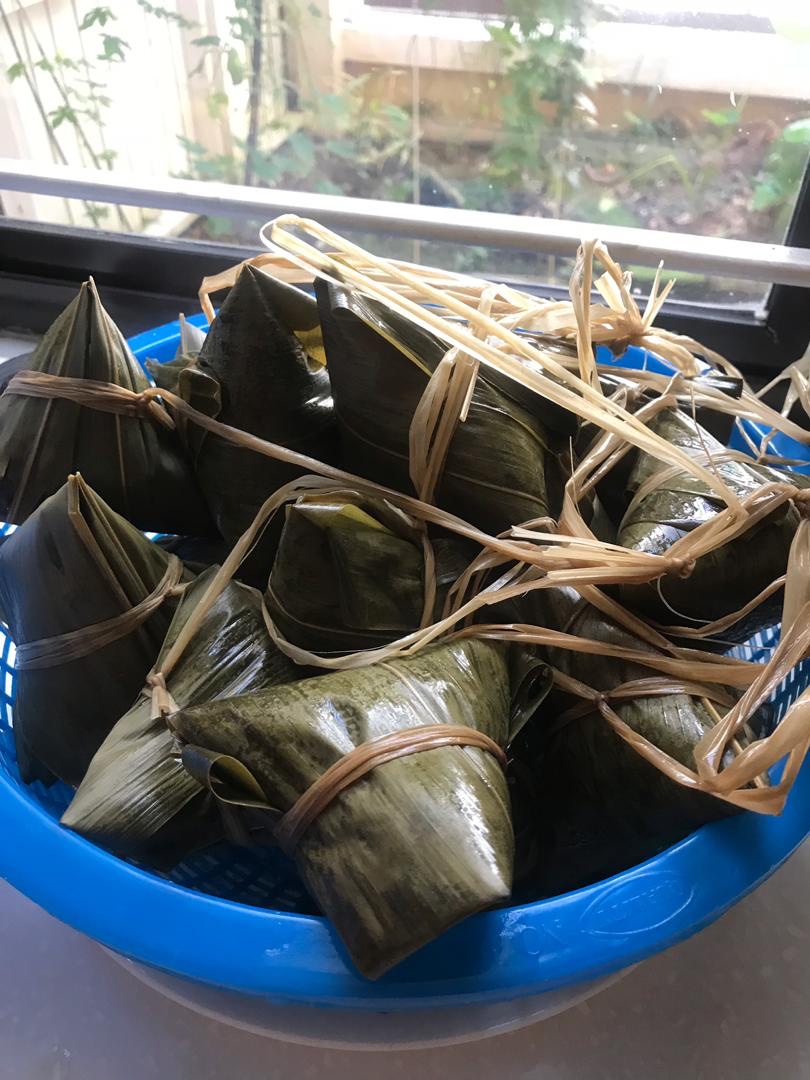
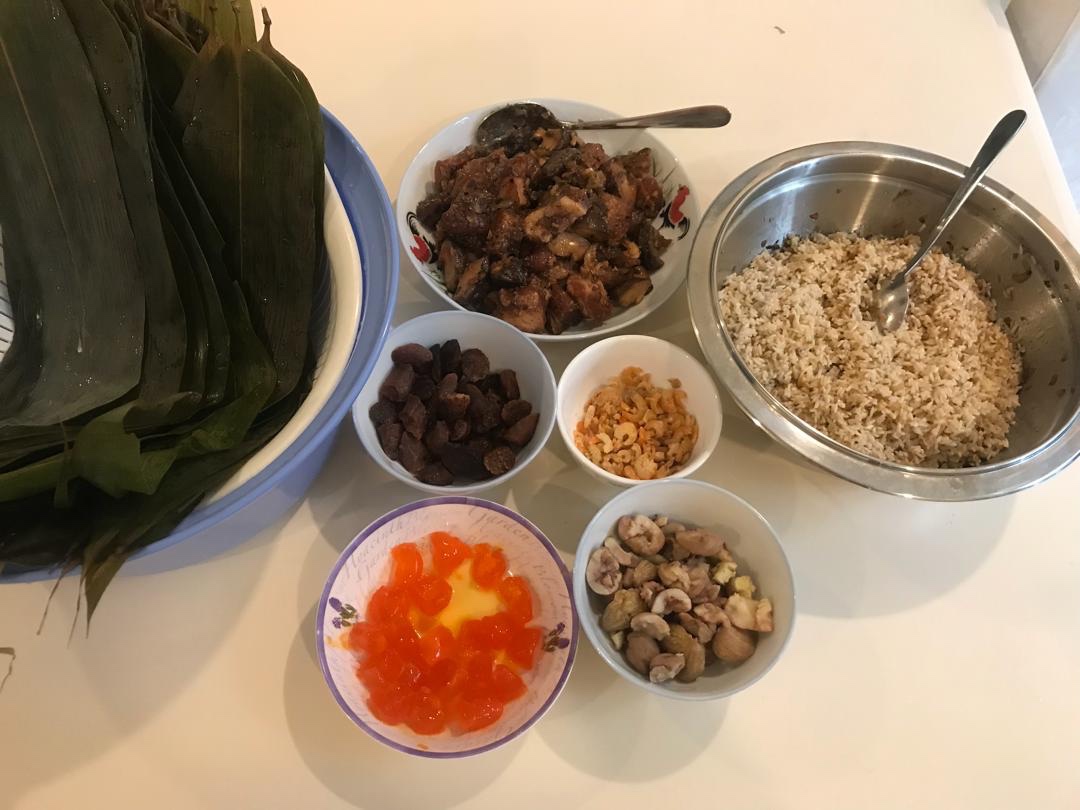
Finally, I got to sink my crooked teeth, (recently described by my dentist as in immaculate condition) into one of her famed dumplings. OMG, she wasn’t blowing her trumpet at all and he didn’t “blow cow” 吹牛 either. Hers is the best! And then, the inevitable happened. I needed to find out how to make these delectable heavenly dumplings, to prise from her the well guarded recipe. Using a disarming body language and a disinterested voice, espionage skills learned from the spy novelist, John Le Carre, I managed to tease out the truth, even before my cup of tea turned lukewarm. I had the same recipe except for one thing. I didn’t remember my High School Physics. The secret is all about osmosis. You need to add salt to the water before you boil the Zongzi, otherwise the salty flavours inside will flow out of the dumplings. Simple Physics, no in-depth analysis necessary of why her Zongzi is rated so highly.
Her secret recipe ( not fully disclosed ):

Ingredients

  • Bamboo leaves for wrapping Zongzi
  • String for tying Zongzi
  • Pork meat with some fat ( cut into bite size)
  • Chinese five spice powder
  • Chinese mushrooms
  • Sun-dried prawns
  • Chinese sausage, 1/2 bite size
  • Duck egg yolk
  • Garlic and Shallots
  • Pinch of salt

Pot of boiling water: Add salt and pandan leaf

Precogs And God’s Dogs

In my early teens, I was bashful and contemplative in public but brash and argumentative when alone, talking to God. Growing up in a strict and disciplined Christian Brothers’ school environment, it was natural that there were conversations about God. And there were many conversations with God, although He contributed zero input to any topic and remained silent to any of my questions. Maybe He did but I mistook them as my ideas? Nah, there were too many discussions and arguments that couldn’t be reconciled, He simply didn’t say a word. Whenever I opened my heart to him and shared with him my innermost thoughts and deliberations, he never showed up. Too busy, I suppose. Who was this inconsequential, scrawny bespectacled boy anyway? Why would the Almighty be distracted from incomparably important quests and conquests to tend to an insignificant boy who may or may not believe in him?

In the early 1970’s, I read about people in Hong Kong eating the brains of live monkeys. Their cruelty and callousness was too much for me to swallow. At the time, I had gone off meat, after my pet chook was turned into a main dish for a Chinese New Year party. A personal choice, being a pescetarian. Those who choose to be omnivorous have an absolute right to eat animals, as long as the killing was as humane and stress-free for the animal as possible. To partake in a meal in which the dish is still alive and screaming isn’t right nor can it be a right no matter what the argument is. At the height of my consternation and distress, I asked God why He allowed such awful cruelty to happen. He gave us free will? How far does He allow free will to be exercised? Absolute and limitless? Even humans have the wisdom to allow freedom but with some constraints attached. We value free speech but detest hate speech. We are free to exercise our right to free speech so long as we do not engage in speech that will provoke others to inflict harm on people due to their race, colour or creed. Why would God allow total free will without any safety clauses?

The all-knowing Almighty God would know that a crime was about to be committed before it was actioned. He would know the monkeys were about to be scalped and realise without a sliver of doubt that their brains were about to be exposed well before the cook even took out his saw and kitchen knives. And if God happened to be too preoccupied with some major disaster at the time, he could have dispatched his guard dogs to stop those who were about to commit the hideous act. Those were my ideas at the time, and I vigorously debated them with God. The cook had free will to open up the skulls of live monkeys. The diners had free will to eat the monkeys’ brains. But, there wasn’t any need for God to allow the suffering of the monkeys to occur. As soon as it was established beyond any reasonable doubt that the crime would soon be committed, God’s dogs could have been dispatched to capture the culprits.

The movie “The Minority Report” came out in 2002. The theme of the movie cast my mind back to the “eat monkey-brain” episode of my life during which God’s dogs would police the world and stop crimes against animals before they happened, stamping the undeniable existence of God. In the movie, three Precogs could look into the future and foresee any crime well before it is committed. Would-be criminals would be arrested before any harm is inflicted on the public. It was a world free of crime therefore, stamping the undeniable existence of a powerful authority.

I was so pleased with myself for coming up with such a fresh idea years before Steven Spielberg made the movie. Today, I wanted to find out who wrote the story, but was crestfallen to discover the story was written by Philip K Dick in 1956!


The Three Precogs

Motive, Give To Receive

All the major religions have the same theme. We reap what we sow. This message has been drummed into us. The motive to give is so we can receive in return, hopefully with interest.

The concept of Karma is well understood, originating from Buddhist teachings. Our intentional actions chain us to Samsara, a cycle of never ending rebirths and therefore suffering. Good moral intentions lead to good rebirths. We have to do good to receive good. To free ourselves of Samsara, the Buddhist eightfold path shows us a way out of this otherwise eternal damnation.

In The Upanishad Vol 2, Hinduism teaches us this: And as is desire so is his will. And as is his will, so is his deed. Whatever deed he does, that he will reap.

In Judaism, Job 4:8 They that plow iniquity and sow wickedness, reap the same.

In the Bible, Galatians 6:7 For whatever a man sows, he shall reap. The one who sows to please God, from God will reap eternal life. If you give, you shall receive back even more.

In the Qu’ran, Yusuf Ali Surah 2: they shall reap the fruit of what they did.

Why did all the deities and prophets in the history of mankind reach the same conclusion, that urghhlings require a reward before they will intentionally act for the good of others? That we must be be promised a negotiated settlement first or reap a personal benefit before we heap good actions on another? We reap what we sow. But, is that a universal teaching? Or could it be that this is the ugly nature of the urghhling, well recognised and accepted by all deities and their wisemen? I suppose the question I ask is this; is it God’s law or is it God accepting it is Nature’s law that we need to be incentivised to do good? The Law of the Jungle dictates that only the fittest survive and thrive. Is it true that this vital genetic code is embedded in us, the selfish gene is the unfortunate burden we must carry? For without it, we shall “perish”? Maybe the enlightened Buddha figured it out 2,600 years ago, to escape Samsara is to perish? After all, isn’t that Nirvana? Life is suffering. To reach nirvana in order to end suffering, we need to end the selfish gene. It is the selfish gene that creates the desires in our minds which causes suffering. The bases of desires are greed – excessive desires, delusions and aversions. Contentment and complacency are not compatible with the Theory of Evolution. It is desires and our drive to satisfy our desires that promote our survival and reproduction. It is also the same insatiable appetite for more desires that cause us pain and suffering. That is the problem with lust or greed. They are not evolved to deliver us happiness, contentment and peace. They do not ennoble us and make us wiser. We have to adopt the right mindset and intentions to free ourselves of desires. Live out the right intentions with the right effort, right speech and right mental focus – mindfulness and concentration. That is The Eightfold Path. So, can we urghhlings give, without any selfish motive? Expunge the selfish gene.


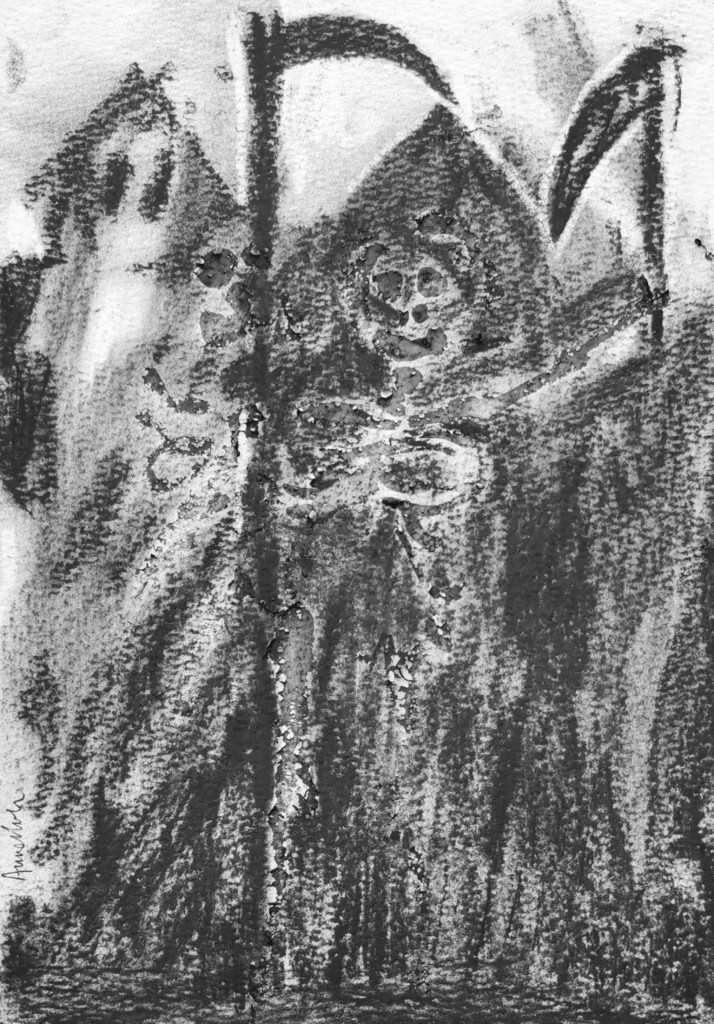
The grim Reaper

Contentment, That’s Contentious

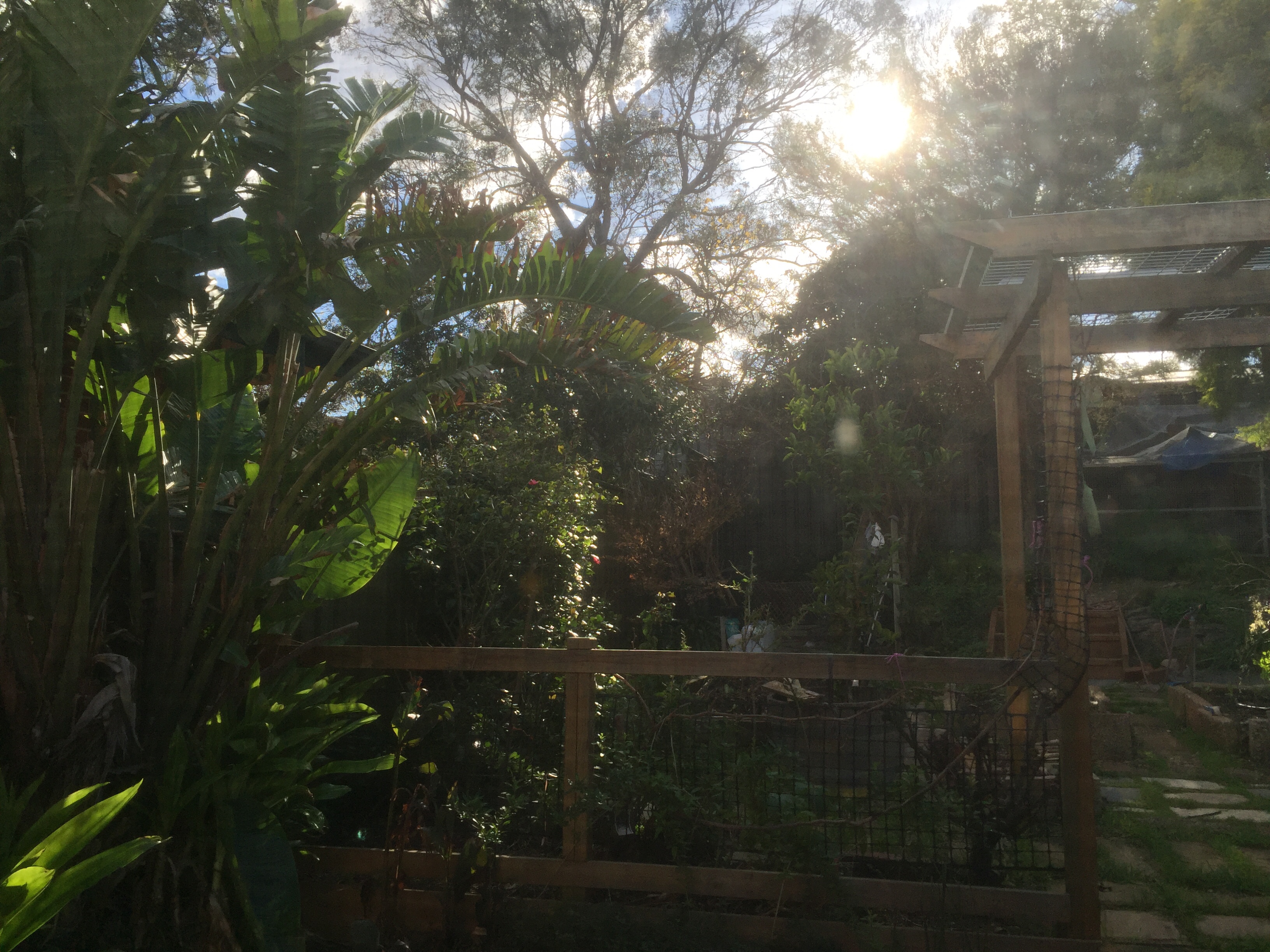
The intent is to be content. Attitude of gratitude, as an old schoolmate reminded me today. He is richest when content with the least, Socrates apparently said. Contentment is a product of our attitude towards our circumstances. And when we are mindful of what we have rather than what we don’t have, that delivers thankfulness to how we feel about our circumstances. When I look out of my dusty, water stained windows, do I see the need to clean them or do I see the unkempt garden? The roses need pruning, the mandarin tree is hungry for its winter dosage of citrus fertiliser, the snow pea seedlings need to be spread out? Thankfully I remind myself I have a garden. I suddenly hear the happy songs the birds sing, I can even imagine the busy white butterflies that visit here in Spring. Winter isn’t so cold anymore, the dark clouds no longer hide the sun from me. It is how we think that brings us happiness. For me, it’s also about thinking that everyday is a Friday. TGIF, as we exclaim every Friday! For many, Fridays is a ledger of life. They worked hard all week, Friday is a pay day, not necessarily in monetary terms but a reward nevertheless. They have a weekend ahead to celebrate life, seek fun, joy of sex, whatever. Since a year ago, I began to think of everyday as a Friday. Was it Lao Tzu who said ” Health is the biggest treasure, contentment the greatest wealth and faithfulness the best friend”? Or maybe it was Buddha. A quote that rings long and loud for me is the one attributed to Aleksandr Solzhenitsyn ( had to google for spelling), he said “we are happy as long as we choose to be happy”. Happiness is a state of mind. In my pursuit of happiness, it’s when I pause that I find contentment.

But, contentment is contentious. Ten weeks ago, before I started blogging, I consciously and mindfully told myself not to harbour any expectations. It wouldn’t matter if no one reads my blogs. It will not disturb me, nor should it, if my words fall on deaf ears and my ill-developed and sometimes impulsive opinions do not distract or disturb. For me, blogging is a selfish act. The audacity of putting down in writing my thoughts and ideas is less frightening with the resignation that they will be too uninteresting to garner much attention from readers. I would be foolish to be hopeful for any reaction, even ones laced with acidity. Blogging inculcates a discipline of deliberate focus on the topic, and forces the unending quest to search for better vocabulary. A very good medicine to help ward off Alzheimer’s. Prior to blogging, newly discovered words were forgotten within minutes. The minutest distraction was a subtraction to my words library. I am already reaping many benefits from this simple hobby.

Contented with a low readership, I carried on writing, with Thoreau’s butterfly on my shoulder. But, one day Liu Xin caught my attention and my blog about her debate with Trish Regan earned “stratospheric” hits. Subsequently, Sophie’s Choice broke the record, being the biggest hit for me. With that, contentment is replaced by commitment to improve, a new endeavour to savour another bigger hit. Contentment is my new resentment, I’m now scrambling for more content! Seriously, this is contentious.

I Wonder, Ponder For Longer?

The Dalai Lama scuffed his own immaculate well-shined aura when making an off-the-cuff remark about the prospect of a female Dalai Lama. She should be more attractive, he said whilst chortling at his own joke. Throughout his long career as the spiritual leader of Tibet, he has preached against the objectification of women and supported gender equality. His foray into the issue of EU refugees this week was also an aberration, a far cry from his usual high standard of public pronouncements. His suggestion that Europe should be left to Europeans and refugees from Africa and the Middle East should return home eventually, caused quite a stir. A statement from his office later acknowledged that not all refugees wish to return to their homeland or are able to. If only he had pondered for longer.

Very sad are the cases of Sam Ballad and David Dowell who both died from accepting their mates’ silly dares. Ballad went into a coma, was paralysed before he died from eating a slimy slug. It looked harmless but revolting enough to the group of teenagers to challenge him to swallow it whole. Ballad developed rat lungworm disease from ingesting the infected slug. It took eight awful years before his life ebbed away. Dowell also accepted a silly dare and died in absolute agony two weeks after a bout of salmonella poisoning. His death certificate said he died from eating a Gecko. If only they had pondered for longer.

Yesterday, Australia’s Federal Court overturned the Home Affairs minister’s deportation of a convicted wife killer on the grounds that it could not be proven the minister, Peter Dutton, took more than eleven minutes to make his decision to deport the urghhling back to Malta. The lucky murderer who was also convicted of assaulting his cell mate and had his sentence extended by two years, can now safely call Australia home again. It is clear to many that the man is a very bad guy. Why would anyone not want to throw away a bad apple? All Mr Dutton had to do was ponder for a bit longer, or at least appear to do so, no matter the crystal clarity of his mind. For appearances’ sake? That’s the ugliness the legal system is moulding society into?

As for Donald Trump’s tirade over trade, his on-again-off-again Tariff Wars with so many countries will eventually lose their effect with friend and foe. His self belief in his ability to clinch big deals may have been formed from some success in his commercial manoeuvres but on the world stage, nations are starting to see through his bluff. At the recent G20 summit in Osaka, the world saw him blink whilst playing for high stakes at the table. His embarrassing backdown from imposing more tariffs on China coupled with his reversal of trade restrictions imposed on Huawei on the grounds of national security concerns were fiercely denounced by only those most hawkish against China. Of course, we ought not be surprised if he reverses his reversal of the trade ban on Huawei. It was only less than twelve months earlier that the US lifted their ban on selling components to ZTE Corp, which the Americans accused of violating sanctions against Iran and North Korea. So, Trump has again surrendered to one of China’s major technology company accused of threatening US national security. His latest offensive is now against the European Union over the EU’s subsidies of Airbus SE. For the past 15 years, the WTO has found both sides guilty of heavily subsiding their aircraft industry. Trump said Trade wars and Tech wars are easy for America to win. Another embarrassing backdown beckons for the US. These are not weak countries that America can simply bull-doze over with impunity. Why won’t the urghhling ponder for longer?

Urghhlings, please heed Albert Einstein who once said, “Unthinking respect for authority is the greatest enemy of truth.” Let us ponder for longer. 

USA vs China

Exercise Or Exorcise Our Free Will?

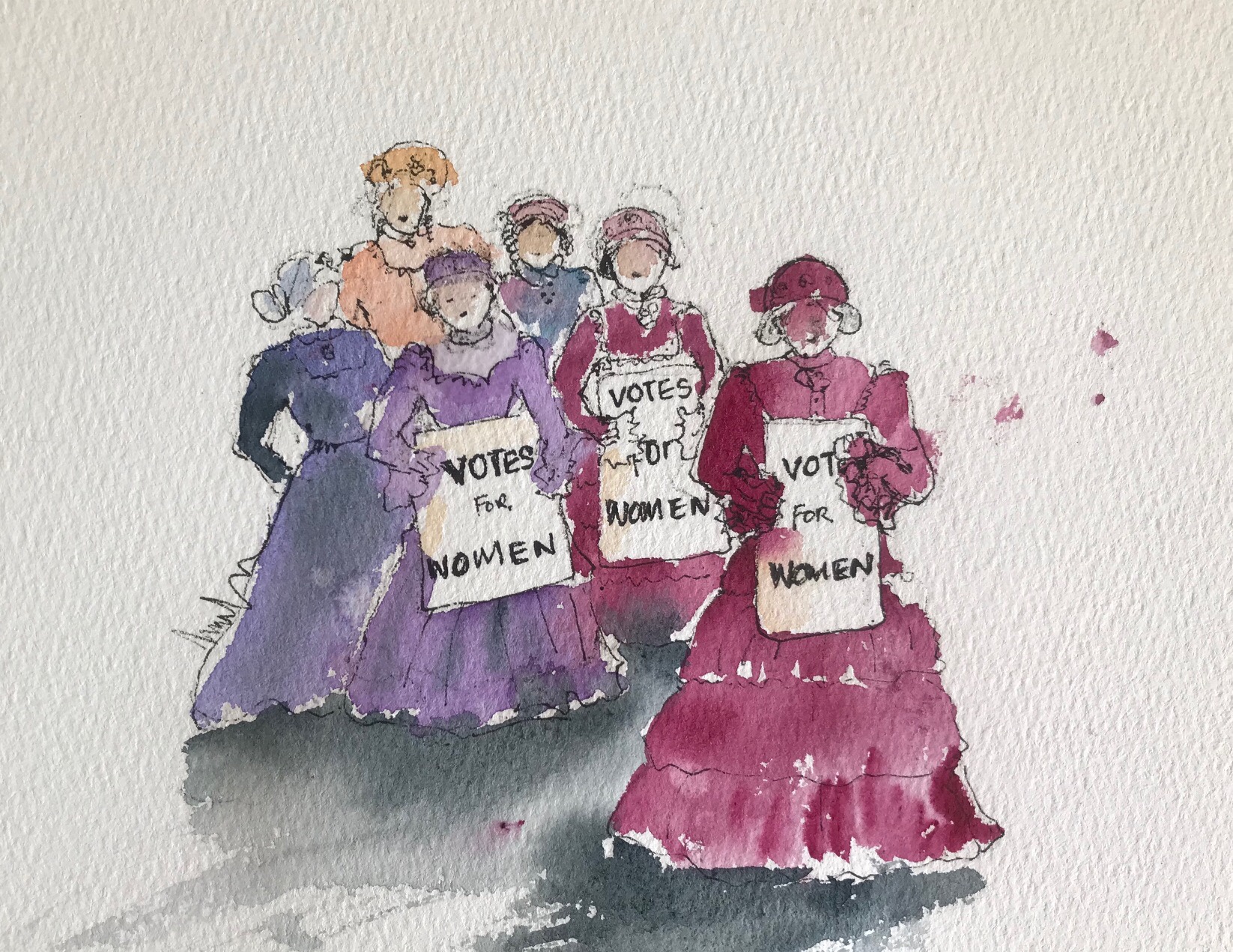
The shambolic story of Brexit since the results of the referendum of 2016 posits to me the foolishness of leaving our fate to the free will of our voters. Democracy sounds quite sound, on the surface. It seems to make perfect sense that everyone is entitled to have their say in who governs their nation or in the case of Brexit, for the Brits to choose to leave or remain in the European Union. These are important matters for everyone to exercise their vote, right? For thousands of years, humans relied on the power of God or Gods to dictate our might or plight. Emperors, Tzars and their ilk taught us that their right to sit on the throne was God-given. Democracy may have been touted as a wonderful idea by the ancient Greeks, but it wasn’t until 1755 in the short lived Corsican Republic that men’s suffrage was won, and it is even later in the history of mankind that we see women at the ballot box. Why did God’s rights and authority pass to us? Did we think democracy would deliver a better result than our reliance on God’s and other deities’ super powers and unrivalled wisdom? If democracy were about rational decision-making, then it would make sense to leave it to those who are undeniably intelligent, highly knowledgeable and rational. Unfortunately, democracy doesn’t rely on only those qualified to impart their knowledge, intelligence and rational thinking. Democracy allows everyone past a certain age to exercise their rights, even if they possess no economic knowledge, no interest in the who and what the election is about, or any mental capacity to exercise their rights. Elections and referendums are not about what we think. Democracy is about allowing each and every voter to vote with their feelings. Brexit wasn’t about what you think are the benefits of leaving the EU. It was about what you feel about staying in the EU. On the 23 June 2016, over 30 million Brits, 51.9% of voters, felt it was better they left the EU. They wanted decisions about the UK to be made in the UK, and they wanted the UK to regain control over immigration and their own borders. So simple, this wasn’t meant to drag on and on with bludgeoned scalps tagged with the names David Cameron and Theresa May.

Democracy arose from the liberalism movement in the Age of Enlightenment. John Locke is often credited as being the founder of liberalism, asserting that everyone has a right to life, liberty and property. Liberalism encourages us to follow our heart. Our feelings are the biochemical algorithms embedded in our genetic code following millions of years of evolution, according to author, Yuval Harari. When animals hunt, mate or escape their predators, they decide using their feelings or biochemical mechanisms which compute the probability of success or failure. He went on to say that feelings aren’t the opposite of rationality, they embody evolutionary rationality. Accordingly, liberalism gave the nod to the importance of free will, the freedom to choose or vote with our feelings.

Looking at Donald Trump’s unwavering popularity, it is fair to say 40% of American voters are ignorant of or accept Trump as a pathological liar, a misogynist and a narcissist who has his finger on the nuclear button, invoking trade wars and economic sanctions on friend or foe.These are dangerous times delivered to the world by American voters who exercised their free will. Urghhlings, perhaps it is time to exorcise our feelings before we exercise our voting rights.

Complicit With Labor Omnia Vincit

Would I be an iconoclast if I lambast this motto? It was Augustus Caesar who inspired this Latin phrase, he desperately needed his Roman subjects to return to the land, to become farmers. Labour Conquers All, that was the catch cry I grew up with. We would stand at attention, puff our chests out and proudly recite our school anthem. Did the stewards of my school for twelve years, St Xavier’s Institution in Penang, realise that the motto originally was a call for ancient Romans to become farmers? Agriculture then was a necessity, (perhaps even more so now), and so it was romanticised by the social elites. Cicero considered it the best of all occupations, none more profitable and more delightful. What my teachers didn’t teach me was that labour during Caesar’s time was carried out mostly by slaves and servants. Labour conquers all? No, they should have said all the conquered, labour.

From my youth to early fatherhood, I held in high esteem the importance of hard work. My father’s story was respectfully retold to anyone interested in his rags to rags story during the early years of his indenture. He left his Shaoxing home at age 9 to work as an apprentice in a laundry workshop in Shanghai. In the 1920’s, that was a distance of over four hours, a frightening distance to the unknown for a child. After almost two years of hard labour, he returned home penniless, the boss simply didn’t pay him a cent. The warning signs were there, but I failed to pay any attention. Hard work does not necessarily reward us.

Unfortunately for my kids, I was complicit in instilling in them the same erroneous teaching that had been drummed into my psyche. As a young father, I wanted to teach my sons by setting good examples. Words can be misinterpreted, easily misunderstood, readily forgotten. Actions, on the other hand, they can see with their own eyes. Sweat and tears they will remember. I left for work early and came home late, just in time to bid them goodnight. I brought them to my office on Saturdays, the extra hours worked didn’t bring home extra pay. Labor Omnia Vincit, I sang proudly and repeatedly in my heart. The importance is in demonstrating to them the romantic concept of hard work. Effort is always rewarded, it may not be a financial one though. If we apply ourselves, there is nothing we can’t achieve.

Practice makes perfect. Everyone is taught that. Isn’t that just so awful? I knew from young that it is simply wrong to believe that. Yet, I kept reciting Labor Omnia Vincit. I started learning the violin when I was 9. My father had already left home at the same age. He would have been taught to practise his laundry skills perfectly. I didn’t ask what would have happened to him if he didn’t. A world of difference, I was merely concerned about practising my violin. Echoing inside my head, Labor Omnia Vincit, Labor Omnia Vincit, practice makes perfect. Does practice make perfect if you play the violin wrongly? No!

My complicity luckily was short-lived. My sons too learned music and they soon found out for themselves it is perfect practice that makes perfect. But, why be perfect? That’s boring and predictable. Why labour away like a slave? Work smart, that’s smarter than to work hard. Especially with the AI Revolution upon us soon. The Industrial Revolution brought about change that delivered great benefits to humans but that cannot be assumed with AI. Many may share the fate not of late 19th century drivers of horse-driven carts who switched to driving trains and cars, but of 19th century horses, rendered totally irrelevant. Be smart young urghhlings, work hard at finding yourselves a cushy political sinecure now!

From Gregarious To Egregious. It’s Contagious.

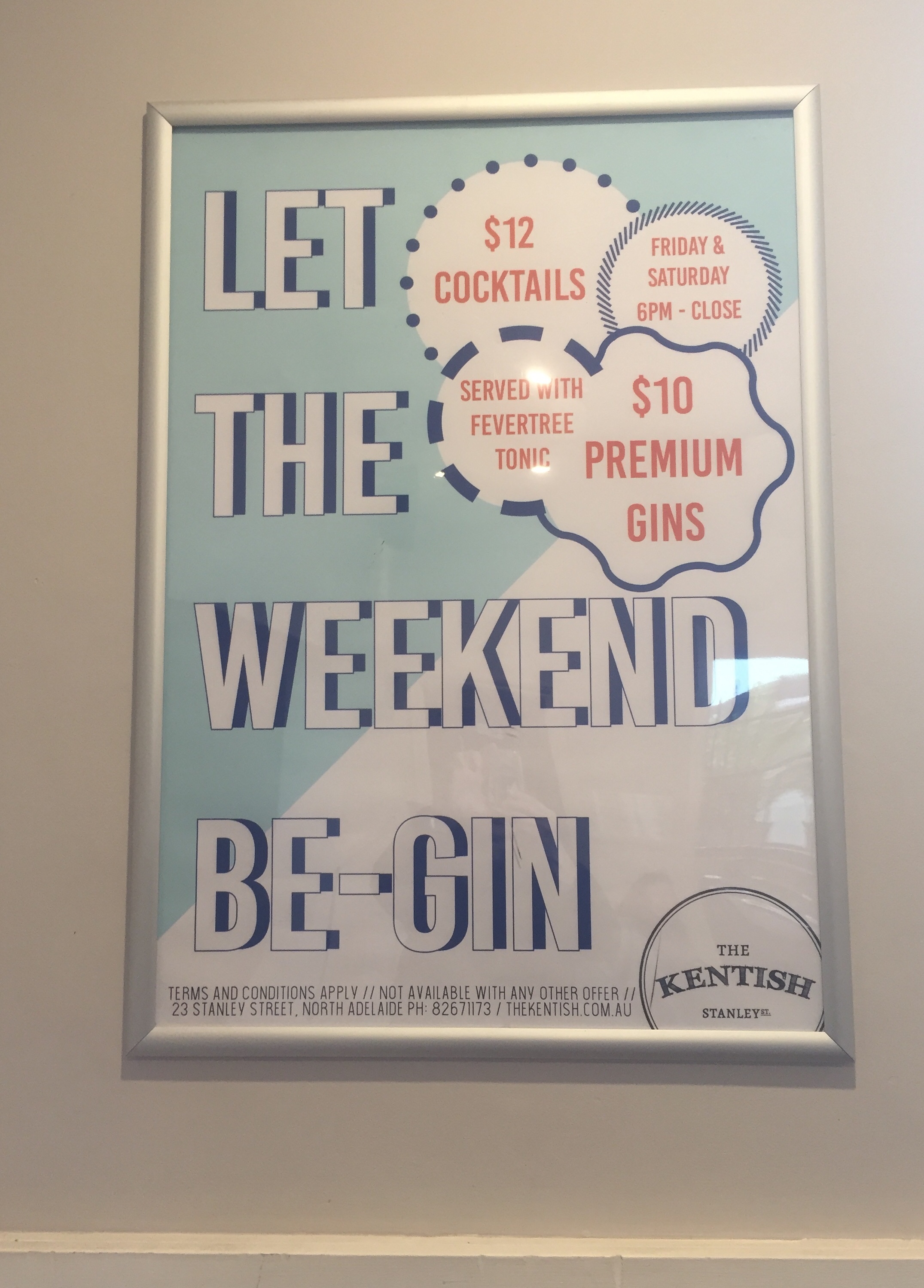
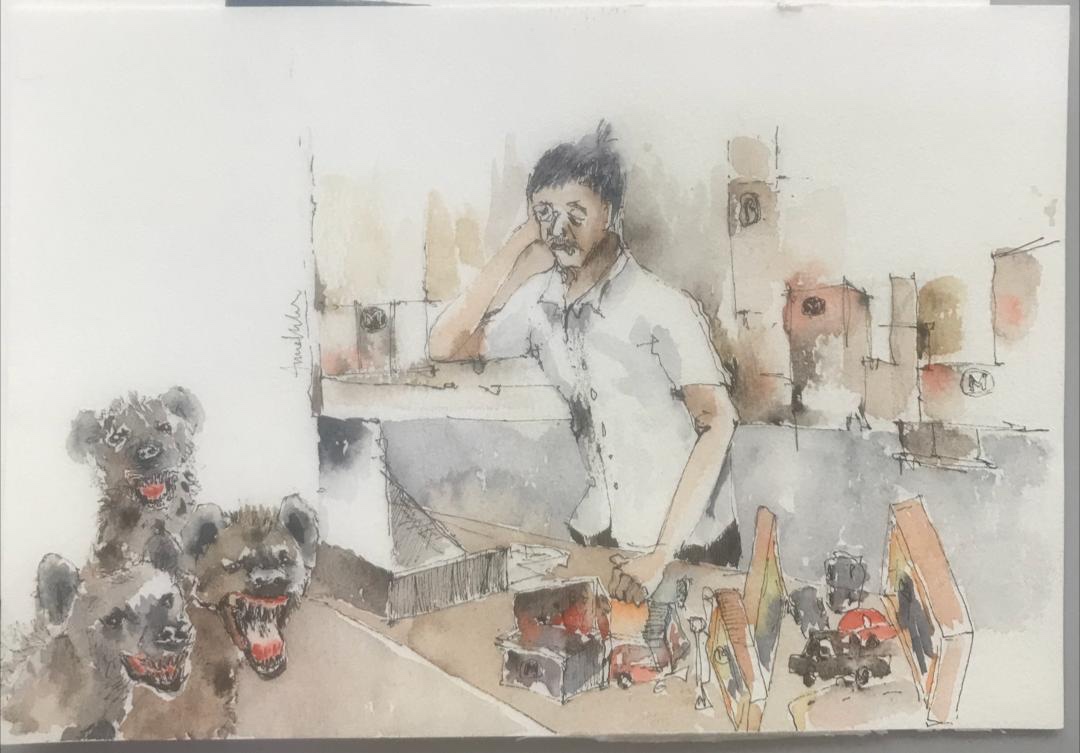
It has been a dismally cold and wet day. I’ve allowed the unwelcoming weather to turn my mood from yesterday’s bright and chirpy TGIF sentiment. TGIF, a few years ago I didn’t know what it meant. Friends were exclaiming TGIF every Friday. It’s somewhat celebratory I suppose. It carries the message of pride, job satisfaction, with fun just around the corner. We have worked hard all week, and Thank God, It’s Friday. Let’s reap our reward, get paid, get laid hopefully, and party all weekend. Let the weekend begin, be gin! I was ignorant of such sentiments. Having worked in retail shops for way too long, I had forgotten a weekend is different from a weekday. Every day was another working day. How did that happen? Life passed by and twenty two years later, every day was still just another working day. Looking back at my life now, I can see the shopping malls sucking the life out of my body. What’s left is a shrivelled shell of a once gregarious, confident and ambitious young man. In retail, the shopkeeper sees the magnified ugliness of urghhlings. It’s not uncommon for customers to buy an item, use it and then return it for a refund. They treat shops like a library. ” I am sorry, we don’t offer refunds simply because you’ve changed your mind”. So, they’ll return later after deliberately breaking the product. “I demand a refund, you sold me a faulty product”. It’s also not uncommon for the shopkeeper to be overwhelmed by a family of thieves. The mother with a pram, a perfect vehicle to hide stolen goods, would direct her children to fan out to all corners of the shop. The shopkeeper understands he’s the wounded gazelle, being attacked by a gang of hyenas. It’s inevitable before they rip him to pieces. Fellow earthlings, no, urghhlings, egregiously grievous to his faith in humanity. My long years spent in retail shops in shopping centres felt like a life sentence, the ugliness of urghhlings was contagious. I became a reliable witness against them, their dishonest and devious behaviour unfolding from across the shop counter. I longed to be freed. It took the 2008 Global Financial Crisis to unchain me from my prison. Fate, it has a cheeky twist to it.

A friend wisely advised me to embrace the cold, it’s better than the 45.9 C being experienced in Paris. A wise friend, she often imparts positive thoughts. She’s the annoying type though, she sees the cup is half full, not half empty. It doesn’t matter to her even if she paid for a full cup. There is simply no negatives in life if we focus on the positives. But, I just can’t forget the urghhlings in the shop….

Antibody, Anybody?

A few sixty year-old friends, the retired and less reticent ones, were loudly agreeing amongst themselves today that tough times made them stronger, better and wiser. Old men’s tales, surely. They want to believe they have benefited from the hard knocks faced in their lifetime, hardened like Charles Bronson in The Death Wish or the chiselled Clint Eastwood in Dirty Harry. Or maybe they learned the concept from secondary school Biology classes? Antibody in our immune system is what makes us stronger. When foreign substances such as bacteria, fungi, virus, toxins, chemicals, drugs invade our bodies, our white blood cells, the B-lymphocytes produce antibodies that will defeat the alien microbes. Our immune system records every microbe it has ever defeated, in the T-lymphocytes known as memory cells. The reappearance of these antigens will be easily dealt with the next time, before they can multiply and cause any illness. Yeah, we become stronger, with a better defence against foreign invaders.

Admittedly, there is such a thing as post-traumatic growth. Some friends share their stories of personal growth following a crisis. They gained a deeper sense of self worth, a greater appreciation of life and love, and perhaps the best reward is a lesson in compassion, altruism and maybe even spirituality. There’s wisdom there.

But, do we have to go through hard times to be a better and stronger person? Do we need to experience a traumatic medical condition or a bitter divorce that breaks up the family? Lose our home, stare at bankruptcy from close up? Why not just read a good book that can serve as our teacher, rather than learn from our own mistakes, a much tougher teacher?

This is what Marcus Aurelius taught us, when he was mired in war against Germania, saddened by the death of Faustina, his wife, and troubled by his son, Commodus who he realises is not the right successor to rule his empire. During his darkest hours, he wrote these teachings about hardship, italics are mine:

1. Do not give up.

2. Ask for help, but don’t expect it will come.

3. No use complaining, and no use worrying.

4. Positive thinking. How we think is more important than what happens.

5. If they can do it, so can you.

6. Hard is relative. Simplify the problems and it will be less hard.

7. Focus and take action.

8. Do not resist change. Change for the better.

9. Don’t let a bad situation make you bad.

10. Don’t get angry, get even. Anger and grief do more damage than the things that cause them.

I have had my fair share of the hard times. I was reacquainted with Marcus Aurelius in the movie Gladiator but I was more captivated by Russell Crowe in 2000. My retail empire was at its zenith. I was chasing the next mountain peak, my favourite childhood saying echoing loudly then. 一 山 還有一 山 高。 There is always a higher peak somewhere. My goal was to conquer the shopping centre based car accessories retail market, and I was halfway to achieving my dream, a national franchise chain. But the global financial crisis hit in late 2008, and my dream was soon shattered. Darkness enveloped the next five years of my life, I hadn’t acquired any wisdom from Marcus Aurelius. But, I have always had a strong affinity for my name, a deep self belief bestowed on me by my father. “Forever strong” is my name and with it, my wise father imparted to me all that the first century Roman emperor wrote. I’m unfortunately ignorant of an equally wise and strong Chinese emperor, maybe Wu Zetian?

The tough times didn’t make me stronger. My name did.